For facility managers and commercial architects, few things are as frustrating—or as quietly expensive—as a failing industrial floor. What begins as minor surface scratching quickly escalates into deep structural gouging, leading to a cascade of hidden operational costs. Wasted maintenance budgets on temporary patch repairs, accelerated forklift tire wear, and increased worker fatigue are just the symptoms. The root cause is a fundamental mismatch between the physical demands of the facility and the material science of the floor.
To truly solve this problem, we must move beyond confusing marketing jargon and generic “heavy-duty” labels. Achieving an indestructible industrial floor requires a holistic blueprint that bridges advanced polymer science—such as Adamantine hardeners and urethane mortars—with actionable warehouse operational Standard Operating Procedures (SOPs). This definitive guide will decode the mechanics of floor failure, demystify abrasion testing, and provide a comprehensive strategy to eliminate deep gouges, halt abrasive wear, and drastically slash your Total Cost of Ownership (TCO).
- The Mechanics of Industrial Floor Wear: Tribology and Impact
- What is Adamantine Flooring?
- Evaluating the Best Abrasion Resistant Flooring for Warehouses
- A Holistic Blueprint: How to Prevent Deep Floor Gouges
- Triage and Repair: Fixing Deep Gouges in Concrete
- Maximizing ROI: Total Cost of Ownership (TCO) for Durable Commercial Flooring
- Conclusion
- References & Authoritative Sources
The Mechanics of Industrial Floor Wear: Tribology and Impact
To establish a permanent flooring solution, it is critical to first understand the science of why floors fail. In industrial environments, floor degradation is not a single event but a compounding process governed by tribology—the science of interacting surfaces in relative motion, friction, and wear [1].
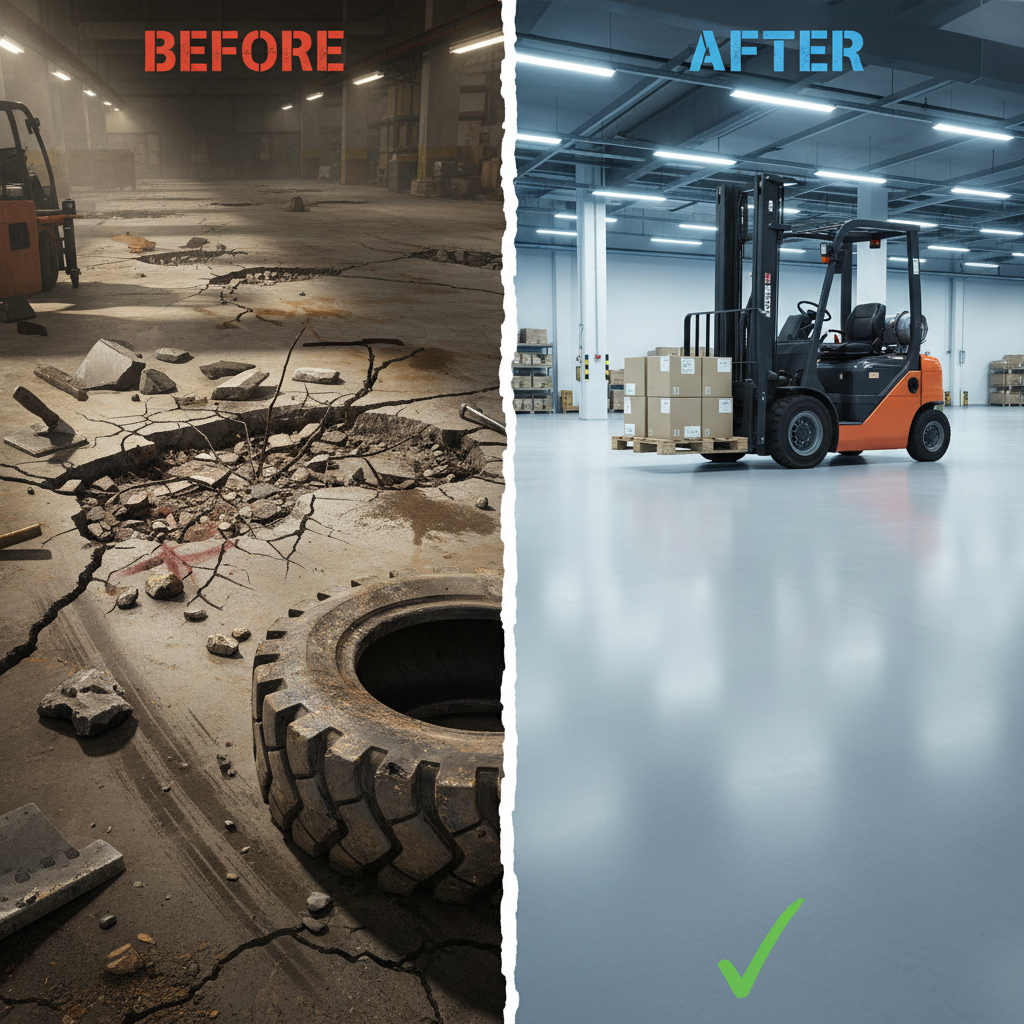
Facility managers must differentiate between gradual surface degradation (abrasion) and acute structural failure (gouges). Failing to address industrial floor wear in its early stages has severe financial implications. In fact, severe floor wear and uneven surfaces can increase forklift tire replacement costs by up to 25% and cause premature suspension failure across your material handling fleet.
Micro-Abrasion: How Silica Dust Destroys Floor Coatings
Long-term abrasive damage is often an invisible enemy. In heavy manufacturing and warehousing, un-swept silica dust and microscopic debris act as a fine-grit sandpaper under the immense pressure of forklift tires. As machinery rolls over the surface, these micro-abrasives grind into the polymer coating or concrete surface.
This continuous friction breaks down the chemical bonds of the floor. Data shows that micro-abrasion from un-swept silica dust can reduce the lifespan of a floor coating by up to 30% over a 5-year period. If you were to examine microscopic or cross-sectional imagery of this floor wear, you would see a jagged, compromised matrix where the smooth, protective resin once sat, leaving the porous substrate beneath vulnerable to chemical and moisture intrusion.
The Physics of Deep Floor Gouges
While abrasion is a slow degradation, deep floor gouges are violent, acute structural failures. These occur when the impact energy applied to the floor exceeds the material’s compressive strength and impact absorption capacity.
The primary culprits in warehouse settings are dropped pallets, dragged heavy machinery, and forklift mast impacts. According to industry data, forklift impacts and dragged pallets account for over 40% of severe industrial floor damage. The Material Handling Institute (MHI) emphasizes that the interaction between material handling equipment and the flooring surface is a critical factor in both facility safety and equipment longevity [2]. Preventing these gouges requires materials that don’t just boast high compressive strength (the ability to hold heavy static weight) but exceptional impact absorption (the ability to dissipate sudden kinetic energy without shattering).
What is Adamantine Flooring?
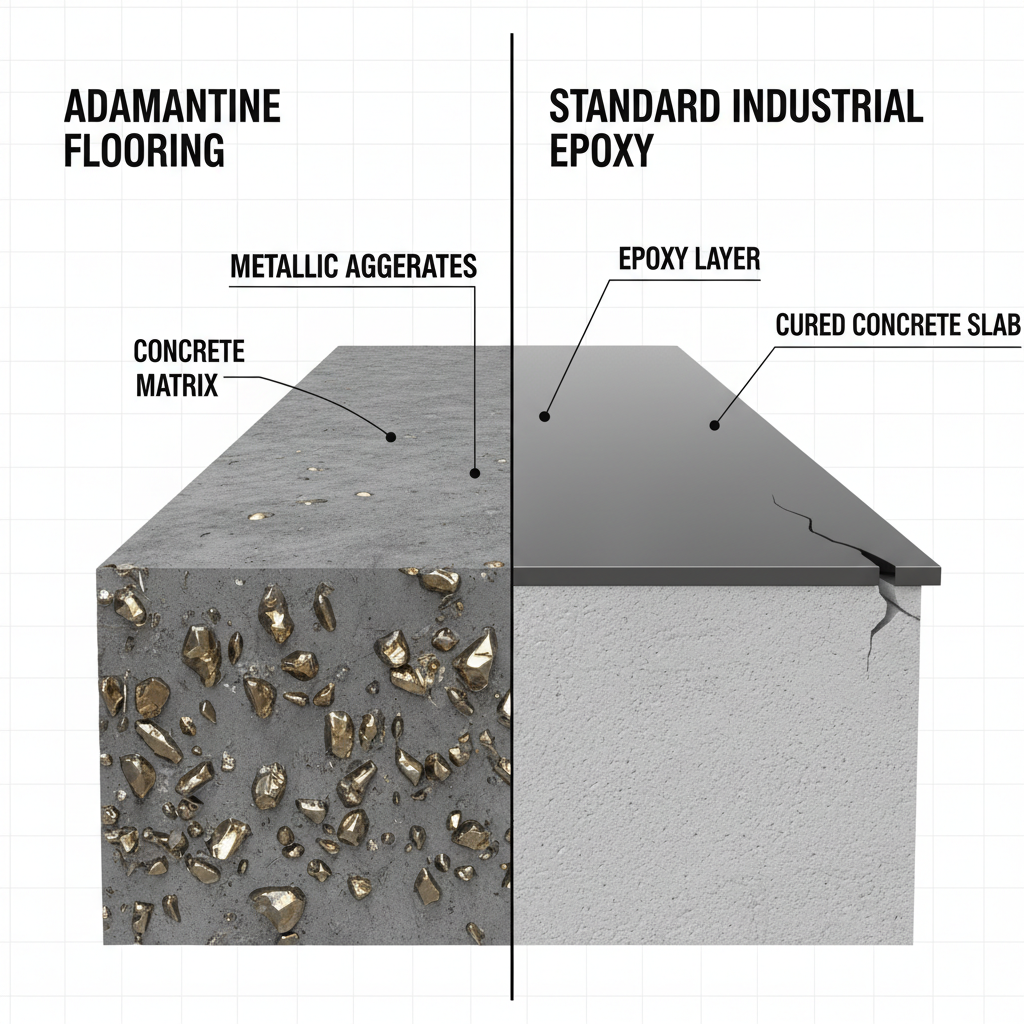
When researching heavy duty flooring, “Adamantine” is a term that frequently surfaces, often surrounded by an aura of invincibility. Adamantine flooring refers to ultra-durable, specialized concrete hardeners—often utilizing metallic or mineral dry-shake aggregates—designed for the most extreme industrial environments, such as steel mills and heavy manufacturing plants.
According to structural engineering principles outlined by the American Concrete Institute (ACI) regarding concrete surface treatments, these hardeners are troweled directly into fresh concrete [3]. The result is a monolithic surface that is exponentially tougher than standard cured concrete. In fact, Adamantine hardeners can increase concrete abrasion resistance by up to 800% compared to untreated concrete.
Material Science: Concrete Hardeners vs. Industrial Epoxy
To make an informed decision, buyers must understand the comparative matrix of Adamantine flooring versus industrial epoxy and polyurethane systems.
Unlike epoxy, which is a topical resin coating applied over a cured slab, adamantine hardeners rely on a chemical and metallic bonding process. The metallic aggregates oxidize and expand slightly within the concrete matrix as it cures, creating a surface of unparalleled density and impact resistance. While epoxies offer excellent chemical resistance and a seamless finish, they can chip under extreme point-load impacts. Adamantine floors, on the other hand, are virtually immune to deep gouging from dropped steel or dragged pallets. Because of this structural integration, the typical lifespan of adamantine-treated floors exceeds 20-30 years, even in the most brutal heavy manufacturing environments.
Evaluating the Best Abrasion Resistant Flooring for Warehouses
Selecting the best abrasion resistant flooring for warehouses requires looking past marketing brochures and demanding hard, empirical data. The gold standard for measuring a coating’s ability to withstand wear is outlined by ASTM International. Specifically, ASTM D4060 is the Standard Test Method for Abrasion Resistance of Organic Coatings [4]. Understanding this test is the key to evaluating true abrasion resistant floor coating options.
Demystifying the Taber Abrasion Test
The Taber Abrasion Test is a standardized scientific method used to measure floor wear. During the test, a coated sample is placed on a turntable and subjected to the rubbing action of two abrasive wheels under a specific weighted load for a set number of cycles. The result is measured in milligrams (mg) of material lost—the lower the number, the more abrasion-resistant the floor.
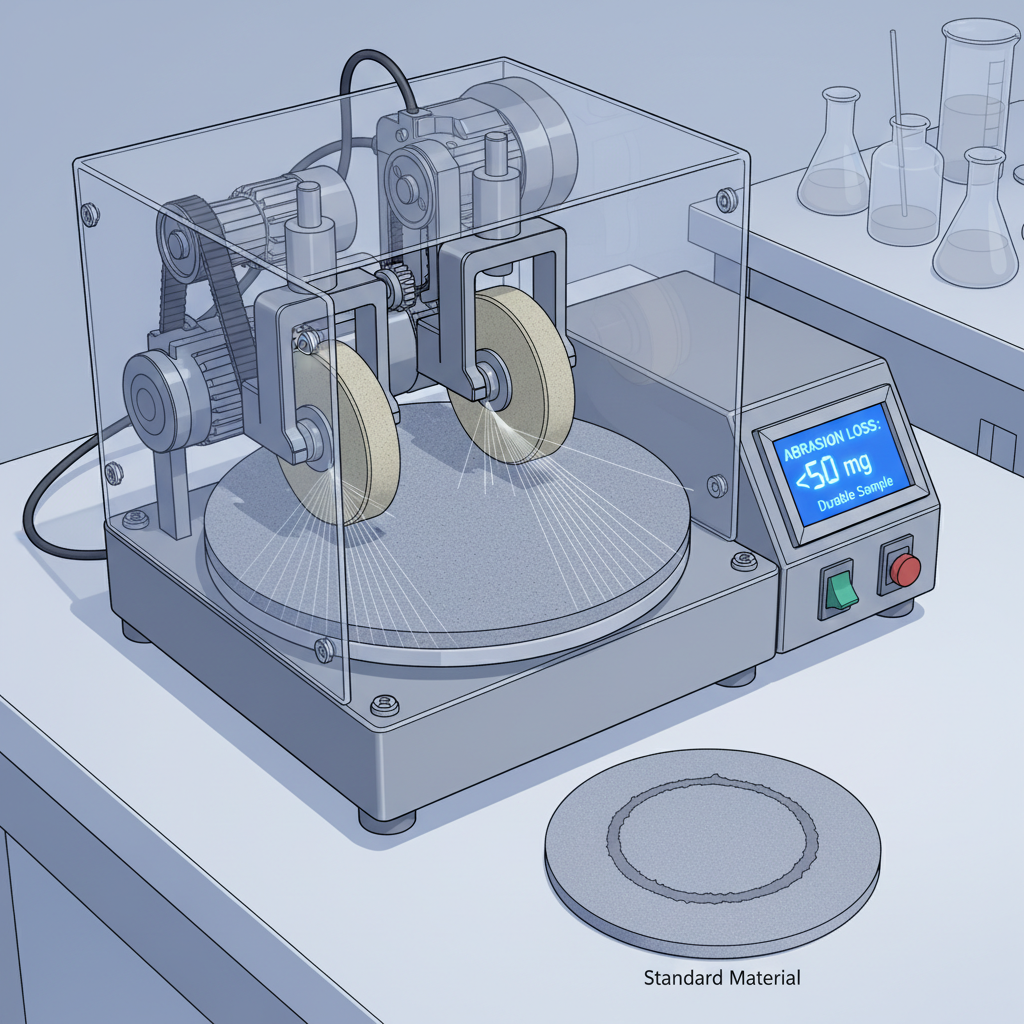
When evaluating coatings, buyers should demand these numbers. As a benchmark of excellence, high-performance urethane mortars typically show less than 50mg of loss in standard Taber Abrasion tests using a CS-17 wheel and 1,000 cycles. Standard epoxies often lose significantly more material under the same conditions.
Urethane Mortars and Polyaspartics: The Gouge-Resistant Champions
For facilities prioritizing gouge resistant flooring, polyurethane concrete systems (urethane mortars) and aliphatic urethanes (polyaspartics) are the undisputed champions.
The Polyurethane Manufacturers Association (PMA) notes the unique elastomeric properties of urethane systems [5]. Unlike standard bisphenol-A epoxies, which can be rigid and brittle, urethanes have a degree of flexibility. This allows them to absorb and dissipate kinetic energy rather than shattering. Urethane concrete systems installed at a thickness of 1/4 inch to 3/8 inch can withstand impact forces exceeding 160 in-lbs without delaminating or gouging, making them vastly superior for areas prone to heavy pallet drops.
The Critical Role of Hard Aggregates
The secret to a truly abrasion resistant floor coating often lies not just in the resin, but in the aggregates suspended within it. Adding hard aggregates directly impacts the coating’s rating on the Mohs hardness scale.
Adding aluminum oxide aggregate to a topcoat can increase abrasion resistance by 50-100% depending on the grit size and broadcast rate. Quartz is another popular, highly durable option. However, facility managers must balance this durability with daily operations: there is a distinct trade-off between high abrasion resistance (which creates a rough, slip-resistant texture) and cleanability. Highly textured floors require more aggressive, mechanized cleaning methods to prevent dirt buildup.
A Holistic Blueprint: How to Prevent Deep Floor Gouges
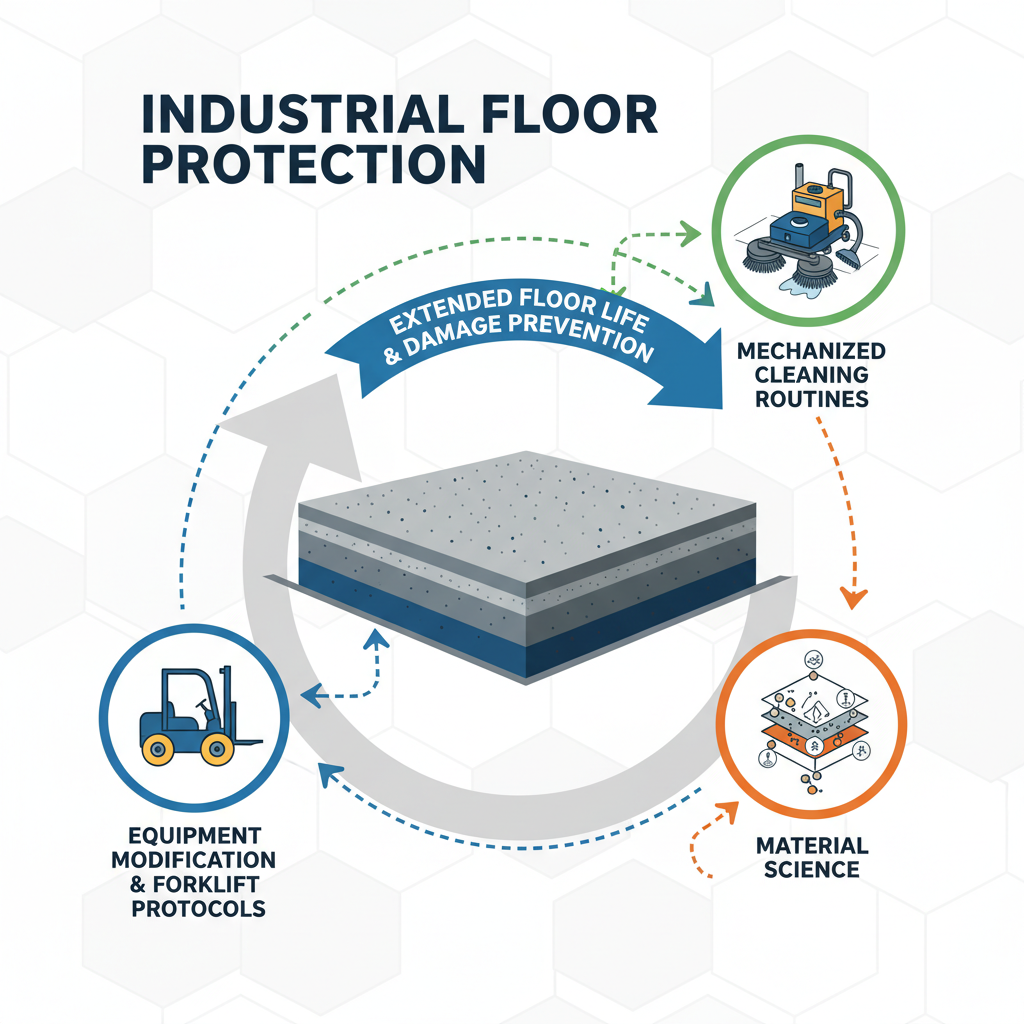
Material science alone cannot protect a facility. To truly learn how to prevent deep floor gouges and prevent floor surface damage, facility managers must shift from a product-only mindset to an operational strategy. We highly recommend that facilities implement a formal “Floor Protection SOP” (Standard Operating Procedure), ideally authored or reviewed by a Certified Safety Professional (CSP), to standardize these preventative measures.
Equipment Modification and Forklift Protocols
The most effective way to stop a gouge is to prevent the impact entirely. This requires strict forklift protocols and equipment modifications.
Driver training should mandate proper forklift mast tilt limits. Diagrams showing safe mast angles should be posted in loading zones; if a mast is tilted too far forward, the steel forks can easily strike and gouge the concrete during a sudden stop or load drop. Furthermore, the Industrial Truck Association (ITA) highlights the importance of matching forklift tires to the operating environment [6]. Switching from hard, aggressive tires to non-marking polyurethane wheels significantly reduces both abrasive wear and the risk of point-load gouging.
Mechanized Cleaning Routines
Routine maintenance is your first line of defense against surface degradation. Implementing a daily mechanized scrubbing routine is not just about aesthetics; it is a critical preventative maintenance method.
By utilizing industrial sweepers and auto-scrubbers, you actively remove the silica dust and micro-abrasives before they can be ground into the floor by heavy traffic. According to industry data, implementing a daily mechanized scrubbing routine can extend the life of a floor coating by up to 20%. The International Sanitary Supply Association (ISSA) provides excellent guidelines on cleaning standards and frequencies to maximize asset protection [7].
Triage and Repair: Fixing Deep Gouges in Concrete
Even with the best SOPs, legacy damage exists. When addressing deep floor gouges, a precise diagnostic approach prevents facilities from wasting capital on improper patch jobs that will inevitably peel or pop out under heavy traffic. The American Society of Civil Engineers (ASCE) stresses that maintaining the structural integrity of concrete slabs is paramount to facility safety [8].
When to Patch vs. When to Resurface
Facility managers must identify the stages of industrial floor wear to determine the correct intervention. Is it localized damage, or systemic failure?
A localized gouge can often be addressed with a high-strength epoxy or urethane mortar patch. However, ignoring these isolated issues is dangerous. Untreated floor gouges can accelerate surrounding concrete spalling by up to 50% due to moisture, chemical penetration, and repeated impact on the weakened edges. If the floor exhibits widespread spalling, extensive micro-cracking, or delamination of existing coatings, a localized patch will fail. At this stage, full mechanical resurfacing is required.
The Importance of Sub-Floor Preparation
The number one reason heavy duty flooring repairs fail is inadequate sub-floor preparation. You cannot simply pour epoxy into a dusty hole and expect it to hold a 10,000-pound forklift.
Proper technical repair requires squaring off the edges of the gouge with a concrete saw to create a vertical wall, ensuring a strong mechanical bond rather than a feathered edge that will easily chip. Furthermore, the surface must be aggressively prepped—typically via shot blasting or diamond grinding—to remove all laitance (the weak, powdery top layer of concrete) and contaminants. The International Concrete Repair Institute (ICRI) provides strict guidelines on achieving the correct Concrete Surface Profile (CSP) for chemical bonding [9]. Before-and-after repair photos from certified contractors routinely highlight this aggressive prep work as the key differentiator between a permanent fix and a temporary band-aid.
Maximizing ROI: Total Cost of Ownership (TCO) for Durable Commercial Flooring
For commercial architects and business owners, flooring is a major capital expenditure. Evaluating durable commercial flooring requires moving past the initial installation price tag and utilizing a Total Cost of Ownership (TCO) framework. The Whole Building Design Guide (WBDG) emphasizes that lifecycle cost methodologies must include installation, routine maintenance, repair costs, and, crucially, the cost of business downtime during replacement cycles [10].
Lifecycle Costs and Sustainability
When viewed through a TCO lens, long term durable flooring solutions like adamantine hardeners, urethane mortars, and polished concrete become highly economical.
For example, polished concrete has a lifecycle cost of approximately $0.10 to $0.15 per square foot annually, making it one of the most cost-effective long-term solutions available. Furthermore, investing in permanent flooring solutions drastically reduces the millions of tons of landfill waste generated annually by failing, ripped-up floor coatings. This durability directly aligns with sustainability goals and can contribute to LEED certification criteria established by the U.S. Green Building Council (USGBC) for durable, sustainable building materials [11].
Conclusion
Achieving an indestructible industrial floor requires looking far beyond the coating in the bucket. It demands a sophisticated synthesis of advanced material science—leveraging the immense strength of Adamantine hardeners and the impact absorption of urethane mortars—combined with rigorous, daily operational SOPs. By understanding the tribology of wear, modifying material handling equipment, and executing precise sub-floor preparation during repairs, facility managers can eliminate deep gouges and halt abrasive damage in its tracks. We encourage you to empower your team by downloading a comprehensive Warehouse Floor Protection SOP checklist, or contact a certified commercial flooring engineer today to conduct a facility wear audit and a customized Total Cost of Ownership analysis.
The information provided is for educational and strategic planning purposes. Always consult a structural engineer or certified commercial flooring contractor for facility-specific load-bearing assessments and OSHA compliance.
References & Authoritative Sources
- Society of Tribologists and Lubrication Engineers (STLE). (N.D.). Friction, wear science, and surface degradation.
- Material Handling Institute (MHI). (N.D.). Impact of flooring on material handling equipment.
- American Concrete Institute (ACI). (N.D.). Authority on concrete standards, surface treatments, and hardeners.
- ASTM International. (N.D.). ASTM D4060 – Standard Test Method for Abrasion Resistance of Organic Coatings.
- Polyurethane Manufacturers Association (PMA). (N.D.). Properties and capabilities of urethane systems.
- Industrial Truck Association (ITA). (N.D.). Forklift operating environments and maintenance.
- International Sanitary Supply Association (ISSA). (N.D.). Cleaning standards, floor care, and maintenance frequencies.
- American Society of Civil Engineers (ASCE). (N.D.). Structural integrity of concrete slabs.
- International Concrete Repair Institute (ICRI). (N.D.). Surface profiles and wear guidelines.
- Whole Building Design Guide (WBDG). (N.D.). Lifecycle cost methodologies and building science.
- U.S. Green Building Council (USGBC). (N.D.). LEED certification criteria for durable, sustainable materials.
