If you are an active family or a pet owner, you likely know the deep, sinking frustration of watching a beautiful new floor succumb to the chaos of daily life. Scratched residential floors, dented planks, and worn traffic paths can make even a newly renovated house look tired and neglected. In the quest for a permanent solution, many homeowners find themselves dreaming of “adamantine”—a mythological material famed for being entirely indestructible.
While you cannot mine adamantine in the real world, modern material science has created the next best thing: bringing commercial-grade toughness directly into residential spaces. This guide will separate marketing jargon from scientific reality, showing you how to bulletproof your home’s floors. We will explore the definitive, science-backed solutions that balance extreme, near-indestructible durability with flawless home aesthetics and long-term financial return.
- What is “Adamantine Flooring”? Separating Myth from Material Science
- The Mechanics of Floor Wear: Why Standard Residential Flooring Fails
- Commercial Grade Flooring for Residential Homes: Top Solutions
- Installation Realities: How to Install Adamantine-Level Residential Floors
- Lifecycle Cost Analysis: Is a Long-Lasting Floor Upgrade Worth It?
- Conclusion
- References
What is “Adamantine Flooring”? Separating Myth from Material Science
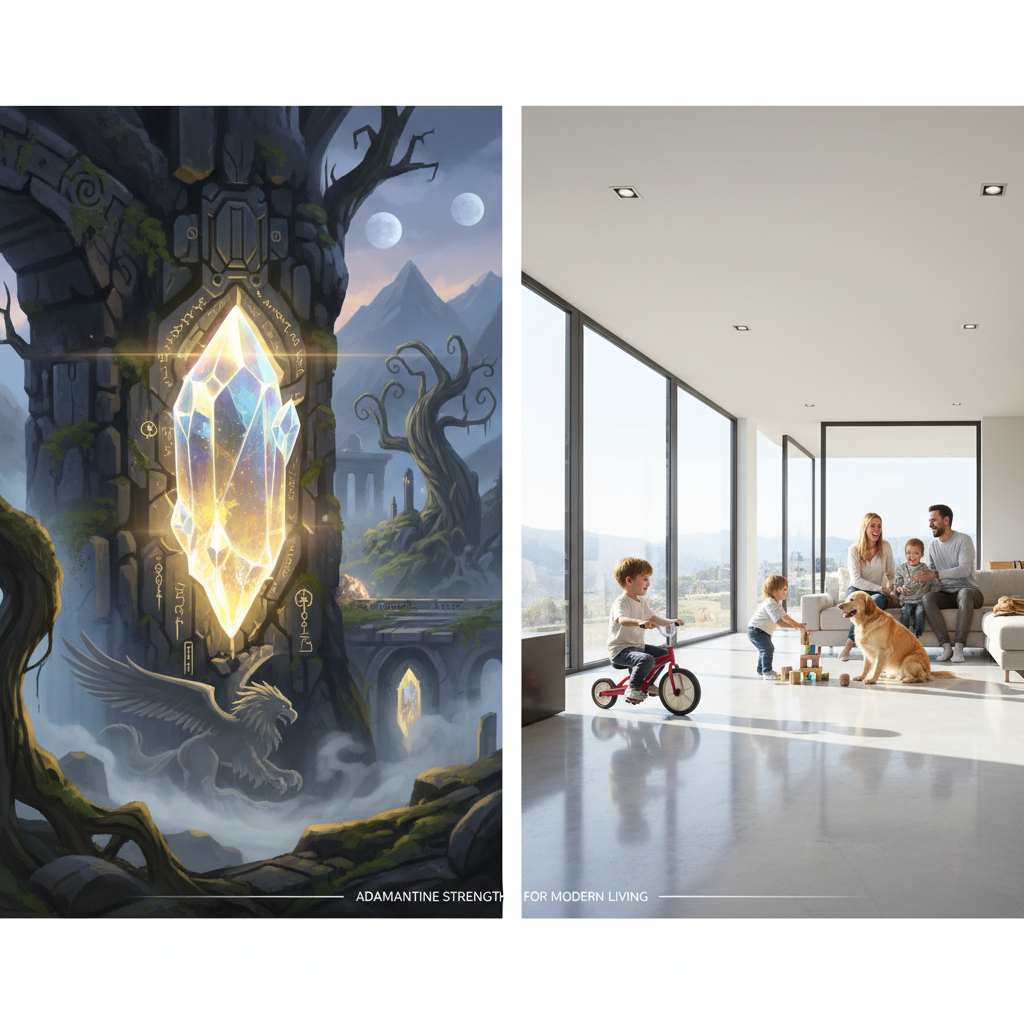
In mythology and fantasy, “adamantine” represents the absolute zenith of hardness—a conceptual benchmark for an indestructible material. In the flooring industry, the term “adamantine flooring” has become a niche shorthand for homeowners seeking ultra-durable, virtually bulletproof surfaces. But what does adamantine flooring actually look like in reality?
To understand extreme durability, we must look at the material science behind it. According to research published in the Journal of Materials Science, the hardness of flooring materials can be objectively measured using the Mohs scale of hardness, which ranks materials from 1 (talc) to 10 (diamond) [1]. Standard residential woods often fall devastatingly low on this scale. To achieve true, tough adamantine flooring for houses, we must look to industrial-grade materials. The World Floor Covering Association (WFCA) defines extreme durability not just by surface hardness, but by a material’s comprehensive resistance to impact, abrasion, and moisture over decades of heavy use [2].
The Closest Real-World Alternatives to Adamantine
If you are searching for the most durable flooring for high traffic areas, you must pivot away from traditional residential options and look toward advanced chemical coatings and composites. The closest real-world alternatives to adamantine include metallic epoxies, quartz-infused urethane coatings, and polished concrete.
These are not your standard garage paints. Data from Polymer Science and Engineering details how metallic epoxy systems achieve a staggering compressive strength exceeding 10,000 PSI, far surpassing standard residential concrete [3]. Furthermore, advanced quartz-infused urethane coatings are engineered to withstand severe impacts of up to 160 in-lbs without chipping or cracking [3]. These materials offer an impenetrable barrier against dropped cast-iron pans, heavy furniture, and the most frantic of pet claws.
The Mechanics of Floor Wear: Why Standard Residential Flooring Fails
To understand why you are experiencing high traffic floor wear, it is essential to diagnose the microscopic mechanics of how floors degrade. Floor damage generally falls into two categories: impact (dents from dropped objects or heavy furniture) and abrasion (scratches and dulling from friction).
The Society of Tribologists and Lubrication Engineers (STLE) explains that surface micro-abrasions are governed by the scientific principles of friction; when a harder material (like a grain of silica sand) is dragged across a softer material (like a polyurethane wood finish), it inevitably gouges the surface [4]. This is why easily damaged home flooring degrades so quickly in entryways and hallways. In fact, data from the Carpet and Rug Institute (CRI) notes that tracked-in dirt acts exactly like sandpaper underfoot, reducing the lifespan of a floor’s finish by up to 30% [5].
The Fragility Index: Materials to Avoid in Active Homes
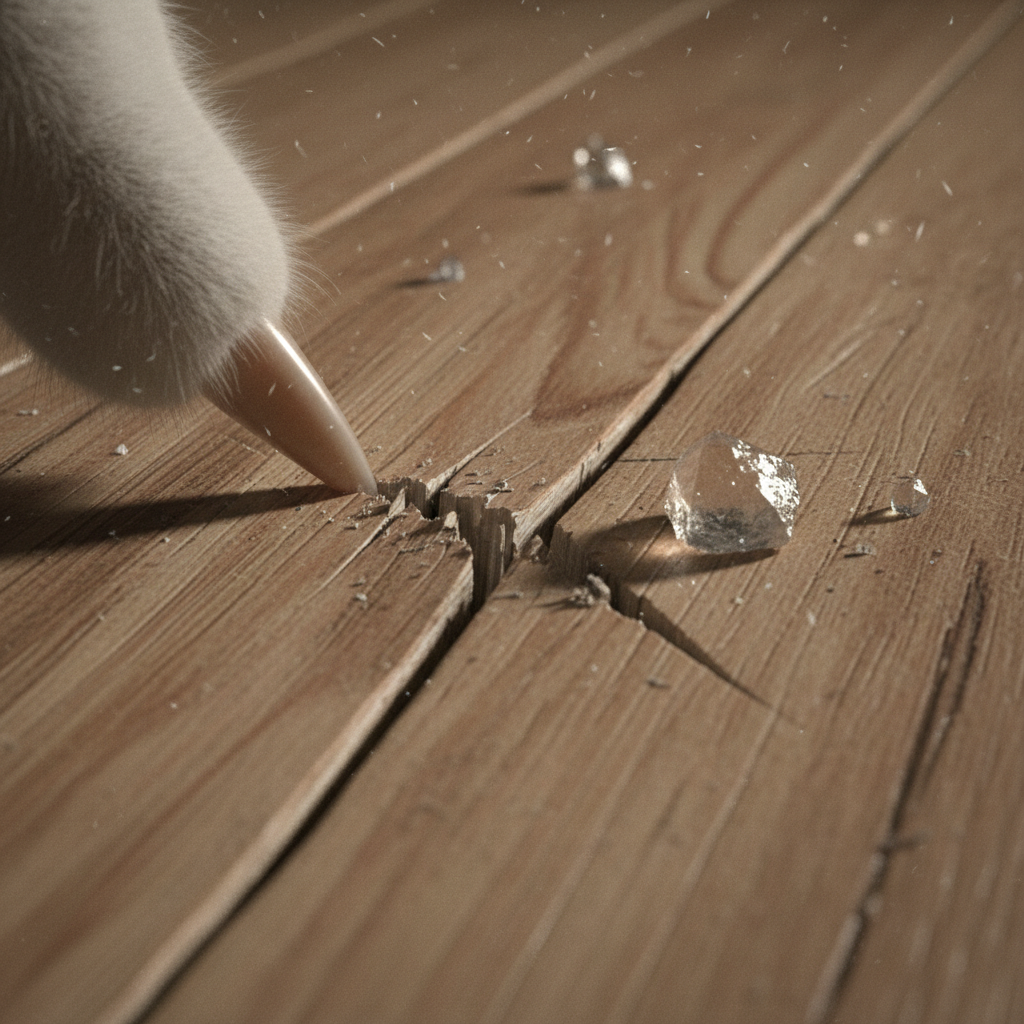
If you want to avoid easily damaged home flooring, you need an “anti-recommendation” list. Not all woods and laminates are created equal. Research from the Forest Products Laboratory (FPL) highlights the inherent vulnerabilities of softwoods [6]. Species like pine and fir have Janka hardness ratings—a standard measurement cited by the National Wood Flooring Association (NWFA) to gauge wood’s resistance to denting and wear—of below 1000 [7]. This makes them highly susceptible to denting from simply walking in high heels or dropping a child’s toy.
Similarly, budget-friendly laminate flooring with an AC1 or AC2 wear rating is generally unsuitable for active residential homes. These lower-tier laminates will show catastrophic wear, chipping, and moisture swelling almost immediately under the stress of heavy foot traffic and pet activity.
Triage: Can You Fix Scratched Floors or Is It Time to Upgrade?
If you are currently staring at scratched residential floors, your immediate concern is likely triage. Can it be fixed, or is the floor ruined? Over 60% of hardwood floor scratches are caused by unprotected furniture legs and pet claws.
According to hard surface floor repair standards from the Institute of Inspection, Cleaning and Restoration Certification (IICRC), surface-level scratches on traditional polyurethane finishes can often be repaired relatively easily [8]. Minor abrasions that haven’t penetrated to the raw wood can frequently be masked using specialized polyurethane blending pencils or tinted waxes for under $50. However, if a scratch has deeply gouged the wear layer of a Luxury Vinyl Plank (LVP) or exposed the core of a laminate board, the waterproofing is compromised. At this stage, repair is impossible, and board replacement or a total floor upgrade is necessary.
Commercial Grade Flooring for Residential Homes: Top Solutions
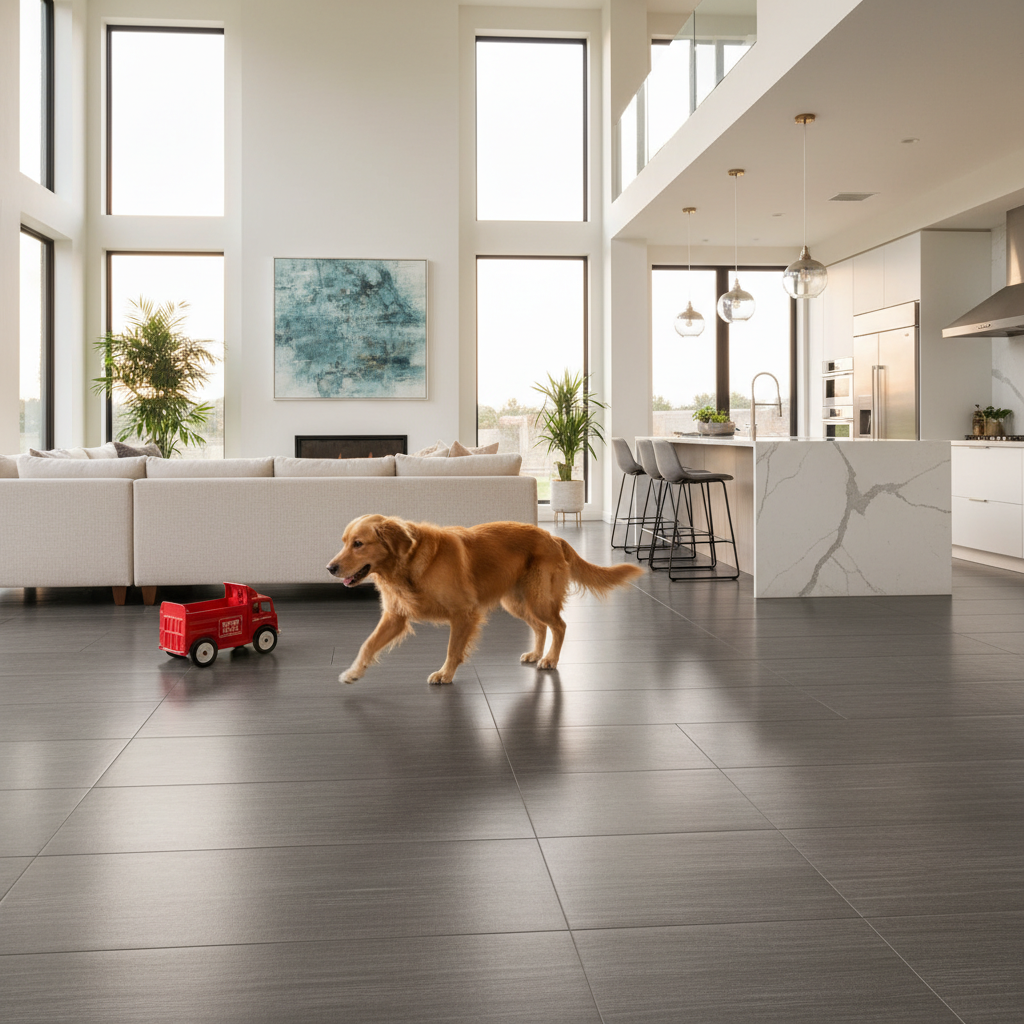
When standard options fail, the ultimate solution is installing commercial grade flooring for residential homes. Commercial grade flooring is engineered for high-traffic retail stores, hospitals, and office buildings, but it is increasingly being adopted by homeowners who want permanent durability.
Decoding the jargon is key to finding durable residential flooring. Commercial materials are judged by rigorous metrics, such as AC (Abrasion Class) ratings for laminates and mil thickness for vinyl wear layers. ASTM International provides standardized testing methods for these materials, ensuring strict compliance with slip resistance and long-term wear metrics [9]. But does it look good in a living room? Absolutely. The American Society of Interior Designers (ASID) notes that modern manufacturing has bridged the gap, allowing homeowners to blend commercial materials—which now feature hyper-realistic wood and stone textures—seamlessly into elegant residential aesthetics [10].
Commercial Luxury Vinyl Plank (LVP) & Scratch-Resistant Finishes
For those seeking scratch resistant home flooring, commercial Luxury Vinyl Plank (LVP) is a revelation. While standard residential LVP might have a 6-mil to 12-mil wear layer, true commercial LVP boasts a wear layer of 28-mil or higher.
It is crucial to demystify “scratch-resistant” versus “scratch-proof” marketing jargon. No vinyl is entirely scratch-proof, but commercial wear layers fortified with aluminum oxide come incredibly close. The Taber Abrasion Test, governed by American National Standards Institute (ANSI) standards, is used by manufacturers to determine true scratch resistance [11]. Through this rigorous testing, it has been proven that aluminum oxide finishes can increase a floor’s scratch resistance by up to 10 times compared to standard polyurethane coatings.
Porcelain Tile: The High-Traffic Champion
If you want the most durable flooring for high traffic areas, porcelain tile is the undisputed heavyweight champion. Fired at incredibly high temperatures, porcelain is dense, impervious, and visually stunning.
The Tile Council of North America (TCNA) recognizes porcelain as the ultimate authority in high-traffic durability [12]. It scores a 7 or higher on the Mohs hardness scale, making it virtually scratch-proof against everyday foot traffic and pet claws. Furthermore, porcelain has a water absorption rate of less than 0.5%, meaning it is entirely waterproof and highly resistant to staining, making it an ideal, near-adamantine choice for kitchens, mudrooms, and grand entryways.
Installation Realities: How to Install Adamantine-Level Residential Floors
The transactional reality of choosing to install adamantine residential floors is that the material is only as good as the subfloor beneath it. You can purchase the most expensive, indestructible coating in the world, but it will fail catastrophically without rigorous, professional subfloor preparation.
Homeowners are strongly warned against DIYing industrial coatings like polyaspartic or metallic epoxies. Industry data shows that 90% of ultra-durable floor coating failures are not due to the product itself, but due to improper concrete profiling and inadequate moisture mitigation during installation.
Subfloor Prep: MVTR and Concrete Surface Profiles (CSP)
To properly install adamantine residential floors, contractors must address two critical factors: Moisture Vapor Transmission Rates (MVTR) and the concrete’s physical texture. If moisture vapor is rising through a concrete slab faster than the impermeable coating can handle, the epoxy or polyaspartic layer will bubble, blister, and peel away.
Furthermore, the concrete must be mechanically ground to achieve a specific texture. The International Concrete Repair Institute (ICRI) outlines strict guidelines for Concrete Surface Profiles (CSP), dictating exactly how rough the concrete must be for industrial adhesives and coatings to bond permanently [13]. Finally, when bringing these heavy-duty chemicals into a living space, ventilation is paramount. The Green Building Council (LEED) provides essential data on VOC (Volatile Organic Compound) emissions, highlighting the importance of choosing low-VOC commercial adhesives to maintain safe indoor air quality during and after installation [14].
Lifecycle Cost Analysis: Is a Long-Lasting Floor Upgrade Worth It?
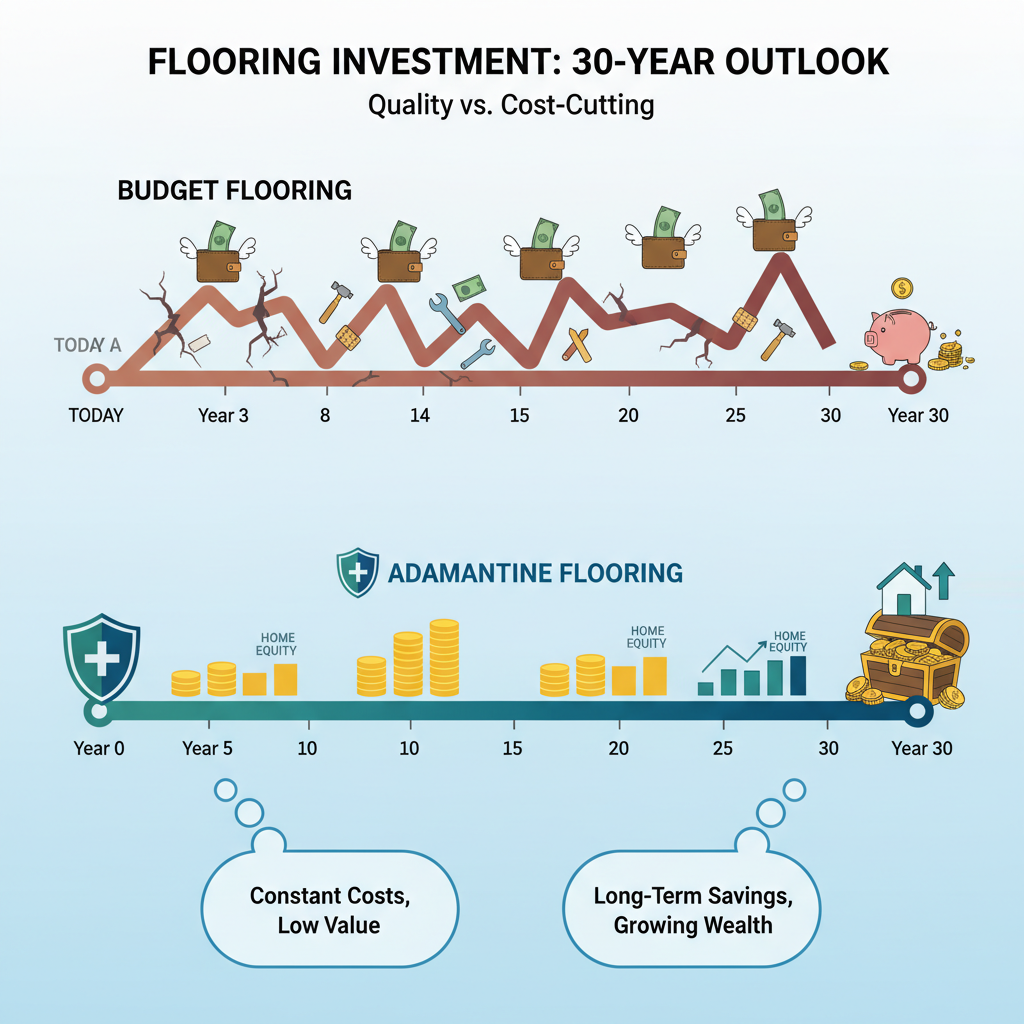
Investing in commercial-grade materials requires a higher upfront premium, prompting many to ask: is a long lasting floor upgrade actually worth it? A Lifecycle Cost Analysis (LCA) proves that buying cheap flooring is often the most expensive mistake a homeowner can make.
Consider a 30-year cost projection. A budget-friendly, AC2-rated laminate might look like a deal today, but in an active home with dogs and children, it will likely need to be completely ripped out and replaced three separate times over three decades. Conversely, investing once in a premium commercial LVP, or a solid hardwood floor that can be refinished, eliminates those recurring replacement costs, ultimately saving thousands of dollars. Furthermore, permanent, high-quality fixtures drastically improve home equity. Data from the Appraisal Institute indicates that homes featuring high-quality, long-lasting flooring can see a potential 2.5% increase in total sale price, offering a tangible return on your initial investment [15].
Conclusion
Achieving “adamantine” flooring in a residential setting is no longer a myth; it is a highly attainable reality achieved by leveraging commercial-grade materials. By upgrading to 28-mil commercial LVP, utilizing advanced polyaspartic coatings, or installing impenetrable porcelain tile, you can effectively bulletproof your home against the chaos of daily life. While the upfront investment in premium materials and rigorous subfloor preparation is higher, it yields a lifetime of stress-free durability and significant financial return.
Evaluate your home’s highest traffic zones today. Before purchasing your next floor, consult with a certified flooring installer to test your subfloor’s moisture levels and request samples of commercial-grade materials fortified with aluminum oxide finishes. Your home deserves flooring as resilient as the life lived upon it.
Disclaimer: Information regarding structural subfloor preparation, moisture vapor transmission rates (MVTR), and VOCs is for educational purposes. Always consult a certified flooring inspector or structural engineer before installing industrial-grade coatings in a residential setting.
References
- Journal of Materials Science. (N.D.). Mohs scale of hardness for flooring materials. DOI: 10.1007/s10853.
- The World Floor Covering Association (WFCA). (N.D.). Industry standards on flooring durability.
- Polymer Science and Engineering. (N.D.). Durability of advanced urethane and epoxy resins.
- Society of Tribologists and Lubrication Engineers (STLE). (N.D.). Scientific principles of friction, wear, and surface engineering.
- Carpet and Rug Institute (CRI). (N.D.). Soil tracking and barrier matting effectiveness.
- Forest Products Laboratory (FPL). (N.D.). Research on wood properties and vulnerabilities.
- National Wood Flooring Association (NWFA). (N.D.). Hardwood durability and Janka hardness ratings.
- Institute of Inspection, Cleaning and Restoration Certification (IICRC). (N.D.). Standards for hard surface floor maintenance and repair.
- ASTM International. (N.D.). Standardized testing methods for flooring materials.
- American Society of Interior Designers (ASID). (N.D.). Insights on blending commercial materials into residential aesthetics.
- American National Standards Institute (ANSI). (N.D.). Standards for testing the abrasion resistance of hard surface flooring.
- Tile Council of North America (TCNA). (N.D.). Authority on tile durability and installation in high-traffic zones.
- International Concrete Repair Institute (ICRI). (N.D.). Guidelines for concrete surface preparation (CSP profiles).
- Green Building Council (LEED). (N.D.). Authoritative data on VOC emissions and indoor air quality regarding commercial adhesives.
- Appraisal Institute. (N.D.). Data on how permanent fixtures like flooring affect property valuation.
