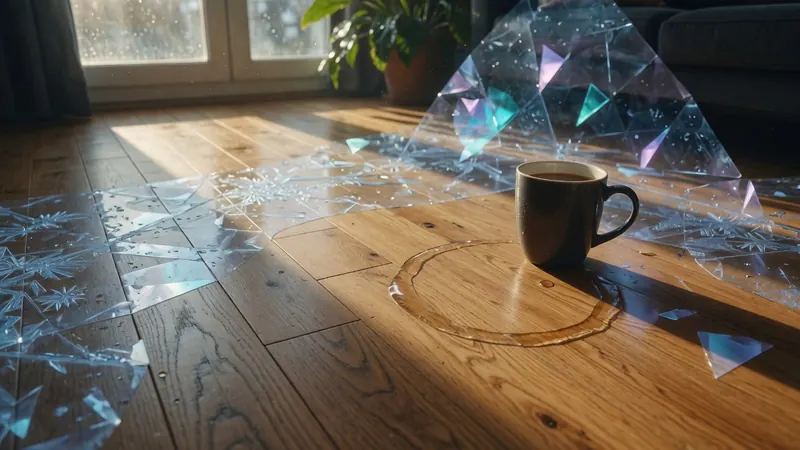
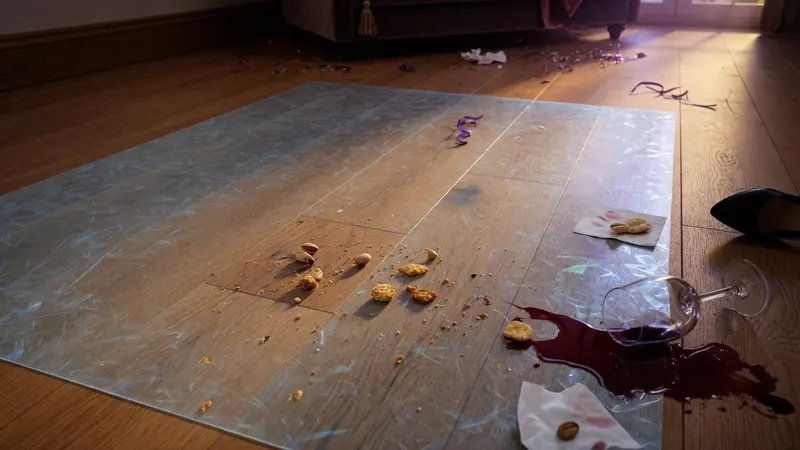
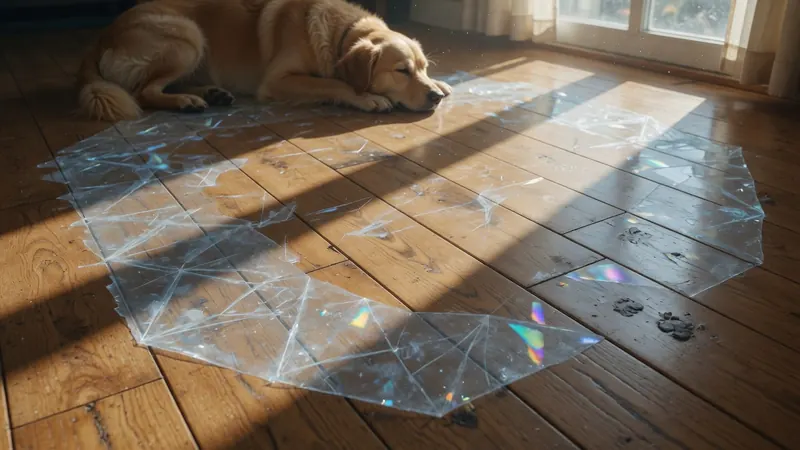
You are pouring coffee when the glass slips. Water spreads across the boards before you can grab a towel. In that moment the real question is not how the floor looks right now but what is happening at the surface where the liquid meets the finish. Most people assume any coating stops water. The difference between waterproof and water resistant only becomes clear in the hours and days that follow. What actually happens when the liquid sits longer than expected?
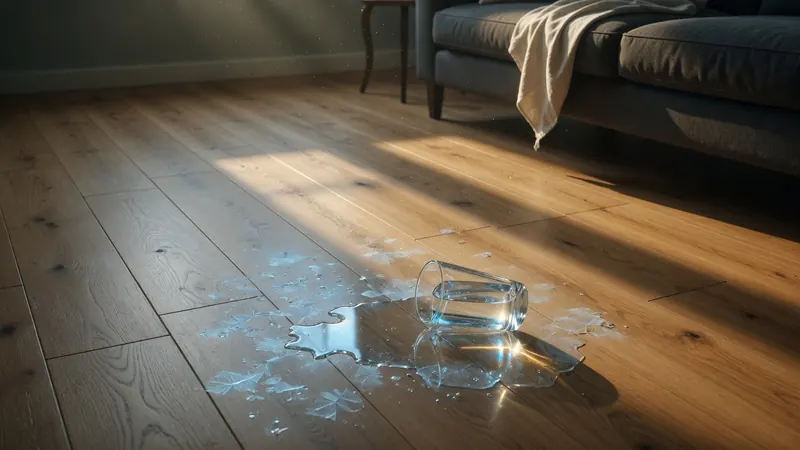
If you have a dog and a toddler under five, here is what actually matters. The water that sits for ten minutes versus the water that sits for two hours. The scuff from a chair leg dragged across the same boards later that week. These small events add up faster than most homeowners notice. How will your floor look after the next busy weekend?
Visible Problem Versus Hidden Behavior
Water resistant finishes slow absorption for a short time. They give you a window to wipe the spill. Waterproof performance in a finish means the liquid beads and stays on top until it is removed. The distinction is not in the wood itself. It lives in the outermost layer that takes the hit every day. On a humid afternoon the surface can feel slightly cooler where moisture has lingered, yet the spill stays on the cross-linked polymer layer instead of etching a surface ring.
After five years in a home with two large dogs the boards in the hallway still showed clean lines where the finish had held. In another house the same species of wood had begun to haze along the edges of every mat because the original coating let moisture linger just long enough to dull the surface. That is the visible difference the homeowner notices first. The wear layer either holds its clarity or it slowly clouds from repeated micro exposure.
What the Terms Actually Mean on the Job
Water resistant describes a finish that delays penetration. It buys time. Waterproof in this context describes a finish that prevents penetration under normal household conditions for far longer. Neither term changes how the board underneath reacts to bulk moisture from below or from the sides. The finish only guards the surface. During a dry winter week the boards can shrink a fraction while the UV-stable topcoat continues to flex without cracking.
One job I took on involved a sunroom addition where the previous contractor had used a standard water resistant sealer. Within eighteen months the afternoon light had started to lift the color along the south edge. The boards themselves were stable. The surface had simply lost its ability to shrug off the combination of heat and occasional tracked-in moisture. The cross-linked polymer layer that replaced it kept the same boards looking even after another three seasons of direct exposure.
Real-World Stress Tests
Busy Kitchen After the Renovation
The family had just finished a kitchen update. Every evening the same pattern repeated: dinner prep, a quick wipe, then the dog coming in from the yard. Within the first month two different spills sat for nearly an hour before anyone noticed. The water resistant finish on the test boards in the corner began to show faint rings. The main floor, protected by a cross-linked polymer layer, showed nothing once the towel passed over it. Six months later the rings remained visible only under certain light angles. The rest of the floor continued to look untouched. Field callbacks from similar kitchens reveal that water resistant products often need re-coating around the sink area by year three, while the denser wear layer versions still read as uniform under the same traffic. The difference shows in the absence of sanding dust on the homeowner's floor.
What actually happens in the six months after the movers leave is rarely dramatic. It is the slow accumulation of small events. A dropped spoon. A paw print that dries before it is cleaned. The wear layer either absorbs those micro events or it does not. In this kitchen the difference showed up first in how easy it was to keep the floor looking the same month after month. Even the strongest UV-cured wear layer still benefits from quick attention, yet it forgives the occasional delay far better than a thinner water resistant alternative.
Rental Property Between Tenants
The property manager called after the third turnover in two years. The floors looked acceptable at the final walkthrough but never quite returned to the original tone. Between tenants the cleaning crews used stronger solutions. The water resistant finish on those boards had already begun to thin in the high-traffic lanes. Each cleaning removed a little more protection. By the fourth tenant the surface haze was noticeable even in photographs. On one inspection the afternoon light caught a faint clouding along the path from kitchen to living room, the exact route the vacuum took weekly.
The next time the unit turned over the owner chose a finish built around a denser UV-cured wear layer. Two years later the same cleaning routine left the boards looking consistent. The difference was not dramatic on day one. It appeared in the absence of callbacks. Real-world turnover data shows that properties with this level of surface protection require half the touch-up visits compared with standard water resistant options, especially when pets move in and out with each lease.
Sunroom With Daily Foot Traffic
The south-facing room received direct light from mid-morning until late afternoon. A large dog used the space as its favorite nap spot. In dry months the boards contracted slightly. In humid weeks they expanded again. The finish had to flex with those movements while still keeping spills from finding any path downward. After three summers the water resistant version began to show micro checking along the joints. The cross-linked polymer layer on the replacement floor stayed continuous. Sun-bleaching stopped at the very surface. The boards underneath remained the same color they had been on installation day. During one particularly hot stretch the temperature swing reached nearly thirty degrees inside the glass, yet the wear layer showed no lifting at the seams.
The same sunroom later hosted a weekend of extra foot traffic from visiting family. Tracked-in dew from the garden stayed on the surface for nearly an hour. The UV-stable topcoat simply shed the moisture when the towel finally reached it. No new haze appeared the following week, confirming that the molecular bonds held through both the light and the liquid.
Work-From-Home Office With Rolling Chair Traffic
A converted spare bedroom now serves as a full-time workspace. The rolling office chair travels the same six-foot path between desk and bookshelf dozens of times each day. After eighteen months the water resistant finish along that lane had worn to a dull strip visible even in photos sent by the homeowner. The cross-linked polymer layer installed in the rest of the room showed only faint compression marks that disappeared after a gentle buff. During one winter the low humidity made the boards feel slightly rough underfoot, yet the surface protection prevented any actual fiber raising. The chair's path remained uniform because the wear layer absorbed the repeated micro-abrasion without thinning to the point of failure.
Field notes from similar conversions show that rooms with daily rolling loads lose surface clarity faster than any other residential use. The UV-cured wear layer version still looked consistent at the three-year mark, while the water resistant test area required a light screen and re-coat to restore even appearance.
Guardian's Test: How a Wear Layer Actually Works
Picture a single droplet resting on the boards. At the molecular level the wear layer forms a continuous film. Cross-linking creates tighter bonds inside that film so water molecules have fewer places to slip through. UV stabilizers sit inside the same layer and absorb the energy that would otherwise break those bonds apart over time. While you are simply living your life the film is doing the quiet work of staying intact. That is the wear layer doing its job. Quietly.
ASTM D4060 measures abrasion resistance under controlled conditions. It does not predict every household variable, yet it gives a baseline for comparing how long a finish can keep its protective qualities before traffic begins to thin it. The test reminds us that durability is measurable but never absolute. One manufacturer data sheet notes that their cross-linked polymer layer retained 92 percent of original film thickness after 10,000 cycles, a figure that translates to years of normal home use before any visible change appears.
Practical Steps That Protect the Guardian
- Place felt pads on every piece of furniture that moves regularly.
- Wipe spills within minutes when possible and always before they dry.
- Use entry mats that actually trap grit rather than simply hiding it.
- Avoid leaving standing water from plant trays or pet bowls for hours at a time.
- Rotate area rugs seasonally in high-sun zones to prevent uneven wear patterns.
Even the strongest wear layer benefits from these habits. They reduce the number of direct hits the finish must absorb. During a dry spell the surface can feel tighter underfoot, yet the UV-stable topcoat continues to maintain its barrier without additional intervention.
One Lesson Learned the Hard Way
Early in my career I recommended a water resistant finish for a high-traffic hallway because the client wanted a quick turnaround. Two years later the surface had lost its original sheen in the center lane. The wood itself was sound. The finish had simply done exactly what its chemistry allowed and nothing more. That job taught me to match the expected exposure to the actual performance of the UV-stable topcoat rather than to the marketing language on the can. The lesson still guides every recommendation I give today.
Looking Five Years Ahead
Picture your own floor on a random Tuesday five years from now. The light hits it the same way it does today. A glass tips again. You wipe it clean and keep moving. The surface shows no new marks because the protection underneath never gave the water a place to settle. That is the outcome most homeowners want and rarely think about until the moment it matters. The best protection is the kind you forget is there.
Adamantine exists for exactly those ordinary days. The cross-linked polymer layer you never see is the reason the floor still looks like itself instead of a record of every small accident. If your current finish is still doing its job you will not notice. That is the point. Find out if your finish is still doing its job.