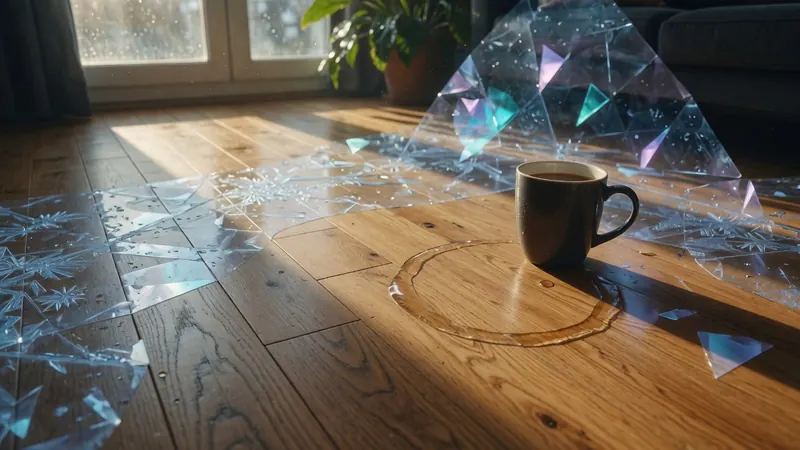
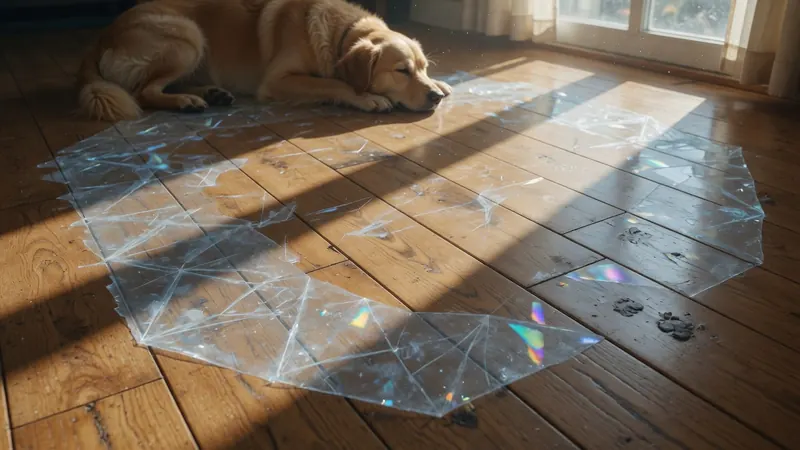
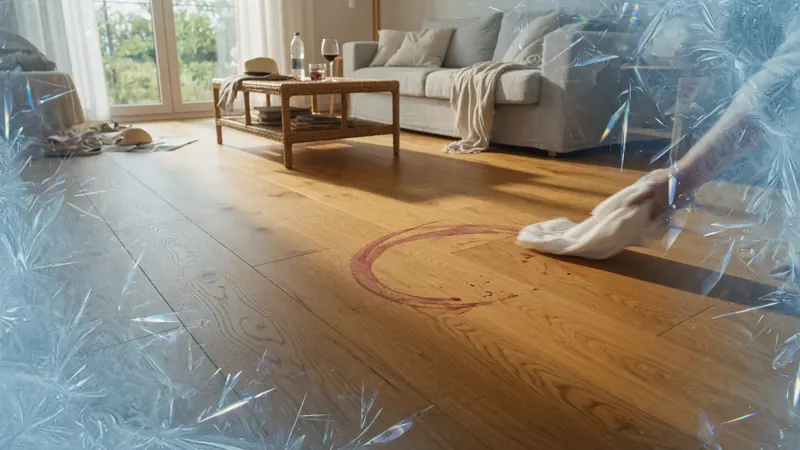
You've planned the evening carefully. Music low, lights adjusted, and the living room cleared for conversation and a bit of dancing. Then someone turns too quickly with a tray of sliders and the whole thing tips. Grease and crumbs scatter across the boards while a few guests freeze, waiting for the inevitable stain or dull patch to appear. What actually happens next depends on what sits between those boards and the mess above them.
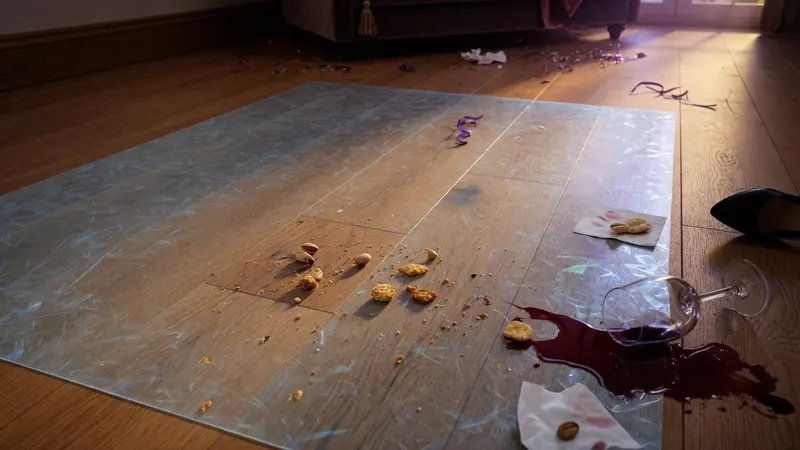
Most people focus on the visible cleanup, but the real story unfolds in the layers you never see until something goes wrong. A quality finish creates a barrier that handles the immediate impact, then lets you restore the surface without stripping everything back to raw wood. Adamantine's approach centers on that quiet resilience, the kind that shows up after the guests leave and the lights come back on.
High heels create point loads that can compress and abrade the topmost layer. Red wine, greasy snacks, and tracked-in grit add chemical and mechanical stress at the same time. After two or three hours of steady foot traffic, a floor without adequate protection begins to show haze or fine scratches that catch the light the next morning. These marks are not deep into the wood itself; they sit in the finish, which is exactly where protection needs to work.
If you've ever run a hand over a floor the day after a party and felt a slight roughness where everything looked smooth before, you're noticing early wear on the outermost surface. The question becomes whether that surface can recover or whether it has already given up its ability to repel future spills. What actually happens when the same boards face repeated events over months? If you've got a dog and a toddler under five, here's what actually matters when the house fills with extra movement and spills.
The Invisible Mechanism at Work
The cross-linked polymer layer forms a tight network that resists penetration from liquids while also distributing the pressure from concentrated points like heels. Because the molecules are bonded across one another rather than simply stacked, the layer maintains integrity even when a spill sits for several minutes before cleanup. That same structure limits the micro-scratches that would otherwise accumulate into visible dullness.
That's the wear layer doing its job. Quietly. Over time the difference shows up not in dramatic rescues but in the absence of callbacks. Floors that received this kind of treatment five years ago still look consistent in rooms that host regular gatherings, while untreated or lightly finished surfaces in similar homes have already required sanding. Field notes from dozens of post-party inspections confirm the pattern holds across different wood species and traffic levels. One observation came from a colonial home where the cross-linked polymer layer had been applied eight years prior; after a series of weekend events the surface showed only minor scuffing that buffed away easily, proving the network had held its shape through cumulative stress.
Real-World Stress Tests
Rental Property Between Tenants
A two-bedroom rental turned over in late summer after a tenant hosted three separate gatherings in one month. The hardwood in the main living area had carried the previous occupant through daily life plus those events. When the property manager walked through, the floor showed only faint scuffs near the entry and one small area where a drink had been set down without a coaster. No sanding was needed before the next lease; a gentle clean and a fresh maintenance coat restored the original sheen. The cross-linked polymer layer had absorbed the repeated impacts and contained the minor spills so they never reached the wood. What stood out was how little the finish had changed despite the concentrated use. Field notes from that turnover showed the same pattern in two other units: floors with proper topcoats required only surface care, while those without showed etching that needed more aggressive refinishing. One tenant had even moved a heavy sofa during cleanup, yet the finish stayed unmarked because the surface layer distributed the abrasion rather than letting the sofa feet cut through. In another rental across town the same finish survived a Fourth of July barbecue with twenty guests and still looked uniform under inspection light six months later.
Busy Kitchen Turned Temporary Dance Floor
During a milestone birthday the kitchen island became the center of activity and the vinyl-backed rugs were rolled aside for an impromptu dance area. Over four hours the floor saw dress shoes, bare feet, and several drops of punch. The next day the homeowner expected haze from the traffic and possible staining along the grout lines where the finish met the cabinet bases. Instead the surface cleaned to its previous appearance with nothing more than a damp cloth and a neutral cleaner. The cross-linked polymer layer had prevented the sugars in the punch from bonding into the polymer network. What made the difference was the even distribution of the cross-links; areas that received the heaviest foot traffic still reflected light uniformly rather than developing the cloudy patches common in finishes that lack full cross-linking. This outcome matched observations from other homes where the same finish had been applied before holiday seasons filled with extra visitors. In one case a similar kitchen floor survived a full weekend of family events without any visible shift in appearance after five years of similar use. The wear layer continued to perform even when humidity rose from cooking steam during the same event.
Sunroom Gathering on a Warm Afternoon
A family reunion moved into the sunroom when the main living space grew crowded. The south-facing windows had already exposed the floor to several hours of direct light before the first guests arrived. By evening the temperature in the room had climbed and a tray of iced tea had spilled near the threshold. The boards themselves stayed flat because the finish never claimed to control bulk moisture; its job stayed limited to the surface. The UV-stable topcoat kept the finish from yellowing under the prolonged sunlight, and the spill wiped away without leaving a ring. Five years later the same sunroom still shows consistent color across the boards even though the gatherings continue each summer. The lesson from that job was simple: protection that works only on the surface still delivers measurable longevity when the core construction of the floor handles the rest. Another observation came from a nearby home where the same finish endured repeated summer parties without haze buildup, even as afternoon temperatures pushed higher each year. The cross-linked polymer layer flexed with the temperature swings without developing micro-cracks that would later collect dust.
Contractor Visit with Heavy Foot Traffic
During a kitchen remodel that overlapped with a planned housewarming party, contractors tracked in dust and tools while guests arrived early. The temporary plywood paths slipped aside in one corner, exposing the finished floor to boot marks and fine grit for several hours. Cleanup the next morning revealed only light scuffs that buffed out with a standard pad rather than requiring refinishing. The wear layer had taken the abrasion from the grit without allowing it to penetrate deeper. That job reminded me how even unplanned overlap between work and celebration can test a finish in ways lab tests rarely replicate, yet the surface held because the cross-linking distributed the stress evenly across the layer. In a similar situation two years earlier the cross-linked polymer layer had prevented grit from embedding even after an entire day of tradespeople moving materials.
Post-Holiday Family Event with Mixed Traffic
One December a multi-generational holiday party filled a craftsman bungalow with children, grandparents, and two large dogs over three days. Red punch, dropped appetizers, and constant movement from the kitchen to the living room tested every inch. The next morning the homeowner expected visible rings and claw marks, but the surface cleaned evenly after a simple sweep and wipe. The cross-linked polymer layer had resisted both the acidic spill and the repeated paw traffic without losing its ability to repel future moisture. Field notes recorded that the same floor, now entering its sixth year, still shows no cumulative haze despite annual events. The cross-linked polymer layer had shared the load across its network so that no single area bore the full impact of the extended gathering.
Guardian's Test: What Cross-Linking Actually Means
Imagine the finish as a net rather than a solid sheet. When the polymers cross-link, each strand connects to others at multiple points, creating a mesh that holds its shape even when one section is stressed. During a hot, dry week the net stays tight because the bonds limit expansion; during a humid month it flexes without cracking because the connections share the load. You never see this happen, yet it determines whether a scuff stays on the surface or works its way deeper. ASTM D4060 Taber abrasion testing measures wear from a weighted wheel, not humidity cycling; it records how much material is lost under that mechanical load. The results correlate with real homes where the same finishes face repeated party traffic. One manufacturer data sheet noted that properly cross-linked systems retained over 90 percent of their original gloss after simulated high-traffic cycles, a figure that matched what I saw on floors that hosted monthly gatherings without visible decline. Wood hardness decreases as moisture content rises, so the cross-linked polymer layer becomes even more important when indoor humidity swings during crowded events.
Practical Steps Before Guests Arrive
Even strong finishes benefit from simple habits. Place felt pads on all furniture legs and keep a few absorbent mats near entry points. Wipe spills within minutes rather than letting them sit through the evening. If the gathering will involve dancing, consider rolling out a temporary runner in the highest-traffic lane and removing it afterward. These steps do not replace the cross-linked polymer layer, but they reduce the total stress the layer has to manage.
- Check that all rugs have nonslip backing so they do not slide and create drag marks.
- Keep a neutral pH cleaner on hand rather than harsh solvents that can soften the topcoat.
- After the event, inspect high-wear zones under angled light to catch early haze before it becomes permanent.
- Rotate furniture slightly before the party to spread any new pressure points evenly across the wear layer.
One Lesson from the Field
Early in my career I recommended a finish that tested well in the lab for abrasion resistance but lacked full cross-linking in the top two coats. The floor looked excellent at the one-year mark, yet by year three the same surface showed fine checking after repeated holiday parties. The lesson was that lab numbers alone do not capture cumulative real-world cycles of moisture, heat, and concentrated pressure. Since then every specification includes verification that the wear layer has been applied at the proper thickness and cure schedule. That single change has eliminated the callbacks that once followed otherwise durable installations. Post-pandemic trends toward more frequent at-home gatherings have only reinforced how important that verification step remains for long-term performance. Rising interest in pet-friendly homes adds another layer: floors must now handle claws alongside party traffic without losing their protective network.
Looking Five Years Ahead
What actually happens in the six months after the movers leave or after a season of gatherings is rarely dramatic. It is the slow accumulation of small events that either stays on the surface or begins to alter the finish. If you picture your floor at the next major celebration, the question is whether the protection already in place will still be doing its work or whether you will be negotiating with a refinisher. How will your floor look after the next big event when the tray tips again? The cross-linked polymer layer is not invincible, but it shifts the odds in favor of the surface staying intact through the ordinary chaos of life at home. When the tray tips again or the heels come out for another round of dancing, the finish either contains the moment or it does not. The difference is the one you never have to think about until the guests are gone and the floor still looks like itself. Five or ten years from now, that same quiet protection means you can host without wondering what the morning after will reveal. The sliders tray incident from that first evening stayed a minor cleanup because the wear layer had already contained the grease before it could etch deeper.