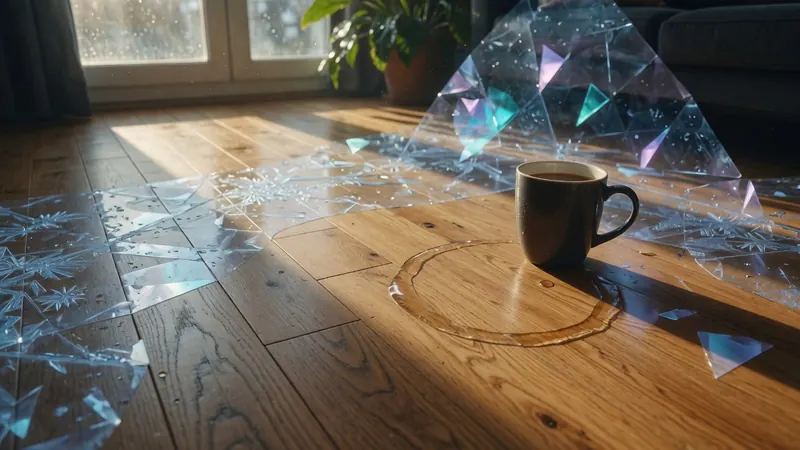
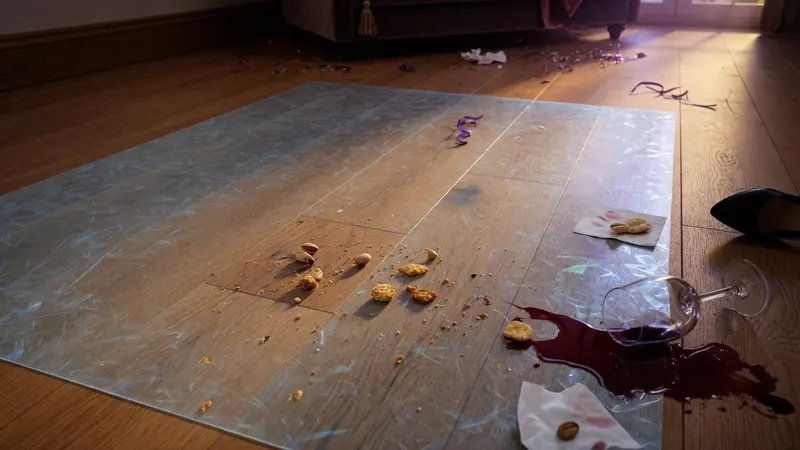
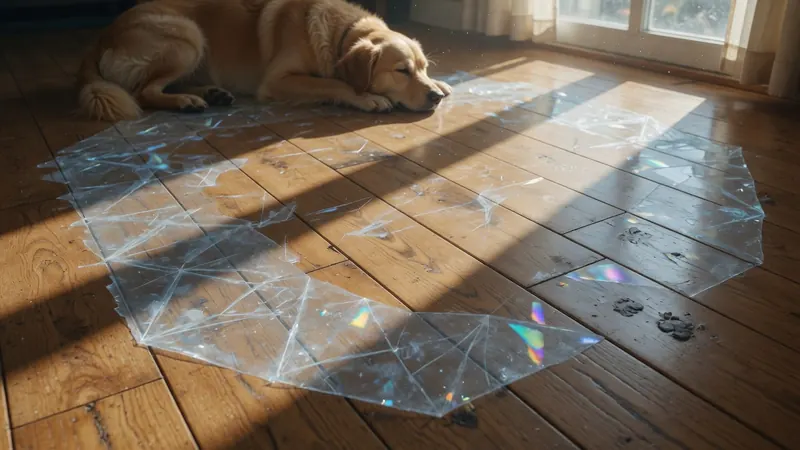
During a long Saturday move-in, two friends heaved a solid oak armchair across a new living room floor. The legs were wrapped in old towels, yet the weight and angle made the fabric slip. One leg dragged for three full feet before they corrected the lift. Anyone watching would expect a pale scar, maybe a cluster of thin lines etched into the surface. Instead the floor showed nothing at all. The chair settled into its corner, and the only sound was the soft thud of wood on wood. What actually prevented the damage stayed completely out of sight.
The Visible Problem Furniture Creates Over Time
Furniture legs are blunt tools that repeat the same motion hundreds of times a year. A dining chair pulled out for every meal grinds a small circle of pressure into the same spot. An office chair on casters rolls back and forth across a ten-foot path. Over months the surface develops haze first, then shallow grooves that catch light at certain angles. In a home with kids or frequent guests these marks multiply faster. The eye notices them during cleaning or when sunlight hits the floor at dawn. Once visible, the damage feels permanent because the surface itself has been altered. What actually happens when the same chair leg travels the same six inches every evening for three hundred nights? The finish loses its ability to reflect light evenly long before any wood fiber tears.
If you've got a dog and a toddler under five, here's what actually matters: the daily traffic patterns are set by furniture, not by paws or shoes. The chair that slides out for breakfast will keep sliding whether anyone notices or not.
What the Surface Actually Experiences
Wood hardness decreases as moisture content rises, so a humid week softens the very top cells of the board. A dry week makes them brittle. When a chair leg presses down during either condition, the force transfers straight into those cells. Microscopic ridges on the metal or wood leg act like fine sandpaper. Over repeated passes the ridges shave away the original finish and begin to cut the wood fibers themselves. The result is not dramatic gouging but a slow loss of the smooth plane that once reflected light evenly. On one job I watched a new maple floor develop a dull halo around every table leg after only eight months because the humidity swung wildly between seasons and no one had thought to change the felt pads when they flattened.
The Invisible Mechanism at Work
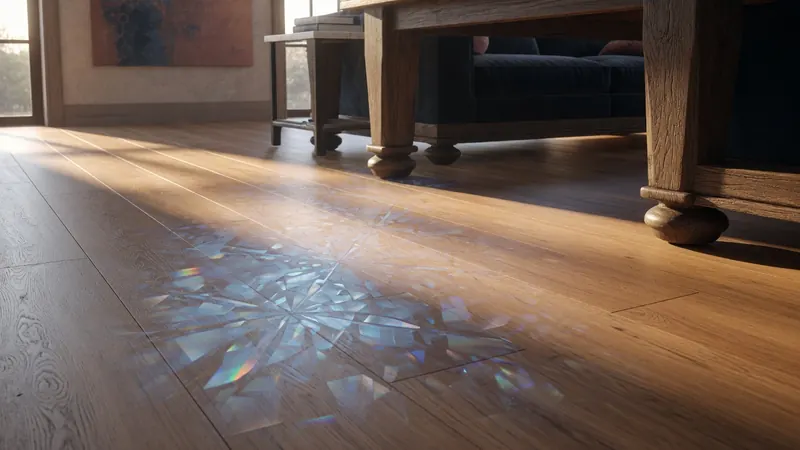
Adamantine applies a cross-linked polymer layer that sits as the outermost surface. This wear layer is formulated so that polymer chains bond tightly during curing, creating a network that resists point loads better than the wood beneath. When the chair leg drags, the force spreads across many linked molecules instead of concentrating on a single spot. The wear layer absorbs the abrasion while the wood stays untouched. That same cross-linked polymer layer also contains slip additives that lower the coefficient of friction, so the leg is less likely to bite in the first place. The wear layer flexes just enough to ride over small debris instead of grinding it in.
Here's what's actually happening at the molecular level while you're just living your life. During a hot, dry week the wood contracts slightly and the finish must stretch with it. The cross-linked polymer layer has enough elasticity to follow without cracking. In a humid month the wood swells; the same layer compresses without buckling. The protection flexes in step with the substrate rather than fighting it. That's the wear layer doing its job. Quietly.
Guardian's Test: How Abrasion Testing Mirrors Real Life
ASTM D4060 uses a Taber abrader to spin weighted wheels across a finish sample for a set number of cycles. The test does not condition samples for humidity, yet it still reveals how quickly a finish loses thickness. A good wear layer loses only a few microns after thousands of cycles. In a living room the same loss would take years of chair movement. The lab number therefore gives a reliable comparison between finishes even if it cannot duplicate every home condition. The takeaway is simple: choose the wear layer that posts the lowest wear index, then protect it with basic habits rather than expecting miracles. On site I have seen finishes that passed the lab test still haze after two winters because the installer skipped the final maintenance coat.
Real-World Stress Tests
The Rental Property Between Tenants
A two-bedroom apartment turned over four times in three years. Each new tenant rearranged the living room furniture within the first week. After the fourth turnover the landlord expected to see the usual web of chair tracks around the dining area and deep scuffs where the sofa had been pivoted. Instead the oak floors still read as freshly finished under the afternoon light. The previous owner had applied two coats of Adamantine the summer before the first tenant arrived. Between moves the only maintenance was occasional sweeping and one round of felt-pad replacement. The cross-linked polymer layer had taken every slide and drop without transmitting damage to the wood. The landlord noted that the unit showed faster and for more money than comparable apartments in the same building. What the tenants never saw was the thin, tough film that had absorbed years of careless movement. One afternoon I helped the owner carry a heavy credenza across the room; the legs left no trace even though the fabric slipped twice.
The Busy Kitchen With Daily Chair Traffic
A family of six eats three meals at a long farmhouse table. The chairs are solid maple with metal glides that were never perfectly level. Every breakfast and dinner produces a short scrape as someone pushes back. After two years the finish in that zone remained uniform in color and gloss. A small test patch done with the original stain on scrap wood showed noticeable lightening and micro-grooves where the same chair legs had been dragged across an unprotected sample. In the actual kitchen the wear layer had prevented both the color shift and the fiber tear. The homeowner added wide-area rugs only for the winter months when boots tracked salt; the rest of the year the floor relied on the finish alone. The difference showed most clearly when sunlight crossed the room at dinner: the protected area still threw back a clean reflection while the test scrap looked dull. Field notes from similar kitchens show that the same setup without the cross-linked polymer layer required spot refinishing after fourteen months.
The Sunroom Office That Rearranges Monthly
A freelance designer keeps a standing desk, two filing cabinets, and a drafting table in a south-facing sunroom. Every few weeks the layout changes to follow a new project. The furniture is heavy and the casters are hard plastic. After eighteen months the cork tile floor showed no clouding or edge chipping around the most-used paths. The designer had chosen Adamantine because an earlier water-based finish had begun to haze within a single summer of UV exposure. The current UV-stable topcoat kept both color and clarity even though the room temperature swings twenty degrees between morning and evening. One field note from the installer: the same cork in a north-facing room without the UV-stable topcoat developed a yellow cast along the window wall within the same timeframe. The sunroom floor simply continued to look like new cork. The wear layer also resisted the fine grit that blew in through the open door every afternoon.
The Contractor's Workshop Floor During Renovation
During a three-week kitchen remodel the crew rolled heavy tool chests and sawhorses across the adjacent dining room every morning. The oak planks had received Adamantine only six months earlier. At the end of the job the floor showed nothing more than a few faint caster tracks that disappeared after a single damp mop. The cross-linked polymer layer had taken the weight of the equipment and the occasional dropped screw without letting any mark reach the wood. In the same house an untreated hallway floor used as a staging area developed shallow dents and white rings within days. The difference came down to that single invisible film absorbing the abuse while the wood below stayed unmarked.
Practical Steps That Extend the Guardian's Life
- Check felt pads monthly; replace any that have flattened or picked up grit.
- Use furniture risers or dollies for pieces over 150 pounds rather than dragging.
- Place a low-pile mat under rolling chairs in high-use zones.
- Avoid vinegar-based cleaners that can soften certain polymer films over time.
- Reapply a maintenance coat only when the surface begins to lose its original sheen under direct light.
One lesson learned from callbacks is that floors still looking fine at year ten almost always had their pads changed on schedule and never had furniture moved across them dry. The finish does the heavy work, but it performs longest when small habits remove the worst abrasives first.
A Trend That Changes the Stakes
More households now treat the living room as both workspace and dining area. Desks roll to the window for video calls, then slide back against the wall for evening meals. That constant rearrangement multiplies the number of contact events any single square foot experiences. The old assumption that furniture stays in one place for years no longer holds. A wear layer that once seemed excessive now sits at the center of keeping an open-plan floor presentable without constant refinishing. Homeowners who work from home report noticing new scuff patterns within weeks rather than years.
One Finish Choice That Taught Humility
Early in my work I once recommended a high-build conversion varnish for a client's new white-oak library because the lab data looked strong. Two years later the surface showed fine checking along the heaviest traffic lanes even though the film thickness was generous. The varnish had cured hard but lacked the slight flexibility the oak needed when seasonal movement occurred. The cross-linked polymer layer in Adamantine handles the same movement with less film build because the polymer network itself gives a little. That project changed how I evaluate data sheets: numbers matter, yet real-world flex and recovery matter more.
The Floor Five Years From Now
Picture the same living room at the end of a decade. The armchair still sits in its corner. The dining table has hosted hundreds of meals and three different sets of guests. Sunlight has crossed the floor every clear afternoon. When you walk through at the end of a long day the surface still reads as smooth and even underfoot. No pale tracks lead from the doorway. No haze gathers around the sofa legs. The only thing you notice is the quiet fact that nothing needs fixing. What actually happened in the six months after the movers left was that the wear layer kept absorbing the small daily insults so the wood never had to. How will your floor look when the next set of movers arrives? The peace of mind is simply that you stopped watching the floor for new damage. If the finish is still doing its job, you can focus on the life happening on top of it instead.
See what's protecting your floor today.