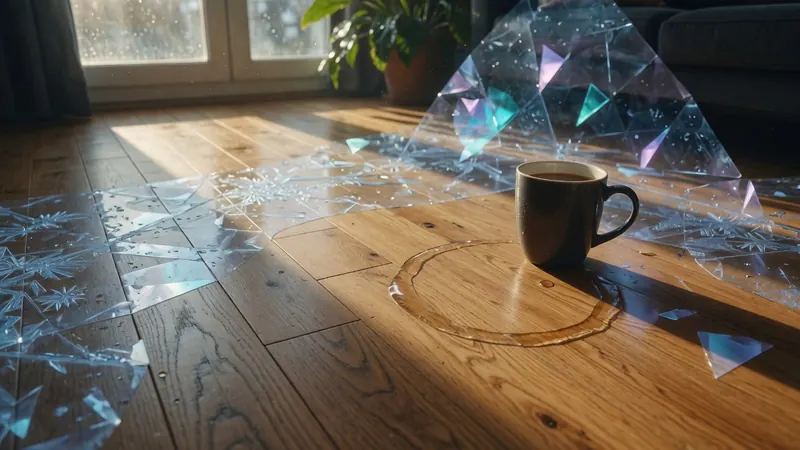
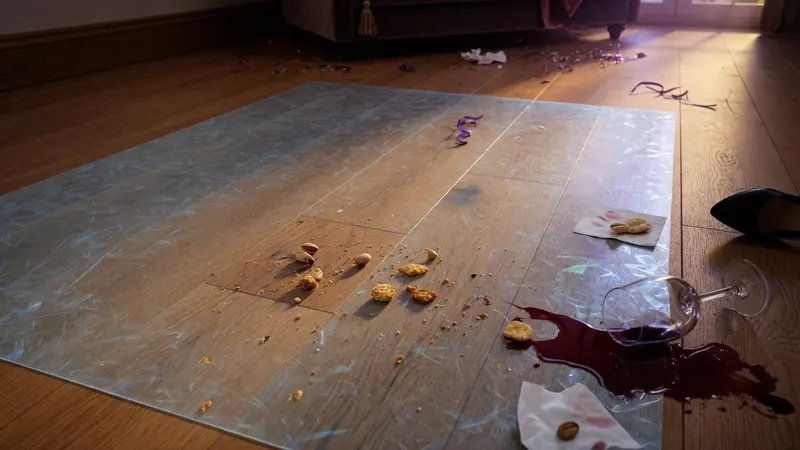
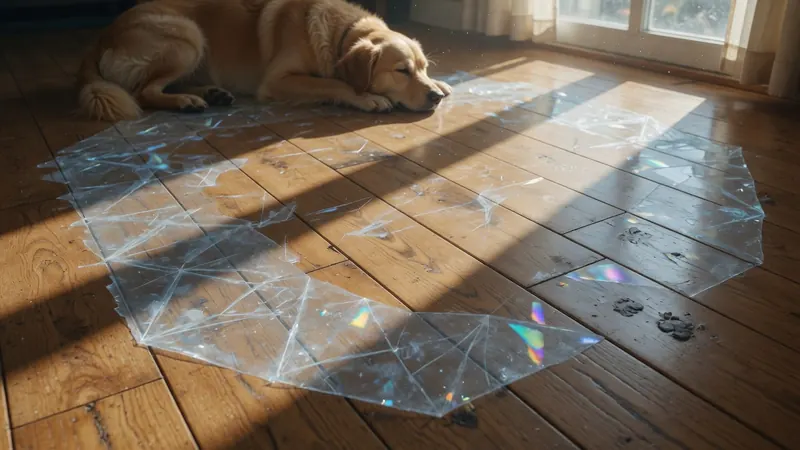
You walk into the kitchen carrying coffee and notice the new puppy's first zoom across the floor. Tiny claws click and skid on the fresh finish, leaving barely visible trails that catch the light. The question hangs there: will this surface still look calm five years from now when the same dog is grown and the toddler has started school? What actually happens in the six months after the movers leave?
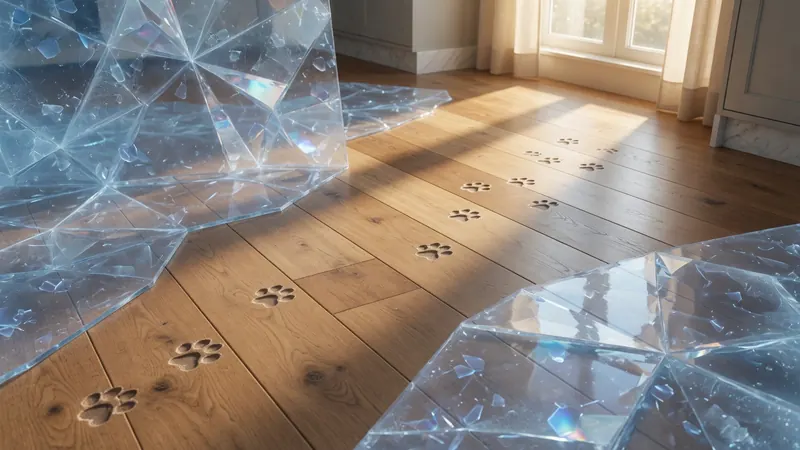
If you've got a dog and a toddler under five, here's what actually matters. The visible finish is only the outermost shield. Beneath it sits the true defense that decides whether scuffs turn into permanent haze or simply disappear with a wipe.
Visible Wear Tells Only Half the Story
Gloss finishes reflect light sharply, so every micro-abrasion shows up as a dull spot within months. Matte finishes scatter light instead, hiding the same marks until they grow deeper. Yet both outcomes depend on what lies underneath the color. A wear layer that has been properly cross-linked will resist the daily grind far longer than one that has not.
Field observation one: after two years in a south-facing sunroom, a gloss floor showed clouding along the traffic path where afternoon sun heated the surface. The matte floor three feet away, installed the same week with the same cross-linked polymer layer, still looked uniform. The difference was not the sheen. It was the chemistry holding the sheen in place.
Another day on a callback, I watched a homeowner run a fingernail across a high-traffic hallway. The gloss version picked up every ridge from chair legs, turning the path into a map of daily life. The matte version in the next room showed nothing until you knelt close with a flashlight. That contrast comes from how light interacts with the top surface, not from any difference in the underlying protection.
The Invisible Mechanism That Actually Works
When foot traffic presses down, the cross-linked polymer layer stretches and rebounds instead of cracking. UV rays try to break molecular bonds; a UV-stable topcoat absorbs or reflects those rays before they reach the wood. Spills sit on the surface because the wear layer has fewer microscopic pores for liquid to enter. That's the wear layer doing its job. Quietly.
One invisible-made-visible moment occurs during a hot, dry week versus a humid month. In low humidity the wood contracts slightly and the finish must flex without delaminating. In high humidity the wood swells and the same finish must not wrinkle or delaminate. A well-formulated cross-linked polymer layer handles both shifts because the cross-links create a flexible yet tough network. You never see this adjustment happening, yet it is the reason the floor does not haze after the first summer.
Wood itself softens when moisture rises, so the finish has to accommodate that movement without losing adhesion. The cross-linked polymer layer acts like a thin, elastic skin that moves with the boards instead of fighting them. In one home I visited after a humid spring, the gloss finish on oak had developed hairline cracks along the grain where the wood had expanded. The matte floor in the hallway, protected by an identical cross-linked polymer layer, stayed smooth because the chemistry allowed for that give.
Guardian's Test: Understanding the Taber Abrasion Result
ASTM D4060 measures how many cycles a finish survives under a rotating abrasive wheel before noticeable wear appears. The test does not condition for household humidity swings or pet claws, yet it still reveals useful data. Finishes that reach higher cycle counts before breakthrough tend to contain denser cross-linked polymer layer networks. The number itself is not a guarantee, but it helps separate products that merely look durable from those built to stay durable.
Real numbers from manufacturer sheets show some matte systems lasting 30 percent longer under the wheel than their gloss counterparts when the wear layer formulation stays the same. That gap comes from how the matting agents sit within the polymer matrix, not from any magic in the sheen itself.
Real-World Stress Tests
Rental Property Between Tenants
Between tenants the floor sees furniture dragged, cleaning crews rushing, and sometimes pets left unsupervised for hours. In one three-unit building the same contractor used matte finish on two units and gloss on the third. After four turnovers the matte units showed only light scuffing that refinished easily. The gloss unit required full sanding in the living areas because the reflective surface had turned hazy where rolling chairs had spun. The wear layer in all three was identical, yet the matte version masked damage long enough for the owner to schedule maintenance on his own timeline rather than an emergency basis.
The lesson learned from that job was simple: durability is measured not only by resistance but by how much visible damage can be tolerated before repair becomes urgent. Matte finishes buy time. Gloss finishes demand attention sooner. In another rental, a family with three large dogs moved out after two years. The matte kitchen floor had absorbed claw marks and dropped food without showing much until you looked under the cabinets with a light. The gloss version in the dining area had dulled into a cloudy path that tenants noticed immediately during showings, forcing the owner to rush a full recoat before the next lease.
Busy Family Kitchen
Breakfast spills, dropped utensils, and constant foot traffic define this room. One homeowner reported that after eighteen months the original gloss finish had developed a ring where a cast-iron skillet had rested hot. The matte kitchen down the street, protected by the same brand's UV-stable topcoat, showed only a faint shadow that disappeared with a mild cleaner. Neither finish prevented the heat mark entirely, yet the matte surface absorbed the incident without permanent discoloration because its light-scattering quality reduced contrast. The cross-linked polymer layer beneath both finishes remained intact, proving the protection was working even when the top surface showed temporary evidence of stress.
Professional humility enters here. Early in my career I assumed gloss always delivered superior wear numbers. After seeing multiple kitchens like this one, I now recognize that sheen level affects perceived durability more than actual surface protection when the underlying wear layer chemistry is equal. In a third kitchen with daily toddler spills, the matte finish kept its even appearance while the gloss version collected a permanent film of dried milk residue that only appeared under certain angles of light.
Sun-Drenched Living Room
South-facing windows turn floors into solar collectors. Over five years the gloss floor in one living room developed a noticeable fade line where direct light hit for four hours daily. The matte floor in the adjacent room, finished at the same time with the same UV-stable topcoat, retained even tone. The cross-linked polymer layer in both cases slowed oxidation, but the matte version simply revealed less change because it did not rely on surface reflection to appear bright. The homeowner noticed the difference only when comparing the two rooms side by side after the family dog had tracked in sand for an entire summer.
That same living room saw a weekend of heavy furniture moving during a family reunion. The gloss areas picked up fine scratches that caught the afternoon sun like tiny mirrors. The matte sections stayed calm because the scattered light hid the new marks until they deepened. The wear layer kept the wood itself safe in both cases, but the visual experience diverged sharply based on sheen.
Contractor Renovation Site
During a whole-house remodel, workers tracked drywall dust and tool bags across newly finished floors for three weeks. The gloss entryway developed a hazy film that required extra buffing to remove. The matte hallway next to it looked untouched because the light-scattering surface made the fine powder blend in until a damp mop passed over it. The cross-linked polymer layer protected both from actual abrasion, yet the matte version let the crew finish their work without constant worry about visible damage.
One more field note from that site: after the project ended, the homeowner hosted a housewarming party with fifty guests. The matte dining room showed only faint chair marks the next morning. The gloss living room needed a full cleaning session to restore its shine. Both floors kept their structural integrity thanks to the same wear layer, but the matte choice gave the owner breathing room during the busy period.
Matte or Gloss: Practical Tradeoffs
Neither finish is magic. Gloss shows every scratch yet wipes clean easily and can be spot-repaired without redoing an entire room. Matte hides marks but can collect more dust in low-traffic areas and sometimes requires more careful cleaning to avoid streaking. The deciding factor remains the quality of the cross-linked polymer layer and the UV-stable topcoat that carries the sheen. Choose based on how much visible maintenance you want to perform, not on marketing claims about toughness.
- Place felt pads on all furniture legs and replace them when they compress.
- Use entry mats at every exterior door and shake them out weekly.
- Avoid vinegar-based cleaners; they can etch the wear layer over time.
- Schedule a maintenance coat every five to seven years in high-traffic zones rather than waiting for visible failure.
- Check under rugs every few months because trapped moisture can soften the cross-linked polymer layer if left unchecked.
One Lesson That Changed How I Specify Finishes
The floors that still look presentable at year ten are rarely the ones with the highest initial gloss. They are the ones where the installer paid attention to the cross-linked polymer layer thickness and the homeowner maintained simple habits. Rising interest in pet-friendly homes has made this distinction more important than ever. Families want floors that survive without constant worry, and the quiet performance of a properly formulated wear layer delivers that result more reliably than surface sheen alone.
In one recent callback, a ten-year-old floor with a quality matte system still looked even after two dogs and daily remote work traffic. The gloss floor across the street from the same era had required two maintenance coats because every scuff showed. The difference traced back to how the UV-stable topcoat held its integrity under real household conditions rather than lab numbers alone.
Five Years From Now
Picture the same kitchen, the same dog now gray around the muzzle, and the same toddler now tall enough to reach the top shelf. The floor still looks calm because the cross-linked polymer layer absorbed the years of traffic, the occasional spills, and the sunlight without ever calling attention to itself. The hook from that first morning with the puppy resolved not through dramatic rescue but through steady, unseen work. You never had to think about the finish until the day you realized it was still doing its job.
The best protection is the kind you forget is there. If your current floor is starting to show its age, take a quiet walk across it at different times of day and notice where light reveals or hides wear. That simple check tells you whether the guardian layer is still earning its keep. See what's protecting your floor today.