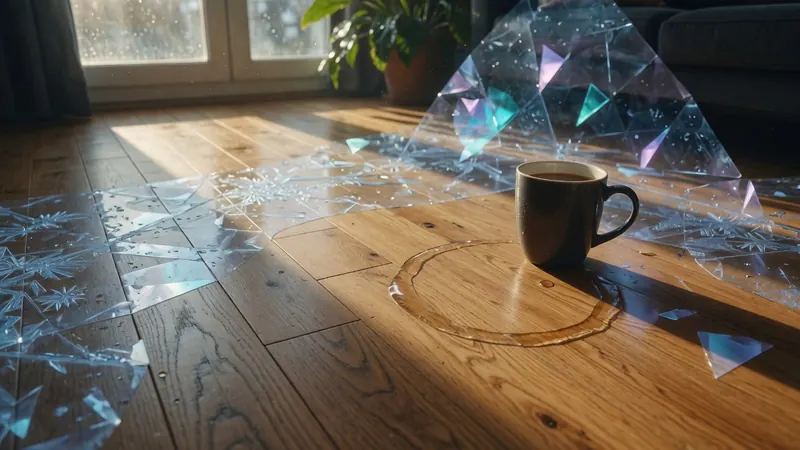
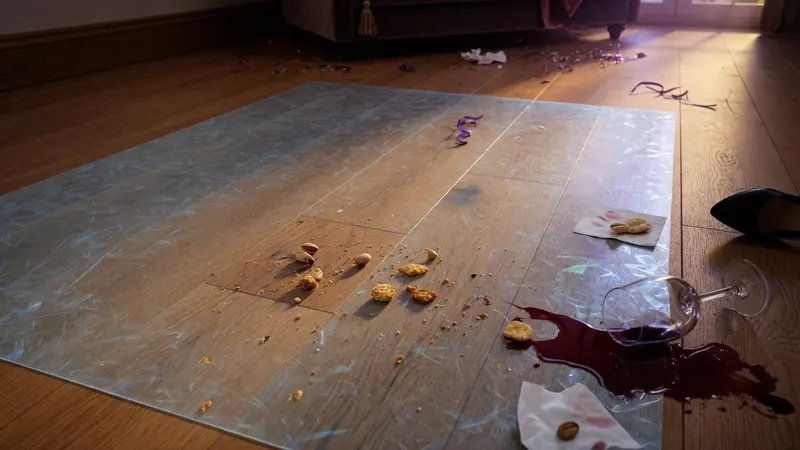
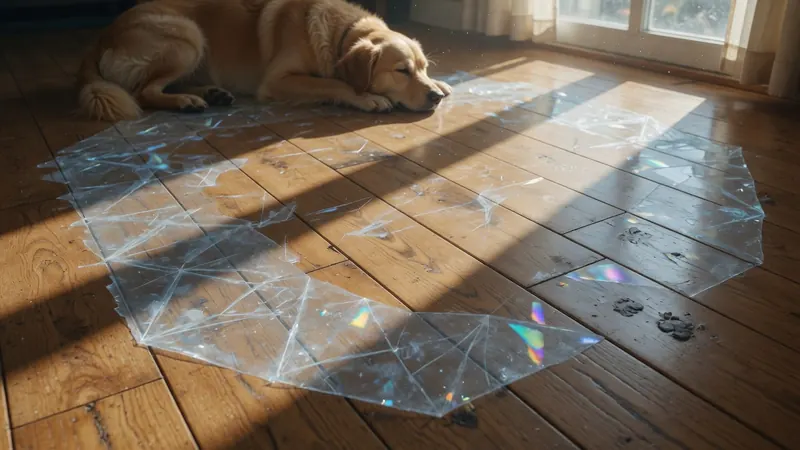
You stand in the doorway after the last box is carried in, watching the new floor gleam under afternoon light. The truck has pulled away and the house feels settled, yet a quiet question lingers: what actually happens in the six months after the movers leave? Furniture legs will drag, shoes will track grit, and a dog will skid across the boards during the first thunderstorm. If you've got a dog and a toddler under five, here's what actually matters when the everyday starts.
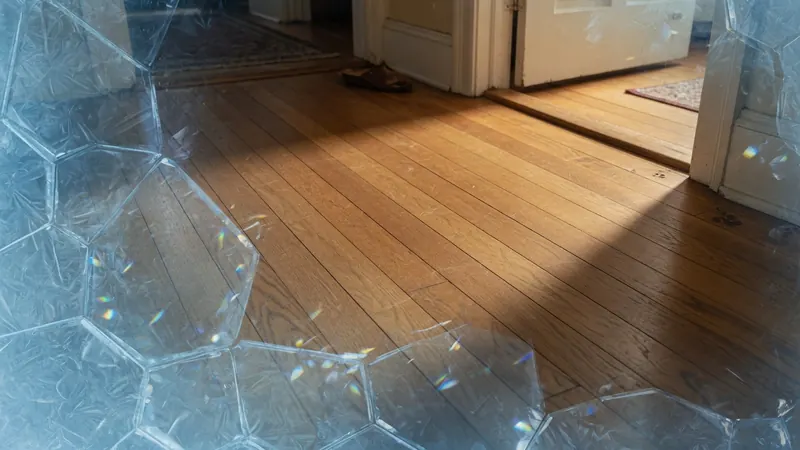
Most floors do not fail from one dramatic event. They wear from the slow accumulation of small contacts that never seem important at the time. A chair pulled back during dinner, a toy car rolled across the hall, sunlight shifting across the same patch of floor day after day. The visible surface begins to show haze or fine scratches long before anyone notices the deeper change underneath.
The Quiet Erosion of Everyday Life
Walk through any home that is five years old and you can read its story on the floor. In one rental property I visited last spring, the living room finish had turned cloudy near the sofa where tenants had hosted weekly game nights. The scuffs were shallow, but the light no longer reflected evenly. That haze told me the wear layer had been abraded just enough to scatter light differently. The boards themselves remained sound, yet the surface no longer looked new.
Another home, this one a busy kitchen in a growing family, showed different patterns. Spills from juice and coffee had been wiped quickly, but the constant traffic from the back door carried in fine sand that acted like low-grade sandpaper. After three years the finish near the threshold felt slightly rough under a fingertip. The owner had assumed daily sweeping would be enough, yet the wear layer still took the brunt of those microscopic particles. What actually happens in the six months after the movers leave is rarely sudden failure; it is this gradual dulling that sets the tone for the next decade.
During a hot, dry week the finish contracts ever so slightly, tightening around any trapped grit and turning ordinary foot traffic into a slow polishing action. In a humid month the same film can swell just enough to trap moisture at the surface, softening the outer skin until a single dragged chair leaves a wider mark. That shift between seasons is something most homeowners never notice until the floor begins to look tired, but it explains why some finishes hold up while others do not.
The Invisible Shield at Work
What sits between those daily contacts and the wood itself is a thin but engineered film. When properly applied, the cross-linked polymer layer forms a network that resists penetration from liquids and resists the micro-tears that come from grit. The same outermost film — a UV-stable topcoat — absorbs the daily dose of sunlight that would otherwise fade the color beneath. That surface can absorb impacts without passing every scratch down to the wood.
That protection is never absolute. A dropped knife or a chair leg dragged without pads will still mark the finish. The difference is that the damage stays on the surface instead of reaching the wood. The floor remains repairable rather than requiring full replacement. That distinction grows more valuable each year a home is lived in.
The wear layer works by distributing force across its thickness rather than allowing it to concentrate at one point. When a heel strikes or a toy rolls, the energy spreads sideways instead of punching through. This is why the same floor that looks untouched after five years can still look serviceable after twenty. The chemistry does not prevent every mark; it simply keeps those marks from becoming permanent wounds in the wood.
Guardian's Test: Understanding Cross-Linking
Picture two strands of cooked spaghetti lying side by side on a plate. When they are separate they slide apart easily. Now imagine the strands chemically joined at many points along their length. They become one stronger structure that holds its shape even when tugged. That joining is what cross-linking does inside a finish. The molecules lock together during curing, turning a soft film into a tougher barrier that holds up longer under foot traffic and cleaning. While you are simply living your life, those bonds are quietly distributing the force of each step so the wood never feels the full impact.
Real-World Stress Tests from Actual Homes
A Rental Property Between Tenants
Between tenants the turnover crew usually has two days to make a unit presentable. In one property I checked after four such cycles, the finish still looked uniform because the wear layer had been thick enough from the start to survive repeated cleanings and light furniture moves. The previous tenants had a large dog, yet the boards showed no deep gouges. The cross-linked polymer layer had taken the scratches and kept them shallow enough that a light screen and recoat brought the surface back to even. The owner avoided sanding because the wood itself had never been exposed. That outcome is common when the initial film is built to last rather than merely to look good on installation day. Over seven years the same unit saw three different dogs and two sets of young children, yet each turnover required only surface maintenance. The finish absorbed the cumulative traffic of dozens of move-ins without ever letting damage reach the boards. What impressed me most was how the UV-stable topcoat had kept the color consistent even though the windows faced west and let in strong afternoon light. The owner later told me the property rented faster because prospective tenants commented on how new the floors still looked. That kind of performance does not come from luck; it comes from choosing a system that builds margin into every layer.
A Busy Kitchen with Daily Spills
In a family kitchen I revisited after seven years, the finish near the sink still resisted water rings. The owners kept a mat by the back door and wiped spills the same evening they happened, yet the real safeguard was the cross-linked polymer layer that had kept the film from softening into extra surface marks during those humidity swings. Without that layer the finish would have shown more abrasion when the air dried. The wood hardness decreases as moisture content rises, but the surface film kept those fluctuations from showing as extra haze and scratches. The floor looked tired in places, yet it had never required more than a maintenance coat. The family hosted holiday gatherings twice a year, and the constant movement of chairs and serving carts never produced more than shallow marks that buffed out during the next recoat. Even the area under the high chair, where juice and cereal had landed daily, remained smooth to the touch. The owners credited their cleaning habits, but the cross-linked polymer layer had done the heavier lifting by refusing to let those repeated contacts become permanent stains or texture changes. After a decade the kitchen still looked presentable without ever needing a full sand.
A Sunroom with Constant Light
A sunroom floor I examined last winter had faced south-facing glass for nine years. The color on the boards remained consistent because the UV-stable topcoat had blocked the wavelengths that normally bleach wood. Where the rug had been moved seasonally, the exposed areas matched the covered ones. The wear layer had also handled the temperature swings that cause expansion and contraction. Without it the finish would have developed fine cracks that collect dust and make the surface look older than it was. The owners had simply enjoyed the room and forgotten the floor was working. Morning sun streamed across the boards for hours each day, yet the finish never developed the chalky haze common in unprotected sunrooms. The family kept plants on wheeled stands that rolled back and forth, and the constant movement never produced more than faint tracks that disappeared after a light polish. What stood out was how the same cross-linked polymer layer that resisted abrasion stayed continuous through those temperature swings. The finish stayed intact even though the room was unheated in winter and overheated in summer; the boards staying dimensionally stable was the floor's construction, not the film.
A Contractor Visit During Renovation
During a kitchen remodel I returned to a home where the living room floor had served as the main pathway for workers carrying tools and materials for six weeks. The finish showed scuffs from boots and small dings from dropped hardware, but none of them reached the wood. The wear layer had taken every impact and kept the damage cosmetic. After the project the owners simply screened and recoated the surface rather than sanding down to bare boards. That single decision saved them thousands of dollars and weeks of disruption. The cross-linked polymer layer had flexed under the weight of ladders and tool chests without cracking, something a thinner or less cured finish might not have managed. The family later hosted a large gathering in the same room, and no one could tell the floor had spent weeks as a construction corridor. That resilience under real abuse is what separates a finish chosen for appearance from one chosen for longevity.
Habits That Actually Extend Finish Life
Even strong finishes benefit from simple routines. Keep felt pads under every piece of furniture and replace them when they flatten. Sweep or vacuum before grit has a chance to grind. Place mats at entry points that actually get used. These steps do not replace the wear layer, but they reduce how often it must prove itself.
- Check furniture pads every six months and replace any that have worn smooth.
- Wipe spills the same day rather than letting them sit overnight.
- Use a doormat that traps sand and change it when it becomes saturated.
- Avoid steam mops on film finishes unless the manufacturer specifically approves them.
- Rotate area rugs seasonally in high-sun rooms so no single patch of finish takes the full UV load year after year.
One Lesson Learned Over Many Callbacks
Early in my career I once specified a thinner topcoat on a new installation because the client wanted a more natural appearance. Two years later the same floor showed wear patterns in the high-traffic paths that a thicker wear layer would have prevented. The lesson was simple: appearance at installation day is less important than the margin of protection that remains after five or ten years of real use. That understanding changed how I recommend finishes today. Over the decades I have seen floors that looked flawless at year one fail by year eight because the protective film was never given enough thickness to absorb the slow accumulation of daily life. The finishes that reach twenty or thirty years without major intervention all share the same trait: they were built with extra depth in the layers that homeowners never see.
Looking Ahead to Your Own Floor
What will your floor look like after the next decade of holidays, pets, and ordinary mornings? The answer depends less on dramatic events and more on whether an unseen cross-linked polymer layer and UV-stable topcoat were present from the beginning. The best protection is the kind you stop noticing because nothing dramatic ever reaches the wood. When you walk across a floor that still looks even after years of use, you are seeing the result of that quiet work.
ASTM D4060 testing measures exactly this kind of abrasion resistance under controlled conditions, and real homes add variables like temperature swings and daily cleaning that the lab cannot fully replicate. The finishes that perform best in both settings share the same trait: they keep damage at the surface. If your current finish is starting to haze or feel rough in places, now is the time to find out if the wear layer is still doing its job. That's the wear layer doing its job. Quietly. The peace of mind that comes from knowing your floor can handle another twenty or thirty years is the part no one photographs, yet it is the part that lasts longest. Picture your own floor a decade from now, still catching the light evenly after countless meals, storms, and ordinary days. That future is not guaranteed by any single product, but it becomes far more likely when the invisible guardian has been there from the start.