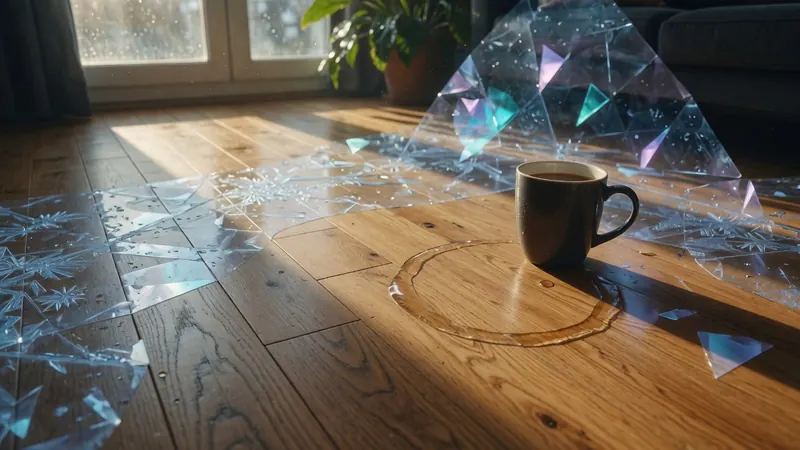
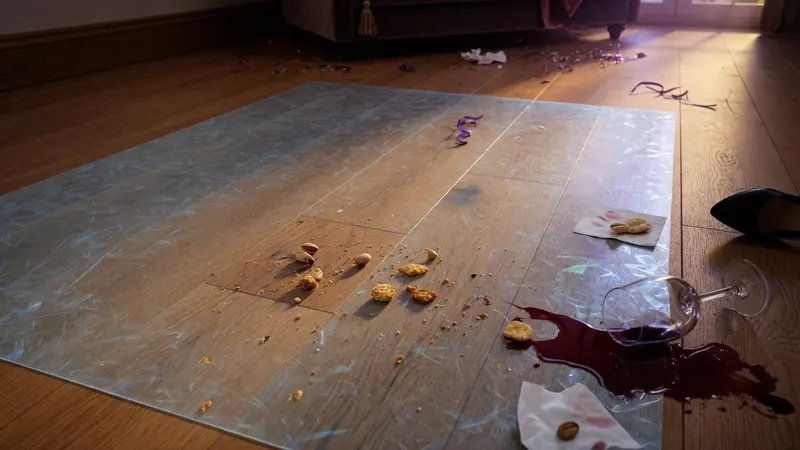
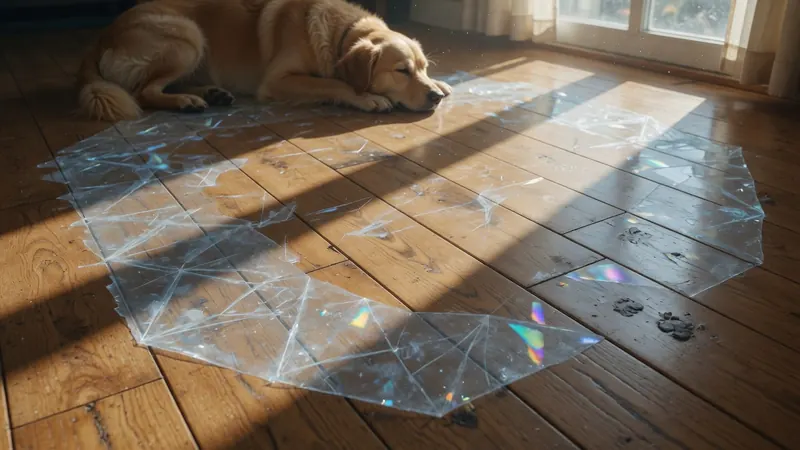
You come home to a kitchen floor dotted with paw prints and a half-spilled bowl of tomato sauce from the counter. The sauce has pooled near the transition to the living room where the engineered hardwood meets the solid oak in the hallway. Five years earlier the floors went in during a rushed reno, and now the question surfaces again: does the finish on engineered boards hold its own against the solid ones when real life shows up?
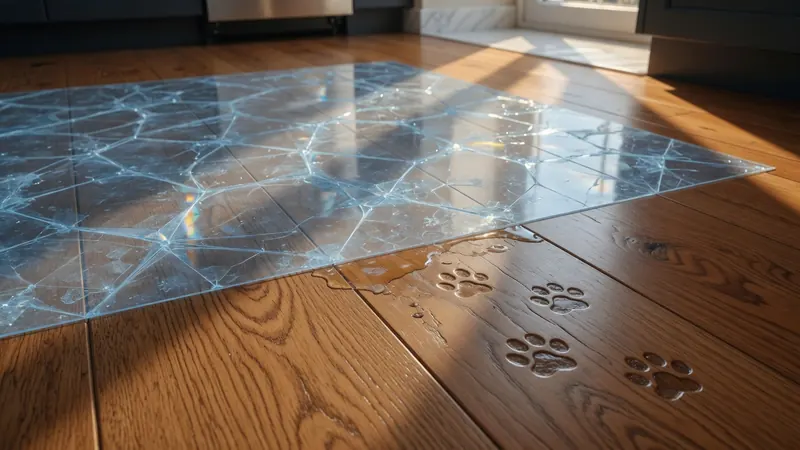
What actually happens in the six months after the movers leave? The sauce sits for twenty minutes before cleanup. On the engineered section a faint haze forms at the edge. On the solid boards the mark wipes clean. Both received the same topcoat at installation, yet the outcomes differ because the underlying construction influences how the finish bonds and flexes over time.
Visible Problems That Appear First
Scuffs from chair legs and sun-bleaching along south-facing windows show up first on any floor. In homes with pets the claw marks cluster near doors and feeding stations. A busy kitchen adds dropped utensils and rolling carts. These marks sit on the surface layer only. They never reach the wood itself unless the finish has already worn through.
If you've got a dog and a toddler under five, here's what actually matters: the finish must absorb the daily hits without telegraphing them into the wood grain. Engineered boards expand and contract less than solid ones, so the finish experiences steadier stress. Solid boards move more with humidity swings, which can create micro-flexing that eventually shows as hairline crazing in the topcoat. Rising interest in pet-friendly homes has made these differences more visible as owners track how finishes hold up under constant claw traffic and occasional accidents.
During a hot dry week the wood itself loses moisture and its hardness decreases, making the surface slightly more prone to micro-scratches even before any finish wears. That change stays invisible until the next spill lands and the film stretches differently than it did in cooler months. In one home the owners noticed the engineered section stayed flatter while the solid boards developed tiny ridges along the grain after repeated dry spells.
The Invisible Mechanism at Work
The cross-linked polymer layer forms the actual barrier. During curing the molecules link tightly, creating a film that resists abrasion from foot traffic and resists staining from spills. This cross-linked polymer layer sits only on the surface; it never alters the core moisture behavior of the boards beneath.
That's the wear layer doing its job. Quietly. Over five years in a sunroom the UV-stable topcoat keeps color shift minimal on both engineered and solid floors, yet the solid boards still show slightly more edge lifting where seasonal expansion stressed the film. The UV-stable topcoat handles the light; the construction of the floor handles the movement.
The cross-linked polymer layer also distributes force from rolling objects so that a single point of pressure does not cut straight through to the wood. In field observations after two years the same wear layer on engineered boards retained uniform gloss because the stable core kept the film from flexing unevenly. On solid boards the same wear layer sometimes showed faint dull bands where repeated expansion had worked the polymer just enough to scatter light. Another observation from a callback showed that when humidity spiked the solid floor's micro-movement pulled the cross-linked polymer layer just enough to create haze at the joints while the engineered side stayed clear.
Guardian's Test: The Taber Abrasion Reality
Here's what's actually happening at the molecular level while you're just living your life. ASTM D4060 runs a Taber abrader with weighted wheels across sample finishes for set cycles. No humidity conditioning occurs during the test. The numbers report how many cycles pass before the film thins noticeably. A good wear layer survives thousands of cycles because the cross-links distribute the force rather than letting it cut through. That laboratory result translates to fewer visible scratches after two years of daily walking, but it never predicts what happens when a humid month makes the wood swell and the film stretches.
One credible reference comes from manufacturer abrasion data aligned with ASTM D4060 protocols, confirming that cross-linked films outperform non-cross-linked urethanes by wide margins in controlled cycles. Yet those same reports note the test ignores real-home movement, which is why field callbacks often trace to construction rather than the chemistry itself. In practice the cross-linked polymer layer on engineered floors lasts longer between recoats because the substrate gives it fewer opportunities to stretch and fatigue.
How Seasonal Shifts Stress the Finish
During a humid month the wood takes on moisture and swells slightly. The cross-linked polymer layer must stretch with it. When the air dries the boards contract and the film relaxes again. Over many cycles this repeated flexing can create micro-cracks that let light scatter and haze appear. Engineered boards with their stable plywood core experience smaller movements so the same UV-stable topcoat stays intact longer. Solid boards move more and the wear layer works harder to stay bonded. One field note from a coastal home showed the solid hallway needed an earlier maintenance coat after a particularly wet summer while the engineered kitchen remained uniform.
Real-World Stress Tests
Rental Property Between Tenants
Between tenants a rental with engineered hardwood in the main living area and solid oak in the bedrooms sees heavy foot traffic from movers and cleaning crews. After three turnovers the engineered section still shows only light scuffing near the entry. The solid oak bedrooms carry more visible wear along the baseboards where vacuum edges catch. The difference traces to how each floor was prepped before the same cross-linked polymer layer went down. The engineered boards accepted the finish more evenly because their stable core reduced telegraphing of any uneven sanding. Field observation: after the fourth turnover the landlord reported zero callbacks for finish repair on the engineered areas, while one solid bedroom needed spot sanding and recoat. The wear layer performed, yet the solid boards' movement created the extra stress point. Over time the UV-stable topcoat on the engineered sections retained its original sheen even under constant vacuuming because the plywood core limited seasonal cupping that would otherwise stretch the film. In contrast the solid oak required extra attention at joints where micro-movement had begun to haze the cross-linked polymer layer. The landlord added area rugs after the third turnover and that simple step preserved the remaining finish life on both surfaces. Tenants also tracked pet accidents more closely on the engineered side because the finish showed less staining after quick wipes.
Busy Family Kitchen
A busy family kitchen with engineered hardwood throughout sees dropped knives, rolling high chairs, and daily spills from juice and coffee. After eighteen months the finish near the sink shows faint clouding where standing water sat too long before wiping. The same UV-stable topcoat on the adjacent dining area remains clear. Practical observation from the job: the homeowner began using felt pads on all chair legs and a runner mat at the sink after the first clouding appeared. Those simple habits let the cross-linked polymer layer continue protecting without further visible change. The kitchen floor still looks uniform at year four because the finish absorbed the hits and the homeowner adjusted cleaning habits rather than expecting the film to handle every spill alone. In one callback the same homeowner noted that steam mops had softened a small patch near the dishwasher, prompting a maintenance coat only there. The wear layer elsewhere stayed intact because daily sweeping removed grit that would otherwise act like sandpaper against the polymer. The family now keeps a small tray of pH-neutral cleaner and microfiber cloths under the sink, a habit that has kept the entire surface looking consistent for another two years. The engineered core helped the finish recover from minor flexing caused by the constant foot traffic of school-age kids.
Sunroom with South-Facing Windows
A sunroom addition used solid oak for its warmth underfoot while the connected hallway stayed engineered. After four summers the solid boards near the windows show slight fading at the edges despite the UV-stable topcoat. The engineered hallway remains even in tone. The difference comes from greater movement in the solid boards during hot, dry weeks when moisture content drops and hardness decreases. The finish film stretches and contracts with each cycle, eventually allowing minor UV penetration at the micro-cracks. One lesson learned from the field: choosing a finish with extra UV stabilizers helps, yet it cannot overcome the natural movement difference between the two constructions. The homeowner added light-filtering shades after year three and the fading stabilized. The cross-linked polymer layer on the engineered hallway never faced the same repeated stretch because the core stayed flatter, so the UV-stable topcoat continued to block light evenly. In that sunroom the solid boards required a light sanding and recoat at year five while the engineered section needed none, illustrating how construction choices affect long-term finish life even when the chemistry is identical. The family noted that the solid floor also showed more dust accumulation in the micro-texture created by the movement stress.
Home Office Under Remote-Work Traffic
A converted dining room turned home office features engineered hardwood under a standing desk and rolling chair while the adjacent hallway remains solid oak. After two years of daily eight-hour use the engineered section shows only faint wheel marks near the desk legs. The solid hallway carries more visible compression lines where the chair occasionally rolled across during meetings. The cross-linked polymer layer on the engineered boards stayed uniform because the stable core absorbed minor vibrations without flexing the film. On the solid boards the same wear layer developed slight dull spots where repeated pressure coincided with seasonal humidity changes. A field note from the install: the homeowner had placed a heavy chair mat only on the engineered side, which further reduced abrasion points. When the mat was later extended into the hallway the compression lines stopped progressing. The UV-stable topcoat on both areas held color because window treatments limited direct light, yet the engineered floor's dimensional stability gave the finish an easier task overall. The office also hosted occasional weekend gatherings that added extra foot traffic without visible change to the engineered finish.
Entryway During Moving Day
An entryway with engineered hardwood near the door and solid boards leading into the main rooms faced the chaos of a full household move. After the furniture and boxes cleared, the engineered section showed only light scuffing from dolly wheels while the solid boards carried deeper compression marks near the threshold. The same cross-linked polymer layer had been applied to both, yet the engineered core's stability kept the film from stretching under the concentrated weight. Field crews noted that quick placement of temporary runners during the move prevented further marking on both surfaces. The homeowner later observed that the UV-stable topcoat on the engineered side retained its clarity because the plywood layers limited any seasonal shift that could have widened the marks. Over the following year the entryway required no additional work on the engineered portion while the solid boards benefited from a light buff and recoat at the high-traffic junction. This scenario reinforced that even brief intense loads test the finish differently depending on the substrate beneath it.
Comparing Engineered and Solid Finish Performance
Engineered hardwood generally accepts finishes with more consistent film thickness because the plywood core stays flatter during sanding. Solid boards can cup slightly during install, leaving the wear layer thinner over high spots that then wear faster. Both benefit from the same cross-linked polymer layer, but the engineered floor's dimensional stability gives the finish a longer quiet life. Professional humility note: early in my career I recommended a high-build finish on solid oak in a vacation rental thinking extra thickness would compensate for movement. Within two seasons the film cracked along several joints. The lesson was that thickness alone cannot replace proper acclimation and movement accommodation. Over multiple jobs the pattern holds that the cross-linked polymer layer performs best when the substrate beneath it moves as little as possible. Homeowners who understand this difference often choose engineered for high-traffic zones and reserve solid boards for lower-movement rooms.
Practical Care That Extends Any Finish
Even strong finishes need help. Sweep or vacuum weekly to remove grit that acts like sandpaper. Wipe spills within minutes. Use pH-neutral cleaners only. Place mats at exterior doors and felt pads under furniture. These steps keep the wear layer intact longer on both engineered and solid floors.
- Check for haze or clouding near wet zones every six months
- Reapply a maintenance coat when traffic patterns show visible thinning
- Avoid steam mops that can soften the film over time
- Rotate area rugs seasonally to prevent uneven wear patterns
Peace of Mind Five Years Out
The tomato sauce spill from the opening moment left no lasting mark because the cross-linked polymer layer and quick cleanup worked together. Five years later the floor still looks even because the homeowner understood that protection is surface-only and that daily habits matter. Picture your own floor a decade from now: the same boards, the same light, and no visible reminders of the spills, claws, or moving days that passed across it. That quiet surface is what the hidden guardian delivers when the chemistry and the care align.
See what's protecting your floor today and whether the current finish is still doing its job.