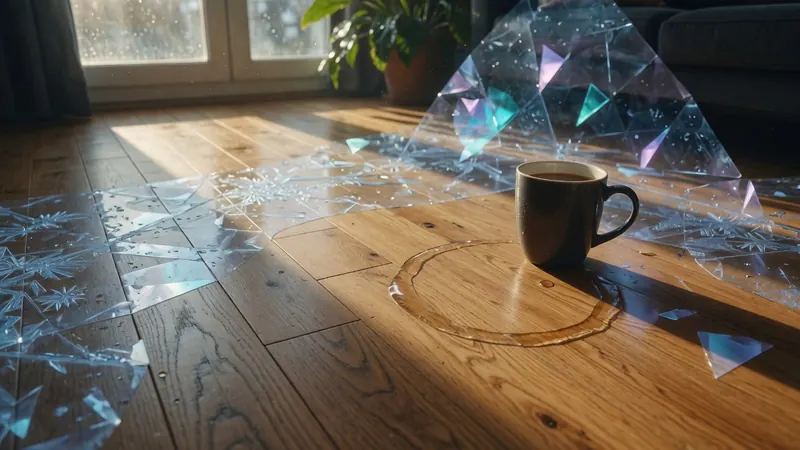
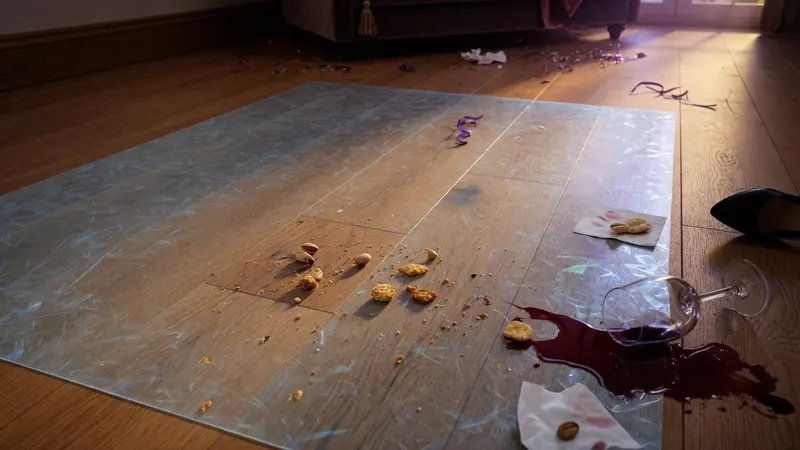
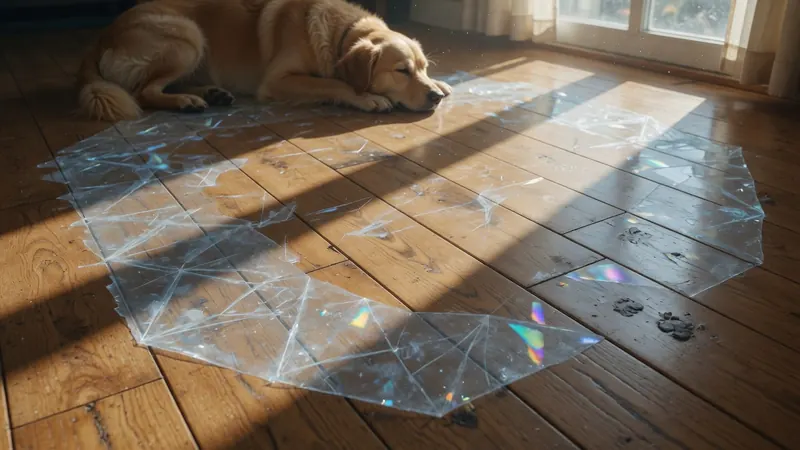
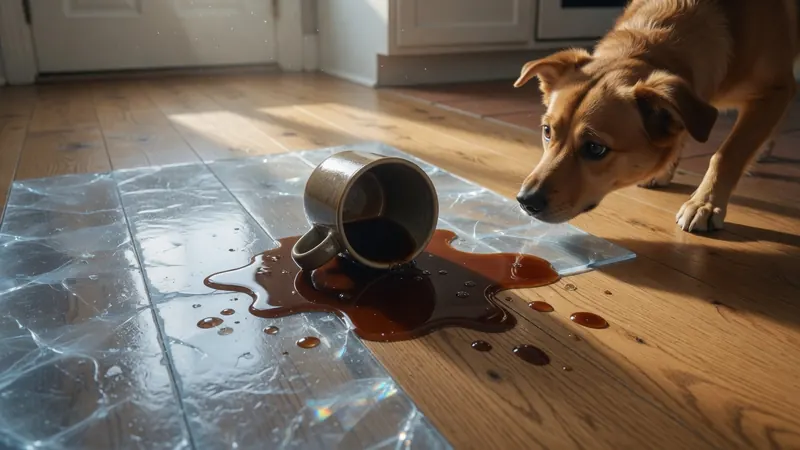
You set the mug down on the counter, turn to grab the paper, and the next sound is that unmistakable ceramic clink followed by a spreading dark pool across the kitchen boards. The toddler laughs. The dog noses closer. In that moment what matters is not the color of the wood or the grain pattern but whether the finish can keep the stain from biting deep and whether the surface can take the scrubbing that follows without turning hazy. What actually happens in the six months after the movers leave when real life begins again?
Visible Wear and the Questions It Raises
Every floor tells its story through the marks that appear after six months or six years. Scuffs from chair legs, haze from repeated mopping, edges that begin to lighten where sunlight lands longest. These are surface signals. What lies underneath determines whether those signals stay cosmetic or become permanent damage. If you have a dog and a toddler under five, here is what actually matters: the outermost layer must absorb the abrasion while the wood beneath stays untouched. The visible problem always points back to the invisible mechanism that either holds or fails.
Two common particles show up in modern finishes when manufacturers want extra toughness. One is aluminum oxide, tiny hard grains suspended in the liquid that settle into the film as it cures. The other is ceramic bead technology, rounded microscopic spheres engineered to roll rather than gouge under pressure. Both aim to improve the wear layer, yet they behave differently once foot traffic, claws, and spills begin their daily work. Rising interest in pet-friendly homes has made these choices more common as families refuse to sacrifice wood floors for practicality.
Ceramic Bead vs Aluminum Oxide: How the Particles Differ
Aluminum oxide has long been the industry standard for adding grit. It is dense and angular. Under a microscope the particles look like shattered glass. When the finish cures they lock into place and resist the sliding action of shoes and furniture. The drawback appears over longer periods: the sharp edges can create micro-channels that collect dirt, and under heavy UV exposure the surrounding resin can yellow slightly around each grain. Field callbacks after five years often reveal this pattern in homes with south-facing windows.
Ceramic bead technology takes a different shape. The beads are smooth and spherical. They sit within the wear layer like tiny bearings. When something drags across the surface the beads rotate instead of digging in. That rolling action reduces the coefficient of friction and leaves fewer pathways for stains to follow. In humid months the difference becomes noticeable because wood expands and contracts; the more flexible response of the beads keeps the film from cracking at the microscopic level. During a hot dry week the wood loses moisture and the boards shrink a fraction of a millimeter while the wear layer must stretch without fracturing.
Both particles sit inside a cross-linked polymer matrix. The cross-linking happens when the finish cures under UV light or through chemical reaction, turning separate chains into a single tough net. That net is what actually guards the wood. The particles are reinforcements inside the net, not the net itself. Adamantine builds its finishes around this understanding so the wear layer performs under real conditions rather than lab numbers alone.
Real-World Stress Tests
The Rental Turnaround Between Tenants
A three-bedroom rental sat empty for three weeks while new carpet was ordered for the bedrooms. The owners asked me to refresh the living-room and kitchen floors before the next family moved in. The existing finish contained aluminum oxide. After two years of one tenant’s large dog and another tenant’s weekly dinner parties the surface showed a network of fine white lines where claws had repeatedly struck the same boards. The wear layer had thinned enough that the wood grain began to telegraph through. We stripped the old film, applied a new coat built around ceramic bead technology, and handed the keys over. Eighteen months later the same floor showed only two faint heel marks near the back door. The new tenant’s shepherd had free run of the house yet the surface remained even. What changed was not the wood hardness but the way the spherical particles distributed the impact across a wider area instead of concentrating it at a single point. The owners later reported the property rented faster because the floors still looked fresh during showings.
The Busy Family Kitchen
A young couple with twins under four and a rescue mutt called after noticing cloudy patches near the sink. They mopped daily with a vinegar solution and kept felt pads on every chair. Still the finish looked tired. The original coating used a standard aluminum oxide load. Under the bright pendant lights the patches showed where repeated moisture and scrubbing had worn the resin between the sharp particles, allowing micro-scratches to scatter light. We recommended a maintenance coat using a product formulated with ceramic bead technology rather than a full sand. The new wear layer bonded to the old one and restored clarity within forty-eight hours. Six months later the mother sent a photo of the same boards after a birthday party for twelve children. The floor looked almost untouched. The beads had taken the sliding of plastic chairs and the occasional spill without creating new pathways for haze. One child even dropped a plate of spaghetti that required immediate blotting, yet no permanent mark remained because the rounded particles prevented deep penetration into the film.
The Sun-Drenched Sunroom
A retired couple’s addition faced south and received direct light from ten in the morning until four. After five years the floor finish had begun to amber along the south edge while the center stayed clear. The original product contained aluminum oxide but lacked strong UV stabilizers. Heat and light had broken down the polymer around the particles, allowing the surface to oxidize. We applied a UV-cured finish that incorporated both ceramic bead technology and additional stabilizers. Two summers later the color remained uniform. The spherical particles also reduced the slight tackiness that sometimes develops on sun-exposed floors when humidity spikes, because the smoother surface collected less dust that could otherwise bake into the film. The couple now hosts weekly book club meetings there without worrying about chair legs or spilled drinks marking the surface.
The Home Office with Heavy Rolling Traffic
A freelance designer converted her spare bedroom into a workspace during the shift to remote work. An ergonomic chair with hard casters rolled across the boards eight hours a day. Within fourteen months the aluminum oxide finish showed parallel tracks where the wheels had compressed the angular particles and left faint compression lines. We refreshed the area with a ceramic bead technology topcoat that bonded cleanly. Two years later the same chair rolls without visible change. The beads absorb the repeated point pressure by distributing force evenly rather than allowing localized wear to telegraph through the wear layer. This scenario reflects the new WFH wear-and-tear trend that has increased demand for finishes that handle concentrated daily movement without constant maintenance.
The Guardian's Test: Cross-Linking Under Daily Conditions
While you are simply living your life the finish is undergoing constant molecular rearrangement. During a hot dry week the wood loses moisture and the boards shrink a fraction of a millimeter. The wear layer must stretch without fracturing. When humidity returns the wood swells and the same layer must compress. Cross-linking gives the film memory. Each polymer chain is tied to its neighbors so the material returns to its original shape instead of staying stretched or compressed. Aluminum oxide particles add stiffness; ceramic beads add a degree of internal lubrication. Both help, yet the spherical shape of the beads allows the film to flex more evenly across temperature swings. That is the wear layer doing its job. Quietly.
Lessons from the Jobsite
One callback still stands out. A client chose a premium aluminum oxide finish because the technical sheet listed higher Taber abrasion numbers under ASTM D4060. After fourteen months the surface showed more visible scuffing than a neighboring home finished with a ceramic-bead product applied the same month. The difference traced back to cleaning habits. The first homeowner used a steam mop weekly; the heat softened the resin between the angular particles. The second homeowner used only a damp microfiber cloth. The lesson is simple: even the hardest particle cannot compensate for methods that attack the binder holding those particles in place. Professional humility comes from realizing that lab tests measure only one kind of stress while real homes deliver many at once.
Another observation comes from resale prep. Sellers often ask for a quick coat to make the floor “pop.” When the existing finish still carries a sound wear layer the quick coat bonds well and the protection extends another several years. When the old layer is already worn through, the new coat fails faster because it has nothing solid beneath it. The hidden guardian only works if something remains to guard. Adamantine finishes are formulated to extend that useful life precisely because they prioritize long-term flexibility over short-term hardness numbers.
Practical Steps That Let the Finish Keep Working
- Place doormats at every exterior door and shake them out weekly so grit never reaches the main traffic paths.
- Check felt pads on furniture every six months; replace any that have flattened or collected embedded sand.
- Avoid vinegar or ammonia cleaners on polyurethane finishes; plain water with a drop of dish soap is enough for most days.
- During dry winter months run a humidifier so the wood does not shrink excessively and stress the wear layer.
- Rotate area rugs seasonally in high-sun rooms to prevent uneven UV exposure on any single section of the floor.
What Your Floor Will Look Like in Five Years
Picture the same boards you walk across today. The light still falls the same way. The dog still greets you at the door. The children still race from room to room. What changes is whether the surface still reads as a single continuous plane or whether it has begun to carry a map of every impact. The choice between ceramic bead and aluminum oxide is really a choice about how the wear layer ages. One particle type tends to hold clarity longer under abrasion and UV; the other can require more careful maintenance to reach the same point. Neither is magic. Both are tools inside a larger system that includes the wood itself, the climate of the house, and the habits of the people who live there. How will your floor hold up when the kids are teenagers and the parties grow louder?
Five or ten years from now the question will not be which particle won the lab test. It will be whether you can forget the floor is even protected because nothing has forced you to notice. That is the real measure of the hidden guardian. The best finish is the one you never have to think about until the day you realize it has been quietly taking every hit so the surface above it never had to. In the case of that initial spilled mug, the ceramic bead technology within Adamantine’s wear layer kept the dark liquid from setting and allowed simple blotting to restore the surface without haze or stain. The peace of mind comes from knowing the guardian is already at work.