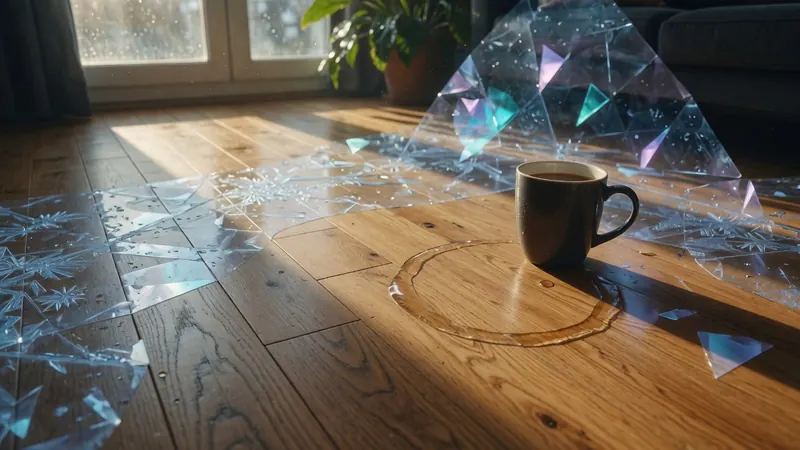
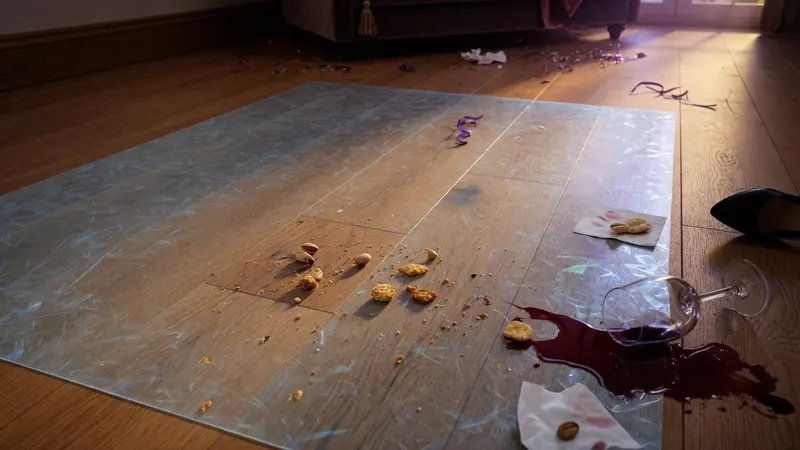
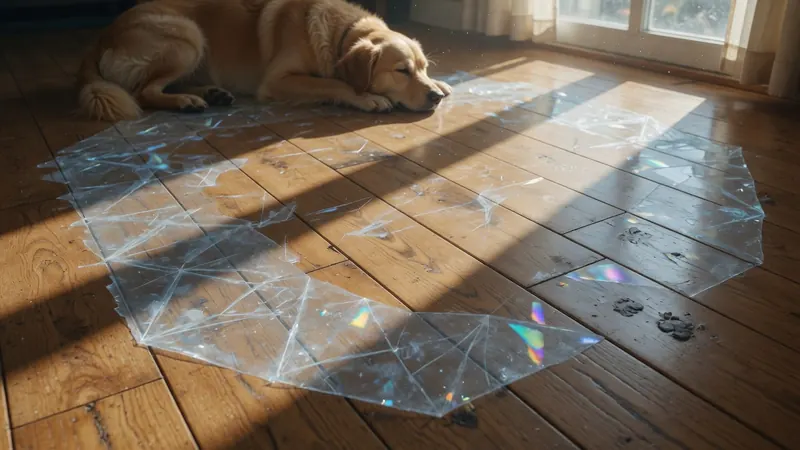
You step into the kitchen after a long day and notice the fresh scratches near the back door where your Labrador has been coming and going through the garden. The marks sit right where morning light hits the floor, small but visible lines that were not there last week. What actually happens in the six months after the movers leave when a new pet joins the household?
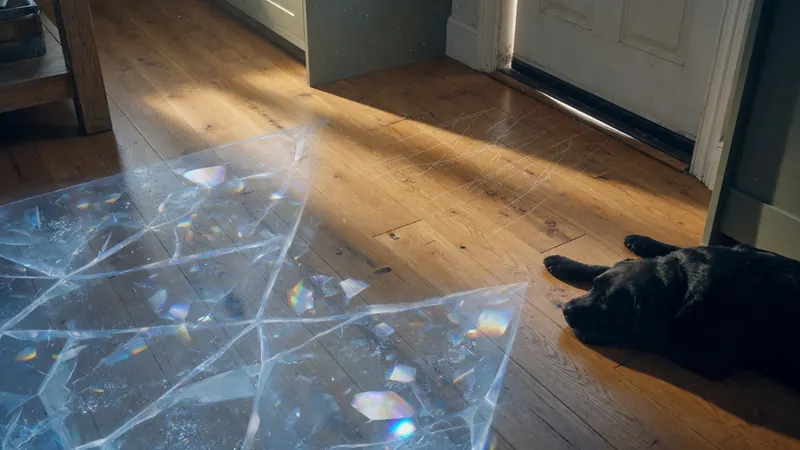
If you have a dog and a toddler under five, here is what actually matters beyond the first coat of finish. The visible problem is clear: surface wear from claws and small feet. The real question is what sits between those daily impacts and the wood itself.
From Visible Wear to the Hidden Layer
Floors show their age first at the surface. Scuffs accumulate from chair legs, spills leave temporary rings, and foot traffic slowly dulls the sheen. These are surface-level effects only. An aluminum oxide wear layer addresses exactly those issues by embedding hard particles that resist abrasion without changing how the floor feels underfoot.
That layer works through simple mechanics. Aluminum oxide particles sit suspended in the finish and create countless tiny points of resistance. When a claw drags across it, the particle takes the hit instead of the wood grain. That's the wear layer doing its job. Quietly.
Over years of service the same particles also blunt the edge of tracked-in grit that would otherwise polish away softer areas. A contractor once pointed out a hallway where one side had the aluminum oxide wear layer and the other did not; the difference in micro-scratches after two winters of boots was obvious even without magnification.
Guardian's Test: What Cross-Linking Actually Means
Here is what is happening at the molecular level while you are just living your life. During curing, the finish forms cross-linked polymer chains that lock the aluminum oxide particles in place. The result is a tougher film that still allows the floor to expand and contract with seasonal moisture changes. Wood hardness decreases as moisture content rises, yet the aluminum oxide wear layer continues to shield the surface regardless.
ASTM D4060 Taber abrasion testing measures this performance by rotating weighted wheels over samples. The test does not simulate every home condition, but it gives a consistent way to compare how different finishes hold up to repeated scraping. The aluminum oxide wear layer consistently shows lower wear rates than finishes without those particles.
One workshop sample sat under a UV lamp for weeks to mimic sun exposure. The cross-linked polymer layer held its clarity while a non-cross-linked control began to haze. That same sample later survived a week of humidity swings without checking because the flexible chains moved with the wood.
Real-World Stress Test: Rental Turnover
Consider a rental property between tenants. The previous occupants had a large dog and hosted weekly game nights. When the new lease starts, the floors need to look presentable without a full refinishing. In one such unit the aluminum oxide wear layer still covered the boards after three years of heavy use. Minor surface marks appeared near the entryway, yet the wood color remained even and no haze developed from repeated cleanings.
The landlord noted that touch-up coats were not required between tenants. That outcome is not guaranteed on every property. Some high-traffic rentals still need periodic maintenance because no finish prevents every mark. The difference showed up in the reduced depth of scratches once the aluminum oxide wear layer was present. The next tenant moved in without commenting on the floors, which is the quiet success metric.
During the turnover walkthrough the property manager ran a fingernail across the surface in several spots. Only the faintest drag marks appeared, none deep enough to reach the stain. That single observation saved the owner the cost of a full sand and recoat before the next family arrived.
Real-World Stress Test: Busy Family Kitchen
A second scenario plays out in homes where the kitchen serves as the main gathering spot. Spills happen daily, chairs slide back after meals, and small feet run from the table to the yard. Over two years the finish on one such floor retained its original sheen except for a faint traffic pattern near the sink. The aluminum oxide wear layer absorbed the repeated contact from rolling carts and dropped utensils.
Practical observation from that kitchen: felt pads on chair legs still matter. The finish handles the occasional impact better than bare wood would, yet constant sliding without pads eventually creates a polished look in one spot. Homeowners who add simple entry mats see even less surface change. The aluminum oxide wear layer buys time and reduces the frequency of full refinishing, but it works alongside basic habits.
After a toddler birthday party the same kitchen floor showed only light scuffs from plastic chairs dragged across the room. A quick pass with a damp microfiber cloth restored the uniform appearance because the hard particles had kept the top film intact rather than letting the stain layer wear through.
Real-World Stress Test: Sunroom Exposure
A third case involves a sunroom with south-facing windows. Direct light hits the floor for several hours each afternoon. After five years the color of the wood stayed consistent where the finish contained UV stabilizers alongside the aluminum oxide wear layer. Without those stabilizers, other finishes in similar rooms developed a yellowed cast along the brightest strip.
The homeowner recalled one earlier job where a different product without aluminum oxide began to show micro-scratches within eighteen months under the same light. The current floor still looked uniform because the hard particles resisted the fine grit that tracked in from the patio. This was not invincibility; it was slower visible aging under real conditions.
During a particularly hot summer the same sunroom saw daily foot traffic from garden work. Even with sandy shoes the aluminum oxide wear layer kept the surface from developing the dull halo that usually forms when unprotected finish meets abrasive grit under intense light.
Real-World Stress Test: Contractor Work Week
A fourth situation arose when a plumbing repair brought contractors through the house for five straight days. Tool bags, step stools, and constant movement created the kind of concentrated wear that usually shows up first near doorways. On the finished floor the aluminum oxide wear layer prevented the deeper gouges that appeared on an adjacent unfinished sample board left in the garage.
After the work ended, the homeowner inspected the traffic paths with a flashlight at an angle. Only shallow surface lines showed, none that caught a fingernail. The cross-linked polymer layer had flexed around the repeated pressure without cracking or lifting at the edges of each board. That single week of abuse would have required sanding on many older finishes, yet this floor needed nothing beyond a normal cleaning.
One Field Lesson on Long-Term Appearance
A lesson learned from callbacks is that floors which look fine at year one often diverge sharply by year ten based on what sits in the topcoat. The aluminum oxide wear layer contributes to that difference by maintaining a consistent coefficient of friction even after repeated cleanings. Floors without it can start to feel slightly slicker in high-use areas, prompting more frequent re-coating.
Another observation comes from a workshop where sample boards sat under varying humidity. During a humid month the wood beneath expanded slightly, yet the surface finish showed no cracking because the cross-linked polymer layer remained flexible enough to move with the substrate. In a later dry spell the same boards contracted without surface checking. The finish did not stop the movement; it simply stayed intact on top.
Trends in Pet-Friendly Homes
Interest in pet-friendly homes continues to rise, and with it comes more questions about how finishes perform around claws and tracked-in debris. The aluminum oxide wear layer aligns with that need by adding abrasion resistance without requiring special cleaning products. Homeowners still benefit from keeping nails trimmed and using washable rugs near doors, but the baseline protection is already built into the finish.
Practical Advice on Care and Selection
When choosing a finish, ask about the aluminum oxide content and curing method. UV-cured options often reach full hardness faster, which helps in occupied homes. Application thickness also matters; a proper build creates the wear layer depth needed for years of service.
- Wipe spills within minutes when possible.
- Use felt pads on all furniture legs and replace them when worn.
- Avoid abrasive pads on mops; microfiber works better with the aluminum oxide wear layer.
- Re-coat when the surface begins to show dull traffic patterns rather than waiting for bare wood.
Even strong finishes need these supports. Professional humility comes from an early project where the chosen product lacked sufficient aluminum oxide. The floor looked good at installation but developed visible wear lines within three years in a hallway. That experience shifted recommendations toward finishes with documented abrasion data.
The Invisible-Made-Visible Moment
During a stretch of dry winter air the wood contracts and tiny gaps appear between boards. At the same time the aluminum oxide wear layer remains continuous across those boards because it was formulated to tolerate minor movement. The surface stays smooth to the touch even though the structure beneath is adjusting. Then spring humidity returns, the boards expand, and the same layer flexes without lifting. Most days this adjustment stays out of sight.
Peace of Mind Five Years Out
Picture your own floor in five or ten years. What will the surface look like after another round of holidays, another dog, another set of growing kids? The scratches that appeared after the Labrador came home have not deepened into the wood. The kitchen traffic pattern remains only a faint difference in sheen rather than exposed grain. That outcome traces back to the aluminum oxide wear layer doing its work without drawing attention.
The best protection is the kind you forget is there until the day a spill or a new pet tests it. If the current finish on your floors still looks uniform after several seasons, it may already be performing that role. If signs of wear are appearing earlier than expected, it could be time to see what is protecting your floor now and what a properly formulated aluminum oxide wear layer could add for the years ahead.
The original kitchen scratches from the Labrador never turned into deeper damage. The aluminum oxide wear layer took those first impacts and continued to take the daily ones that followed. That is the quiet result homeowners notice most when they stop worrying about the surface and simply live on it.