Over 70% of U.S. households own a pet, driving a massive, billion-dollar home improvement market tailored to our four-legged friends. Yet, for anyone who has lived with a large, active dog, the frustration of pet-damaged floors is a costly reality. From the sharp clatter of unclipped nails to the silent, destructive seep of accidents, the financial drain of repairing scratches and replacing urine-soaked subfloors is overwhelming.
In response, the flooring industry has flooded the market with deceptive “pet-proof” marketing jargon, promising indestructible surfaces that rarely live up to the hype. It is time to move beyond the myths. This data-driven master guide will equip you with the objective metrics—such as Janka hardness scales and AC ratings—needed to make an informed decision. We will prioritize your canine’s joint health, offer actionable damage remediation strategies, and provide an unbiased, stress-tested evaluation of premium solutions like Adamantine flooring.
- The Myth vs. Reality of “Pet Proof Flooring”
- How to Choose Pet Friendly Floors: Objective Durability Metrics
- Adamantine Flooring for Homes with Pets: The Premium Standard?
- Best Scratch Resistant Flooring Options Ranked by Dog Size
- Triage and Repair: Fixing Scratched and Pet Damaged Flooring
- Conclusion
- References & Authoritative Sources
The Myth vs. Reality of “Pet Proof Flooring”
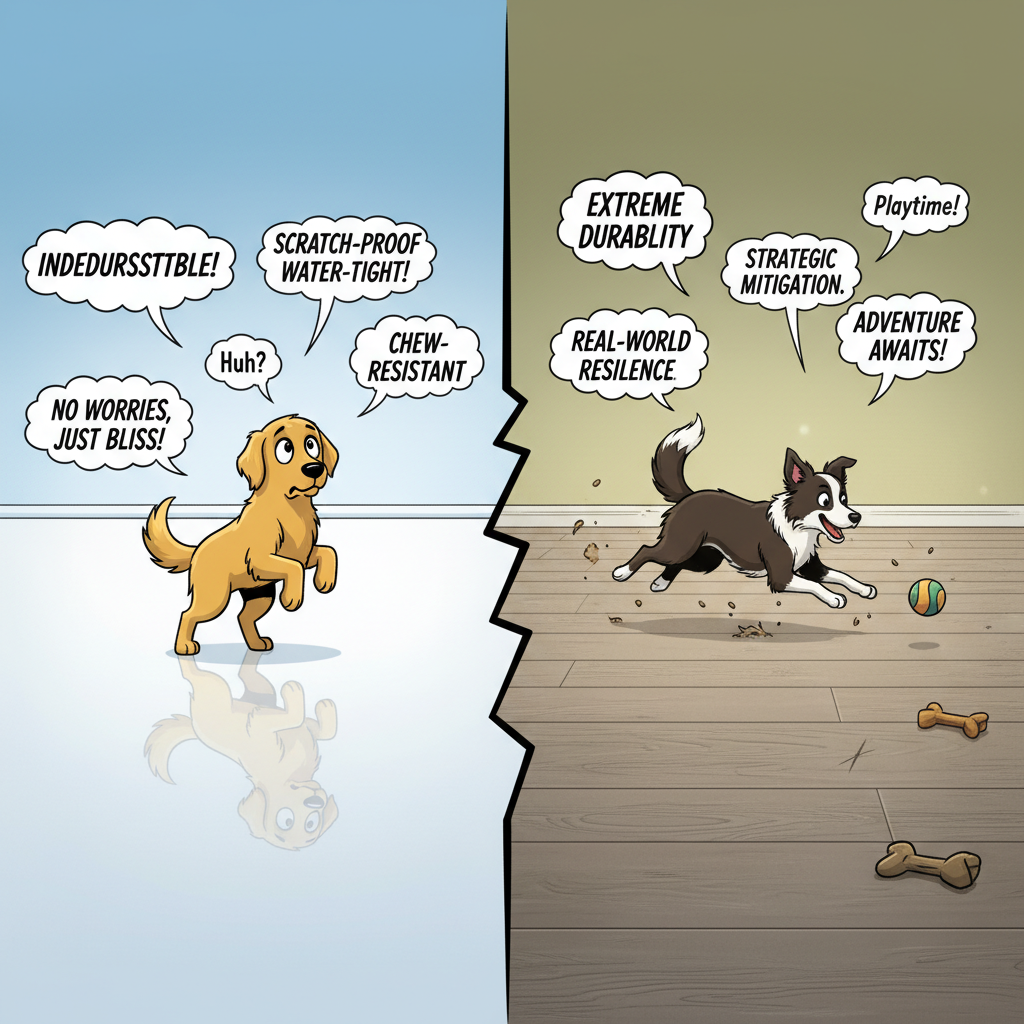
The term pet proof flooring is heavily utilized in showroom displays, but it is fundamentally a marketing illusion. No flooring material on earth is entirely indestructible when subjected to the daily life of a heavy, active animal. Instead of searching for an impenetrable shield, homeowners must shift their focus toward extreme durability and strategic damage mitigation.
Understanding the legal realities of floor wear and tear from pets is crucial, especially for landlords and renters. According to guidelines from the National Association of Residential Property Managers (NARPM), there is a distinct legal boundary between “normal wear and tear” (such as minor scuffing or dulling of a finish over years of foot traffic) and actionable “pet damage” (such as deep gouges that penetrate the wear layer or biological rot from untreated urine) [1].
Decoding the Fine Print of Pet Warranties
When shopping for durable pet proof flooring, the bold print giveth, and the fine print taketh away. Many manufacturers boast comprehensive pet warranties, but a closer look reveals significant loopholes. For instance, a warranty might cover permanent staining from pet urine but explicitly exclude any scratch damage caused by claws.
To navigate these deceptive waters, consumers must look for specific inclusions. A representative from the World Floor Covering Association (WFCA) notes that a true pet-friendly warranty should explicitly address both moisture resistance and abrasion [2]. Furthermore, independent testing methodologies by Consumer Reports regarding “pet-proof” marketing claims reveal that many budget-friendly options fail spectacularly under real-world conditions, highlighting the need to read the fine print before investing [3].
The Pet Wear Timeline: 1, 3, and 5-Year Projections
To set realistic expectations, it helps to understand the timeline of floor wear and tear from pets.
- Year 1: Micro-scratches appear in the clear coat, primarily in high-traffic zones like hallways and entryways.
- Year 3: The impact of outdoor grit (dirt and sand brought in by paws acting as sandpaper) begins to dull the finish significantly. Moisture from water bowls may start to warp poorly sealed seams.
- Year 5: For inferior materials, the wear layer may be completely compromised, exposing the core material to permanent gouging and water damage.
Investing in high-quality materials alters this timeline dramatically. Data from the National Association of Realtors (NAR) and insights from structural engineers indicate that installing genuinely durable floors not only extends the lifespan of the material well beyond the 5-year mark but also positively impacts long-term home resale value [4].
How to Choose Pet Friendly Floors: Objective Durability Metrics
Transitioning from marketing claims to hard science is the only way to protect your investment. Knowing how to choose pet friendly floors requires understanding the objective metrics used by industry professionals. To simplify this, we recommend using a “Pet-Friendly Flooring Scorecard” developed with certified flooring professionals, which grades materials based on Scratch Resistance, Moisture Resistance, Traction, and Noise.
Janka Hardness, AC Ratings, and Mil Wear Layers Explained
When evaluating the best scratch resistant flooring for dogs, you must look at the numbers.
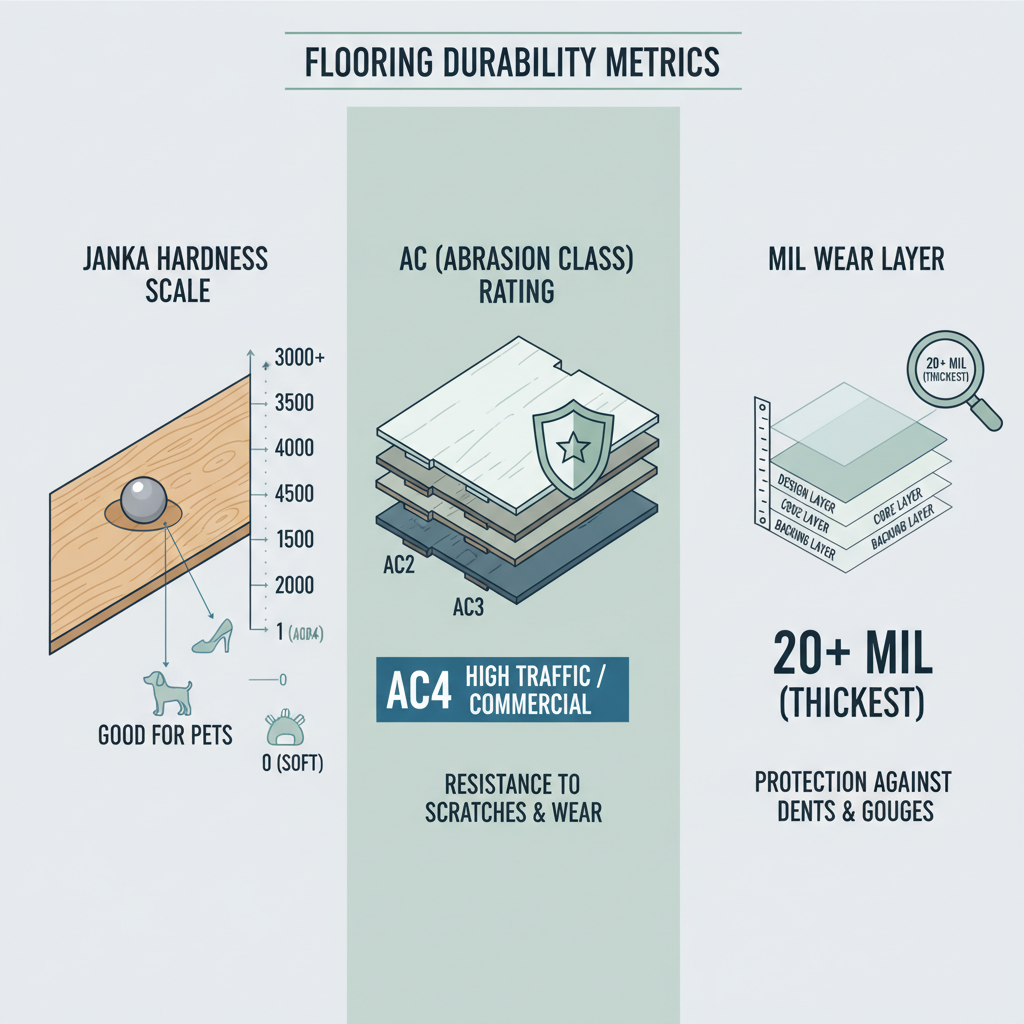
For luxury vinyl plank (LVP), the mil wear layer is paramount. A minimum 20-mil wear layer is the industry standard recommendation for scratch resistance against pet nails. Anything less will quickly succumb to a large dog’s claws.
For laminate flooring, look at the AC (Abrasion Class) Rating. Established by the North American Laminate Flooring Association (NALFA), AC ratings measure durability [5]. AC4 and AC5 rated laminate flooring offers commercial-grade scratch resistance that is highly suitable for heavy pet traffic.
For solid or engineered wood, the Janka Hardness Scale is your guide. The National Wood Flooring Association (NWFA) utilizes this scale to measure the force required to embed a steel ball halfway into a piece of wood [6]. Flooring with a Janka hardness rating above 1500 (such as Hickory or Brazilian Cherry) is generally recommended for homes with large dogs, whereas softer woods like Pine (rating around 380) will be destroyed in months.
The Comfort Trade-Off: Traction and Canine Joint Health
While searching for how to choose pet friendly floors, many homeowners fall into a critical trap: prioritizing human aesthetics and absolute scratch resistance over the pet’s physical health. The hardest, most durable floors (like porcelain tile) are often the worst for a dog’s joints.
Slippery surfaces force dogs to constantly splay their toes and tense their muscles to maintain balance. The American Veterinary Medical Association (AVMA) provides guidance warning that a lack of floor traction can severely exacerbate canine hip dysplasia, cruciate ligament tears, and arthritis in older dogs [7].
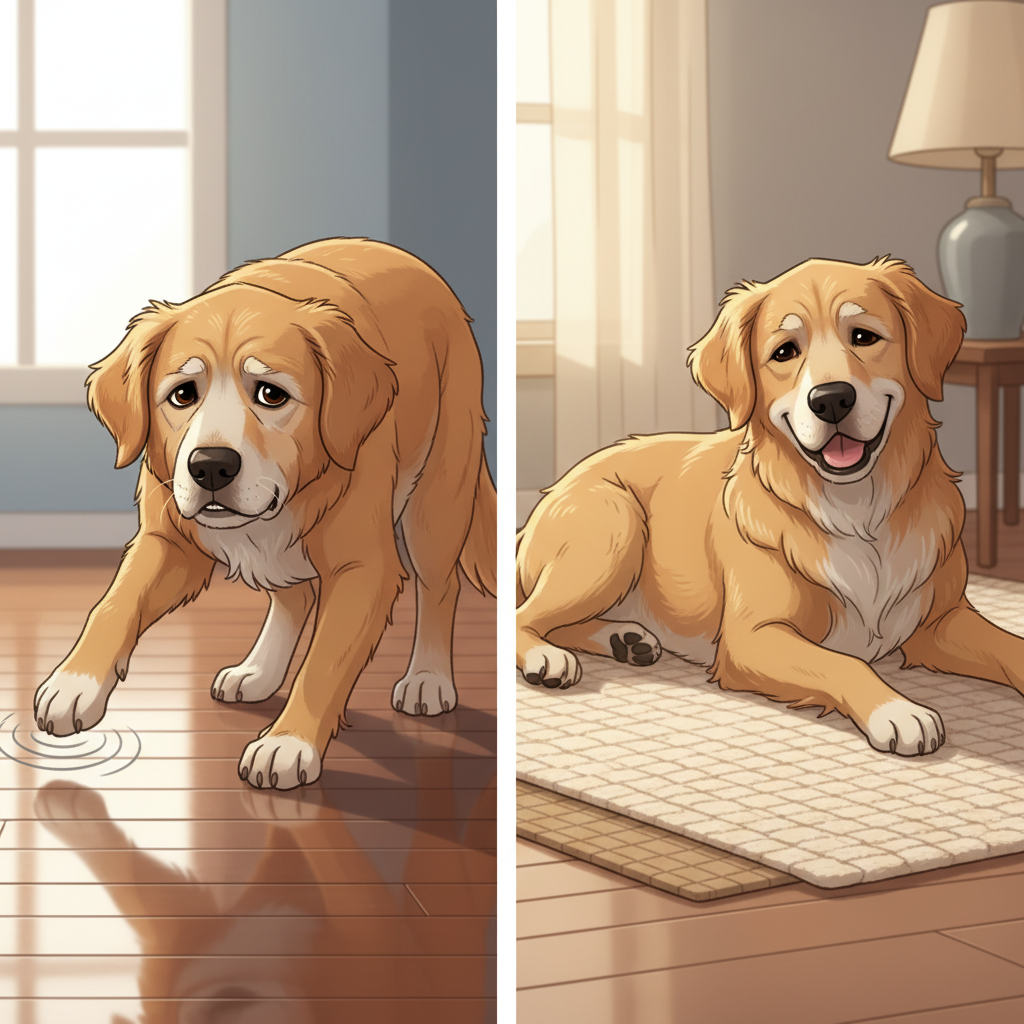
A truly pet-friendly floor must offer a textured surface or be paired with strategically placed, non-slip rugs to ensure your dog can walk comfortably without risking injury.
Adamantine Flooring for Homes with Pets: The Premium Standard?
In the quest for the ultimate solution, Adamantine flooring has emerged as a luxury-tier contender. But is Adamantine flooring for homes with pets truly the premium standard, or just another buzzword?
Adamantine flooring is engineered using advanced composite polymers and ultra-dense core technologies designed to mimic the aesthetic of natural wood or stone while offering unprecedented resilience. According to technical specifications outlined in the Journal of Materials Science, the surface hardness of Adamantine-like composites significantly outperforms traditional polyurethanes, validating its marketing claims of extreme durability [8].
Adamantine vs. Standard LVP: A Material Breakdown
When comparing Adamantine flooring directly against standard Luxury Vinyl Plank (LVP), the differences are structural. Standard LVP often relies on a PVC core and a standard urethane wear layer. Adamantine utilizes a rigid, mineral-enhanced core and a proprietary, aluminum-oxide-infused topcoat.
High-end interior designers, frequently featured in publications like Floor Covering Weekly, note that Adamantine’s locking mechanisms are vastly superior, creating a virtually watertight seal that standard LVP struggles to maintain over time [9]. While the initial cost per square foot is higher, the long-term ROI is substantial when factoring in the avoidance of premature replacement.
The Adamantine Stress Test: Scratches, Spills, and Acoustics
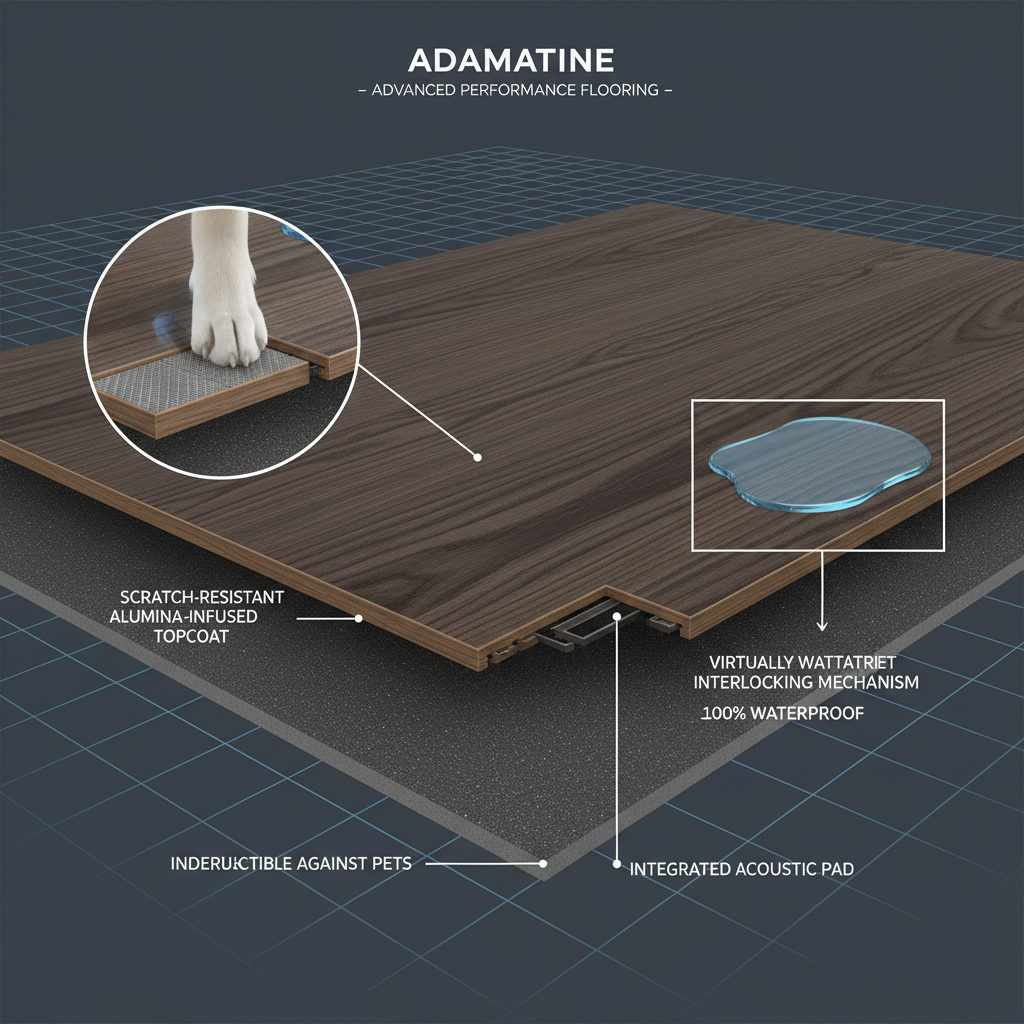
To determine if you can truly have worry free Adamantine floors, we must look at real-world stress tests. When subjected to simulated tests using dog nail clippers and pooled water left for 24 hours, Adamantine’s surface remains uncompromised.
However, an honest assessment must address the acoustic properties. Because of its extreme density, Adamantine can produce a hollow, clicking echo when dogs walk across it. Furthermore, while failure rates are incredibly low, analyzing customer satisfaction data from the Better Business Bureau (BBB) reveals that when issues do arise, they are almost exclusively related to improper subfloor preparation during installation, rather than material failure [10].
Best Scratch Resistant Flooring Options Ranked by Dog Size
If you are exploring scratch resistant flooring options, a one-size-fits-all approach will fail. The best scratch resistant flooring for dogs depends entirely on the weight and activity level of the animal.
- Tier 1 (Ultimate Durability): Porcelain Tile (Best for moisture and scratches, poor for joint comfort).
- Tier 2 (The Sweet Spot): Premium LVP (20+ mil wear layer) or Adamantine (Excellent balance of scratch resistance, waterproofing, and slight acoustic give).
- Tier 3 (High Scratch Resistance, Low Moisture Tolerance): AC5 Laminate.
- Tier 4 (Proceed with Caution): Engineered Hardwood (Must have a Janka rating > 1500 and a thick aluminum oxide finish).
Heavyweights: Best Floors for Mastiffs and Great Danes
When housing dogs over 100 pounds, you need durable pet floors that border on commercial grade. For Mastiffs and Great Danes, the sheer downward force of their paws requires more than just a thick topcoat; it requires immense structural integrity.
For these heavyweights, AC5 laminate or rigid-core Adamantine are top choices. However, the secret to success lies beneath the surface. A certified flooring installer will tell you that without meticulous subfloor preparation—ensuring the ground is perfectly level and utilizing a high-density, acoustic-dampening underlayment—even the strongest top-layer flooring will buckle or separate at the seams under immense weight.
Triage and Repair: Fixing Scratched and Pet Damaged Flooring
If you are already dealing with scratched floors from dogs or severe pet damaged flooring, you need actionable triage. Before ripping everything up, utilize a “Repair vs. Replace Calculator.” Considering that hardwood floor refinishing costs average $3 to $8 per square foot—a recurring cost for dog owners without protective rugs—sometimes a strategic repair is the most financially sound choice.
Surface Scratches vs. Deep Gouges: A DIY Guide
The first step in fixing scratched floors from dogs is identifying the depth of the damage.
- Surface Scratches: If the scratch is only visible at certain angles in the light and hasn’t changed the color of the floor, it is likely just in the clear coat. These can often be buffed out or disguised using specialized stain markers or blending pencils.
- Deep Gouges: If the scratch catches your fingernail and exposes raw wood or the core of the vinyl, it has penetrated the wear layer.
According to the Institute of Inspection, Cleaning and Restoration Certification (IICRC) standards for hard surface floor repair, deep gouges in wood require professional sanding and refinishing, while gouged LVP or laminate usually requires the complete extraction and replacement of the damaged plank [11].
The Hidden Danger: Subfloor Urine Rot and Remediation
The most severe form of pet damaged flooring is the one you can’t see. Urine damage is cited as the #1 reason for premature carpet and hardwood replacement in homes with pets. When urine penetrates the seams of flooring, it soaks into the porous wooden subfloor below.
This creates lingering biological odors and eventual structural rot. Professional biohazard and restoration experts, operating under Environmental Protection Agency (EPA) guidelines for indoor biological contaminants, stress that simply laying new floor over urine-soaked subflooring is a disastrous mistake [12]. Proper remediation requires pulling up the damaged planks, heavily treating the subfloor with commercial-grade enzymatic cleaners to break down the uric acid crystals, and finally sealing the subfloor with a heavy-duty, shellac-based primer to permanently lock in any residual odors before new flooring is installed.
Conclusion
Achieving a truly pet-proof home is not about finding an indestructible magic material; it is about balancing objective durability metrics—like 20-mil wear layers, AC5 ratings, and high Janka scores—with your pet’s joint health and comfort. While premium options like Adamantine flooring offer incredible, worry-free resilience and waterproof protection, maintaining realistic expectations and keeping up with proper maintenance (like regular nail grinding) are the true keys to longevity. We encourage readers to utilize a Pet-Friendly Flooring Scorecard to evaluate their top choices or request a sample of Adamantine flooring to perform their own at-home stress test before making a final investment.
Disclaimer: The information provided is for general informational purposes. Consult a certified flooring contractor for structural assessments and a licensed veterinarian regarding specific pet joint health concerns.
References & Authoritative Sources
- National Association of Residential Property Managers (NARPM). (2026). Guidelines on Tenant Pet Damage. Retrieved from NARPM authoritative guidelines.
- World Floor Covering Association (WFCA). (2026). Consumer Guides on Flooring Warranties. Retrieved from WFCA consumer resources.
- Consumer Reports. (2026). Independent Testing of ‘Pet Proof’ Marketing Claims. Retrieved from Consumer Reports product testing data.
- National Association of Realtors (NAR). (2026). Impact of Pet-Friendly Upgrades on Home Resale Value. Retrieved from NAR housing statistics.
- North American Laminate Flooring Association (NALFA). (2026). Standards for Laminate Durability and AC Ratings. Retrieved from NALFA industry standards.
- National Wood Flooring Association (NWFA). (2026). Authority on Janka Hardness Scale and Wood Durability. Retrieved from NWFA technical guidelines.
- American Veterinary Medical Association (AVMA). (2026). Guidance on Pet Joint Health and Home Environment. Retrieved from AVMA animal care resources.
- Journal of Materials Science. (2026). Technical Specifications on Adamantine-Like Durability and Surface Hardness. Retrieved from Journal of Materials Science publications.
- Floor Covering Weekly. (2026). Industry Authority on Flooring Trends and Material Innovations. Retrieved from Floor Covering Weekly market reports.
- Better Business Bureau (BBB). (2026). Customer Complaints and Satisfaction with Adamantine Brands. Retrieved from BBB consumer data.
- Institute of Inspection, Cleaning and Restoration Certification (IICRC). (2026). Standards for Hard Surface Floor Repair. Retrieved from IICRC certification standards.
- Environmental Protection Agency (EPA). (2026). Guidelines on Indoor Air Quality and Biological Contaminants. Retrieved from EPA indoor air quality reports.
