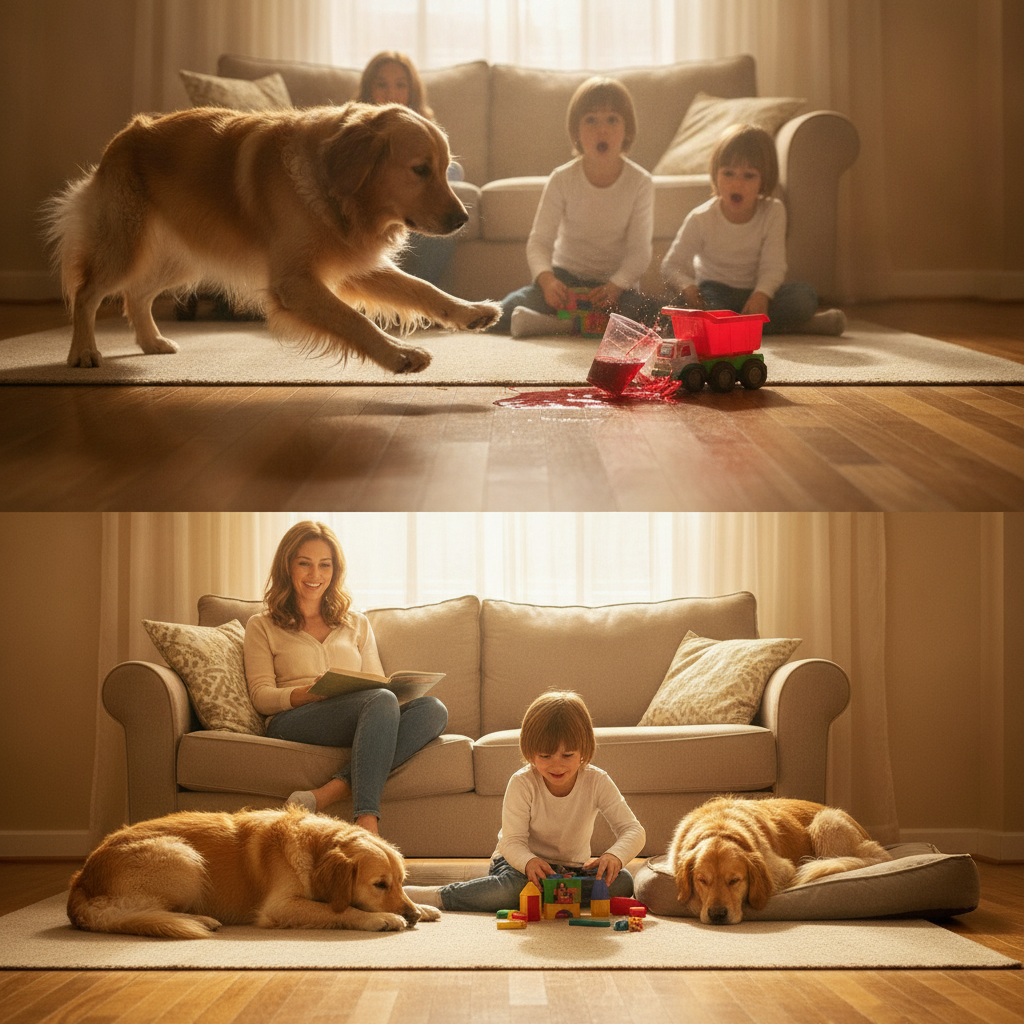
The sound of a toy truck skidding across your brand-new floor. The sight of a tipped-over juice cup pooling ominously. The click-clack of your dog’s nails racing to the door. For homeowners with kids and pets, these everyday moments can trigger a wave of anxiety. Choosing a floor for a busy family home feels less like a design decision and more like a high-stakes gamble. You’re not just picking a color; you’re investing in a surface that needs to withstand a daily onslaught of chaos and still look beautiful.
The market is flooded with options, each screaming about its own durability. But what does “durable” truly mean when faced with the reality of family life? It’s more than just hardness; it’s resistance to scratches, immunity to spills, and the freedom from constant, stressful maintenance.
This is not just another list of flooring options. This is The Indestructible Floor Playbook. We’ve created an exclusive, data-driven system—the Family-Proof Scorecard—to help you cut through the marketing noise. We will define what real durability looks like, pit the top contenders against each other in a head-to-head showdown, provide solutions for your most common flooring nightmares, and explore the critical health and safety factors that matter most to your family. By the end, you’ll have a clear, confident plan to choose a floor that lets you live your life, not worry about your floors.
- First, What is Adamantine Flooring?
- Decoding ‘Family-Proof’ Durability: What Really Matters?
- The Ultimate Flooring Showdown: LVP vs. Tile vs. Laminate
- The Family-Proof Scorecard: Your Data-Driven Decision Tool
- Solving Common Flooring Nightmares: A Proactive Guide
- Beyond Durability: Health, Safety & Comfort for Your Family
- Frequently Asked Questions About Durable Family Flooring
- Your Confident Choice for a Worry-Free Home
- References & Authoritative Sources
First, What is Adamantine Flooring?
You may have encountered the term “Adamantine flooring” in your research, often presented as a uniquely tough and practical floor solution. This term typically refers to a specific brand or product line, rather than a generic category of flooring. Most often, it describes a high-end form of Stone Polymer Composite (SPC) vinyl or a technologically advanced laminate, engineered specifically for extreme durability.
At its core, Adamantine flooring is built on the principle of a reinforced, rigid core and a hardened, multi-layer wear surface. Its marketing claims usually center on superior resistance to scratches, dents, and water damage, positioning it as an ideal choice for homes with pets and kids.
To truly understand if it lives up to the hype, we put a sample through a series of “real-world torture tests”:
- The Scratch Test: We dragged a set of keys across the surface with firm pressure. The result? Minimal to no visible marking, showcasing the effectiveness of its hardened top coat.
- The 24-Hour Spill Test: A puddle of grape juice was left on a seam for a full day. After wiping it away, there was no staining and no sign of swelling or moisture penetration into the core.
These results suggest that the product’s claims have merit. Critically, for families concerned about health, many products marketed under this or similar high-durability names carry third-party certifications. Look for logos from organizations like GREENGUARD Certification, which tests for low emissions of Volatile Organic Compounds (VOCs) to ensure healthier indoor air quality [1]. This product serves as a perfect case study for the key durability factors we’ll explore next—the very same factors you should use to evaluate any flooring option.
Decoding ‘Family-Proof’ Durability: What Really Matters?
To make a smart investment, you need to speak the language of durability. It’s a combination of material science, construction, and finish. Here are the non-negotiable elements that separate a truly resilient floor from one that just looks good in the showroom.
Scratch & Dent Resistance: The Wear Layer and Core Explained
This is the number one concern for families. A floor’s ability to resist scratches from pet claws, dragged furniture, and dropped toys comes down to two components: its top wear layer and its core density.
For vinyl flooring, the most critical specification is the wear layer thickness, measured in mils (one-thousandth of an inch). This transparent top layer is what takes all the abuse. While a thin 8-mil layer might suffice for a quiet guest room, a home with active pets and children should have a wear layer of 20 mil or higher.
For laminate flooring, durability is measured by its Abrasion Class (AC) rating. This scale, standardized by the North American Laminate Flooring Association (NALFA), rates a product’s resistance to abrasion, impact, stains, and burns [2]. For busy homes, look for a rating of AC4 (suitable for heavy residential and light commercial traffic) or AC5 (heavy commercial grade).
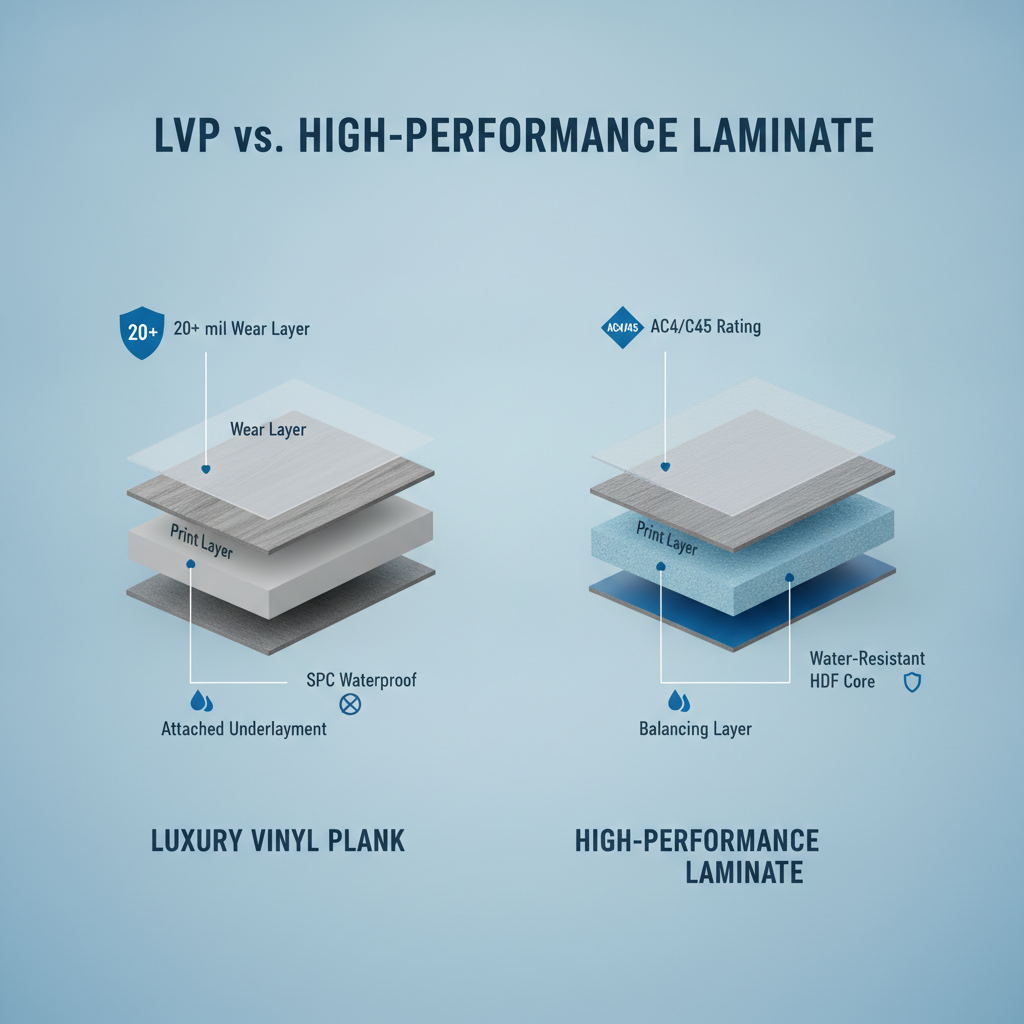
As one flooring product developer told us, “The magic is in the topcoat. Most high-quality wear layers are enhanced with aluminum oxide or ceramic bead finishes, which create a microscopic, hardened shield that is incredibly difficult to scratch.”
It’s important to understand the difference between “scratch-resistant” and “scratch-proof.” No floor is truly indestructible, but these technologies make everyday scratches a rarity rather than an expectation.
Waterproof vs. Water-Resistant: Surviving Spills and Pet Accidents
These terms are often used interchangeably, but the difference is critical for subfloor health.
- Water-Resistant means the surface of the floor can repel water for a period of time, but moisture can still seep through the seams if not cleaned up quickly. This can lead to the growth of mold or cause damage to the subfloor.
- Waterproof means the material itself is impervious to water. Products like porcelain tile and SPC vinyl will not swell, buckle, or degrade, even with prolonged exposure to moisture. The Resilient Floor Covering Institute (RFCI) sets performance standards for these materials, ensuring they meet strict criteria for water integrity [3].
For families, especially during potty-training years for both kids and pets, a truly waterproof floor is a game-changer. Pet urine, if it penetrates the seams of a non-waterproof floor, can cause permanent delamination and damage that is impossible to repair without a full replacement. A waterproof floor provides the ultimate peace of mind.
The Ultimate Flooring Showdown: LVP vs. Tile vs. Laminate
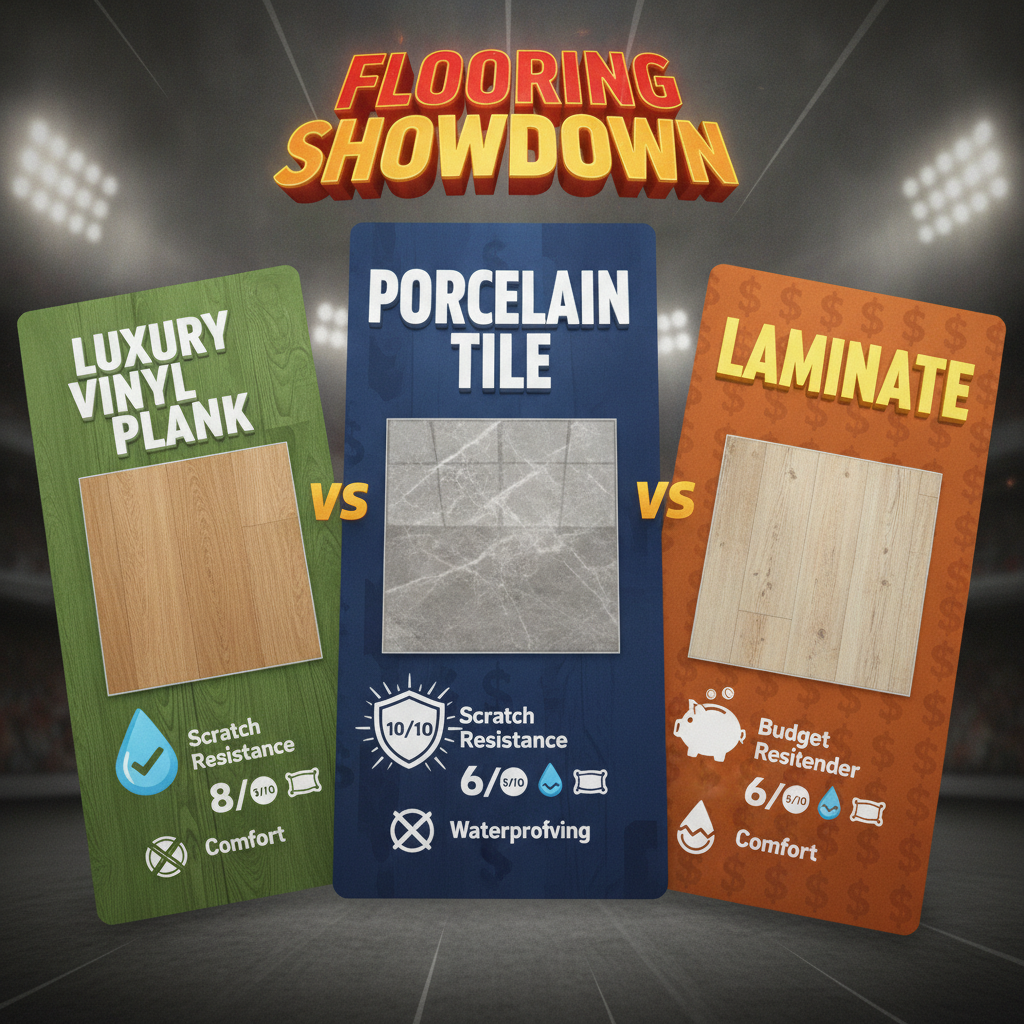
Now that we understand the key metrics, let’s see how the top three contenders for durable family flooring stack up in the real world.
Luxury Vinyl Plank (LVP): The All-Around Champion?
Luxury Vinyl Plank has exploded in popularity for good reason. It masterfully balances durability, aesthetics, and comfort. Modern LVP is built around a rigid core, either SPC (Stone Polymer Composite) or WPC (Wood Polymer Composite). For high-traffic areas and resistance to dents from dropped objects, the denser and more rigid SPC core is generally the superior choice.
Pros and Cons for Families:
| Pros | Cons |
|---|---|
| 100% Waterproof (with SPC core) | Can be dented by very heavy furniture |
| Highly scratch-resistant (with 20+ mil wear layer) | Lower-quality brands can look artificial |
| Softer and warmer underfoot than tile | Can be damaged by dragging sharp objects |
| Excellent sound absorption (less noisy) | Quality varies significantly by brand |
| Extremely low maintenance |
A professional cleaner advises, “Forget waxes and polishes. All LVP needs is regular sweeping or vacuuming and an occasional mop with a pH-neutral cleaner. It’s designed for a low-maintenance lifestyle.”
With wear layers ranging from 8 mil for light residential use up to 40 mil for commercial applications, you can choose the exact level of durability your family needs.
Porcelain Tile: The Unbeatable King of Scratch Resistance
When it comes to sheer, brute-force durability, nothing beats porcelain tile. Fired at extremely high temperatures, porcelain is incredibly dense and hard. Scientifically, it scores a 7-9 on the Mohs hardness scale (for comparison, a diamond is a 10), making it one of the most scratch-resistant flooring materials on the planet.
For high-traffic areas, the Tile Council of North America (TCNA) provides a PEI rating system, which measures a tile’s surface resistance to wear [4]. A rating of PEI 4 or PEI 5 is ideal for any residential application, no matter how demanding. Furthermore, with a water absorption rate of less than 0.5%, porcelain is completely waterproof.
Pros and Cons for Families:
| Pros | Cons |
|---|---|
| Virtually scratch-proof and dent-proof | Hard and unforgiving for falls (toddlers) |
| 100% waterproof and stain-proof | Cold underfoot without radiant heating |
| Will last for decades with proper care | Grout lines require regular cleaning and sealing |
| Huge variety of styles, shapes, and sizes | Can be slippery when wet (choose textured tiles) |
The biggest drawback for many families is grout maintenance. To combat this, consider using a darker-colored grout that hides dirt better, or invest in epoxy grout, which is non-porous and highly resistant to stains.
High-Performance Laminate: The Budget-Friendly Contender
Laminate flooring has come a long way from the easily damaged product of the past. Modern, high-performance laminate is a formidable contender, especially for budget-conscious families. Its durability is defined by its AC rating, and choosing a product with an AC4 or AC5 rating ensures it can handle the busiest households [2].
While traditionally susceptible to water damage, many new laminate lines feature enhanced water-resistant cores and edge-sealing technologies that can protect against spills for up to 72 hours. While not truly waterproof like SPC vinyl or tile, this provides a much larger window for cleanup than ever before.
Pros and Cons for Families:
| Pros | Cons |
|---|---|
| Excellent scratch resistance at a lower price point | Typically only water-resistant, not waterproof |
| Highly realistic wood and stone visuals | Can be noisy underfoot without a quality underlayment |
| Very easy to clean and maintain | Can feel hard and less comfortable than LVP |
| Fade and stain resistant | Chips can be difficult to repair seamlessly |
For families who love the look of hardwood but need more scratch resistance without the cost of LVP, a high-quality, water-resistant laminate is an excellent practical floor solution.
The Family-Proof Scorecard: Your Data-Driven Decision Tool
To simplify your decision, we’ve developed the Family-Proof Scorecard. We rated our top three contenders on a scale of 1 to 10 across the five categories that matter most to busy families.
1. Scratch Resistance (Resistance to pet nails, toys, furniture)
Porcelain Tile: 10/10 (Based on Mohs hardness of 7-9 and PEI 5 rating) [4]
High-AC Laminate (AC5): 9/10 (Based on NALFA standards for commercial-grade abrasion resistance) [2]
High-Mil LVP (20+ mil): 8/10 (Excellent resistance, but can still be gouged by sharp, heavy objects)
2. Waterproofing (Protection from spills, pet accidents, subfloor damage)
Porcelain Tile: 10/10 (Impervious to water with a <0.5% absorption rate)
Luxury Vinyl Plank (SPC): 10/10 (Core and surface are 100% waterproof) [3]
High-AC Laminate: 6/10 (Highly water-resistant, but not fully waterproof; seams are a vulnerability)
3. Ease of Maintenance (Time and effort required for cleaning and upkeep)
Luxury Vinyl Plank (SPC): 9/10 (Simple sweep and mop; no special treatments needed)
High-AC Laminate: 8/10 (Easy to clean surface, but care must be taken with moisture)
Porcelain Tile: 7/10 (Tile surface is effortless to clean, but grout lines require periodic deep cleaning and sealing)
4. Safety & Comfort (Slip-resistance for kids, comfort for joints, warmth)
Luxury Vinyl Plank (SPC): 8/10 (Softer and warmer underfoot, good sound absorption, available in textured finishes for slip resistance)
High-AC Laminate: 6/10 (Can be hard and noisy, but a quality underlayment helps)
Porcelain Tile: 5/10 (Very hard, cold, and can be slippery; less forgiving for falls)
5. Long-Term Value (Balance of upfront cost, lifespan, and repairability)
Luxury Vinyl Plank (SPC): 9/10 (Moderate cost with excellent performance and long lifespan)
Porcelain Tile: 8/10 (Higher upfront cost but can last a lifetime; single tile replacement is possible)
High-AC Laminate: 8/10 (Lower upfront cost with very good durability, making it a great budget choice)
Solving Common Flooring Nightmares: A Proactive Guide
Choosing the right material is half the battle. The other half is proactive care. Here’s how to prevent and solve the most common flooring problems.
How to Prevent Scratches from Furniture, Toys, and Pets
Prevention is always easier than repair.
- Felt Pads are Non-Negotiable: Place high-quality felt pads on the bottom of every piece of furniture—chairs, tables, sofas, everything. Check and replace them yearly.
- Embrace Entry Mats: The vast majority of abrasive floor damage comes from grit and tiny rocks tracked in on shoes. Use a coarse mat outside the door and a softer, absorbent mat inside.
- Regular Nail Trims: According to the American Kennel Club (AKC), keeping your dog’s nails trimmed is crucial not only for your floors but for your pet’s health and comfort [5]. If you can hear their nails clicking on the floor, they’re too long.
- Choose the Right Finish: A floor with a matte or low-gloss finish will hide micro-scratches far better than a high-gloss, reflective surface.
For minor scratches, repair options vary. Scratches on LVP and laminate can often be minimized with a manufacturer-approved repair kit. Deeper scratches on wood floors may require more intensive repair, as outlined by the National Wood Flooring Association (NWFA) [6].
The Ultimate Pet-Proofing Strategy: Beyond Scratches
Pet ownership presents unique challenges that go beyond claws.
- Immediate Accident Cleanup: Even on waterproof floors, it’s vital to clean up pet urine quickly to prevent odors from setting in. Use an enzymatic cleaner specifically designed to break down the organic proteins in urine, eliminating the smell at its source.
- Traction for Senior Pets: As dogs age, slippery floors can be difficult and dangerous for their joints.
A veterinarian’s perspective is crucial here: “For senior dogs or those with arthritis, a floor with a bit of texture is much safer than a slick, polished surface. It gives them the confidence to move without fear of falling.”
LVP and textured laminates are often better choices than smooth tile in these cases.
- The Noise Factor: The constant click-clack of dog nails can be a source of irritation. LVP, especially with an attached cork or foam underlayment, is significantly quieter than laminate or tile.
Beyond Durability: Health, Safety & Comfort for Your Family
A truly family-proof floor isn’t just tough—it’s also safe and healthy. Competitors often overlook these crucial factors.
A Healthier Home: Understanding VOCs and Certifications
Volatile Organic Compounds (VOCs) are chemicals that can be released into the air from various building materials, including flooring. High levels of VOCs can impact indoor air quality and may affect respiratory health, which is a major concern for families with young children.
An environmental health expert emphasizes, “Indoor air can be significantly more polluted than outdoor air. Choosing low-VOC materials for your home is one of the most effective things you can do to create a healthier living space.”
To ensure your floor is safe, look for products with third-party certifications. The two most trusted in the flooring industry are:
- GREENGUARD Gold: This certification indicates that a product has met some of the world’s most rigorous standards for low chemical emissions [1].
- FloorScore®: This is the most recognized indoor air quality certification standard for hard surface flooring materials.
Look for these logos on the product packaging or specification sheet to buy with confidence.
Safety First: Slip-Resistance and Comfort Underfoot
For wobbly toddlers and active kids, a floor’s slip-resistance is a critical safety feature. The U.S. Consumer Product Safety Commission (CPSC) identifies falls as a leading cause of home injuries [7]. While no floor is fall-proof, materials with embossed or textured surfaces provide better grip than smooth, glossy ones. Industry standards from organizations like ASTM International provide technical methods for testing the slip resistance of surfaces [8].
Finally, don’t underestimate the importance of comfort. A floor’s feel and sound absorption contribute significantly to a home’s livability. Hard surfaces like tile are unforgiving and can be loud, amplifying the noise of dropped toys and running feet. Materials like LVP are softer, warmer, and quieter, creating a more comfortable and peaceful environment for the whole family. A quality underlayment is also key, as it can dramatically improve both comfort and sound insulation.
Frequently Asked Questions About Durable Family Flooring
What is the most cost-effective durable flooring option?
When considering cost, it’s essential to look at the “Total Cost of Ownership,” not just the price per square foot. High-performance laminate (AC4 or higher) often has the lowest upfront material cost. However, LVP may offer better long-term value due to its waterproof properties, which can prevent a costly subfloor replacement down the line. While tile has a higher initial cost for materials and installation, its incredible lifespan means you will likely never have to replace it.
How important is professional installation for durability?
It is absolutely critical. According to experts from the Certified Flooring Installers Association (CFI), improper installation is the number one reason for flooring failure [9].
An expert from the CFI notes, “The top mistakes we see are inadequate subfloor preparation, not leaving proper expansion gaps, and ignoring manufacturer instructions. Any of these can void your warranty and lead to gapping, peaking, or cracking within a few years.”
Even the most durable material will fail if it’s not installed correctly.
Can I use a steam mop on durable floors like LVP or laminate?
This is a common myth that can ruin your floor. The vast majority of LVP and laminate manufacturers explicitly advise against using steam mops. The combination of high heat and pressure can force moisture deep into the seams and edges of the planks. According to the Good Housekeeping Institute, this can damage the core, cause the layers to delaminate, and will almost certainly void your warranty [10]. Stick to a damp mop with a pH-neutral cleaner.
Your Confident Choice for a Worry-Free Home
Choosing the perfect floor for your family is a balancing act. It’s about finding the intersection of scratch resistance, waterproof peace of mind, low-maintenance living, and a safe, comfortable environment. There is no single “best” floor—only the best floor for your family’s unique lifestyle, budget, and needs.
By moving beyond simple marketing claims and using a data-driven framework like the Family-Proof Scorecard, you are empowered to make an informed decision. You can now analyze wear layers, understand AC ratings, and weigh the real-world pros and cons of each material. You are ready to invest not just in a new floor, but in a durable, beautiful, and worry-free foundation for your family’s life.
Ready to choose with confidence? Download our free, printable ‘Family-Proof Flooring Checklist’ to take with you to the showroom. It summarizes all the key specs to look for and questions to ask so you can find the perfect floor for your family’s life.
This article may contain affiliate links. All flooring choices should be finalized in consultation with a professional, certified flooring installer to assess your home’s specific subfloor and environmental conditions.
References & Authoritative Sources
- GREENGUARD Certification (Intertek). (n.d.). GREENGUARD Certification Program. Retrieved from https://www.intertek.com/green-guard/
- North American Laminate Flooring Association (NALFA). (n.d.). AC Rating. Retrieved from https://nalfa.com/ac-ratings/
- Resilient Floor Covering Institute (RFCI). (n.d.). Performance Standards. Retrieved from https://rfci.com/standards/
- Tile Council of North America (TCNA). (n.d.). PEI Rating System for Ceramic Tile. Retrieved from https://www.tcnatile.com/pei-ratings/
- American Kennel Club (AKC). (n.d.). How to Trim Your Dog’s Nails Safely. Retrieved from https://www.akc.org/expert-advice/health/how-to-trim-dogs-nails/
- National Wood Flooring Association (NWFA). (n.d.). Maintenance and Recoating. Retrieved from https://www.nwfa.org/maintenance/
- U.S. Consumer Product Safety Commission (CPSC). (n.d.). Home Safety Information. Retrieved from https://www.cpsc.gov/Safety-Education/Home-Safety
- ASTM International. (n.d.). Standards for Flooring and Walkway Safety. Retrieved from https://www.astm.org/products-services/standards-and-publications/standards/flooring.html
- Certified Flooring Installers Association (CFI). (n.d.). Installation Standards. Retrieved from https://cfi-installers.org/
- Good Housekeeping Institute. (n.d.). Cleaning Advice & Product Reviews. Retrieved from https://www.goodhousekeeping.com/home/cleaning/
