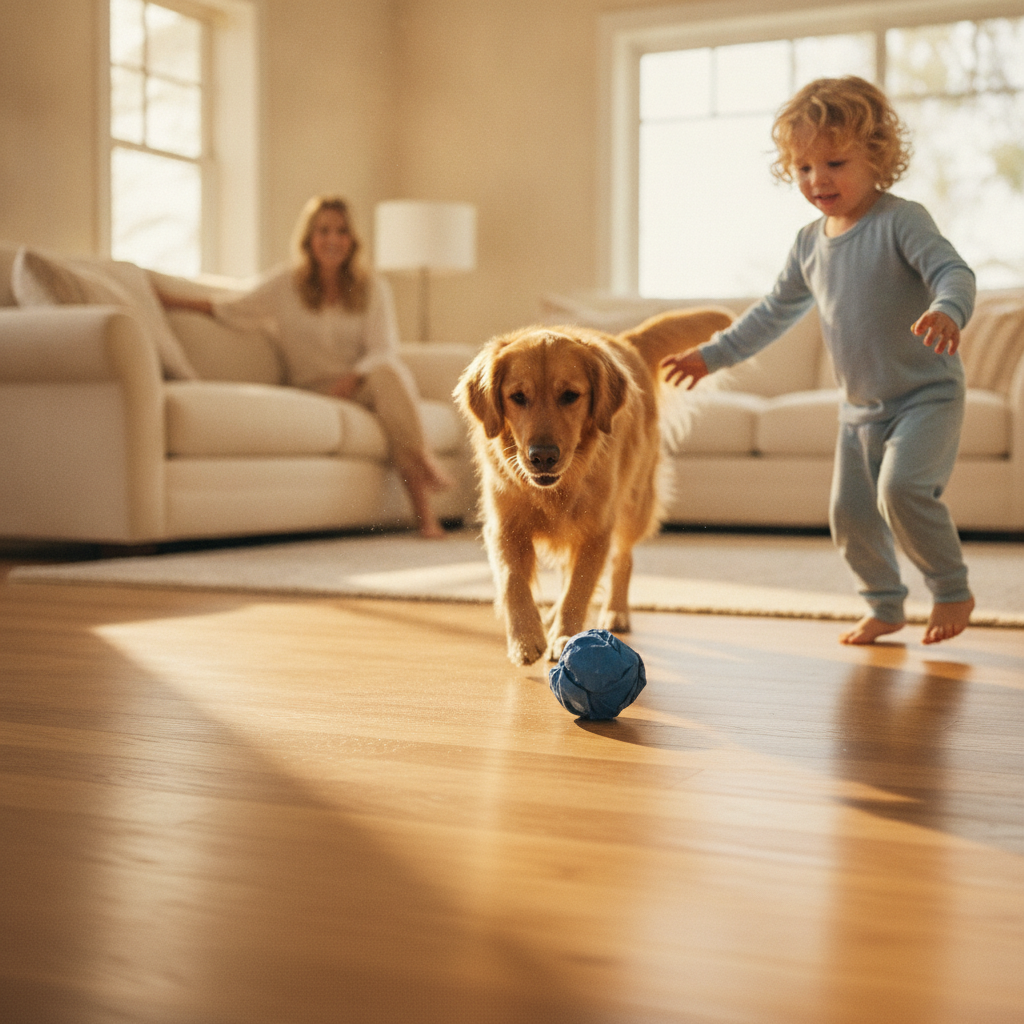
The thunder of tiny feet racing down the hallway. The sudden, heart-stopping crash of a dropped toy. The tell-tale click-clack of a dog’s nails during a “zoomie” session. This is the soundtrack of a vibrant, happy home—and it’s also the sound of your floors facing their daily trial by fire. If you’re a parent or a pet owner, the search for durable family flooring can feel overwhelming. You’re navigating a sea of marketing claims, technical jargon, and conflicting advice, all while trying to find a single, simple answer: what floor can actually survive my family?
You’ve come to the right place. This isn’t just another list of flooring options. This is your definitive survival guide to choosing a floor that brings peace of mind, not perpetual worry. We’ve gone beyond the sales pitches to create a unique Family-Proof Flooring Scorecard, a data-driven tool that rates the top materials on the metrics that actually matter in a chaotic home.
In this guide, we will decode the meaning of true durability, pit the top contenders against each other in a head-to-head showdown, and provide a survival guide for your biggest flooring problems—from pet scratches to kid catastrophes. By the end, you’ll be empowered to choose the perfect, worry-free floor for your family’s unique needs with the confidence of a pro.
- Decoding Durability: What Really Makes a Floor Family-Proof?
- The Family-Proof Flooring Scorecard: A Head-to-Head Comparison
- The Top Contenders for Most Durable Family Flooring
- Solving Your Biggest Flooring Problems: A Family Survival Guide
- Beyond the Planks: Installation, Acoustics, and Maintenance
- FAQ: Your Durable Flooring Questions Answered
- Your Floor, Your Fortress
- References & Authoritative Sources
Decoding Durability: What Really Makes a Floor Family-Proof?
Before we dive into specific materials, it’s crucial to understand what “durability” truly means. It’s not a single quality but a combination of factors that determine how a floor will stand up to the rigors of high-traffic floor wear and family life. The myth of a completely indestructible floor can lead to disappointment; the reality is that the best resilient home flooring is the one whose strengths align with your family’s biggest challenges.
According to industry best practices, long-term durability is as much about proper installation and subfloor preparation as it is about the material itself[1]. A high-quality product on a poor foundation will fail prematurely. Understanding the language of durability allows you to see past marketing and evaluate a product’s true potential.
A Quick Glossary of Durability Terms
- Wear Layer (for LVP): This is the transparent top coating on Luxury Vinyl Plank. Its thickness, measured in mils (1/1000th of an inch), is the single most important factor for scratch and scuff resistance. For active homes, look for 20 mils or more.
- AC Rating (for Laminate): The Abrasion Class (AC) rating measures laminate’s resistance to abrasion, impact, stains, and burns. The scale runs from AC1 (light residential use) to AC5 (heavy commercial use). An AC4 rating is an excellent benchmark for busy family homes.
- Janka Hardness Scale (for Wood): This test measures the force required to embed a steel ball into a piece of wood[4]. A higher number indicates a harder, more dent-resistant wood. For example, traditional Red Oak has a Janka rating of around 1290, while strand-woven bamboo can exceed 3000.
- PEI Rating (for Tile): The Porcelain Enamel Institute (PEI) rating grades ceramic and porcelain tile on a scale of 1 to 5 based on its surface hardness and suitability for traffic. A PEI 4 or 5 rating is recommended for any residential floor, especially in high-traffic areas[3].
The Family-Proof Flooring Scorecard: A Head-to-Head Comparison
To simplify your decision, we’ve developed this scorecard. We’ve rated the top durable family flooring options on a scale of 1 (Poor) to 5 (Excellent) across the categories that matter most to parents and pet owners.
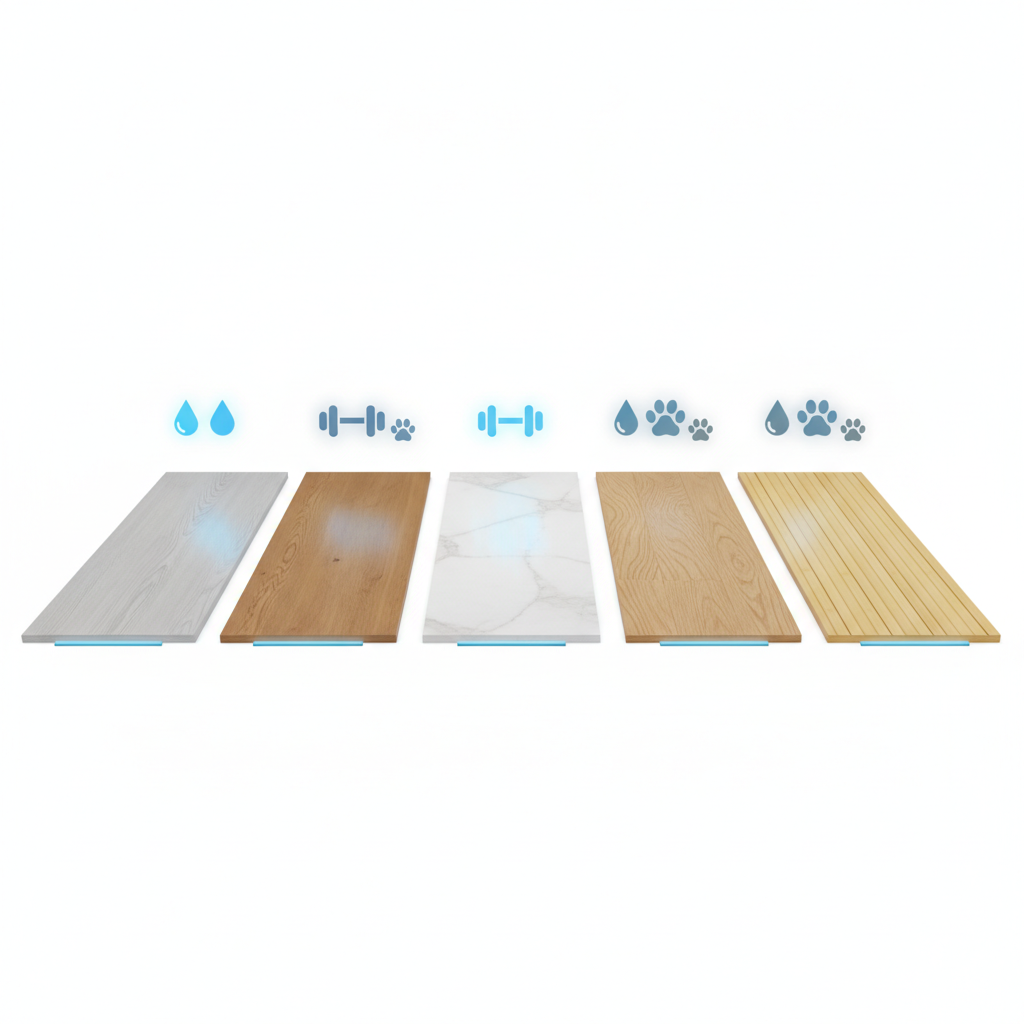
Author’s Note: These ratings are based on a comprehensive analysis of industry standards, manufacturer specifications, and real-world performance data for high-quality products within each category. Your results may vary based on the specific product line, installation quality, and maintenance.
| Flooring Material | Scratch Resistance | Water/Stain Proofing | Impact Resistance (Dents) | Ease of Cleaning | Comfort & Safety | Average Cost (Installed) |
|---|---|---|---|---|---|---|
| Luxury Vinyl Plank (LVP) | 4 | 5 | 4 | 5 | 4 | $4 – $10 / sq. ft. |
| Laminate Flooring | 5 | 3 | 4 | 5 | 3 | $3 – $9 / sq. ft. |
| Porcelain Tile | 5 | 5 | 5 | 4 | 2 | $8 – $20 / sq. ft. |
| Engineered Hardwood | 3 | 2 | 3 | 3 | 4 | $6 – $15 / sq. ft. |
| Strand-Woven Bamboo | 4 | 2 | 5 | 3 | 4 | $5 – $12 / sq. ft. |
The Top Contenders for Most Durable Family Flooring
Now, let’s take a deeper look at the champions from our scorecard. Each material offers a unique blend of strengths, making it the perfect choice for a specific type of family.
1. Luxury Vinyl Plank (LVP): The All-Around Champion
For many families, LVP hits the sweet spot, offering an incredible balance of performance, comfort, and style. It masterfully mimics the look of real wood or stone but provides a level of resilience that natural materials often can’t match. Its multi-layer construction—typically a rigid core, a design layer, and a protective wear layer—is the key to its success.
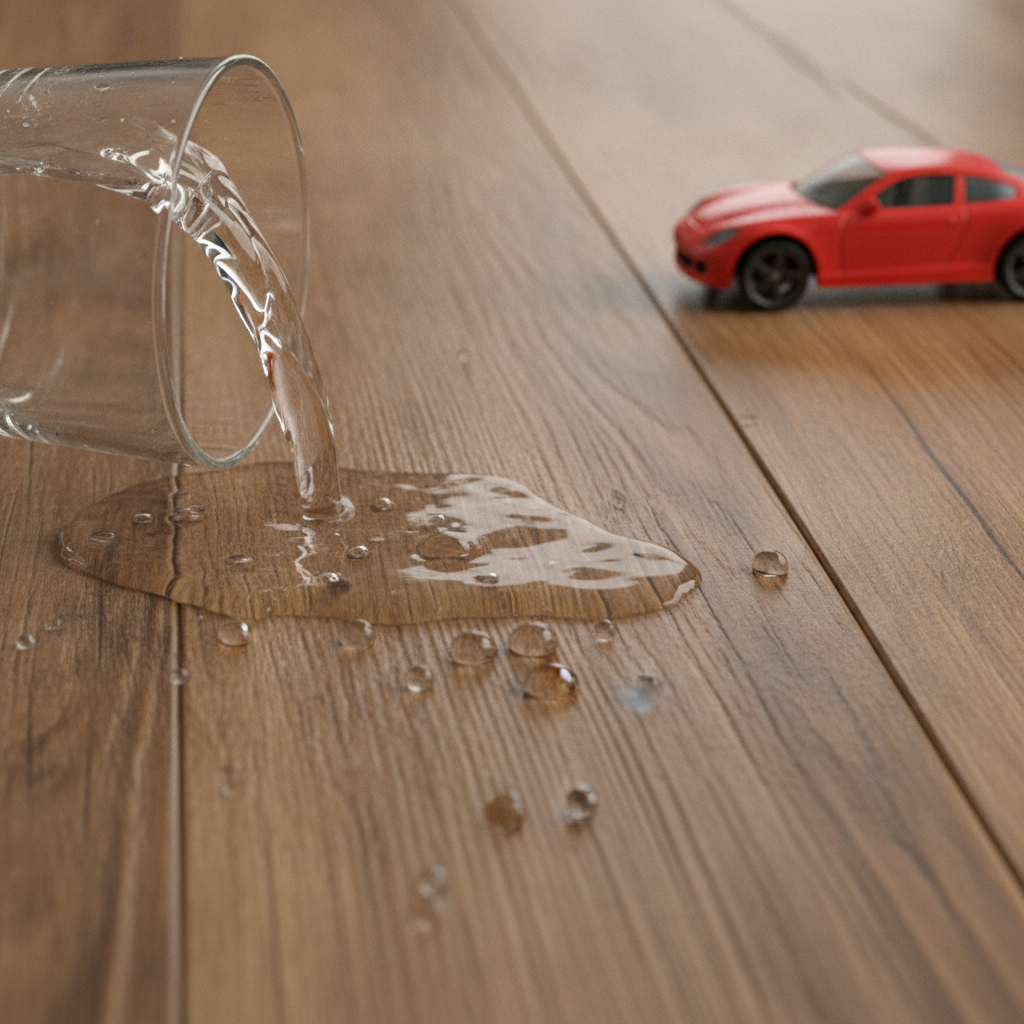
When it comes to kids and pets, LVP’s biggest advantages are its 100% waterproof core and its tough wear layer. A high-quality LVP with a wear layer of 20 mil or higher is recommended for homes with active pets and kids. This transparent topcoat is what stands between your floor and dog nails, dragged toys, and dinner spills. In the debate of LVP vs. laminate for dogs, LVP’s waterproof nature often gives it the edge against accidents, while its slightly softer surface can be more forgiving on pets’ joints.
The mistake people make is buying cheap, thin LVP. For a family, investing in a quality product with a thick wear layer and a rigid core is the difference between a floor that lasts five years and one that lasts twenty-five.
2. Laminate Flooring: The King of Scratch Resistance
If your primary concern is scratches—from large dogs, active kids, or frequently moved furniture—modern laminate flooring is your undisputed champion. While older laminate had a reputation for being vulnerable to water, new technologies have introduced highly water-resistant options suitable for most areas of the home.
Laminate’s superpower comes from its incredibly hard top layer. As explained by manufacturers like Pergo, the inventor of laminate flooring, this surface is infused with an aluminum oxide finish, one of the hardest materials available[2]. This is what gives it a superior ability to resist scratches and scuffs compared to most other flooring types, including LVP. To ensure you’re getting a product built for family life, look for a commercial-grade rating. Laminate flooring with an AC4 rating is designed for light commercial traffic, making it highly durable for residential use. This means it’s engineered to withstand the foot traffic of a small shop, so it can certainly handle your family’s entryway.
3. Porcelain & Ceramic Tile: The Indestructible Option
When it comes to sheer, raw durability, nothing beats porcelain tile. It is virtually impervious to scratches and is completely waterproof, making it a phenomenal choice for kitchens, bathrooms, mudrooms, and basements. With proper installation and care, porcelain tile can last for 50+ years, potentially outliving every other component of your home.
To ensure you’re getting a scratch-proof product, check the PEI rating. The Porcelain Enamel Institute rates tile from 1 to 5; for any floor in a busy home, a PEI 4 or 5 rating is essential[3]. While tile is nearly indestructible, its primary drawback is comfort—it’s hard and cold underfoot. The other major consideration is grout. To minimize the headache of cleaning grout lines, consider using larger format tiles (which reduces the number of lines), choosing a darker or epoxy-based grout that resists staining, and sealing your grout regularly.
4. Modern Wood & Bamboo: Durable Natural Beauty
Many families love the timeless beauty and warmth of wood but worry, “Is hardwood flooring considered durable?” The answer is yes—if you choose the right kind. Softer woods will dent and scratch easily, but modern options offer impressive resilience.
The champion in this category is strand-woven bamboo. This material is engineered by fusing bamboo fibers with adhesive under extreme pressure. The result is a flooring material with a Janka hardness rating of over 3,000, making it significantly harder than traditional oak (approx. 1300)[4]. For traditionalists, engineered hardwood with a tough, factory-applied finish is another excellent option. Look for products with multiple coats of an aluminum oxide finish. The National Wood Flooring Association (NWFA) sets the standards for these finishes, ensuring a high level of protection against everyday wear and tear[5]. While not waterproof, these modern wood floors offer far more scratch and dent resistance than their predecessors.
Solving Your Biggest Flooring Problems: A Family Survival Guide
Choosing the right material is half the battle. The other half is knowing how to prevent and solve the specific problems that family life throws at your floors.
The Action Plan for Pet Scratches
Pet nails are a floor’s worst enemy. A two-pronged approach of prevention and repair is your best strategy.
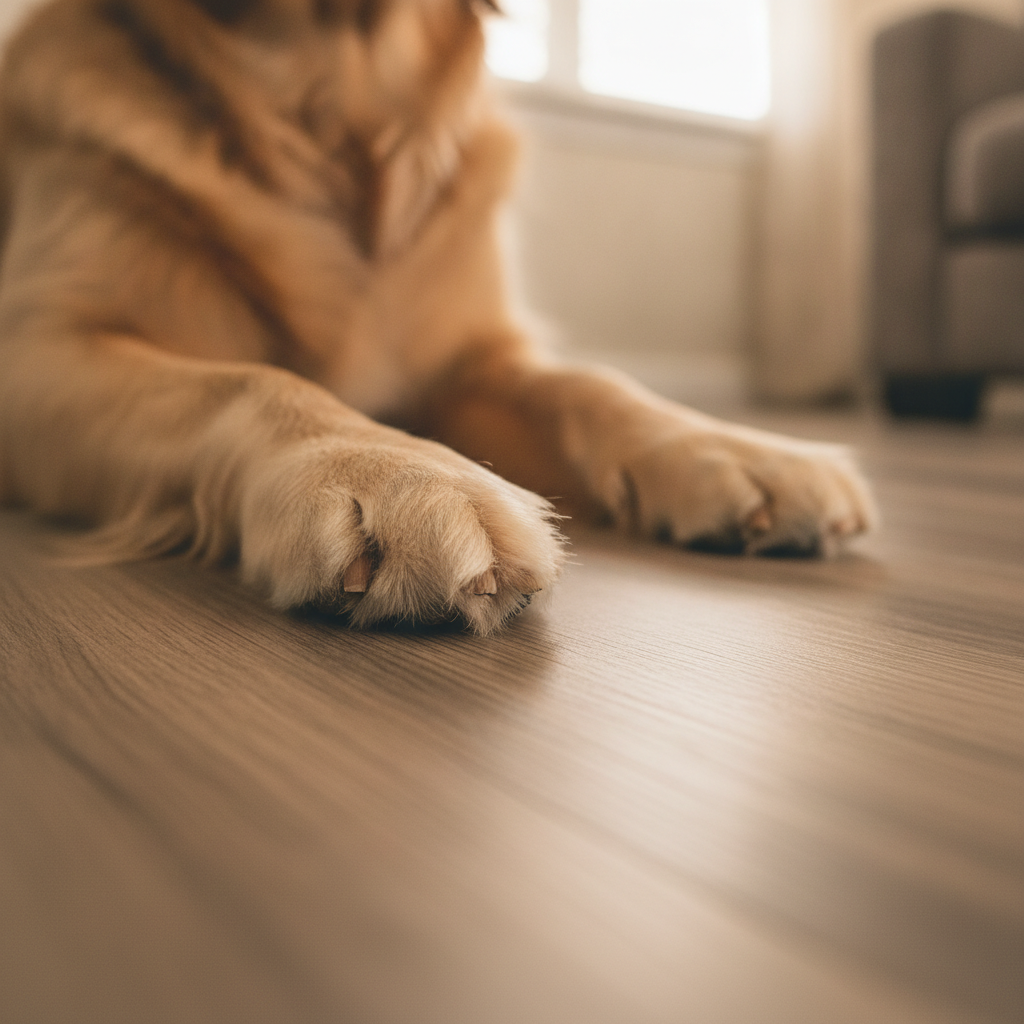
Prevention:
- Nail Care is Key: The American Kennel Club (AKC) advises that proper nail trimming is the first line of defense. If you can hear your dog’s nails clicking on the floor, they’re too long[6]. Regular trimming or grinding keeps the nails short and blunt.
- Use Rugs & Runners: Place durable area rugs in high-traffic “zoomie” zones and runners in hallways.
- Choose the Right Finish: A floor with a matte or low-gloss finish and a textured or wire-brushed surface will do a much better job of hiding minor surface scuffs than a smooth, high-gloss floor.
Repair:
For minor surface scuffs on wood or laminate, a simple repair kit with a wax stick or stain marker can often make them disappear. Deeper gouges, however, may require a wood filler putty for wood floors or, in the case of LVP and laminate, the replacement of the damaged plank—a key advantage of floating floor systems.
The ‘Kid-Catastrophe’ Cheat Sheet: Spills, Stains & Dents
From dropped sippy cups to rogue crayons, kids test a floor’s limits in unique ways.
Impact Resistance: For dents from dropped toys, materials with a bit of give, like LVP, or extreme hardness, like strand-woven bamboo and porcelain tile, perform best.
Safety & Health: A safe home environment is paramount. Look for flooring with low or no VOCs (Volatile Organic Compounds), which can impact indoor air quality. The GREENGUARD Certification is a rigorous third-party standard that ensures products have low chemical emissions, making them safer for children and pets[7].
Stain Removal Cheat Sheet:
| Stain | Luxury Vinyl Plank (LVP) | Laminate Flooring | Sealed Hardwood |
|---|---|---|---|
| Juice / Soda | Wipe with a damp cloth. For sticky residue, use a pH-neutral cleaner. | Wipe immediately with a damp cloth. Do not let liquid sit on seams. | Wipe immediately with a soft, dry cloth. Use a wood-specific cleaner if needed. |
| Permanent Marker | Apply rubbing alcohol to a clean cloth and gently rub the spot. | Use a dry erase marker to draw over the stain, then wipe away. Rubbing alcohol can also work. | Use a small amount of mineral spirits on a cloth, then clean the area with wood cleaner. Test in an inconspicuous spot first. |
| Crayon | Scrape off excess with a plastic card. Rub the spot with a cloth and a small amount of mineral spirits. | Scrape off excess. Use a small amount of mineral spirits on a cloth to remove the waxy residue. | Place a paper towel over the mark and iron on low heat to lift the wax. Clean with wood cleaner. |
Winning the War on Water and Wear
Water damage is a major concern in kitchens, bathrooms, and basements. Understanding the terminology is critical.
| Term | What It Means | Best For |
|---|---|---|
| 100% Waterproof Core | The core material itself will not swell, warp, or be damaged by water, even if submerged. | Basements, full bathrooms, kitchens, mudrooms. (LVP, Tile) |
| Water-Resistant Surface | Can withstand topical spills and moisture for a period but water can damage the core or subfloor if it gets through seams. | Kitchens, half-baths, entryways. (Water-resistant Laminate, modern Hardwoods) |
One of the biggest mistakes homeowners make is assuming a waterproof floor makes the whole installation waterproof. The subfloor underneath is not! Proper installation is crucial to prevent water from getting trapped beneath the flooring, which can lead to mold and mildew. Ensure your installer seals the perimeter of the room with silicone caulk in wet areas like bathrooms. For high-wear areas like entryways, use high-quality doormats outside and inside, along with a durable runner rug, to trap dirt, grit, and moisture before they can be tracked through the house.
Beyond the Planks: Installation, Acoustics, and Maintenance
Even the best flooring material can fail if these final details are overlooked.
- Installation is Everything:
I’ve seen expensive flooring fail in two years and budget flooring last for decades. The difference is almost always the subfloor. A flat, stable, and dry subfloor is the non-negotiable foundation for a long-lasting floor.
- Acoustics Matter: In a multi-level home, the noise of dropped toys or running feet can be a major issue. Tile and laminate are the loudest, while LVP and wood are quieter. Using a high-quality acoustic underlayment during installation can make a dramatic difference in sound dampening.
- The Maintenance Reality Check: Low maintenance doesn’t mean no maintenance. Here’s a realistic look at what it takes to keep your floors looking great:
- LVP & Laminate: Daily: Sweep or vacuum. Weekly: Mop with a microfiber mop and a manufacturer-approved pH-neutral cleaner. Never use wax or steam mops.
- Porcelain Tile: Daily: Sweep or vacuum. Weekly: Mop with a suitable tile cleaner. Yearly: Inspect grout and reseal if necessary (for cement-based grout).
- Modern Hardwood: Daily: Sweep or dust mop. Weekly: Vacuum (no beater bar) and clean with a manufacturer-approved hardwood floor cleaner. Never wet-mop.
FAQ: Your Durable Flooring Questions Answered
What is the most durable and safest flooring for toddlers?
Luxury Vinyl Plank (LVP) is often the top choice. It’s water-resistant, easy to clean, and softer underfoot than tile or laminate, providing a more forgiving surface for tumbles. Look for products with GREENGUARD Gold certification to ensure low VOC emissions for healthy indoor air[7].
Are waterproof floors truly protected from pet urine?
Yes, the surface and core of 100% waterproof flooring like LVP and porcelain tile will not be damaged by pet urine. However, the urine can seep into the seams of a floating floor and get trapped underneath, causing odor and potential subfloor issues. It’s crucial to clean up accidents as quickly as possible, even on a waterproof floor.
Can you repair worn-out laminate flooring?
Minor scratches can sometimes be concealed with a laminate repair kit. However, once the top wear layer is worn through, it cannot be refinished like hardwood. For significant damage like a deep gouge or a chipped edge, the best solution is to replace the affected plank(s), which is a major benefit of a floating floor installation.
Your Floor, Your Fortress
Choosing the right durable family flooring is an investment in your home’s functionality and your own peace of mind. It’s about transforming a source of constant worry into a resilient, beautiful foundation for your family’s life. By moving beyond simple marketing claims and using our Family-Proof Scorecard to match a material’s specific strengths to your family’s biggest challenges, you are now equipped to make a choice with confidence. You can select a floor that not only withstands the chaos but embraces it, allowing you to focus on what truly matters: the memories being made on it.
Feeling confident? Share your family’s biggest flooring challenge in the comments below, or tell us which durable flooring you chose and why!
This article provides general advice and recommendations. For specific needs and installation, it’s always best to consult with a professional flooring installer. Product specifications and warranties can change; always verify with the manufacturer.
References & Authoritative Sources
- World Floor Covering Association (WFCA). (n.d.). Industry Standards and Best Practices.
- Pergo. (n.d.). Laminate Flooring Technology & Protection.
- The Porcelain Enamel Institute (PEI). (n.d.). PEI Rating System for Ceramic Tile.
- ASTM International. (n.d.). ASTM D1037: Standard Test Methods for Evaluating Properties of Wood-Base Fiber and Particle Panel Materials.
- National Wood Flooring Association (NWFA). (n.d.). Official Flooring Guidelines.
- American Kennel Club (AKC). (n.d.). Expert Advice on Dog Grooming and Nail Trimming.
- GREENGUARD Environmental Institute. (n.d.). GREENGUARD Certification Program.
