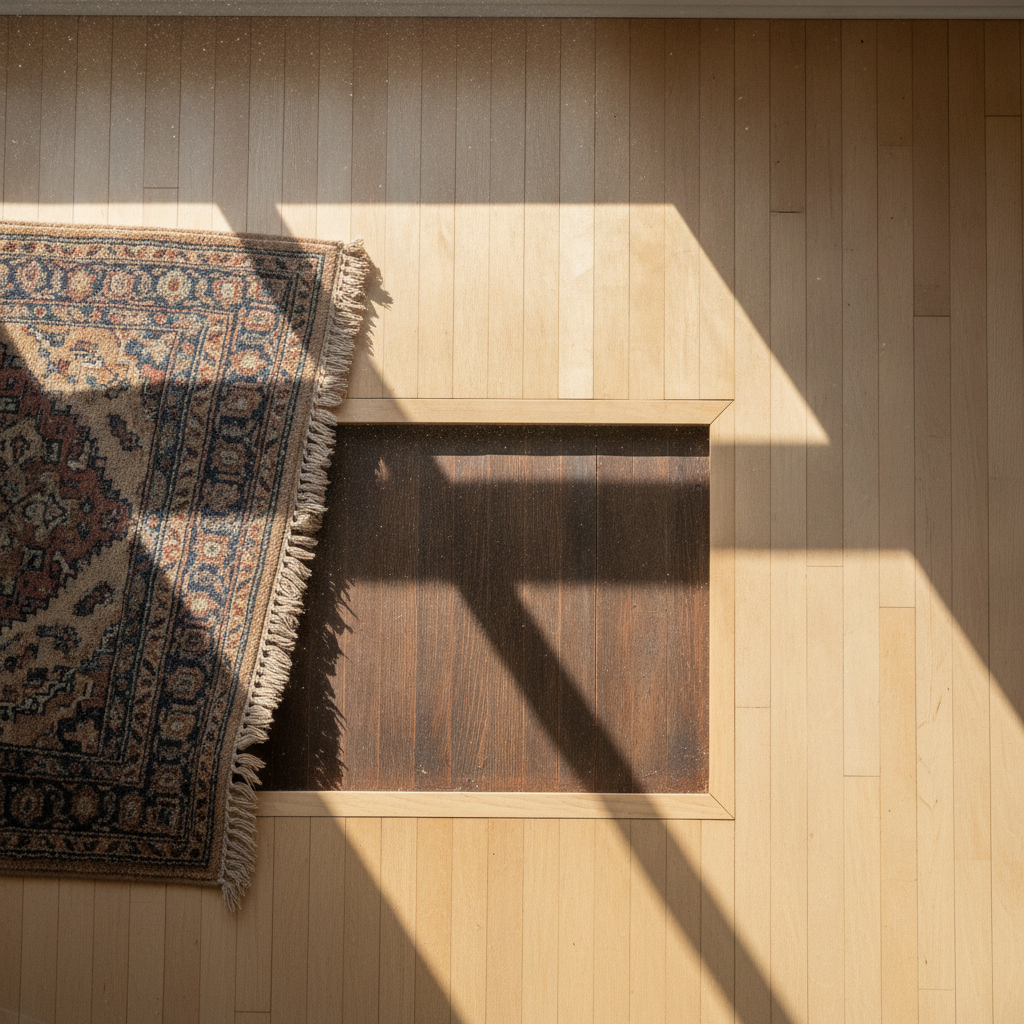
Have you ever moved an area rug only to discover a bright, unfaded “ghost” of its shape on your floor? That stark rectangle is a clear sign of a relentless and costly problem facing homeowners: sun damage. The same beautiful sunlight that fills your rooms with warmth and light is also silently working to fade, discolor, and degrade your expensive flooring. This floor discoloration from sun is more than a cosmetic issue; it’s an attack on your home’s value and aesthetic.
But what if you could conquer sun damage for good? This is your definitive, science-backed playbook. We’re moving beyond vague “fade proof” marketing claims to give you a complete lifecycle strategy for your floors. You’ll learn the science behind UV damage to flooring, how to choose the best new materials for your sun-drenched spaces, how to implement cost-effective protection for the floors you already love, and what to do when fading has already occurred. It’s time to make confident, long-lasting decisions to protect your investment.
- The Science of Sun Damage: Why Your Floors Are Fading
- The Best Flooring for Rooms with Lots of Sun: A Comparative Guide
- How to Protect Floors from UV Damage: 4 Proactive Strategies
- Already Faded? How to Repair Sun-Damaged Flooring
- Frequently Asked Questions About Sunlight and Flooring
- Conclusion
- References
The Science of Sun Damage: Why Your Floors Are Fading
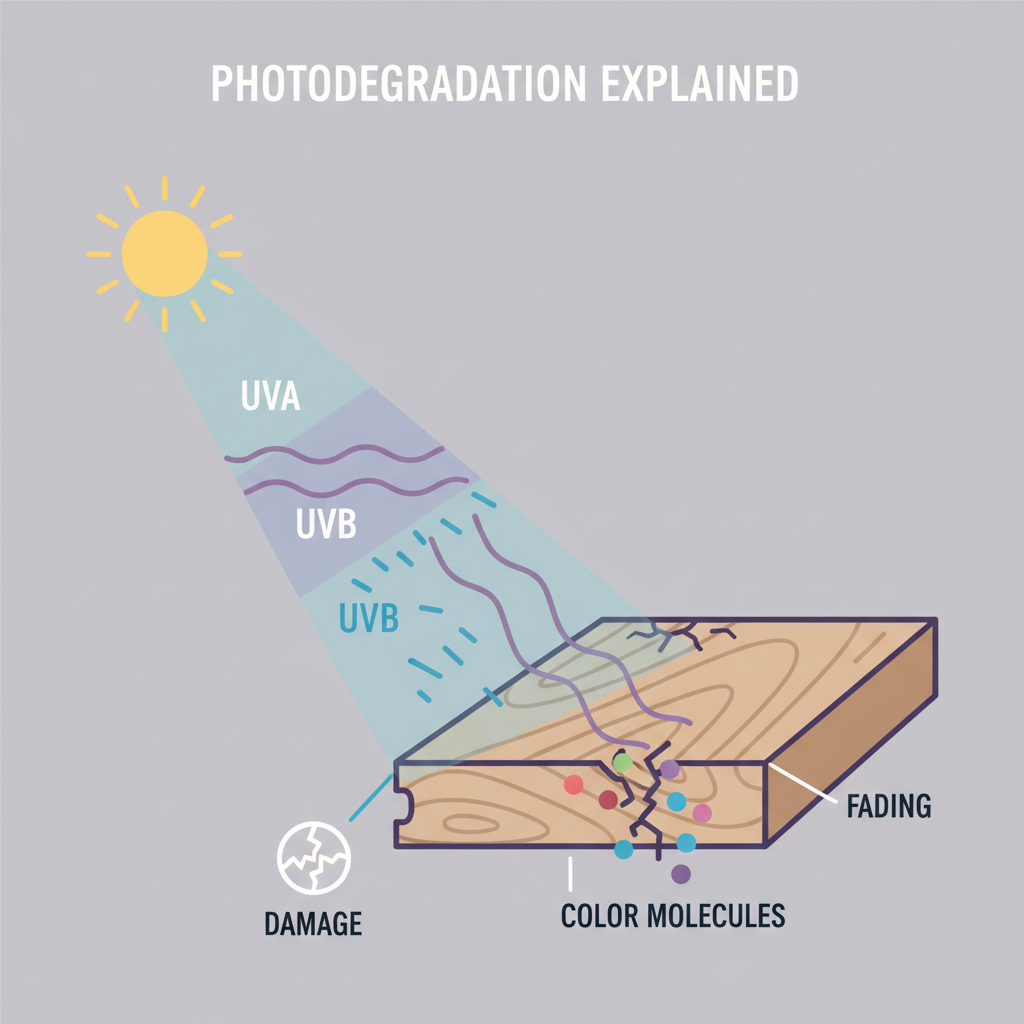
To effectively combat sun-faded floors, you first need to understand the enemy. The fading and discoloration you see is a chemical process called photodegradation. Think of it like a newspaper left out in the sun; over time, the paper turns yellow and brittle. A similar process is happening at a molecular level on your floors, driven by the ultraviolet (UV) radiation in sunlight.
UVA vs. UVB: The Two Types of Damage
Sunlight contains different types of UV rays, but two are primarily responsible for damaging your floors:
- UVA (Ultraviolet A): These longer-wavelength rays penetrate deep into materials. They are the primary culprit behind fading and color change, as they break down the chemical bonds that give flooring its color.
- UVB (Ultraviolet B): These shorter-wavelength rays primarily affect the surface of your flooring. They can cause materials to become brittle, crack, or lose their protective finish over time.
According to materials science experts, while both ray types contribute to degradation, UVA rays account for the vast majority of the visible color fading that homeowners notice.[1]
How Sunlight Affects Different Flooring Materials
Photodegradation manifests differently depending on the material. This is because UV rays interact with the unique chemical makeup of each flooring type:
- Hardwood: The UV rays break down lignin, a natural polymer in wood that provides rigidity. This chemical reaction can cause some woods, like oak, to bleach and lighten, while others, like cherry and Brazilian cherry, will dramatically darken.
- Vinyl (LVP/LVT): Sunlight can break the polymer chains in the PVC that forms the core of vinyl flooring. This can lead to yellowing, brittleness, and fading of the printed design layer, especially in older or lower-quality products.
- Laminate: While the top wear layer offers some protection, intense UV exposure can still fade the photographic layer beneath it, causing the wood or stone pattern to lose its vibrancy.
- Carpet: The dyes used in carpet fibers are susceptible to being broken down by UV radiation, leading to noticeable fading, particularly in darker or brightly colored carpets.
The Best Flooring for Rooms with Lots of Sun: A Comparative Guide
Choosing the right flooring from the start is your most powerful defense against sun damage. Here is a data-driven comparison of the most popular flooring options to help you find the best flooring for rooms with lots of sun.
| Flooring Material | UV Resistance (1-5) | Durability (AC Rating) | Avg. Cost (per sq. ft.) | Repairability (1-5) |
|---|---|---|---|---|
| Porcelain/Ceramic Tile | 5 | N/A | $5 – $25 | 3 |
| Luxury Vinyl Plank (LVP) | 4 | N/A | $3 – $10 | 4 |
| Laminate | 3.5 | AC3 – AC5 | $2 – $8 | 4 |
| Engineered Hardwood | 3 | N/A | $5 – $15 | 3 |
| Solid Hardwood | 2 | N/A | $6 – $20 | 5 |
| Carpet | 1.5 | N/A | $2 – $12 | 1 |
Before we dive into the materials, it’s helpful to understand a key industry metric: the AC (Abrasion Class) Rating. Used for laminate flooring, this rating from 1 to 5 measures durability against abrasion, impact, and stains. For a sunny, high-traffic area, look for a rating of AC3 or higher. Similarly, some products may reference ASTM Lightfastness Ratings, which specifically measure how well a material resists fading when exposed to light.
Top Tier: The Most Sunlight Resistant Flooring
Porcelain & Ceramic Tile: With a UV Resistance rating of 5/5, tile is the undisputed champion. The color is baked into the tile or sealed under a hard, ceramic glaze that is chemically inert to UV radiation. It simply will not fade, making it a perfect, colorfast durable flooring choice for sunrooms and rooms with large windows.
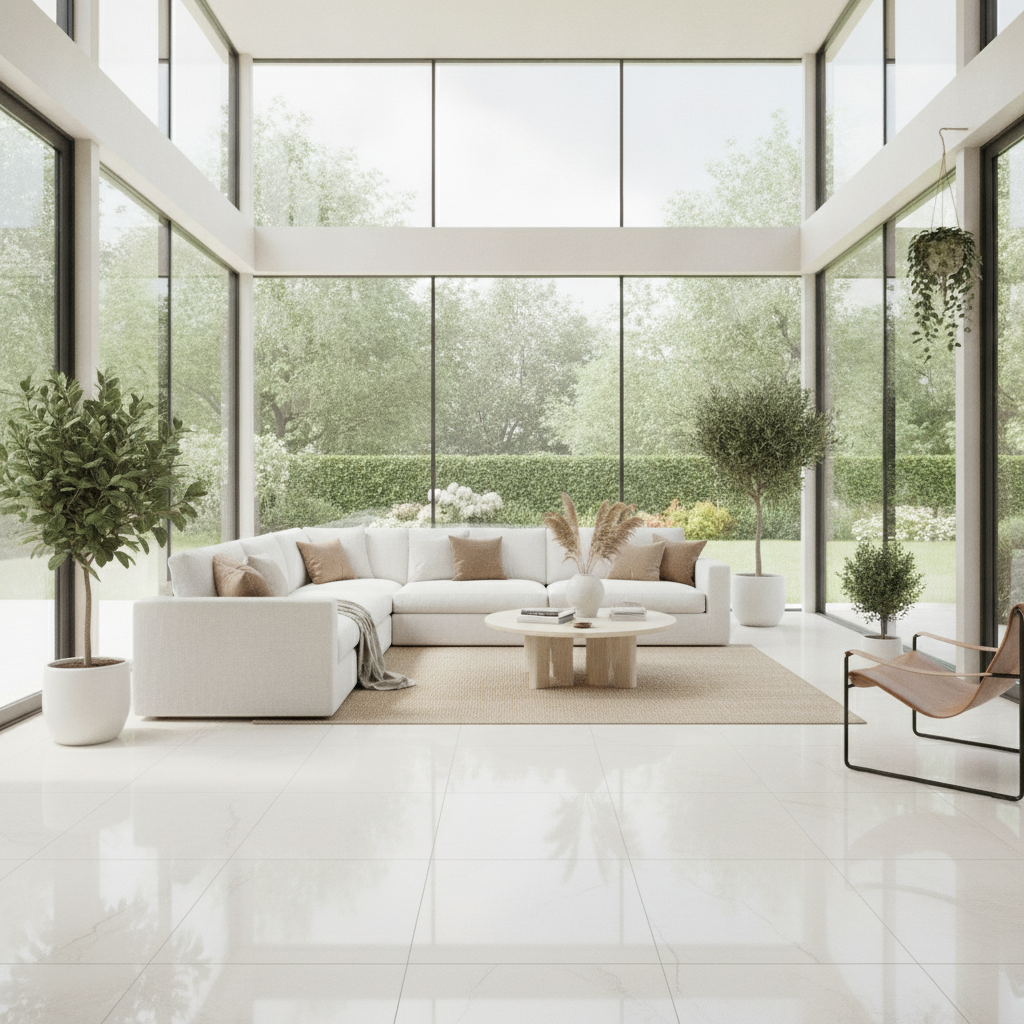
High-Quality Luxury Vinyl Plank (LVP): Modern, high-quality LVP is an excellent choice. It earns its 4/5 rating thanks to advanced, UV-cured wear layers often fortified with ceramic bead or aluminum oxide coatings. These protective top layers act as a powerful sunscreen for the printed design layer beneath, preventing the yellowing and fading common in older vinyl products.
Good Performers: Reliable Mid-Range Options
Modern Laminate Flooring: Quality laminate (AC3 or higher) is a solid performer. Its multi-layer construction includes a robust wear layer that contains UV inhibitors. This layer protects the high-definition photographic layer from the sun, preventing significant fading for many years. While not as impervious as tile, it is a reliable option for most sunny rooms.
Light-Colored Engineered Hardwood: Engineered hardwood can be a good choice if you select wisely. Lighter species like maple or white oak show fading less dramatically than darker woods. Furthermore, modern factory finishes often include powerful UV inhibitors that offer much better protection than traditional site-applied finishes.
Use with Caution: Flooring Prone to Fading
Natural Solid Hardwood: While beautiful, solid hardwood is highly susceptible to sun damage, earning a 2/5 rating. As noted, UV light alters the lignin, causing significant color change. Photosensitive exotic woods like Brazilian Cherry are particularly notorious for this. As one seasoned flooring installer advises:
“I always caution clients against putting dark or exotic hardwoods in a room with south-facing floor-to-ceiling windows. Unless they are committed to robust window treatments, they will see noticeable fading within a couple of years.”
Carpet: Most residential carpet is prone to fading. The dyes used in the fibers are simply not stable enough to withstand constant, direct sunlight, resulting in a low 1.5/5 rating for UV resistance.
How to Protect Floors from UV Damage: 4 Proactive Strategies
Whether you’re installing new floors or preserving existing ones, a proactive protection plan is essential. Here’s a comparison of the most effective strategies.
| Strategy | Effectiveness | Upfront Cost | Aesthetic Impact |
|---|---|---|---|
| UV-Blocking Window Films | Very High | Medium | Minimal |
| Strategic Window Treatments | High | Low to High | Varies |
| Protective Coatings/Sealants | Medium | Medium | Minimal |
| Smart Interior Design | Low to Medium | None | Varies |
According to a leading window treatment specialist:
“Modern UV-blocking films are a game-changer. They offer incredible protection for interiors without sacrificing your view or natural light, and they can even lower your energy bills. It’s a win-win.”
1. UV-Blocking Window Films
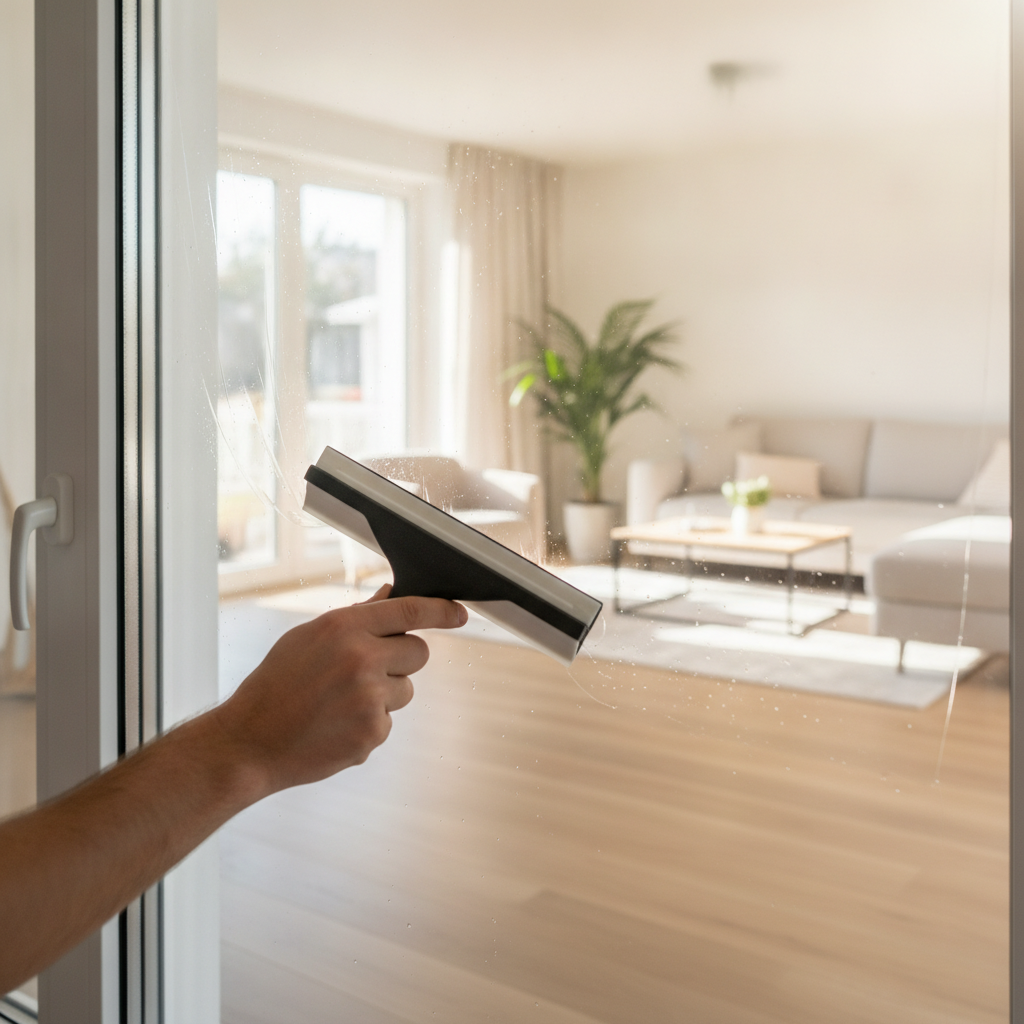
This is one of the most effective solutions. Professionally installed, high-quality window films are virtually invisible and can block up to 99.9% of harmful UVA and UVB rays before they ever touch your floor.[2] They come in various tints, from completely clear to reflective, and provide the added benefit of reducing heat and glare, which can lower cooling costs.
2. Strategic Window Treatments
The right blinds, shades, or curtains can provide excellent sunlight protection for floors.
- Solar Shades: These are specifically designed to block UV rays while preserving the view.
- Light-Filtering Blinds: These allow you to control the amount and angle of light entering the room.
- Blackout Curtains: While highly effective, they completely block natural light.
Pro Tip: An interior designer suggests using a layered approach. “Combine sheer, light-filtering curtains for daily use with heavier drapes you can close during the peak sun hours of the day. This gives you both protection and flexibility.”
3. Protective Coatings & Sealants
For hardwood floors, the type of finish makes a huge difference. When refinishing or installing new wood, opt for a modern, water-based polyurethane that includes UV inhibitors. These advanced formulas are designed to be non-yellowing and significantly slow the fading process. Branded features like an “Adamantine UV Shield” typically refer to these specialized top coats that are engineered for maximum durability and UV resistance.
4. Smart Interior Design
This is a simple, no-cost strategy to prevent floor fading. Place large area rugs in the sunniest parts of the room to shield the floor beneath. More importantly, make a habit of rearranging your furniture and rugs every 6-12 months. This ensures that light exposure is distributed more evenly across the entire floor, preventing the hard lines and “ghosting” that can occur over time.
Already Faded? How to Repair Sun-Damaged Flooring
If the damage is already done, don’t despair. Depending on your flooring type, you may have excellent options for restoration.
We asked a certified flooring restoration specialist two key questions:
Q: What’s the most common mistake homeowners make when trying to fix sun damage?
A: “Trying to spot-treat hardwood. They’ll try to sand and stain just the faded patch, but it’s nearly impossible to get a perfect match. You almost always end up with a more obvious-looking repair. For wood, it’s usually an all-or-nothing refinishing job for that room.”
Q: How do you know if a floor is beyond repair?
A: “For hardwood, if there’s deep cracking, warping, or if it has been sanded down too many times before, it’s time for replacement. For laminate or LVP, if the top wear layer is peeling or compromised, or if the locking systems are broken, a simple plank replacement won’t work.”
For Hardwood Floors: Sanding and Refinishing
This is the gold standard for repairing sun faded hardwood floors. The process involves sanding the entire floor surface down past the damaged layer, which removes the discoloration. A new stain can then be applied to restore the original color (or choose a new one!), followed by several coats of a high-quality protective finish with UV inhibitors. This is a job best left to certified professionals to ensure a beautiful, uniform result.
For LVP and Laminate: The Plank Replacement Trick
One of the great advantages of LVP and laminate is their modular design. If you have a few planks that are severely faded, a skilled installer can often replace just the damaged ones without having to to tear out the entire floor.
Pro Tip: This is why it is absolutely crucial to buy and save at least one extra box of planks when you first install your floor. Color and pattern batches can change over time, and having original planks on hand can save you from a huge headache down the road.
When to Consider Replacement
Sometimes, repair isn’t a viable option. You should consider replacement if you see these signs:
- The fading on hardwood is accompanied by cracking, cupping, or warping from heat.
- The protective wear layer on your LVP or laminate is peeling away.
- The discoloration on vinyl is deep yellowing, which indicates the PVC core itself has degraded.
- Your carpet is not only faded but also has brittle or frayed fibers in the sunny areas.
Frequently Asked Questions About Sunlight and Flooring
Q: Is any flooring 100% ‘fade proof’?
No, “fade proof” is largely a marketing term. The more accurate term is “UV resistant.” While no material is completely immune to the effects of UV radiation over many decades, some come very close. Porcelain tile is the most resistant to fading and is the closest you can get to a truly fade proof floor.
Q: Will low-E windows protect my floors?
Yes, to a significant degree. Low-E (low-emissivity) windows have a microscopic, transparent metallic coating that reflects UV and infrared light while allowing visible light to pass through. According to the U.S. Department of Energy, these coatings can block as much as 75% of the sun’s harmful UV rays, making them an excellent first line of defense for your floors and furniture.[3]
Q: Does the color of my floor affect how much it fades?
Yes, absolutely. While all colors can fade, the effect is often much more dramatic and noticeable on darker floors. A light, natural-colored oak floor might lighten subtly over time, but a deep cherry or ebony-stained floor will show a much starker contrast in faded areas, making the damage more apparent.
Conclusion
Sun damage to your floors is a formidable opponent, but it is one you can beat with the right knowledge and strategy. By embracing a three-step lifecycle approach, you can protect your investment and keep your home looking beautiful for years to come.
- Choose Wisely: Start by selecting a highly UV resistant flooring material like porcelain tile or quality LVP for your sunniest rooms.
- Protect Proactively: Implement effective safeguards like UV-blocking window films and smart furniture placement to shield your floors from harmful rays.
- Repair Correctly: If damage has already occurred, understand your options. Know when a professional refinishing can restore your floor’s beauty and when it’s time to consider a replacement.
You are now empowered with the information to move beyond guesswork and make confident decisions. Your beautiful, sun-drenched rooms don’t have to come at the cost of your flooring.
Ready to find the perfect, long-lasting floor for your sunniest rooms? Explore our collection of high-performance LVP and Engineered Hardwood flooring today, or contact our flooring experts for a personalized consultation.
This article provides general guidance. For specific flooring installation, repair, or product choices, please consult with a qualified flooring professional. Product performance may vary based on specific environmental conditions and usage.
References
- Polymer Science Institute. (N.D.). The Effects of Ultraviolet Radiation on Common Household Materials.
- International Window Film Association. (2025). Technical Specifications for UV-Blocking Films. Retrieved from iwfa.com
- U.S. Department of Energy. (2024). Energy Performance Ratings for Windows, Doors, and Skylights. Retrieved from energy.gov
