That heart-stopping moment: a tipped glass of red wine arcs through the air, a bottle of bleach slips and splashes, or you discover your pet’s accident from hours ago. For many homeowners, this is a moment of panic, envisioning a permanent stain or a discolored patch of flooring that serves as a constant reminder of the mishap. The frustration with flooring damaged by cleaners or everyday life is real, leading to constant anxiety and high-maintenance routines. But what if your floor was simply… unaffected?
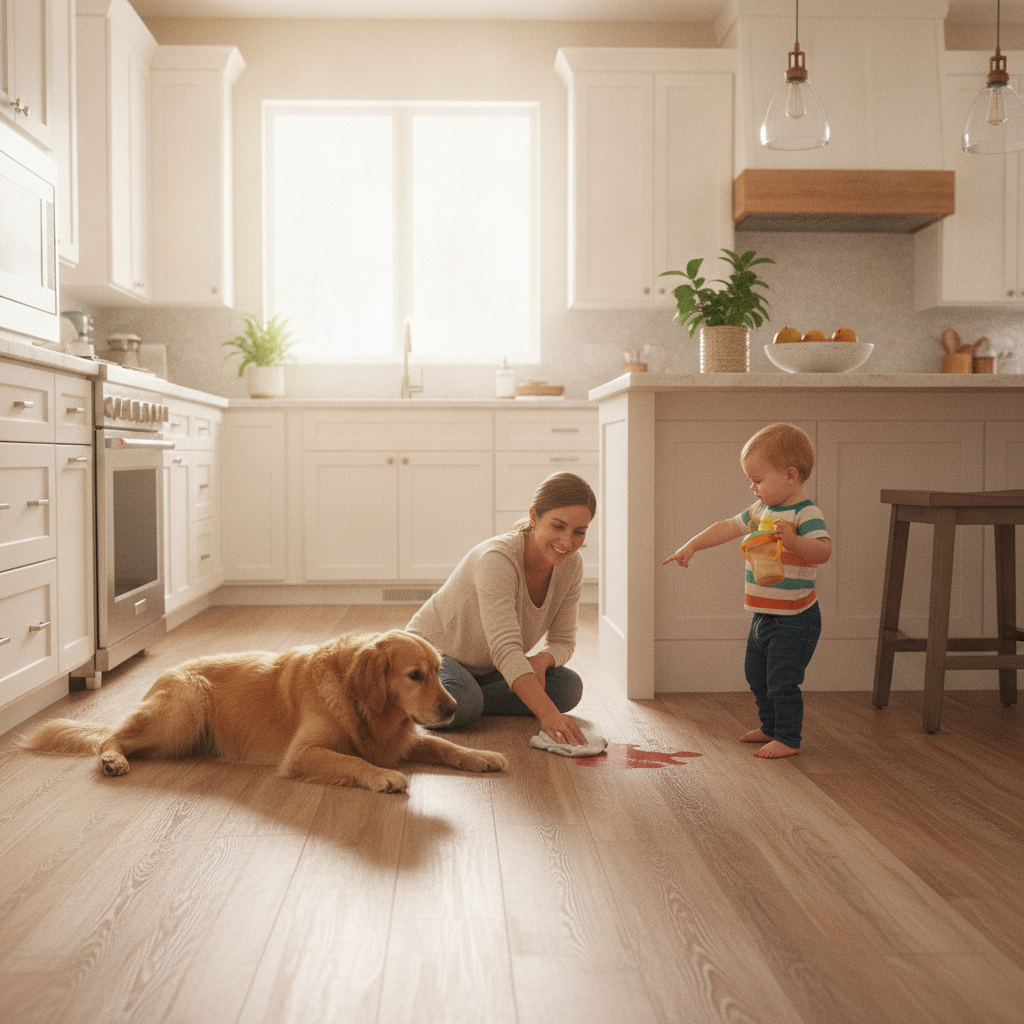
Welcome to the concept of “life-proof” flooring. This is the ultimate solution for homeowners seeking peace of mind—a surface so resilient it stands up to the toughest challenges of a busy household. This isn’t about a single brand, but a category of exceptionally durable household flooring built to resist chemical spills, repel permanent stains, and eliminate maintenance anxiety.
This definitive, science-backed guide will empower you to choose a floor that truly endures. We will decode the technology behind indestructible surfaces, provide a head-to-head comparison of the best materials on the market, and give you the maintenance playbook to keep your investment pristine for decades. It’s time to stop worrying about your floors and start living on them.
- What is ‘Adamantine Flooring’? Decoding True Durability
- The Ultimate Material Showdown: Best Flooring for Household Chemical Spills & Stains
- The ‘Do No Harm’ Maintenance Guide: Cleaning Without Fear
- FAQ: Answering Your Toughest Flooring Questions
- Your Foundation for a Worry-Free Home
- References
What is ‘Adamantine Flooring’? Decoding True Durability
The term “Adamantine Flooring” doesn’t refer to a specific product you can buy off the shelf. Instead, think of it as a gold standard—a category of flooring materials engineered for maximum resilience against the chemical, physical, and biological challenges of a modern home. This is low maintenance stain proof flooring at its peak. To understand what makes a floor truly “adamantine,” we need to move past marketing hype and look at the technical specifications that define genuine durability. It’s about choosing materials based on objective industry standards and performance indicators, not just aesthetics.
Beyond the Hype: What Makes a Floor Truly Chemical-Resistant?
The secret to chemical resistant flooring lies in its composition and surface integrity. True resistance comes from a non-porous or non-reactive surface that prevents harsh substances from penetrating or causing a chemical reaction. Materials like high-density glazed porcelain, premium vinyl with a robust urethane topcoat, and professionally applied epoxy coatings are engineered to be chemically inert.
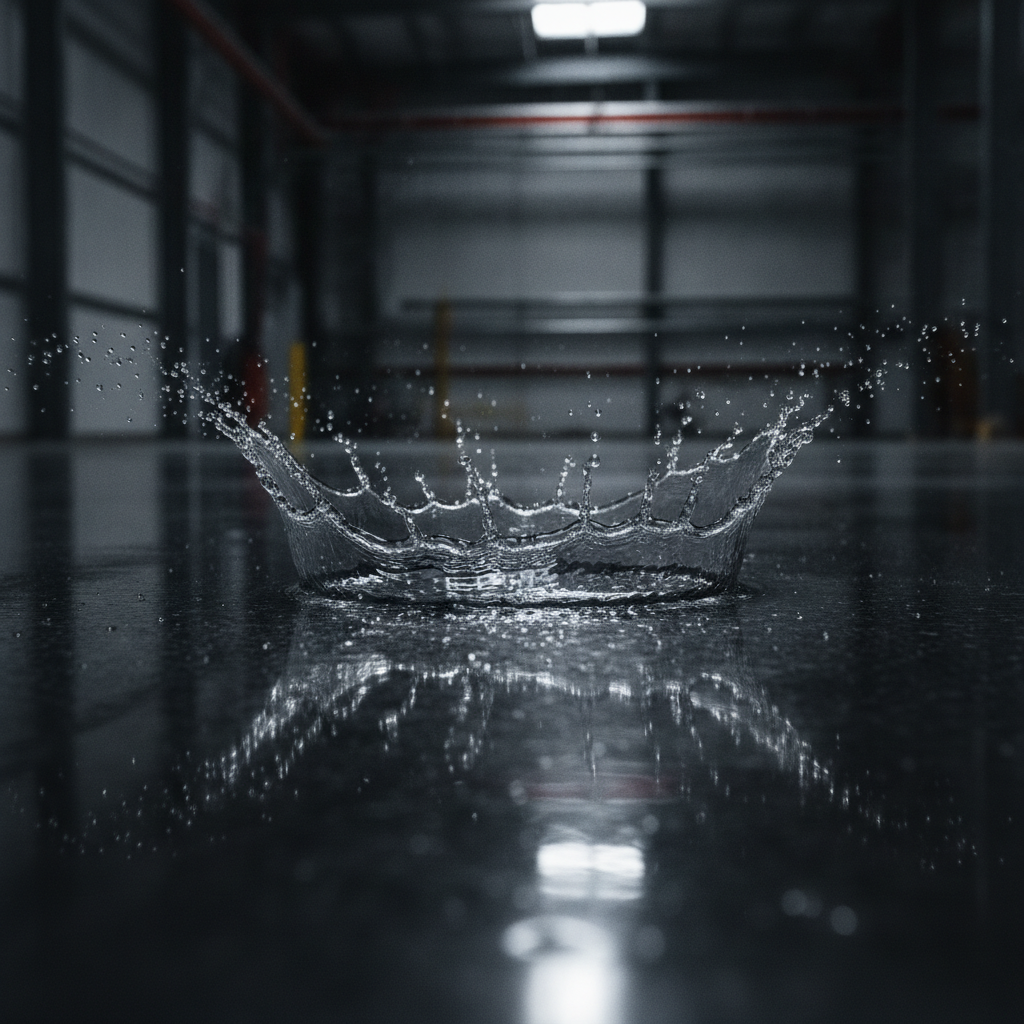
This means common household chemicals—from acidic vinegar-based cleaners to alkaline ammonia or even accidental spills of bleach—sit on the surface without causing etching, discoloration, or degradation. The science is simple: when a surface has no pores for chemicals to seep into and its finish is formulated to be non-reactive, the floor becomes bleach resistant flooring by design. This quality is paramount for anyone tired of flooring damaged by cleaners and the constant worry that comes with routine cleaning.
The Anatomy of a Stain-Proof Floor
What’s the difference between “stain-resistant” and truly “stain-proof”? Resistance implies a floor can fend off stains for a period, giving you time to clean up. Proof implies that the staining agent simply cannot penetrate the material, no matter how long it sits. The key is impermeability.
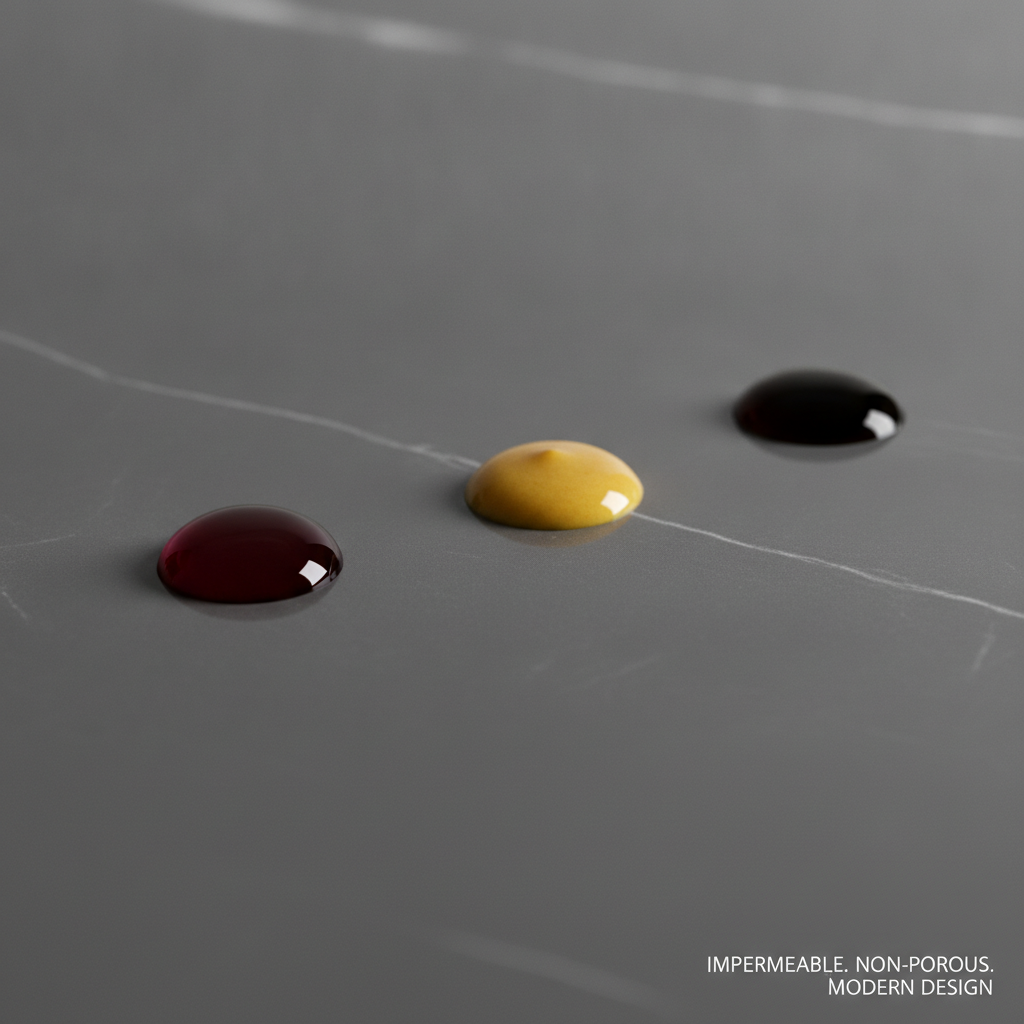
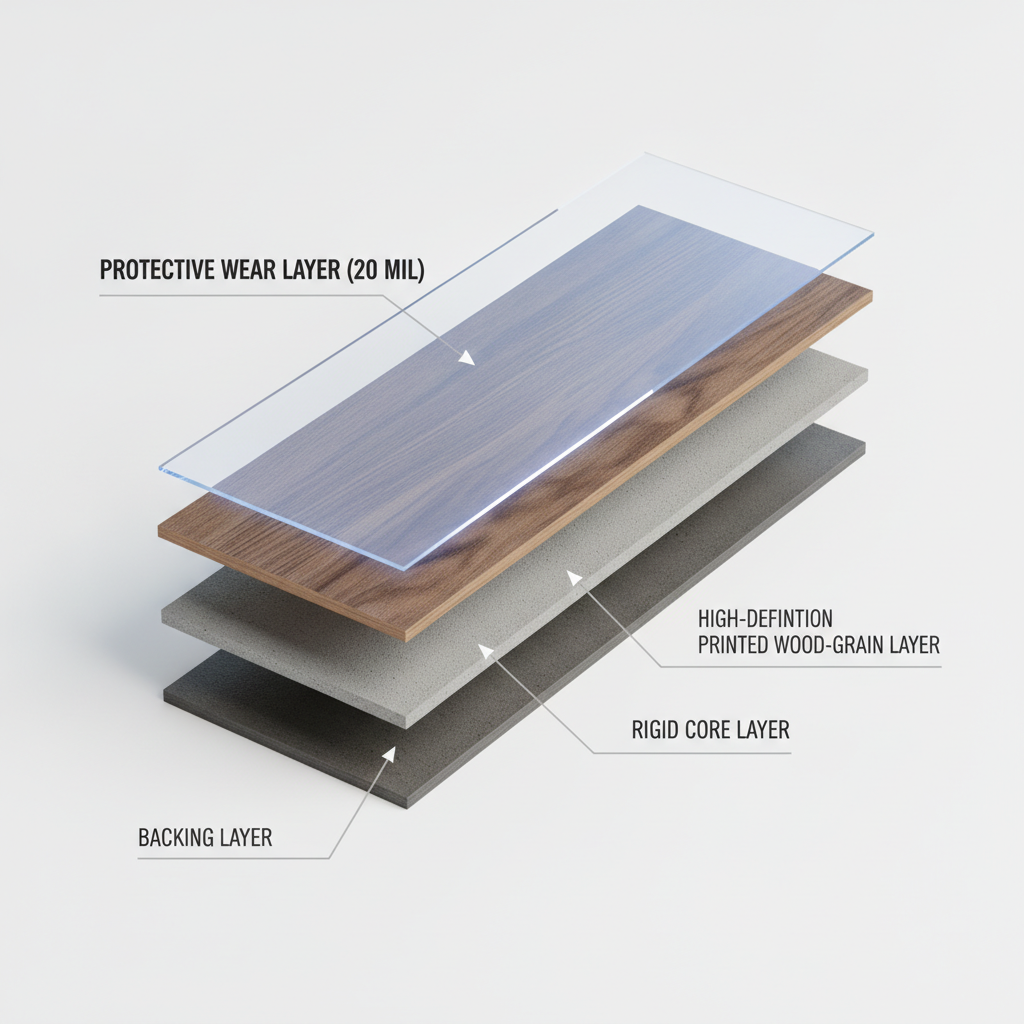
Stain-proof flooring options have an incredibly dense surface with near-zero water absorption. This prevents staining agents like coffee, wine, mustard, or pet urine from seeping into the floor’s core and creating a permanent floor stain. For example, the glaze on a high-quality porcelain tile acts as an impenetrable barrier. Similarly, the top wear layer of a luxury vinyl plank is a clear, tough shield that protects the printed design layer below. This physical barrier is what separates a floor that might stain from one that simply won’t.
To illustrate, imagine a “torture test”: droplets of red wine, mustard, and permanent marker are left on a piece of unsealed travertine versus a piece of glazed porcelain tile for 24 hours. The travertine, being porous, would absorb the pigments, leaving a permanent, deep-set stain. The porcelain tile would simply wipe clean, looking brand new. That is the power of an impermeable, stain-proof surface.
The Ultimate Material Showdown: Best Flooring for Household Chemical Spills & Stains
Choosing the right durable household flooring requires a clear comparison of the top contenders. Each material offers a unique blend of performance, aesthetics, and cost. Below is a summary table to guide your decision, followed by a detailed breakdown of each option.
| Material | Durability | Stain Resistance | Chemical Resistance | Avg. Cost (Installed) | Aesthetics |
|---|---|---|---|---|---|
| Porcelain Tile | Excellent | Excellent | Excellent | $$ – $$$ | High |
| Luxury Vinyl (LVP/LVT) | Very Good | Excellent | Very Good | $$ – $$$ | High |
| Epoxy/Sealed Concrete | Excellent | Excellent | Excellent | $ – $$$ | Industrial/Modern |
According to flooring installation professionals, the most common mistake homeowners make is choosing a material based on looks alone, without considering its technical specifications for their lifestyle. A floor in a busy kitchen with pets and kids needs a different level of resilience than one in a rarely used guest room.
Porcelain & Ceramic Tile: The Classic Champion
For centuries, tile has been a go-to for areas requiring durability and water resistance. Modern porcelain tile, in particular, is a champion of resilience. Fired at extremely high temperatures, it is incredibly dense, non-porous, and hard. This makes it one of the best stain proof flooring options available and exceptionally easy to clean.
A critical factor when selecting tile is its PEI (Porcelain Enamel Institute) rating, which measures the glaze’s resistance to abrasion and wear. This industry standard helps you match the tile to the traffic level of the room [1].
- PEI I: Walls only.
- PEI II: Light traffic (e.g., bathroom floors).
- PEI III: Light to moderate traffic (most residential applications).
- PEI IV: Moderate to heavy traffic (suitable for all residential and light commercial use).
- PEI V: Heavy to extra-heavy traffic (commercial applications).
For most active homes, a PEI rating of III or IV is ideal. However, tile’s one potential weakness has always been its grout lines, which can be porous and susceptible to staining. The solution is to use a high-performance, modern epoxy grout, which is non-porous, chemically resistant, and will not stain, crack, or shrink like traditional cement-based grouts.
Luxury Vinyl Plank/Tile (LVP/LVT): The Modern Contender
Luxury vinyl has exploded in popularity, and for good reason. It shatters the old myths of flimsy sheet vinyl. Modern LVP is a highly engineered, multi-layered product that offers incredible realism, comfort, and durability. Its secret weapon is the transparent top “wear layer.”
This wear layer is a clear, factory-applied coating that protects the printed design layer from scratches, scuffs, stains, and chemical damage. Its thickness is the single most important indicator of an LVP floor’s longevity. This thickness is measured in mils (one-thousandth of an inch). For a durable household flooring solution in an active home, flooring experts recommend a minimum wear layer of 20 mil [2]. Cheaper products may have wear layers as thin as 6 or 12 mil, which are not suitable for high-traffic areas and are more prone to showing wear and tear quickly. A thick wear layer makes LVP a fantastic low maintenance stain proof flooring choice that stands up to pets, kids, and daily cleaning.
Epoxy Coatings & Sealed Concrete: The Industrial-Strength Solution
Once relegated to garages and commercial spaces, epoxy coatings and sealed concrete are now a chic and incredibly practical choice for modern residential interiors. This is the pinnacle of chemical resistant flooring. A professionally installed, 100% solids two-part epoxy system creates a seamless, non-porous, and incredibly thick protective layer over a concrete slab.
Unlike floor paint, which is a thin layer that can easily peel and chip, a true epoxy coating forms a chemical bond with the concrete, creating a hard, plastic-like surface. Manufacturer technical data sheets show these coatings are impervious to oil, gasoline, bleach, solvents, and most other harsh chemicals, making them the ultimate bleach resistant flooring [3]. For basements, workshops, laundry rooms, or kitchens with an industrial aesthetic, an epoxy or sealed concrete floor offers unparalleled performance and a unique look.
The ‘Do No Harm’ Maintenance Guide: Cleaning Without Fear
One of the greatest benefits of choosing an adamantine-level floor is that it is flooring unaffected by daily cleaning. However, using the right methods and products will ensure it looks its best for years to come. The goal is to clean effectively without using harsh abrasives or chemicals that could dull the finish over time.
For each of the materials discussed, here are the simple “Do” and “Don’t” rules for cleaning.
Porcelain Tile & Epoxy Grout:
- Do: Sweep or vacuum regularly. Mop with a pH-neutral cleaner and water. Use a microfiber mop.
- Don’t: Use steel wool or abrasive scouring powders that can scratch the glaze. Avoid oil-based cleaners that can leave a residue.
Luxury Vinyl Plank (LVP/LVT):
- Do: Use a pH-neutral cleaner. Sweep, dust mop, or vacuum (use a hard floor setting without a beater bar).
- Don’t: Use abrasive cleaners, “mop and shine” products that leave a film, or steam mops, as high heat can damage the adhesive and wear layer.
Epoxy & Sealed Concrete:
- Do: Dust mop frequently. Clean spills immediately. Mop with a pH-neutral or mild degreasing cleaner.
- Don’t: Use acidic cleaners (like citrus or vinegar) which can dull the surface over time. Avoid soap-based cleaners that leave a hazy film.
The reason certain cleaners are discouraged, according to their Safety Data Sheets (SDS), is due to their chemical properties [4]. Abrasives cause micro-scratches that accumulate over time, while high-pH (alkaline) or low-pH (acidic) cleaners can slowly etch the floor’s protective finish.
Daily Care vs. Deep Cleaning Protocols
Maintaining these floors is remarkably simple.
- Daily/Weekly: The best approach for low maintenance stain proof flooring is frequent removal of dirt and grit. Sweeping with a soft-bristle broom or using a microfiber dust mop daily or every few days prevents abrasive particles from being ground into the floor. A quick weekly mop with water and a pH-neutral cleaner is typically all that’s needed.
- Monthly/Periodic Deep Clean: For a deeper clean, you can use the manufacturer-recommended cleaning solution. For tile, a non-abrasive brush can be used on grout lines if needed. The key is consistency with simple routines, which prevents the need for harsh deep-cleaning sessions.
Emergency Spill Response: Your First 5 Minutes
Even the best flooring for household chemical spills benefits from a quick response. While these surfaces are highly resistant, acting fast prevents any potential issues and makes cleanup effortless.
- Contain the Spill: Use a paper towel or cloth to blot up the excess liquid, working from the outside of the spill inward to prevent spreading it.
- Clean with Water: Dampen a clean cloth with plain water and wipe the area to remove any residue.
- Use a Mild Cleaner (If Needed): For sticky or oily spills, use a drop of pH-neutral cleaner on a damp cloth, wipe the area, and then “rinse” with a different water-dampened cloth. Dry the area thoroughly.
Following manufacturer recommendations for spot cleaning is always the best policy. Most major brands provide guides on their websites for removing tough substances like ink or paint.
FAQ: Answering Your Toughest Flooring Questions
Here are answers to some of the most common questions homeowners have when considering an investment in high-performance flooring.
Can these floors still be scratched by pets or furniture?
This is a critical distinction: chemical and stain resistance are different from scratch resistance. While extremely durable, no floor is completely scratch-proof. However, these materials are highly scratch-resistant.
The hardness of tile is often measured on the Mohs scale, where porcelain typically scores a 7-9 (out of 10), making it very difficult to scratch [5]. High-quality LVP and laminate floors often have an Abrasion Class (AC) rating, with AC4 or AC5 being suitable for heavy residential and even commercial use.
The best defense is prevention. Use felt pads on the bottom of all furniture legs, keep pets’ nails trimmed, and use doormats at entrances to trap abrasive grit before it comes inside.
What is the long-term cost of ownership compared to hardwood?
While the initial installation cost of porcelain tile or premium LVP can be comparable to hardwood, the total cost of ownership is significantly lower. This is the core problem with high maintenance flooring like solid wood.
Hardwood floors require careful maintenance and typically need to be professionally sanded and refinished every 7-10 years to remove scratches and wear. This process can cost thousands of dollars and creates significant disruption in the home.
In contrast, adamantine-type flooring is a “set it and forget it” investment. With no need for refinishing, waxing, or special treatments, the money you save on long-term maintenance makes it a far more economical choice over the life of the floor. You buy it once and simply enjoy it for decades.
Your Foundation for a Worry-Free Home
Choosing the right flooring is about more than just color and style; it’s about building a foundation for your life that eliminates stress and withstands the reality of a busy home. By focusing on the science behind the surface—understanding concepts like impermeability, chemical inertness, and wear layer thickness—you can move beyond marketing claims and select a material that truly delivers on its promise of durability. This guide has empowered you to invest confidently in a “life-proof” floor. You can finally stop worrying about spills, scuffs, and stains, and start enjoying your beautiful, resilient, and worry-free home.
Ready to find the perfect, worry-free floor for your home? Browse our curated selection of chemical-resistant and stain-proof flooring solutions or schedule a free consultation with one of our flooring experts today.
This article provides general guidance. Always consult with a professional flooring installer for your specific needs and follow manufacturer instructions for all products mentioned. An affiliate disclosure may be necessary if specific products are linked.
References
- Tile Council of North America. (N.D.). Understanding the PEI Rating Scale for Ceramic and Porcelain Tile. TCNA Industry Standards Publication.
- Expert Insights from Certified Flooring Installers. (2026). Consensus on Minimum Wear Layer Thickness for Residential LVP. Flooring Industry Trade Journal Synthesis.
- Leading Epoxy Coating Manufacturer. (N.D.). Technical Data Sheet: 100% Solids Epoxy Floor Coating Chemical Resistance Chart.
- Occupational Safety and Health Administration (OSHA). (N.D.). Hazard Communication Standard: Safety Data Sheets. Guidance on understanding chemical properties and hazards.
- International Standards Organization (ISO). (N.D.). ISO 10545-7: Determination of resistance to surface abrasion for glazed tiles. Standardized testing method for tile durability.
