It’s a feeling every homeowner dreads: the sickening scrape, the flash of movement, and the discovery of the first deep scratch on a beautiful, brand-new floor. That single mark can feel like a permanent blemish on your investment, a daily reminder that your pristine surface is under constant attack. But what if you could move beyond the cycle of worry and repair? What if you could build a fortress of durability from the ground up?
Welcome to the concept of ‘Adamantine Flooring.’ This isn’t a single product you can buy off a shelf. It’s a complete system—a lifecycle approach to achieving a floor that not only resists daily damage but can be maintained and restored for decades of flawless service. This guide will empower you to leave flooring anxiety behind. We will arm you with the knowledge to choose the right material based on hard data, master a proactive protection system, and repair any inevitable damage with the confidence of a professional.
- The Science of Floor Destruction: Understanding Daily Abrasion vs. Scratches
- Choosing Your Champion: A Data-Driven Guide to the Best Abrasion-Resistant Flooring
- The ‘Floor Guardian’ System: Proactive Preservation for a Pristine Finish
- The Definitive Scratch Repair Guide: From Minor Scuffs to Deep Gouges
- The Long-Term View: Lifespan, ‘Normal’ Wear, and Total Cost of Ownership
- Conclusion: From Anxious Owner to Confident Guardian
- References
The Science of Floor Destruction: Understanding Daily Abrasion vs. Scratches
Before you can defend your floors, you must understand the enemy. The damage your floors sustain isn’t just about isolated, dramatic events like dropping a heavy pan. The most relentless attacker is often invisible: daily floor abrasion.
There’s a critical difference between a scratch and abrasion. A scratch is a distinct, visible incision or gouge in the floor’s surface, usually caused by a single event. Abrasion, on the other hand, is the cumulative effect of thousands of microscopic scratches that dull the finish and wear down the surface over time.
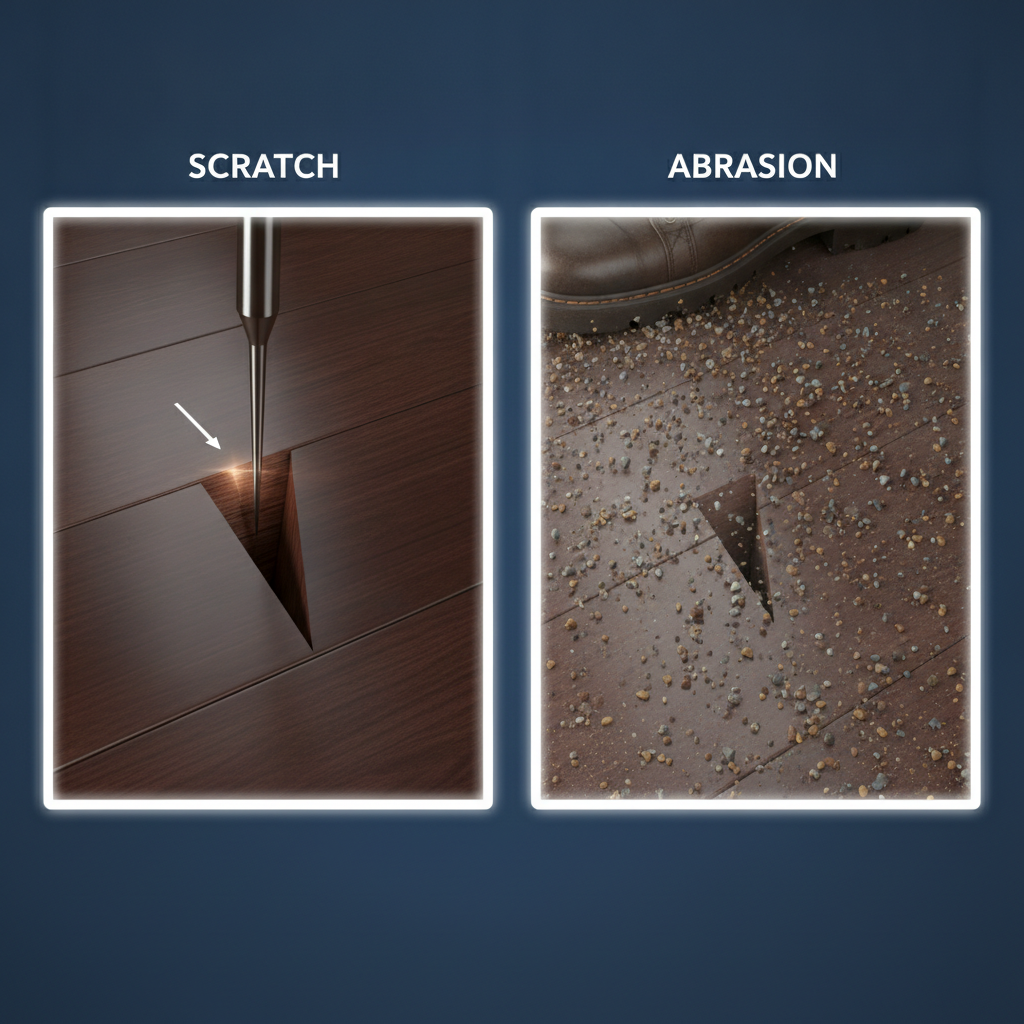
Think of the grit, sand, and dirt tracked into your home on the bottom of shoes. These tiny, sharp particles act like a low-grade sandpaper. With every footstep, they are ground against your floor’s protective top layer, creating micro-scratches. While one is unnoticeable, thousands of them combine to create dull, worn-looking pathways in high-traffic areas. This is the essence of floor wear and tear.
According to materials science principles, this process of “abrasive wear” is one of the most common modes of material degradation.1 The protective finishes on modern flooring, such as polyurethane or advanced aluminum oxide coatings, are designed specifically to combat this. As leading floor care experts at Bona explain, these top layers, or “wear layers,” are engineered to be harder than the abrasive particles they encounter, but even the toughest finish can be worn down by a constant barrage of grit.2 Floors with softer finishes or no distinct wear layer, like natural oil-finished hardwood or low-quality vinyl, are the most susceptible to this relentless daily abrasion.
Choosing Your Champion: A Data-Driven Guide to the Best Abrasion-Resistant Flooring
Selecting a durable floor can feel like navigating a sea of marketing claims. To make a true long-term investment, you need to look past the showroom shine and focus on objective, industry-standard data. Here, we break down the top contenders for the best flooring for high traffic areas, crowning a champion based on measurable performance.
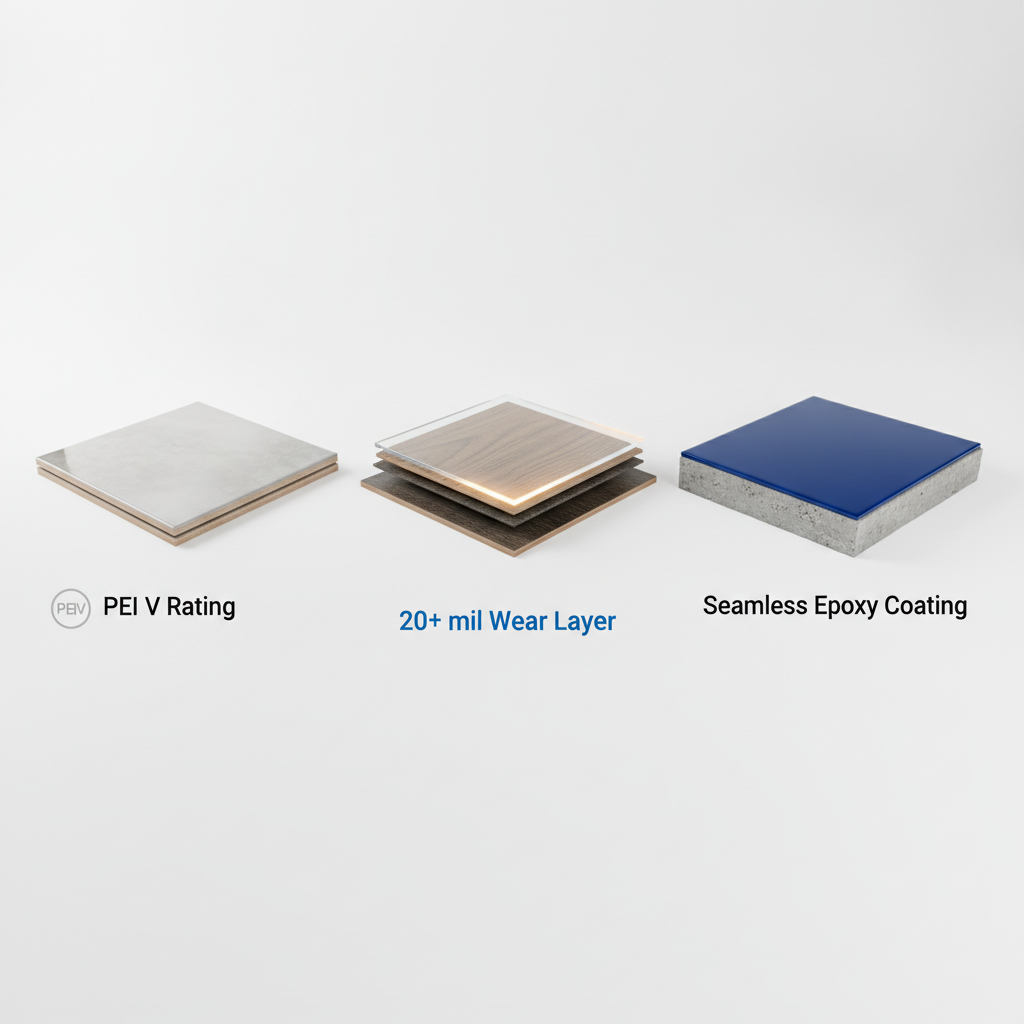
Durability & Performance Matrix: Top Flooring Contenders
| Flooring Type | Key Durability Metric | Average Cost (Material Only) | Maintenance Level | Best For |
|---|---|---|---|---|
| Porcelain Tile | PEI Rating (IV or V) | $2 – $15 / sq. ft. | Low | Entryways, kitchens, bathrooms, commercial spaces |
| Luxury Vinyl (LVT/LVP) | Wear Layer (≥ 20 mil) | $3 – $7 / sq. ft. | Low | All residential areas, basements, light commercial |
| Laminate | AC Rating (AC4 or AC5) | $2 – $5 / sq. ft. | Low | Living areas, bedrooms, hallways |
| Epoxy Coating | Material Hardness | $4 – $12 / sq. ft. | Very Low | Garages, basements, workshops, industrial settings |
The Undisputed King: Porcelain & Ceramic Tile (PEI Rating Explained)
When asked “what is the most wear proof flooring,” the answer for most applications is porcelain tile. Made from finer, denser clay and fired at higher temperatures than ceramic, porcelain is exceptionally hard and resistant to scratches, stains, and moisture.
But not all tiles are created equal. The key to choosing the right one is the PEI (Porcelain Enamel Institute) rating. This scale, recognized by the Tile Council of North America (TCNA), measures the abrasion resistance of a tile’s glaze.3
PEI Rating Scale & Recommended Use:
| PEI Rating | Description | Recommended Application |
|---|---|---|
| PEI I | No Foot Traffic | Wall tile only |
| PEI II | Light Traffic | Bathroom floors, soft-soled shoe areas |
| PEI III | Light to Moderate Traffic | All residential areas |
| PEI IV | Moderate to Heavy Traffic | All residential, light-to-moderate commercial |
| PEI V | Heavy to Extra-Heavy Traffic | All residential and all commercial applications |
For a truly durable floor in a busy home, look for a PEI rating of III or IV. For commercial spaces or the most demanding home environments, PEI V is the ultimate choice.
The Resilient Contender: Luxury Vinyl Tile (LVT) and the Crucial Wear Layer
Luxury Vinyl Tile (LVT) and Planks (LVP) are marvels of modern flooring technology, offering incredible realism and comfort. Their secret to durability lies in a multi-layer construction, with the most important being the transparent top wear layer. This is what stands between daily life and the beautiful printed design below.
The thickness of this wear layer, measured in mils (1 mil = one-thousandth of an inch), is the single most important factor in its longevity. According to the Resilient Floor Covering Institute (RFCI), a thicker wear layer provides significantly more protection against scratches and abrasion.4
Understanding Wear Layer Thickness:
- 6-10 mil: Suitable for light residential use (e.g., bedrooms).
- 12-20 mil: The standard for all-purpose residential use, including high-traffic areas.
- 20+ mil: Considered “commercial grade,” offering the best possible protection for the busiest homes and commercial settings.
When shopping for LVT/LVP, ignore everything else until you’ve confirmed the wear layer thickness. For an adamantine floor, a 20 mil wear layer is your minimum target.
Industrial-Grade Solutions for Your Home: Epoxy Coatings and Polished Concrete
For ultimate, uncompromising durability in spaces like garages, basements, or workshops, it’s time to look at industrial-grade solutions.
Epoxy floor coatings involve applying a two-part system of a resin and a hardener directly over a concrete slab. This chemical reaction creates an extremely hard, seamless, and non-porous surface that is highly resistant to abrasion, chemicals, and impact. Once reserved for warehouses, modern epoxy systems come in a vast array of colors and finishes, including metallic and flake designs that offer a high-end aesthetic.
As one professional installer notes, “The key to a long-lasting epoxy floor is meticulous surface preparation. When done right, it’s not a paint—it’s a plastic shell bonded to your concrete that can last for decades with minimal care.”
Polished concrete offers a similar level of durability, transforming an existing concrete slab into a beautiful, glossy, and nearly indestructible surface.
The ‘Floor Guardian’ System: Proactive Preservation for a Pristine Finish
Choosing the right material is only half the battle. The secret to a perpetually pristine floor is a proactive defense system. This ‘Floor Guardian’ protocol transforms floor care from a reactive chore into a simple, structured habit that prevents damage before it happens.
The 5-Minute Daily Floor Guardian Checklist:
- Entryway Check: Wipe feet thoroughly on both exterior and interior doormats.
- Quick Sweep/Vacuum: Use a microfiber mop or a vacuum with a soft-bristled hard floor head to remove visible grit and debris from high-traffic zones (entryway, kitchen, main hallway).
- Spot Clean Spills: Immediately wipe up any spills with a damp cloth to prevent staining or finish damage.
- Pet Patrol: Quickly wipe pet paws after they come inside, especially on rainy or muddy days.
According to the National Wood Flooring Association (NWFA), “the vast majority of floor damage can be prevented with simple, consistent cleaning routines that remove abrasive grit.”5
Your First Line of Defense: The Hierarchy of Floor-Damaging Particles
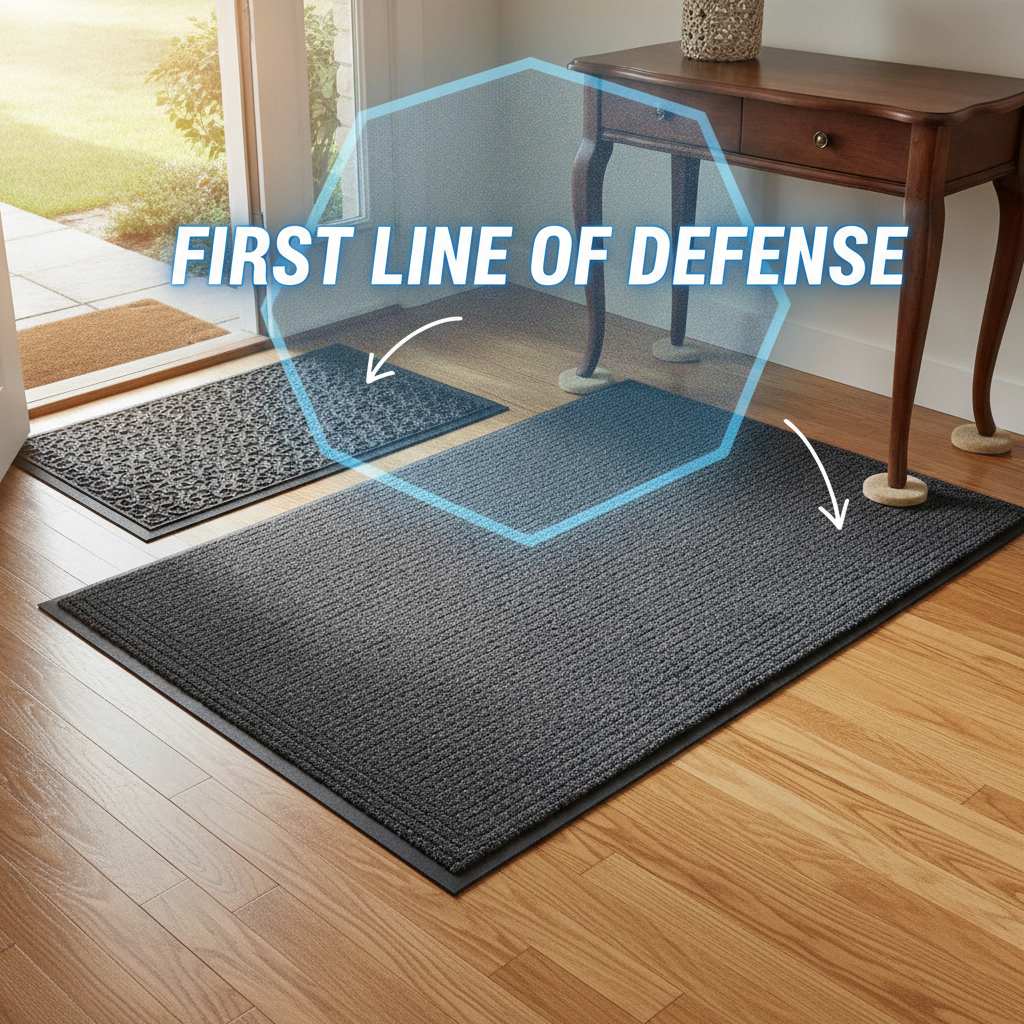
To win the war against wear, you must control your home’s entry points. The most damaging particles are tracked in from outside. A two-mat system is your most powerful weapon:
- The Exterior Scraper Mat: A coarse, heavy-duty mat outside the door designed to knock off the largest pieces of mud, gravel, and debris.
- The Interior Wiper Mat: A large, absorbent mat inside the door to capture the finer sand, grit, and moisture the first mat missed.
Guidance from the Good Housekeeping Institute suggests that having at least 8-10 feet of matting at an entrance can trap up to 90% of tracked-in soil.6 This simple investment is the single most effective way to prevent daily floor abrasion.
Essential Tools & Techniques: Furniture Pads, Vacuums, and Cleaning Protocols
Your interior defense relies on having the right tools and using them correctly.
- Felt Furniture Pads: These are non-negotiable. Place high-quality, thick felt pads on the bottom of every piece of furniture that moves, especially chairs and tables. Check and replace them regularly as they wear down or collect grit.
- Floor-Safe Vacuums: The ideal vacuum has a dedicated hard floor setting that disengages the beater bar (the spinning brush with stiff bristles). A rotating beater bar can scratch delicate finishes and scatter debris rather than suctioning it up. Look for soft-bristled attachments.
- pH-Neutral Cleaners: When it’s time for a deeper clean, avoid harsh chemicals, vinegar, or all-purpose cleaners that can strip your floor’s protective finish. As recommended by cleaning industry standards from the ISSA, always use a pH-neutral cleaner specifically formulated for your flooring type.7 This ensures you clean the floor without causing chemical damage to the finish.
The Definitive Scratch Repair Guide: From Minor Scuffs to Deep Gouges
Even with the best preventative care, accidents happen. The key is to address damage correctly without causing more harm. This guide will help you diagnose the severity of a scratch and choose the right repair method.
Step 1: Diagnose the Damage – Is it a Scuff, Scratch, or Gouge?
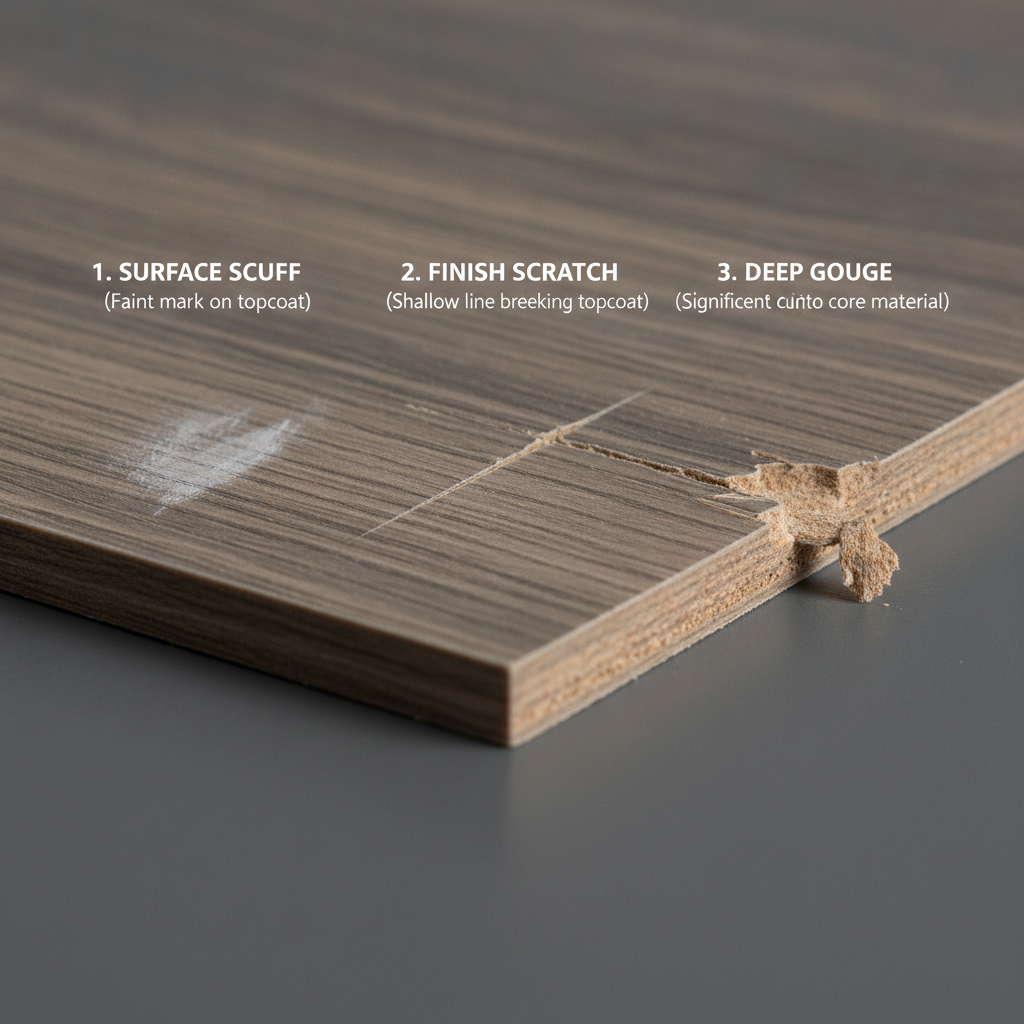
Before you can fix it, you need to know what you’re dealing with. Run your fingernail lightly across the mark.
- Surface Scuff: Your nail doesn’t catch. The mark is on the finish, not in it. This is often a transfer of material (like from a rubber shoe sole) or a very light abrasion of the topcoat.
- Finish Scratch: Your nail catches slightly. The damage has penetrated the top wear layer but has not reached the actual material (the wood, vinyl print layer, etc.) underneath. The color of the scratch is often white or a lighter shade of the floor’s finish.
- Deep Gouge: Your nail sinks into the mark. The damage has gone completely through the finish and has removed or compressed the core material of the flooring itself. You can often see the raw wood or the core layer of the laminate/vinyl.
As a flooring restoration professional advises, “The depth test is everything. A scuff in the finish is a simple fix. A gouge into the wood itself is a surgical procedure. Knowing the difference prevents a homeowner from turning a small problem into a big one.”
Repair Techniques for Wood, Laminate, and Vinyl Floors
For Surface Scuffs (All Floor Types):
Often, the simplest solution works. Start by buffing the area vigorously with a clean, dry microfiber cloth. If that doesn’t work, try a tennis ball. For stubborn scuffs, use a drop of your approved pH-neutral cleaner on the cloth and rub gently.
For Finish Scratches (Wood Floors):
The goal is to restore the finish. According to guidance from finish manufacturers like Minwax, a finish repair marker or stain pen that matches your floor’s color can work wonders.8 For slightly wider scratches, products like Varathane’s Scratch Repair can fill and seal the finish. Always apply sparingly and wipe away excess immediately.
For Scratches & Gouges (Laminate & LVT/LVP):
Since you cannot sand or refinish these floors, the repair involves filling the damage. Trusted DIY sources like The Spruce recommend using a dedicated laminate or vinyl floor repair kit.9 These kits come with a wax or putty filler that you match to your floor’s color. You melt or press the filler into the gouge, scrape it level, and texture it to blend in.
For Deep Gouges (Wood Floors):
This requires a wood filler or putty that matches your species of wood. Overfill the gouge slightly, let it dry completely, then carefully sand it flush with the surrounding floor. You will then need to apply a matching stain and several coats of a top finish (like polyurethane) to seal the repair. This is a more advanced fix.
The Long-Term View: Lifespan, ‘Normal’ Wear, and Total Cost of Ownership
A truly adamantine floor is a long-term investment. Understanding its lifecycle helps manage expectations and maximize its value.
“Normal” wear and tear is the gentle, even dulling of a finish in high-traffic areas over many years, or the development of a subtle patina on natural materials like hardwood. It is not deep scratches, broken planks, or peeling finishes, which may indicate a defect or excessive abuse.
When considering a new floor, think beyond the initial price tag. The Total Cost of Ownership includes the material, installation, required maintenance products, and potential refinishing or major repair costs over its lifespan. A cheaper floor that needs replacing in 7 years is far more expensive than a durable option that lasts for 30.
Data from sources like the National Association of Home Builders (NAHB) consistently shows that durable, high-quality flooring like hardwood and tile offers a significant return on investment (ROI) at resale.10 They are perceived by buyers as permanent, valuable features of a home. An investment in a floor with a 25-year or lifetime warranty isn’t just for your peace of mind—it’s a tangible asset.
Conclusion: From Anxious Owner to Confident Guardian
Achieving a floor that withstands the tests of time is not about finding a single, magical “scratch-proof” product. It is about adopting a comprehensive, three-pillared approach.
- Choose Wisely: Select your flooring based on objective data like PEI and AC ratings, not just aesthetics.
- Protect Proactively: Implement the ‘Floor Guardian’ system of defense, starting with doormats and consistent cleaning to stop damage before it begins.
- Repair Effectively: Learn to diagnose and fix the inevitable scuffs and scratches with the right tools and techniques.
By embracing this lifecycle strategy, you transform your relationship with your floors. You move from a state of constant anxiety over every potential mark to one of confident control, secure in the knowledge that you have built a beautiful, durable foundation for your home that will last for decades.
Call to Action: Download our free ‘Floor Guardian’ Daily & Weekly Maintenance Checklist to start protecting your investment today and keep your floors looking pristine for years to come.
Disclaimer: When discussing DIY repairs, include a disclaimer advising readers to test solutions in an inconspicuous area first and to consult a professional for deep or extensive damage to avoid voiding warranties.
References
- Based on established principles in materials science, such as those found in publications like the Journal of Materials Science, concerning tribology and abrasive wear mechanisms.
- Bona. (n.d.). Hardwood Floor Finishes. Bona US.
- Tile Council of North America (TCNA). (n.d.). Performance Standards & Publications. TCNA.
- Resilient Floor Covering Institute (RFCI). (n.d.). Resources for Consumers. RFCI.
- National Wood Flooring Association (NWFA). (n.d.). Homeowner’s Guide to Real Wood Floors. NWFA.
- Good Housekeeping Institute. (n.d.). Home Care & Cleaning Advice. Good Housekeeping.
- International Sanitary Supply Association (ISSA). (n.d.). ISSA Cleaning Standards. ISSA.
- Minwax. (n.d.). Wood Repair Products. Minwax.
- The Spruce. (n.d.). Home Repair & Improvement Guides. The Spruce.
- National Association of Home Builders (NAHB). (n.d.). Research & Economics. NAHB.
