It’s a scenario that makes every homeowner and facility manager cringe: a spilled bottle of harsh cleaner, a dragged piece of furniture, or an aggressive scrubbing session leaves a permanent, ugly mark on a beautiful floor. You invested in a surface that was supposed to last, only to see it stained, scratched, or dulled by the very things meant to keep it clean and functional. This frustrating cycle of damage and premature replacement is costly, time-consuming, and entirely avoidable.
This is not just another list of “durable” flooring options. This is your complete lifecycle guide to selecting, maintaining, and protecting a high-performance floor that truly endures. We will empower you with a data-driven framework to choose the perfect surface for your environment, whether it’s a chaotic family kitchen or a high-stakes commercial lab. We’ll dive into the science of why floors fail, compare the top contenders in durability, provide a masterclass in protective maintenance, and even show you how to diagnose and repair common damage. Get ready to invest in a floor that stays pristine, not just for years, but for a lifetime.
- Why Your Floor is Failing: The Hidden Dangers in Your Mop Bucket
- Decoding Durability: What Makes a Floor Truly Chemical Resistant?
- The Contenders: A Head-to-Head Comparison of High-Performance Flooring
- Your Selection Framework: Choosing the Right Floor for Your Environment
- The Floor Protection Masterclass: Maintenance, Cleaning & Stain Removal
- Conclusion
- References & Authoritative Sources
Why Your Floor is Failing: The Hidden Dangers in Your Mop Bucket
Before you can choose the right floor, you must understand the enemy. Often, the greatest threat to your flooring isn’t foot traffic—it’s the very chemicals you use to clean it. Many common cleaning agents contain harsh ingredients that can cause irreversible floor damage, from stripping protective finishes to causing ugly chemical stains.
The problem goes beyond aesthetics. The American Lung Association emphasizes that many cleaning supplies can release dangerous chemicals, including volatile organic compounds (VOCs) [3]. These airborne pollutants can compromise indoor air quality and pose significant health risks. In fact, one landmark 2018 study found that VOCs from consumer products, including cleaners, are now as harmful to urban air pollution as emissions from cars [2]. The health implications are serious; another study published in the American Journal of Respiratory and Critical Care Medicine revealed that regular use of cleaning sprays could increase the risk of developing asthma by 30-50% [1].
To protect both your floors and your health, it’s crucial to recognize which cleaners cause the most harm.
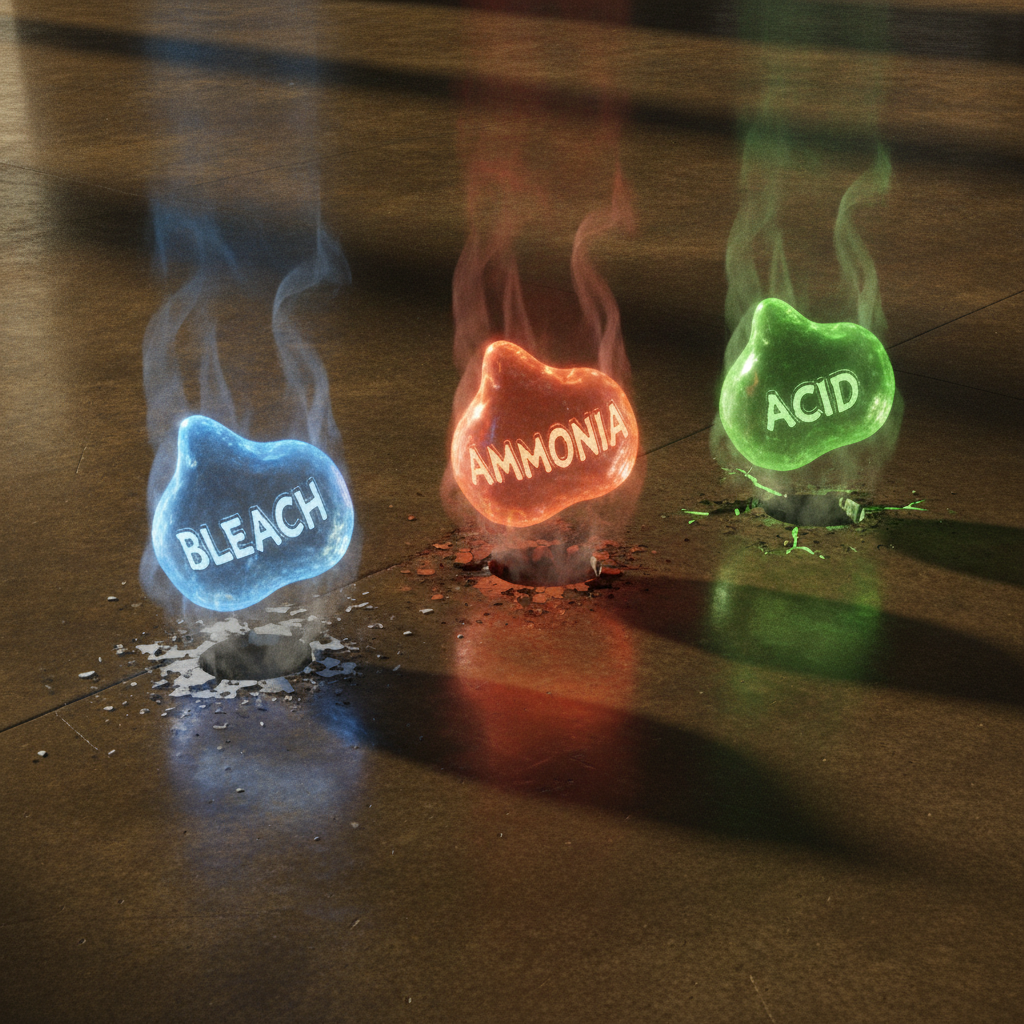
A Rogues’ Gallery of Damaging Cleaners:
- Ammonia-Based Cleaners: While effective at cutting grease, ammonia is highly alkaline and can strip the protective sealant and wax from many floor types, especially hardwood and vinyl, leaving them dull and vulnerable to moisture.
- Undiluted Vinegar: Often touted as a “natural” cleaner, vinegar is an acid. When used undiluted or too frequently, it can etch the surface of natural stone like marble and travertine and break down the finish on hardwood floors over time.
- Bleach: A powerful disinfectant, chlorine bleach is also a potent oxidizer that can discolor and damage laminate, vinyl, and certain types of tile grout. It should only be used on specific, non-porous surfaces when heavily diluted and recommended by the manufacturer.
- Abrasive Powder Cleansers: The fine grit in these cleaners can create micro-scratches on your floor’s finish. Over time, these tiny scratches accumulate, dulling the surface and trapping dirt, making the floor look perpetually dirty.
- Steam Mops on Unsealed Floors: High-temperature steam can force water deep into the seams of laminate, unsealed hardwood, and some vinyl plank flooring, causing planks to swell, warp, and delaminate.
Understanding these threats is the first step. The next is choosing a floor engineered to withstand them.
Decoding Durability: What Makes a Floor Truly Chemical Resistant?
Marketing terms like “tough” and “long-lasting” are everywhere, but true durability is defined by measurable, scientific standards. When selecting a floor that can resist both harsh chemicals and heavy use, you need to look beyond the surface and understand the technical specifications that matter.
The science behind a chemical-resistant floor, particularly in commercial-grade resinous systems, lies in a process called polymer cross-linking. During curing, the liquid resin and hardener molecules form a tightly woven, three-dimensional network. This creates a non-porous, monolithic surface that is physically impenetrable to most chemicals, preventing them from soaking in and causing stains or degradation.
For residential and light commercial flooring, durability is measured by a different set of metrics:
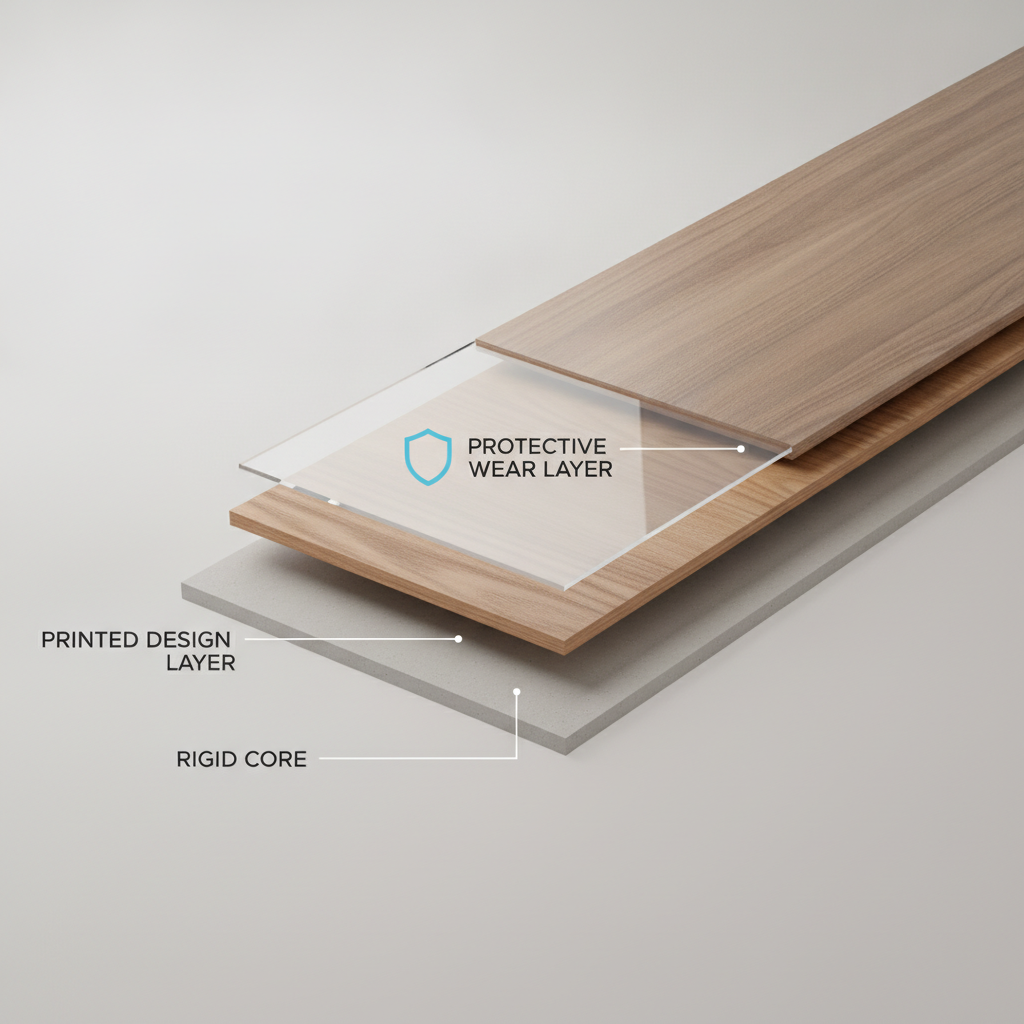
- Wear Layer Thickness (LVT/LVP): This is the top, transparent coating that protects the printed design layer. For busy homes and commercial spaces, a wear layer of at least 20 mil (0.5 mm) is essential for maximum protection against scratches and scuffs.
- AC Rating (Laminate): The Abrasion Class (AC) rating measures a laminate floor’s resistance to abrasion, impact, stains, and burns. An AC4 rating is designed for light commercial use, while AC5 is built for moderate commercial traffic, making them excellent choices for demanding residential areas.
- PEI Rating (Porcelain/Ceramic Tile): The Porcelain Enamel Institute (PEI) rating grades a tile’s ability to resist abrasion and wear. A rating of Class 3 is suitable for all residential uses, while Class 4 and Class 5 are recommended for commercial applications with heavy foot traffic.
- Janka Hardness (Hardwood): This test measures the force required to embed a steel ball into a species of wood. While it indicates dent resistance, it does not measure resistance to scratches or chemicals, which is determined by the finish.
The Unsung Hero: The Topcoat
No matter the core material, the floor’s primary defense is its topcoat or finish. This is where the battle against chemicals and abrasion is won or lost. Advanced finishes provide a shield that dramatically extends a floor’s life. Some of the most durable include Aluminum Oxide, a factory-applied finish that can last up to 25 years, and professional-grade coatings like Acid-Cured or Polyaspartic topcoats, which offer exceptional chemical and scratch resistance for high-demand environments.
The Contenders: A Head-to-Head Comparison of High-Performance Flooring
Now that you understand the science, let’s evaluate the top flooring solutions engineered for durability and chemical resistance. Each has unique strengths, making them suitable for different environments and challenges.
Durability Scorecard
| Flooring Type | Chemical Resistance | Scratch Resistance | Impact Resistance | Water Resistance | Maintenance Needs | Approx. Cost |
|---|---|---|---|---|---|---|
| Resinous (Epoxy/Urethane) | Excellent | Very Good | Excellent | Excellent | Low | High |
| Porcelain Tile | Excellent | Excellent | Very Good | Excellent | Low (Grout is key) | Moderate-High |
| Advanced LVT/LVP | Good | Good-Very Good | Good | Excellent | Low | Moderate |
For Ultimate Protection: Resinous Flooring Systems (Epoxy, Urethane & Polyaspartic)
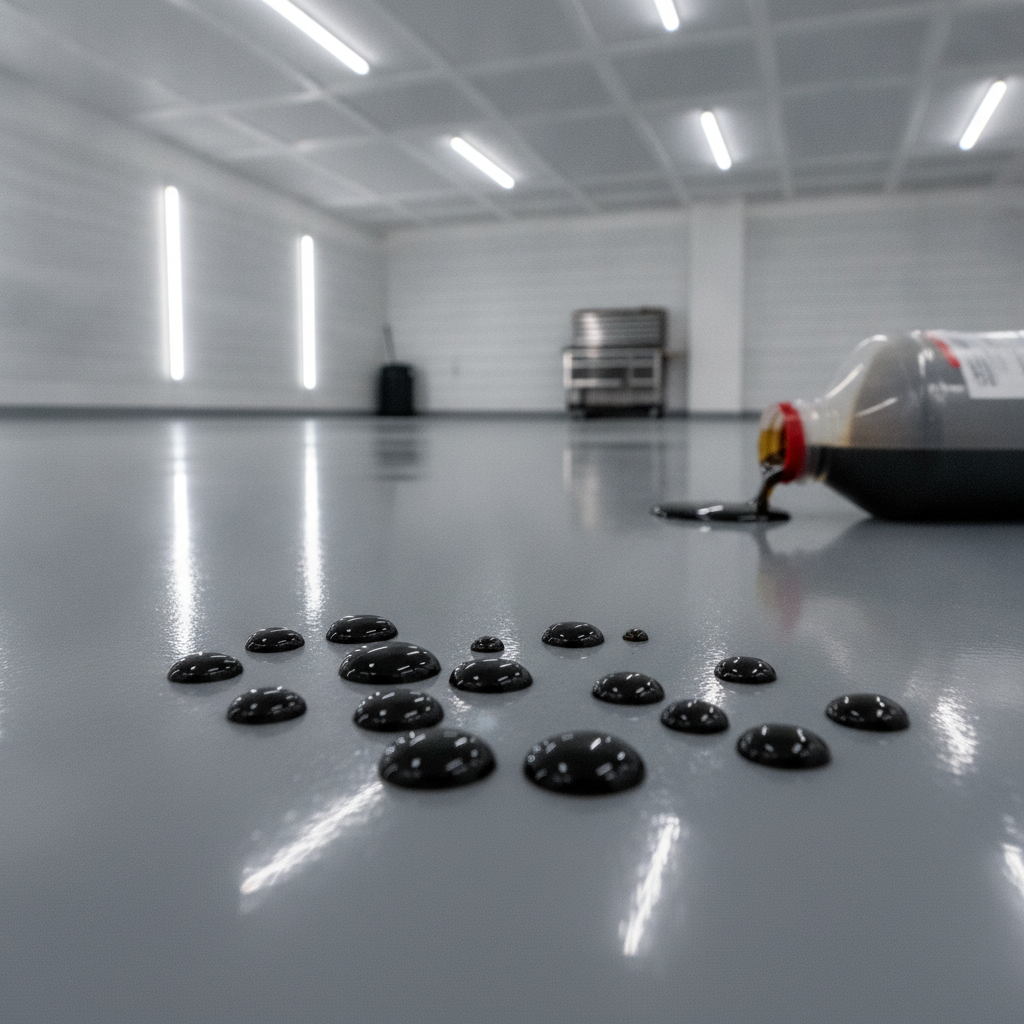
When absolute chemical resistance and durability are non-negotiable, resinous flooring is the gold standard. Ideal for garages, commercial kitchens, laboratories, and manufacturing plants, these systems create a seamless, non-porous surface that is incredibly easy to clean and sanitize. As leading manufacturers like Sherwin-Williams and Stonhard demonstrate, these floors can be formulated to resist specific chemicals, from harsh acids to industrial solvents [4] [7]. A real-world case study of a surgical center’s epoxy floor showed zero degradation after three years of daily cleaning with bleach, proving its real-world resilience.
Epoxy vs. Urethane vs. Polyaspartic
| Feature | Epoxy | Urethane | Polyaspartic |
|---|---|---|---|
| UV Stability | Poor (can yellow) | Good | Excellent |
| Flexibility | Rigid | More Flexible | Flexible |
| Application Time | Slower Cure | Slower Cure | Very Fast Cure |
| Ideal Environment | Indoor, Basements, Garages | Food Service, High Impact | Outdoor, Fast Turnaround |
The All-Round Champion: Porcelain & Ceramic Tile
For a blend of aesthetic versatility, extreme durability, and inherent resistance, porcelain tile is a top performer in both homes and businesses. Because it is fired at extremely high temperatures, porcelain is naturally non-porous and impervious to water, stains, and most chemicals. Its hardness, backed by high ratings from trusted sources like Consumer Reports, makes it one of the most scratch-resistant flooring options available [6].
As explained by its PEI rating, choosing a tile rated Class 4 or 5 ensures it can handle even the heaviest commercial foot traffic without showing wear. However, tile’s one potential weakness is its grout lines. To create a truly indestructible surface, it is critical to use a high-performance epoxy grout or a quality penetrating sealant. Epoxy grout is chemically cured, non-porous, and resists staining and degradation from harsh cleaners, ensuring the entire surface is as durable as the tile itself.
Advanced Resilient Flooring: LVT, LVP & Sheet Vinyl
Modern luxury vinyl tile (LVT), plank (LVP), and sheet vinyl have evolved far beyond their predecessors. For demanding residential and light commercial settings, they offer an excellent balance of durability, water resistance, and design. The key to their performance lies in two features: the wear layer and the protective finish. A commercial-grade LVT with a 20 mil wear layer provides robust protection against daily wear and tear.
Some manufacturers have taken this protection to the next level with proprietary finishes. For example, TAS Flooring’s Adamantine™ Protection is an advanced finish technology applied to their resilient flooring lines, engineered to provide superior resistance to scratches, scuffs, and chemical stains [5]. In environments where hygiene is paramount, such as healthcare facilities, commercial sheet vinyl is often the top choice. As noted by commercial flooring experts like Spectra Contract Flooring, its seams can be heat-welded to create a single, monolithic surface with no cracks for bacteria to hide, making it exceptionally easy to sanitize [8].
Your Selection Framework: Choosing the Right Floor for Your Environment
The “best” floor doesn’t exist in a vacuum; it depends entirely on the specific stressors of your environment. Use this framework to assess your needs and make an informed decision.
What’s Your Floor’s Kryptonite? A Needs-Assessment Checklist:
- Foot Traffic: How many people (and pets) will use this space daily? (Low, Moderate, Heavy, Commercial)
- Impact Risk: Will heavy items be dropped or rolled across the floor? (e.g., dropped pans in a kitchen, tool chests in a garage)
- Chemical Exposure: What specific chemicals will the floor encounter? (e.g., household cleaners, cooking oils, automotive fluids, medical disinfectants)
- Cleaning Routine: How often and how aggressively will the floor be cleaned? (e.g., daily mopping, weekly scrubbing, use of sanitizers)
- Moisture Levels: Is the area prone to spills, humidity, or standing water? (e.g., bathroom, basement, entryway)
Tailored Recommendations:
- For the Busy Family Home (Kitchens, Mudrooms): Porcelain tile with epoxy grout offers the best all-around defense against spills, scratches from pets, and frequent cleaning. High-quality LVP with a 20+ mil wear layer is an excellent, more comfortable alternative.
- For the Commercial Kitchen: A seamless urethane flooring system is the top choice. It withstands thermal shock from hot oil spills, resists harsh degreasers, and provides a hygienic, slip-resistant surface.
- For the Auto Repair Shop or Garage: An epoxy or polyaspartic coating system is essential. It resists hot tire pickup, oil, gasoline, and other automotive fluids while being incredibly easy to clean.
- For the Healthcare Facility: Heat-welded sheet vinyl or a seamless resinous floor is required. These options create a sterile environment free of seams where pathogens can grow, and they can withstand the aggressive disinfectants used in medical settings.
Calculating the Total Cost of Ownership
Don’t just look at the price per square foot. A cheaper floor that needs to be replaced in five years is far more expensive than a durable solution that lasts for twenty. Factor in the material cost, installation, maintenance requirements, and the expected lifespan to understand the true long-term value of your investment.
The Floor Protection Masterclass: Maintenance, Cleaning & Stain Removal
Choosing the right material is half the battle; proper maintenance is the other half. A proactive approach to cleaning and protection will ensure your high-performance floor lives up to its potential. It’s also critical to follow manufacturer guidelines, as using unapproved cleaners can often void your warranty, a point stressed by flooring makers like Hallmark Floors [10].
Safe Cleaning Compatibility Chart
| Flooring Type | Recommended Cleaner | Technique | Avoid |
|---|---|---|---|
| Resinous (Epoxy/Urethane) | pH-Neutral Cleaner | Damp Mop, Auto Scrubber | Abrasive Pads, Solvents |
| Porcelain Tile | pH-Neutral Cleaner, Diluted Vinegar (occasionally) | Damp Mop | Abrasive Powders, Bleach on Grout |
| LVT/LVP/Sheet Vinyl | Manufacturer-Approved pH-Neutral Cleaner | Damp Mop | Ammonia, Steam Mops, Abrasive Pads |
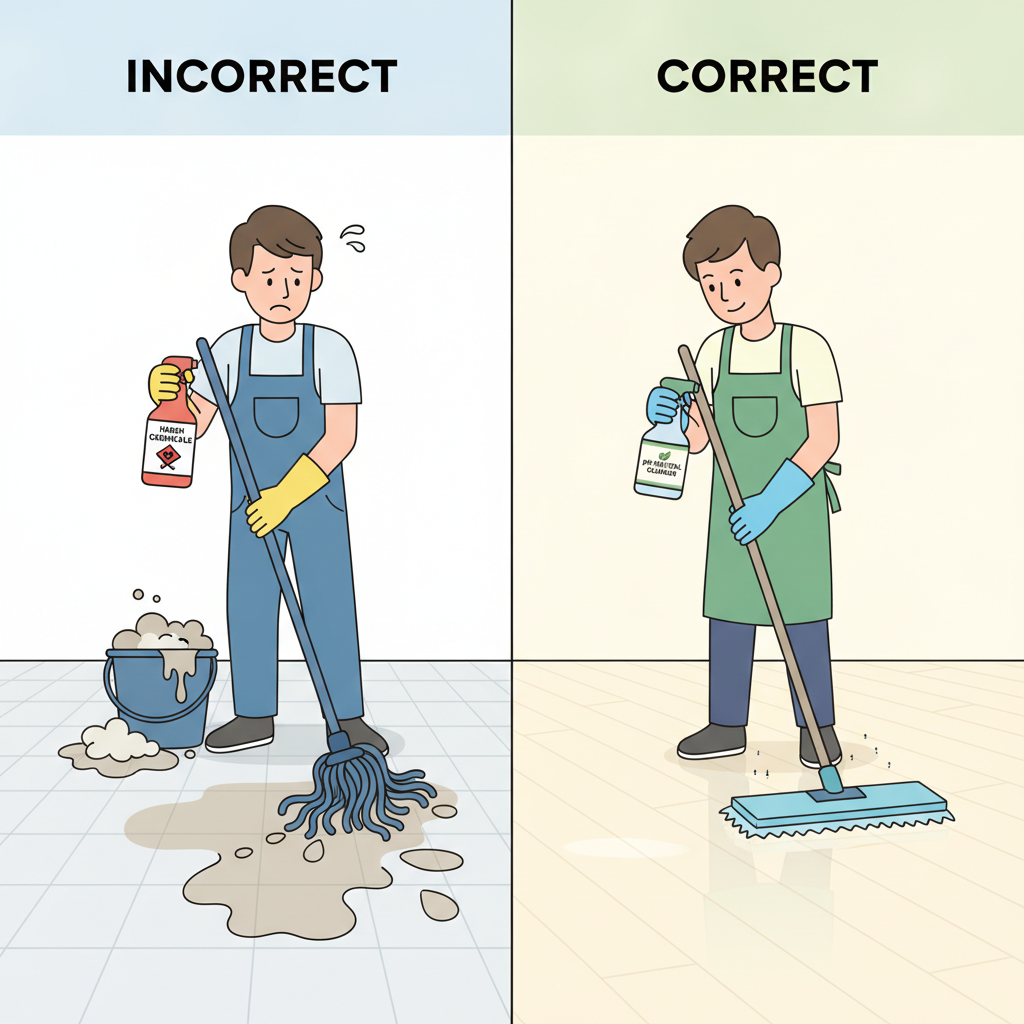
A key principle for any floor is to use a damp-mop, not a wet-mop. A dripping wet mop pushes dirty water into grout lines and seams and can oversaturate the floor, leading to long-term damage. A properly wrung-out mop cleans effectively without leaving excess moisture behind. For commercial spaces using floor machines, choosing the right pad is crucial. As commercial cleaning experts at Hillyard explain, pads are color-coded by aggressiveness: white pads are soft for polishing, while black pads are highly aggressive for stripping finishes and can easily abrade a floor if used improperly [9].
Damage Control: A Visual Guide to Diagnosing and Fixing Floor Issues
Even with the best floors, accidents happen. Here’s how to identify and address common issues caused by chemical spills and improper cleaning.
Floor Damage Diagnostic Guide
- The Issue: Finish Etching
- What it Looks Like: A dull, rough patch on a stone or finished wood floor. It looks like the shine has been “eaten away.”
- Common Cause: An acidic substance like vinegar, lemon juice, or harsh toilet bowl cleaner has sat on the surface.
- The Fix: For minor etching on stone, it can sometimes be polished out with a specialized marble polishing powder. For wood, the area may need to be lightly screened and recoated.
- The Issue: Chemical Burns/Discoloration
- What it Looks Like: A distinct yellow, brown, or white stain that appears to be part of the floor material itself.
- Common Cause: A strong alkali (like bleach or oven cleaner) or solvent has reacted with the flooring material or its finish.
- The Fix: This is often permanent. For dark chemical stains on unfinished or oiled wood, a solution of oxalic acid (wood bleach) can sometimes lift the stain, but this is an advanced technique. For LVT, the damaged plank may need to be replaced.
- The Issue: Dulling or Sticky Residue
- What it Looks Like: The entire floor has lost its luster and may feel slightly tacky to the touch.
- Common Cause: Using the wrong cleaner (like dish soap or oil-based products) that leaves behind a residue, or a buildup of floor polish.
- The Fix: Strip the residue using a manufacturer-recommended stripping solution or a mixture of warm water and a small amount of ammonia (on compatible floors only, with good ventilation). Rinse thoroughly with clean water.
Safety First: When to Call a Pro
Safety Warning: Before attempting any chemical stain removal, ensure the area is well-ventilated, wear appropriate Personal Protective Equipment (PPE) like gloves and eye protection, and never mix cleaning chemicals, especially bleach and ammonia. Follow safety protocols outlined by authoritative sources like the Canadian Centre for Occupational Health and Safety (CCOHS) [11].
Use this checklist to decide if a repair is beyond a DIY fix:
- Is the damage widespread across a large area?
- Has the damage penetrated through the finish and into the core of the material (e.g., water-swollen laminate)?
- Does the repair involve aggressive chemicals like solvents or wood bleach?
- Is the flooring a high-end material like natural stone or exotic hardwood?
If you answer “yes” to any of these, it’s time to consult a certified flooring inspector or restoration professional. As experts at professional flooring companies like SVB Wood Floors often note, a failed DIY repair can be far more costly to fix than the original problem [12].
Conclusion
An “indestructible” floor is not just a product you buy; it’s a system you create. It begins with an informed selection, matching the science of durability—wear layers, PEI ratings, and resinous systems—to the unique demands of your environment. It is sustained through a commitment to proper, lifelong maintenance, using the right tools and cleaners to protect your investment.
By understanding why floors fail, choosing a material engineered to resist your specific challenges, and adhering to correct cleaning and repair protocols, you can break the cycle of damage and disappointment. This knowledge empowers you to choose a floor that not only looks beautiful on day one but remains a durable, clean, and valuable asset for decades, saving you significant money, time, and frustration in the long run.
Ready to find the perfect long-lasting floor for your space? Explore our collection of high-performance flooring options or contact our flooring experts today for a personalized consultation.
This article provides general information. Always consult with a professional flooring installer for your specific needs. When handling chemical spills or using strong cleaning agents, follow manufacturer safety guidelines and use appropriate Personal Protective Equipment (PPE).
References & Authoritative Sources
- Svanes, Ø., Bertelsen, R. J., Lygre, S. H. L., & Sigsgaard, T. (2018). Cleaning at Home and at Work in Relation to Lung Function Decline and Airway Obstruction. American Journal of Respiratory and Critical Care Medicine, 197(9), 1157–1163.
- McDonald, B. C., de Gouw, J. A., Gilman, J. B., Jathar, S. H., Akherati, A., Cappa, C. D., … & Harley, R. A. (2018). Volatile chemical products emerging as largest petrochemical source of urban organic emissions. Science, 359(6377), 760-764.
- American Lung Association. (n.d.). Cleaning Supplies and Household Chemicals. Retrieved from https://www.lung.org/clean-air/at-home/indoor-air-pollutants/cleaning-supplies-household-chem
- Sherwin-Williams. (n.d.). Industrial Flooring Requirements: Chemical Resistant Epoxy Floor Coatings & Systems. Retrieved from their industrial flooring website.
- TAS Flooring. (n.d.). Product Information on Adamantine™ Protection. Retrieved from tasflooring.com.
- Consumer Reports. (n.d.). Flooring Buying Guide. Retrieved from consumerreports.org.
- Stonhard. (n.d.). Chemical Resistant Flooring. Retrieved from stonhard.com.
- Spectra Contract Flooring. (n.d.). Durable Commercial Flooring Options for High Traffic Areas. Retrieved from spectracf.com.
- Hillyard. (2024, January 19). How to Choose the Right Floor Pad. Retrieved from hillyard.com blog.
- Hallmark Floors. (2025, October 29). The Best Wood Floor Cleaners & The Secret to Stunning Floors. Retrieved from hallmarkfloors.com.
- Canadian Centre for Occupational Health and Safety (CCOHS). (n.d.). Spill Response. Retrieved from ccohs.ca.
- SVB Wood Floors. (n.d.). 5 Hardwood Floor Cleaning Mistakes Homeowners Make (And How to Avoid Them). Retrieved from svbwoodfloors.com blog.
