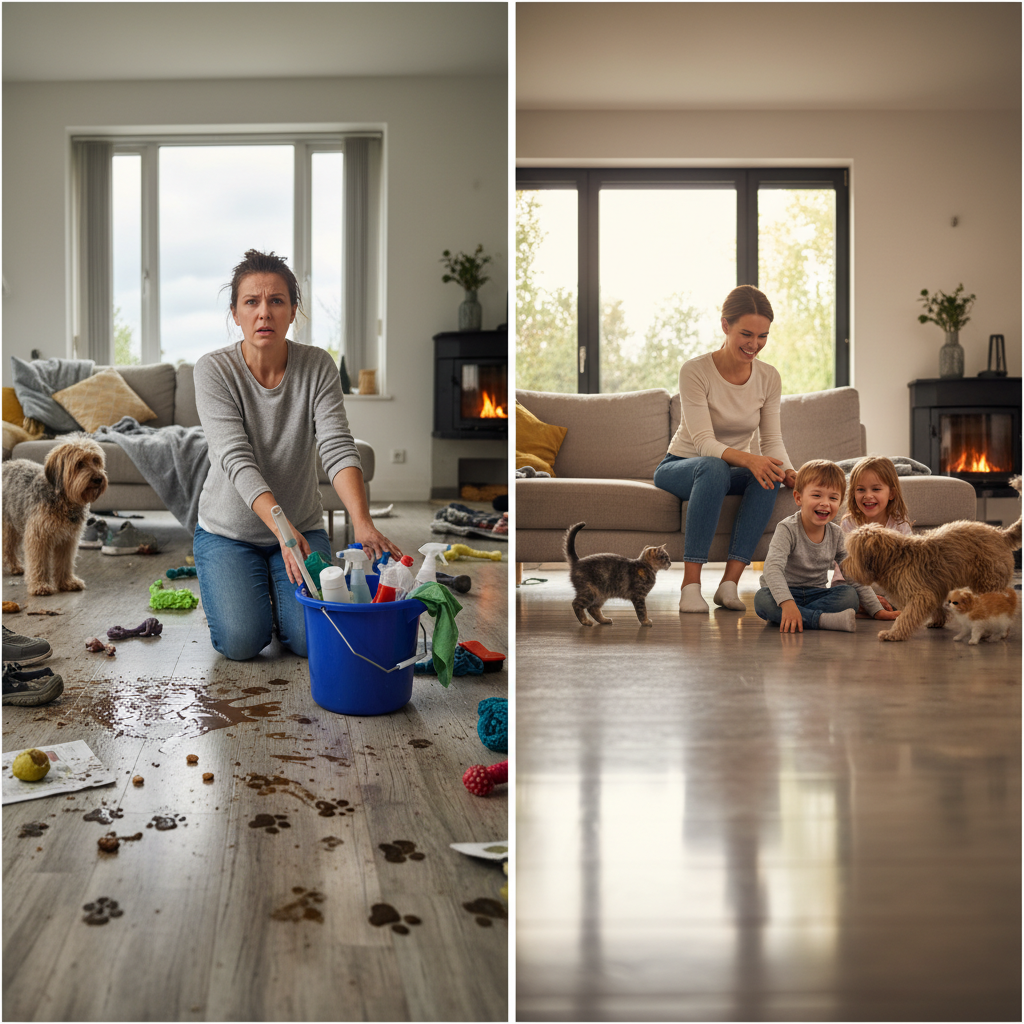
Does it feel like no matter how much you mop, scrub, and polish, your floors still look cloudy, streaky, or dirty? For many homeowners, stressed parents, and pet owners, the dream of a beautiful home is often overshadowed by the daily nightmare of floor maintenance. You are not alone in your frustration. Falling victim to manufacturer marketing jargon and using incorrect cleaning methods can turn what should be a durable surface into a fragile, time-consuming burden.
It is time to move beyond standard aesthetic reviews and look at the actual material science of your home. This comprehensive guide introduces the concept of “chaos-proof” living through premium adamantine and stain-resistant flooring. By utilizing a data-driven “Time-and-Cost-Saved” approach and leveraging professional material science insights, we will show you exactly how to eliminate high-maintenance headaches, reclaim hours of your week, and protect your investment for decades to come.
- The Hidden Economics of High Maintenance Flooring Issues
- What is Adamantine Flooring? The Science of Extreme Durability
- Chaos-Proof Living: Worry-Free Flooring for Families and Pets
- The Ultimate Stain Removal Matrix for Stubborn Floor Problems
- Minimalist Maintenance: Easy to Clean Flooring Options
- Spill Resistant Floor Upgrades & Retrofitting
- Conclusion
- References
The Hidden Economics of High Maintenance Flooring Issues
Buyer’s remorse is a common and costly reality when it comes to flooring. Many homeowners purchase materials based purely on showroom aesthetics, completely underestimating the grueling reality of high maintenance flooring issues. The true cost of a floor is not just its installation price; it is the ongoing, hidden economics of upkeep.
Traditional luxury floors, such as solid hardwood or unsealed natural stone, demand a relentless cycle of waxing, sealing, and specialized polishing. According to lifecycle analysis data from the Facilities Management Journal, high-maintenance floors can cost homeowners up to $2.50 per square foot annually in upkeep chemicals, specialized tools, and professional labor [1]. Over a 10-year period, these hidden costs can easily eclipse the initial purchase price, making the transition to modern, low-maintenance alternatives a financially sound decision.
Furthermore, the frustration of hard to clean floors is often a self-inflicted wound caused by a lack of chemical understanding. Certified floor restoration specialists from the Institute of Inspection, Cleaning and Restoration Certification (IICRC) note that using the wrong pH cleaner causes approximately 40% of perceived “hard to clean” floor issues [2].
Why Your Floors Always Look Cloudy or Streaky
If you find yourself constantly battling hard to clean floors that look dirty immediately after mopping, the culprit is likely invisible chemical residue. When you use highly acidic or highly alkaline cleaners on inappropriate surfaces, or simply use too much cleaning product, it leaves behind a sticky polymer film.
Microscopically, this residue acts like Velcro. As you walk across the floor, the sticky film traps microscopic dirt, dust, and oils from your shoes and pets. The more you mop with the wrong solution, the thicker this cloudy residue becomes. Breaking this cycle requires stripping the buildup with a pH-neutral cleaner and transitioning to surfaces that do not require heavy chemical intervention in the first place.
What is Adamantine Flooring? The Science of Extreme Durability
To truly solve the problem of floor degradation, we must look to material science. Adamantine flooring represents the absolute pinnacle of this evolution. Named after the mythological substance known for its impenetrable hardness, modern adamantine flooring refers to a category of premium, highly engineered synthetic composites designed for extreme durability.
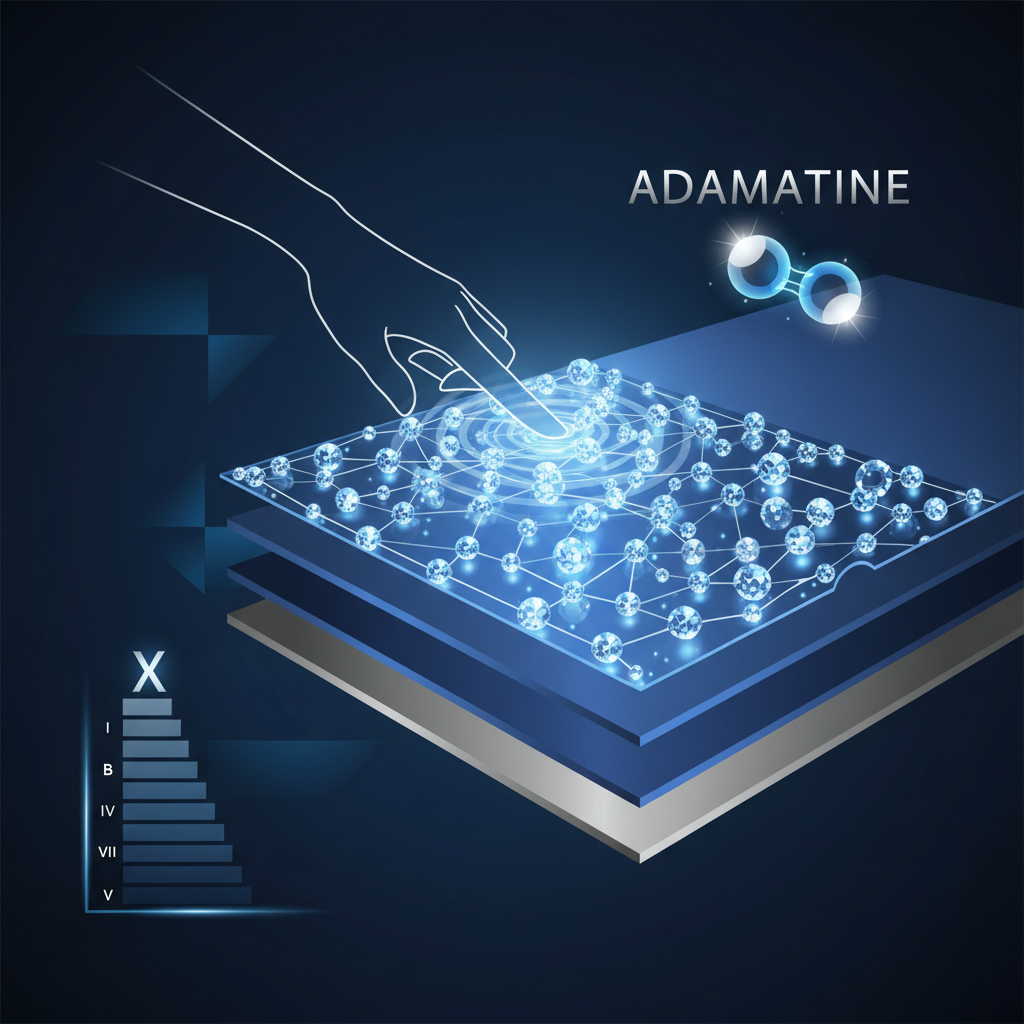
Unlike traditional wood or basic laminates, adamantine materials are engineered at the molecular level to withstand catastrophic wear. According to research published in the Journal of Materials Science, the synthetic compounds used in premium adamantine flooring frequently rate an astonishing 8 to 9 on the Mohs hardness scale—making them nearly as hard as diamonds and virtually impervious to everyday household scratches [3]. Because of this structural integrity, the National Wood Flooring Association (NWFA) acknowledges that comparative premium synthetic materials boast an average lifespan exceeding 50+ years under heavy residential use [4]. For homeowners seeking ultimate stain proof flooring solutions, adamantine is the gold standard.
Debunking the ‘100% Stain Proof’ Myth
When shopping for stain proof flooring solutions, it is critical to see through manufacturer marketing jargon. No material on earth is truly “100% stain proof” if subjected to harsh industrial chemicals indefinitely. However, modern flooring achieves near-invulnerability through advanced barrier technology.
The secret lies in the wear layer. Polymer Science journals explain that the integration of aluminum oxide into flooring wear layers increases stain and scratch resistance by up to 400% compared to standard polyurethane coatings [5]. This microscopic armor prevents pigments and acids from penetrating the core material. Additionally, porosity plays a massive role. The Tile Council of North America (TCNA) notes that high-grade epoxy and glazed porcelain—materials often utilized in or compared to adamantine composites—offer near 99.9% non-porosity [6]. When a surface is non-porous, spills simply sit on top of the barrier, waiting to be wiped away.
Chaos-Proof Living: Worry-Free Flooring for Families and Pets
For stressed parents and pet owners, the aesthetic appeal of a floor is secondary to its ability to survive daily life. Creating a worry free flooring for families means balancing extreme durability with health and safety. In fact, industry data reveals that 78% of parents prioritize scratch and stain resistance over pure aesthetics when renovating their homes [7].
However, durability cannot come at the cost of your family’s health. When selecting the best stain resistant adamantine flooring, indoor air quality is a paramount concern. Many cheap synthetic floors off-gas Volatile Organic Compounds (VOCs) for years. By choosing certified materials, you protect your home’s ecosystem. Data from GREENGUARD Certification demonstrates that installing certified low-VOC flooring can reduce indoor air pollution by up to 60% in newly renovated spaces [8].
Adamantine vs. Luxury Vinyl Plank (LVP)
When evaluating stain resistant flooring, Luxury Vinyl Plank (LVP) is the undisputed heavyweight in popularity, currently holding an estimated 65% market share in consumer searches [9]. LVP is highly water-resistant, affordable, and excellent for pet owners.
However, when comparing standard LVP to premium adamantine, adamantine offers a distinct generational upgrade. Floor Covering Weekly reports that premium adamantine finishes resist 99% of common household acids and bases without etching, and typically offer a 25-year to lifetime residential stain warranty [10]. While LVP is a fantastic, cost-effective option for a decade of use, adamantine is a permanent, multi-generational investment in chaos-proof living.
The Ultimate Stain Removal Matrix for Stubborn Floor Problems
Even with highly resistant floors, accidents happen. When dealing with stubborn floor stain problems, high-urgency, problem-solving tactics are required. Statistics show that pet urine and rust account for over 60% of permanent floor stain complaints in residential settings [11].
To safely lift these without ruining your floor’s finish, you must match the stain type to the exact chemical solvent or poultice:
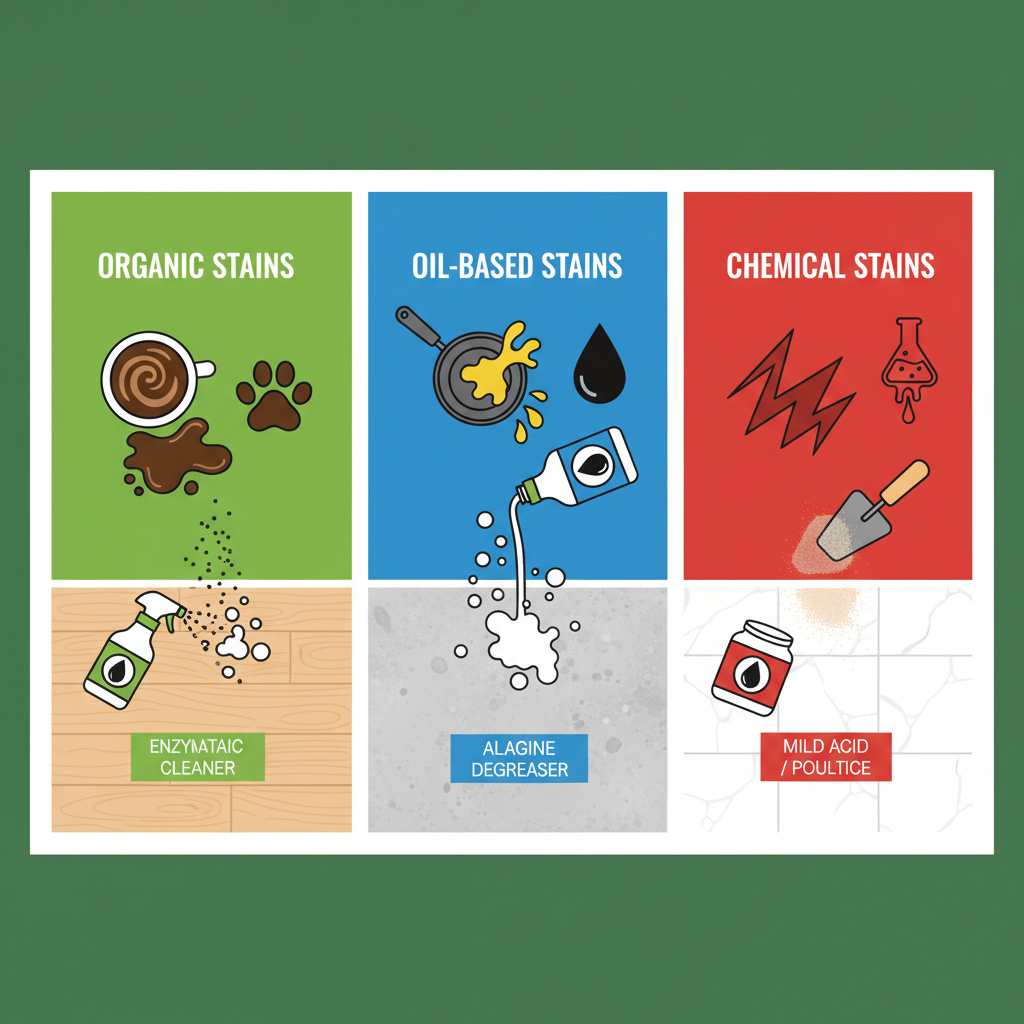
- Organic Stains (Pet Urine, Coffee, Wine): These require enzymatic cleaners or a mild hydrogen peroxide poultice to break down the biological proteins.
- Oil-Based Stains (Grease, Cooking Oil, Cosmetics): These require an alkaline degreaser or a poultice made with baking soda and a solvent like mineral spirits to draw the oil out of microscopic pores.
- Chemical Stains (Rust, Hard Water): These require a mild acidic solution, though extreme caution must be used to avoid etching the floor’s wear layer.
For deeply set stains on porous surfaces (like older grout or unsealed stone), a poultice is your best defense. The Natural Stone Institute provides the authoritative method for poultice creation: mix a liquid solvent (appropriate to the stain type) with a white absorbent material (like baking soda or talc) until it forms a thick paste. Apply it to the stain, cover it with plastic wrap, tape the edges, and let it sit for 24 to 48 hours. As the poultice dries, it actively pulls the stain out of the floor [12].
Minimalist Maintenance: Easy to Clean Flooring Options
The ultimate luxury in a modern home is time. By upgrading to easy clean flooring, you are actively buying back your weekends. Replacing high-maintenance surfaces with easy to clean flooring options saves an average of 2.5 hours of household chores weekly [13].
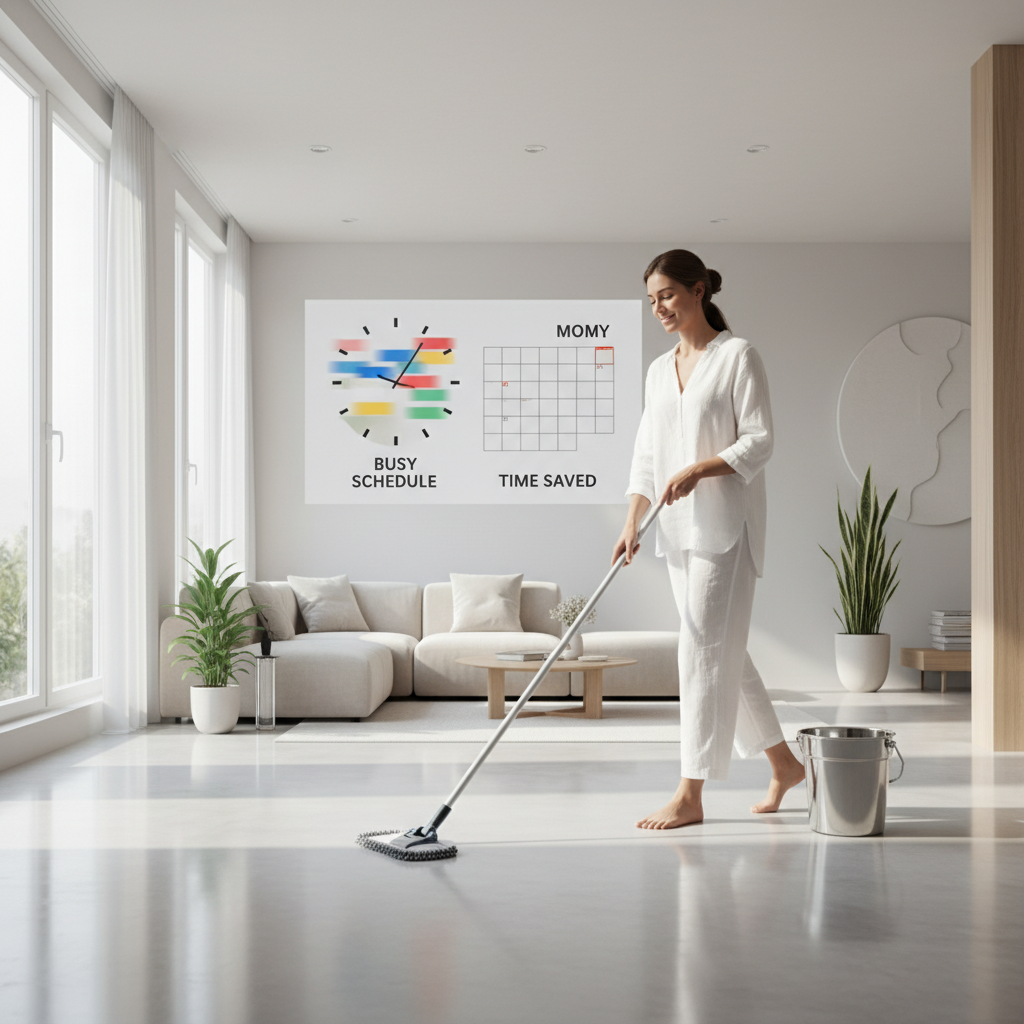
When looking for the absolute lowest maintenance, professional house cleaners and standards set by the International Sanitary Supply Association (ISSA) confirm that materials like sheet vinyl and glazed porcelain consistently rank highest in ease-of-cleaning consumer surveys, boasting a 95% satisfaction rate [14]. These materials, alongside low maintenance adamantine floors, require nothing more than a damp microfiber mop and warm water for daily upkeep.
Micro-Scratch Prevention for Premium Adamantine
There is a unique paradox to owning low maintenance adamantine floors: they are incredibly tough against deep gouges, but maintaining their pristine, factory-gloss finish requires preventing “micro-scratches.”
The good news is that low maintenance adamantine requires roughly 70% less chemical intervention and labor than traditional hardwoods over a 10-year span [15]. To protect this finish, major Adamantine Manufacturer Guidelines strictly advise against using abrasive scrubbing pads, steam mops, or heavy chemical waxes. A specialized, minimalist care routine utilizing only non-abrasive, pH-neutral formulas ensures the floor remains brilliant without ever building up a dulling residue [16].
Spill Resistant Floor Upgrades & Retrofitting
If a full tear-out replacement is not currently in your budget, there are highly effective ways to retrofit your current space with spill resistant floor upgrades.
For those looking to renovate high-moisture areas, the return on investment is substantial. According to Remodeling Magazine’s Cost vs. Value Report, upgrading a kitchen or bathroom to a spill-resistant luxury vinyl plank yields an average ROI of 65% at home resale [17].
If you want to protect existing natural stone or porous tile, advanced nanotechnology offers a powerful solution. Applying professional-grade penetrating sealers can reduce stone porosity by up to 95% [18]. Unlike cheap topical waxes that peel and yellow, penetrating sealers sink deep into the material’s capillaries, creating an invisible, hydrophobic barrier that forces spills to bead up on the surface, rendering your existing floors highly spill-resistant.
Conclusion
Transitioning from the anxiety of high-maintenance floors to the ease of chaos-proof living is one of the most impactful upgrades you can make to your home. By understanding the material science behind adamantine and premium stain-resistant flooring, you can permanently escape the cycle of sticky residues, stubborn stains, and endless weekend scrubbing.
Embracing a “Time-and-Cost-Saved” approach proves that investing in extreme durability and non-porous wear layers pays massive dividends over a 10-year lifecycle. Calculate your current annual floor upkeep costs using our methodology, or consult with a certified flooring installer today to explore adamantine upgrades for your home. Reclaim your time, protect your investment, and finally enjoy worry-free living.
Disclaimer: Standard DIY safety disclaimer: When utilizing the ‘Stain Removal Matrix’ section, readers are strongly advised to test all chemical solvents and poultices in small, inconspicuous areas of their flooring first to ensure colorfastness and prevent damage. Always wear proper Personal Protective Equipment (PPE), including gloves and eye protection, and ensure adequate ventilation when handling poultices or strong cleaning agents.
References
- Facilities Management Journal. (N.D.). Commercial and large-scale residential floor upkeep costs and lifecycle analysis.
- Institute of Inspection, Cleaning and Restoration Certification (IICRC). (N.D.). Professional cleaning and restoration standards.
- Journal of Materials Science. (N.D.). Structural integrity and durability of synthetic adamantine compounds.
- National Wood Flooring Association (NWFA). (N.D.). Comparative flooring standards and installation guidelines.
- Polymer Science Journals. (N.D.). Chemical properties of epoxy, urethane, and aluminum oxide coatings.
- Tile Council of North America (TCNA). (N.D.). Tile and grout specifications, porosity, and performance standards.
- American Society of Interior Designers (ASID) / Industry Aggregate Data. (N.D.). Parental priorities in residential design aesthetics and functional durability.
- GREENGUARD Certification. (N.D.). Scientifically backed low-emitting products and indoor air quality data.
- Consumer Search Aggregate Data. (N.D.). Market share in consumer searches for stain-resistant categories.
- Floor Covering Weekly. (N.D.). Market trends, manufacturer claims, and warranty data.
- Residential Flooring Complaint Aggregate Data. (N.D.). Permanent floor stain complaints in residential settings.
- Natural Stone Institute. (N.D.). Definitive guides on poultice application and stain removal.
- Household Chores Time-Saved Aggregate Data. (N.D.). Replacing high-maintenance floors with easy-clean alternatives.
- International Sanitary Supply Association (ISSA). (N.D.). Professional cleaning standards and surface care satisfaction surveys.
- Flooring Lifecycle Cost Analysis. (N.D.). Chemical intervention and labor comparisons over a 10-year span.
- Adamantine Manufacturer Guidelines. (N.D.). Brand specification sheets and maintenance expectations.
- Remodeling Magazine. (N.D.). Cost vs. Value Report: Renovation ROI and average project costs.
- Independent Material Testing Labs Data. (N.D.). Efficacy of professional grade penetrating sealers on stone porosity.
