For commercial facility managers, industrial property investors, and architects, few operational headaches are as persistent—or as costly—as failing floors. The massive financial bleed and operational downtime caused by frequent flooring replacement costs can cripple a facility’s bottom line. The core problem often lies in confusing marketing jargon that masks easily damaged floor surfaces behind buzzwords like “scratch-resistant” or “heavy-duty.”
This guide cuts through the noise to deliver a scientifically-backed, Total Cost of Ownership (TCO) focused masterclass on adamantine flooring and high-performance solutions engineered for extreme wear and tear. By moving beyond initial purchase prices and focusing on material science, financial ROI, and expert-level installation preparation, this blueprint will empower you to eliminate replacement cycles and engineer a surface that lasts half a century.
- The Fragile Floor Epidemic: Why Standard Surfaces Fail Under Heavy Wear and Tear
- Demystifying Durability: Resilient vs. Rigid vs. Adamantine Flooring
- Engineering the 50-Year Floor: High-Performance Flooring Solutions by Industry
- The Financial Case: Calculating the ROI of Adamantine Flooring Installation
- The Flawless Install: Preparation Secrets to Install Long-Lasting Flooring
- The Buyer’s Roadmap: How to Upgrade to Adamantine Floors
- References & Authoritative Sources
The Fragile Floor Epidemic: Why Standard Surfaces Fail Under Heavy Wear and Tear
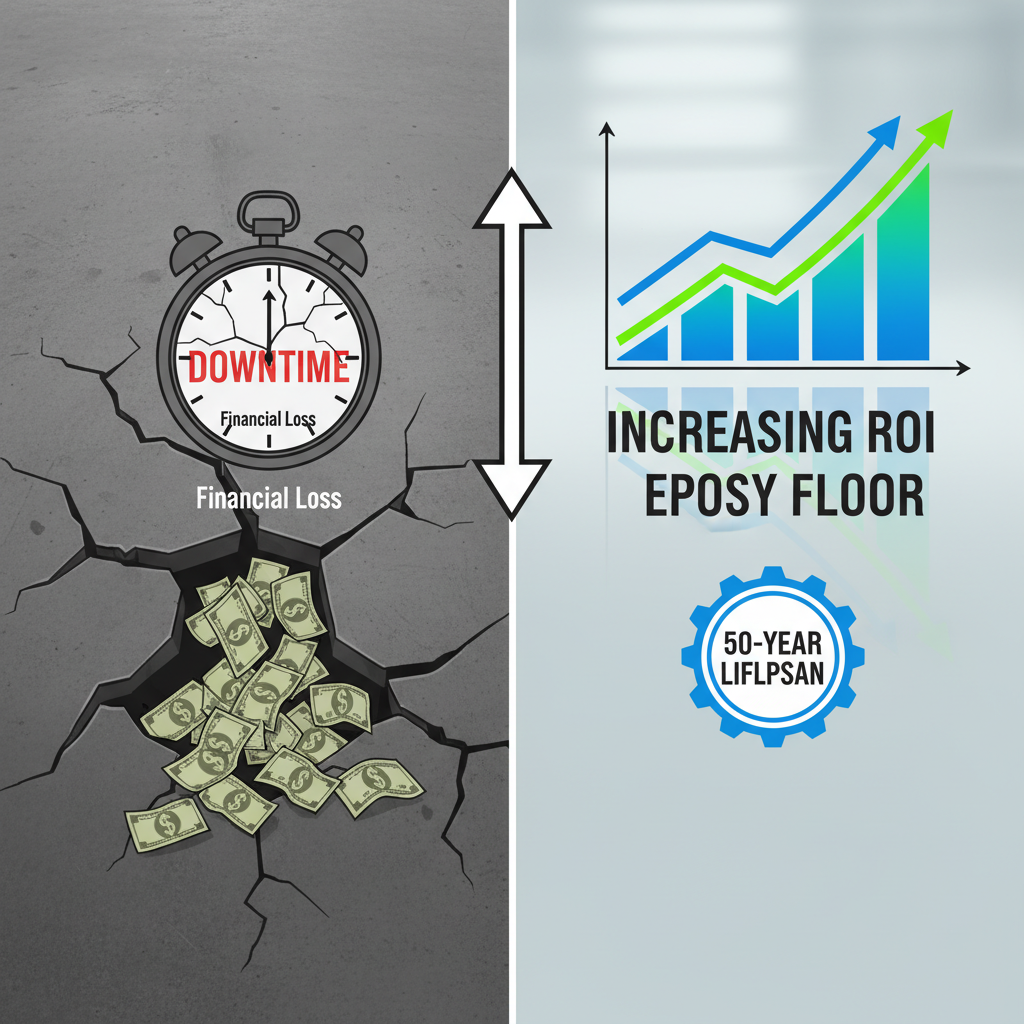
To truly solve the problem of heavy wear and tear flooring, we must shift our perspective from the initial purchase price to the Total Cost of Ownership (TCO). When standard commercial floors fail prematurely, the cost of the replacement material is only a fraction of the financial damage.
According to data from the Building Owners and Managers Association (BOMA) International [1] and construction cost estimators at RSMeans Data [2], labor, demolition, and disposal account for up to 60% of total flooring replacement costs. Furthermore, replacing a commercial floor typically results in 24 to 72 hours of complete operational downtime. In a busy manufacturing plant, retail environment, or logistics hub, the revenue lost during this downtime often vastly exceeds the cost of the floor itself.
The “Fragile Five”: Floor Surfaces to Avoid in High-Traffic Zones
Understanding why floors fail requires looking at the mechanical vulnerabilities of easily damaged floor surfaces. High-traffic zones are unforgiving, and deploying the wrong material guarantees a short lifecycle.
Hardwood, while aesthetically pleasing, is highly susceptible to denting and scratching. According to the National Wood Flooring Association (NWFA), wood species with a Janka Hardness rating below 1000 (such as Pine or Douglas Fir) will easily dent from dropped objects, heavy foot traffic, and equipment [3]. Similarly, standard laminate flooring is notoriously vulnerable to moisture. The North American Laminate Flooring Association (NALFA) notes that standard laminate can swell and permanently warp within 24 to 48 hours of standing water exposure [4]. Other fragile surfaces include standard vinyl composition tile (VCT) which requires constant stripping and waxing, low-density ceramic tiles prone to cracking under point-loads, and unsealed concrete that generates dust and absorbs chemical spills.
Demystifying Durability: Resilient vs. Rigid vs. Adamantine Flooring
To make data-backed purchasing decisions, facility managers must separate marketing fluff from actual material science. True durable flooring is categorized by its mechanical properties and tested against rigorous standards.
Reviewer Methodology: In assessing the durability of the flooring categories below, we rely on objective, standardized testing metrics rather than subjective manufacturer claims. This includes citing ASTM International standard test methods [5] for abrasion resistance (e.g., ASTM D4060) and impact resistance, ensuring a scientifically rigorous comparison.
Resilient Flooring: The Science of Joint Health and Acoustics
Searchers often confuse “resilient” with “durable,” but in material science, resilient flooring specifically refers to materials that have elasticity or “give,” such as luxury vinyl, linoleum, cork, and rubber. While high-quality Luxury Vinyl Plank (LVP) is a form of resilient flooring, its true value lies beyond basic water resistance.
The ergonomic and acoustic benefits of these materials are substantial. The American Podiatric Medical Association (APMA) recognizes the health benefits of resilient surfaces in reducing standing fatigue and joint stress for workers on their feet all day [6]. Acoustically, the Resilient Floor Covering Institute (RFCI) notes that materials like cork and rubber can drastically improve Impact Insulation Class (IIC) ratings, reducing impact noise transmission by up to 20 decibels [7].
The 2024 Durability Index: Ranking Rigid Floors
When elasticity is less important than sheer surface longevity, rigid floors take precedence. For those seeking durable flooring for heavy traffic without moving into industrial resins, porcelain tile and commercial-grade LVP are top contenders.
Insights from Floor Covering Installer Magazine highlight that high-quality porcelain tile can last 50+ years, largely due to a water absorption rate of less than 0.5% and extreme scratch resistance [8]. For commercial environments requiring the aesthetic of wood or stone but demanding heavy-duty performance, commercial LVP must feature a wear layer of at least 20 to 28 mil (0.5mm – 0.7mm) to survive thousands of daily footsteps without premature degradation.
What is Adamantine Flooring? The Pinnacle of Material Hardness
Adamantine flooring represents a niche, ultra-durable flooring category. It does not refer to a single product, but rather to specialized industrial coatings, advanced polyaspartics, and high-end epoxy blends engineered to achieve maximum surface hardness.
What exactly is adamantine flooring made of? It is typically a thermosetting polymer that cures into a highly cross-linked matrix. To understand its strength, we look to the Mohs hardness scale. While standard polyurethanes might scratch easily, adamantine-grade industrial coatings typically score above 7 on the Mohs scale, making them harder than quartz. The National Terrazzo and Mosaic Association (NTMA) [9] and peer-reviewed data from the Journal of Materials in Civil Engineering [10] confirm that these high-density epoxy and resin blends offer unparalleled substrate adhesion and abrasion resistance, boasting lifespans averaging 20 to 30 years in heavy industrial settings with proper maintenance.

Engineering the 50-Year Floor: High-Performance Flooring Solutions by Industry
For extreme environments—such as aerospace hangars, pharmaceutical manufacturing, or heavy logistics—standard commercial flooring is inadequate. Architects and specifiers must turn to custom high-performance flooring solutions.
The Association for Materials Protection and Performance (AMPP) sets strict standards for protective coatings and corrosion resistance in these environments [11]. Furthermore, global leaders in construction chemicals, such as Master Builders Solutions / BASF, emphasize that engineering the longest lasting high performance flooring requires matching specific resinous chemistries to exact environmental threats [12].
Matching Chemistry to the Threat: Epoxy, Polyaspartic, Urethane Cement, and MMA
There is no universal “best” floor; there is only the best chemistry for a specific threat.
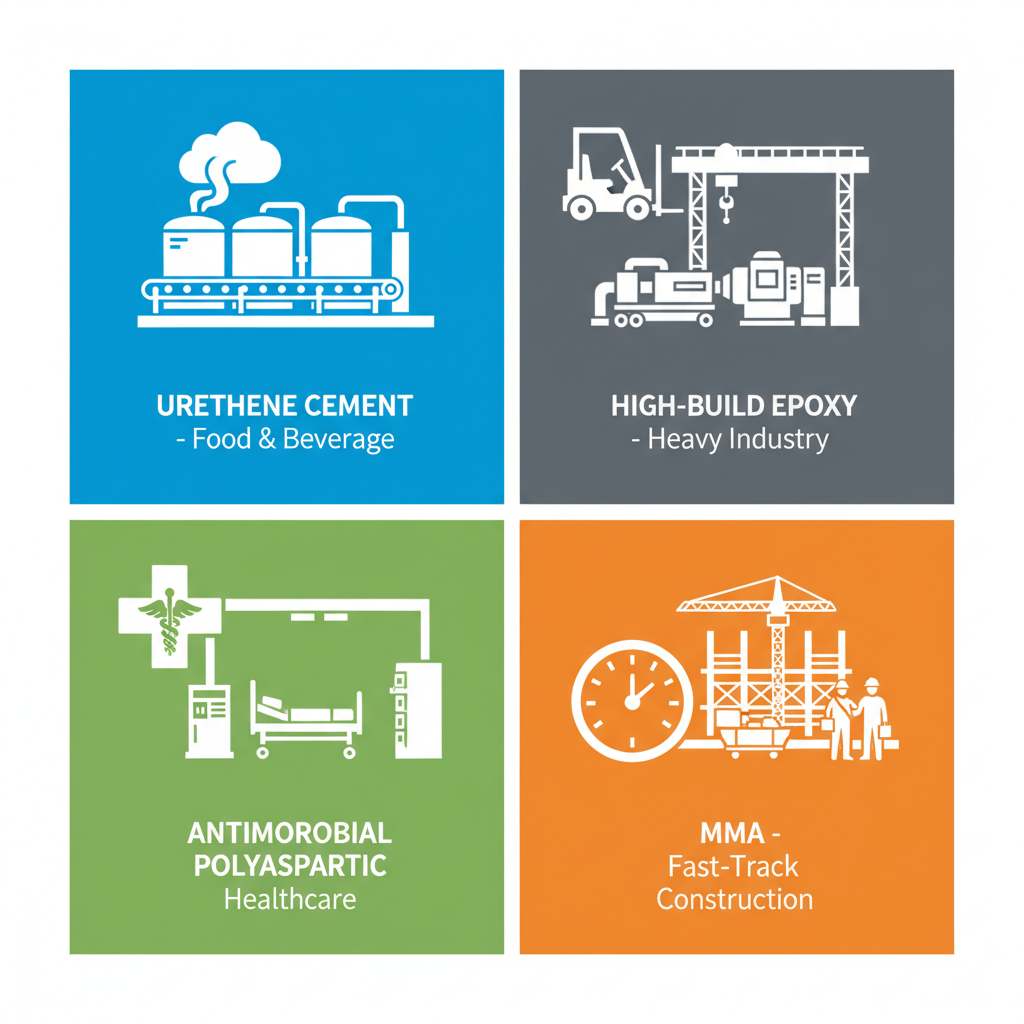
- Urethane Cement: The undisputed champion for food and beverage processing. It can withstand extreme thermal shock up to 250°F (121°C) without delaminating, making it perfect for areas subjected to high-pressure steam cleaning.
- MMA (Methyl Methacrylate): When facility downtime is not an option, MMA is the solution. Properly installed MMA flooring can cure fully in under 2 hours and last over 25 years.
- High-Build Epoxy: The standard for heavy forklift traffic and machinery. The American Concrete Institute (ACI) notes that to withstand heavy point-loads, the concrete substrate and the epoxy overlay must have exceptionally high compressive strength (PSI) [14].
- Antimicrobial Polyaspartic: Ideal for healthcare. The USDA provides strict guidelines on sanitary facility design, and FDA-compliant antimicrobial high-performance flooring can reduce surface bacterial growth by up to 99.9% [13].
The Financial Case: Calculating the ROI of Adamantine Flooring Installation
Upgrading to an industrial-grade surface requires a higher initial capital expenditure, but the benefits of adamantine flooring installation become undeniable when viewed through an ROI lens.
Facility Executive Magazine frequently highlights that infrastructure investments must be measured by their ability to reduce long-term maintenance costs and prevent operational interruptions [16]. While polished concrete requires frequent re-sealing and VCT demands constant waxing, adamantine floors require only basic scrubbing. Furthermore, these floors drastically improve facility safety. By incorporating custom aggregates, adamantine textures easily meet and exceed Occupational Safety and Health Administration (OSHA) slip-resistance standards, mitigating the massive financial risk of workplace slip-and-fall liabilities [15].
The Flawless Install: Preparation Secrets to Install Long-Lasting Flooring
The most critical secret in the commercial flooring industry is this: longevity is 80% preparation and 20% material. You cannot install long lasting flooring over a failing substrate.
Industry experts estimate that over 80% of premature flooring failures are due to improper subfloor preparation and unmitigated moisture issues. The Floor Covering Installation Contractors Association (FCICA) [17] and Certified Floorcovering Installers (CFI) [18] represent the highest standards of installation training, and their protocols dictate that surface preparation can never be rushed.
Mastering Moisture Vapor Transmission Rates (MVTR) and Subfloor Profiling
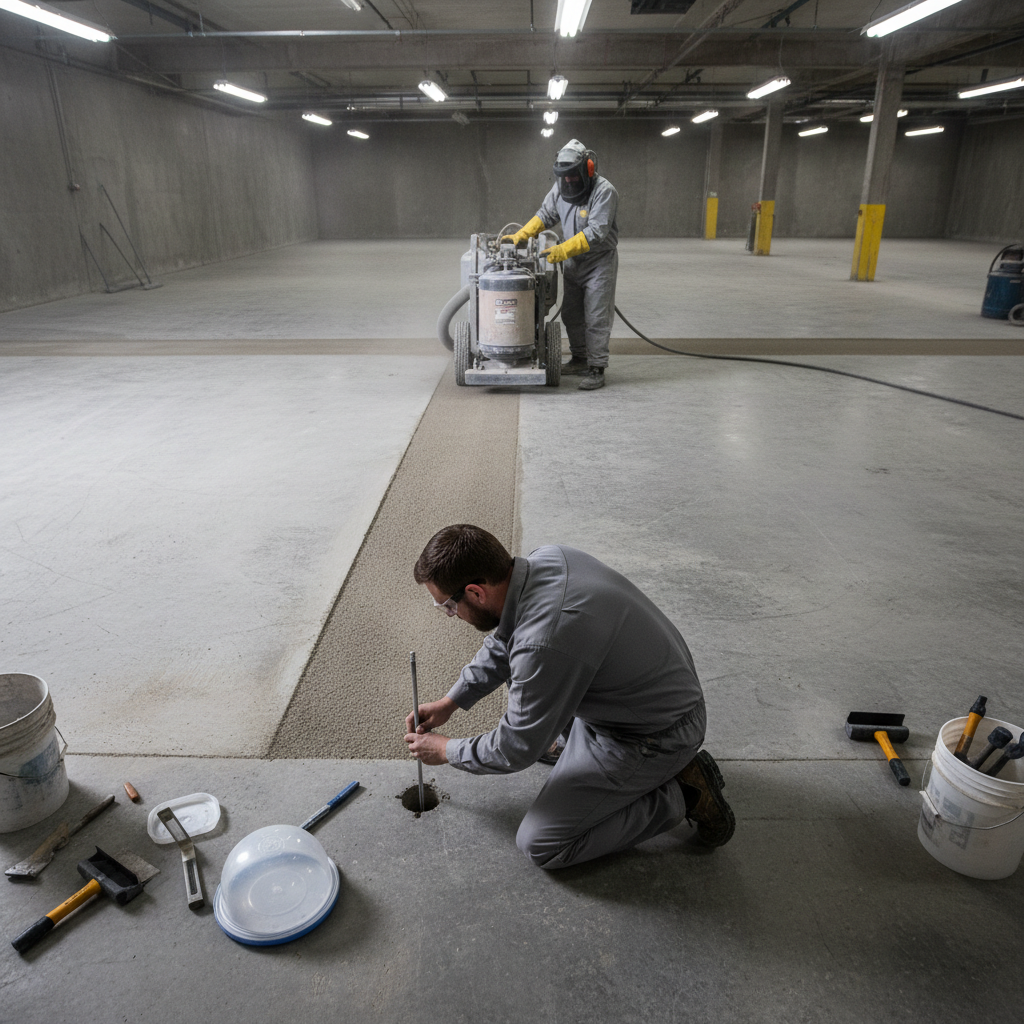
A high-performance coating is only as strong as its bond to the concrete beneath it. Concrete subfloors must be mechanically profiled (often via shot blasting or diamond grinding) and leveled to a strict tolerance of 3/16 inch per 10-foot radius for most rigid, long-lasting floors.
More importantly, installers must master Moisture Vapor Transmission Rates (MVTR). Visualizing proper moisture testing is crucial—high-resolution imagery of an installation site should always feature in-situ relative humidity (RH) probes embedded in the concrete or calcium chloride dome tests sealed to the surface. If moisture levels exceed the coating’s tolerance, hydrostatic pressure will literally push the adamantine floor off the slab. Applying specialized epoxy moisture mitigators creates a vapor barrier that prevents this catastrophic delamination.
The Buyer’s Roadmap: How to Upgrade to Adamantine Floors
For those ready to upgrade to adamantine floors, understanding the installation process, timelines, and expectations is vital to minimizing friction.
A standard upgrade involves three phases: substrate preparation (grinding/repairing cracks), primer and base coat application, and final topcoat sealing. Buyers must plan for facility downtime. During the curing process of some industrial coatings, strong odors and Volatile Organic Compounds (VOCs) are emitted. The Environmental Protection Agency (EPA) provides strict guidelines regarding indoor air quality and VOC emissions, necessitating heavy-duty ventilation protocols during installation [19]. However, as noted by Concrete Decor Magazine, advancements in low-VOC polyaspartics are rapidly reducing these off-gassing windows, allowing for faster return-to-service times [20].
Maintenance Protocols for Heavy Traffic Zones
To protect your durable flooring for heavy traffic, post-installation maintenance is key. Even adamantine floors benefit from strategic protection.
The International Facility Management Association (IFMA) stresses the importance of proactive asset maintenance [21]. The most critical areas are “transition zones”—the entrances where exterior grit is tracked inside. According to authoritative data from the Carpet and Rug Institute (CRI), properly placed walk-off mats at entrances can capture up to 80% of dirt and grit [22]. By preventing this abrasive material from acting like sandpaper under thousands of footsteps, you significantly extend the life and gloss retention of your heavy-traffic flooring.
Conclusion
True flooring durability is not found in a marketing brochure; it is the result of advanced material science—utilizing adamantine and high-performance resins—combined with meticulous, expert-level subfloor preparation. By shifting your focus from the initial price tag to the Total Cost of Ownership, you can engineer a 50-year floor that permanently eliminates the hidden financial drain of frequent replacements, maintenance headaches, and operational downtime. We highly encourage facility managers to utilize a comprehensive TCO calculator or schedule a site evaluation with a certified high-performance flooring contractor to match the perfect chemical solution to your facility’s specific environmental threats.
Disclaimer: The financial ROI calculations and Total Cost of Ownership (TCO) models provided are estimates. Actual costs will vary based on facility conditions, local labor rates, and specific material chemistry. Always consult with a certified industrial flooring contractor.
References & Authoritative Sources
- Building Owners and Managers Association (BOMA) International. (N.D.). Commercial Building Operating Costs and Lifecycle Management. Retrieved from BOMA.
- RSMeans Data (Gordian). (N.D.). Construction and Renovation Cost Estimating Standards. Retrieved from RSMeans.
- National Wood Flooring Association (NWFA). (N.D.). Wood Flooring Characteristics and the Janka Hardness Scale. Retrieved from NWFA.
- North American Laminate Flooring Association (NALFA). (N.D.). Laminate Water Resistance and Durability Standards. Retrieved from NALFA.
- ASTM International. (N.D.). Standard Test Methods for Abrasion and Impact Resistance of Materials. Retrieved from ASTM.
- The American Podiatric Medical Association (APMA). (N.D.). Foot Health and Standing Surfaces Guidelines. Retrieved from APMA.
- Resilient Floor Covering Institute (RFCI). (N.D.). Resilient Flooring Standards and Acoustic IIC Ratings. Retrieved from RFCI.
- Floor Covering Installer Magazine. (N.D.). Material Longevity and Wear Layer Specifications. Retrieved from Floor Covering Installer Magazine.
- National Terrazzo and Mosaic Association (NTMA). (N.D.). High-Durability Flooring Standards and Installation Best Practices. Retrieved from NTMA.
- Journal of Materials in Civil Engineering. (N.D.). Peer-Reviewed Data on Epoxy, Resin Hardness, and Substrate Adhesion. Retrieved from Journal of Materials in Civil Engineering.
- The Association for Materials Protection and Performance (AMPP). (N.D.). Global Standards on Protective Coatings and Corrosion. Retrieved from AMPP.
- Master Builders Solutions / BASF. (N.D.). Construction Chemicals and High-Performance Flooring Science. Retrieved from Master Builders Solutions.
- U.S. Department of Agriculture (USDA) & Food and Drug Administration (FDA). (N.D.). Guidelines on Sanitary Facility Design and Approved Flooring Materials. Retrieved from USDA/FDA.
- American Concrete Institute (ACI). (N.D.). Concrete Durability, Repair, and Surface Preparation Standards. Retrieved from ACI.
- Occupational Safety and Health Administration (OSHA). (N.D.). Guidelines on Maintaining Safe, Slip-Resistant Walking Surfaces. Retrieved from OSHA.
- Facility Executive Magazine. (N.D.). Facility Management ROI and Infrastructure Investments. Retrieved from Facility Executive Magazine.
- Floor Covering Installation Contractors Association (FCICA). (N.D.). Commercial Flooring Installation Best Practices. Retrieved from FCICA.
- Certified Floorcovering Installers (CFI). (N.D.). Standards of Installation Training and Certification. Retrieved from CFI.
- Environmental Protection Agency (EPA). (N.D.). VOC Emissions and Indoor Air Quality Guidelines. Retrieved from EPA.
- Concrete Decor Magazine. (N.D.). Decorative and High-Performance Concrete Coatings. Retrieved from Concrete Decor Magazine.
- International Facility Management Association (IFMA). (N.D.). Managing and Maintaining Commercial Building Assets. Retrieved from IFMA.
- Carpet and Rug Institute (CRI). (N.D.). Soil Tracking and Entrance Matting Effectiveness Data. Retrieved from CRI.
