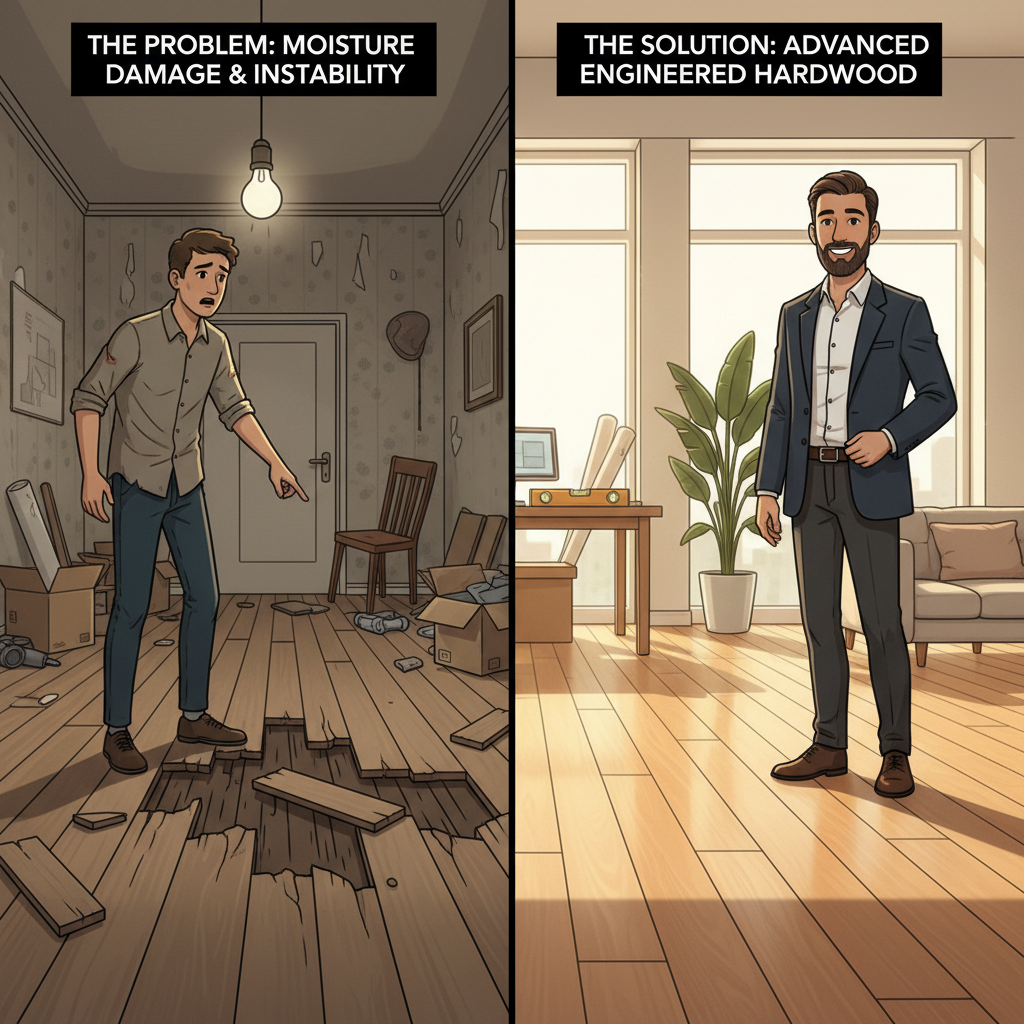
There are few homeownership experiences more frustrating—or financially draining—than watching a newly installed, premium floor slowly tear itself apart. You invest thousands of dollars in high-end materials, only to be greeted months later by unsightly seasonal gapping that traps debris, or worse, irreversible warping and buckling that ruins the aesthetic of your entire home. The harsh reality is that most flooring fails not because of heavy foot traffic, but due to a fundamental mismatch between the material and its environment.
To protect your investment, you must adopt an “Architect’s Approach.” This means looking past superficial marketing claims and understanding the science of durable flooring. By selecting ultra-durable materials like adamantine flooring or premium engineered wood, and proactively engineering your home’s climate, you can eradicate board separation and buckling forever. This comprehensive guide will walk you through the anatomy of high-performance flooring, the physics behind why floors fail, and the critical pre-installation and climate control imperatives needed to guarantee a floor that lasts a lifetime.
- The Anatomy of Durability: Adamantine vs. Premium Engineered Flooring
- The Physics of Flooring Failure: Diagnosing Gaps, Warps, and Separation
- Pre-Installation Imperatives: The Foundation of Warping Prevention
- Proactive Climate Control: Engineering Your Home to Prevent Gapping
- Adamantine Flooring Durability Over Time: A Decade-by-Decade Look
- Conclusion: Securing Your Flooring Investment
- References & Authoritative Sources
The Anatomy of Durability: Adamantine vs. Premium Engineered Flooring
To build a resilient home, we must first demystify the physical construction of high-performance flooring. Moving away from generic marketing buzzwords, true durability is found in the technical specifications of the materials. What makes a floor truly capable of withstanding both environmental stress and daily physical wear?
According to peer-reviewed data published in the Journal of Materials Science [1], the structural integrity of composite flooring materials relies heavily on the density of the core and the chemical bonding of the wear layer. When evaluated by certified flooring contractors, a reliable “Durability Index” scores flooring across three critical metrics: scratch resistance (dictated by the finish), water resistance (dictated by the core and seal), and impact resistance (dictated by material density).
What is Adamantine Flooring? Composition and 20-Year TCO
Adamantine flooring represents a niche, ultra-durable flooring category designed for maximum longevity. The term “adamantine” refers to its diamond-like hardness, achieved through advanced manufacturing processes that fuse mineral-based composites with high-density polymers under extreme heat and pressure. This creates a completely waterproof, dimensionally stable plank that refuses to swell or contract under normal moisture fluctuations.
When comparing adamantine flooring to traditional solid hardwoods, the 20-Year Total Cost of Ownership (TCO) heavily favors the former. While traditional hardwood may average $8 to $15 per square foot for materials and requires periodic refinishing, adamantine flooring—often starting around $7 to $12 per square foot—requires virtually zero long-term maintenance. Independent laboratory testing standards [2] and Janka hardness scale equivalents place adamantine composites well above traditional oak or hickory, meaning it easily resists dents from dropped cast-iron pans or heavy furniture.
Demystifying Engineered Wood Cores: Plywood vs. HDF
If you prefer the authentic look and feel of real wood, finding the best engineered flooring for preventing warping requires a deep dive into the core. Engineered flooring is constructed of a real wood veneer bonded to a multi-layer core. The stability of this core dictates how the floor will react to humidity.
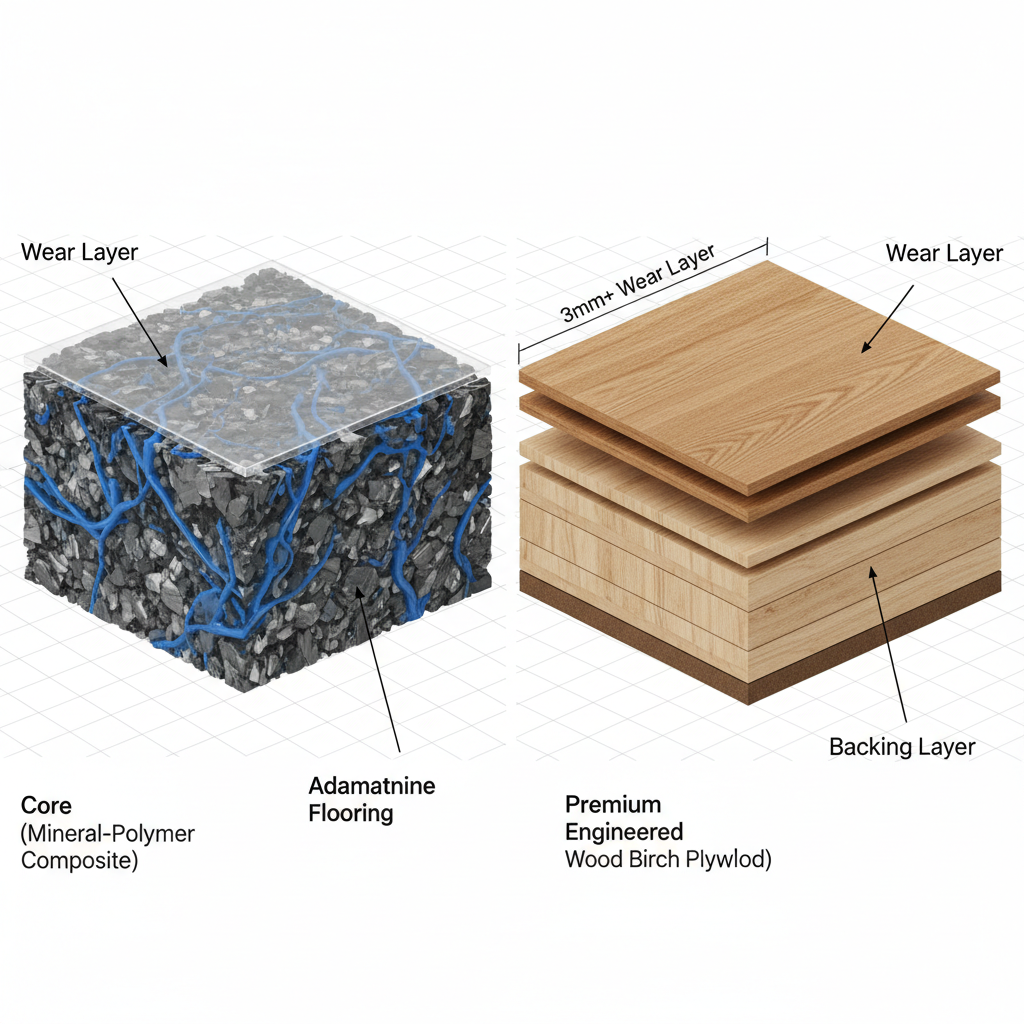
- Baltic Birch Plywood: Considered the gold standard, Baltic birch features multiple thin layers glued in a cross-ply construction. This alternating grain pattern physically restricts the wood’s natural tendency to expand and contract.
- Poplar Plywood: A softer, less expensive alternative to birch. While still utilizing cross-ply construction, it is slightly more susceptible to denting from heavy impacts.
- HDF (High-Density Fiberboard): Made from compressed wood fibers and resins. HDF is incredibly dense and highly water-resistant from the top down, but can swell irreversibly if moisture penetrates from the subfloor.
Research from the Forest Products Laboratory (FPL) on wood moisture relations [3] confirms that cross-ply construction with balancing bottom layers significantly mitigates warping. For humid climates or installations over concrete, a marine-grade Baltic birch plywood core, manufactured to Hardwood Plywood and Veneer Association (HPVA) standards [4], is the most stable option available.
The Wear Layer Matrix: Thickness and Finish Types
When evaluating engineered flooring durability, the top veneer—or “wear layer”—is your primary defense. A critical statistic every buyer must know: a wear layer of 3mm or thicker is generally required to safely sand and refinish engineered flooring at least once during its lifespan. Anything thinner is essentially a disposable floor once deeply scratched.
Furthermore, the core material does not dictate scratch resistance; the finish does.
- Aluminum Oxide: The industry standard for extreme durability. Microscopic aluminum oxide crystals are embedded in a UV-cured urethane, offering unparalleled protection against micro-scratches from pet claws.
- Polyurethane: Offers a clearer, more traditional aesthetic and is easier to touch up if scratched, though it lacks the diamond-hard armor of aluminum oxide.
It is vital to set realistic expectations: while a thick wear layer and aluminum oxide finish prevent scratches, wood is still wood. Heavy, concentrated loads can still cause denting. Always consult the National Wood Flooring Association (NWFA) guidelines on wear layers and refinishing [5] before making a purchase.
The Physics of Flooring Failure: Diagnosing Gaps, Warps, and Separation
Even the most durable flooring can succumb to environmental extremes. Understanding the physics of flooring failure provides you with the diagnostic tools needed to determine if an issue is a simple seasonal fluctuation or a catastrophic structural failure requiring professional replacement.
If you are experiencing hardwood floor gapping, warped engineered flooring, or flooring separation issues, a diagnostic flowchart vetted by a NWFA-certified inspector typically starts with one question: Where is the moisture coming from?
Normal Seasonal Gapping vs. Structural Failure
Is it normal for hardwood floors to have gaps? Yes, to a degree. Wood is a hygroscopic material, meaning it acts like a sponge, absorbing moisture from the air and releasing it when the air is dry. According to NWFA technical guidelines on seasonal wood movement [6], wood can shrink up to 1/16th of an inch per board during dry winter months. This creates noticeable, but normal, seasonal gaps.
A common and disastrous DIY mistake is attempting to fill these winter gaps with wood filler. When summer humidity returns, the wood will naturally expand. If the gap is packed with hardened filler, the expanding boards will crush against each other, causing the filler to crack out and the edges of the boards to splinter and permanently damage the floor.
Root Causes of Warping, Cupping, and Buckling
When dealing with warped engineered flooring, the issue is rarely seasonal; it is structural. Cupping (edges higher than the center) and buckling (boards lifting entirely off the subfloor) are symptoms of severe moisture imbalance.
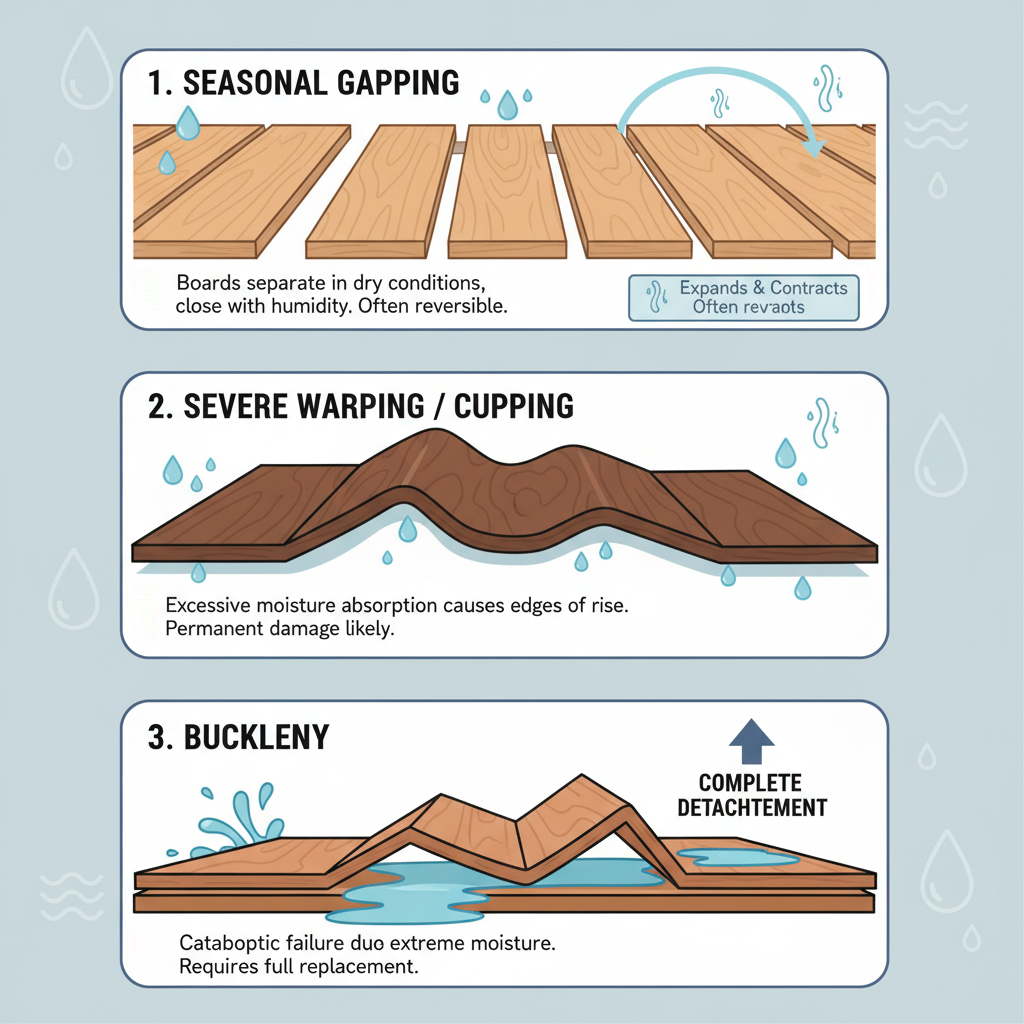
The root causes are almost always hidden: plumbing leaks inside walls, high moisture emissions from a concrete slab, or the lack of a proper vapor barrier. Institute of Inspection, Cleaning and Restoration Certification (IICRC) standards for water damage restoration [7] note that severely warped engineered boards usually require complete replacement, not just flattening. If the damage is due to a sudden plumbing failure, consult the Insurance Information Institute [8] for guidance on navigating homeowners insurance claims, as slow leaks are rarely covered, but sudden bursts often are.
Click-Lock Separation and Heavy Load Failures
For floating floors, flooring separation issues often manifest as boards pulling apart at the seams. This is a mechanical failure of the click-lock system.
Troubleshooting this requires looking at the installation. Did the installer leave the required 1/4-inch to 1/2-inch expansion gap around the perimeter of the room? If the floor is pinned beneath baseboards or door casings, it cannot expand naturally, causing the locking mechanisms to snap under pressure. Uneven subfloors also create weak points where foot traffic bends and eventually breaks the locking joints.
Furthermore, heavy rolling loads—such as motorized wheelchairs or massive kitchen islands placed on top of a floating floor—pin the floor down, forcing it to separate elsewhere. North American Laminate Flooring Association (NALFA) [9] and Multilayer Flooring Association (MFA) [10] standards dictate strict tolerances for subfloor flatness and expansion gaps to prevent these exact failures. In minor cases, a floor gap fixer tool (a specialized suction block) can tap boards back together, but if the locking mechanism is sheared off, reinstallation of the affected area is necessary.
Pre-Installation Imperatives: The Foundation of Warping Prevention
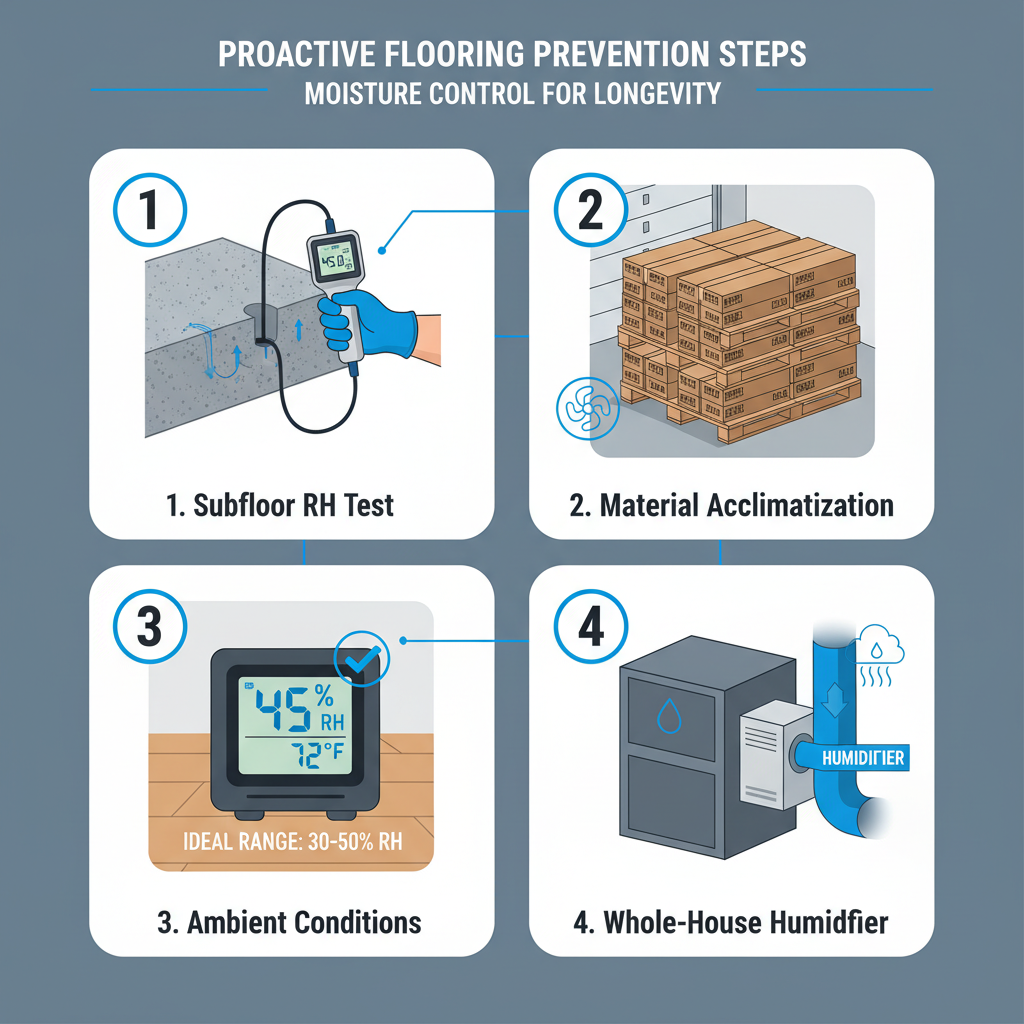
Flooring warping prevention does not start on installation day; it begins weeks prior. The foundation of an indestructible floor relies entirely on meticulous subfloor preparation and proper acclimatization.
ASTM-Standard Subfloor Moisture Testing
You cannot simply feel a concrete slab to determine if it is dry. Testing a concrete subfloor for moisture is a non-negotiable step; skipping it is the leading cause of warranty-voiding warped floors.
There are two primary, scientifically backed methods:
- Calcium Chloride Tests (ASTM F1869) [11]: Measures the moisture vapor emission rate (MVER) exiting the surface of the concrete over 60-72 hours.
- In-Situ Relative Humidity (RH) Probes (ASTM F2170) [12]: Involves drilling into the concrete and inserting sensors to measure the internal moisture of the slab. This is widely considered the most accurate method.
“If you don’t test the moisture, you are the moisture test.” — Certified Flooring Installers
Vapor Barriers, Underlayment, and Exterior Drainage
If testing reveals high moisture, you must intervene. The best moisture barrier for concrete floors is a high-quality, 6-mil polyethylene sheet or a roll-on elastomeric membrane. When selecting a barrier, look at its “perm rating”—a measure of vapor permeability. A Class I vapor retarder (0.1 perms or less) is required over concrete.
However, a critical gap in most flooring advice is ignoring the outside of the home. World Floor Covering Association (WFCA) [13] underlayment standards are excellent, but if your gutters are dumping water directly against your foundation, no interior vapor barrier will stop the hydrostatic pressure from eventually ruining your basement floor. Exterior drainage and proper grading are your first lines of defense in flooring warping prevention.
NWFA-Compliant Acclimatization Protocols
Improper acclimatization accounts for over 70% of flooring gapping issues. Acclimatization is not simply leaving boxes of wood in a room for 48 hours.
According to NWFA definitive standards [14], acclimatization is the process of allowing the flooring to reach an Equilibrium Moisture Content (EMC) with the home’s normal living conditions.
- Step 1: Turn on the HVAC system to normal living conditions (60-80°F, 30-50% humidity) at least five days before delivery.
- Step 2: Open the flooring boxes and cross-stack the boards to allow airflow.
- Step 3: Use a professional moisture meter to test the wood and the subfloor. The flooring is ready to install only when the moisture content of the wood is within 2-4% of the subfloor’s moisture content.
If you want to know how to prevent flooring from gapping, this is the most critical step.
Proactive Climate Control: Engineering Your Home to Prevent Gapping
Once the floor is installed, the focus shifts from the material to the environment. HVAC management is the ultimate, ongoing solution for flooring gapping prevention.
The 30-50% Relative Humidity Rule
What is the ideal humidity for wood floors? The data is clear: maintaining a consistent indoor temperature of 60-80°F and a relative humidity (RH) of 30-50% prevents 90% of seasonal gapping.
The American Society of Heating, Refrigerating and Air-Conditioning Engineers (ASHRAE) [15] sets these indoor humidity standards not just for human comfort, but for the structural stability of the home’s interior finishes. This is especially critical if you have radiant floor heating. Radiant heat bakes the moisture out of wood from the bottom up. Systems must be brought up to temperature gradually (no more than 5 degrees per day) to prevent shocking the wood and causing severe, immediate gapping.
Integrating Whole-House Humidifiers
Do whole-house humidifiers prevent floor gaps? Absolutely. In cold climates where winter air is bone-dry, a furnace will strip the remaining moisture from your home, causing wood to shrink violently.
Integrating a whole-house humidifier directly into your HVAC system ensures a constant, regulated flow of moisture. For older homes without forced air, strategically placed console humidifiers can achieve similar results. The Environmental Protection Agency (EPA) [16] guidelines on indoor air quality note that maintaining proper humidity also reduces airborne viruses and respiratory irritation. To monitor this, every homeowner with premium flooring should invest in a high-quality digital hygrometer to keep a constant eye on their indoor climate.
Adamantine Flooring Durability Over Time: A Decade-by-Decade Look
For homeowners making a substantial financial investment, understanding Adamantine flooring durability over time is crucial. How does a premium floor age over 10, 20, or 30 years?
Wear, Maintenance, and Aesthetic Changes
When subjected to simulated aging based on Taber abrasion tests—a standard utilized by the American National Standards Institute (ANSI) for wear testing protocols [17]—adamantine and thick-wear-layer engineered floors show remarkable resilience.
- Year 1-10: The floor will maintain its original luster. UV-cured aluminum oxide finishes prevent fading in sunlight. Heavy furniture will not cause structural denting, though felt pads are still recommended.
- Year 10-20: You may begin to notice micro-scratches in high-traffic areas (hallways, kitchens) visible only under direct, angled light. The floor will not lose its overall shine, provided you have avoided harsh, abrasive cleaning chemicals. Independent materials testing laboratories like Intertek [18] confirm that maintaining a pH-neutral cleaning routine extends the finish life exponentially.
- Year 20+: For engineered floors with a 3mm+ wear layer, this is the decade where a screen-and-recoat or a full sand-and-refinish might be considered to restore the factory-new look. Adamantine floors, being composite, will not require refinishing but may show slight textural smoothing in heavy pivot zones. Detailed manufacturer warranties often cover structural integrity for 50 years to life, provided climate control parameters were maintained.
Conclusion: Securing Your Flooring Investment
True flooring durability is not a marketing gimmick; it is a calculated combination of selecting premium materials—like adamantine composites or engineered wood with a 3mm+ wear layer and cross-ply core—and rigorously controlling your home’s internal environment.
Gapping, warping, and separation are not inevitable acts of nature. They are preventable engineering failures. By testing subfloor moisture, strictly adhering to NWFA acclimatization protocols, and utilizing your HVAC system to maintain a 30-50% relative humidity, you can protect your financial ROI and enjoy a flawless floor for decades. Download our comprehensive ‘Pre-Installation Subfloor & Acclimatization Checklist’ or consult with a NWFA-Certified Flooring Inspector before beginning your next flooring project to ensure your investment is built on a solid, scientific foundation.
Disclaimer: The information provided is for educational purposes based on industry standards (NWFA, ASTM). Always consult a Certified Wood Flooring Inspector or licensed HVAC professional for specific structural or climate control issues.
References & Authoritative Sources
- Journal of Materials Science. (N.D.). Peer-reviewed data on composite material strength and density.
- Independent materials testing laboratories. (N.D.). Testing standards for premium composites and adamantine hardness equivalents.
- Forest Products Laboratory (FPL). (N.D.). Research on wood moisture relations and dimensional stability.
- Hardwood Plywood and Veneer Association (HPVA). (N.D.). Standards for engineered wood cores and cross-ply construction.
- National Wood Flooring Association (NWFA). (N.D.). Guidelines on wear layers and refinishing potentials.
- National Wood Flooring Association (NWFA). (N.D.). Technical guidelines on seasonal wood movement and gapping.
- Institute of Inspection, Cleaning and Restoration Certification (IICRC). (N.D.). Standards for water damage restoration and warped flooring replacement.
- Insurance Information Institute. (N.D.). Guidance on homeowner claims for water damage.
- North American Laminate Flooring Association (NALFA). (N.D.). Standards for laminate installation, expansion gaps, and performance.
- Multilayer Flooring Association (MFA). (N.D.). Standards for LVP/SPC flooring and click-lock mechanisms.
- ASTM International. (N.D.). ASTM F1869: Standard Test Method for Measuring Moisture Vapor Emission Rate of Concrete Subfloor Using Anhydrous Calcium Chloride.
- ASTM International. (N.D.). ASTM F2170: Standard Test Method for Determining Relative Humidity in Concrete Floor Slabs Using in situ Probes.
- World Floor Covering Association (WFCA). (N.D.). Standards for underlayment and moisture barriers.
- National Wood Flooring Association (NWFA). (N.D.). Definitive standards on acclimatization and Equilibrium Moisture Content (EMC).
- American Society of Heating, Refrigerating and Air-Conditioning Engineers (ASHRAE). (N.D.). Authoritative data on indoor climate control and humidity standards.
- Environmental Protection Agency (EPA). (N.D.). Guidelines on indoor air quality, VOCs, and humidity management.
- American National Standards Institute (ANSI). (N.D.). Standardized wear testing protocols and Taber abrasion tests.
- Intertek. (N.D.). Independent materials testing and long-term finish durability analysis.
