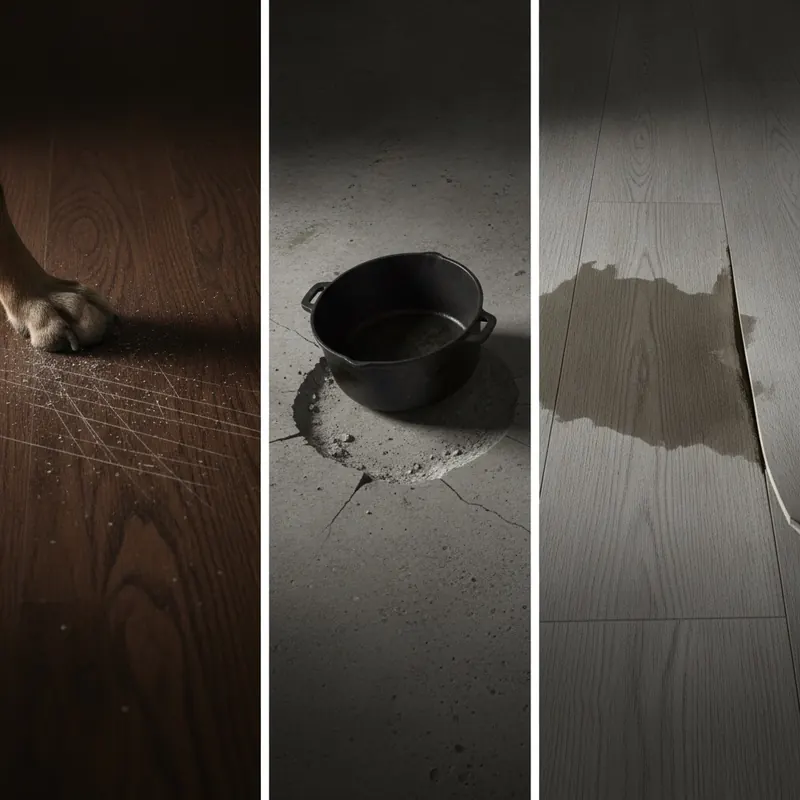
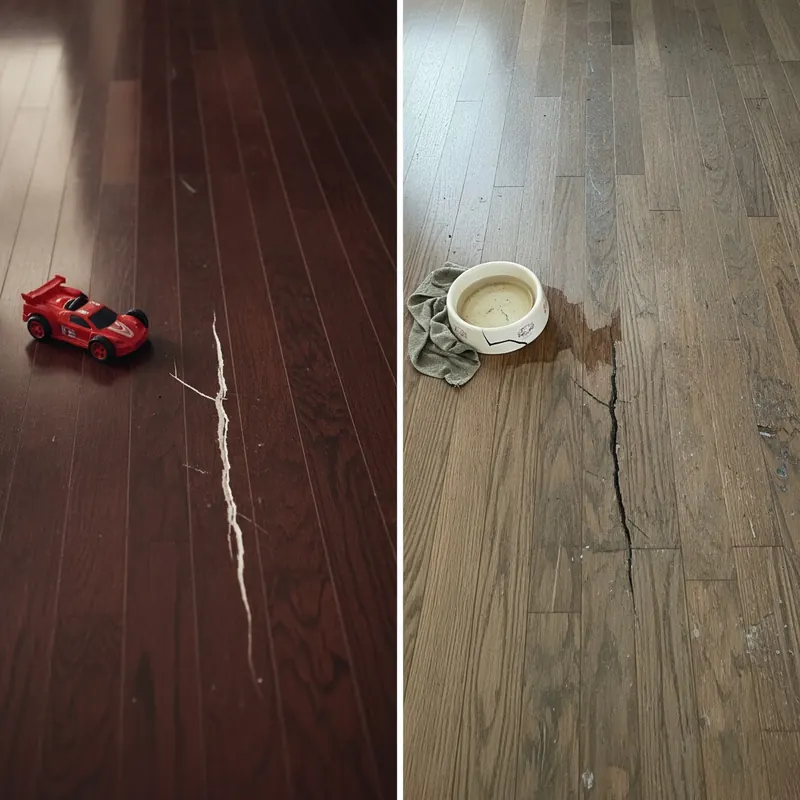
There’s a unique sound that every homeowner dreads: the sharp scrape of a dragged chair, the heavy thud of a dropped pan, or the faint crack that signals a tile has given up. It’s the sound of a beautiful, expensive floor failing. You invested in a surface that was supposed to withstand daily life, but now it’s covered in a frustrating map of scratches from pets, dents from furniture, and chips that catch your eye every time you walk by.
If you’re tired of floors that can’t keep up, you’ve come to the right place. This is not another generic “best of” list. This is your ultimate durability playbook—a myth-busting, data-driven guide that will equip you with an engineering-level understanding of what makes a floor truly tough.
We will move beyond marketing claims and dive into the science of strength. You will learn to decode the technical specs that professionals use, like PEI ratings, the Janka scale, and AC ratings. We will diagnose the root cause of common flooring failures and explore the materials scientifically proven to resist impact, scratches, and wear. By the end of this guide, you will have the knowledge and confidence to choose an indestructible floor and ensure it lasts a lifetime.

- Why Most Floors Fail: A Homeowner’s Guide to Common Flooring Problems
- Decoding Durability: The Engineer’s Guide to Flooring Strength Metrics
- The Contenders: A Data-Driven Comparison of Top Impact-Resistant Floors
- Application Mastery: Matching the Right Floor to Your High-Stress Zone
- The Unseen Hero: Why Your Subfloor is the Key to Longevity
- Your Lifetime Protection Plan: Maintenance for Lasting Durability
- Conclusion
- References & Authoritative Sources
Why Most Floors Fail: A Homeowner’s Guide to Common Flooring Problems
Before choosing a new floor, it’s crucial to understand why your old one failed. Most flooring problems aren’t random; they’re predictable outcomes based on material science and installation quality. By diagnosing the issue, you can ensure you don’t repeat the same costly mistakes.
Over 80% of floor scratches, for instance, are caused by simple dirt and grit tracked in from outside, according to experts at the National Wood Flooring Association (NWFA)[1]. These tiny, abrasive particles act like sandpaper underfoot, slowly dulling and damaging the finish. Understanding these common culprits is the first step toward building a defense.
Scratch Diagnosis Guide
| Type of Scratch | Common Culprit(s) | Likely Flooring Type Affected |
|---|---|---|
| Fine, web-like surface scratches | Abrasive dirt, grit, sand | Hardwood, Low-quality Laminate, Vinyl |
| Deeper, isolated gouges | Dragged heavy furniture, dropped sharp objects | Softer Hardwoods, LVP, Laminate |
| Consistent, parallel scratches | Pet claws (especially dogs) | Hardwood, Softer LVP, Bamboo |
| Scuff marks (surface transfer) | Rubber-soled shoes, plastic toys | Vinyl, Laminate, Sealed Hardwood |
The Scratch & Scuff Dilemma: When Finishes Aren’t Finished
The reason some floors scratch so easily often comes down to two factors: core hardness and the quality of the top finish. For wood flooring, this is measured by the Janka Hardness Scale[7], a test that measures the force required to embed a steel ball into the wood. A soft wood like Pine has a Janka rating of around 690, making it highly susceptible to dents and scratches. In contrast, a hard wood like Brazilian Cherry, with a Janka rating over 2350, offers significantly more resistance[1].
However, the finish is the floor’s first line of defense. Basic polyurethane finishes offer moderate protection, but premium flooring often uses a factory-applied aluminum oxide finish. As authorities on floor finishes like Bona and Minwax[6] explain, these finishes consist of multiple layers containing microscopic aluminum oxide particles, creating a surface with exceptional resistance to abrasion and wear.
The Anatomy of a Dent: Understanding LVP Core and Static Load Limits
The frustrating problem of dented vinyl plank flooring is almost always a failure of the plank’s core. Early luxury vinyl plank (LVP) often used a Wood Polymer Composite (WPC) core, which is lighter and softer, providing more comfort underfoot but less resistance to impact.
Modern, high-impact LVP has shifted to a Stone Polymer Composite (SPC) core. This core is made from a dense mixture of limestone and stabilizers, making it far more rigid. In fact, a Stone Polymer Composite (SPC) core is more rigid and offers up to 25% higher dent resistance than Wood Polymer Composite (WPC) cores. This density prevents dents from heavy furniture or dropped objects. When shopping for LVP, understanding this core difference is critical. The Resilient Floor Covering Institute (RFCI)[2] provides technical standards that help define these product categories, ensuring you know what you’re buying.
The Cracked Tile Catastrophe: Is It Impact or a Deeper Problem?
A single cracked tile is often the result of a severe impact, like a heavy cast-iron skillet falling. However, if you see a crack running across multiple tiles, or cracks appearing along grout lines, you likely have a more serious subfloor issue.
The Tile Council of North America (TCNA)[3], the definitive authority on tile installation, states that over 60% of tile installation failures are due to improper subfloor preparation. The primary culprit is “subfloor deflection”—too much flex or bounce in the floor. To prevent cracking, the TCNA Handbook specifies that a subfloor’s deflection should not exceed L/360, meaning it shouldn’t bend more than one inch over a 360-inch (30-foot) span[3]. If this standard isn’t met, the subfloor’s movement will eventually transfer to the rigid tile, causing it to crack under the stress.
Crack Analysis Flowchart
- Is the crack on a single tile?
- Yes: Was there a recent heavy impact? Likely an impact fracture. The tile can be replaced.
- No, it crosses multiple tiles: Go to step 2.
- Does the crack follow a grout line or run diagonally across the room?
- Yes: Does the floor feel bouncy in that area? This strongly indicates subfloor deflection or a control joint issue. This is a structural problem requiring professional assessment.
- No: Are the tiles tenting or pushing upwards? This could be a bonding failure or lack of expansion space. Professional diagnosis is needed.
Decoding Durability: The Engineer’s Guide to Flooring Strength Metrics
To choose a truly impact-resistant floor, you must speak the language of durability. Manufacturers use standardized tests to rate their products, and understanding these metrics allows you to make a true apples-to-apples comparison, free from marketing hype. These standards, often developed by organizations like ASTM International[4], provide the unbiased data you need.
Here is a master scorecard to help you compare the top flooring contenders across the most important durability metrics.

| Metric (Measures) | Porcelain Tile | SPC Luxury Vinyl | High-AC Laminate | Hardwood |
|---|---|---|---|---|
| MOHS Scale (Scratch) | 7 – 9 (Excellent) | N/A | N/A | N/A |
| AC Rating (Wear/Scratch) | N/A | N/A | AC4 – AC5 (Excellent) | N/A |
| Wear Layer (Wear/Scratch) | N/A | 20+ mil (Excellent) | N/A | N/A |
| Janka Scale (Dents) | N/A | N/A | N/A | 1200 – 4000+ (Varies) |
| Core Type (Dents) | N/A | SPC (Excellent) | HDF (Good) | Solid Wood (Varies) |
| PEI Rating (Traffic) | IV – V (Excellent) | N/A | N/A | N/A |
| Water Resistance | Waterproof | Waterproof | Water-Resistant | Poor |
Hardness & Dent Resistance: The Janka Scale and SPC Cores
For solid wood, dent resistance is quantified by the Janka Hardness Scale[7]. As referenced by the National Wood Flooring Association (NWFA)[1], this test measures the force needed to press a steel ball halfway into a plank. A higher number means a harder, more dent-resistant wood.
- Common Janka Ratings:
- American Cherry: ~950 (Softer)
- Red Oak: ~1290 (The Benchmark)
- Hickory: ~1820 (Hard)
- Brazilian Cherry: ~2350 (Very Hard)
- Strand-Woven Bamboo: ~4000+ (Extremely Hard)
For luxury vinyl, dent resistance comes from the SPC (Stone Polymer Composite) core, which provides the rigid backbone needed to resist impacts from furniture and dropped items.
Scratch & Wear Resistance: AC Ratings, Wear Layers, and the MOHS Scale
Surface durability is arguably the most important factor for a floor’s long-term appearance.
- AC (Abrasion Class) Rating: This is the industry standard for laminate flooring durability, defined by the Association of European Producers of Laminate Flooring[9]. The rating system (AC1 to AC5) simulates foot traffic, abrasion, and impact. For a durable home, look for AC4 (rated for light commercial use) or AC5 (rated for heavy commercial use).
- Wear Layer: This is the top protective coating on LVP. Its thickness is measured in mils (1/1000th of an inch). A basic LVP might have a 6-12 mil wear layer, but for high-traffic and high-impact areas, you need 20 mil or thicker. High-quality LVP features a 20-mil (or thicker) wear layer infused with ceramic beads for enhanced durability.
- MOHS Hardness Scale: For tile and stone, scratch resistance is measured by the MOHS scale[8], the scientific standard for mineral hardness from 1 (Talc) to 10 (Diamond). Porcelain tile has a MOHS hardness rating of 7-9, making it harder than granite and exceptionally resistant to scratches from grit, furniture, and pet claws.
Traffic & Impact Strength: PEI Ratings and Compressive Strength (PSI)
These metrics measure a floor’s ability to withstand heavy use and force.
- PEI (Porcelain Enamel Institute) Rating: As defined by the TCNA[3], this rating measures the wear resistance of a tile’s glaze.
- PEI 1-2: Walls only.
- PEI 3: Light residential floors.
- PEI 4: All residential and light commercial floors.
- PEI 5: All residential and heavy commercial floors (e.g., shopping malls).
Porcelain tile often has a PEI rating of 5, making it suitable for the most demanding heavy commercial traffic.
- Compressive Strength (PSI): This measures a material’s ability to resist a crushing force, crucial for industrial-style floors. According to the American Concrete Institute (ACI)[5], the compressive strength of concrete used for flooring can range from 3,000 to 5,000 PSI (pounds per square inch).
The Contenders: A Data-Driven Comparison of Top Impact-Resistant Floors
Now that you’re armed with the data, let’s evaluate the top contenders for the title of the most durable home flooring.
Porcelain & Ceramic Tile: The Hardness Champion
For sheer surface durability, nothing beats porcelain tile. It is the undisputed champion of scratch resistance and is completely waterproof.
- Durability Snapshot:
- Scratch Resistance (MOHS): 7-9 (Excellent)
- Traffic Resistance (PEI): IV – V (Excellent)
- Water Resistance: Waterproof
- Key Strength: Its extreme hardness makes it nearly impervious to scratches from pets, furniture, and daily grit.
- Primary Weakness: While incredibly strong, it is brittle. A severe impact on a tile that is not fully supported by mortar (due to improper installation) can cause a crack. Adhering to TCNA[3] installation standards is non-negotiable to maximize its impact resistance.
Luxury Vinyl Plank (SPC Core): The All-Around Performer
Modern SPC LVP, a form of “Adamantine Flooring,” is the versatile workhorse of the durable flooring world. It combines resilience, water resistance, and excellent dent protection in one package.
- Durability Snapshot:
- Wear Layer: 20+ mil recommended (Excellent)
- Dent Resistance: SPC Core (Excellent)
- Water Resistance: Waterproof
- Key Strength: Its rigid core resists dents far better than older LVP, while its thick wear layer handles scratches. It is also 100% waterproof, making it ideal for kitchens, bathrooms, and basements.
- E-E-A-T Signal: For homes with children and pets, look for products with FloorScore® certification[10], which ensures low VOC (Volatile Organic Compound) emissions for healthier indoor air quality.
High-Performance Laminate: Scratch Resistance Perfected
While once considered a budget option, modern laminate has evolved into a scratch-resistance specialist. Its strength lies in its incredibly tough, factory-fused top layer.
- Durability Snapshot:
- Scratch Resistance (AC Rating): AC4 – AC5 (Excellent)
- Dent Resistance: Good (High-Density Fiberboard Core)
- Water Resistance: Varies (look for “water-resistant” or “waterproof” technologies)
- Key Strength: A laminate floor with an AC4 or AC5 rating offers some of the best scratch protection on the market, often outperforming even high-end hardwood finishes.
- Primary Weakness: While improving, its core is still wood-based fiberboard, making it more susceptible to damage from standing water than LVP or tile.
Niche & Industrial Solutions: Epoxy, Polished Concrete, and Rubber
For ultimate impact resistance in spaces like home gyms, workshops, or basements, consider materials borrowed from the industrial world.
- Polished Concrete: As standardized by the American Concrete Institute (ACI)[5], concrete is incredibly strong in compression and highly abrasion-resistant when polished and sealed.
- Epoxy Coatings: These coatings are applied over concrete to create a seamless, non-porous surface. High-performance epoxy coatings can increase the strength of a concrete surface by up to 300% and offer superior resistance to chemicals and impact. Deep technical standards like ASTM D2794[4] are used to test the impact resistance of these coatings.
- Rubber Flooring: The top choice for home gyms, rubber is designed to absorb impact. It is soft underfoot but incredibly durable, capable of handling dropped weights without damage.
Application Mastery: Matching the Right Floor to Your High-Stress Zone
The “best” floor is not a one-size-fits-all solution. True mastery lies in selecting the optimal material for the specific stresses of each area in your home.
| Flooring Type | Scratch Resistance | Water Resistance | Slip Resistance | Ease of Cleaning |
|---|---|---|---|---|
| Porcelain Tile | Excellent | Excellent | Good (Textured) | Excellent |
| SPC LVP | Very Good | Excellent | Very Good | Excellent |
| High-AC Laminate | Excellent | Good | Good | Very Good |
| Hardwood | Poor to Good | Poor | Good | Good |
| Carpet | N/A | Poor | Excellent | Fair |
The Gauntlet: Entryways, Hallways, and Kitchens
These are your home’s highest traffic zones, facing a constant assault of grit, moisture, and spills. Durability and ease of cleaning are paramount.
- Top Recommendation: Porcelain Tile with a PEI rating of 4 or 5. Its hardness shrugs off the abrasive grit that gets tracked inside, and it can be cleaned with virtually any product without fear of damage.
- Strong Alternative: SPC LVP with a 20+ mil wear layer. It’s waterproof, easy to clean, and more forgiving than tile if you drop a dish. Look for products with an “embossed-in-register” texture, which aligns the surface texture with the visual pattern, for enhanced slip resistance.
The Chaos Zone: Homes with Pets and Kids

This environment demands a trifecta of durability: resistance to scratches from claws, waterproof protection from spills, and safety for the family.
- Top Recommendation: SPC Luxury Vinyl Plank. It checks all the boxes. It’s tough against claws, 100% waterproof, and softer underfoot than tile. Critically for family health, seek out products with Greenguard[12] or FloorScore[10] certifications, which verify low chemical emissions. The American Kennel Club (AKC)[11] often recommends hard surfaces like vinyl for their ease of cleaning and hygiene.
- Acoustics. A major downside of hard surfaces is noise. LVP with an attached cork underlayment provides significantly better sound dampening than laminate, reducing the clatter of pet nails and children’s toys.
The Impact Zone: Home Gyms, Workshops, and Basements
These areas require floors that can handle true high-impact force from dropped weights, heavy tools, or potential flooding.
- Top Recommendation: Rubber Flooring. For home gyms, nothing else compares. Look for a thickness of 8mm (about 5/16″) or more to provide adequate protection for your subfloor from dropped dumbbells.
- Strong Alternatives: Epoxy-coated concrete or polished concrete. These industrial-grade solutions offer a seamless, incredibly durable, and easy-to-clean surface perfect for workshops and basements. Their resilience is validated by rigorous ASTM impact testing standards[4].
The Unseen Hero: Why Your Subfloor is the Key to Longevity
You can install the strongest, most expensive flooring in the world, but it will fail if the foundation beneath it is inadequate. This is the most overlooked aspect of a flooring project and a primary content gap in most online advice. A proper subfloor is the key to longevity.
For a tile installation, the system must be built in layers, as specified in the TCNA Handbook[3] and governed by the International Building Code (IBC)[14].
Understanding Deflection: The Hidden Enemy of Tile and Grout
As mentioned earlier, subfloor deflection is the amount of “bounce” in your floor. The TCNA[3] has established strict limits to prevent tile and grout from cracking under stress:
- L/360 for ceramic and porcelain tile.
- L/720 for natural stone like marble or granite (which is more brittle).
If your floor feels excessively bouncy, a professional may need to add bracing between the joists or an additional layer of plywood to the subfloor before any tile can be installed.
The Power of Uncoupling: How Membranes Like Schluter-DITRA Prevent Cracks

One of the most important innovations in flooring is the uncoupling membrane. Companies like Schluter Systems[13], pioneers in this technology, developed products that create an intermediate layer between the subfloor and the tile.
This membrane is designed to absorb the lateral (sideways) movement of the subfloor caused by expansion, contraction, or slight shifting. It effectively “uncouples” the tile from the substrate, allowing the subfloor to move independently without transferring that stress to the tile and grout. Using an uncoupling membrane is one of the best forms of insurance against cracks caused by substrate movement.
Your Lifetime Protection Plan: Maintenance for Lasting Durability
Your new floor is an investment. A proactive maintenance plan is essential to protect it and ensure it looks great for decades.
| Flooring Type | Daily/Weekly Care | Protective Measures | Periodic Maintenance |
|---|---|---|---|
| Porcelain Tile | Sweep/vacuum, mop with pH-neutral cleaner. | Use high-quality doormats. | Inspect and reseal grout every 1-2 years with a quality sealant like those from Aqua Mix[15]. |
| SPC LVP | Sweep/vacuum, damp mop with approved cleaner. | Use felt or soft plastic furniture pads. Avoid rubber pads. | Never wax or polish. Use manufacturer-recommended cleaners only. |
| Laminate | Sweep/vacuum, use a microfiber mop with a laminate cleaner. | Use felt furniture pads. Wipe up spills immediately. | Never use steam mops or excessive water. |
| Hardwood | Sweep/vacuum with a soft-bristle head. | Use felt furniture pads. Maintain stable humidity levels. | Recoat finish every 7-10 years with products from experts like Bona[6]. |
| Carpet | Vacuum regularly. | Use high-quality doormats. Address spills immediately. | Professional deep cleaning every 12-18 months, per Carpet and Rug Institute (CRI)[16] guidelines. |
Conclusion
Choosing a durable, impact-resistant floor is no longer a matter of guesswork or trusting slick marketing slogans. It’s about understanding the science of materials and the data behind their performance. By learning to decode key durability metrics—the PEI rating for tile, the Janka scale for wood, and the AC rating for laminate—you have moved from a consumer to an informed expert.
You are now equipped with the knowledge to diagnose problems, evaluate materials based on empirical evidence, and match the right product to the unique demands of your home. You understand that a floor’s true strength lies not just in the surface you see, but in the unseen foundation beneath it. With this playbook in hand, you can make a confident, long-term investment, ensuring your next floor is your forever floor.
Feeling confident and ready to choose your forever floor? Explore our detailed product reviews or contact our certified flooring experts for a personalized consultation.
This article provides informational guidance. Flooring installation can be complex and may have structural implications. Always consult with a certified flooring professional and a structural engineer for major projects to ensure compliance with local building codes and manufacturer specifications.
References & Authoritative Sources
- National Wood Flooring Association (NWFA). (n.d.). Technical Resources. Retrieved from the official NWFA website.
- Resilient Floor Covering Institute (RFCI). (n.d.). Technical Information & Standards. Retrieved from the official RFCI website.
- Tile Council of North America (TCNA). (n.d.). TCNA Handbook for Ceramic, Glass, and Stone Tile Installation. Retrieved from the official TCNA website.
- ASTM International. (n.d.). Standards and Publications. Retrieved from the official ASTM International website.
- American Concrete Institute (ACI). (n.d.). Codes, Standards & Guides. Retrieved from the official ACI website.
- Bona / Minwax. (n.d.). Manufacturer technical data and guides for floor finishes. Retrieved from their respective official websites.
- Janka Hardness Scale. (n.d.). Scientific standard for wood hardness testing. Information is widely available through forestry and wood science resources.
- Mohs Hardness Scale. (n.d.). Scientific standard for mineral hardness. Information is widely available through geology and materials science resources.
- Association of European Producers of Laminate Flooring (EPLF). (n.d.). Technical Bulletins on AC Ratings. Retrieved from the official EPLF website.
- FloorScore® Certification. (n.d.). Certified Products Directory. Managed by SCS Global Services. Retrieved from the official SCS Global Services website.
- American Kennel Club (AKC). (n.d.). Articles on Pet-Friendly Home Design. Retrieved from the official AKC website.
- Greenguard Certification. (n.d.). UL GREENGUARD Certification Program. Managed by UL Solutions. Retrieved from the official UL Solutions website.
- Schluter Systems. (n.d.). Technical Data Sheets for Uncoupling Membranes. Retrieved from the official Schluter Systems website.
- International Code Council. (n.d.). International Building Code (IBC). Retrieved from the official ICC website.
- Aqua Mix. (n.d.). Manufacturer technical data for tile and grout sealants. Retrieved from the official Aqua Mix website.
- Carpet and Rug Institute (CRI). (n.d.). Carpet Maintenance Guidelines. Retrieved from the official CRI website.