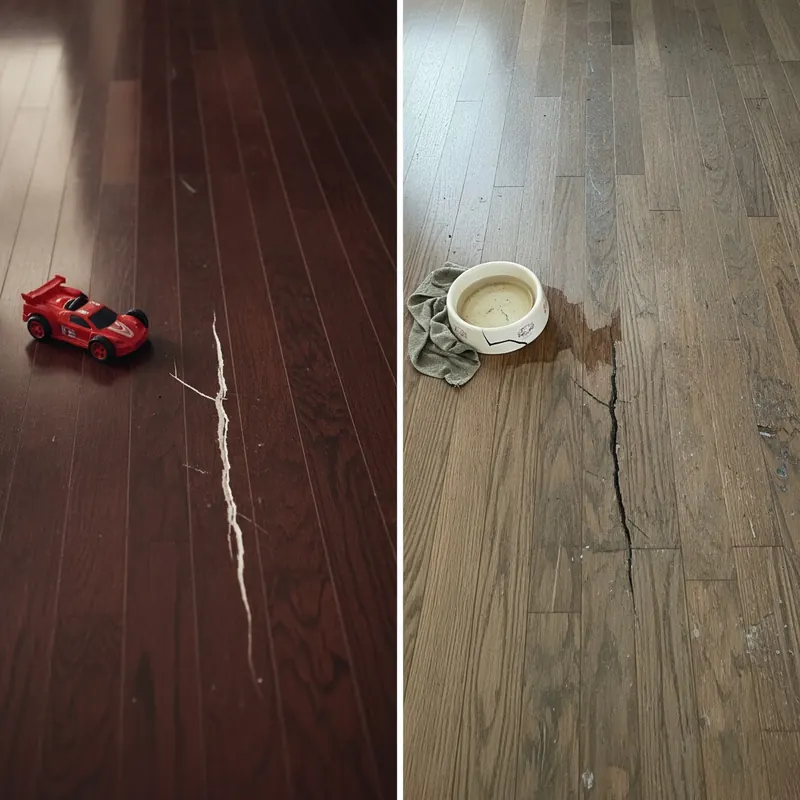
Choosing a new floor is one of the most significant investments you’ll make in your home. It’s the foundation of your design and the surface that endures the daily chaos of life. Yet, the fear of making a costly mistake is real. You imagine spending thousands, only to see your beautiful new floor marred by pet claws, dropped toys, or dragged furniture within months. The market is a confusing maze of technical jargon and marketing promises, leaving you wondering: what is the most durable flooring material, really?
This guide is your answer. We’re cutting through the noise to provide a clear, practical framework for protecting your investment. We will empower you to choose a floor that not only looks stunning but truly withstands the demands of your lifestyle. Together, we’ll explore the common enemies of flooring, decode the industry standards that measure true strength, compare the top damage-resistant materials head-to-head, and even unveil what next-generation, high-strength options like “Adamantine flooring” can offer. By the end, you’ll be equipped to select a floor with confidence, ensuring years of beauty and peace of mind.
- The Homeowner’s Dilemma: Understanding Common Floor Damage
- Decoding Durability: How to Measure a Floor’s True Strength
- The Ultimate Showdown: Comparing the Most Damage-Resistant Flooring Materials
- What Is Adamantine Flooring? Unveiling a Superior Strength Option
- Making the Right Choice for Your Lifestyle
- Protecting Your Investment: Maintenance for Lasting Durability
- Your Foundation for a Confident Decision
The Homeowner’s Dilemma: Understanding Common Floor Damage
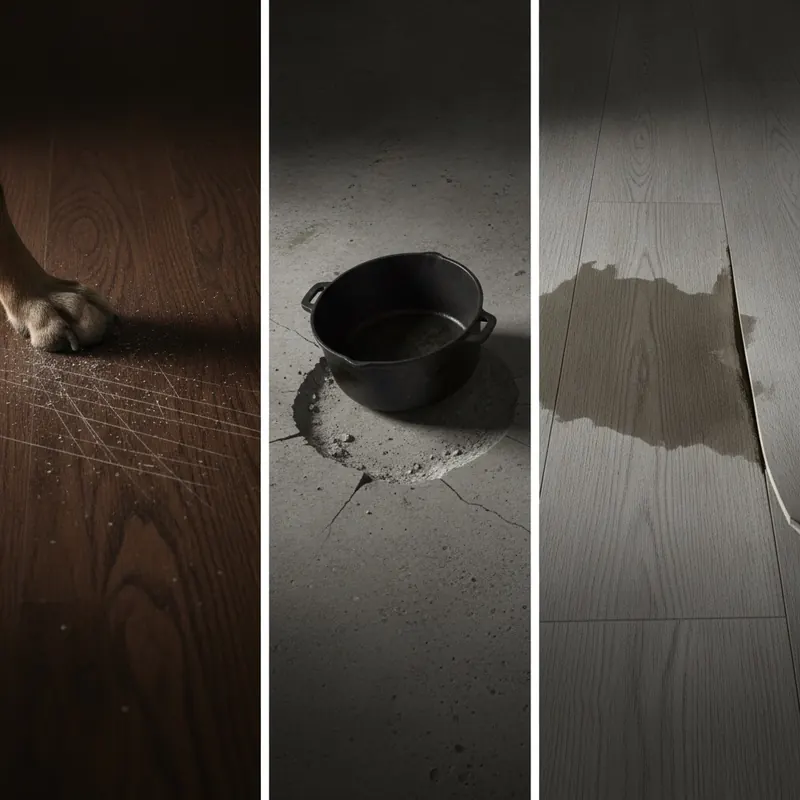
Before you can choose a solution, you must understand the problem. Every homeowner fears the moment they discover that first ugly scratch or dent. These common types of floor damage are the primary reason why durability should be at the top of your checklist. Investing in a damage-resistant floor upfront can save you from costly repairs and the heartache of a prematurely worn-out surface.
Surface Scratches and Gouges: The #1 Enemy
This is the most frequent and frustrating complaint. Surface scratches are the fine lines and abrasions that dull your floor’s finish, while deeper gouges cut into the material itself. The culprits are everywhere in a busy home:
- Pet Claws: The clicking sound of your dog’s nails on the floor is often the sound of micro-scratches being made.
- Grit and Debris: Tiny particles of sand, dirt, and rock tracked in on shoes act like sandpaper underfoot.
- Dragged Furniture: Moving a sofa or chair without proper protection can leave a permanent scar.
- Children’s Toys: Hard plastic or metal toys can easily scratch and scuff most surfaces during playtime.
Finding a truly scratch-proof flooring solution is the holy grail for many, especially those with pets and active families.
Dents and Impact Damage: Beyond Surface-Level Issues
Unlike a scratch, a dent is a compression of the flooring material caused by a forceful impact. This type of damage speaks to the core hardness and density of your floor. Common causes include dropping a heavy pot in the kitchen, a tool falling in the workshop, or the immense pressure from the legs of heavy furniture like a piano or bookcase. While some materials, like dented laminate flooring, may show these impacts permanently, dent-resistant flooring is engineered to withstand them.
Water, Stains, and Fading: The Silent Destroyers
Some of the most destructive forces are the ones that work slowly over time. Moisture, spills, and sunlight can ruin a floor from the inside out.
- Water Damage: For materials like traditional hardwood and older laminate, water is a critical weakness. Spills that aren’t cleaned up immediately can cause planks to swell, warp, and buckle.
- Stains: Red wine, coffee, pet accidents, or even a spilled glass of juice can leave a permanent mark on porous or improperly sealed surfaces. Stain-resistant floors are essential for kitchens and dining areas.
- UV Fading: In rooms with large, sun-facing windows, constant exposure to UV rays can cause discoloration and fading over time, leaving patches of flooring lighter than the rest.
Decoding Durability: How to Measure a Floor’s True Strength
To move beyond vague marketing terms like “tough” and “long-lasting,” you need to understand the objective, standardized tests that professionals use to rate flooring durability. These ratings are your secret weapon for making an informed comparison and finding what is the most durable flooring material for your specific needs.
The Janka Hardness Test: Measuring Dent Resistance in Wood
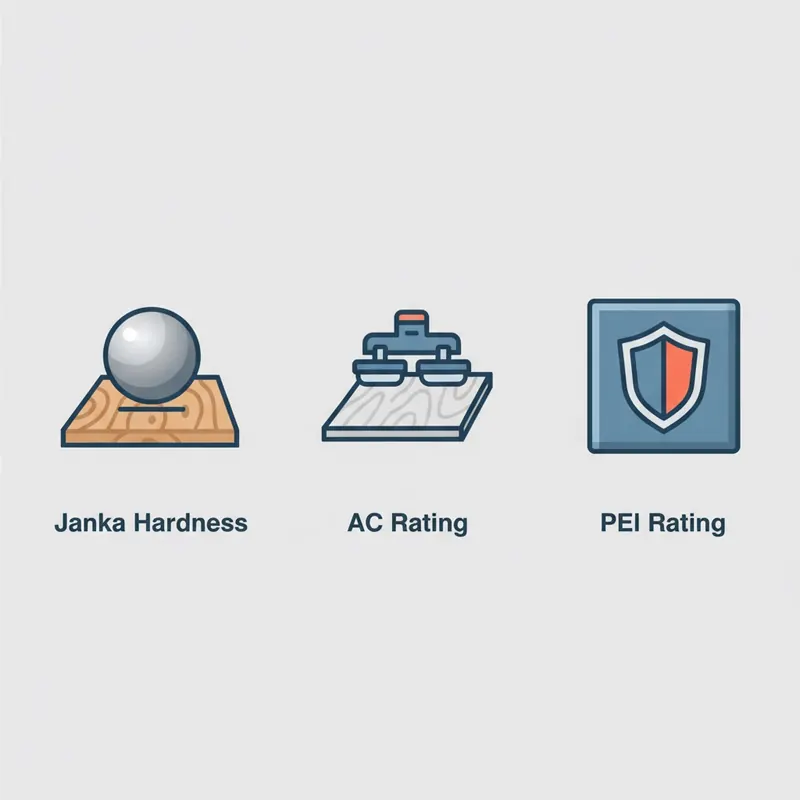
The Janka Hardness Test is the industry standard for determining a wood species’ resistance to denting and wear. The test measures the force required to embed a 0.444-inch steel ball halfway into a sample of wood. The higher the Janka rating, the harder and more resistant the wood is to dents.
As referenced by experts at the National Wood Flooring Association (NWFA), this scale is crucial when comparing hardwoods. For example, woods like Brazilian Cherry and Hickory have very high Janka ratings, making them far more durable than a softer wood like Pine. This test is also used to rate strand-woven bamboo, which often scores even higher than many exotic hardwoods.
AC Rating: Grading Laminate and LVP for Wear and Tear
The Abrasion Class (AC) rating is used to grade the durability of the wear layer on laminate and some Luxury Vinyl Plank (LVP) flooring. It’s a critical indicator of how well the floor will resist scratches, scuffs, and fading in high-traffic areas. The scale runs from AC1 to AC5:
- AC1: Light residential use (e.g., bedrooms).
- AC2: Moderate residential use (e.g., living rooms).
- AC3: Heavy residential use and light commercial use.
- AC4: General commercial use (e.g., small offices, cafes).
- AC5: Heavy commercial use (e.g., department stores, public buildings).
For a busy home, especially in hallways, kitchens, and entryways, choosing a floor with an AC4 or AC5 rating provides a commercial-grade level of scratch resistance and is an excellent investment in long-term durability.
PEI Rating: Gauging Ceramic and Porcelain Tile Hardness
The Porcelain Enamel Institute (PEI) rating measures the hardness and durability of the glaze on ceramic and porcelain tiles. This rating indicates how well a tile’s surface will hold up to foot traffic and abrasion without showing wear. The scale is grouped into five classes:
- PEI I: Wall use only. Not suitable for floors.
- PEI II: Light traffic areas (e.g., residential bathrooms).
- PEI III: Light to moderate traffic (e.g., all residential areas).
- PEI IV: Moderate to heavy traffic (e.g., all residential areas plus light commercial).
- PEI V: Heavy to extra-heavy traffic (all residential and commercial applications).
For most home applications, a tile with a PEI rating of III or IV is more than sufficient, offering excellent durability for any room.
The Ultimate Showdown: Comparing the Most Damage-Resistant Flooring Materials
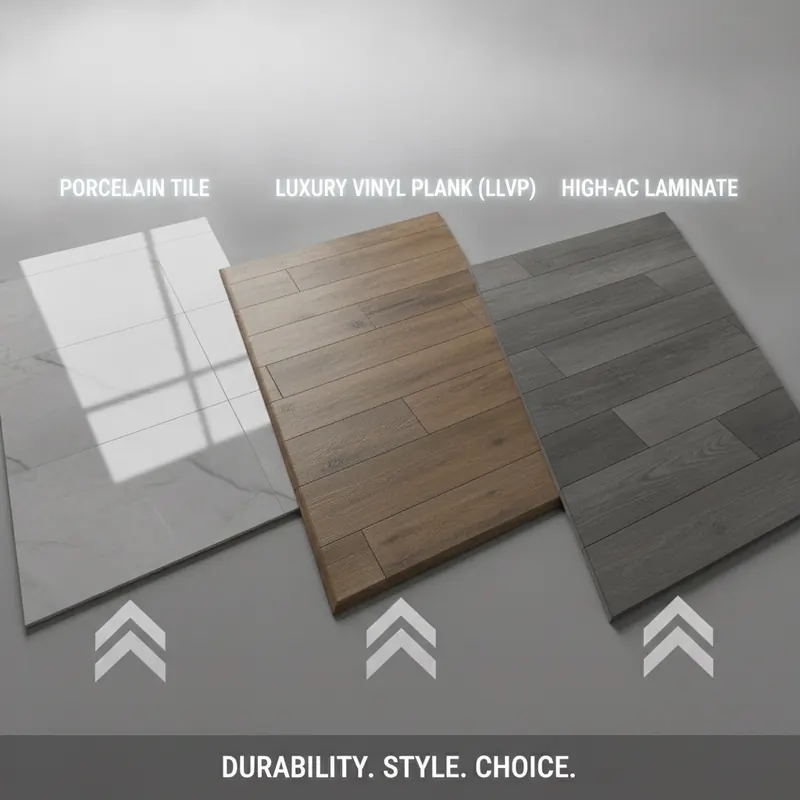
Now that you speak the language of durability, let’s put the top contenders to the test. Here’s a head-to-head comparison of high-durability flooring solutions, evaluated against the most common types of damage.
Porcelain & Ceramic Tile: The Reigning Champion of Hardness
Tile is often considered the king of durability for good reason. Its incredibly hard, dense surface makes it one of the best options for preventing scratches and dents.
- Durability Scorecard:
- Scratch Resistance: ★★★★★
- Dent Resistance: ★★★★★
- Water Resistance: ★★★★★
Pros: Virtually scratch-proof and waterproof. With a high PEI rating (IV or V), it can withstand decades of heavy foot traffic. It’s also incredibly easy to clean and maintain.
Cons: Its hardness is also a drawback. Dropped glasses will shatter instantly, and it can be uncomfortable to stand on for long periods. A heavy enough impact can crack a tile, which is difficult to replace.
Luxury Vinyl Plank (LVP/LVT): The Resilient All-Rounder
Modern LVP has exploded in popularity because it offers a fantastic balance of durability, comfort, and style. It’s a high-performance solution that excels in almost every category.
- Durability Scorecard:
- Scratch Resistance: ★★★★☆
- Dent Resistance: ★★★☆☆
- Water Resistance: ★★★★★
Pros: LVP is typically 100% waterproof, making it ideal for kitchens, bathrooms, and basements. Its commercial-grade wear layer (look for 12 mil or, ideally, 20 mil thickness) provides excellent protection against scratches and scuffs. It’s also softer and warmer underfoot than tile.
Cons: While highly scratch-resistant, it’s not scratch-proof; a deep gouge can damage the wear layer. Very heavy, sharp objects can dent or puncture the surface.
High-AC Laminate: Scratch Resistance Perfected
Don’t confuse modern laminate with the cheap, easily damaged products of the past. Today’s high-quality laminate flooring is an engineering marvel, specifically designed to combat scratches.
- Durability Scorecard:
- Scratch Resistance: ★★★★★
- Dent Resistance: ★★★★☆
- Water Resistance: ★★★☆☆
Pros: The top layer of AC4 or AC5 laminate is infused with aluminum oxide, creating one of the most scratch-resistant surfaces on the market—often outperforming LVP and even some hardwoods. It’s also very resistant to dents and fading.
Cons: Its primary weakness has always been moisture. While many new products are marketed as “water-resistant,” they still can’t match the 100% waterproof nature of tile or vinyl. Spills must be wiped up promptly to prevent damage to the fiberboard core.
Strand-Woven Bamboo & Hardwoods: Natural Strength
For those who love the timeless beauty of natural materials, certain options offer impressive durability. Strand-woven bamboo, in particular, is a powerhouse of dent resistance.
- Durability Scorecard:
- Scratch Resistance: ★★★☆☆
- Dent Resistance: ★★★★★
- Water Resistance: ★★☆☆☆
Pros: Strand-woven bamboo is created by shredding bamboo fibers and compressing them under extreme heat and pressure, resulting in a floor that is two to three times harder than oak on the Janka scale. This makes it exceptionally resistant to dents. Hardwoods like Hickory and Maple also offer good natural durability.
Cons: Despite their hardness, both strand-woven bamboo and traditional hardwoods are more susceptible to surface scratches than high-quality laminate or LVP. They are also vulnerable to water damage and require more careful maintenance.
What Is Adamantine Flooring? Unveiling a Superior Strength Option
You may have encountered the term “Adamantine flooring” in your search for superior durability. While not a single, standardized product category, the term “adamantine”—meaning unbreakable or unshakable—is used to describe a class of next-generation, ultra-durable flooring materials that go beyond typical residential standards. These are high-strength flooring options designed for the most demanding environments.
Composition and Technology: What Makes It So Tough?
Flooring that fits the “adamantine” description often relies on advanced material science and composite technology. This isn’t your standard plank. Instead, these are often seamless, monolithic surfaces like:
- Epoxy and Polyaspartic Coatings: These are resinous flooring systems poured over a concrete substrate. They create a thick, seamless, and incredibly hard shell that is impervious to water, chemicals, and extreme impacts. They are a popular choice for commercial garages, workshops, and industrial settings.
- Polished Concrete: By grinding down a concrete slab and treating it with chemical densifiers, you can create a floor with a beautiful sheen and incredible hardness. It’s virtually impossible to scratch or dent with everyday use.
The strength of these floors comes from their dense, non-porous composition and chemical cross-linking that creates a single, ultra-strong surface.
Pros and Cons vs. Traditional Durable Flooring
Choosing an adamantine-level floor involves a different set of trade-offs compared to LVP or tile.
- Pros: Unmatched durability against almost all forms of damage—impacts, abrasion, chemicals, and water. They are seamless and extremely easy to clean.
- Cons: The aesthetic is often industrial and may not suit all home interiors. Installation is a highly specialized process that requires professional expertise. They can be very hard and cold underfoot, and the upfront cost can be significantly higher than traditional options.
Ideal Use Cases: Where Does Adamantine Flooring Shine?
While not for every living room, these high-strength flooring solutions are the perfect choice for specific, high-stress environments:
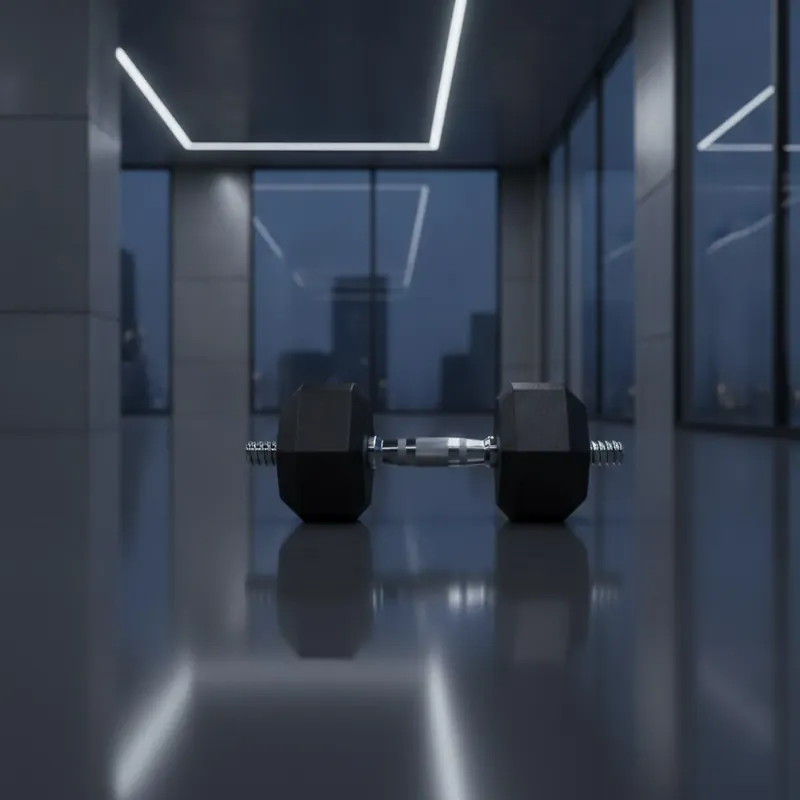
- Home Gyms: Withstands dropped weights and heavy equipment without denting or cracking.
- Garages and Workshops: Resists oil stains, chemical spills, and impact from tools.
- Basements: Provides a completely waterproof and durable surface.
- Homes with Multiple Large Pets: For homeowners who need the absolute maximum guarantee against scratches and accidents.
Making the Right Choice for Your Lifestyle
The best damage-resistant floor isn’t just the one with the highest rating; it’s the one that best matches your daily life. Here’s how to choose based on your specific needs.
The Pet Owner’s Playbook: Prioritizing Scratch and Stain Resistance
For homes with furry friends, the primary concerns are claws and accidents. You need a floor that is highly scratch-resistant and non-porous.
Top Recommendations: High-AC Laminate (AC4 or AC5) is arguably the best for scratch resistance. Luxury Vinyl Plank (LVP) is a close second for scratch resistance but is superior for its 100% waterproof and stain-proof qualities, making it the safest all-around choice for pet-proof flooring.
Avoid: Softer hardwoods and carpets that can be easily scratched, stained, and hold onto odors.
The Busy Family’s Fortress: Balancing Durability and Comfort
Families with young children need a floor that can handle everything from spilled juice and dropped toys to constant foot traffic. The ideal kid-friendly flooring is durable, safe, and easy to clean.
Top Recommendations: Luxury Vinyl Plank (LVP) is the clear winner here. It’s tough, waterproof, and softer underfoot than tile, providing a more forgiving surface for tumbles. Its resilience also helps to muffle sound.
Consider: Newer water-resistant laminate options also perform well, offering top-tier scratch protection against toys being dragged across the floor.
Protecting Your Investment: Maintenance for Lasting Durability
Even the most durable flooring requires basic care to keep it looking its best. Following these simple steps will maximize the lifespan of your investment:
- Use Furniture Pads: Place felt pads under the legs of all furniture, especially chairs and tables that are moved frequently.
- Sweep or Vacuum Regularly: Removing grit and dirt prevents it from being ground into the floor, which causes micro-scratches.
- Use Doormats: Place mats at all exterior doors to trap dirt, sand, and moisture before it gets tracked inside.
- Clean Spills Immediately: Even on waterproof floors, prompt cleaning prevents potential staining and keeps the surface safe.
- Use the Right Cleaner: Avoid harsh, abrasive chemicals. Use a pH-neutral cleaner recommended by your flooring manufacturer.
Your Foundation for a Confident Decision
Choosing a new floor no longer has to be an exercise in anxiety. By moving past marketing claims and focusing on real-world performance, you can protect your home and your wallet. The key is to first identify the primary threats your floor will face—be it pet claws, heavy foot traffic, or kitchen spills. From there, you can use the power of objective durability ratings like the Janka, AC, and PEI scales to compare your options like a pro.
For most busy households, modern materials like high-quality Luxury Vinyl Plank and high-AC Laminate offer an incredible combination of scratch resistance, water protection, and style. For those seeking the pinnacle of hardness, porcelain tile remains an unbeatable champion. And for the most extreme environments, adamantine-strength solutions like epoxy or polished concrete provide ultimate peace of mind.
You are now equipped with the knowledge to make a confident, long-term flooring decision. You can invest wisely, knowing your beautiful new floor is built to withstand the realities of your life, giving you a durable foundation you’ll love for years to come.
What are your biggest flooring challenges? Share your questions or experiences in the comments below