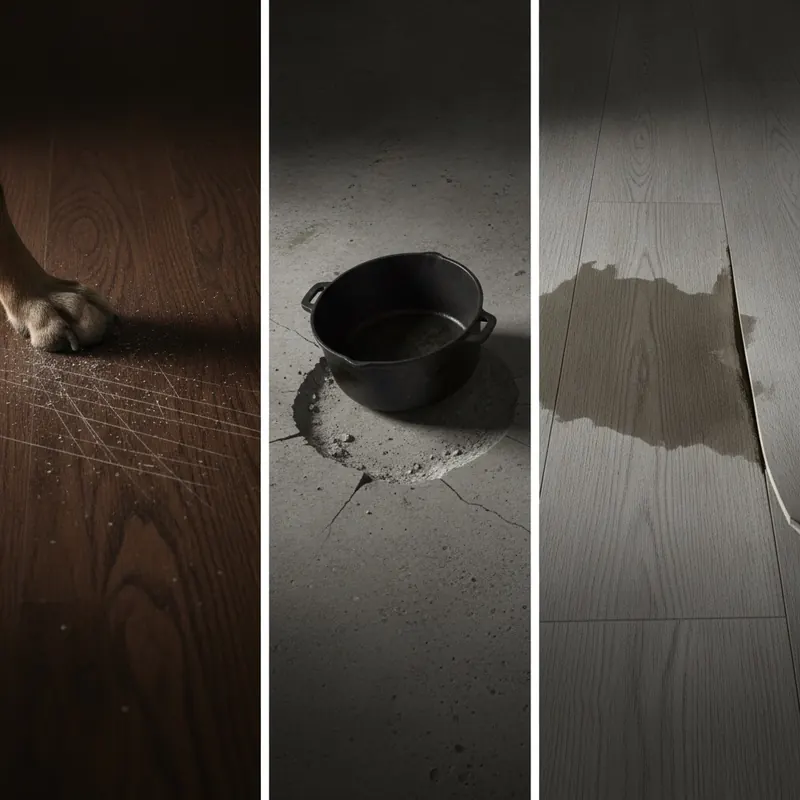
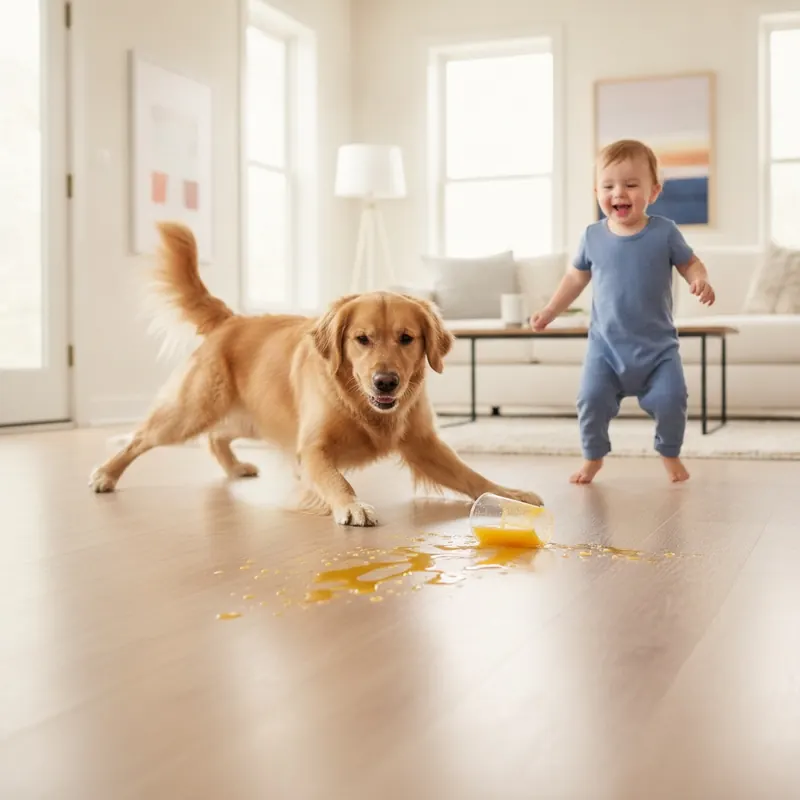
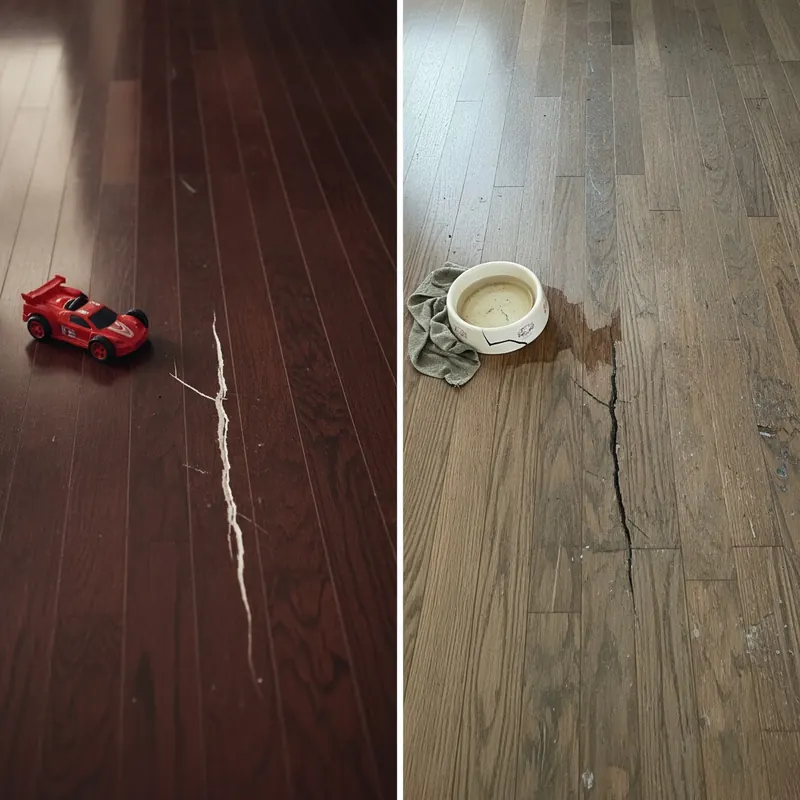
Are you tired of the sinking feeling that comes with discovering a new scratch on your floor? Do you cringe every time a chair scrapes or a toy drops, worried about the permanent mark it will leave behind? You invested in a beautiful floor, only to find it’s a constant source of stress, collecting scuffs, dents, and signs of wear far too quickly. This cycle of disappointment—and the looming, high cost of frequent floor replacement—is a common frustration for homeowners and business managers alike.
It’s time to move beyond vague marketing claims and confusing technical jargon. This guide is your definitive resource for understanding what truly makes a floor durable. We will empower you with the knowledge to decode the science behind longevity, from wear layers and industry ratings to advanced protective finishes like Adamantine™. You’ll learn how to compare the top materials with confidence, calculate the true long-term cost of your investment, and implement simple strategies to protect your floor for decades. By the end, you won’t just be buying a new floor; you’ll be making a single, confident investment in a beautiful, worry-free foundation for your life or business.
- Decoding Durability: What Really Makes a Floor Last?
- The Ultimate Material Showdown: Ranking the Most Durable Flooring
- Beyond the Price Tag: Calculating the True Cost of Your Flooring
- Protecting Your Investment: Maintenance for High-Traffic Areas
- Frequently Asked Questions (FAQ) About Durable Flooring
- Sources & References
Decoding Durability: What Really Makes a Floor Last?
Before you can choose a durable floor, you need to speak the language of durability. The flooring industry uses specific terms and metrics to measure a product’s ability to withstand wear and tear. Understanding these concepts is the key to seeing past the marketing and identifying a floor that will genuinely perform in your space.
The Wear Layer Explained: Your Floor’s First Line of Defense
Think of a wear layer like the screen protector on your smartphone. It’s a transparent, tough top coating applied to resilient flooring like Luxury Vinyl Plank (LVP) and laminate that bears the brunt of daily traffic, scuffs, and scratches. Its thickness is the single most important factor in the floor’s long-term durability.
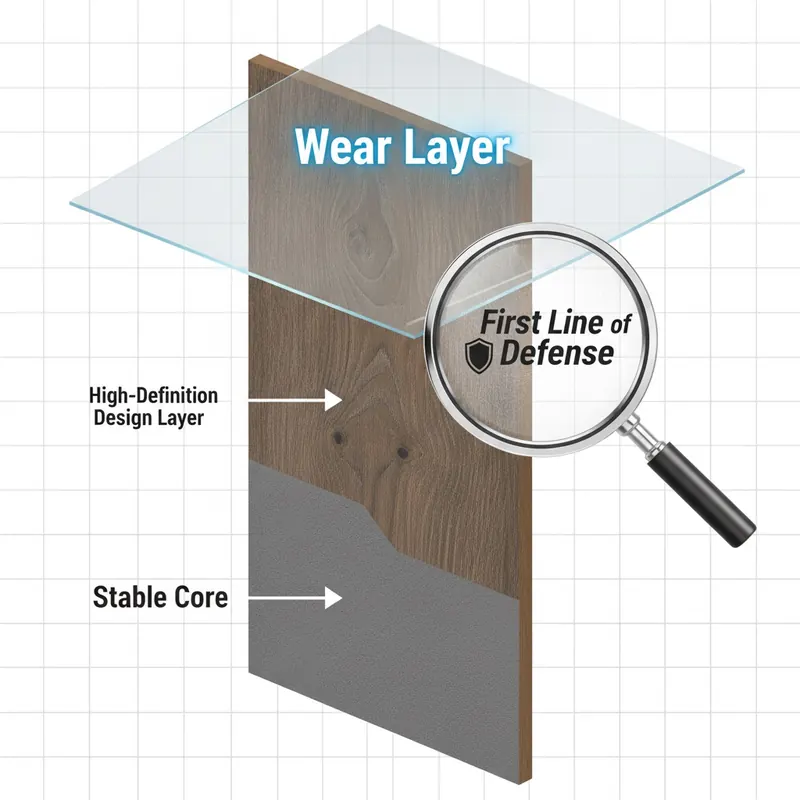
This thickness is measured in mils (one-thousandth of an inch). While it might sound small, the difference is significant. A floor with a 6 or 8 mil wear layer might be inexpensive, but it’s best suited for a closet or a guest room with minimal traffic. For the main areas of a busy home, research shows that a wear layer of 12 mils is a minimum for moderate traffic, with 20-30 mils being ideal for high-traffic areas and even light commercial use. A 20 mil wear layer provides substantially more protection, ensuring your floor’s beautiful design layer is shielded from the daily abuse of pets, kids, and foot traffic for years to come.
Understanding Industry Ratings: PEI, AC, and Janka Hardness
Beyond the wear layer, independent rating systems provide a standardized way to compare material strength. Knowing what to look for can instantly tell you if a product is right for your needs.
- PEI Rating (Porcelain Enamel Institute): This rating applies specifically to the glaze on ceramic and porcelain tiles and measures its resistance to abrasion and wear. For most residential and light commercial applications, home improvement expert Bob Vila advises looking for a tile with a rating of at least Class 3 2.
- Class 1: No foot traffic (wall tile only).
- Class 2: Light traffic (e.g., residential bathrooms).
- Class 3: Light to moderate traffic (most residential uses).
- Class 4: Moderate to heavy traffic (suitable for homes and many commercial spaces).
- Class 5: Heavy to extra-heavy traffic (high-traffic commercial environments).
- AC Rating (Abrasion Class): This rating is for laminate flooring and measures its resistance to abrasion, impact, stains, and burns. A higher rating means a more durable floor.
- AC1: Light residential (e.g., bedrooms).
- AC2: Moderate residential (e.g., living rooms).
- AC3: Heavy residential / Moderate commercial.
- AC4: General commercial (can be used in any home).
- AC5: Heavy commercial.
- Janka Hardness Scale: This scale measures the resistance of a species of wood to denting and wear. It tests the force required to embed a 0.444-inch steel ball into the wood to half its diameter. For example, Hickory has a high rating of 1820, making it much more resistant to dents than a softer wood like Douglas Fir (660).
The Science of Protective Finishes: From Adamantine™ to Aluminum Oxide
The final piece of the durability puzzle is the protective finish. This is where modern material science creates surfaces that are exceptionally resistant to scratches and stains.
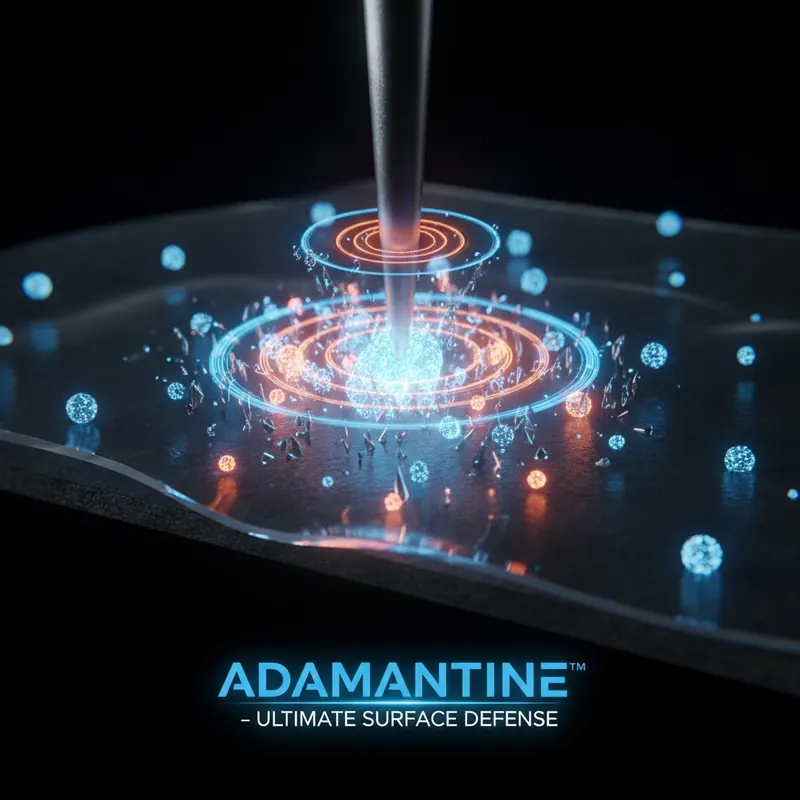
You may have encountered the term “Adamantine Flooring” and wondered if it was a new type of material. In reality, it’s a branded technology—Adamantine™ Protection—a high-performance finish applied to flooring products 3. According to the primary manufacturer, TAS Flooring, this finish is engineered to provide high scratch resistance and is a key feature in their collections designed for high-traffic commercial environments. It’s often paired with a robust 20 mil wear layer to create a formidable defense against damage 3.
This is similar to other advanced finishes you’ll see on high-quality LVP and laminate. The most common is a urethane-based coating infused with hard mineral additives. Aluminum oxide and ceramic beads are microscopic particles suspended in the finish that create an incredibly tough and abrasion-resistant surface, protecting the floor from the fine grit and debris that can cause scratches. When you see these terms, you know you’re looking at a premium product designed for longevity.
The Ultimate Material Showdown: Ranking the Most Durable Flooring
Now that you know how to measure durability, let’s compare the top contenders. We’ve created a “Durability Scorecard” for each material, rating them on key metrics based on industry standards and real-world performance insights from flooring experts 4.
Champion of Longevity: Porcelain & Ceramic Tile
For sheer, uncompromising durability, porcelain tile is in a class of its own. Made from finer, denser clay and fired at extremely high temperatures (between 2,200 and 2,600 degrees Fahrenheit), it is incredibly hard, non-porous, and resistant to almost everything.
- Durability Scorecard:
- Scratch Resistance: 5/5
- Water Resistance: 5/5
- Impact Resistance: 4/5 (Can crack if something very heavy is dropped on it)
- Lifespan: 5/5 (60+ years)
Best For: Kitchens, bathrooms, entryways, basements, and any area where water and heavy traffic are a concern.
Keep in Mind: Tile is hard and cold underfoot, and installation is complex and best left to professionals. Grout lines also require periodic sealing and cleaning.
The All-Around Performer: Luxury Vinyl Plank (LVP/SPC)
Luxury Vinyl Plank has exploded in popularity for good reason. It offers an exceptional balance of durability, comfort, and style, making it the top contender for busy households. For even greater performance, look for SPC (Stone Plastic Composite) flooring. SPC has a rigid core made from a limestone composite, making it significantly more dent-resistant than traditional LVP.
- Durability Scorecard:
- Scratch Resistance: 4/5 (with a 20+ mil wear layer)
- Water Resistance: 5/5 (100% waterproof)
- Impact Resistance: 4.5/5 (especially SPC)
- Lifespan: 4/5 (10-25 years)
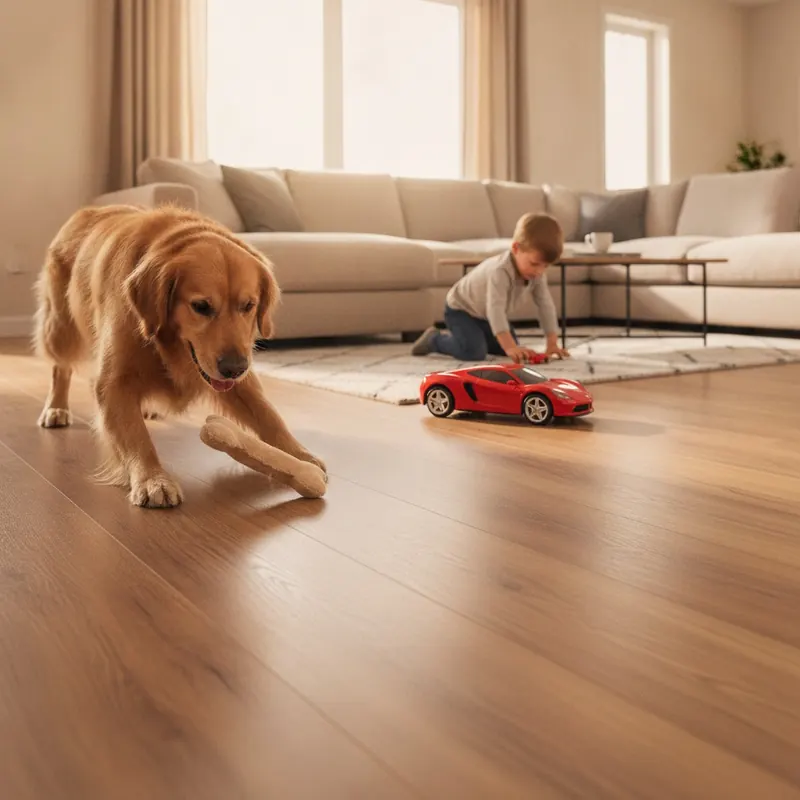
Best For: Any room in the house. It’s widely considered the most durable flooring for a home with pets and children due to its scratch resistance, waterproof nature, and softer feel 5.
Keep in Mind: Durability is directly tied to the wear layer. Avoid products with less than a 12 mil wear layer for any moderate-traffic area.
The Commercial Contender: High-Performance Coatings (Epoxy & Polyaspartic)
When durability is non-negotiable, commercial and industrial spaces turn to resinous floor coatings. These seamless, fluid-applied floors create an incredibly hard, chemical-resistant, and wear-resistant surface that bonds directly with the concrete substrate.
- Durability Scorecard (Commercial Focus):
- Abrasion Resistance: 5/5
- Chemical Resistance: 5/5
- Rolling Load Capacity: 5/5
- Lifespan: 5/5 (Decades)
Best For: Garages, workshops, commercial kitchens, hospitals, warehouses, and showrooms.
Keep in Mind: Installation is a multi-step chemical process that requires meticulous surface preparation and professional expertise. Leading manufacturers like Sherwin-Williams offer systems that can contribute to LEED credits 6, while others like Versatile High-Performance Coatings have developed proprietary polyaspartic technology for even stronger bonds 7.
Other Durable Options: High-Quality Laminate & Engineered Hardwood
High-Quality Laminate: Modern laminate is a far cry from the products of the past. Look for options with a high AC rating (AC4 or AC5) for a surface that is extremely resistant to scratches and fading.
- Durability Scorecard:
- Scratch Resistance: 4.5/5 (with high AC rating)
- Water Resistance: 3/5 (Water-resistant, but not waterproof)
- Impact Resistance: 4/5
- Lifespan: 3.5/5 (15-25 years)
Engineered Hardwood: For those who love the look of real wood, engineered hardwood offers more dimensional stability than solid hardwood, making it less prone to warping from changes in humidity. Its durability comes from a strong factory-applied finish, but as Consumer Reports notes, even the most durable wood floors can be susceptible to scratches 8. Its true long-term value lies in its ability to be sanded and refinished, extending its life for decades.
- Durability Scorecard:
- Scratch Resistance: 3/5
- Water Resistance: 2/5
- Impact Resistance: 3/5 (Varies by wood species)
- Lifespan: 4.5/5 (30+ years, refinishable)
Beyond the Price Tag: Calculating the True Cost of Your Flooring
One of the biggest mistakes in flooring is focusing only on the upfront cost per square foot. This often leads to choosing a cheaper, less durable option that needs to be replaced in just a few years, creating a cycle of expense and hassle. To make a smart investment, you need to consider the Total Cost of Ownership.
According to home improvement authorities like This Old House, the national average for replacing old flooring is around $12.50 per square foot 9. This includes removal of the old floor, materials, and installation. If you have to do this every 8 years instead of every 25, the long-term costs skyrocket.
Upfront Costs vs. Total Cost of Ownership: A 20-Year Comparison
Let’s look at a hypothetical 500-square-foot living room:
| Feature | Option A: Basic Laminate | Option B: High-Quality SPC Vinyl |
|---|---|---|
| Material Cost | $2.50/sq. ft. = $1,250 | $5.00/sq. ft. = $2,500 |
| Installation Cost | $3.00/sq. ft. = $1,500 | $3.00/sq. ft. = $1,500 |
| Initial Investment | $2,750 | $4,000 |
| Expected Lifespan | 8-10 Years | 20-25 Years |
| Replacements in 20 Yrs | 1 (at Year 10) | 0 |
| Cost of Replacement | ~$3,500 (with inflation) | $0 |
| Total 20-Year Cost | $6,250 | $4,000 |
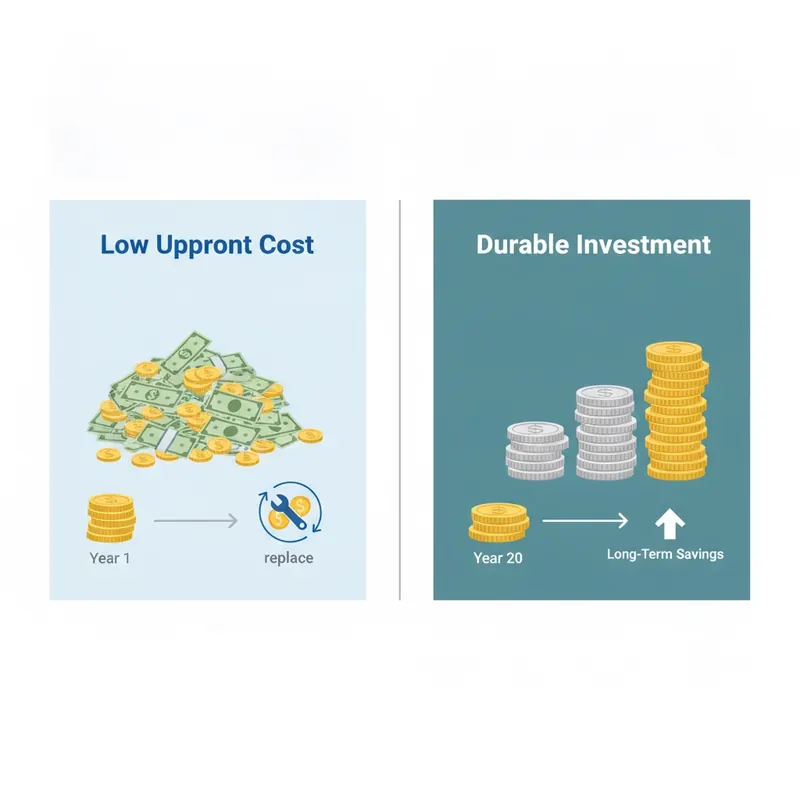
As you can see, the “cheaper” floor ends up costing over $2,000 more in the long run. Investing in durability upfront saves significant money and avoids the disruption of a major renovation project.
Factoring in Installation: The Impact on Longevity and Your Wallet
Even the most durable flooring material will fail if installed improperly. Poor subfloor preparation is a leading cause of flooring issues like buckling, separating seams, and premature wear. While a DIY installation can save on labor costs (which financial experts at NerdWallet note can be $3 to $6 per square foot for some materials 10), it can be a costly mistake if not done perfectly. Professional installation ensures the subfloor is properly prepped, the material is correctly acclimated, and the manufacturer’s warranty remains intact.
Questions to Ask Your Flooring Installer:
- Are you licensed and insured?
- How will you prepare my subfloor, and is that included in the quote?
- What is your process for moving furniture?
- Does your quote include removal and disposal of the old flooring?
- What warranties do you offer on your labor?
Protecting Your Investment: Maintenance for High-Traffic Areas
Choosing a durable floor is the first step. The second is implementing a simple maintenance routine to keep it looking its best and maximize its lifespan.
The Prevention Playbook: Mats, Pads, and Proper Cleaning
Prevention is always the best strategy.
- Use Entryway Mats: Place high-quality mats both outside and inside every exterior door to trap the majority of abrasive dirt, grit, and moisture before it reaches your floor.
- Apply Felt Pads: Put heavy-duty felt pads on the bottom of all furniture legs, especially chairs and tables that are moved frequently. Check and replace them regularly.
- Clean Smart: Sweep or vacuum regularly to remove abrasive particles. For deeper cleaning, use a pH-neutral cleaner recommended for your specific flooring type. Harsh chemicals can damage the protective finish. As experts at Hardwood Revival point out, it’s especially important to clean up salt tracked in during the winter, as it can quickly damage finishes 12. Professional services like ServiceMaster Clean recommend that commercial high-traffic areas may need cleaning every few hours during inclement weather 11.
Repairing Common Damage: Scuffs, Scratches, and Gouges
Even with the best care, accidents can happen. The key is to distinguish between minor surface issues and deeper damage.
- Surface Scuffs: Often, scuff marks from shoes are just residue left on the surface. These can typically be buffed out with a clean, dry microfiber cloth or a tennis ball.
- Minor Scratches: For light scratches on LVP or laminate, a repair kit with a color-matched wax pencil can often fill and conceal the damage. For engineered wood, a stain-filled marker can make a small scratch virtually disappear.
- Deep Scratches & Gouges: If a scratch has penetrated the wear layer and damaged the design layer or wood veneer, the best solution is often to replace the individual plank. This is a major advantage of plank flooring formats over sheet goods.
Frequently Asked Questions (FAQ) About Durable Flooring
What is Adamantine Protection™ in flooring?
Answer: It’s a branded, high-performance protective finish applied to flooring (like LSPC from TAS Flooring) to provide high scratch and wear resistance, especially for high-traffic areas 3. It is not a type of flooring material itself, but rather an advanced top coat.
What is the most durable flooring for a home with pets and children?
Answer: Luxury Vinyl Plank (LVP), especially Stone Plastic Composite (SPC), is widely considered the best all-around choice. It offers excellent scratch resistance from its thick wear layer, is 100% waterproof for spills and accidents, and is softer and warmer underfoot than tile 5.
What does a ’20 mil wear layer’ mean and is it good?
Answer: A ‘mil’ is a unit of thickness equal to one-thousandth of an inch. A 20 mil (or 0.020 inches) wear layer is considered excellent for any residential use and is also suitable for light-to-moderate commercial use. It offers significant, long-lasting protection against scratches and scuffs.
Is expensive flooring always more durable?
Answer: Not necessarily. While price can be an indicator of quality (e.g., a thicker wear layer, better core construction), the material itself is key. A high-quality LVP can be more durable in a busy, wet environment like a kitchen than an expensive but soft hardwood. Durability comes from understanding the specifications, not just the price tag.
Choosing a new floor is a major decision, but it doesn’t have to be overwhelming. By understanding the science behind durability—the wear layers, the industry ratings, and the protective finishes—you are now equipped to look past the showroom samples and see the true, long-term value in your investment. You can confidently select a floor that not only looks beautiful on day one but also stands up to the rigors of your life for decades to come, saving you money, time, and frustration.
Feeling confident? Explore our top-rated flooring collections or use our free project calculator to start budgeting for your new, worry-free floor today.
The flooring costs mentioned in this article are estimates and can vary based on location, materials, and labor. This article may contain links to partner sites; however, all recommendations are based on independent research.
Sources & References
- Stonhard. (n.d.). Wear-Resistant Flooring. Retrieved from stonhard.com.
- Bob Vila. (n.d.). Ultra Durable Flooring Options. Retrieved from bobvila.com.
- TAS Flooring. (n.d.). Product Information on Adamantine™ Protection. Retrieved from tasflooring.com.
- Creative Carpet & Flooring. (2026). Most Durable Flooring Ranked: 35 Years of Real-World Testing. Retrieved from creativecarpetinc.com.
- Go Flooring. (n.d.). Best Scratch Resistant Flooring. Retrieved from goflooring.com.
- Sherwin-Williams High Performance Flooring. (n.d.). Resinous Flooring Systems. Retrieved from industrial.sherwin-williams.com.
- Versatile High-Performance Coatings. (n.d.). High-Performance Coating Systems. Retrieved from versatile.net.
- Consumer Reports. (n.d.). Best Flooring for High-Traffic Areas. Retrieved from consumerreports.org.
- This Old House. (n.d.). How Much Does Flooring Cost?. Retrieved from thisoldhouse.com.
- NerdWallet. (n.d.). Cost to Replace Hardwood Floors. Retrieved from nerdwallet.com.
- ServiceMaster Clean. (n.d.). How to Maintain Your Flooring in High-Traffic Areas. Retrieved from servicemasterclean.com.
- Hardwood Revival. (n.d.). Hardwood Floors in High-Traffic Areas. Retrieved from hardwoodrevival.com.