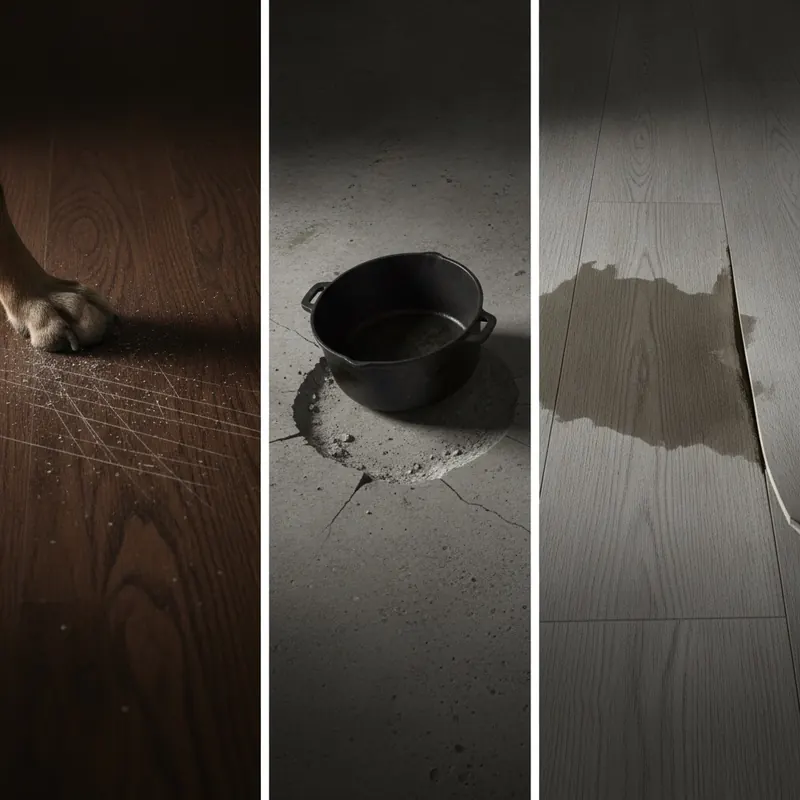
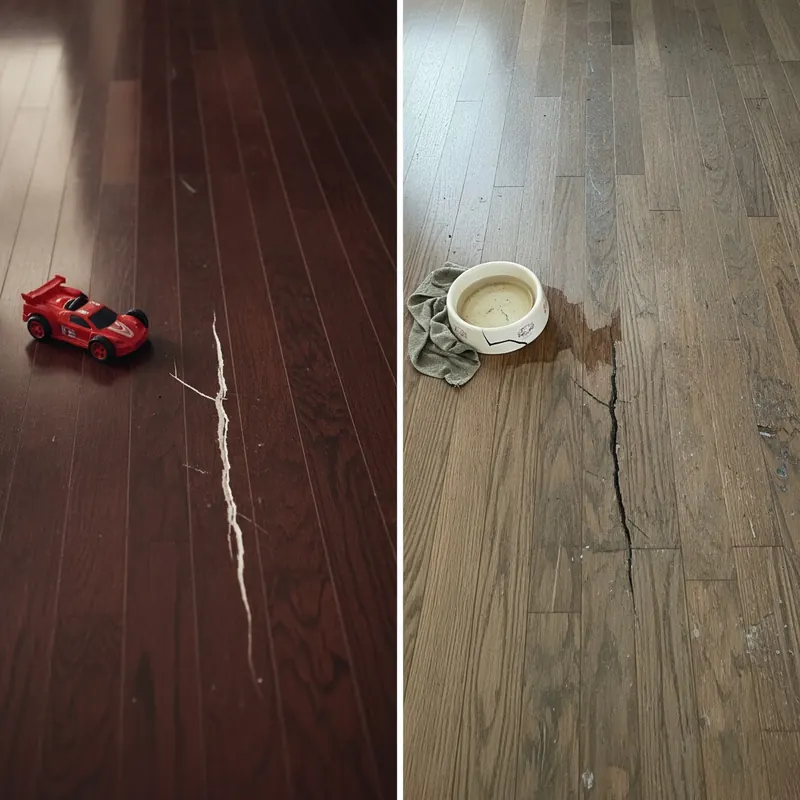
Is your beautiful floor starting to look like a battlefield? Every dropped toy leaves a dent, your dog’s playful scamper results in a new network of scratches, and the path from the front door to the kitchen is a worn-out shadow of its former self. You’re not alone. The frustration of investing in a floor that can’t keep up with your life is a real and costly problem.
But what if you could choose your next floor with the confidence of a materials scientist?
This is not just another list of “top 5 durable floors.” This is your Indestructible Floor Playbook—a data-driven guide designed to transform you into an educated buyer. We’ll move past the marketing hype and arm you with the scientific metrics, industry standards, and expert insights you need to make a smart, long-term investment.
We will decode the science of durability, put the top materials head-to-head in a comprehensive showdown, and show you how to choose the perfect floor that is truly proofed for your lifestyle. Get ready to select a floor that not only looks stunning but withstands anything your family throws at it.
- Why Your Current Floor is Failing: Understanding Scratches, Dents, and Wear
- Decoding Durability: The Science Behind a Tough Floor
- The Adamantine Flooring Mystery: A Modern Look at an Old Term
- The Material Showdown: Top Contenders for the Most Durable Flooring
- Lifestyle-Proofing Your Home: The Best Flooring for Your Family’s Needs
- Beyond Toughness: Factoring in Health, Safety, and Comfort
- Protecting Your Investment: Maintenance and Repair Essentials
- Your Floor, Your Fortress: A Confident Conclusion
- References & Authoritative Sources
Why Your Current Floor is Failing: Understanding Scratches, Dents, and Wear
That feeling of disappointment when you spot a new scratch on your floor is universal. Whether it’s from moving furniture, a pet’s claws, or grit tracked in on a shoe, the damage feels permanent. This wear and tear isn’t a sign of failure on your part; it’s often a mismatch between a floor’s capabilities and the demands of a dynamic household.
Common signs of flooring failure include:
- Scratches and Scuffs: Fine lines or deep gouges, especially visible in high-gloss finishes, caused by sharp objects, pet nails, or abrasive dirt.
- Dents and Divots: Depressions left by dropped objects or heavy furniture legs, a common issue with softer wood species.
- Worn Traffic Patterns: Discoloration or loss of finish in areas that see the most foot traffic, like hallways, entryways, and kitchen work zones.
- Water Damage: Swelling, peeling, or staining at the seams of laminate or wood floors due to spills or pet accidents.
These issues often stem from a few root causes. As experts from the Certified Flooring Installers (CFI) organization often note, one of the most common homeowner complaints is premature wear, which frequently happens when a floor with a soft wood species, a thin protective layer, or a low-density core is installed in a high-activity environment [1]. Understanding the science behind a floor’s construction is the first step to avoiding these problems in the future.
Decoding Durability: The Science Behind a Tough Floor
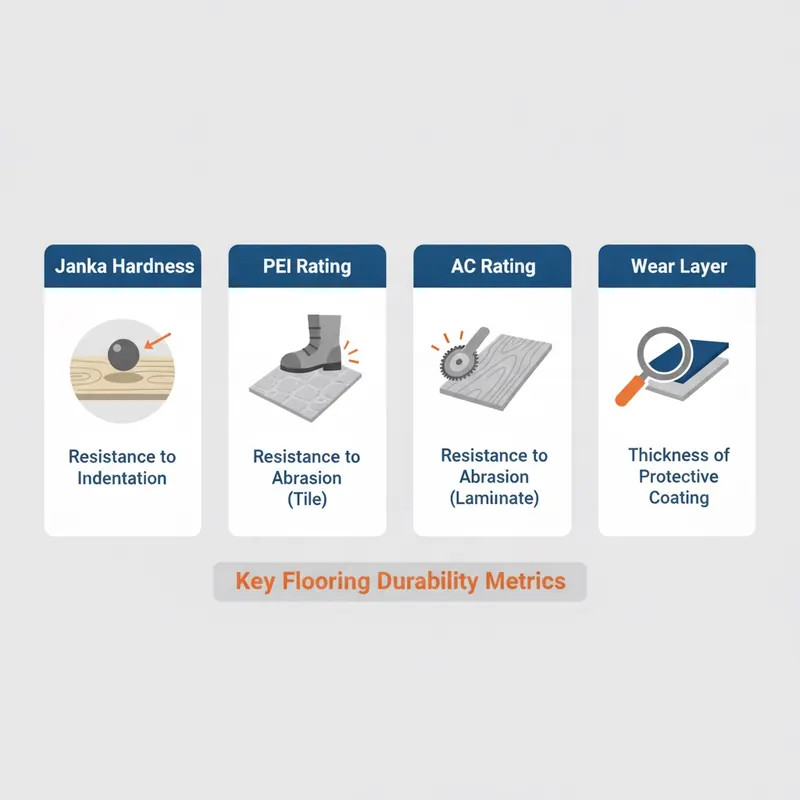
To choose a truly durable floor, you need to speak the language of durability. Manufacturers use standardized tests and rating systems to measure a floor’s resistance to wear, scratches, and impacts. Understanding these metrics is your secret weapon for cutting through marketing claims and assessing a product’s true potential.
For Wood: The Janka Hardness Test
The Janka Hardness Test is the industry gold standard for measuring the resistance of a wood species to denting and wear. The test measures the force required to embed a 0.444-inch steel ball halfway into a sample of wood. The higher the Janka rating, the harder and more resistant the wood is.
According to the National Wood Flooring Association (NWFA), the primary authority on wood flooring standards, this rating is a crucial indicator of how well a wood floor will withstand daily life [2].
For a tangible comparison:
- Red Oak, the industry benchmark, has a Janka rating of 1290.
- Brazilian Cherry, a much harder exotic wood, boasts a rating of around 2350.
- Douglas Fir, a softer wood, has a much lower rating of 660, making it more susceptible to dents.
For Tile: The PEI Rating for Wear Resistance
When it comes to ceramic and porcelain tile, the most important durability metric is the PEI rating. Developed by the Porcelain Enamel Institute, this rating classifies a tile’s resistance to abrasion and its suitability for different levels of foot traffic. The Tile Council of North America (TCNA) recognizes this as a key standard for consumers [3].
The PEI scale runs from 1 to 5:
- PEI 1: No foot traffic (wall tile only).
- PEI 2: Light traffic (e.g., residential bathrooms).
- PEI 3: Light to moderate traffic (most residential applications).
- PEI 4: Moderate to heavy traffic (all residential areas and some light commercial).
- PEI 5: Heavy to extra-heavy traffic (all residential and all commercial applications).
Additionally, tile hardness is often discussed using the MOHS scale of mineral hardness. Porcelain, which is fired at extremely high temperatures, can rate a 7-9 on the MOHS scale (where diamond is a 10), making it exceptionally resistant to scratching.
For Laminate: The AC (Abrasion Class) Rating
Laminate flooring durability is measured by its Abrasion Class (AC) rating. This system, promoted by the North American Laminate Flooring Association (NALFA), rates how well the floor’s wear layer resists abrasion, impact, stains, and heat [4].
The AC ratings are:
- AC1: Light residential use (e.g., bedrooms).
- AC2: General residential use (e.g., living rooms).
- AC3: Heavy residential use and light commercial use.
- AC4: General commercial use (e.g., small offices, cafes).
- AC5: Heavy commercial use (e.g., department stores, public buildings).
For busy homes, especially those with kids and pets, you should look for a laminate floor with a rating of AC3 or AC4 to ensure long-lasting performance.
For LVP & Laminate: The Critical Role of the Wear Layer
For Luxury Vinyl Plank (LVP) and many laminate products, the single most important component for durability is the wear layer. This is a clear, protective top coating that shields the printed design layer from scratches, scuffs, and stains. Its thickness is measured in mils (one-thousandth of an inch).
A thicker wear layer means more protection. Here’s a simple guide:
- 6-12 mil: Suitable for light traffic areas like bedrooms or guest rooms.
- 12-20 mil: The sweet spot for most busy residential settings, offering good protection against daily wear.
- 20+ mil: Considered commercial-grade. For homes with large dogs, active children, or very high traffic, a wear layer of 20 mil or more is the best investment for maximum scratch and scuff protection.
The Adamantine Flooring Mystery: A Modern Look at an Old Term
While searching for ultra-durable options, you may encounter the term “adamantine flooring.” This niche term often causes confusion. Historically, “adamantine” was used to describe anything exceptionally hard and unbreakable. In flooring, it likely referred to early, incredibly dense products, possibly an early brand of tile or industrial linoleum. Researching historical patents at sources like the U.S. Patent and Trademark Office (USPTO) could reveal its specific origins as a brand name [5].
Today, the term is largely archaic, but its spirit lives on in modern high-performance flooring. The true “spiritual successors” to the concept of an adamantine floor are materials engineered for extreme durability:
- Polished Concrete: Grinding and polishing a concrete slab creates a seamless, incredibly hard, and low-maintenance surface often used in commercial and high-end residential spaces. Authoritative sources like The Concrete Network detail its versatility and strength [6].
- Industrial Epoxy Coatings: Applied as a liquid resin over concrete, this flooring creates a thick, seamless, and chemical-resistant surface that can withstand immense weight and impact, making it standard in garages, workshops, and factories.
The Material Showdown: Top Contenders for the Most Durable Flooring
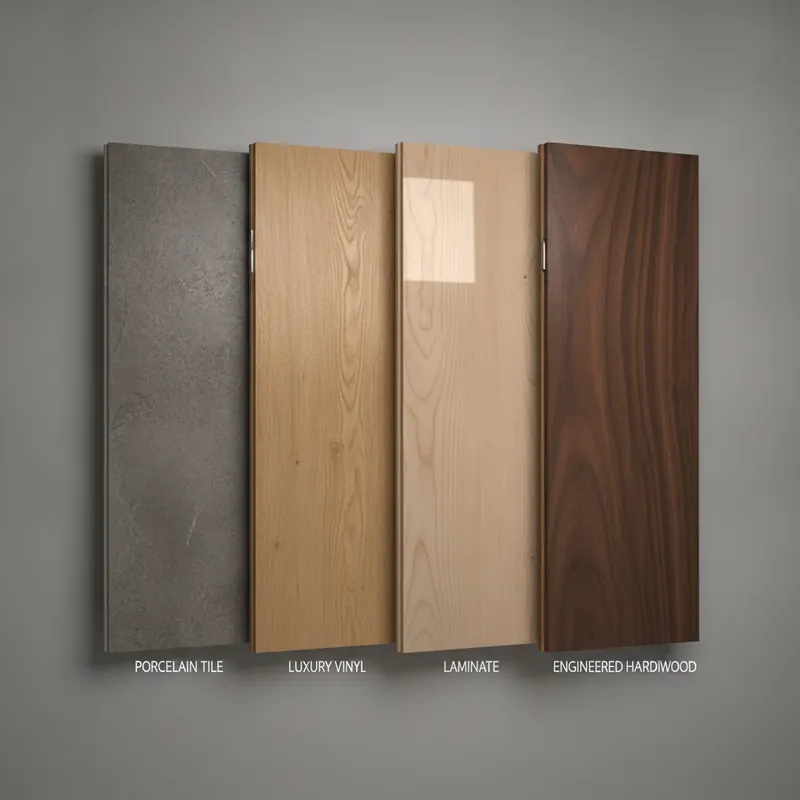
Now that you’re armed with the science, let’s put the top materials to the test. It’s crucial to address a common misconception: no floor is truly “scratch-proof.” Any material can be damaged by the right combination of force and a sharp object. Our goal is to identify the options with the best-in-class resistance to the challenges of a busy home.
1. Porcelain & Ceramic Tile: The Hardness Champion
Tile is a powerhouse of durability. Thanks to its construction, it excels where other floors fail.
- Pros: With a PEI rating of Class 4 or 5, porcelain tile is built for the highest traffic areas. Its high MOHS hardness makes it exceptionally resistant to scratches from pets, furniture, and tracked-in dirt. It is also completely waterproof and easy to clean.
- Cons: Tile can be hard and cold underfoot, and dropped items are more likely to break. The grout lines require periodic cleaning and sealing to prevent staining.
2. Luxury Vinyl Plank/Tile (LVP/LVT): The All-Around Contender
LVP has exploded in popularity for good reason. It masterfully balances performance, style, and comfort.
- Pros: LVP is typically 100% waterproof, making it ideal for kitchens, bathrooms, and basements. Its resilience makes it more comfortable to stand on than tile, and it’s quieter underfoot. The key is choosing a product with a thick wear layer (20+ mil for ultimate durability) and a rigid core (WPC or SPC) that resists dents. For families concerned about health, many reputable brands offer Greenguard Certification for low chemical emissions [7].
- Cons: While highly scratch-resistant, LVP can still be gouged by very sharp objects or dented by extremely heavy furniture without proper pads. The quality can vary dramatically between brands.
3. High-Performance Laminate: The Scratch-Resistant Lookalike
Modern laminate flooring is a far cry from its predecessors. It is engineered specifically to fight scratches.
- Pros: Laminate’s greatest strength is its incredibly hard top layer, which is often infused with aluminum oxide, a substance used in sandpaper. As authorities on finishes like Bona and Minwax can attest, this additive dramatically increases abrasion resistance [8]. This makes high-quality laminate (AC3 or AC4) one of the most scratch-resistant options on the market, often outperforming LVP in this specific category.
- Cons: Laminate’s primary weakness is its core, which is typically made of wood fiber. While top layers are water-resistant, moisture that seeps into the seams can cause the planks to swell and warp, making it a riskier choice for full bathrooms or spill-prone areas.
4. Engineered & Hardwood: The Classic Choice, Optimized
The timeless beauty of wood is undeniable, but choosing a durable option requires careful selection.
- Pros: For the best performance, select a species with a high Janka rating like Hickory, Maple, or Brazilian Cherry. According to NWFA guidelines, a high-quality, factory-applied urethane finish with aluminum oxide is also critical for resisting scratches and wear [2]. Engineered hardwood offers more dimensional stability than solid wood, making it a better choice for variable climates.
- Cons: Even the hardest wood will dent under enough force. It is the most susceptible to scratches and water damage of all the options on this list and requires more careful maintenance.
5. High-Performance Coatings: Epoxy & Polished Concrete
For ultimate, near-industrial levels of durability, these seamless surfaces are in a class of their own.
- Pros: As defined by standards from the American Concrete Institute (ACI), these floors offer incredible compressive strength—epoxy can exceed 10,000 psi—making them virtually immune to damage from dropped tools or heavy vehicles [9]. They are seamless, waterproof, and extremely easy to clean.
- Cons: The aesthetic is modern and industrial, which may not suit all home styles. Installation is a complex process best left to professionals, and they can be very hard underfoot.
Lifestyle-Proofing Your Home: The Best Flooring for Your Family’s Needs
The “best” durable floor isn’t a one-size-fits-all solution. It’s the one that best matches your specific lifestyle challenges.
For Homes with Pets & Kids: The Ultimate Scratch & Stain Fighters
This environment demands a floor that excels in three areas: scratch resistance, water/stain proofing, and traction.
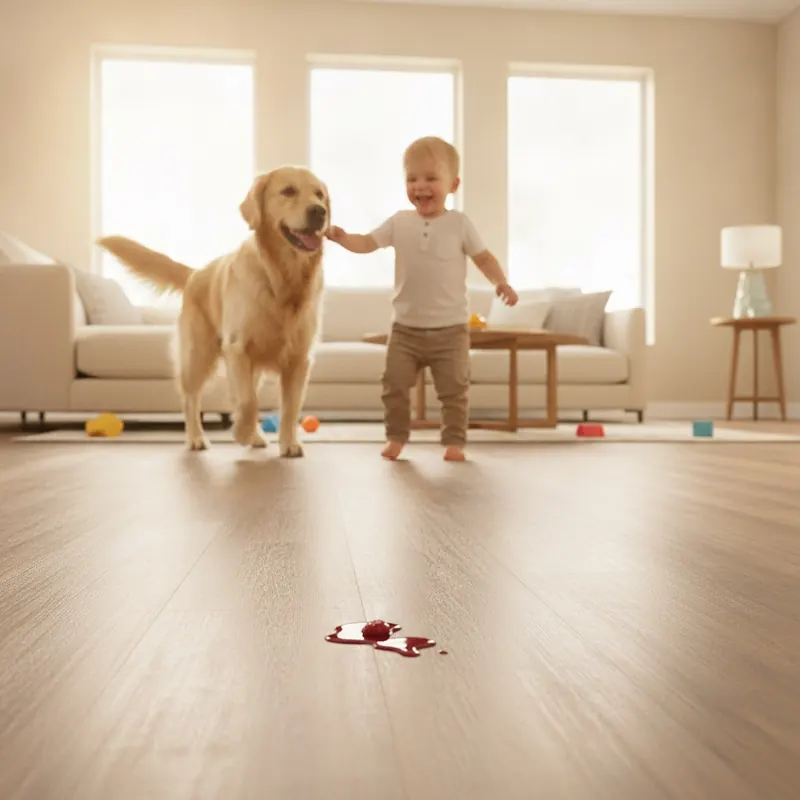
- Top Recommendations: Luxury Vinyl Plank (with a 20+ mil wear layer) and Porcelain Tile are the clear winners. LVP’s waterproof core handles spills and accidents without worry, while tile is virtually impervious to both scratches and moisture.
- The Overlooked Factor: Traction: A slippery floor can be dangerous for playful kids and, especially, for dogs. As the American Kennel Club (AKC) notes, poor traction can contribute to joint issues in dogs, particularly as they age [10]. Look for LVP with an embossed or textured surface and choose tile with a higher coefficient of friction to provide a safer grip for both paws and feet.
For High-Traffic Areas (Entryways, Hallways, Kitchens): The Wear Warriors
These zones are assaulted daily by abrasive dirt, moisture, and constant foot traffic. They require a floor with a commercial-grade wear rating.
- Top Recommendations: Porcelain Tile (PEI Class 4-5) and High-Performance Laminate (AC4) are built for this abuse. Their surfaces are engineered to resist the grinding action of dirt and grit that wears down other floors over time.
- Proactive Defense: Experts in commercial cleaning, who follow standards set by organizations like ISSA, emphasize that the best defense is preventing dirt from entering in the first place [11]. A proper entryway matting system—a coarse “scraper” mat outside and an absorbent “wiper” mat inside—can trap the vast majority of dirt and moisture before it ever touches your floor.
Beyond Toughness: Factoring in Health, Safety, and Comfort
A truly family-friendly floor isn’t just tough; it’s also safe, healthy, and comfortable. This is where the category of “resilient floors” shines.
The Comfort Factor: Understanding Resilient Flooring (Cork, Rubber, LVT)
As defined by the Resilient Floor Covering Institute (RFCI), resilient flooring is a category of flooring that has some “give” or elasticity [13]. This makes it more comfortable for standing, quieter to walk on, and more forgiving when items (or toddlers) fall.
- Luxury Vinyl (LVT): The most popular resilient option, offering a great balance of durability and comfort.
- Cork: An excellent natural choice. Its structure can be up to 50% air, giving it fantastic thermal and acoustic insulation properties. It’s warm, soft, and eco-friendly.
- Rubber: Often used in gyms, rubber offers the ultimate in comfort and durability, making it a unique and practical choice for home gyms, playrooms, or workshops.
For families with allergies or asthma, flooring choice is a health decision. The Asthma and Allergy Foundation of America (AAFA) recommends smooth, hard-surface flooring over wall-to-wall carpeting, as it is easier to clean and harbors fewer allergens like dust mites and pet dander [12].
Breathe Easy: Indoor Air Quality, VOCs, and Key Certifications
Many household products, including flooring, can release Volatile Organic Compounds (VOCs) into the air. These chemicals can impact indoor air quality, a major concern for any family. The U.S. Environmental Protection Agency (EPA) provides extensive information on the importance of maintaining healthy indoor air [14].
To ensure you’re choosing a healthy floor, look for these third-party certifications:
- FloorScore®: This is the most recognized indoor air quality certification for hard surface flooring materials.
- Greenguard Gold: This certification has even stricter limits on VOC emissions and is designed to ensure products are safe for use in environments like schools and healthcare facilities.
Protecting Your Investment: Maintenance and Repair Essentials
Choosing a durable floor is the first half of the battle. The second half is proactive maintenance to keep it looking new for years.
The First Line of Defense: Furniture Pads, Rugs, and Entry Mats
Prevention is always the best strategy.
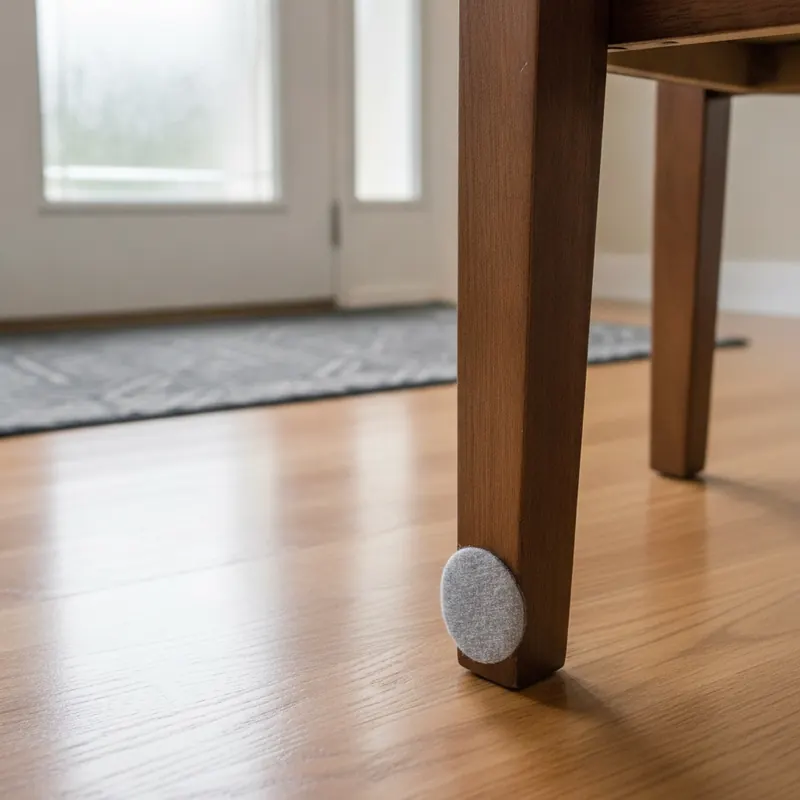
- Furniture Pads: Use high-quality felt pads on any furniture that moves, like chairs and tables. For heavy, stationary furniture, use non-staining, hard plastic or rubber protectors to distribute the weight and prevent dents.
- Area Rugs: Place rugs in high-activity zones, like under a dining room table or in a child’s play area, to absorb the brunt of the wear.
- Entry Mats: As mentioned before, this is non-negotiable. An effective matting system is the single best way to reduce scratches, as it traps the abrasive grit that acts like sandpaper under every footstep. Experts from the Institute of Inspection, Cleaning and Restoration Certification (IICRC) confirm that a proper system can capture over 80% of tracked-in soil [15].
A Simple Guide to Fixing Minor Scratches and Scuffs
Even on the toughest floors, minor damage can happen. Luckily, simple DIY fixes are often possible.
- For Hardwood: For light surface scratches, a simple polish or a color-matched stain marker can often do the trick. Deeper scratches may require a wax repair stick or a wood filler pen.
- For Laminate & LVP: Use a repair kit specifically designed for laminate or vinyl. These kits typically come with a color-matched putty or marker that can fill in minor scratches and gouges, making them nearly invisible.
When attempting any repair, always follow the advice of flooring care experts like Mohawk or Minwax and test the product in an inconspicuous area first, like inside a closet or under a large piece of furniture [16].
Your Floor, Your Fortress: A Confident Conclusion
Choosing a new floor is one of the biggest investments you’ll make in your home. By moving beyond marketing hype and focusing on the science of durability, you’ve transformed from an overwhelmed shopper into an empowered expert. You now understand that true long-term value lies not in a brand name, but in Janka ratings, PEI classes, AC ratings, and the thickness of a wear layer.
Using this playbook and the principles of the Durability Scorecard, you are fully equipped to select a floor that won’t just survive your family’s active lifestyle—it will thrive. You can now make a confident choice that provides a beautiful, worry-free foundation for your home for years to come.
Feeling confident and ready to choose the perfect durable floor for your home? Explore our detailed product reviews or contact our flooring experts today for a personalized consultation.
References & Authoritative Sources
- Certified Flooring Installers (CFI). (n.d.). Industry expertise and standards for flooring installation professionals.
- National Wood Flooring Association (NWFA). (n.d.). Official guidelines and standards for wood flooring. Retrieved from https://www.nwfa.org/
- Tile Council of North America (TCNA). (n.d.). Standards and resources for the ceramic tile industry. Retrieved from https://www.tcnatile.com/
- North American Laminate Flooring Association (NALFA). (n.d.). Performance standards for laminate flooring. Retrieved from https://nalfa.com/
- U.S. Patent and Trademark Office (USPTO). (n.d.). Patent and trademark archives. Retrieved from https://www.uspto.gov/
- The Concrete Network. (n.d.). Resources on decorative concrete, including polished concrete. Retrieved from https://www.concretenetwork.com/
- Greenguard Certification. (n.d.). UL GREENGUARD Certification Program. Retrieved from https://www.ul.com/services/greenguard-certification
- Bona / Minwax. (n.d.). Expert information from leading manufacturers of floor finishes and care products.
- American Concrete Institute (ACI). (n.d.). Standards and best practices for concrete and epoxy coatings. Retrieved from https://www.concrete.org/
- American Kennel Club (AKC). (n.d.). Expert advice on dog health, training, and home safety. Retrieved from https://www.akc.org/
- ISSA (The Worldwide Cleaning Industry Association). (n.d.). Standards and best practices for the professional cleaning industry. Retrieved from https://www.issa.com/
- Asthma and Allergy Foundation of America (AAFA). (n.d.). Recommendations for creating healthier home environments. Retrieved from https://www.aafa.org/
- Resilient Floor Covering Institute (RFCI). (n.d.). Technical information and standards for resilient flooring. Retrieved from https://rfci.com/
- U.S. Environmental Protection Agency (EPA). (n.d.). Information on indoor air quality and VOCs. Retrieved from https://www.epa.gov/indoor-air-quality-iaq
- Institute of Inspection, Cleaning and Restoration Certification (IICRC). (n.d.). Standards for the inspection, cleaning, and restoration industries. Retrieved from https://iicrc.org/
- Mohawk / Minwax. (n.d.). Expert guidance from leading manufacturers of flooring repair and maintenance products.