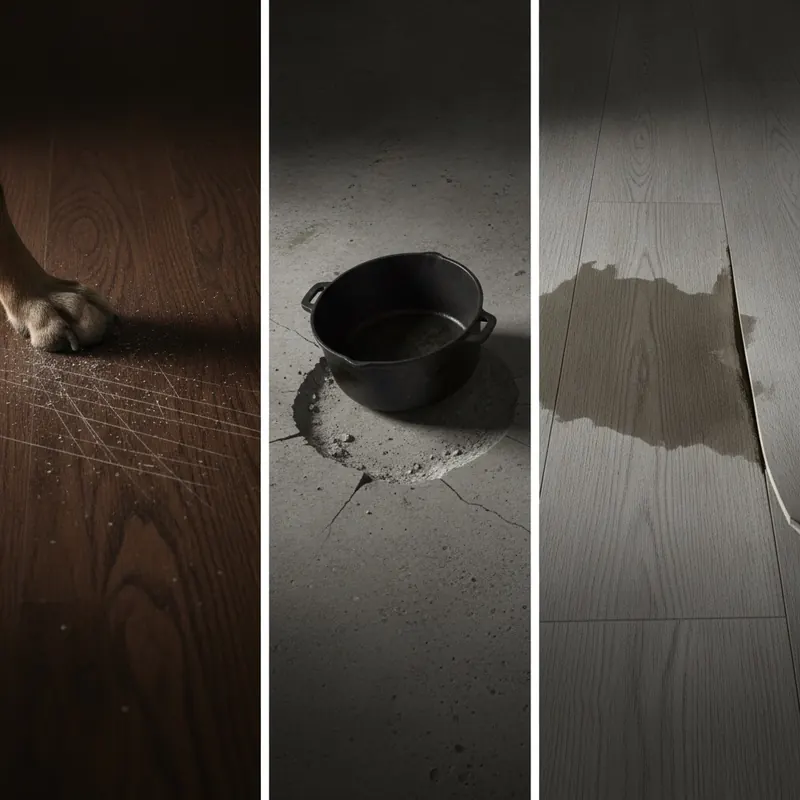
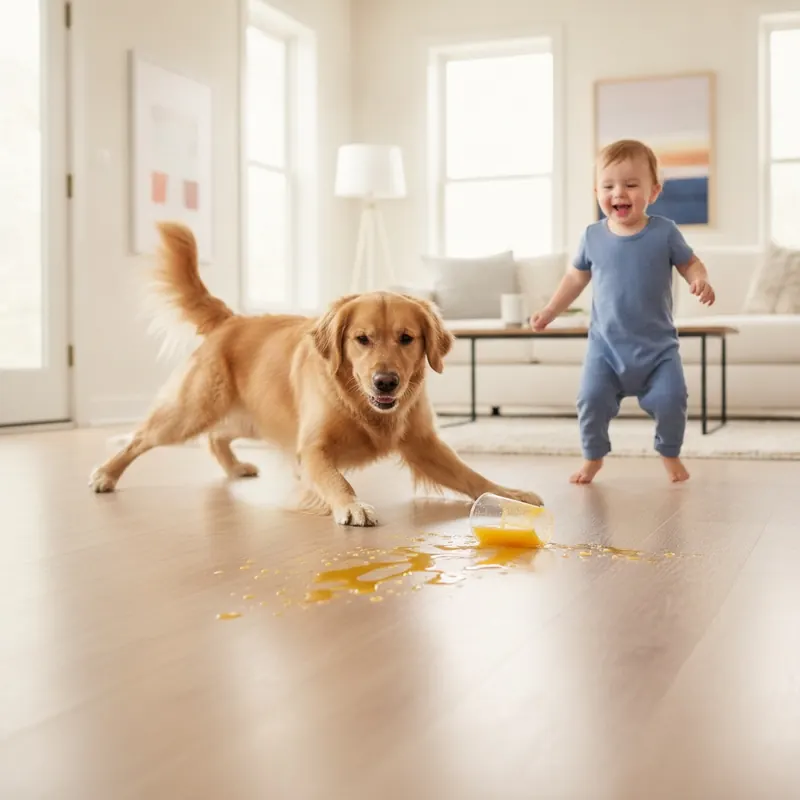
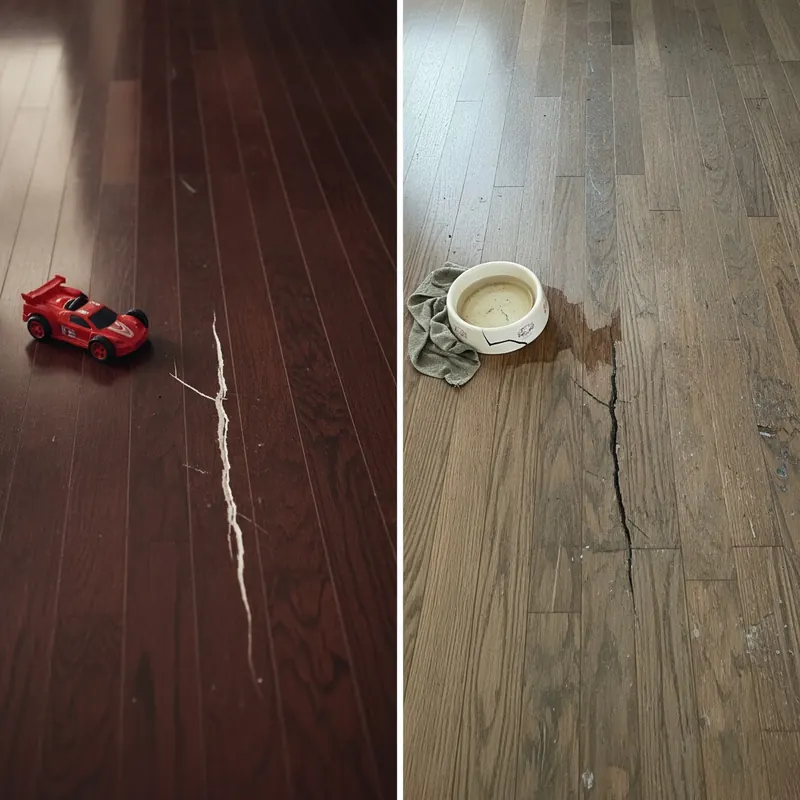
That sinking feeling in your stomach when a glass of juice topples over, the sharp cringe you feel when a chair scrapes across the floor, the constant, nagging worry about scratches from pet claws or dropped toys—this is floor anxiety. For many homeowners, a new floor represents a significant investment, but instead of joy, it brings a new source of stress. The process of choosing a floor that can withstand the beautiful chaos of real life is overwhelming, filled with confusing technical jargon and conflicting advice.
This guide is your antidote to that anxiety. We’re introducing the ‘Life-Proof Flooring Framework,’ a data-driven approach to help you move beyond simple product lists and confidently select a floor that matches your lifestyle, budget, and tolerance for maintenance. We will demystify the science of durability and present our proprietary ‘Worry-Free Flooring Scorecard’ to compare the top contenders head-to-head.

By the end of this article, you will be empowered to read product specifications like an expert, understand the critical trade-offs between materials, and ultimately choose a durable, low-maintenance flooring solution that gives you lasting peace of mind.
- The End of Floor Anxiety: What is ‘Worry-Free’ Flooring?
- Decoding Durability: The Science Behind a Long-Lasting Floor
- The Worry-Free Flooring Scorecard: Comparing the Top Contenders
- Lifestyle-Centric Solutions: Finding Your Perfect Floor Match
- Beyond Durability: The Low-Maintenance Advantage
- Proactive Protection & Smart Repairs: Your Floor First-Aid Kit
- The Long-Term Investment: Lifespan and Home Value
- Your Worry-Free Future
- References & Authoritative Sources
The End of Floor Anxiety: What is ‘Worry-Free’ Flooring?
The desire for an indestructible floor is not new. Historically, the term “Adamantine flooring” was used to describe a type of dense, vitreous tile that was incredibly tough and water-resistant—essentially, flooring as strong as a diamond. While the term itself is archaic, the core human desire it represents is more relevant than ever: the wish for a surface in our home that we don’t have to constantly worry about.
Today, “worry-free flooring” is the modern equivalent of that adamantine ideal. It’s not just about a single material; it’s a holistic concept built on four pillars:
- Scratch & Scuff Resistance: The ability to withstand daily traffic, moving furniture, pet claws, and active kids without showing every mark.
- Water & Stain Resistance: The capacity to handle spills, accidents, and moisture without warping, swelling, or permanent staining.
- Low Maintenance: A surface that is easy to clean and doesn’t require constant, specialized, or costly upkeep like sealing or refinishing.
- Longevity: A floor that is built to last for decades, providing a solid return on your investment.
Addressing “new floor anxiety” is about more than just picking a tough material. As home organization experts will attest, creating a low-maintenance environment directly contributes to lower stress levels. When your home’s foundational surfaces can handle daily life without demanding constant vigilance, it frees up mental and emotional energy, allowing you to simply live in and enjoy your space.
Decoding Durability: The Science Behind a Long-Lasting Floor

To choose a truly durable floor, you must learn to speak its language. Manufacturers use several industry-standard rating systems to measure performance. Understanding these key metrics will empower you to look past marketing claims and assess the true quality of a product.
For Tile: Understanding the PEI Rating for Wear Resistance
The Porcelain Enamel Institute (PEI) rating is the most important measure of a ceramic or porcelain tile’s durability and resistance to abrasion. The Tile Council of North America (TCNA) upholds this standard, which classifies tile on a scale from 1 to 5.[1]
- PEI 1: Wall use only.
- PEI 2: Light residential traffic (e.g., bathrooms).
- PEI 3: Light to moderate residential traffic (all home areas).
- PEI 4: Moderate to heavy traffic (all home areas, plus light commercial).
- PEI 5: Heavy to extra-heavy traffic (all residential and commercial applications).
For a busy home, especially with pets and kids, a PEI rating of 4 or 5 is ideal for floor applications to ensure maximum wear resistance.
For Laminate: What the AC (Abrasion Class) Rating Really Means
Laminate flooring’s durability is measured by its Abrasion Class (AC) rating, a standard overseen by the North American Laminate Flooring Association (NALFA).[2] This rating assesses a plank’s resistance to abrasion, impact, stains, and even cigarette burns.
- AC1: Light residential use (e.g., bedrooms).
- AC2: General residential use (e.g., living rooms).
- AC3: Heavy residential use and light commercial use.
- AC4: General commercial use.
- AC5: Heavy commercial use.
For most active households, choosing a laminate with a rating of AC3 or higher is strongly recommended to ensure it can handle the demands of daily life.
For Vinyl (LVT/LVP): The Critical Role of the Wear Layer
For Luxury Vinyl Tile (LVT) and Luxury Vinyl Plank (LVP), the single most important factor in its durability is the wear layer. This is a clear, protective top coating that shields the printed design layer from scratches, scuffs, and stains. Its thickness is measured in mils (one-thousandth of an inch). According to industry bodies like the Resilient Floor Covering Institute (RFCI), a thicker wear layer means a more durable floor.[3]
- 6-10 mil: Suitable for light traffic areas.
- 12-16 mil: Good for general residential use.
- 20+ mil: Excellent for heavy residential traffic, homes with pets, and commercial applications.
A 20 mil (0.5 mm) wear layer is considered the gold standard for durable residential vinyl flooring, with commercial-grade LVT often featuring a wear layer of 20 mil or greater.
For Wood & Bamboo: The Janka Hardness Scale Explained
The Janka hardness test measures the resistance of a wood species to denting and wear. As referenced by the National Wood Flooring Association (NWFA), the test involves measuring the force required to embed a 0.444-inch steel ball into the wood to half its diameter.[4] The higher the Janka rating, the harder and more resistant the wood is to dents.
This is crucial for understanding why some hardwoods are better for active homes than others. For example:
- Softwoods: Douglas Fir (660), Pine (600-900)
- Standard Hardwoods: Red Oak (1290), White Oak (1360), Maple (1450)
- Exotic Hardwoods: Brazilian Walnut (Ipe) (3680), Strand-Woven Bamboo (3000+)
A soft pine floor will dent and scratch far more easily than an extremely hard Brazilian Walnut floor.
The Worry-Free Flooring Scorecard: Comparing the Top Contenders

Now that you understand the metrics, let’s see how the top contenders for “worry-free” flooring stack up. We’ve created this scorecard to rate each material on the key factors that contribute to peace of mind.
| Flooring Type | Scratch Resistance (1-5) | Water Resistance (1-5) | Ease of Cleaning (1-5) | Long-Term Value (1-5) | Overall Score |
|---|---|---|---|---|---|
| Luxury Vinyl (LVT/LVP) | 4 | 5 | 5 | 4 | 4.5 |
| Porcelain Tile | 5 | 5 | 4 | 5 | 4.75 |
| High-Performance Laminate | 5 | 3 | 5 | 3 | 4.0 |
| Epoxy Coating | 4 | 5 | 5 | 4 | 4.5 |
| Strand-Woven Bamboo | 4 | 3 | 4 | 4 | 3.75 |
Champion of Versatility: Luxury Vinyl Flooring (LVT/LVP)
Luxury vinyl is arguably the best all-around choice for a worry-free floor. Its key advantage is that Luxury Vinyl Plank (LVP) and Luxury Vinyl Tile (LVT) are typically 100% waterproof.[3] This means they can be installed anywhere, including basements, kitchens, and bathrooms, without fear of swelling or warping from spills or moisture. Combined with a thick (20+ mil) wear layer, it offers excellent protection against scratches and scuffs, making it a go-to for busy families and pet owners.
The Unbreakable Option: Porcelain & Ceramic Tile
When it comes to sheer scratch resistance, nothing beats high-quality porcelain tile. With a top PEI rating, it is virtually impervious to scratches from pet claws, furniture, and daily wear. Furthermore, porcelain tile has a water absorption rate of 0.5% or less, making it completely waterproof.[1] This is a true “lifetime” flooring, as a professionally installed tile floor can easily last 50 years or more. The primary trade-offs are its hardness underfoot (which can be tough on joints and unforgiving to dropped dishes) and the need to periodically clean and seal grout lines to prevent staining.
The Scratch-Resistant Lookalike: High-Performance Laminate
Modern laminate flooring has come a long way. Thanks to incredibly tough top coats infused with materials like aluminum oxide, a high-quality laminate (AC4 or higher) offers some of the best scratch resistance on the market, often outperforming even vinyl and many hardwoods. Innovations from manufacturers like Pergo with its TitanX™ technology have set a high bar for durability. The main drawback is its core, which is typically made of wood fiber. While many modern laminates are “water-resistant” and can handle topical spills, they are generally not waterproof and can be damaged by prolonged exposure to moisture or flooding.
Honorable Mentions: Epoxy Coatings & Strand-Woven Bamboo
For specific applications, two other materials deserve recognition. Epoxy flooring, a resinous coating applied over concrete, is a favorite for garages, basements, and commercial spaces because it creates a seamless, waterproof, and incredibly resilient surface that can withstand up to 10,000 psi of pressure. Strand-woven bamboo is an eco-friendly option that is harder than most hardwoods, with a Janka rating that can exceed 3000. It offers fantastic scratch and dent resistance for those who want the look of a natural material.
Lifestyle-Centric Solutions: Finding Your Perfect Floor Match
The “best” durable flooring is not a one-size-fits-all answer. It depends entirely on the specific challenges of your environment.
The Pet Owner’s Guide: Best Durable Flooring for Dogs & Cats
Pets introduce a unique trifecta of challenges: scratches from claws, stains from accidents, and a constant battle with pet hair.

- Scratch Resistance: LVT with a 20+ mil wear layer and porcelain tile are the top choices. High-quality laminate is also excellent.
- Water/Stain Resistance: LVT and tile are 100% waterproof, making them ideal for handling accidents without damage.
- Ease of Cleaning: The smooth, hard surfaces of LVT, tile, and laminate make sweeping or vacuuming pet hair incredibly easy compared to carpet.
- Pet Health: The American Kennel Club (AKC) advises considering a floor with some texture to prevent slipping, which can be hard on a dog’s joints.[5] A textured LVP or a matte-finish tile is often better than a high-gloss, slippery surface.
- Acoustics: A common complaint is the sound of clicking claws on hard surfaces. LVT, especially with an attached underlayment, tends to be quieter underfoot than laminate or tile, filling a crucial quality-of-life gap for pet owners.
The Commercial Challenge: Top Flooring for High-Traffic Areas
Commercial spaces like retail stores, restaurants, and offices require flooring that can withstand constant foot traffic, rolling carts, and stringent safety codes.
- Extreme Durability: Commercial-grade LVT (20+ mil wear layer), porcelain tile (PEI 4-5), and epoxy coatings are the leading options.
- Safety & Compliance: Flooring must meet strict safety standards. According to the Americans with Disabilities Act (ADA) National Network, the ADA requires the coefficient of friction for floor surfaces to be 0.6 or higher to be considered slip-resistant.[6] OSHA also has regulations related to workplace safety and floor surfaces.[7] Always verify that your chosen material meets all local and federal building codes.
Beyond Durability: The Low-Maintenance Advantage
A durable floor that is difficult to keep clean is not a worry-free floor. The goal is to minimize the time spent on maintenance, and certain characteristics make a huge difference. According to standards from bodies like the Institute of Inspection, Cleaning and Restoration Certification (IICRC), hard, non-porous surfaces are inherently easier to clean and maintain than soft, porous ones.[8]
The Art of Camouflage: Best Colors and Finishes to Hide Dirt
The aesthetic you choose can either highlight every speck of dust or cleverly conceal it, extending the time between cleanings.
- Color & Pattern: Avoid very dark, solid colors (like espresso) and very light, solid colors (like pure white). Both act as a canvas for dust, hair, and footprints. The best options are multi-tonal floors with variation and pattern, such as wood-look vinyl with prominent graining or stone-look tile with natural veining.
- Finish: A high-gloss, reflective finish will show every smudge, water spot, and minor scratch. A matte or satin finish diffuses light, making it far more forgiving and effective at hiding minor imperfections.
- Lighting: Be aware of how lighting, especially large windows with direct sunlight, will hit your floors. Low-angle light can highlight dust and scratches on a glossy floor that might be invisible otherwise.
The High-Maintenance Flooring Hall of Shame
If your primary goal is low maintenance, there are a few materials you should approach with caution.
- Porous Natural Stone: Beautiful stones like marble, travertine, and limestone are relatively soft and highly porous. The Marble Institute of America notes that they are susceptible to scratching, etching from acidic spills (like wine or lemon juice), and staining if not properly maintained.[9] They typically require professional sealing every 1-3 years.
- Softwoods: Woods like pine and fir have a low Janka hardness rating, making them prone to dents and scratches from even minor impacts. They develop a “rustic” patina over time, which some love, but they are not for those who want a pristine surface.
- High-Pile Carpet: While soft and warm, light-colored, high-pile carpet is difficult to keep clean, prone to staining, and traps allergens, dust, and pet dander.
Proactive Protection & Smart Repairs: Your Floor First-Aid Kit
Even the most durable floor benefits from a good defense. A few simple, proactive steps can prevent the vast majority of damage before it happens.
Floor Protection 101: An Ounce of Prevention
Following basic care guidelines from authorities like the NWFA can dramatically extend the life and beauty of your floors.[4]
- Furniture Pads: Place high-quality felt pads on the bottom of every piece of furniture, especially chairs and tables that are moved frequently. This is the single most effective way to prevent scratches.
- Entry Mats: Use high-quality doormats at every exterior door to trap dirt, grit, and moisture before it gets tracked onto your floor.
- Area Rugs: Use area rugs in high-traffic zones like hallways and living areas to protect the floor underneath.
- Lift, Don’t Drag: When moving heavy furniture, never drag it across the floor. Lift it completely or use furniture sliders designed for your floor type. A common mistake is dragging an appliance out for cleaning, which can cause a deep gouge. The right way is to use an appliance dolly or sliders.
A Triage Guide to Fixing Scratches and Scuffs
When damage inevitably occurs, don’t panic. First, identify your flooring material, then assess the severity.
- Minor Scuffs (Vinyl, Laminate, Polyurethaned Wood): For black scuff marks from shoes, a simple tennis ball or a pencil eraser can often provide enough friction to remove the mark without damaging the finish.
- Light Surface Scratches (Wood, LVT, Laminate): For scratches that haven’t penetrated the wear layer or finish, a simple repair kit or stain pen from the manufacturer can often conceal the mark effectively.
- Deeper Scratches (Wood): If a scratch has penetrated the finish and dug into the wood itself, it may require sanding and refinishing. For a single deep scratch, a professional may be able to repair the single board, but widespread damage often requires refinishing the entire room.
- What NOT to Do: Never use abrasive cleaners, steel wool, or “magic eraser” type products on a finished floor, as they can permanently dull or remove the protective top coat, causing a much bigger problem. Always follow the specific repair instructions from your flooring’s manufacturer.
The Long-Term Investment: Lifespan and Home Value
Choosing a durable floor is a long-term investment in your property. Different materials have vastly different life expectancies. Data from the National Association of Home Builders (NAHB) on the life expectancy of home components shows a clear hierarchy:[10]
- Carpet: 5-15 years
- Laminate: 15-25 years
- Luxury Vinyl: 20-30+ years
- Solid Hardwood: 100+ years (can be refinished multiple times)
- Tile & Stone: 50-100+ years
Beyond just lasting a long time, certain flooring types can increase the resale value of your home. Reports from the National Association of Realtors (NAR) consistently show that hardwood floors (or high-quality alternatives that mimic wood) are highly desirable to homebuyers and can provide a strong return on investment.[11]
Your Worry-Free Future
Choosing a floor doesn’t have to be a source of stress. By moving past marketing hype and embracing the Life-Proof Flooring Framework, you are now equipped to make a truly informed decision. You understand that true durability is measurable through ratings like PEI, AC, and Janka. You know that the best floor is one that is perfectly matched to the unique demands of your lifestyle, whether that involves pets, kids, or heavy foot traffic. And you recognize that a combination of smart material selection and simple, proactive protection is the ultimate key to peace of mind.
You are now ready to choose a floor with confidence, creating a beautiful, resilient foundation for your home that you can enjoy for years to come—without the worry.
Ready to find your perfect worry-free floor? Explore our detailed reviews of the top-rated LVT, Laminate, and Tile flooring to start your project today.
This article provides general guidance. Always consult with a professional flooring installer for specific advice related to your home’s subfloor and conditions. Product performance can vary based on installation, maintenance, and specific usage.
References & Authoritative Sources
- Tile Council of North America (TCNA). (N.D.). PEI Rating. The TCNA is the recognized industry authority on standards for ceramic tile, grout, and installation methods in North America.
- North American Laminate Flooring Association (NALFA). (N.D.). AC Rating. NALFA provides certification and sets performance standards for laminate flooring products in North America.
- Resilient Floor Covering Institute (RFCI). (N.D.). Industry Information on Vinyl Flooring. The RFCI is an industry trade association representing manufacturers of resilient flooring.
- National Wood Flooring Association (NWFA). (N.D.). Janka Hardness Scale & Maintenance Guidelines. The NWFA provides standards and guidelines for the wood flooring industry, from manufacturing to installation and maintenance.
- American Kennel Club (AKC). (N.D.). Guidance on Home Environments for Dogs. The AKC is a leading authority on dog breeds, health, and creating safe home environments for pets.
- Americans with Disabilities Act (ADA) National Network. (N.D.). ADA Standards for Accessible Design. Ada.gov is the official government source for information and technical assistance on the Americans with Disabilities Act.
- Occupational Safety and Health Administration (OSHA). (N.D.). Regulations on Walking/Working Surfaces. OSHA is a U.S. government agency that sets and enforces standards to ensure safe and healthful working conditions.
- Institute of Inspection, Cleaning and Restoration Certification (IICRC). (N.D.). Cleaning and Maintenance Standards. The IICRC is a certification and standard-setting organization for the inspection, cleaning, and restoration industries.
- Marble Institute of America (now part of the Natural Stone Institute). (N.D.). Guides on Natural Stone Care. This organization provides authoritative information on the care and maintenance of natural stone surfaces like marble and travertine.
- National Association of Home Builders (NAHB). (N.D.). Study of Life Expectancy of Home Components. The NAHB is a trade association that helps promote policies that make housing a national priority and publishes research on home construction and components.
- National Association of Realtors (NAR). (N.D.). Reports on Home Improvement Resale Value. The NAR is America’s largest trade association, providing data and reports on the real estate market, including the value of home improvements.