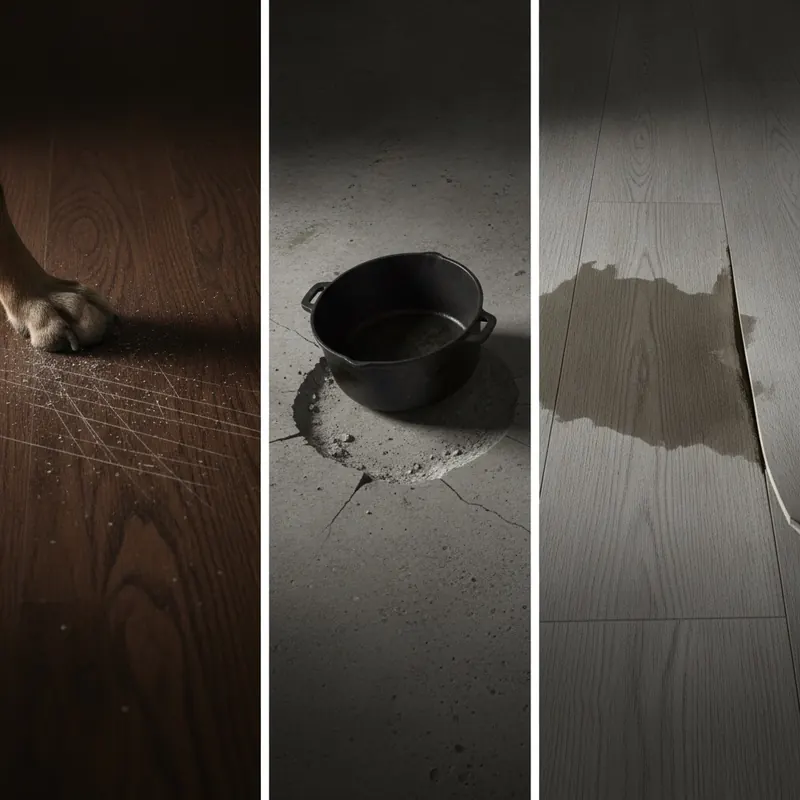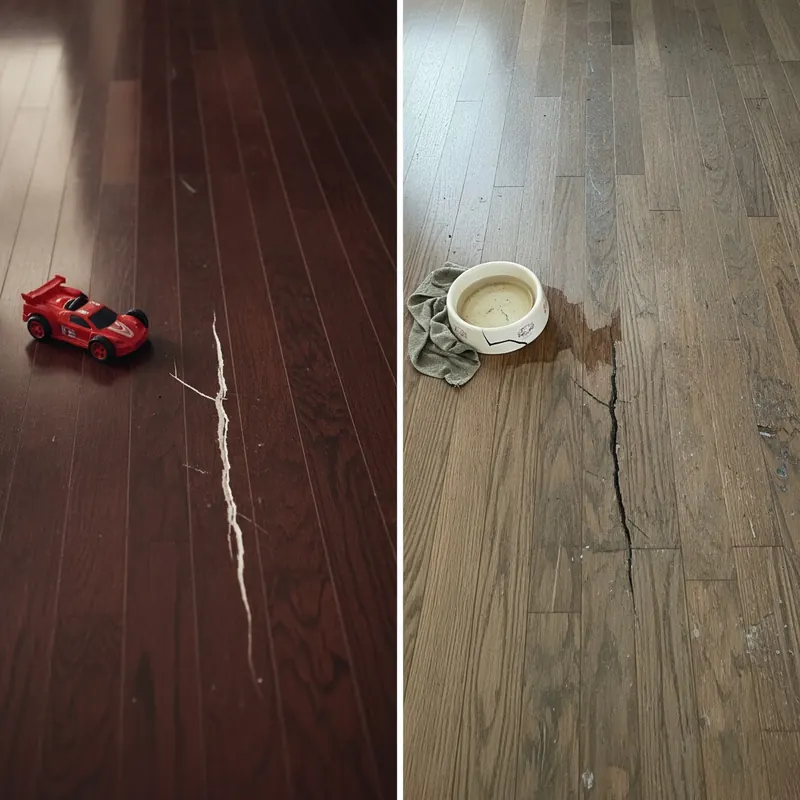
There’s nothing quite like the sinking feeling of sliding a sofa aside to clean, only to discover a permanent, quarter-sized crater in your beautiful floor. That single indentation serves as a constant reminder that everyday life—from heavy furniture to dropped objects—can wage a war on your home’s surfaces. The core problem is that choosing a truly durable floor feels like navigating a minefield of confusing technical jargon and marketing hype. What exactly is a “20 mil wear layer”? Is “SPC” better than “WPC”? And what on earth is “Adamantine flooring”?
This is where the guesswork ends. Consider this your Definitive Floor Durability Playbook. We will move beyond simple lists of “best floors” to empower you with the expert knowledge to select the right material for your home, protect it proactively against damage, and even repair minor indentations yourself. By the end of this guide, you’ll be equipped to make a confident choice and ensure your flooring investment looks flawless for years to come.
- Understanding Dent-Proof Flooring: The Science of Ultimate Durability
- Decoding Durability: How to Read Flooring Specs Like a Pro
- Your Complete Floor Protection System: A Proactive Prevention Guide
- Damage Triage: A DIY Guide to Fixing Dents and Indentations
- Conclusion
- References
Understanding Dent-Proof Flooring: The Science of Ultimate Durability
Before you can choose the right armor for your floors, you need to understand the science of what makes a material truly strong. This section dives into the core concepts behind dent-resistant flooring, comparing the top contenders head-to-head and demystifying branded technologies so you can see past the marketing and focus on real-world performance.
What is Resilient Flooring?
You’ll often hear the term “resilient flooring” used when discussing durability. But what does it actually mean? According to the Resilient Floor Covering Institute (RFCI), resilient flooring is a category of non-textile flooring that has “give” or elasticity under pressure and can “bounce back” to its original shape after being compressed.[1] This category traditionally includes materials like vinyl, rubber, cork, and linoleum.
While that ability to bounce back is great for comfort underfoot, it’s also why some older or lower-quality resilient floors are prone to indentations from heavy furniture. The pressure from a narrow sofa leg can compress the material beyond its ability to recover. However, modern advancements have led to a new generation of resilient flooring specifically engineered to resist this very problem.
The King of Durability: Why SPC Flooring is the Top Choice for Dent Resistance
When it comes to resisting dents, one material stands above the rest: Stone Polymer Core (SPC) flooring. Also known as rigid core luxury vinyl, SPC is the top choice for homeowners seeking maximum indentation resistance.
The secret is in its construction. The core of an SPC plank is a high-density composite made from a mixture of limestone powder, polyvinyl chloride (PVC), and stabilizers. This dense, solid core gives the plank incredible rigidity and dimensional stability. Unlike more flexible flooring, it simply doesn’t have much “give,” making it exceptionally difficult to dent. In fact, some premium SPC products feature a composite core made of nearly 70% limestone, providing extreme resistance to both dents and cracking.[2]
This superior performance is why trusted home improvement authorities like Bob Vila frequently endorse stone-core luxury vinyl plank (LVP) as a top solution for durable, dent-proof flooring in busy homes.[3]
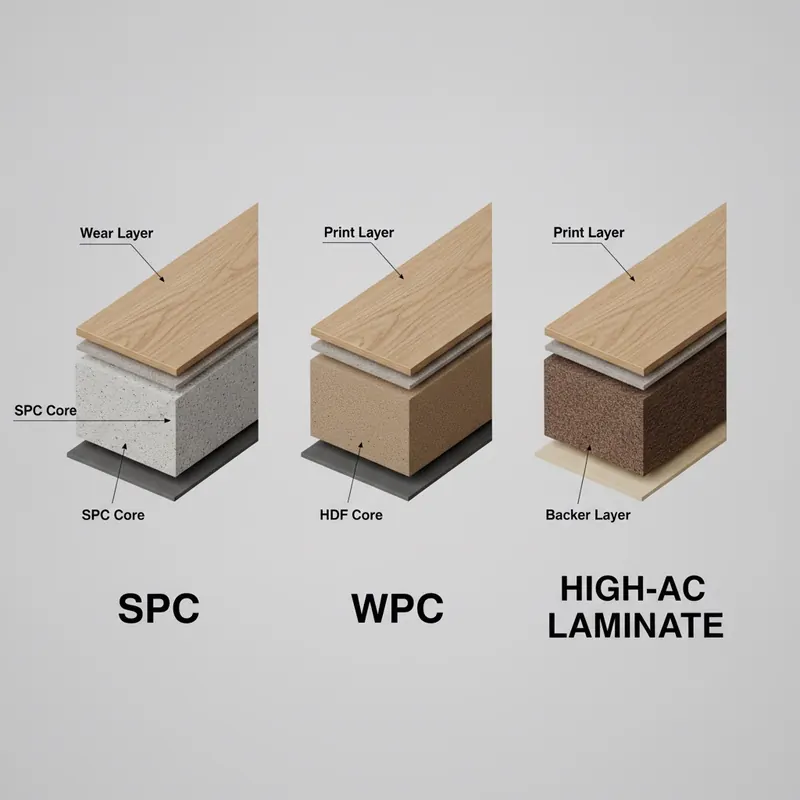
Flooring Core Showdown: SPC vs. WPC vs. High-AC Laminate
To truly understand your options, it helps to compare the top three contenders for durable flooring side-by-side. Each has a unique construction that affects its performance.
- SPC (Stone Polymer Core): As discussed, its core is a solid, dense composite of limestone and polymers. It is the most rigid and dent-resistant option.
- WPC (Wood Polymer Core): WPC also has a rigid, waterproof core, but it’s made from a mixture of wood pulp, plastic composites, and a foaming agent. This makes the core lighter and less dense than SPC. While still very durable and more comfortable underfoot, it is slightly more susceptible to heavy impacts and indentations than its stone-based counterpart.
- High-AC Laminate: Modern laminate flooring is a formidable opponent. It consists of a high-density fiberboard (HDF) core topped with a photographic image layer and a tough, clear protective layer. Its durability against dents and scratches is measured by its Abrasion Class (AC) rating.
To simplify your choice, here is a Durability Scorecard:
| Feature | SPC Flooring | WPC Flooring | High-AC Laminate (AC4+) |
|---|---|---|---|
| Dent Resistance | ⭐⭐⭐⭐⭐ (Highest) | ⭐⭐⭐⭐ (High) | ⭐⭐⭐⭐ (High) |
| Scratch Resistance | ⭐⭐⭐⭐ (High) | ⭐⭐⭐⭐ (High) | ⭐⭐⭐⭐⭐ (Highest) |
| Water Resistance | ⭐⭐⭐⭐⭐ (100% Waterproof) | ⭐⭐⭐⭐⭐ (100% Waterproof) | ⭐⭐ (Water-Resistant, not Waterproof) |
| Cost | $$$ (Mid-High) | $$$ (Mid-High) | $$ (Low-Mid) |
A great real-world example comes from leading manufacturer Mannington, which clearly distinguishes its product lines based on core technology. Their ADURA®Rigid line uses a solid SPC core for maximum dent resistance in any room, while their ADURA®Max line uses a WPC core for enhanced comfort and sound dampening.[4]
Deconstructing Branded Finishes: What is ‘Adamantine Flooring’?
While searching for durable options, you might encounter terms like “Adamantine flooring.” It’s crucial to understand that this is not a type of flooring material itself, but rather a proprietary finish. Specifically, Adamantine Protection™ is a high-performance urethane finish developed by the manufacturer TAS Flooring.[5]
This advanced finish is applied to their luxury vinyl products to provide superior resistance to scratches, stains, and everyday wear. It acts as the floor’s first line of defense. The true dent resistance of these products comes from their core, which is often an LSPC (Limestone Polymer Composite Core)—another term for SPC.
You can find the Adamantine finish on TAS Flooring collections like Olympus and Monument, which are designed for both demanding commercial and residential environments. So, when you see a branded term, remember to look deeper at the two key components of durability: the core for dent resistance and the finish for scratch resistance.
Decoding Durability: How to Read Flooring Specs Like a Pro
Understanding the science is the first step. The next is learning to read the technical specifications on a product label. This knowledge transforms you from a confused consumer into an empowered buyer, allowing you to confidently compare products and know exactly what you’re paying for.
The Wear Layer Explained: Why Mil Thickness Matters for Scratches
The wear layer is a clear, protective top coating on vinyl flooring that shields the photographic image layer from scuffs, scratches, and stains. Its thickness is the single most important factor for scratch resistance.
This thickness is measured in “mils,” which is not to be confused with millimeters. A mil is one-thousandth of an inch (0.001 inches). While a 6-8 mil wear layer might be acceptable for a low-traffic bedroom, for the main areas of a busy home, you should look for much more. A 20-mil wear layer is widely considered the gold standard for durable LVP, offering excellent protection against pets, kids, and daily traffic.[6] Some premium wear layers are even infused with hardening agents like ceramic bead or aluminum oxide for even greater toughness.
Understanding AC Ratings for Laminate Flooring
For laminate flooring, the key durability metric is the Abrasion Class (AC) rating. This internationally recognized system rates a laminate’s resistance to abrasion, impact, stains, and burns. The ratings are simple: the higher the number, the more durable the floor.
- AC1: Light residential use (e.g., bedrooms, closets).
- AC2: General residential use (e.g., living rooms, dining rooms).
- AC3: Heavy residential use and light commercial use (e.g., hallways, home offices).
- AC4: General commercial use (e.g., small offices, cafes). This is an excellent choice for any area of a busy home.[7]
- AC5: Heavy commercial use (e.g., department stores, public buildings).
For homeowners seeking a truly dent- and scratch-proof floor, choosing a laminate with an AC4 or AC5 rating is essential.
The Unsung Hero: How Underlayment Impacts Dent Prevention
Often overlooked, the underlayment plays a crucial role in preventing dents, especially with “floating” floors like LVP and laminate that aren’t glued down. Underlayment is a thin layer of material that sits between the subfloor (e.g., concrete or plywood) and your new flooring.
A cheap, overly soft, or spongy underlayment can allow the flooring planks to flex too much under a heavy load. This flexing can strain the locking mechanisms between planks and make the surface more susceptible to indentations. A firm, high-density underlayment provides critical support, distributing the weight from heavy furniture more evenly and reinforcing the floor’s inherent strength.
Pro Tip: Always check the flooring manufacturer’s specifications for recommended underlayment properties. Using the wrong type can sometimes void the warranty. For concrete subfloors, ensure your underlayment also includes a vapor barrier to protect against moisture.
Your Complete Floor Protection System: A Proactive Prevention Guide
Choosing a durable floor is half the battle. The other half is protecting that investment with a smart, proactive prevention system. These simple measures will dramatically reduce the risk of dents and keep your floors looking brand new.
A Visual Guide to Furniture Protectors: Choosing the Right Armor
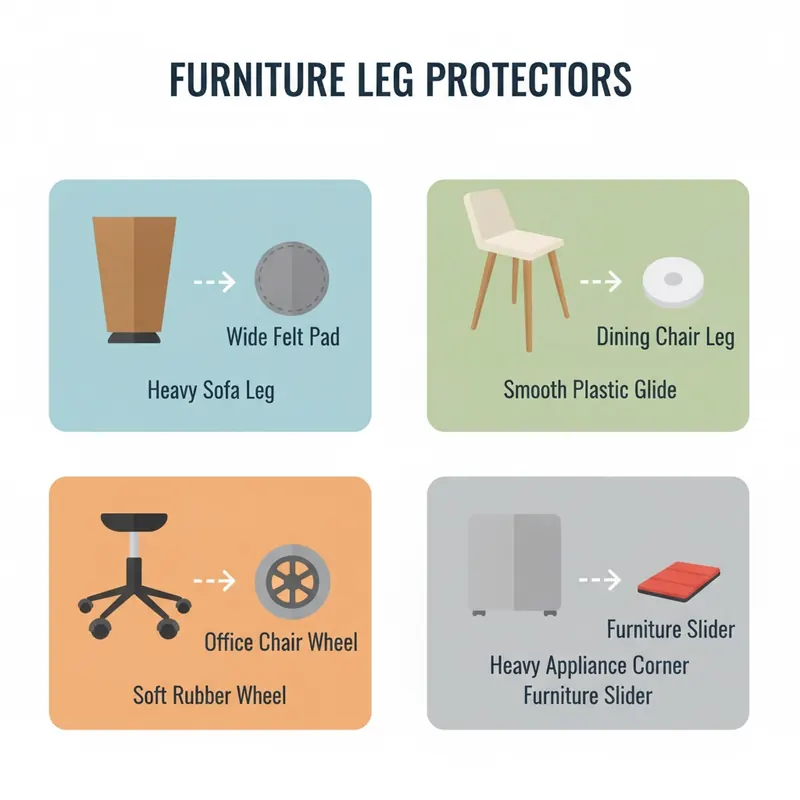
Not all furniture feet are created equal, and neither are the protectors designed for them. Using the wrong type can be ineffective or even cause damage.
- For Static Furniture (Sofas, Bookcases, Beds): Use wide, non-slip felt pads or caster cups. The goal is to distribute the weight over a larger surface area. Look for high-quality, screw-in felt pads rather than cheap adhesive ones, which can slide off and collect grit that scratches the floor.
- For Mobile Furniture (Dining Chairs, Stools): Use smooth plastic or Teflon glides. These allow chairs to slide easily without scuffing. Avoid felt pads here, as they can pick up dirt and act like sandpaper over time.
- For Rolling Furniture (Office Chairs): Immediately replace the hard plastic casters that come standard on most chairs. These are notorious for damaging floors. Invest in soft rubber or polyurethane “rollerblade-style” wheels that are specifically designed for hard surfaces.
- For Moving Day: Keep a set of furniture sliders on hand. These large, low-friction discs allow you to glide even the heaviest appliances and furniture across the floor with minimal effort and zero risk of gouging.
According to floor protection experts at RugPadUSA, the material of the protector is key. Felt is for distributing weight, rubber is for gripping, and smooth plastic is for sliding.[8]
Best Practices for Static vs. Mobile Furniture
The strategy for protecting your floors changes based on how furniture is used.
For heavy, static pieces like a media console or china cabinet, the primary goal is to prevent long-term compression. Use the widest possible floor protectors under the legs. As recommended by cleaning professionals at Zerorez, it’s also a good practice to slightly shift these heavy pieces by an inch or two every few months if possible.[9] This prevents the floor from being under constant, unyielding pressure in the exact same spots.
For mobile furniture like dining chairs, the risk comes from repetitive movement. Regularly check the glides to ensure they are clean and not worn down. A tiny piece of embedded gravel on a chair leg can cause hundreds of scratches over time.
How to Move Heavy Furniture and Appliances Without Damage
The number one rule of moving heavy items is simple: lift, don’t drag. Dragging concentrates the entire weight of the object onto a few small, sharp points, which is a guaranteed recipe for deep scratches and gouges.
Pro Mover’s Tip: When you can’t lift, use leverage and the right tools.
- Clear the Path: Remove all rugs and other obstacles from the moving path.
- Use Sliders: Gently tilt the heavy item to one side and place furniture sliders under the feet. Repeat for all corners.
- Push, Don’t Pull: Push the item slowly and steadily across the floor. Pushing gives you more control and a better view of the path ahead.
- Use a Dolly: For extremely heavy items like refrigerators or safes, always use an appliance dolly with soft rubber wheels.
Damage Triage: A DIY Guide to Fixing Dents and Indentations
Even with the best flooring and protection, accidents can happen. When they do, don’t panic. Many minor dents and indentations can be fixed with simple DIY techniques.
First, Assess the Damage: Is it a Dent, Gouge, or Compression?
Before you can apply a fix, you need to diagnose the problem correctly. Flooring experts at ESB Flooring note that people often use these terms interchangeably, but they are different types of damage requiring different solutions.[10]
- Compression: This is a temporary indentation, most common in resilient floors like vinyl. The material has been compressed but not broken. This is the most likely type to be repairable.
- Dent: The material’s fibers have been crushed and broken by an impact. This is common in wood floors.
- Gouge or Scratch: Material has been physically scraped away or removed from the surface.
Myth vs. Fact
- Myth: All dents are permanent.
- Fact: Minor compressions in vinyl and dents in solid wood can often be repaired or significantly improved, as the material’s “memory” or fibers can be encouraged to return to their original shape.
How to Fix Minor Vinyl Indentations (The Hairdryer Trick)
Vinyl flooring has thermal memory, meaning it wants to return to its original flat state when heated. You can use this property to your advantage to fix minor compression marks from furniture legs.
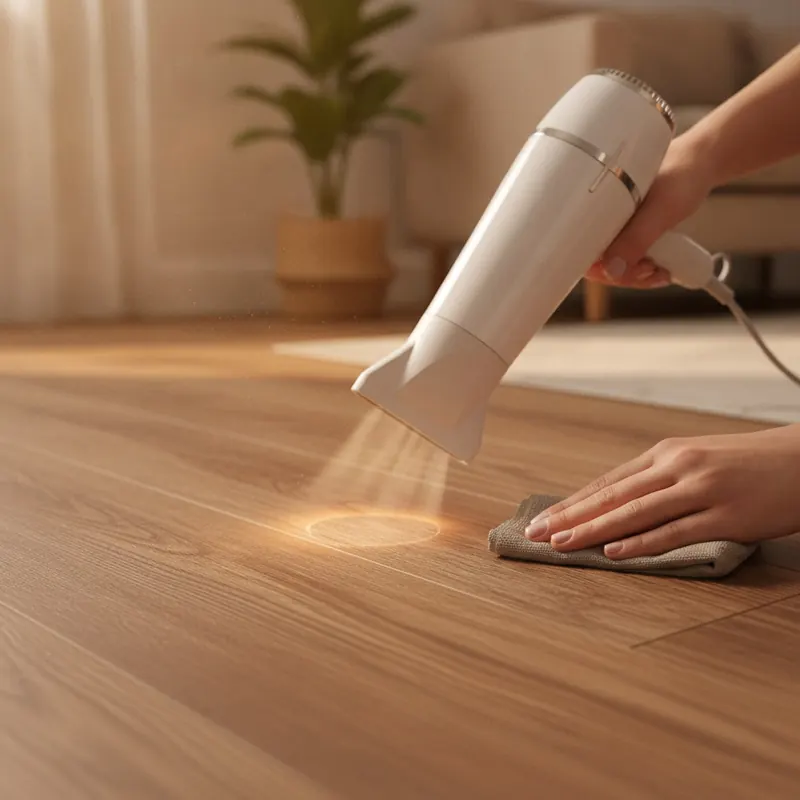
- Clean the Area: Make sure the indentation is free of any dirt or debris.
- Apply Gentle Heat: Using a standard hairdryer on a medium-to-high setting, hold it 4-6 inches away from the dent. Move it in a constant circular motion to heat the area evenly. Do not hold it in one spot.
- Be Patient: Continue heating the area for 30-60 seconds at a time. You should see the indentation slowly start to rise and disappear as the vinyl softens and expands.
- Cool Down: Once the dent is gone, let the area cool completely before walking on it or placing furniture back.
Safety Warning: Do not use an industrial heat gun unless you are experienced, as it can easily melt or scorch the vinyl.
How to Fix Minor Dents in Hardwood Floors (The Steam & Iron Method)
This classic technique works wonders on dents (where wood fibers are crushed, not gouged) in solid hardwood floors. The steam swells the compressed wood fibers, causing them to expand back to their original height.
- Prepare the Dent: Lightly sand the dent with fine-grit sandpaper just enough to break the surface of the finish. This allows the steam to penetrate.
- Add Water: Place a few drops of water directly into the dent.
- Apply a Damp Cloth: Cover the dent with a damp, folded-over cloth or paper towel.
- Apply Heat: Set a household iron to its highest setting. Press the hot iron onto the damp cloth directly over the dent and move it in a small circular motion for a few seconds. You should hear a hissing sound as the water turns to steam.
- Check Your Progress: Lift the iron and cloth to check the dent. Repeat the process until the dent has risen level with the surrounding wood.
- Let it Dry & Refinish: Allow the area to dry completely. You may need to apply a small amount of matching finish to the spot to seal it.
Note: This method is best for solid hardwood. Use extreme caution on engineered wood, as excessive heat or moisture can damage the thin top veneer and cause it to delaminate from the core.
When to Call a Professional
DIY repairs are great for minor issues, but it’s important to know your limits. You should call a certified flooring professional if you encounter:
- Deep gouges where wood or material has been scraped away.
- Dents or damage on high-end or delicate flooring like engineered hardwood with a thin veneer.
- Widespread damage across multiple planks.
- Cracked planks or damage to the floor’s locking system.
Attempting a complex repair without the proper skills can often make the problem worse. A professional can replace individual planks or refinish an area for a seamless result, preserving the value and beauty of your floor.
Conclusion
A beautiful, durable floor is the foundation of your home, but keeping it that way requires more than just hope. It requires knowledge. You are now equipped with the expert insights to make a truly informed decision. You know that the secret to dent resistance lies in a dense core, like that found in SPC flooring. You can confidently decode technical specs like wear layer thickness and AC ratings to separate the marketing from the meaningful. Most importantly, you have a complete playbook for protecting your investment with a proactive system of the right furniture pads and best practices, and you even have the skills to perform first aid on minor indentations.
By choosing, protecting, and repairing your floors with this knowledge, you are no longer just a homeowner; you are the dedicated steward of your home’s foundation, ensuring it remains strong, beautiful, and free from damage for years to come.
What’s your #1 tip for preventing floor dents? Share your own expert advice in the comments below!
This article provides general advice and DIY repair instructions. For severe damage or if you are unsure, always consult a professional flooring installer. Follow manufacturer safety guidelines when using tools like irons or heat guns.
References
- Resilient Floor Covering Institute (RFCI). (N.D.). What is Resilient Flooring?. RFCI.
- Floor & Decor. (N.D.). Product Listing for Hewn’s Premium Stoneform Flooring. Floor & Decor.
- Vila, B. (N.D.). Expert Guides on Durable Flooring. BobVila.com.
- Mannington. (N.D.). ADURA®Rigid vs. ADURA®Max Product Information. Mannington.
- TAS Flooring. (N.D.). Adamantine Protection™ Finish Information. TAS Flooring.
- Go Flooring. (N.D.). [Blog Posts and Guides on LVP Specifications]. GoFlooring.com.
- The Spruce. (N.D.). [Guides on Laminate Flooring]. TheSpruce.com.
- RugPadUSA. (N.D.). [Blog on Furniture Pad Materials]. RugPadUSA.com.
- Zerorez. (N.D.). [Blog on Floor Protection Tips]. Zerorez.com.
- ESB Flooring. (N.D.). [Blog on Repairing Floor Damage]. ESB Flooring.