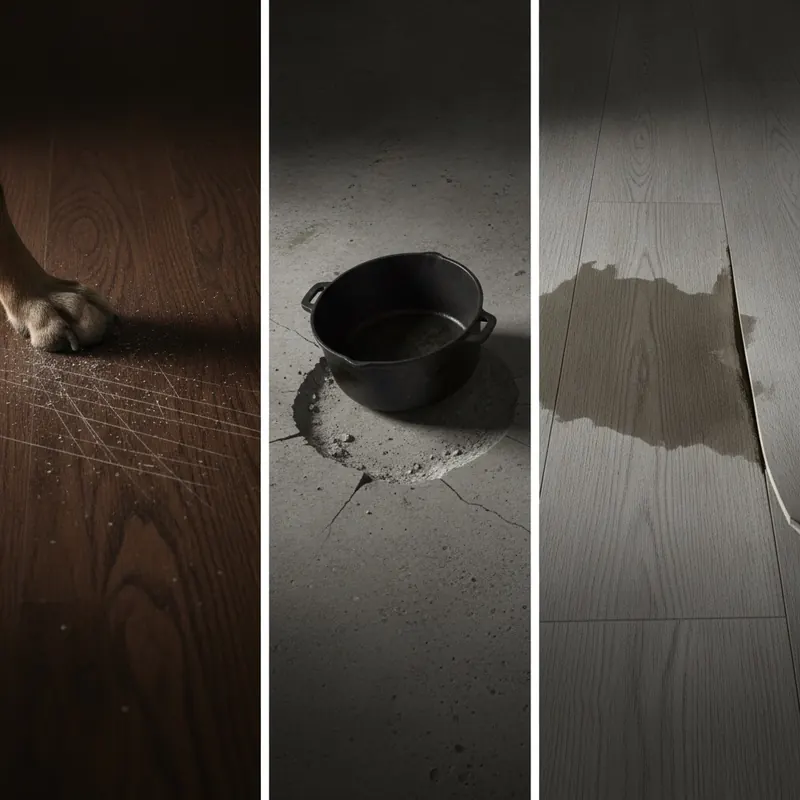
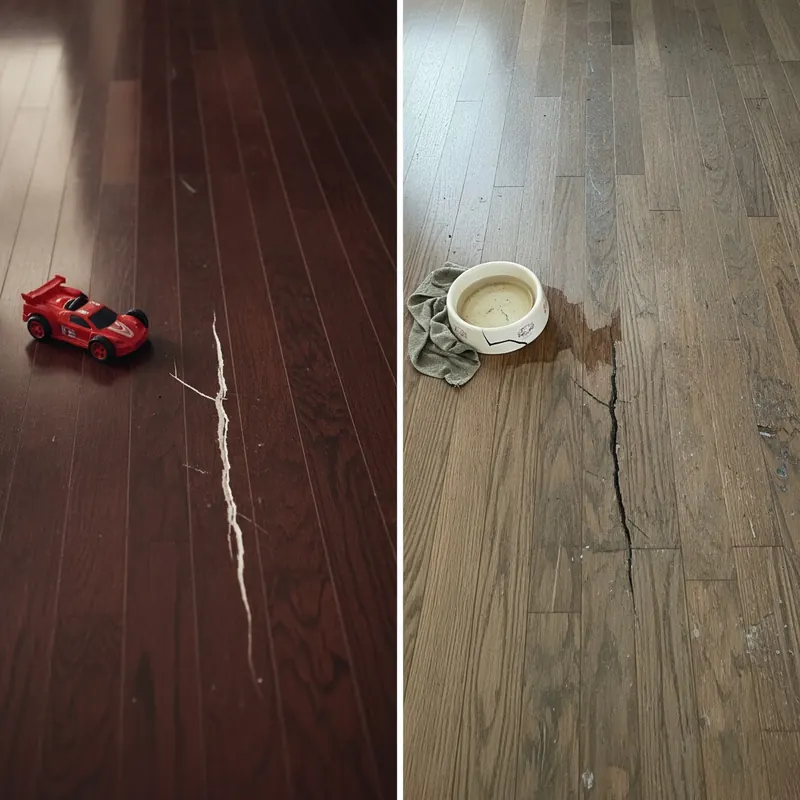
That heart-sinking scrape of a chair dragged across the floor, the sight of new scratches from the dog’s enthusiastic greeting, the slow, creeping wear pattern forming in your busiest hallway—these are the moments that make homeowners question their flooring choices. You invested time and money, yet your floors look worn and tired far too soon. It’s a frustrating cycle that leaves you anxious about everyday life in your own home.
But what if you could choose a floor with confidence, armed with more than just marketing claims and showroom samples? This is your definitive, science-backed playbook for choosing, installing, and maintaining a floor that can truly stand up to the demands of your life. We’re moving beyond the brochure to explore the core science of strength, from the molecular bonds in porcelain tile to the layered engineering of luxury vinyl. We will compare the top contenders head-to-head, decode advanced technologies like Adamantine Protection, and give you the pro-level knowledge you need to make a lasting investment.
- Why Most Floors Fail: Understanding Scratches, Dents, and Wear
- The Science of Strength: How Flooring Durability is Measured
- The Contenders: Ranking the Most Durable Flooring Materials
- Technology Deep Dive: What is Adamantine Flooring?
- Beyond the Home: Industrial-Strength Flooring Solutions
- Installation and Maintenance: Protecting Your Investment
- Your Foundation for a Worry-Free Home
- References
Why Most Floors Fail: Understanding Scratches, Dents, and Wear
Before finding the right solution, it’s critical to understand the problem. Flooring damage isn’t a single issue; it’s a combination of different forces attacking your floor in different ways. The floor that resists a scratch might not resist a dent, which is why a deeper understanding is your best defense against making a costly mistake.
The primary culprits of floor failure are:
- Scratches (Surface Abrasion): This is damage to the very top surface or finish of your floor. It’s caused by friction—think of a dog’s claws, a chair being dragged, or grit tracked in on shoes. A floor’s ability to resist scratches is determined by the hardness and composition of its uppermost protective layer.
- Dents (Impact Damage): This is a compression of the floor’s core material caused by a heavy impact. It’s the result of dropping a heavy object, the pressure from a refrigerator’s feet, or even stiletto heels. Dent resistance has less to do with the surface finish and everything to do with the density and strength of the floor’s core structure.
- General Wear and Tear: This is the gradual decline of a floor’s appearance over time due to normal, everyday use. It includes fading from sunlight, loss of sheen in high-traffic paths, and minor scuffs.
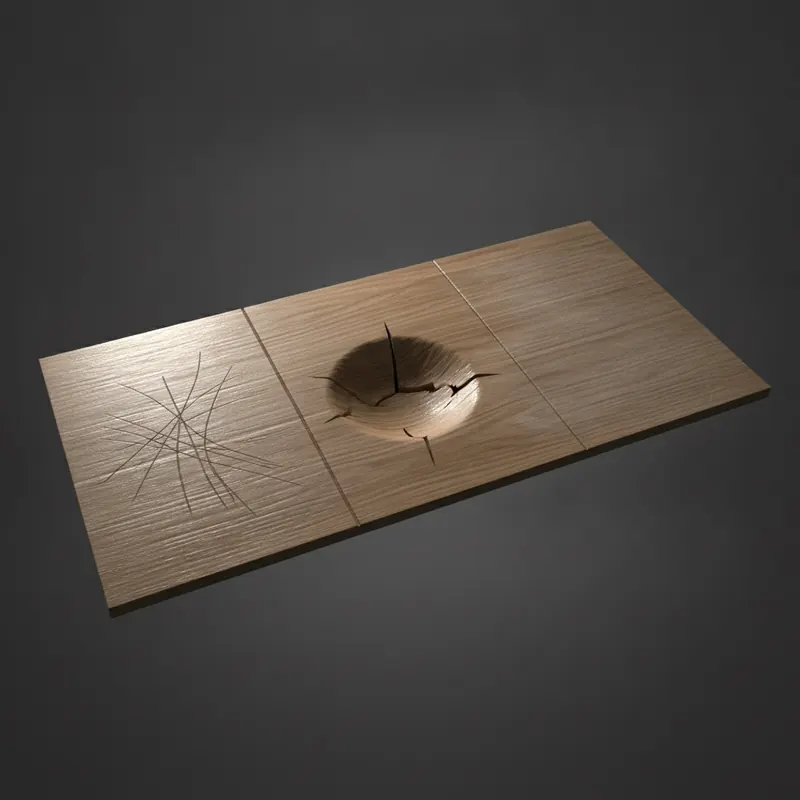
Distinguishing between these is key. Independent testing from organizations like Consumer Reports has shown that even some of the best prefinished solid wood and engineered wood flooring do not perform well in scratch tests, validating the frustration many homeowners feel[1]. This highlights the need to choose materials specifically engineered to combat these issues.
| Damage Type | Primary Cause | Resistant Property |
|---|---|---|
| Scratch | Friction, Abrasion | Surface Hardness (Wear Layer, Glaze) |
| Dent | Impact, Compression | Core Density (SPC Core, Wood Hardness) |
For homeowners and especially landlords, it’s also crucial to distinguish between expected aging and preventable harm. Authoritative property management resources clarify that “normal wear and tear” includes minor scuffs and scratches from regular use or slight fading in sunny areas. In contrast, deep gouges, significant stains from spills, or pet-related damage are typically considered preventable damage[2].
The Science of Strength: How Flooring Durability is Measured
The secret to choosing an indestructible floor lies in understanding the language of durability. Manufacturers and industry experts use standardized, scientific metrics to rate a floor’s toughness. Learning to read these ratings is like getting a behind-the-scenes look at how a floor will actually perform in your home.
For Wood: The Janka Hardness Scale Explained
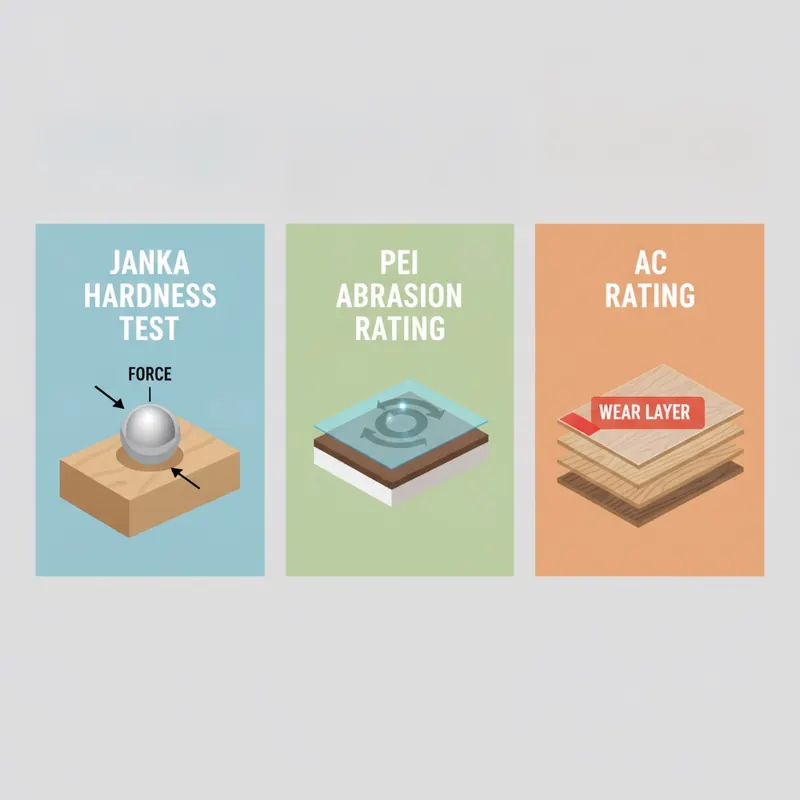
When it comes to solid or engineered hardwood, the single most important metric for dent resistance is the Janka Hardness Test. This industry-standard test measures the amount of force (in pounds-force, or lbf) required to embed a 0.444-inch steel ball halfway into a sample of wood[3]. The higher the Janka rating, the more resistant the wood is to denting and impact damage.
This is why a floor made from Brazilian Cherry will stand up to dropped toys far better than one made from a soft pine.
Janka Hardness Scale for Common Wood Species
(Higher numbers indicate greater dent resistance)
| Wood Species | Janka Rating (lbf) |
|---|---|
| Brazilian Ebony | 3,700 |
| Hickory | 1,820 |
| Hard Maple | 1,450 |
| White Oak | 1,360 |
| Red Oak | 1,290 |
| Douglas Fir | 660 |
| Eastern White Pine | 380 |
For Tile: Understanding PEI Ratings and Water Absorption
The durability of ceramic and porcelain tile is a direct result of its manufacturing process. Raw materials like clay, sand, and feldspar are fired at extreme temperatures—between 2,200 and 2,600 degrees Fahrenheit[4]. This process, called vitrification, causes the materials to fuse into an incredibly dense, hard, and non-porous structure, almost like glass.
To standardize tile durability, the industry relies on the Porcelain Enamel Institute (PEI) rating scale. This rating measures a tile’s glaze for its resistance to abrasion and wear[5].
- PEI Class 1: No foot traffic. Wall use only.
- PEI Class 2: Light traffic (e.g., residential bathrooms).
- PEI Class 3: Light to moderate traffic. Suitable for all residential areas.
- PEI Class 4: Moderate to heavy traffic. Suitable for all residential and light commercial use.
- PEI Class 5: Heavy to extra-heavy traffic. Suitable for all residential and heavy commercial use.
For wet areas like bathrooms and kitchens, another key metric is the DCOF (Dynamic Coefficient of Friction) rating, which measures slip resistance. A DCOF of 0.42 or higher is the industry-recommended standard for level interior spaces expected to be walked upon when wet[6].
For Vinyl & Laminate: The Critical Role of Wear Layers and AC Ratings
Luxury Vinyl Plank (LVP) and laminate floors are marvels of layered engineering. Their durability doesn’t come from a single solid material but from a multi-layer construction designed for stability, aesthetics, and toughness. The most critical component for durability is the top protective layer.

For LVP, this is the Wear Layer, a clear, resilient coating measured in mils (one-thousandth of an inch). This layer is what stands between daily life and the beautiful photographic layer beneath it. For busy homes, flooring experts recommend a wear layer of at least 20 mil for maximum durability[7].
For laminate flooring, durability is measured by its AC (Abrasion Class) Rating. This is a comprehensive rating (AC1 to AC5) that tests for resistance to abrasion, impact, stains, and burns.
- AC1: Light residential (e.g., bedrooms).
- AC2: Moderate residential (e.g., living rooms).
- AC3: Heavy residential / Light commercial.
- AC4: General commercial (e.g., offices, cafes).
- AC5: Heavy commercial (e.g., department stores).
For any high-traffic area in a home, choosing a laminate with an AC3 or, ideally, an AC4 rating is essential for long-term performance.
The Contenders: Ranking the Most Durable Flooring Materials
Now that you understand the science, let’s put it into practice. Based on industry data, independent testing, and real-world performance, these are the top contenders for the most durable flooring on the market.
Durability Decision Matrix
| Flooring Type | Scratch Resistance | Dent Resistance | Water Resistance |
|---|---|---|---|
| Porcelain Tile | Excellent (PEI 4-5) | Excellent | Waterproof |
| Luxury Vinyl (SPC) | Very Good (20+ mil) | Very Good | Waterproof |
| Laminate | Very Good (AC4+) | Good | Water-Resistant |
| Engineered Wood | Fair to Good (Janka) | Fair to Good | Poor |
Best Overall Durability: Porcelain Tile
When it comes to sheer, unrivaled durability, porcelain tile is the undisputed champion. Thanks to the vitrification process, it is incredibly hard, dense, and virtually non-porous, making it resistant to scratches, stains, and water damage. According to findings from Consumer Reports, porcelain tile is consistently one of the most resilient flooring types available[1]. A properly installed and cared-for porcelain tile floor can easily last 60 years or more, making it a true lifetime investment[8].
- Pros: Nearly indestructible, waterproof, endless style options, easy to clean.
- Cons: Hard and cold underfoot, can be slippery if not textured, installation is difficult and expensive.
Best for Pets & Kids: Luxury Vinyl Plank (LVP)
For the chaotic reality of a busy household with pets and children, Luxury Vinyl Plank offers the best combination of toughness, comfort, and practicality. Its multi-layer construction is its greatest strength. For maximum performance, look for two key features:
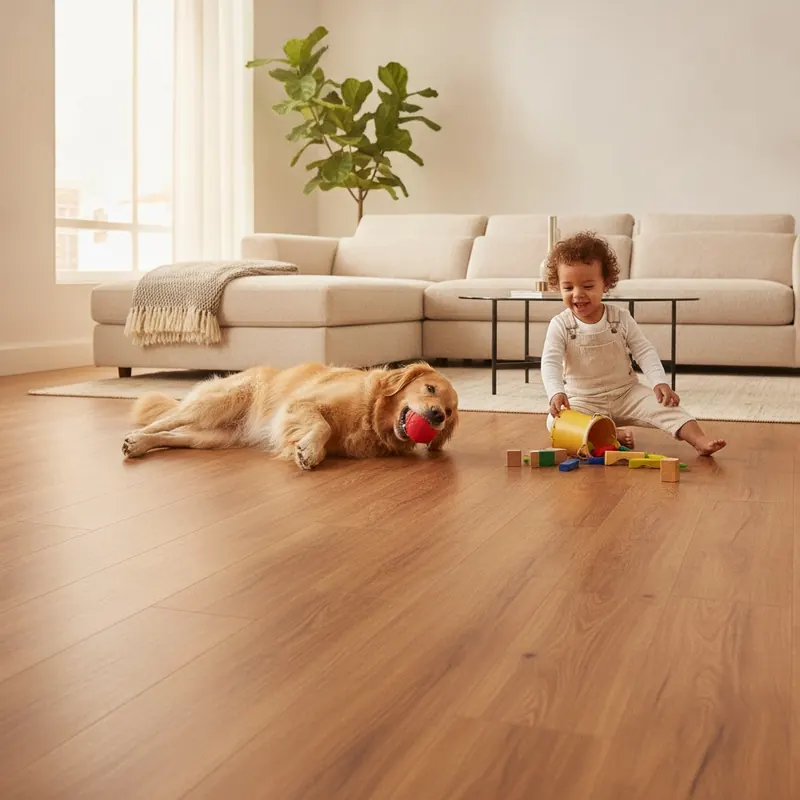
- A thick wear layer: A 20 mil or thicker wear layer is crucial for resisting scratches from claws and toys.
- An SPC Core: LVP comes with different cores. A Stone Polymer Composite (SPC) core is made with a dense blend of limestone and polymers. This makes it significantly more rigid and dent-resistant than a Wood Plastic Composite (WPC) core, which is softer and more comfort-oriented.
This combination makes SPC luxury vinyl waterproof, highly scratch-resistant, and exceptionally tough against dents from dropped objects.
Best Budget-Friendly Durability: High-Performance Laminate
Modern laminate flooring has come a long way from its easily-damaged predecessors. Today’s high-performance laminate, particularly options with an AC4 rating, offers exceptional scratch and impact resistance at a budget-friendly price point. Its tough top layer, often infused with aluminum oxide, makes it one of the most scratch-resistant surfaces you can buy. While traditional laminate was famously vulnerable to water, many modern products now feature water-resistant cores and edge sealants, making them suitable for kitchens and half-baths. It consistently scores high in durability tests by independent bodies like Consumer Reports, proving its value as a tough, cost-effective solution[1].
Technology Deep Dive: What is Adamantine Flooring?
In your search for durable flooring, you may come across specific branded technologies like “Adamantine Protection.” Understanding these proprietary finishes is key to cutting through marketing hype and assessing their true value.
Is It a Brand or a Material? Decoding the Name
First, it’s important to clarify that “Adamantine Flooring” is not a type of material. “Adamantine Protection” is a proprietary, high-performance wear layer technology used by manufacturers like TAS Flooring on some of their laminate and luxury vinyl collections[9]. Think of it as an advanced, branded version of the protective top coats and wear layers discussed earlier, engineered for enhanced scratch and stain resistance. It is applied to existing flooring types, such as the Ambiance, Monument, and Olympus collections from TAS Flooring, to boost their durability.
Performance in High-Traffic Areas: Is It Worth It?
Flooring collections featuring Adamantine Protection are explicitly engineered for demanding environments. For example, the Olympus Collection is designed for high-traffic commercial settings, while the Monument Collection is noted for its suitability in busy areas[9].
A key benefit highlighted by the manufacturer is structural integrity for large installations. The Monument Collection, for instance, can be installed in rooms as large as 66’ x 66’ without needing transition strips, a feature highly desirable for open-concept commercial and residential spaces[9]. While independent, third-party data comparing Adamantine directly to other high-end finishes is scarce, its use on commercially-rated product lines indicates a high level of confidence from the manufacturer in its ability to withstand significant wear and tear. For those considering a floor for a high-traffic home or a light commercial space, products with this technology represent a premium, performance-focused option.
Beyond the Home: Industrial-Strength Flooring Solutions
For some, “durable” isn’t enough. For garages, workshops, commercial lobbies, or basements, the search is for the absolute “strongest flooring” available—something truly indestructible. In these cases, we move beyond traditional residential products into the realm of commercial and industrial solutions.
Polished Concrete & Epoxy Coatings
When it comes to sheer compressive strength and impact resistance, nothing beats concrete. A professionally sealed and polished concrete floor is incredibly resistant to abrasion and heavy loads.
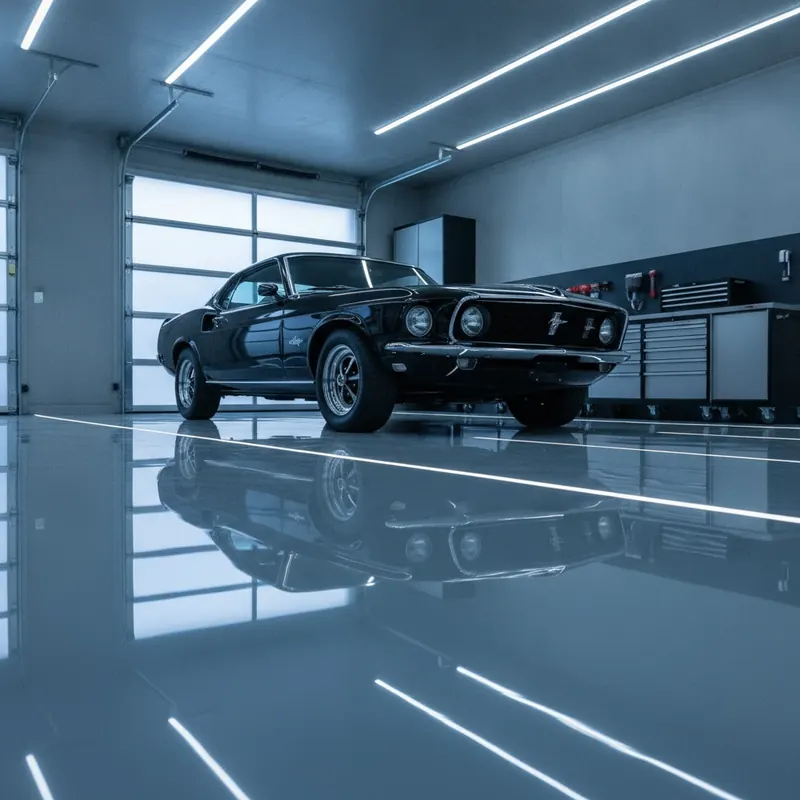
Taking it a step further, epoxy flooring is a thermosetting resin applied as a liquid coating over a concrete slab. When it cures, it creates a hard, durable, and seamless surface that is even stronger than high-performance concrete[10]. This makes it a top choice for demanding environments like auto shops, commercial kitchens, and hospitals, as it is non-porous and resistant to chemicals, stains, and impacts. While installation is complex and requires meticulous surface preparation, the result is one of the toughest flooring surfaces available.
Installation and Maintenance: Protecting Your Investment
You can choose the most scientifically advanced, durable flooring material on the planet, but its performance will be completely undermined by poor installation. The long-term resilience of your floor is a partnership between the quality of the material and the quality of the craftsmanship.
The Scratch-Proof Myth
It is critical to understand that no flooring is truly “scratch-proof.” The correct term is “scratch-resistant.” Any floor can be scratched or damaged by a hard enough object with enough force. The goal is to choose a material with the highest possible resistance to the type of wear your household will inflict upon it.
A professional installation is an investment in durability. Key steps that pros get right include:
- Subfloor Preparation: Ensuring the subfloor is perfectly flat, clean, and structurally sound is the most critical step. An uneven subfloor creates flex, which can lead to broken tile grout or separating vinyl planks.
- Proper Underlayment: Using the correct underlayment provides acoustic benefits, moisture protection, and crucial support for the flooring.
- Expansion Gaps: Leaving the correct amount of space around the perimeter of a room for floating floors (like laminate and LVP) is essential to prevent buckling as the floor expands and contracts with temperature changes.
By investing in both a high-quality material and a professional installation, you ensure that your floor can live up to its full durability potential.
Your Foundation for a Worry-Free Home
Choosing a durable floor is about more than just avoiding scratches and dents; it’s about creating a worry-free foundation for your life. Durability is not a vague marketing term but a measurable science, and by understanding the metrics that matter—Janka ratings for wood, PEI ratings for tile, and AC ratings for laminate—you can make an informed decision that goes far beyond surface-level aesthetics.
Whether you need the near-indestructible power of porcelain tile for the ultimate peace of mind, the practical, family-friendly resilience of LVP, or the budget-friendly toughness of a high-performance laminate, the right solution exists. By focusing on the science of the material and ensuring a high-quality installation, you are not just buying a new floor; you are making a long-term investment in the value, beauty, and enjoyment of your home.
This article provides general guidance. Flooring performance can vary based on installation quality, maintenance, and specific environmental conditions. Always consult manufacturer specifications and a professional installer for your specific project.
References
- Consumer Reports. (N.D.). Best Flooring for a High-Traffic Area. Retrieved from https://www.consumerreports.org/home-garden/flooring/best-flooring-for-high-traffic-area-a2992906171
- Avail. (N.D.). Wear and Tear: What Is Fair?. Retrieved from https://www.avail.com/education/articles/wear-and-tear-what-is-fair
- WoodHouse. (N.D.). How is Hardwood Flooring Tested and Rated for Dent Resistance?. Retrieved from https://www.woodhousefloor.com/woodhouse-university/how-is-hardwood-flooring-tested-and-rated-for-dent-resistance
- Cascade Flooring Co. (N.D.). The Science Behind Tile Flooring Durability. Retrieved from https://www.cascadeflooringco.com/blog/articles/the-science-behind-tile-flooring-durability
- Porcelain Enamel Institute. (N.D.). PEI Rating Scale for tile abrasion resistance.
- The Spruce. (N.D.). What Is the DCOF Rating for Tile?. The Spruce.
- Giant Floor. (N.D.). Top 5 Most Durable Floors for Busy Households. Retrieved from https://giantfloor.com/blogs/news/top-5-most-durable-floors-for-busy-households
- Creative Carpet & Flooring. (2026, May 13). Most Durable Flooring Ranked: 35 Years of Real-World Testing. Retrieved from https://www.creativecarpetinc.com/2026/05/13/most-durable-flooring-ranked-35-years-of-real-world-testing
- TAS Flooring. (N.D.). Product Pages for Ambiance, Monument, and Olympus Collections. Retrieved from https://www.tasflooring.com
- The Spruce. (N.D.). The Most Durable Floorings You Can Install. Retrieved from https://www.thespruce.com/most-durable-floorings-you-can-install-1821624