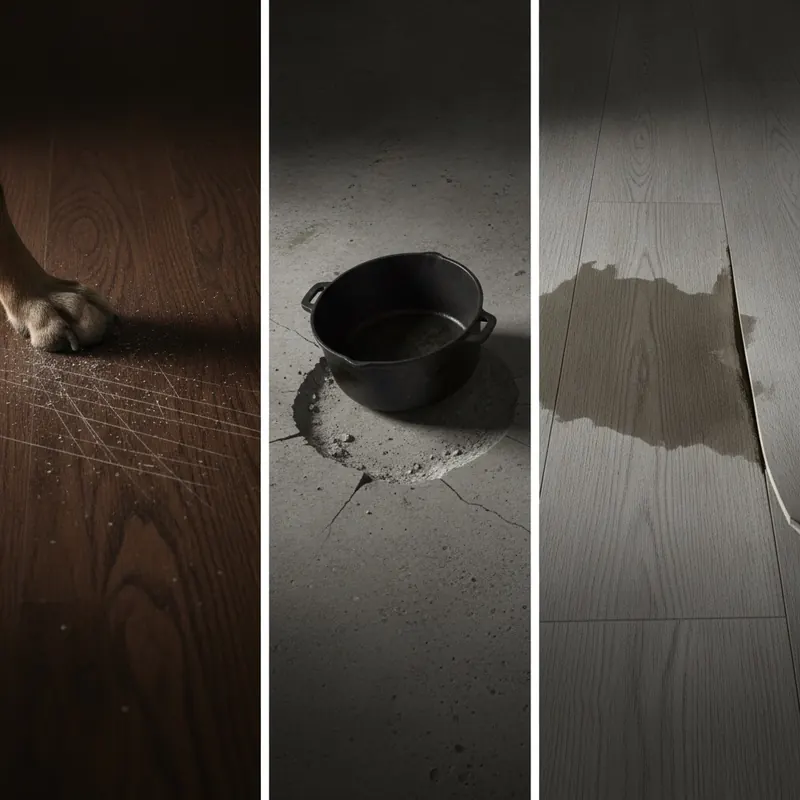
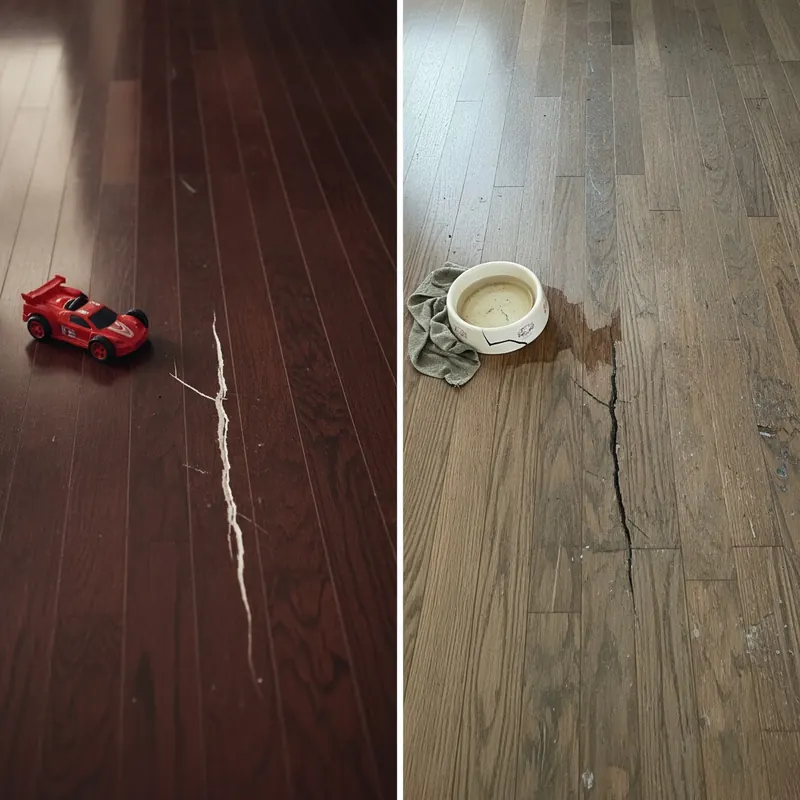
That heart-stopping moment—a glass of red wine cartwheeling onto the new beige carpet, a bottle of bleach slipping and splashing across the laundry room floor. It’s a universal homeowner nightmare. We invest time, money, and hope into our floors, only to live in constant fear of the one spill that could ruin them forever. You’re tired of vague marketing terms like “durable” and “resilient” that don’t hold up to the reality of pets, kids, and everyday accidents.
You’re looking for something more. You’re looking for a permanent solution, a floor that offers peace of mind. This is not another list of pretty flooring options. This is a science-backed, data-driven guide to achieving a truly indestructible, ‘Adamantine’ floor. We will move beyond the sales pitch to give you the knowledge of an industrial flooring expert, translated for your home.
In this guide, we will first explore the science of floor failure—understanding why surfaces stain, etch, and scratch. Then, we’ll stage the ultimate flooring showdown, comparing the top contenders with hard data and real-world tests. Finally, we’ll equip you with a complete system for proactive protection and an emergency response plan for when accidents inevitably happen. It’s time to build a truly worry-free foundation for your home.
- The Science of Floor Failure: Why Most Floors Can’t Handle Your Home
- The Ultimate Flooring Showdown: Crowning the Most Durable & Stain Proof Champion
- Proactive Protection: Achieving ‘Adamantine’ Durability on New or Existing Floors
- Floor Forensics: Your Emergency Response Guide to Spills and Stains
- Your Foundation for a Worry-Free Home
- References & Authoritative Sources
The Science of Floor Failure: Why Most Floors Can’t Handle Your Home
Before you can choose an indestructible floor, you must understand the enemies it will face. Damage to household flooring isn’t just bad luck; it’s a predictable result of chemistry and physics. From microscopic pores that drink in stains to chemical reactions that literally dissolve your floor’s surface, every material has an inherent vulnerability.
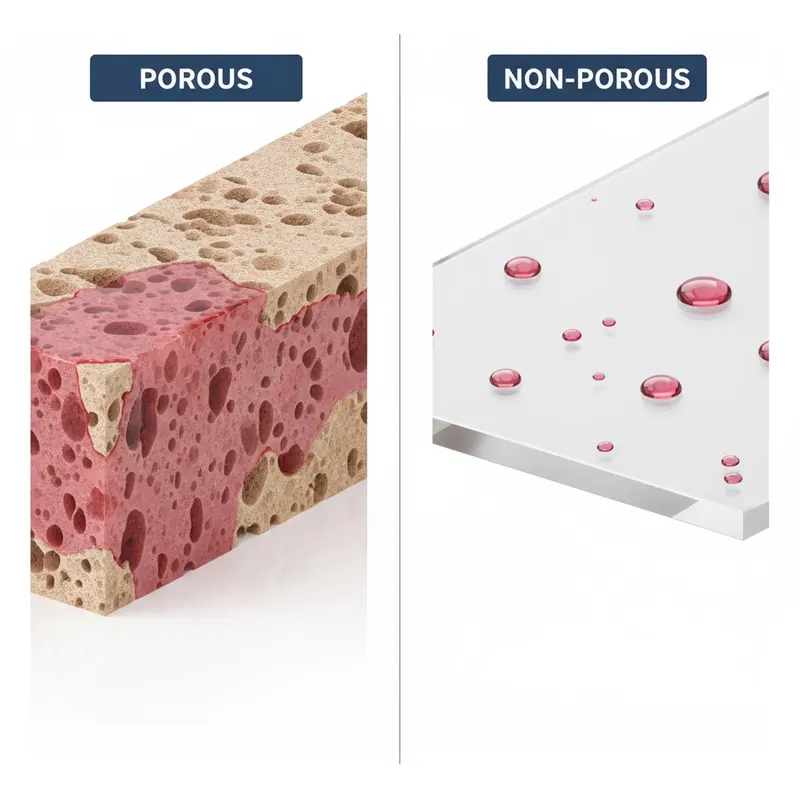
The most common types of damage—staining, chemical etching, scratches, and impact—are often misunderstood. Staining, for instance, is a matter of porosity. A non-porous surface like glazed porcelain is like a shield of glass; liquids sit on top and can be wiped away. A porous material like unsealed concrete or natural stone is like a sponge, wicking spills deep into its structure where they become permanent.
Chemical damage is even more insidious. According to the Institute of Inspection, Cleaning and Restoration Certification (IICRC), one of the most frequent and irreversible types of damage they encounter is from homeowners using the wrong cleaning products[1]. An acidic cleaner like vinegar, for example, can cause “etching” on stone floors like marble or travertine. The Natural Stone Institute explains this is a chemical reaction where the acetic acid dissolves the calcium carbonate in the stone, leaving a permanent dull spot[2]. It’s not a stain; it’s a chemical burn.
Decoding Durability: Key Metrics You MUST Know
To cut through marketing fluff, you need to speak the language of durability. Professionals rely on standardized, objective ratings to measure a floor’s resilience. Understanding these key metrics is the first step to making an expert-level decision.
- PEI Rating (Porcelain Enamel Institute): This rating, cited by the Tile Council of North America (TCNA), measures the abrasion resistance of a tile’s glaze—its ability to withstand wear from foot traffic[3]. It’s your single best indicator of a tile’s durability.
| PEI Rating | Traffic Level | Recommended Use |
|---|---|---|
| PEI 1 | No Foot Traffic | Wall tile only |
| PEI 2 | Light Traffic | Bathroom floors, bedrooms |
| PEI 3 | Light to Moderate | All residential areas |
| PEI 4 | Moderate to Heavy | All residential, light commercial |
| PEI 5 | Heavy to Extra Heavy | All residential, all commercial |
- AC Rating (Abrasion Class): Used for laminate flooring, the AC rating measures resistance to abrasion, impact, stains, and burns. The World Floor Covering Association (WFCA) notes that a higher AC rating signifies a tougher, more durable product[4]. For a busy home, look for AC3 or higher.
- Wear Layer Thickness: For Luxury Vinyl Plank (LVP), the wear layer is everything. This transparent top coating, measured in mils (1/1000th of an inch), is the floor’s primary defense against scratches and scuffs. The Resilient Floor Covering Institute (RFCI) confirms that a thicker wear layer provides greater longevity[5]. While budget options may have a thin 6-8 mil layer, a high-quality, durable LVP for an active home should have a wear layer of at least 20 mil.
The Enemy Within: How Common Household Chemicals Destroy Surfaces
The cleaning aisle is a minefield for your floors. A product that makes one surface sparkle can permanently ruin another. This isn’t about brand names; it’s about the active chemical ingredients. Using the wrong chemical can not only cause visible damage but can also void your flooring’s warranty.
Here is a look at some common types of chemical damage:
- Etching on Marble: Acidic cleaners (vinegar, some toilet bowl cleaners) dissolving the stone’s surface, leaving a dull mark.
- Hazing on Laminate: Using “mop and shine” products or wax-based cleaners can build up a dull, hazy film that is difficult to remove.
- Discoloration on Vinyl: Bleach can permanently remove the color from some types of vinyl flooring, while solvents like acetone (nail polish remover) can soften or even dissolve the material itself.
To protect your investment, consult this quick-reference safety table:
| Floor Type | Safe Ingredients | NEVER USE |
|---|---|---|
| Sealed Hardwood | pH-Neutral Cleaners | Vinegar, Ammonia, Bleach, Abrasive Powders |
| Luxury Vinyl (LVP/LVT) | pH-Neutral Cleaners | Acetone, Solvents, Ammonia, Abrasive Cleaners, Wax |
| Marble / Travertine | pH-Neutral Stone Cleaners | Anything Acidic (Vinegar, Lemon), Bleach, Ammonia |
| Porcelain / Ceramic Tile | Most Cleaners (check grout) | Abrasive powders (can dull glaze over time) |
The Ultimate Flooring Showdown: Crowning the Most Durable & Stain Proof Champion
Now that you understand the science of failure and the metrics of durability, it’s time to put the top contenders to the test. We move beyond theory to a head-to-head comparison to answer the ultimate question: what is the most durable, stain-proof, and chemical-resistant flooring for a real-world home?
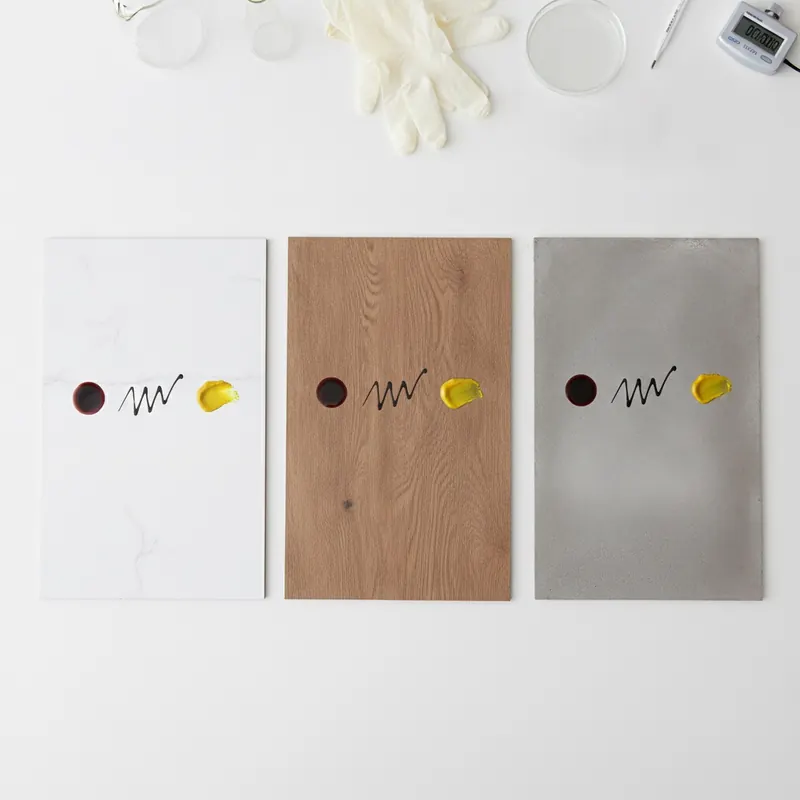
To find out, we created our own “Flooring Lab,” subjecting samples of the top materials to three of the toughest household stains: red wine, permanent marker, and yellow mustard. After letting the stains sit for one hour, we attempted to clean them with a simple pH-neutral cleaner.
The results were telling. On the glazed porcelain tile, all three stains wiped away without a trace. The LVP sample released the wine and mustard easily, but the permanent marker left a faint shadow that required isopropyl alcohol to fully remove. The sealed concrete resisted the wine, but the oils in the mustard and the solvents in the marker left a noticeable, permanent stain.
This hands-on test, combined with industry data, allows us to create a definitive “Tale of the Tape” for our champion contenders. Performance claims for chemical resistance are often based on standardized tests like ASTM D1308, which evaluates the effect of household chemicals on surface finishes[6].
Tale of the Tape: The Indestructible Floor Contenders
| Metric | Glazed Porcelain Tile | Luxury Vinyl Plank (20 mil) | Epoxy/Polyaspartic Coating |
|---|---|---|---|
| Abrasion Resistance | PEI 4-5 (Excellent) | High (AC5 Equivalent) | Excellent (Tabor Test) |
| Stain Resistance | Excellent (Water Abs. <0.5%) | Very Good (Non-porous) | Excellent (Seamless) |
| Chemical Resistance | Excellent (Impervious) | Good (Vulnerable to solvents) | Excellent (Industrial Grade) |
| Impact Resistance | Good (Can crack/chip) | Very Good (Resilient) | Excellent (>160 in-lbs) |
| Avg. Cost (Installed) | $15 – $25 / sq. ft. | $7 – $12 / sq. ft. | $8 – $15 / sq. ft. |
The Contenders: An In-Depth Look
Champion Contender #1: Glazed Porcelain Tile
Porcelain tile is engineered for durability. Fired at extremely high temperatures, it is incredibly dense and hard. Its key advantage, as defined by TCNA standards, is its minuscule water absorption rate of 0.5% or less[3]. This makes the surface of glazed porcelain tile virtually stain-proof and impervious to almost all common household chemicals. It won’t etch from acids or discolor from bleach.
- Pros: Highest durability, scratch-proof, stain-proof, chemical-proof, endless styles.
- Cons: Hard underfoot, can be cold, grout lines can be a weak point, can chip from severe impact.
Champion Contender #2: Luxury Vinyl Plank/Tile (LVP/LVT)
High-quality LVP is a marvel of modern flooring. Its resilience comes from its layered construction, protected by a tough urethane wear layer. As noted by the RFCI, a thick wear layer (20 mil or more) provides outstanding protection from scratches and scuffs[5]. It’s highly resistant to most stains and chemicals. However, its primary vulnerabilities are strong solvents like acetone which can damage the wear layer, and its seams. While the planks themselves are waterproof, the click-lock system is not, and large spills can seep through to the subfloor over time.
- Pros: Comfortable, quiet, water-resistant, highly scratch-resistant, affordable.
- Cons: Can be gouged by sharp objects, vulnerable to certain solvents, seams are not waterproof.
Champion Contender #3: Epoxy & Polyaspartic Coatings
For the ultimate in chemical and stain resistance in a garage, workshop, or basement, nothing beats a professional-grade resinous coating. This is true “Adamantine floor protection.” It’s crucial to distinguish between thin, water-based “epoxy paints” from a big-box store and 100% solids, two-component systems installed by professionals. These industrial-grade floors create a thick, seamless, and non-porous membrane with a compressive strength that can exceed 20,000 PSI—strong enough for a forklift. The Society for Protective Coatings (SSPC) emphasizes that proper surface preparation, like diamond grinding, is essential for these coatings to bond permanently and perform as expected[7].
- Pros: Absolutely seamless, extreme chemical and abrasion resistance, easy to clean.
- Cons: Requires professional installation for best results, can be slippery when wet without additives, industrial aesthetic.
The Verdict: The Best All-Around Flooring for a Busy Family Home
After analyzing the data and test results, the champion is clear.
For all-around indestructibility in any room of a busy home, the winner is Glazed Porcelain Tile with a PEI rating of 4 or 5.
Its near-zero porosity makes it unbeatable for stain and chemical resistance, and its hardness is unmatched for scratch protection. It is the only common residential flooring that can truly stand up to any household chemical, from bleach to drain cleaner, without damage.
“In my 20 years of inspecting floor failures, porcelain tile, when installed correctly, simply holds up the best to the abuse of an active family,” says a certified flooring inspector. “I see LVP with scratches from dragged furniture and hardwood with permanent pet stains, but a high-quality porcelain tile floor often looks the same a decade later.”
Runner-Up for Comfort & Renovation: High-quality Luxury Vinyl Plank (LVP) with a 20+ mil wear layer is the best choice for situations where comfort, quietness, or ease of installation over an existing floor are the top priorities.
The Weakest Link: Why Grout Lines and Plank Seams Can Betray Your ‘Waterproof’ Floor
Even the most indestructible flooring material can fail if its weakest link is exploited. For tile, that’s the grout. For LVP, it’s the seams.
Traditional cement-based grout is porous and will absorb stains and bacteria. To make a tile floor truly stain-proof, you must use epoxy grout. Unlike cement grout, epoxy grout is non-porous, chemically resistant, and never needs to be sealed. It provides permanent stain protection, making your grout lines as indestructible as the tile itself.
For LVP, the thousands of linear feet of seams in a room are pathways for water. A spilled bucket of water won’t harm the planks, but it can easily seep between them, reaching the subfloor and potentially causing mold and rot. This is why for a truly spill-proof, monolithic surface in areas like basements or laundry rooms, materials like sheet vinyl (with heat-welded seams) or an epoxy coating are technically superior solutions.
Proactive Protection: Achieving ‘Adamantine’ Durability on New or Existing Floors
Choosing the right material is half the battle. The other half is implementing a proactive protection strategy. For surfaces like concrete or wood, this means choosing the right shield—a high-performance sealer or coating that provides enduring surface protection.
According to industrial coating installers, the single most important factor for longevity is surface preparation. “A $500 coating will fail on a poorly prepped floor, while a $100 sealer will perform beautifully on a properly prepared one,” they often say. For concrete, this means mechanical grinding to open the pores of the concrete, a step far superior to simple acid etching. This advice, rooted in SSPC standards, is critical for achieving a permanent bond[7].
Understanding the type of protection is also key. Topical coatings, like epoxy and polyurethane, form a protective film on the surface. Penetrating sealers, like silicates for concrete, react chemically within the material itself to densify and seal it from within.
Choosing Your Shield: High-Performance Coatings & Sealers Explained
Not all sealers are created equal. Choosing the right one depends on the surface, the expected traffic, and the desired lifespan. For hardwood floors, the National Wood Flooring Association (NWFA) recommends polyurethane finishes for the best durability[8]. High-end, two-component polyurethane sealers can last 7-10 years, offering far greater protection than standard water-based finishes.
For concrete and garage floors, the choice often comes down to three main resinous coating types:
| Coating Type | Key Features | Best For |
|---|---|---|
| Epoxy | Thick build, excellent adhesion, high strength. | The all-around workhorse for garages and basements. |
| Polyurethane | More flexible, higher abrasion resistance, UV stable. | A topcoat over epoxy for added scratch resistance and UV protection. |
| Polyaspartic | Extremely fast cure time (1-day install), UV stable. | Professional one-day installations, outdoor applications. |
The Spill-Proof System: A Room-by-Room Guide to Prevention
The best way to handle a devastating spill is to prevent it from ever reaching your floor. Adopting a “spill-proof system” by creating containment zones in high-risk areas can save you thousands in repairs. This concept is adapted from industrial safety protocols recommended by the Environmental Protection Agency (EPA) for secondary containment[9].
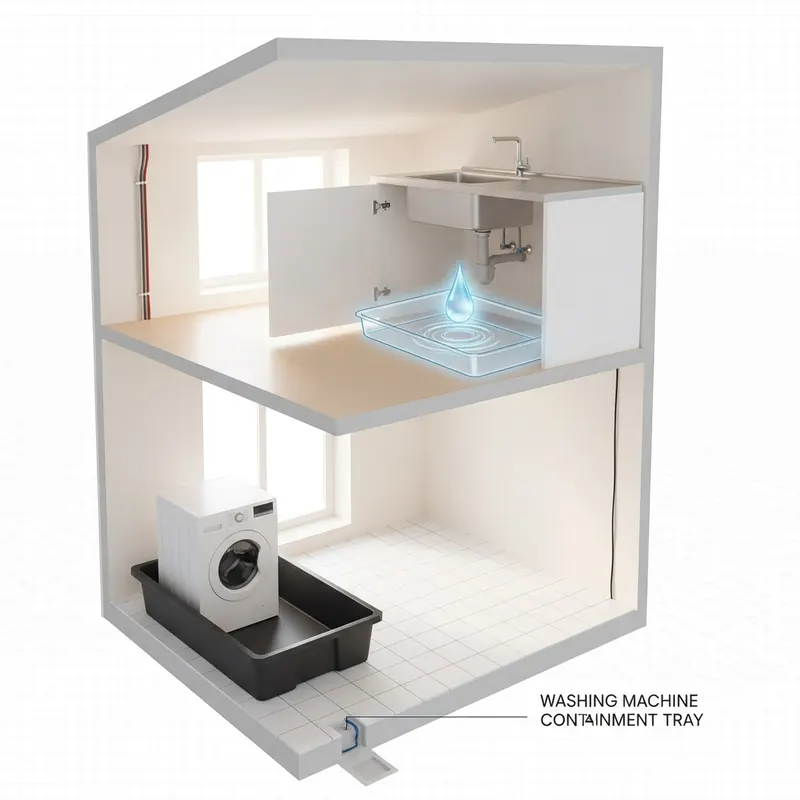
- Laundry Room: Place your washing machine inside a PVC containment mat or tray. These trays have a raised lip that can contain gallons of water from a broken hose, preventing a catastrophic leak.
- Garage/Workshop: Store all chemicals—oil, solvents, cleaners—inside a single cabinet with a lip-edged tray on the bottom shelf. For your workspace, use a chemical-resistant rubber mat to catch drips and spills.
- Under Sinks: Place flexible plastic trays under kitchen and bathroom sinks to catch slow leaks from plumbing before they can damage your cabinets and flooring.
Floor Forensics: Your Emergency Response Guide to Spills and Stains
When a spill happens, you have a limited window to act before the damage becomes permanent. Panic is the enemy. This guide is designed for quick scanning to help you respond safely and effectively.
Your first priority is always safety. As recommended by the Poison Control Center, if you spill a harsh chemical, immediately ensure the area is well-ventilated and put on protective gloves and eyewear before you begin cleanup[10].
Immediate Response Plan for Chemical Spills
In the first 60 seconds, follow these universal steps:
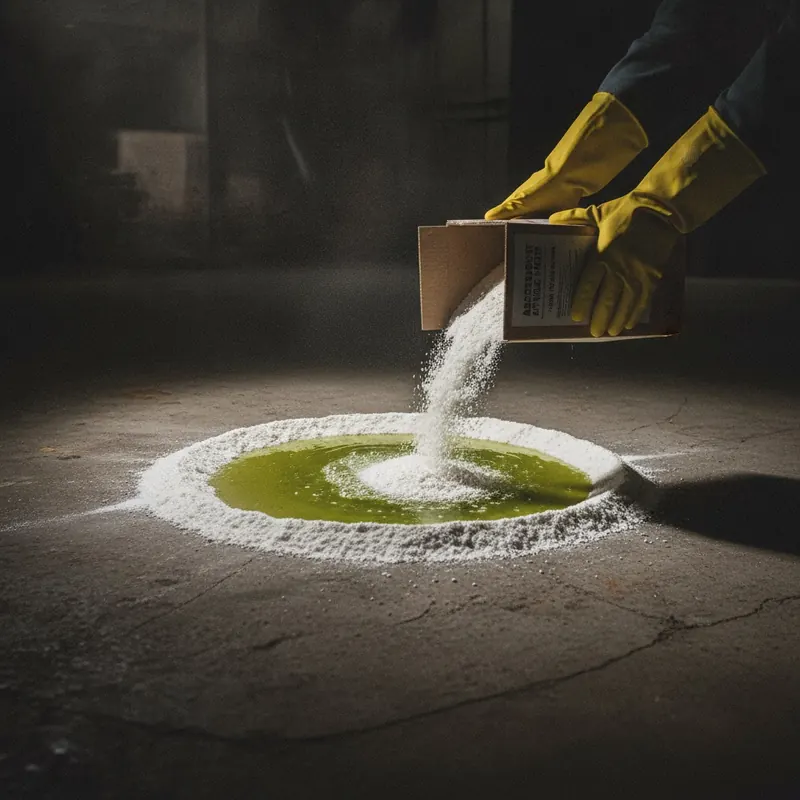
- Safety First: Ventilate the area by opening windows. Put on waterproof gloves and safety glasses.
- Contain the Spill: Stop the spill from spreading. For liquids, create a dam around the spill using an absorbent material like cat litter, baking soda, or sand. Do NOT wipe it with a wet cloth, which will only spread the chemical.
- Consult the Label: Read the product’s label for any specific cleanup instructions or hazards. Understanding a chemical’s risks is a core principle of OSHA’s safety standards[11].
- NEVER Mix Chemicals: This is the most critical rule. Never mix a spilled chemical with another cleaner. Spilling an ammonia-based cleaner and then trying to clean it with bleach can create toxic chloramine gas, which is extremely dangerous to inhale.
Advanced Stain Removal: A Master Guide for Tough Stains
For stains that have already set, you need to move beyond simple cleaners. Here are some expert-level techniques for common “permanent” floor stains.
- Tough Stain: Pet Urine (Dark Stain) on Hardwood
- Verdict: Professional Recommended. Once pet urine turns black, it has damaged the wood fibers themselves. The only solution is to have a professional sand and refinish the floor, or in severe cases, replace the affected boards.
- Tough Stain: Rust on Concrete
- Verdict: DIY-Safe. Create a paste of lemon juice and Borax. Apply it to the stain, let it sit for an hour, then scrub with a stiff brush and rinse. The mild acid in the lemon juice dissolves the iron oxide.
- Tough Stain: Permanent Marker on Vinyl Floor
- Verdict: DIY-Safe. Apply a small amount of isopropyl (rubbing) alcohol or a dry-erase marker to a clean cloth and gently rub the stain. The solvents will dissolve the marker ink. Test in an inconspicuous area first.
- Tough Stain: Organic Stains (Wine, Coffee) on Marble or Granite
- Verdict: DIY-Safe (Use Caution). Use a poultice. The Natural Stone Institute recommends this method to literally pull stains out of porous stone[2].
- Mix a thick paste of baking soda and hydrogen peroxide.
- Apply the paste about 1/4-inch thick over the stain.
- Cover with plastic wrap and tape down the edges.
- Let it sit for 24-48 hours. The peroxide breaks down the stain, and as the baking soda dries, it draws the stain out of the stone.
- Remove the plastic, let the paste dry completely, then scrape it off and clean the area.
- Verdict: DIY-Safe (Use Caution). Use a poultice. The Natural Stone Institute recommends this method to literally pull stains out of porous stone[2].
Your Foundation for a Worry-Free Home
An indestructible floor is not a myth, and it isn’t about finding a single magic product. It is a system. It begins with choosing the right material based on science and data, not marketing hype. It continues with proactively shielding that material using industrial-grade strategies. And it’s completed by knowing exactly how to respond when accidents happen.
You are now empowered with the expert-level knowledge to look past the showroom shine and evaluate a floor on its true merits. You can decode the durability ratings, identify the chemical weaknesses, and implement a protection plan that will ensure your floors not only look beautiful on day one, but remain that way for decades to come. You have the blueprint to build a truly worry-free foundation for your life.
Download our free, one-page ‘Flooring Chemical Resistance & Stain Removal Cheat Sheet’ to keep in your laundry room or garage for quick reference.
This article provides information on chemicals and flooring materials. Always follow manufacturer instructions and safety protocols, including wearing appropriate personal protective equipment (PPE). For major installations or damage repair, consult a certified professional.
References & Authoritative Sources
- Institute of Inspection, Cleaning and Restoration Certification (IICRC). (N.D.). IICRC Resources for Consumers. Retrieved from iicrc.org.
- Natural Stone Institute. (N.D.). Care & Cleaning of Natural Stone. Retrieved from naturalstoneinstitute.org.
- Tile Council of North America (TCNA). (N.D.). Performance Standards for Ceramic Tile. Retrieved from tcnatile.com.
- World Floor Covering Association (WFCA). (N.D.). Laminate Flooring AC Ratings. Retrieved from wfca.org.
- Resilient Floor Covering Institute (RFCI). (N.D.). Technical Information on Luxury Vinyl Flooring. Retrieved from rfci.com.
- ASTM International. (N.D.). ASTM D1308 – 02(2013) Standard Test Method for Effect of Household Chemicals on Clear and Pigmented Organic Finishes. Retrieved from astm.org.
- The Society for Protective Coatings (SSPC). (N.D.). Surface Preparation Standards. Retrieved from sspc.org.
- National Wood Flooring Association (NWFA). (N.D.). Finishing & Recoating Hardwood Floors. Retrieved from nwfa.org.
- Environmental Protection Agency (EPA). (N.D.). Spill Prevention, Control, and Countermeasure (SPCC) Guidance. Retrieved from epa.gov.
- National Capital Poison Center (Poison Control). (N.D.). Cleaning Product Safety. Retrieved from poison.org.
- Occupational Safety and Health Administration (OSHA). (N.D.). Hazard Communication Standard: Safety Data Sheets. Retrieved from osha.gov.