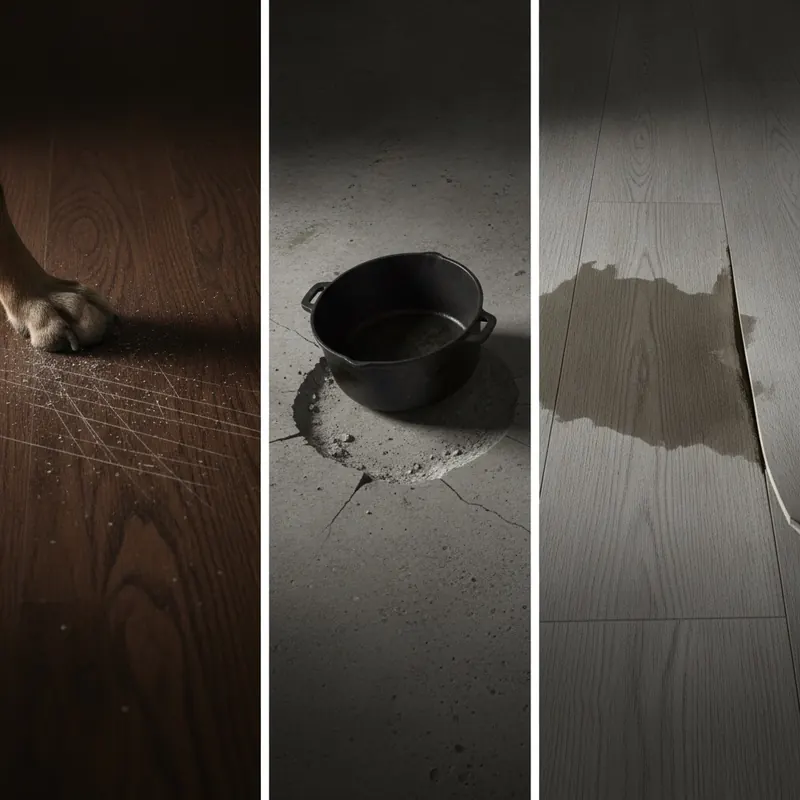
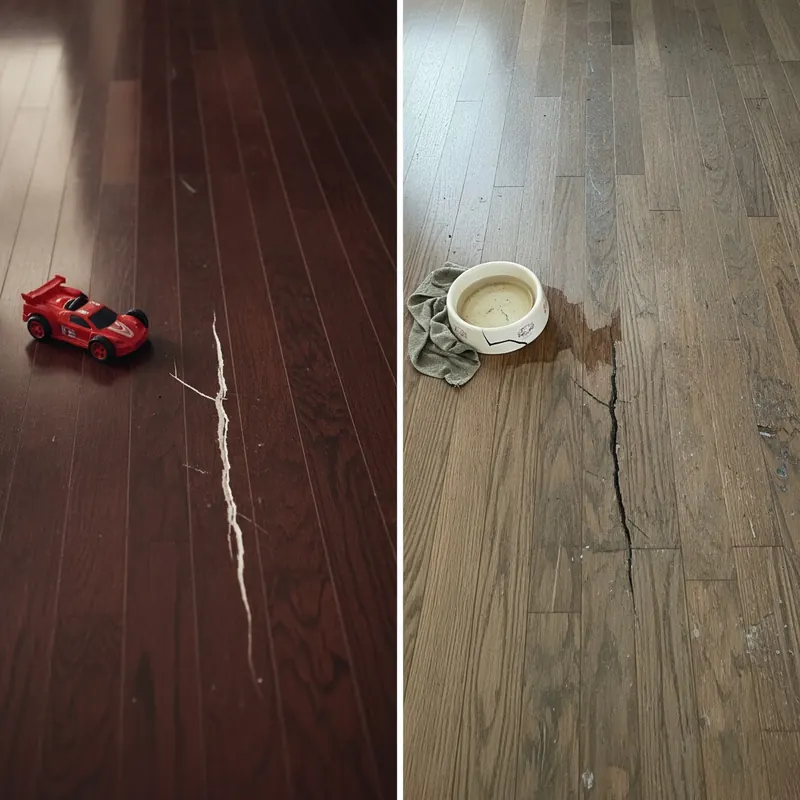
There’s nothing more disheartening than the sight of your beautiful, newly installed floors succumbing to the daily grind. The once-pristine surface is now a map of scratches from pet claws, scuffs from shuffling feet, and a dull, worn path in the busiest areas of your home or business. This constant battle against wear and tear can be frustrating and costly. You’re left wondering if a floor that is both durable and stylish is just a myth.
This is where the Indestructible Floor Playbook comes in. This is not just another list of flooring options. This is your comprehensive resource, designed to empower you with the knowledge to diagnose your current floor’s problems, understand the data behind durability, and make a confident, long-lasting decision. We’ll provide you with diagnostic tools, side-by-side comparisons, and a clear “Repair vs. Replace” framework. By the end of this guide, you’ll have everything you need to choose, protect, and maintain a floor that can truly handle everything life throws at it.
- Why Your Floors Are Failing: Understanding High Traffic Floor Damage
- The Critical Decision: Should You Repair or Replace Your Worn Out Flooring?
- The Ultimate Showdown: Best Flooring for High Foot Traffic Areas
- For Extreme Demands: A Look at High-Performance Flooring
- Your Floor Protection Plan: How to Keep Floors Looking New for Decades
- Frequently Asked Questions About Durable Flooring
- Conclusion
- References
Why Your Floors Are Failing: Understanding High Traffic Floor Damage
Before you can find the right solution, you must understand the problem. The premature aging of your floors isn’t just bad luck; it’s a result of specific forces at play every single day. Seeing your investment show signs of high traffic floor damage can be incredibly frustrating, especially when it feels like the flooring scratches easily no matter how careful you are. This section will help you diagnose exactly what’s going on.
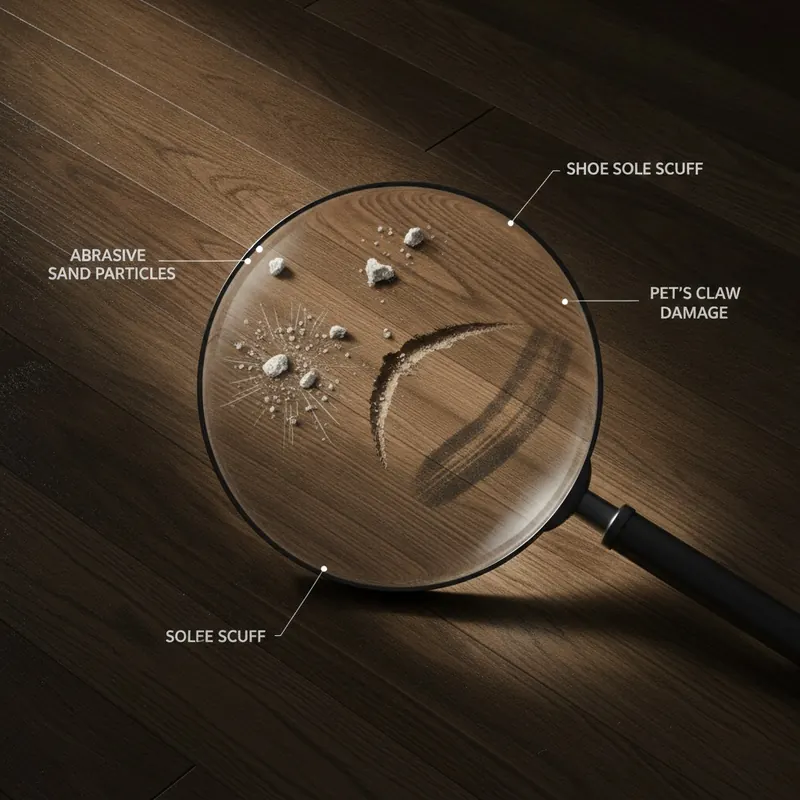
According to the experts at Flooring Surgeons, one of the most overlooked causes of floor damage is not the traffic itself, but what the traffic brings in. Tiny particles of sand, dirt, and grit act like sandpaper under every footstep, slowly but surely grinding away at your floor’s protective finish.[2] This microscopic abrasion is what leads to a dull, worn out flooring appearance over time.
The Culprits: Identifying the Sources of Wear and Tear
The damage your floor sustains is rarely from a single event. It’s the cumulative effect of daily activities. Understanding these sources is the first step toward creating an effective defense.
- Abrasive Grit: As highlighted, dirt, sand, and small pebbles tracked in from outside are the number one enemy of your floor’s finish. They create thousands of micro-scratches that dull the surface.
- Repetitive Foot Traffic: The main pathways in your home or business—hallways, entryways, the path from the sofa to the kitchen—receive concentrated wear that breaks down the finish and can even wear down the material itself over time.
- Pet Claws: The clicking of your furry friend’s nails on the floor is the sound of potential damage. Even well-trimmed nails can cause scratches and scuffs, especially when pets are playing or running.
- Furniture Movement: Chairs scraping back and forth, tables being nudged, and heavy sofas being dragged can cause deep gouges and scratches that go beyond the surface finish.
- Sunlight (UV Rays): While not related to traffic, direct sunlight can cause significant fading and discoloration over time, creating a noticeable contrast between exposed and unexposed areas of your floor.
Early Warning Signs: Is Your Floor Crying for Help?
Damage doesn’t happen overnight. It starts with subtle signs that are easy to miss. Use this checklist to self-diagnose your floor’s health and catch problems before they become severe.
Floor Health Checklist:
- Dullness in High-Traffic Lanes: Is the finish in your main hallway or entryway less shiny than the floor along the walls?
- Visible Micro-Scratches: In bright light, can you see a network of tiny, fine scratches near doorways or in front of the sofa?
- Fading or Discoloration: Is the area of floor under an area rug significantly darker or more vibrant than the surrounding floor?
- Difficulty Cleaning: Does the floor in busy areas seem to hold onto dirt and look smudged even after cleaning? This can indicate the protective finish has worn away.
- Gaps or Peaking: Are planks separating or pushing up against each other? This can be a sign of moisture damage or installation issues exacerbated by traffic.
If you’re nodding along to several of these points, your floor is showing the classic signs of high traffic floor damage. The next step is to decide on the most effective course of action.
The Critical Decision: Should You Repair or Replace Your Worn Out Flooring?
Faced with worn out flooring, many people feel stuck between two choices: a potentially expensive replacement or a series of frustrating, temporary repairs. Making the right financial and practical decision is crucial. This framework will help you determine the best path forward for your specific situation.
Professional flooring companies like Corle & Perry often advise clients to distinguish between cosmetic and structural damage.[3] Cosmetic issues, like surface scratches or a single damaged plank, are often repairable. Structural problems, such as widespread water damage or a failing subfloor, almost always necessitate a full replacement.
When to Call a Pro: While some repairs are DIY-friendly, always consult a professional for:
- Widespread water damage
- Signs of subfloor issues (major squeaking, soft spots, unevenness)
- Damage covering more than 25-30% of the room
- Refinishing entire hardwood floors
DIY Repair Guides for Common Problems
For isolated damage, a DIY repair can save you hundreds or even thousands of dollars. Here are guides for the most common issues.
How to Replace a Single Damaged Luxury Vinyl or Laminate Plank:
This is one of the most common repairs for floating floors.
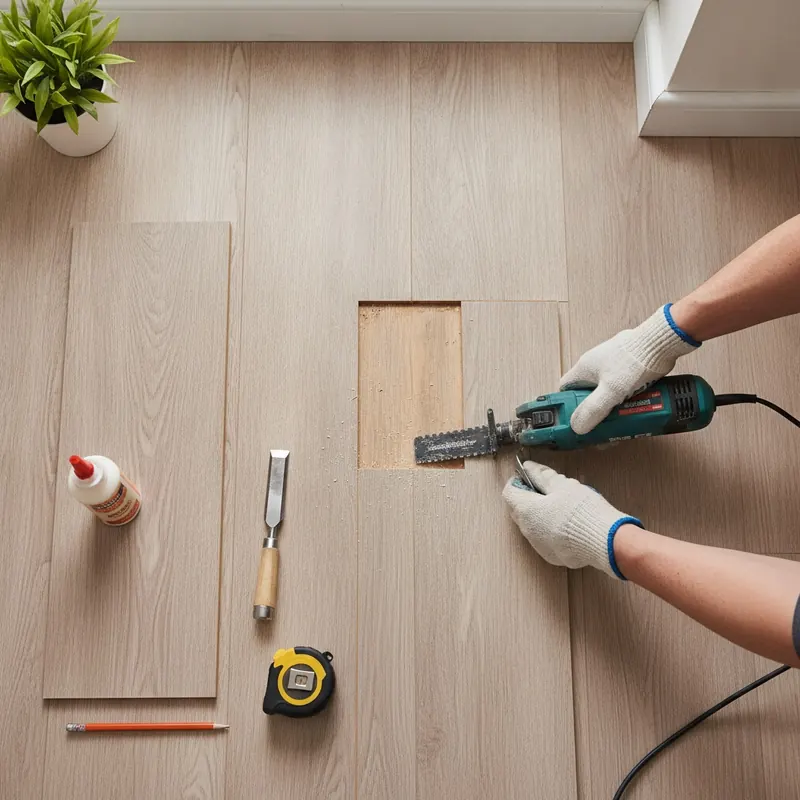
- Tools & Materials Checklist:
- New replacement plank
- Circular saw with a guide or an oscillating multi-tool
- Drill
- Chisel and hammer
- Wood glue or construction adhesive
- Masking tape
- Safety glasses
- Step-by-Step Process:
- Outline the Plank: Use masking tape to clearly mark the edges of the damaged plank to avoid cutting into its neighbors.
- Cut the Center: Set your circular saw blade to the exact thickness of the plank. Make two long cuts down the center of the damaged plank, stopping about an inch from each end.
- Make Relief Cuts: Drill a hole inside each corner of the plank. Use your saw or multi-tool to connect the long cuts to these corner holes, creating a removable center section.
- Remove the Pieces: Use a chisel to carefully pry out the center section first. Then, gently collapse the remaining edge pieces inward and remove them from the tongue-and-groove system.
- Prepare the New Plank: On the new plank, you’ll need to cut off the bottom part of the groove edge and the tongue on the short side. This allows it to be dropped into place.
- Install: Apply a thin bead of wood glue to the tongue of the existing floorboards. Carefully fit the new plank into place, wiping away any excess glue immediately.
- Weigh it Down: Place a heavy object (like a stack of books or a paint can) on the new plank for at least 12-24 hours to ensure the adhesive bonds securely.
This process is similar to trusted DIY content from sources like The Home Depot.[4]
Knowing When It’s Time for a Fresh Start
Sometimes, repair is just throwing good money after bad. A full replacement is the smarter long-term investment when you encounter these red flags:
- Widespread Water Damage: If flooring is cupping, buckling, or showing signs of mold across a large area, the material and potentially the subfloor are compromised.
- Extensive Deep Scratches: When deep gouges and scratches cover a significant portion of the floor, especially on materials that can’t be refinished (like laminate or vinyl), a replacement is the only way to restore the look.
- Outdated Materials: If your floor is decades old and has reached the end of its expected lifespan, investing in repairs is often not cost-effective. A new floor offers better technology, durability, and style.
- The Cost of Repair vs. Replacement: Get a quote for professional repairs. If the cost is more than 30-40% of the cost of a brand-new floor, the long-term value lies in replacement. A new floor comes with a new warranty and a fresh start, saving you from the headache of recurring repairs on an aging surface.
The Ultimate Showdown: Best Flooring for High Foot Traffic Areas
If you’ve decided a new floor is in your future, you’re facing the most important decision: choosing the right material. This is where the playbook gets data-driven. We’ll compare the top contenders for durable stylish flooring, moving beyond marketing claims to give you the hard facts you need.
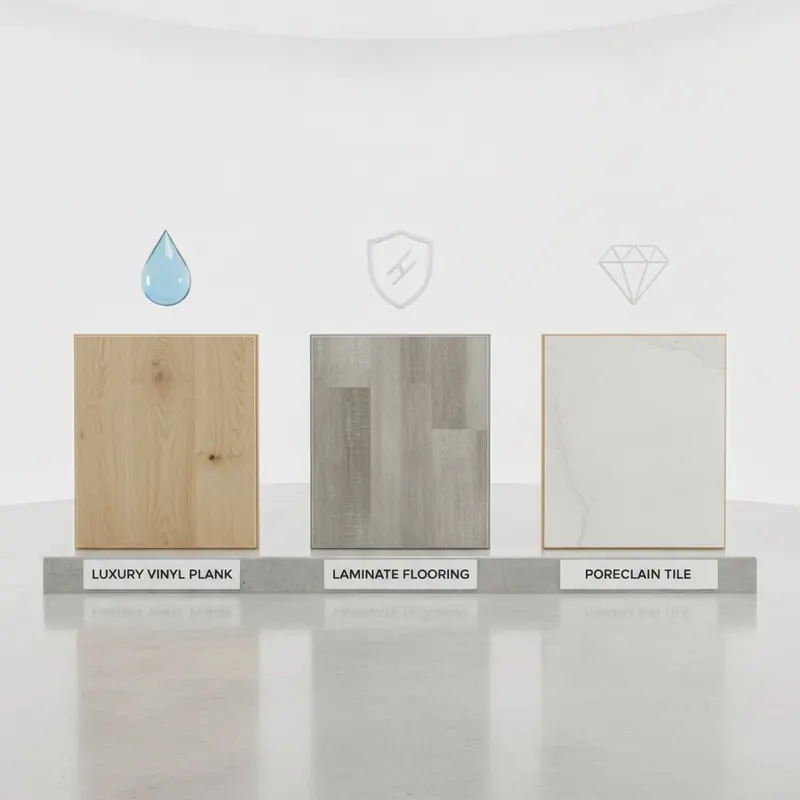
High-Traffic Flooring Comparison Chart
| Feature | Luxury Vinyl Plank (LVP) | Laminate Flooring | Porcelain Tile |
|---|---|---|---|
| Durability | 4/5 | 4/5 | 5/5 |
| Scratch Resistance | 4/5 | 5/5 (with high AC) | 5/5 |
| Water Resistance | 5/5 (100% waterproof) | 2/5 (improving but vulnerable) | 5/5 |
| Cost (Material + Install) | $$$ | $$ | $$$$ |
| DIY-Friendliness | High | High | Low |
| Style Options | Excellent | Very Good | Excellent |
Luxury Vinyl Plank/Tile (LVP/LVT): The All-Around Champion
Luxury vinyl has exploded in popularity for good reason. It offers a winning combination of stunning aesthetics, robust durability, and complete water resistance, making it one of the best flooring for high foot traffic areas, especially for homes with kids and pets.
The secret to its strength lies in its layered construction, specifically the transparent top “wear layer.” This is the invisible shield that protects the printed design from scratches, scuffs, and stains. When shopping for LVP, the thickness of this layer is the single most important factor. As recommended by the experts at Go Flooring, look for a wear layer of “at least 12 mils for moderate traffic, with 20-30 mils being ideal for high-traffic use”.[6]
Laminate Flooring: The Budget-Friendly Brawler
If your primary concern is scratch resistance on a budget, laminate flooring is a formidable contender. It’s known for its incredibly tough top layer that can fend off pet claws and dragged furniture better than many more expensive options.
To choose a durable laminate, you need to understand its Abrasion Class (AC) rating. This is an industry standard that grades its durability.
- AC1-AC2: Light residential use (bedrooms).
- AC3: Heavy residential use (hallways, kitchens) and light commercial use.
- AC4: Heavy commercial use (offices, cafes).
- AC5: Extreme commercial use (department stores).
For any high-traffic area in a home, AC3 or AC4 is the recommended choice. Laminate’s main weakness has always been moisture, but many modern products now feature enhanced water resistance.
Porcelain & Ceramic Tile: The Lifetime Contender
When it comes to sheer, brute-force durability, nothing beats porcelain tile. It is the definition of long lasting floor materials. According to rigorous testing by Consumer Reports, tile is one of the highest-rated flooring types, noting it “doesn’t wear out, scratch, or stain”.[7] It’s impervious to water, immune to pet claws, and can last for 50 years or more with minimal maintenance.
This durability makes it the top choice for the most demanding environments, like commercial entryways, kitchens, and bathrooms. The trade-offs are a higher installation cost, a harder and colder feel underfoot, and the need to maintain grout lines. When choosing a tile, look for the PEI (Porcelain Enamel Institute) rating, which grades the hardness of the glaze from 1 (no foot traffic) to 5 (heavy commercial traffic).
Beyond the Basics: Hardwood, Bamboo, and Eco-Friendly Options
While the “big three” offer fantastic solutions, other materials can also perform well in high-traffic situations if chosen and maintained correctly.
- Hardwood: The classic choice for durable and beautiful flooring. For high-traffic areas, opt for harder wood species like Oak, Hickory, or Maple. A strong, modern polyurethane finish is essential. While it can scratch, the major advantage of solid hardwood is that it can be sanded and refinished multiple times, with a potential lifespan of 75-100 years.[1]
- Bamboo: Strand-woven bamboo is incredibly dense and hard, often more so than traditional hardwoods. However, quality varies greatly, so research brands carefully.
- Eco-Friendly Options: For those prioritizing sustainability, materials like cork and linoleum are making a comeback. Modern cork flooring comes with durable topcoats, offering good resilience and comfort. Linoleum, made from natural materials, is inherently durable and long-lasting.
For Extreme Demands: A Look at High-Performance Flooring
For commercial spaces, garages, workshops, or basements, residential flooring may not be enough. This is where high performance flooring systems, designed for industrial-level demands, come into play.
These systems, often detailed by industry leaders like Sherwin-Williams, focus on chemical resistance, impact resistance, and seamless surfaces that are easy to sanitize.[8]
- Epoxy Flooring: This is a resinous coating applied over a concrete slab. It creates a seamless, incredibly hard, and chemical-resistant surface. It’s ideal for garages, commercial kitchens, and manufacturing facilities where spills and heavy impacts are common. The installation is a multi-step process that requires professional application and can involve significant downtime for curing.
- Polished Concrete: This involves grinding and polishing an existing concrete slab to a high-gloss finish. It is exceptionally durable, low-maintenance, and has a modern, industrial aesthetic. It’s a popular choice for retail stores, galleries, and large public venues.
Mini Case Study: Flooring for a High-Traffic Cafe
A cafe needs a floor that can handle constant foot traffic, frequent spills (coffee, food), and the scraping of chairs and tables. Porcelain tile with a high PEI rating (4 or 5) is an excellent choice for its near-indestructibility and ease of cleaning. Alternatively, a commercial-grade epoxy coating would provide a seamless, modern look that is equally resistant to stains and wear.
Your Floor Protection Plan: How to Keep Floors Looking New for Decades
Choosing a durable material is half the battle. The other half is implementing a proactive protection plan. These simple habits and tools are the secret to maximizing your floor’s lifespan and keeping it looking its best.
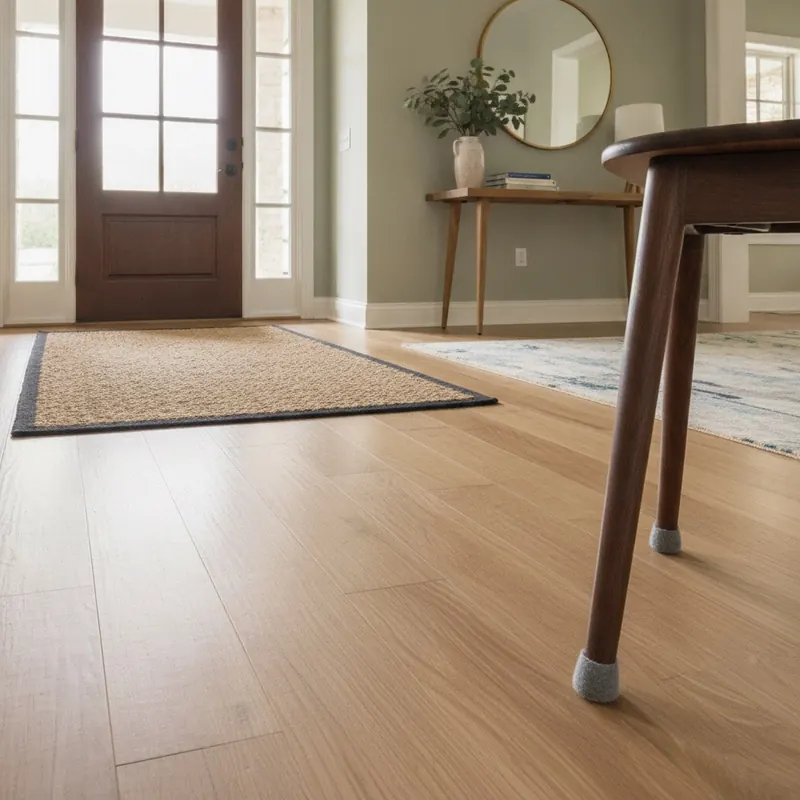
The First Line of Defense: Mats, Rugs, and Pads
The vast majority of floor damage can be prevented before it even starts.
- Entryway Mats: The most critical floor protection tool. A good system involves a coarse scraping mat outside the door and a more absorbent, carpet-like mat inside. This “walk-off” zone can trap up to 90% of the abrasive grit from shoes.
- Area Rugs: Place rugs in the highest traffic paths—down hallways, in front of sofas, and under dining tables—to take the brunt of the wear.
- Furniture Pads: Apply thick, felt pads to the bottom of every piece of furniture, especially chairs and tables that move frequently. Check and replace them regularly as they wear down or collect grit.
The Right Cleaning Routine for Your Floor Type
Using the wrong cleaner or method can do more harm than good. Follow these guidelines to clean your floors safely and effectively.
| Floor Type | Recommended Cleaner | Frequency | AVOID AT ALL COSTS |
|---|---|---|---|
| LVP/LVT | pH-neutral vinyl cleaner | Sweep daily, Mop weekly | Abrasive cleaners, wax, “mop & shine” products, steam mops |
| Laminate | Laminate-specific cleaner | Sweep daily, Damp mop weekly | Excessive water, steam mops, soap-based detergents, wax |
| Porcelain Tile | pH-neutral tile cleaner | Sweep daily, Mop weekly | Abrasive powders, bleach (on grout), oil-based cleaners |
| Hardwood | Hardwood-specific cleaner | Sweep daily, Damp mop bi-weekly | Water (standing), steam mops, vinegar, ammonia, all-purpose cleaners |
Frequently Asked Questions About Durable Flooring
Here are quick answers to the most common questions we hear from people searching for the perfect high-traffic floor.
What is the absolute most durable flooring for a home with large dogs and active kids?
For pure scratch-proof, wear-proof, and waterproof performance, porcelain tile is the undisputed champion. However, high-quality Luxury Vinyl Plank (LVP) with a thick commercial-grade wear layer (20 mil or more) is a very close second and offers a softer, warmer, and quieter surface that is often more comfortable for an active family home.
Which flooring looks the most like real wood but is more durable?
High-quality Luxury Vinyl Plank (LVP) is the winner here. Modern LVP uses advanced high-definition printing and “embossed-in-register” (EIR) technology, which aligns the surface texture with the printed wood grain image. This creates a stunningly realistic look and feel that is far more resistant to water and scratches than most real wood floors.
What is the most cost-effective flooring that is also very durable?
Laminate flooring with a high AC rating (AC3 or AC4) offers the best bang for your buck. It provides exceptional scratch and dent resistance at a lower price point than LVP or tile. While you need to be mindful of moisture, it’s an excellent cost-effective solution for busy, dry areas of a home.
Conclusion
You are now equipped with the Indestructible Floor Playbook. You know how to diagnose the signs of wear and tear, how to make the critical “repair or replace” decision, and most importantly, how to evaluate new flooring options like a pro. Remember the key takeaways: diagnose the problem first, use objective data like wear layer thickness and AC ratings to guide your choice, and always implement a proactive protection plan with mats and proper maintenance. By following these principles, you can move past the frustration of worn-out floors and make a smart, confident investment that will stand up to heavy foot traffic and look beautiful for years to come.
Feeling confident? Explore our curated gallery of durable and stylish flooring options to find the perfect look for your high-traffic space. Or, if you’re still unsure, contact our flooring experts for a free consultation.
This article may contain affiliate links. All recommendations are based on extensive research and expert opinion. For major installations or repairs, always consult with a certified flooring professional.
References
- Hardwood Revival. (N.D.). Hardwood Floors in High Traffic Areas. Retrieved from https://www.hardwoodrevival.com/blog/hardwood-floors-in-high-traffic-areas
- Flooring Surgeons. (N.D.). How to Prevent Floor Damage in High Traffic Areas. Retrieved from https://www.flooringsurgeons.co.uk/blog/how-to-prevent-floor-damage-in-high-traffic-areas
- Corle & Perry. (N.D.). Top 5 Repair Solutions for Common Floor Problems That Actually Last. Retrieved from https://www.corlewandperry.com/blog/articles/top-5-repair-solutions-for-common-floor-problems-that-actually-last
- The Home Depot. (N.D.). How to Replace Laminate Flooring [Video]. YouTube. Retrieved from https://www.youtube.com/watch?v=t7Ds2d8_fQs
- Bob Vila. (N.D.). Ultra-Durable Flooring Options. Retrieved from https://www.bobvila.com/interior/ultra-durable-flooring-options
- Go Flooring. (N.D.). Best Scratch Resistant Flooring. Retrieved from https://goflooring.com/learn-about-flooring/best-scratch-resistant-flooring
- Consumer Reports. (2023). Best Flooring for High-Traffic Areas. Retrieved from https://www.consumerreports.org/home-garden/flooring/best-flooring-for-high-traffic-area-a2992906171
- Sherwin-Williams. (N.D.). Resinous Flooring Systems. Retrieved from https://industrial.sherwin-williams.com/na/us/en/resin-flooring.html