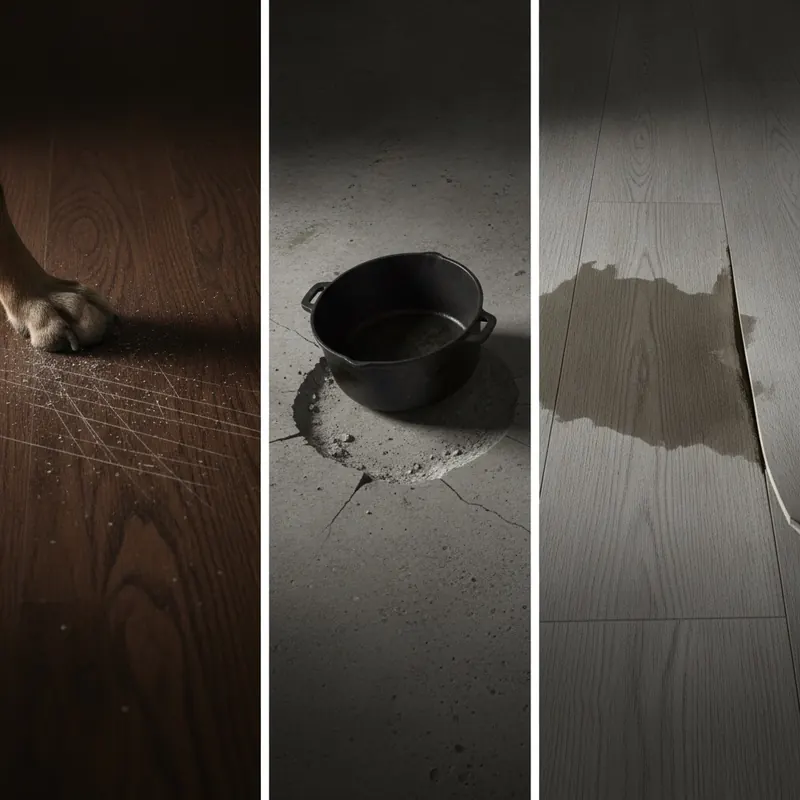
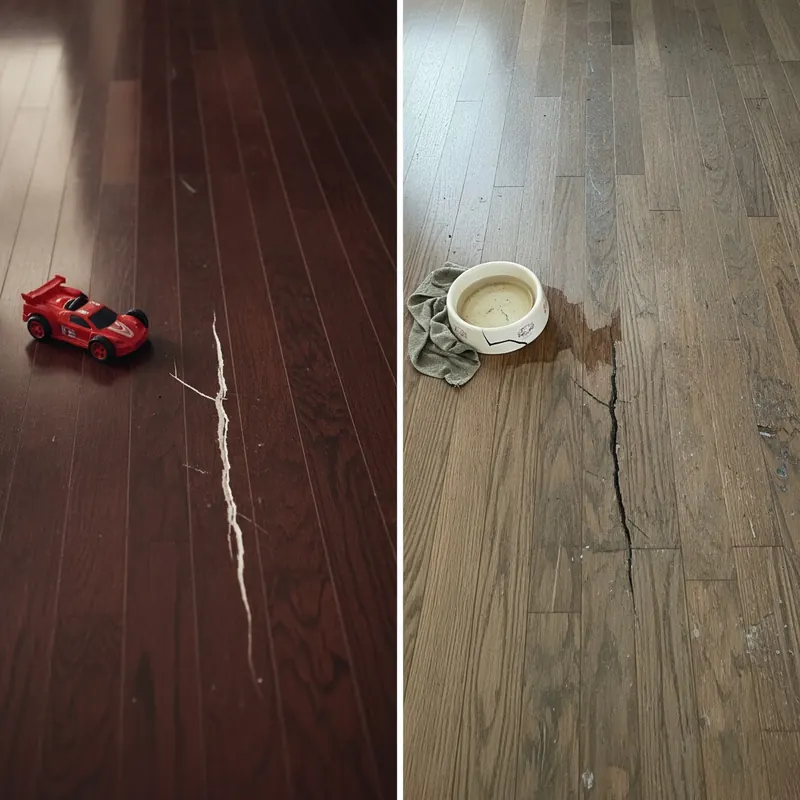
There’s a moment of dread every homeowner fears: you walk into a room and notice something is wrong with the floor. A board is lifting, a plank feels spongy, or the edges of your beautiful hardwood are starting to curve upwards. The culprit is often a silent, invisible force working against your home: humidity. High humidity is more than just uncomfortable; it’s a relentless destroyer of flooring, causing warped floorboards, fostering mold growth, and compromising your home’s value and health.
Navigating the world of flooring can be a maze of confusing jargon and conflicting advice, especially when you’re trying to combat a persistent moisture problem. But what if you had a clear playbook? This is it. Consider this your ultimate guide to conquering humidity. We will walk you through diagnosing the damage, choosing the absolute best humidity resistant flooring for your climate, and mastering the installation and maintenance secrets that will protect your investment for a lifetime. It’s time to stop worrying about moisture and start enjoying a beautiful, durable floor that’s built to last.
- Why Humidity Is Your Floor’s #1 Enemy: A Visual Diagnostic Guide
- The Best Flooring for Humid Climates: A Head-to-Head Comparison
- Myth-Busting: From ‘Adamantine Flooring’ to Real-World Waterproof Specs
- Your Installation Playbook: How to Prevent Humidity Problems Before They Start
- Long-Term Protection: Your Home Humidity Control Strategy
- Your Path to a Humidity-Proof Home
- References
Why Humidity Is Your Floor’s #1 Enemy: A Visual Diagnostic Guide
Before you can choose a solution, you must understand the problem. Humidity-related flooring damage isn’t a single issue; it manifests in several distinct, destructive ways. Excess moisture in the air or from the subfloor is absorbed by flooring materials, causing them to swell, change shape, and ultimately fail. This guide will help you identify the specific high humidity floor problems you might be facing.
The Telltale Signs: Identifying Warping, Cupping, and Buckling
Structural damage is the most visible sign that humidity is winning the battle. These issues arise when different parts of a floorboard absorb moisture at different rates, creating immense internal pressure.

- Cupping: This occurs when the edges of a floorboard are higher than its center, creating a concave, “cupped” shape. According to the National Wood Flooring Association (NWFA), this is a classic sign that there is more moisture on the bottom of the board than on the top2. This often points to a problem with a damp subfloor or crawlspace.
- Crowning: The opposite of cupping, crowning is when the center of the board is higher than its edges. This typically happens when the surface of the floor has been exposed to more moisture than the underside, such as from a spill, or if a previously cupped floor was sanded flat before the moisture issue was resolved.
- Buckling: This is the most extreme form of moisture damage. Buckling happens when the flooring expands so much that it lifts completely off the subfloor, sometimes by several inches. It’s an unmistakable sign of a serious water or humidity problem that needs immediate attention.
Diagnosing these issues correctly is the first step in fixing them. Experts in moisture-related failures, such as the specialists at Wagner Meters, emphasize that identifying the type of warping is critical to locating the source of the moisture5.
Hidden Dangers: Mold, Mildew, and Subfloor Rot
What you can’t see can be even more dangerous. The space beneath your flooring can become a breeding ground for harmful organisms when humidity is high.
Mold and mildew are not just unsightly; they pose significant health risks. The Environmental Protection Agency (EPA) warns that mold can begin to grow on a damp surface in as little as 24 to 48 hours1. To prevent this, the EPA recommends keeping indoor relative humidity between 30% and 50%1. A musty smell is a major red flag that you may have mold under your flooring, even if you can’t see it.
Subfloor moisture damage is another silent threat. A damp subfloor can rot over time, compromising the structural integrity of your entire floor system.
Checklist: Signs of Subfloor Moisture Damage
- A persistent musty or earthy odor.
- Soft, spongy, or bouncy spots in the floor.
- Discoloration or water stains on baseboards.
- Visible mold or mildew growth along the edges of the room.
- Gaps opening between floorboards as the subfloor shifts or deteriorates.
“The biggest mistake homeowners make is focusing only on the surface flooring,” notes a certified floor inspector. “If the subfloor isn’t dry and stable, any new floor you put on top is destined to fail. It’s the foundation of the entire system.”
The Best Flooring for Humid Climates: A Head-to-Head Comparison

Choosing the right material is your most powerful defense against humidity. In climates where moisture is a constant, such as Florida where the average relative humidity is over 74%4, material selection is everything. Here’s a comparison of the top contenders for the best flooring for homes in humid climates.
| Feature | Porcelain & Ceramic Tile | Luxury Vinyl Plank (LVP/LVT) | Engineered Hardwood |
|---|---|---|---|
| Material Composition | Fired clay, sand, and feldspar | Multi-layer PVC with a rigid core (SPC or WPC) | Plywood/HDF core with a real wood veneer top layer |
| Water Resistance | Waterproof. Porcelain is virtually impervious to water. | Waterproof. The core and surface are unaffected by water. | Water-Resistant. Resists moisture better than solid wood but is not waterproof. |
| Pros | Extremely durable, endless styles, zero moisture absorption issues. | Realistic wood/stone looks, comfortable underfoot, easy to install. | Authentic wood look and feel, more stable than solid wood. |
| Cons | Hard and cold underfoot, grout can stain, professional installation needed. | Can be dented by heavy furniture, quality varies significantly. | Can still be damaged by standing water, higher cost, has limits to humidity tolerance. |
| Average Cost (Installed) | $8 – $25 per sq. ft. | $5 – $12 per sq. ft. | $9 – $20 per sq. ft. |
Top Choice: Porcelain & Ceramic Tile
When you need an absolutely foolproof waterproof flooring solution, tile is the undisputed champion. Porcelain tile, in particular, is manufactured to be incredibly dense. According to the American National Standards Institute (ANSI), a material must have a water absorption rate of 0.5% or less to be certified as porcelain, making it essentially waterproof3. This quality makes it the perfect choice for high-humidity areas like bathrooms, kitchens, laundry rooms, and basements. With modern printing technology, you can find porcelain tile that convincingly mimics wood, stone, and concrete, so you don’t have to sacrifice style for performance.
Best All-Arounder: Luxury Vinyl Plank (LVP) & Tile (LVT)
Luxury vinyl is arguably the most popular humidity resistant flooring on the market today, and for good reason. Unlike old-school vinyl, modern LVP and LVT are built with a rigid, waterproof core. The two main types are:
- SPC (Stone Polymer Composite): A core made from a blend of limestone and stabilizers, making it incredibly dense, durable, and stable.
- WPC (Wood Polymer Composite): A core that incorporates wood pulp and plasticizers, making it slightly softer and quieter underfoot than SPC.
Both core types are 100% waterproof, meaning the planks themselves will not swell, warp, or delaminate when exposed to moisture. However, it’s crucial to remember that while the planks are waterproof, the installation is not. High humidity can still compromise the adhesives used in glue-down installations, and moisture can get trapped under floating floors if the subfloor isn’t properly prepared, leading to mold.
Best for a Wood Look: Engineered Hardwood
For those who love the timeless beauty of real wood, engineered hardwood is the best option for humid environments. Unlike solid hardwood, which is a single piece of wood, engineered planks are constructed with a multi-layered core of plywood or high-density fiberboard with a veneer of real hardwood on top. This cross-ply construction provides dimensional stability, making it far less likely to expand and contract with humidity changes.
However, it’s not invincible. The National Wood Flooring Association (NWFA) advises that even engineered wood performs best in a stable environment with relative humidity between 35% and 55%2. It will resist seasonal humidity swings better than solid wood, but it is not a waterproof product and should not be used in chronically damp areas like basements.
Flooring to Avoid in High-Humidity Areas
- Solid Hardwood: As a natural material, it absorbs ambient moisture and will inevitably cup, warp, or buckle in a consistently humid environment.
- Traditional Laminate: While some newer versions have “water-resistant” top layers, the core of most laminate flooring is high-density fiberboard, which acts like a sponge when it meets moisture, causing swelling and peeling that cannot be repaired.
- Carpet: Natural fiber carpets (like wool) and their padding can absorb and trap moisture, leading to mold, mildew, and musty odors.
Myth-Busting: From ‘Adamantine Flooring’ to Real-World Waterproof Specs
In the search for the perfect floor, you might come across confusing terms or seemingly miraculous products. Let’s clear the air and give you the tools to evaluate any flooring product like a pro.
Myth: There is a product called “Adamantine flooring” that is completely indestructible and waterproof.
Fact: “Adamantine” is a term used to describe something diamond-hard and unbreakable, but it is not a standard flooring product category. Searches for “Adamantine flooring” or “Adamantine moisture protection” often lead to industrial coatings or materials not intended for residential use. What you are likely looking for are the real-world attributes of the most durable flooring options available.
What Is ‘Adamantine Flooring’ and What Are You Really Looking For?
When you search for something like “Adamantine flooring,” your true goal is to find the toughest, most resilient, and most waterproof flooring possible. In the residential world, this translates to:
- Porcelain Tile: With its incredible hardness and near-zero water absorption, this is the closest you can get to an “indestructible” floor.
- Commercial-Grade LVT: This is a thicker, more durable version of residential luxury vinyl with a heavy-duty wear layer designed for high-traffic commercial spaces. It offers superior performance against scratches, dents, and moisture.
- Epoxy Floor Coatings: Often used in garages and basements, a professionally applied epoxy coating creates a seamless, non-porous, and extremely durable surface directly over concrete.
The principles of industrial moisture protection, often discussed by engineering firms like Salas O’Brien, focus on creating an unbroken barrier against moisture intrusion8. For your home, this means choosing a non-porous flooring material and ensuring the subfloor is properly sealed.
Your Installation Playbook: How to Prevent Humidity Problems Before They Start
The best humidity resistant flooring in the world can still fail if it’s not installed correctly. Proper installation in a humid environment is all about moisture management from the ground up.
Expert Installer’s Corner
We asked a certified flooring professional about the #1 mistake they see in humid climates. Their answer was immediate: “Skipping subfloor preparation. People are so excited to see the new floor go down that they rush the most important step. A damp, uneven subfloor is a guaranteed callback. You have to test for moisture and seal it if necessary. Period.”
Step 1: Mastering the Subfloor (Moisture Testing & Sealing)
Your subfloor is the foundation. Whether it’s concrete or wood, it must be clean, flat, and—most importantly—dry.

- Moisture Testing: Before installation, the subfloor’s moisture content must be tested. For concrete, professionals use methods like the calcium chloride test or in-situ probes to get an accurate reading. For wood subfloors, a moisture meter is used. If the readings are too high, you must resolve the moisture issue before proceeding.
- Vapor Barriers: A vapor barrier (or retarder) is a material, typically a 6-mil polyethylene film, laid over the subfloor to stop moisture from migrating upwards into your flooring. It is absolutely essential over concrete subfloors in basements or on-grade slabs. Many modern underlayments for LVP have a vapor barrier built-in, but always check the product specifications. As technical experts at organizations like the International Flooring Covering Inspectors Institute (IFCII) emphasize, a proper vapor barrier is critical to the long-term success of any floating floor system9.
Step 2: The Non-Negotiable Step of Acclimation
Flooring needs to get used to its new home before it’s installed. Acclimation is the process of letting the flooring material sit in the room where it will be installed for a period of time to adjust to the home’s temperature and humidity.
Skipping this step is a recipe for disaster. If you install a floor that is colder and drier than the room, it will absorb ambient moisture and expand, leading to buckling. Most manufacturers, like the Garrison Collection, recommend a 48-72 hour acclimation period6.
How to Acclimate Your Flooring Correctly:
- Bring the unopened boxes of flooring into the room where they will be installed.
- Lay the boxes flat and separate them to allow for air circulation. Do not stack them in a single pile.
- Wait for the manufacturer-recommended time, typically 48-72 hours, before beginning installation.
Long-Term Protection: Your Home Humidity Control Strategy
Your new floor is in, and it looks fantastic. The final step is to maintain a stable indoor environment to protect it for years to come. The goal is to keep your home’s relative humidity within the ideal range. While some sources vary slightly, humidity control specialists like Condair7 and many flooring manufacturers agree that a range between 30% and 50% relative humidity is the sweet spot for most flooring types6.

- Use a Dehumidifier: In consistently humid climates or damp areas like basements, a dehumidifier is your best friend. A portable unit can manage a single large room or basement, while a whole-house dehumidifier integrated into your HVAC system provides the most consistent, hassle-free control.
- Run Your Air Conditioner: Your AC naturally removes humidity from the air as it cools. Running it consistently during humid months helps maintain a stable environment.
- Ensure Proper Ventilation: Use exhaust fans in bathrooms and kitchens to vent moist air directly outside. Make sure your attic and crawl spaces are also well-ventilated to prevent moisture buildup.
Your Path to a Humidity-Proof Home
Conquering humidity and securing a beautiful, long-lasting floor is not about finding a single magic product. It’s about a smart, strategic approach. By following this playbook, you are now empowered to protect your home’s value and create a healthier living space.
The path is clear:
- Diagnose the Problem: Start by correctly identifying the signs of moisture damage to understand the scope of your challenge.
- Choose the Right Material: Select a proven humidity-resistant flooring like porcelain tile or luxury vinyl plank that is perfectly suited to your climate and lifestyle.
- Install and Maintain Like a Pro: Insist on proper subfloor preparation, acclimation, and long-term humidity control to guarantee a lifetime of performance.
With this knowledge, you can move forward with confidence, making an informed decision that will bring you peace of mind and a floor you’ll love for years to come.
Ready to find the perfect humidity-proof floor for your home? Browse our collection of waterproof Luxury Vinyl and Porcelain Tile to get started today.
This article provides general guidance. For specific flooring installation or damage remediation, it is always recommended to consult with a certified flooring professional. Product specifications and manufacturer recommendations should always be followed.
References
- Environmental Protection Agency (EPA). (N.D.). A Brief Guide to Mold, Moisture, and Your Home. Retrieved from https://www.epa.gov/mold/brief-guide-mold-moisture-and-your-home
- National Wood Flooring Association (NWFA). (N.D.). Technical Guidelines & Publications. Retrieved from https://www.nwfa.org/technical-guidelines/
- American National Standards Institute (ANSI). (N.D.). ANSI A137.1 American National Standard Specifications for Ceramic Tile.
- Florida Climate Center. (N.D.). Florida’s Climate. Retrieved from https://climatecenter.fsu.edu/products-services/data/floridas-climate
- Wagner Meters. (N.D.). Can Wood Floor Cupping Be Fixed? Retrieved from https://www.wagnermeters.com/moisture-meters/wood-info/can-wood-floor-cupping-be-fixed/
- The Garrison Collection. (N.D.). Humidity, Temperature, and Your Floors. Retrieved from https://www.garrisoncollection.com/blog/humidity-temperature-and-your-floors-what-to-know-this-fall/
- Condair Group. (N.D.). Protecting hardwood flooring with proper humidity control. Retrieved from https://www.condair.com/en/support-and-resources/knowledge-hub/articles/protecting-hardwood-flooring-with-proper-humidity-control
- Salas O’Brien. (N.D.). Advances in Roofing and Waterproofing. Retrieved from https://salasobrien.com/news/advances-roofing-and-waterproofing/
- International Floor Covering Inspectors Institute (IFCII). (N.D.). Does Humidity Affect Vinyl Flooring? Retrieved from https://ifcii.org/does-humidity-affect-vinyl-flooring/