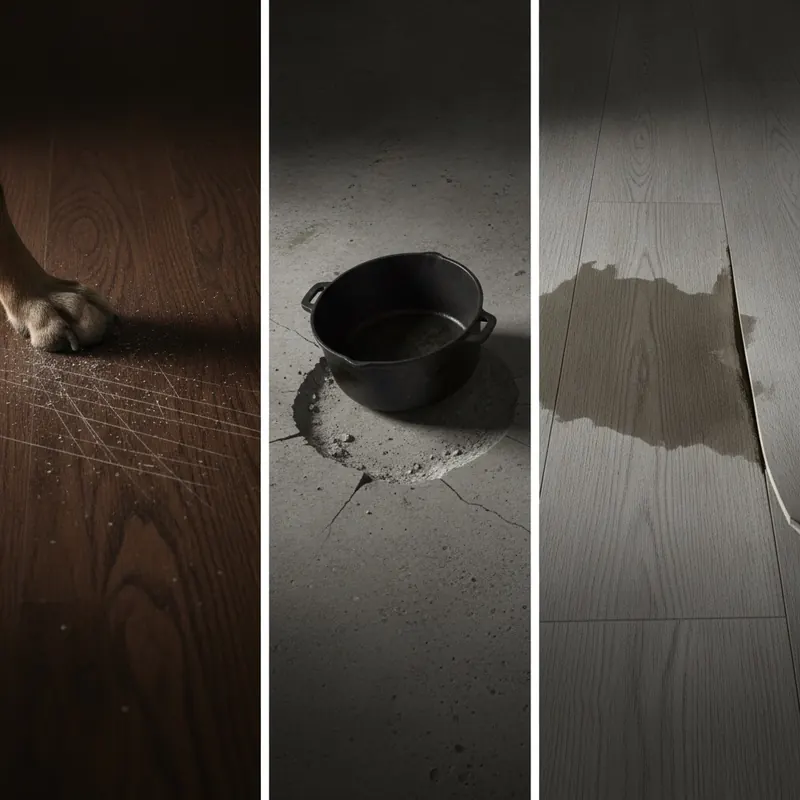
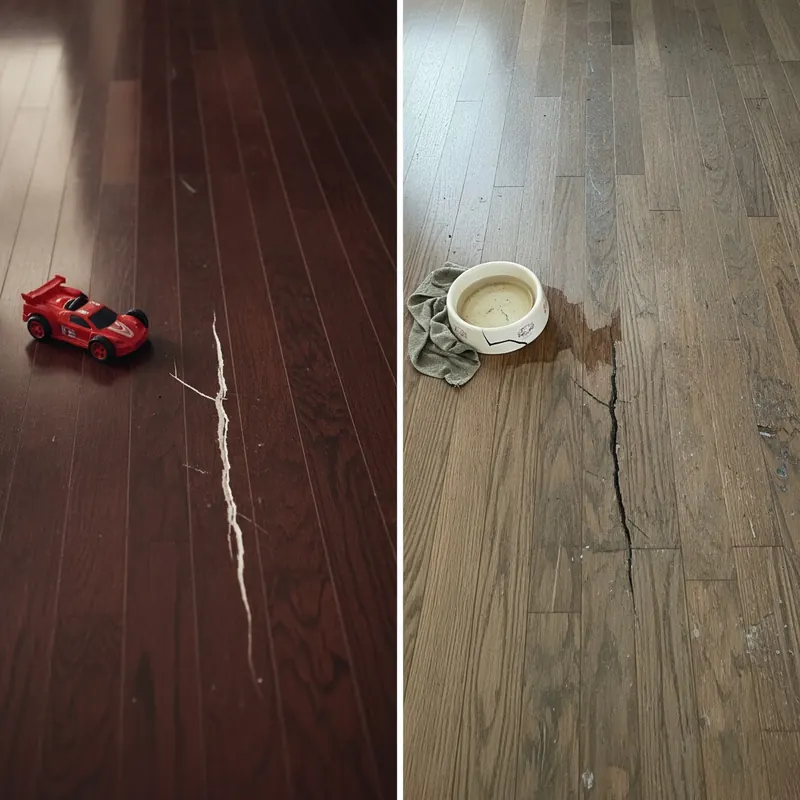
Choosing a new floor feels like a monumental decision, and it is. You’re not just picking a color; you’re laying the foundation for your home’s health, durability, and daily life. It’s easy to get lost in a sea of showroom samples, marketing buzzwords, and conflicting advice. You worry about scratches from pet claws, spills from kids, and hidden chemicals affecting your family’s air quality.
This guide is designed to cut through that noise. We’re moving beyond the marketing hype to give you a clear, practical framework for selecting a floor that is genuinely durable, truly healthy, and refreshingly easy to maintain. We will introduce you to the “Three Pillars” of high-performance flooring and decode the technical jargon—from “Adamantine Protection” to VOCs—into real-world advice. By the end, you’ll be empowered to choose the perfect floor for your life, your family, and your peace of mind.
- The Modern Flooring Dilemma: Why Choosing the Right Floor is So Hard
- The Three Pillars of High-Performance Flooring: Your Homeowner’s Checklist
- Decoding the Specs: How to Read a Flooring Label Like a Pro
- The 2026 Flooring Showdown: Top Choices for a Healthy, Durable Home
- What’s the Best Flooring for Your Lifestyle?
- Frequently Asked Questions About Modern Flooring
- Your Confident Choice for a Better Home
- References
The Modern Flooring Dilemma: Why Choosing the Right Floor is So Hard
The path to new flooring is paved with potential pitfalls. Making the wrong choice can lead to years of frustration and buyer’s remorse, turning a significant investment into a daily headache. This guide is your preventative measure, designed to help you sidestep the common challenges homeowners face.
The Fear of Scratches: Avoiding Floors That Can’t Handle Real Life
You’ve just invested thousands in a beautiful new floor. The first week, a chair leg scrapes across the surface, a pet’s claws leave a trail, or a dropped toy creates a permanent dent. This is a primary fear for any homeowner, and it’s a valid one. Many are in a problem-aware stage, trying to avoid this exact scenario. Some materials, like softer hardwoods or low-quality laminates, are simply more prone to showing wear and tear, turning your pristine surface into a map of every mishap.
The Hidden Health Hazard: Allergens and VOCs Underfoot
Your floor is one of the largest surfaces in your home, and it can have a significant impact on your indoor air quality. For the millions of people affected by respiratory issues, this is a critical concern. According to the Centers for Disease Control (CDC), over 50 million people in the U.S. experience allergies every year[1]. Flooring contributes to this in two main ways:
- Trapped Allergens: Materials like high-pile carpet can act as a reservoir for dust, pet dander, pollen, and mold spores, releasing them back into the air with every footstep.
- Chemical Off-Gassing: Many synthetic flooring materials, adhesives, and finishes can release Volatile Organic Compounds (VOCs) into the air. These chemicals can contribute to short-term and long-term health problems.
The Endless Chore: Escaping the Trap of High-Maintenance Floors
Your time is valuable. The last thing you want is a floor that requires constant, specialized cleaning to look its best. A high-maintenance floor becomes an endless chore, stealing time that could be spent with family. This isn’t just about the material itself; it’s about the situation. A floor that might be low-maintenance in a quiet bedroom can become a nightmare in a high-traffic entryway with kids and pets, constantly showing dirt, smudges, and stains.
The Three Pillars of High-Performance Flooring: Your Homeowner’s Checklist

To make a confident decision, you need a reliable evaluation system. We’ve developed this checklist based on three core pillars that define a truly high-performance floor. This is the foundation for our “Flooring Performance Scorecard,” a method that prioritizes real-world function over showroom aesthetics.
Pillar 1: Unbreakable Durability (Scratch, Dent & Water Resistance)
Durability isn’t a single feature; it’s a combination of strengths tailored to your lifestyle. For a floor to be truly durable in a modern home, it must resist the most common forms of damage: scratches from pet claws and dragged furniture, dents from dropped objects, and damage from moisture, whether it’s a kitchen spill or a bathroom’s humidity. The right choice depends on your specific use case—a floor for a busy entryway needs different strengths than one for a basement.
Pillar 2: A Foundation for Health (Hypoallergenic & Low-VOC)
A healthy floor is the bedrock of a healthy home. This pillar has two non-negotiable components. First, the surface must be non-porous and easy to clean, preventing it from trapping allergens like dust and dander. Second, the flooring and all its components (including underlayment and adhesives) must be made from non-toxic materials that do not release harmful VOCs into your air. Authoritative organizations like Toxic Free Future emphasize the importance of choosing safer materials to reduce chemical exposure in our homes[2].
Pillar 3: Everyday Practicality (Easy to Clean & Maintain)
Practicality is where a floor proves its worth day after day. An easy-to-clean floor is one that resists stains and can be wiped clean quickly with simple tools and solutions. It doesn’t require special equipment or complex procedures to handle everyday messes like muddy paw prints, spilled juice, or tracked-in dirt. This pillar is about reclaiming your time and reducing your daily stress.
Decoding the Specs: How to Read a Flooring Label Like a Pro
This is where we translate industry jargon into your secret weapon for making a smart purchase. Understanding these key metrics is what separates a guess from an informed investment. This is the information that empowers you to see past the sales pitch and evaluate a product’s true performance potential.
Scratch & Wear Resistance: AC Ratings, Wear Layers, and Aluminum Oxide
When it comes to resisting daily wear, scuffs, and scratches, these are the terms that matter most:
- AC (Abrasion Class) Rating: Used for laminate flooring, this rating measures its resistance to abrasion, impact, stains, and burns. For residential use, look for a rating of at least AC3. For busy homes with pets and kids or light commercial use, AC4 or AC5 is even better.
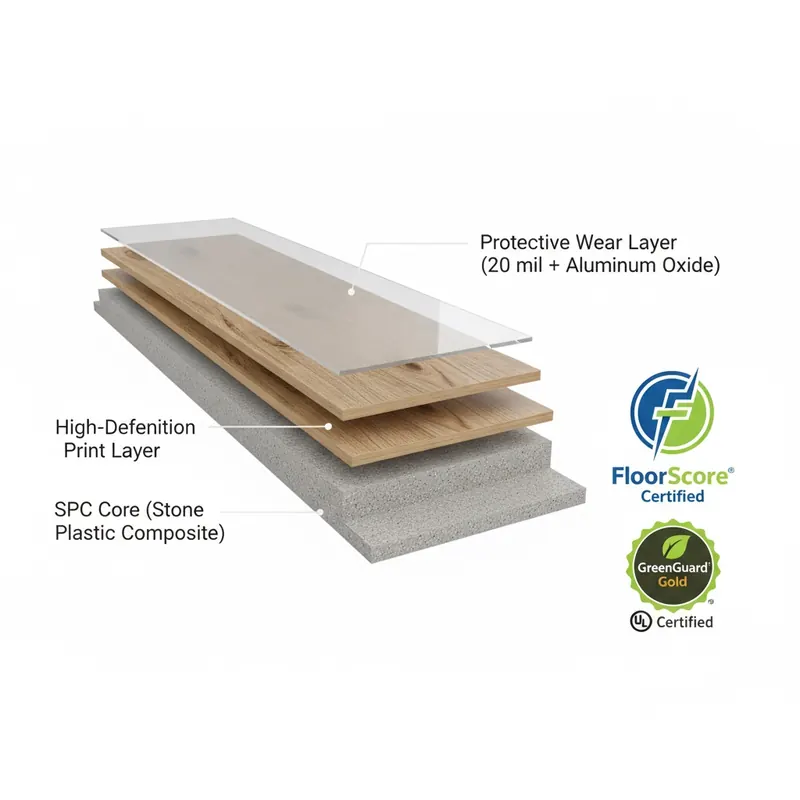
- Wear Layer: This is the top, transparent protective coating on Luxury Vinyl Plank (LVP) flooring. Its thickness is measured in mils (not to be confused with millimeters). For residential areas, a wear layer of at least 12 mils is recommended, but for maximum durability in high-traffic areas, 20 mils or more is the ideal choice[3].
- Protective Additives: Many high-quality LVP and laminate products infuse their wear layers with microscopic particles of aluminum oxide or ceramic beads. These incredibly hard materials dramatically increase the surface’s resistance to fine scratches and scuffs.
Impact & Hardness: What PEI Ratings (for Tile) Really Mean
For ceramic and porcelain tile, the key durability metric is the PEI rating, established by the Porcelain Enamel Institute. This rating classifies a tile’s resistance to visible abrasion and its suitability for different applications.
- PEI Rating Scale:
- Class 1: No foot traffic (wall tile only).
- Class 2: Light traffic (e.g., residential bathrooms).
- Class 3: Light to moderate traffic (suitable for all residential applications).
- Class 4: Moderate to heavy traffic (all residential and some commercial use).
- Class 5: Heavy to extra-heavy traffic (all residential and most commercial use).
For any floor in your home, a PEI rating of at least Class 3 is recommended[4]. Additionally, for areas that might get wet, look for a DCOF (Dynamic Coefficient of Friction) rating of 0.42 or higher to ensure good slip resistance.
Health & Air Quality: Why You Must Look for FloorScore® & GreenGuard
Certifications from independent, third-party organizations are the most reliable way to verify that a flooring product is healthy for your home. They are science-based and provide unbiased proof of a product’s safety. Look for these labels:
- FloorScore®: This is the most recognized indoor air quality (IAQ) certification standard for hard surface flooring. It tests for and certifies that a product has low VOC emissions, ensuring it won’t negatively impact your home’s air.
- GreenGuard Certification: A similar IAQ standard that tests for over 10,000 chemicals and VOCs. The higher “GreenGuard Gold” certification has even stricter limits, making it ideal for environments with sensitive individuals like children and the elderly.
- Asthma & Allergy Friendly®: This certification program identifies products that are scientifically proven to be more suitable for people with asthma and allergies.
The 2026 Flooring Showdown: Top Choices for a Healthy, Durable Home
Now, let’s apply our three-pillar framework to the top flooring contenders on the market today. Below is our “Flooring Performance Scorecard” to give you a quick visual comparison.
| Flooring Type | Durability (Scratch/Water) | Health (Hypoallergenic/Low-VOC) | Ease of Cleaning |
|---|---|---|---|
| SPC Vinyl Plank | ★★★★★ | ★★★★★ | ★★★★★ |
| Porcelain Tile | ★★★★★ | ★★★★★ | ★★★★☆ |
| High-AC Laminate | ★★★★☆ | ★★★★☆ | ★★★★★ |
The All-Around Champion: Luxury Vinyl Plank (LVP & SPC)
For most homeowners seeking the ultimate balance of all three pillars, Luxury Vinyl Plank—specifically with an SPC core—is the clear winner. SPC stands for Stone Plastic Composite, a core made of limestone and stabilizers that makes the planks incredibly rigid, stable, and durable. High-end SPC cores can be composed of nearly 70% limestone, providing unmatched dent resistance. Its 100% waterproof construction and tough wear layer make it ideal for any room, from basements to bathrooms, and it easily stands up to the challenges of pets and kids.
The Durability King: Porcelain & Ceramic Tile
When it comes to sheer scratch resistance and longevity, nothing beats porcelain tile. Fired at extreme temperatures between 2,200 and 2,600 degrees Fahrenheit, porcelain becomes incredibly dense, non-porous, and resistant to almost any form of damage or moisture[5]. This hard, solid surface is also one of the best hypoallergenic flooring solutions available, as it provides nowhere for allergens to hide. The primary drawback is the grout lines, which require sealing to prevent staining and can be more difficult to clean than the tile itself.
The High-Tech Contender: Modern Laminate & Adamantine Flooring
Today’s laminate flooring is a world away from the products of the past. Thanks to technological advancements, modern high-performance laminate offers exceptional scratch and dent resistance, often rivaling more expensive options. The key is its high-density core and incredibly tough top layer, measured by the AC rating. This is where proprietary technologies like Adamantine Protection come into play.
What is Adamantine Protection in Flooring?
Instead of being a type of flooring, “Adamantine Protection” is a branded, high-performance wear layer technology found on specific laminate collections, such as the Olympus and Monument Collections from TAS Flooring[6]. It is engineered to exceed standard industry tests for scratch, stain, and wear resistance. This advanced top coat is often combined with other premium features like an embossed-in-register (EIR) surface, which aligns the texture with the printed wood grain for a remarkably realistic look and feel.
Products with this feature often boast other high-end benefits, such as oversized planks (e.g., 9.5” wide by 60” long) and the ability to be installed over massive areas (up to 66’ x 66’) without unsightly transition strips, creating a seamless, cohesive look throughout the home[6].
| Feature | Standard Laminate (AC3) | Laminate with Adamantine Protection |
|---|---|---|
| Wear Resistance | Good for residential use | Engineered to exceed industry standards |
| Scratch Resistance | Moderate | Exceptional |
| Stain Resistance | Good | Exceptional |
| Realism | Standard print | Often includes Embossed-in-Register (EIR) |
What’s the Best Flooring for Your Lifestyle?
Applying this knowledge to real-world scenarios makes the final choice easy. Here are our definitive recommendations for the most common household needs.
The Ultimate Choice for Homes with Pets and Allergies
The Winner Is… SPC Vinyl Plank.
It’s the perfect solution for both challenges. Its 100% waterproof construction means pet accidents are no problem—they can’t soak in and cause damage or lingering odors. The high-quality, 20-mil+ wear layer is exceptionally resistant to scratches from claws. For allergies, its solid, non-porous surface is a dream. It doesn’t trap dander or dust, and it can be easily sanitized. For extra pet-friendliness, consider a textured or embossed finish, which provides better paw grip for your furry friends.
Top Picks for Busy Families with Kids
The Winners Are… SPC Vinyl Plank and High-AC Rated Laminate.
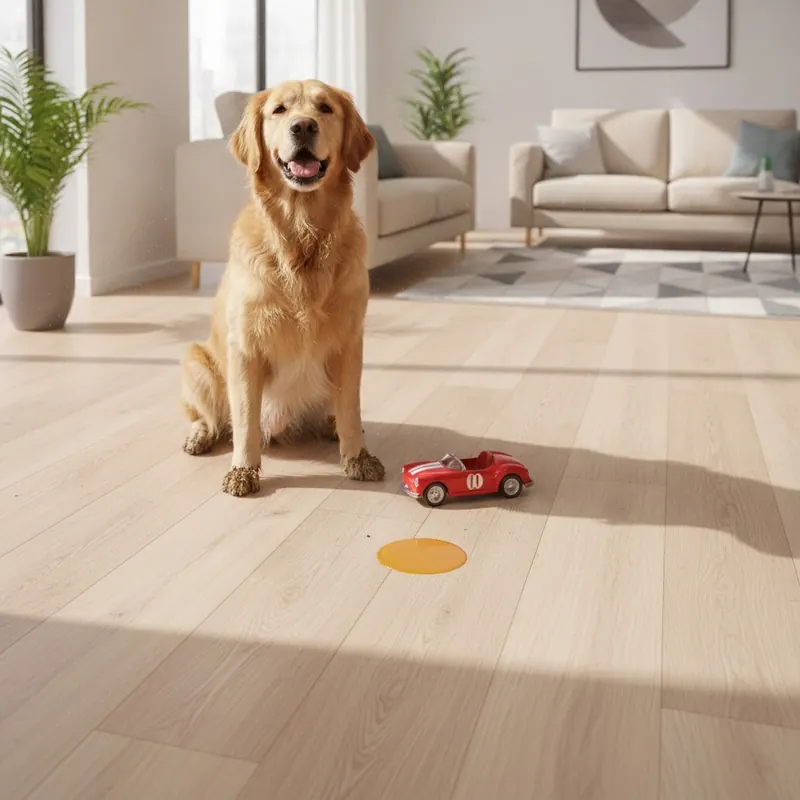
Both options are built to withstand the chaos of family life. They excel at resisting scratches from dragged toys, scuffs from running feet, and dents from dropped items. Their easy-to-clean surfaces make quick work of spills, crayon marks, and tracked-in mud. Laminate with an advanced wear layer like Adamantine Protection is particularly adept at handling the intense, concentrated wear and tear that kids can inflict on a floor.
Best Low-Maintenance Flooring for Kitchens and Bathrooms
The Winners Are… Porcelain Tile and SPC Vinyl Plank.
In these wet, high-spill zones, water resistance is the most critical factor. Both porcelain tile and SPC vinyl are 100% waterproof and will not swell, buckle, or degrade when exposed to moisture. Their non-porous surfaces also resist staining from common kitchen spills. This is where materials like solid hardwood or older, non-water-resistant laminate are poor choices, as they are highly susceptible to water damage.
Frequently Asked Questions About Modern Flooring
Is LVP or laminate better for pets and allergies?
While both are excellent hypoallergenic options compared to carpet, LVP generally has the edge for pets. Its 100% waterproof construction provides superior protection against pet accidents, which can seep into the core of even water-resistant laminate and cause damage over time.
Does installing durable flooring increase home value?
Yes, absolutely. New, high-quality flooring is one of the first things potential buyers notice. As flooring professionals at Hogan Flooring note, it can unify a home’s design and significantly boost property value[7]. Durable, low-maintenance options like LVP and modern laminate are highly attractive to buyers who want a move-in-ready home without immediate projects.
Is hardwood flooring still a healthy and durable option?
Solid hardwood is an excellent hypoallergenic choice because, like other hard surfaces, it doesn’t trap allergens. However, its durability varies widely depending on the wood species (measured on the Janka hardness scale) and it is not inherently scratch-proof or waterproof. While a well-maintained hardwood floor can last 70 to 100 years, it requires more maintenance and is more susceptible to scratches and water damage than the top modern contenders[8].
Your Confident Choice for a Better Home
Choosing the right floor no longer needs to be an overwhelming process. By focusing on the Three Pillars—Durability, Health, and Practicality—and learning to decode the key specifications, you can move past the marketing and make a truly confident decision. Understanding what a 20-mil wear layer means for your dog’s claws or why a FloorScore® certification matters for your child’s health is the key to investing in a floor that you’ll love for years to come. You are now equipped to select a foundation for your home that is not only beautiful but also worry-free.
Feeling more confident about your flooring choice? Share your biggest takeaway or remaining question in the comments below!
References
- Centers for Disease Control and Prevention. (N.D.). Allergies. CDC.gov.
- Toxic Free Future. (N.D.). Safer Types of Flooring to Keep Your Family Toxic-Free. toxicfreefuture.org.
- Go Flooring. (N.D.). Best Scratch Resistant Flooring. goflooring.com.
- Flooring America. (N.D.). The Most Durable Flooring Options. flooringamerica.com/blog.
- Creative Carpet & Flooring. (2026, May 13). Most Durable Flooring Ranked: 35 Years of Real-World Testing. creativecarpetinc.com.
- TAS Flooring. (N.D.). Product Specifications for Olympus and Monument Collections. TAS Flooring.
- Hogan Flooring. (N.D.). The Benefits of Installing a New Floor in Your Home. hoganflooring.net.