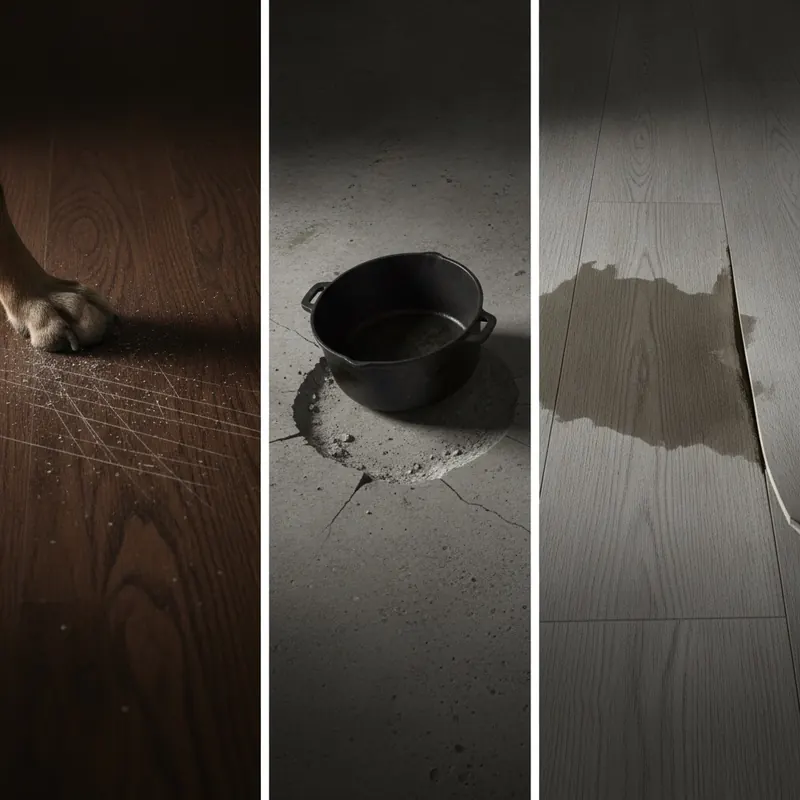
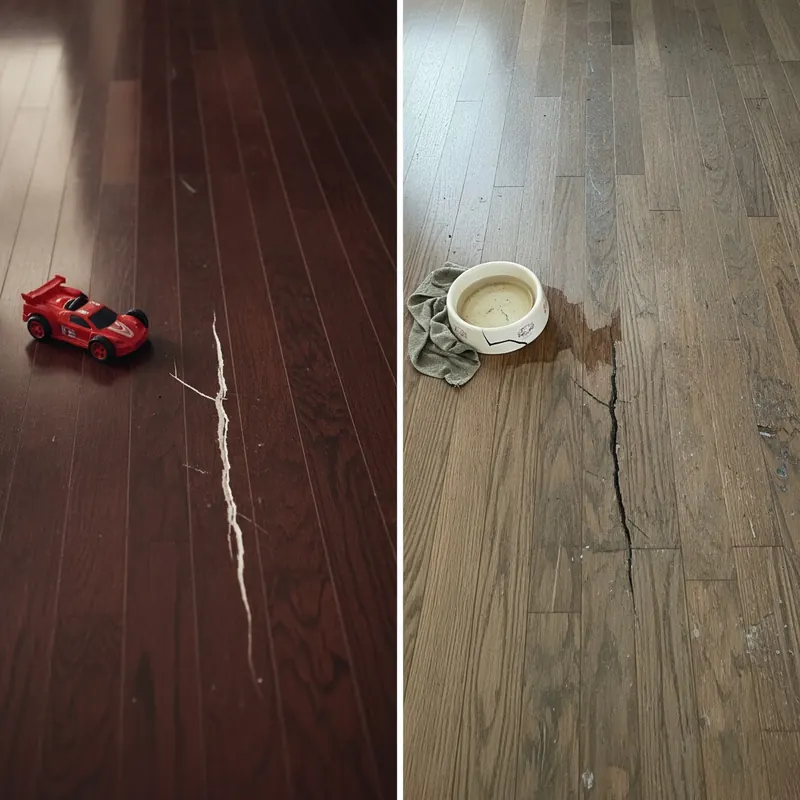
Have you ever searched for a truly indestructible floor? A surface so resilient it could only be described as “adamantine”—unyielding, unbreakable, and permanent. It’s a common frustration for homeowners and business owners alike, tired of the cycle of scuffs, scratches, cracks, and costly replacements. You invest in a new floor, only to watch it fail years before its time.
The truth is, “Adamantine flooring” is a concept, not a product you can buy off a shelf. But the desire it represents is real: the need for a floor that offers uncompromised structural integrity for decades.
This is not another list of “top 10 durable floors.” This is an engineer’s guide to the entire flooring system. True longevity isn’t just about the surface you walk on; it’s about the meticulously prepared foundation beneath it. We will go beyond marketing hype to analyze your floor from the joists up, empowering you with the technical knowledge and data-driven frameworks to make a single, intelligent investment. By the end of this guide, you will understand how to choose and build a forever floor.
- What is “Adamantine Flooring”? The Truth Behind the Myth
- The Foundation of a Forever Floor: Why Structural Integrity is Non-Negotiable
- A Data-Driven Comparison: The Ultimate Flooring Durability Scorecard
- Application-Specific Solutions: Matching the Material to the Mission
- Diagnosing Flooring Problems: A Triage Guide to Cracks and Wear
- How to Maintain Flooring Structural Integrity for Decades
- Breaking the Cycle: Calculating the True Cost of Your Flooring
- Conclusion: Your Floor is a System, Not a Surface
- References & Authoritative Sources
What is “Adamantine Flooring”? The Truth Behind the Myth
If you’ve typed “Adamantine flooring” into a search bar, you’re not alone. The term frequently appears in online forums and communities like Reddit’s /r/flooring, where users are searching for the absolute pinnacle of durability. However, it’s crucial to understand that “adamantine” is a descriptor, not a specific material or brand. It’s a neologism used to describe the ideal of a perfect, long-lasting floor.
There is no quarry mining adamantine slabs or factory producing adamantine planks. The term is a placeholder for a user’s core need: finding the longest lasting, most durable flooring material available for their specific situation.
Our approach is to honor that intent. Instead of chasing a mythical product, we will deconstruct what makes a floor truly “adamantine-like.” This involves understanding the science of durable materials, the non-negotiable importance of structural integrity, and how to select real-world products that live up to the promise of exceptional longevity. By being transparent about this industry term, we can move past the myth and focus on tangible solutions that will deliver the performance you’re seeking.
The Foundation of a Forever Floor: Why Structural Integrity is Non-Negotiable
The single biggest mistake in any flooring project is focusing solely on the surface material. The most expensive porcelain tile or toughest luxury vinyl plank will inevitably fail if the foundation beneath it is inadequate. True flooring longevity—its structural integrity—is a function of a complete, well-engineered system. As experts at the Building Science Corporation emphasize, a floor is not just a covering; it is an assembly of interconnected components working together to manage loads, moisture, and movement.1
Structural Engineer’s Corner
“Homeowners are often surprised when I tell them the most common point of flooring failure has nothing to do with the flooring itself. It’s the subfloor. An improperly prepared, inadequately supported, or moisture-compromised subfloor is a guarantee for future problems, from cracked tiles to sagging planks. Get the foundation right, and your floor has a fighting chance to last a lifetime.”
To understand this, visualize the floor as a layered system:
- Finish Floor: The visible surface you walk on (e.g., tile, hardwood, LVP).
- Underlayment: A thin layer that provides cushioning, sound absorption, or a moisture barrier.
- Sheathing (Subfloor): The structural wood panel layer (plywood or OSB) that covers the joists.
- Joists: The horizontal beams that form the structural skeleton of the floor.

Only when all these components are correctly specified and installed can the system achieve true, long-term durability.
The Anatomy of Your Floor: From Joists to Sheathing
The strength of your floor begins with its skeleton. Floor joists, the large beams that span the foundation, provide the primary support. Their size, spacing, and span determine how much weight the floor can handle without excessive bouncing or “deflection.” On top of these joists lies the sheathing—typically large sheets of plywood or Oriented Strand Board (OSB).
This sheathing layer is critical. According to installation standards from authorities like the National Wood Flooring Association (NWFA), the subfloor must be flat, level, and rigid.2 For many flooring types, especially tile, the subfloor must have a deflection rating of L/360, meaning it cannot deflect more than the span length divided by 360 under a given load. Insufficiently thick or poorly secured sheathing is a primary cause of squeaks, soft spots, and, in the case of tile, cracked grout and broken tiles.
Warning Signs of a Compromised Subfloor
Before you invest thousands in a new floor, it’s essential to assess the health of your subfloor. Ignoring these warning signs is a recipe for premature flooring failure. Here is a checklist of potential issues:
- Excessive Bouncing or Sagging: Does the floor feel spongy or trampoline-like when you walk across it? Are there visible dips or sags, particularly in the middle of a room? This often points to undersized or over-spanned joists.
- Loud or Frequent Squeaking: While some minor squeaks are normal, persistent and widespread squeaking often indicates that the subfloor sheathing has loosened from the joists.
- Cracked Tile or Grout Lines: If you have an existing tile floor with long, continuous cracks, it’s a strong indicator that the subfloor is flexing too much.
- Musty or Moldy Odors: A persistent musty smell, especially from a basement or crawlspace, is a red flag for moisture intrusion, which can lead to wood rot and a severely weakened subfloor.
- Water Stains: Visible water stains on the subfloor from below (in a basement or crawlspace) show past or present leaks that may have compromised the wood’s structural integrity.
A professional home inspector will tell you that these are not just cosmetic issues; they are signals from the foundation of your floor that require investigation before any new material is installed.
A Data-Driven Comparison: The Ultimate Flooring Durability Scorecard
To move from theory to practical application, we’ve created a “Durability Scorecard.” This framework evaluates the top real-world “adamantine-like” flooring categories based on objective, industry-standard metrics. This allows you to compare options based on data, not just marketing claims.

Key Metrics Explained:
- Scratch & Abrasion Resistance: For laminate and LVT, this is measured by an AC Rating (Abrasion Class), from AC1 (light residential) to AC5 (heavy commercial). For wood, the Janka Hardness Test measures resistance to denting.
- Water/Moisture Resistance: A measure of how well the material withstands spills and humidity, from fully waterproof to susceptible to damage.
- Impact Resistance: The ability to withstand dropped objects without cracking, chipping, or denting.
- Expected Lifespan: The typical lifespan under normal conditions with proper maintenance.
- Maintenance Level: The amount of effort required to keep the floor looking and performing its best (Low, Medium, High).
Here is our analysis of the top contenders for a “forever floor.”
Category 1: Concrete Systems (Polished & Epoxy)
For ultimate durability in demanding environments like garages, basements, workshops, and commercial spaces, concrete systems are nearly untouchable.
- Polished Concrete: This involves grinding an existing concrete slab to a smooth, high-gloss finish. It is exceptionally hard, durable, and easy to clean. Its performance is directly tied to the quality of the original concrete slab.
- Epoxy Coatings: A resinous coating applied over a concrete slab, creating a seamless, non-porous, and incredibly resilient surface. Industrial-grade systems from manufacturers like Sika or Sherwin-Williams offer superior chemical and impact resistance.
Scorecard:
- Scratch & Abrasion Resistance: Very High
- Water/Moisture Resistance: High (Epoxy) / Medium (Sealed Concrete)
- Impact Resistance: High to Very High
- Expected Lifespan: 50+ years (can be the life of the building)
- Maintenance Level: Low
Category 2: High-Performance Resilient Flooring (LVT/LVP, Sheet Vinyl)
Modern resilient flooring, particularly Luxury Vinyl Tile/Plank (LVT/LVP), has become a top choice for high-traffic homes and commercial spaces due to its balance of durability, aesthetics, and value.
The single most important factor in LVT durability is the wear layer. This is a clear top coat measured in mils (1/1000th of an inch). A flooring retailer will often tell you the most common mistake buyers make is choosing a beautiful plank with a thin wear layer (e.g., 6-12 mil) for a high-traffic area. For busy homes, a 20 mil wear layer is recommended, while commercial applications demand 28 mil or more. Additionally, look for an AC rating of AC3 or higher for residential use. The Resilient Floor Covering Institute (RFCI) provides standards for these products, ensuring quality and performance.4
Scorecard:
- Scratch & Abrasion Resistance: Medium to High (depends on wear layer/AC rating)
- Water/Moisture Resistance: Very High (100% waterproof core)
- Impact Resistance: Medium to High
- Expected Lifespan: 15-25 years
- Maintenance Level: Low
Category 3: Tile & Natural Stone (Porcelain, Ceramic, Slate)
When it comes to sheer lifespan, nothing beats properly installed tile or natural stone. Data from the National Association of Home Builders (NAHB) suggests these materials can last for over 100 years.3 They are impervious to water, immune to rot, and incredibly hard.
However, their “forever” status comes with a critical caveat: the installation. The vast majority of tile failures are not due to the tile itself, but to either a flexible subfloor or failing grout. An expert tip for achieving true longevity is to use modern grout technology. Epoxy or urethane-based grouts are non-porous, meaning they resist staining, mildew, and cracking far better than traditional cement-based grout, eliminating the most common maintenance headache and failure point.
Scorecard:
- Scratch & Abrasion Resistance: Very High (especially porcelain)
- Water/Moisture Resistance: Very High
- Impact Resistance: Medium (can crack from sharp, heavy impacts)
- Expected Lifespan: 100+ years
- Maintenance Level: Low (with epoxy/urethane grout)
Application-Specific Solutions: Matching the Material to the Mission
The most durable floor is the one best suited for its specific environment. A material that thrives in a commercial lobby may be overkill for a bedroom. Here are our top recommendations for common high-demand applications, drawing on insights from industry publications like Floor Trends Magazine.
Best for Busy Homes with Kids and Pets
For the chaotic environment of a family home, the primary needs are scratch resistance, water resistance, and ease of cleaning.
- Top Recommendation: Luxury Vinyl Plank (LVP) with a wear layer of 20 mil or greater. It withstands scratches from pet claws, is 100% waterproof against spills, and is soft and quiet underfoot. Findings from trusted sources like the Good Housekeeping Institute consistently rank high-quality LVP as a top choice for active families.
Best for Commercial & Retail Spaces
Business owners need flooring that can handle relentless foot traffic, rolling carts, and meet stringent safety codes.
- Top Recommendation: Commercial-Grade LVT (28+ mil wear layer) or Polished Concrete. These options offer superior abrasion resistance. Crucially, they can be specified to meet commercial safety standards, such as ANSI A326.3, which measures the Dynamic Coefficient of Friction (DCOF) to ensure adequate slip resistance in public spaces.5 Case studies from major manufacturers like Armstrong and Mannington showcase these materials performing for years in demanding retail settings.
Best for Gyms, Workshops, and Garages
In these spaces, impact resistance is the single most important metric. Dropped weights, tools, or equipment can shatter tile or dent other materials.
- Top Recommendation: Interlocking Rubber Tiles or High-Density Vinyl. These materials are designed to absorb and distribute impact forces. Their elasticity prevents them from cracking or chipping. The performance of these materials is often validated using industry tests like ASTM D2794, the standard test for resistance to rapid deformation (impact).6 A demonstration video would clearly show a dumbbell bouncing harmlessly off a rubber tile while shattering a ceramic one.
Diagnosing Flooring Problems: A Triage Guide to Cracks and Wear
Seeing a crack appear in your floor can be alarming. Is it a minor cosmetic issue or a sign of a catastrophic structural problem? This guide will help you triage the situation.
This article provides informational guidance. For concerns about structural issues, cracks, or subfloor integrity, consult a qualified structural engineer or certified flooring professional. All major flooring work should comply with local building codes.
An interview with a foundation repair specialist would reveal a key distinction: structural problems often manifest as cracks that are active (growing wider or longer), wider than 1/4 inch, or are accompanied by other signs like sticking doors or cracked drywall.
Cosmetic vs. Structural: How to Analyze a Crack
Before you panic, take a moment to document the issue. This information will be invaluable if you need to call a professional.

- Observe the Pattern: A single, hairline crack in a tile’s grout line is often caused by minor subfloor flex or grout shrinkage. In contrast, a crack that runs continuously across multiple tiles, or a long, jagged crack in a concrete slab, points to a larger issue with the underlying structure.
- Measure the Width: Use a ruler to measure the crack at its widest point. Mark the ends with a pencil and date it. Check back in a month to see if it has grown.
- Check for Vertical Displacement: Is one side of the crack higher than the other? This “heaving” is a more serious sign, particularly in a concrete slab, and warrants an immediate call to a professional.
Simple Triage Flowchart:
- Is the crack wider than 1/4 inch OR growing in length/width OR is one side higher than the other?
- Yes -> Call a licensed Structural Engineer for an assessment.
- No -> Monitor the crack. If it’s a hairline crack in grout, it may be a simple repair.
A Visual Library of Common Wear and Tear
Not all flooring problems are structural. Here are some common issues and their typical solutions, with techniques often highlighted by trusted DIY sources like the DIY Network.
- Problem: Minor scratches on a hardwood floor finish.
Cause: Pet claws, dragged furniture, grit on shoes.
Solution: For surface-level scratches, stain-matching markers or wax repair sticks can often conceal the damage. A deeper scratch may require a light sanding and application of new polyurethane. - Problem: Peeling or lifting vinyl plank corners.
Cause: Improper acclimation before installation, moisture getting underneath, or adhesive failure.
Solution: Carefully lift the corner, clean both the subfloor and the plank back, and apply a vinyl-specific adhesive. Weigh it down for 24 hours. - Problem: Fading near windows.
Cause: Prolonged exposure to UV rays from direct sunlight.
Solution: Prevention is key. Use UV-blocking window film, curtains, or blinds. Once faded, the damage is often irreversible without replacing the affected planks.
For any significant damage, it’s wise to consult standards from the Institute of Inspection, Cleaning and Restoration Certification (IICRC) or a certified professional to assess the best course of action.7
How to Maintain Flooring Structural Integrity for Decades
Once you’ve invested in a high-quality flooring system, proactive maintenance is the key to maximizing its lifespan. According to certified flooring installers, the single most important task is moisture control. Water is the number one enemy of a floor’s structural integrity.
Seasonal Maintenance Checklist:
- All Seasons:
- Wipe up all spills immediately.
- Use felt pads under all furniture legs and replace them annually.
- Use entryway mats to trap abrasive dirt and grit.
- Spring/Fall:
- Inspect the exterior of your home. Ensure gutters are clean and downspouts direct water far away from the foundation.
- Check for any plumbing leaks under sinks or behind appliances.
- Winter/Summer (Humid Climates):
- In your basement or crawlspace, check for any signs of condensation or moisture. Run a dehumidifier if necessary to keep relative humidity in the recommended range for your flooring (typically 30-50%).
Breaking the Cycle: Calculating the True Cost of Your Flooring
Are you tired of the frequent floor replacement cycle? The cheapest flooring option is rarely the most cost-effective. To make a smart financial decision, you must calculate the Total Cost of Ownership (TCO). This reframes the choice from a simple purchase to a long-term investment.
The formula is simple:
(Material Cost + Installation Cost + Lifetime Maintenance Costs) / Lifespan in Years = True Annual Cost
A $3/sq. ft. floor that lasts 7 years has a much higher true annual cost than an $8/sq. ft. floor that lasts 25 years. Furthermore, as the Certified Flooring Installers Association (CFI) frequently points out, improper installation is the leading cause of premature flooring failure and almost always voids the manufacturer’s warranty, making a cheap installation the most expensive mistake of all.8 Investing in a certified professional installer is an essential part of securing a low TCO.
Conclusion: Your Floor is a System, Not a Surface
The quest for an “adamantine” floor ends not with the discovery of a mythical material, but with the understanding that a forever floor is a well-engineered system. By shifting your focus from the surface to the foundation, you can break the frustrating cycle of premature wear and costly replacements.
We’ve learned that true durability begins with a rigid, stable subfloor. It is defined by data-driven material selection, using metrics like AC ratings and wear layer thickness to choose a product fit for its mission. And it is preserved through proactive maintenance that controls the number one enemy of any floor: moisture.
For most applications, the top contenders for a truly durable, long-term flooring solution are:
- High-Performance LVT/LVP: For its unmatched balance of water resistance, scratch resistance, and value in busy homes and commercial spaces.
- Porcelain Tile: For its legendary lifespan and hardness, especially when paired with modern epoxy grout to eliminate maintenance headaches.
- Concrete Systems: For ultimate, near-indestructible performance in garages, basements, and industrial settings.
You are now equipped with the engineer’s mindset needed to make a single, intelligent investment in a floor that will deliver decades of performance and peace of mind.
Ready to plan your project? Download our free “Flooring Pre-Installation Checklist” to ensure you and your installer cover all the critical steps for a floor that lasts a lifetime.
Disclaimer
This article provides informational guidance. For concerns about structural issues, cracks, or subfloor integrity, consult a qualified structural engineer or certified flooring professional. All major flooring work should comply with local building codes.
References & Authoritative Sources
- Building Science Corporation. (N.D.). Building Science Information. Retrieved from buildingscience.com.
- National Wood Flooring Association. (N.D.). Installation Guidelines. Retrieved from nwfa.org.
- National Association of Home Builders. (N.D.). Study of Life Expectancy of Home Components. Retrieved from nahb.org.
- Resilient Floor Covering Institute. (N.D.). Resources & Standards. Retrieved from rfci.com.
- American National Standards Institute (ANSI). (N.D.). ANSI A326.3: American National Standard Test Method for Measuring Dynamic Coefficient of Friction of Hard Surface Flooring Materials.
- ASTM International. (N.D.). ASTM D2794 – Standard Test Method for Resistance of Organic Coatings to the Effects of Rapid Deformation (Impact). Retrieved from astm.org.
- Institute of Inspection, Cleaning and Restoration Certification. (N.D.). IICRC Standards. Retrieved from iicrc.org.
- Certified Flooring Installers Association. (N.D.). Installation Standards & Resources. Retrieved from cfi-installers.org.