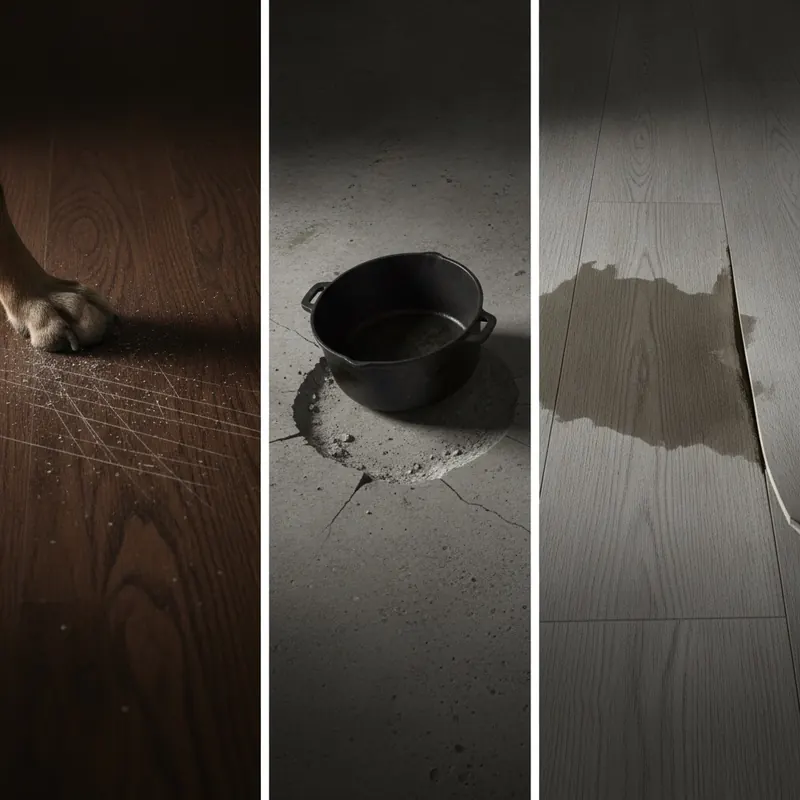
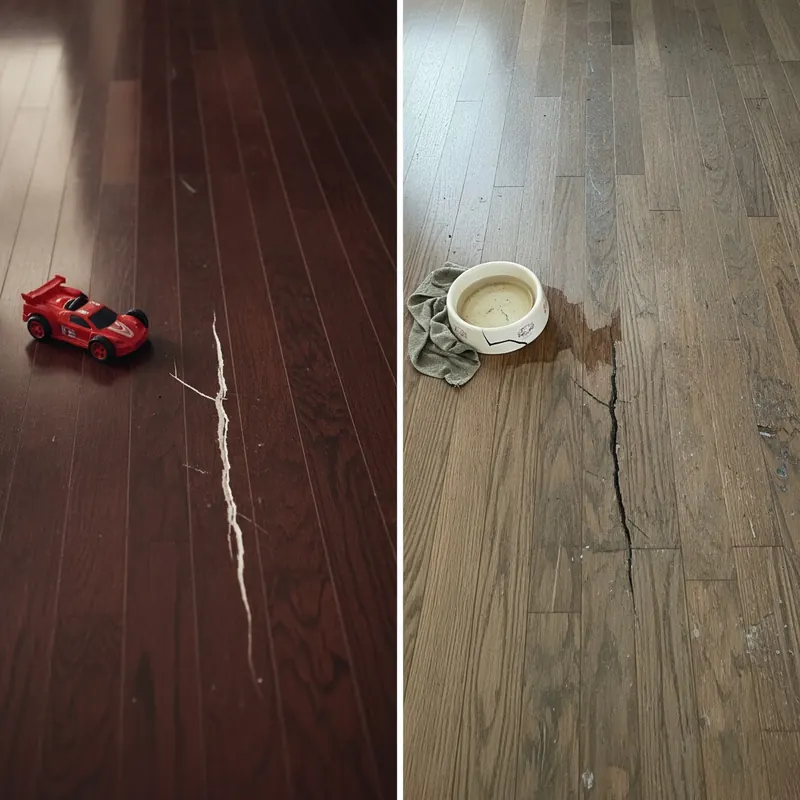
There’s nothing more frustrating than the sight of a dark scuff mark or a worn path appearing on a floor you thought would last a lifetime. That initial investment in time and money suddenly feels wasted, replaced by the daily annoyance of visible wear and tear. In a world of confusing marketing claims and endless options, how do you choose a floor that truly stands up to the demands of real life?
This guide moves beyond the brochure. We’re here to provide a data-driven framework for selecting, installing, and maintaining high-performance flooring. We will deconstruct the science of durability, translate complex technical specs into practical knowledge, and analyze materials based on their real-world performance and total cost of ownership. From busy family homes to high-traffic commercial spaces, you will learn how to make an informed choice that guarantees a beautiful, resilient floor that withstands the test of time, traffic, and stress.
- The Science of Floor Durability: Understanding Scuffs, Scratches, and Friction Wear
- Material Masterclass: The Top 5 Most Durable & Scuff-Resistant Flooring Options
- Application Blueprint: Choosing the Best Durable Flooring for Your Space
- Maximizing Your Investment: The Total Cost of Ownership
- Your Floor Protection Plan: Preventing and Repairing Damage
- Conclusion
- References & Authoritative Sources
The Science of Floor Durability: Understanding Scuffs, Scratches, and Friction Wear
Before you can choose a durable floor, it’s essential to understand the forces working against it. Every footstep, every piece of dragged furniture, and every dropped object contributes to a process of gradual degradation. Understanding the mechanics of this damage is the first step toward preventing it. The core concept is friction wear, a process where repeated contact slowly abrades, or wears away, a floor’s surface. Think of it like extremely fine sandpaper on wood; a single pass does little, but thousands of passes will eventually wear down the finish and the material itself.
This is why industry standards are so critical. Authoritative bodies like ASTM International develop and publish standardized test methods to measure material properties like abrasion resistance, ensuring that claims of durability can be backed by objective data [1].
To clarify the nuances of floor damage, we consulted our Pro Panel expert, Dr. Alena Petrova, a material scientist specializing in polymer coatings.
“The key difference is what’s happening at the microscopic level,” Dr. Petrova explains. “A scuff is primarily material transfer—a deposit of rubber or plastic from a shoe sole onto the floor’s finish. It sits on top. A scratch, however, is a physical gouge or incision into the floor’s surface, a true displacement of material. Understanding this distinction is crucial for both removal and prevention.”
What’s the Difference? Scuffs vs. Scratches vs. Wear Paths
Diagnosing the type of high traffic floor damage you’re seeing is the first step toward finding the right solution. While often used interchangeably, these terms describe distinct issues:
- Scuffs: These are surface-level marks caused by material transfer. The most common culprits are the black or colored rubber soles of shoes, plastic wheels on chairs, or dragged furniture leaving a residue on the floor’s protective topcoat. They are an addition to the surface.
- Scratches: These are physical cuts or grooves in the flooring surface itself. They are caused by sharp, hard objects like grit trapped under a shoe, a pet’s claws, or dragging a heavy appliance with a metal foot. They are a subtraction or displacement of the surface material.
- Wear Paths: These are dull, faded, or worn-down areas that appear over time in the most frequently used parts of a room, such as hallways, entryways, or in front of a sofa. This is the result of concentrated friction wear, where thousands of footsteps have gradually eroded the floor’s finish and sometimes even the printed design layer beneath it.
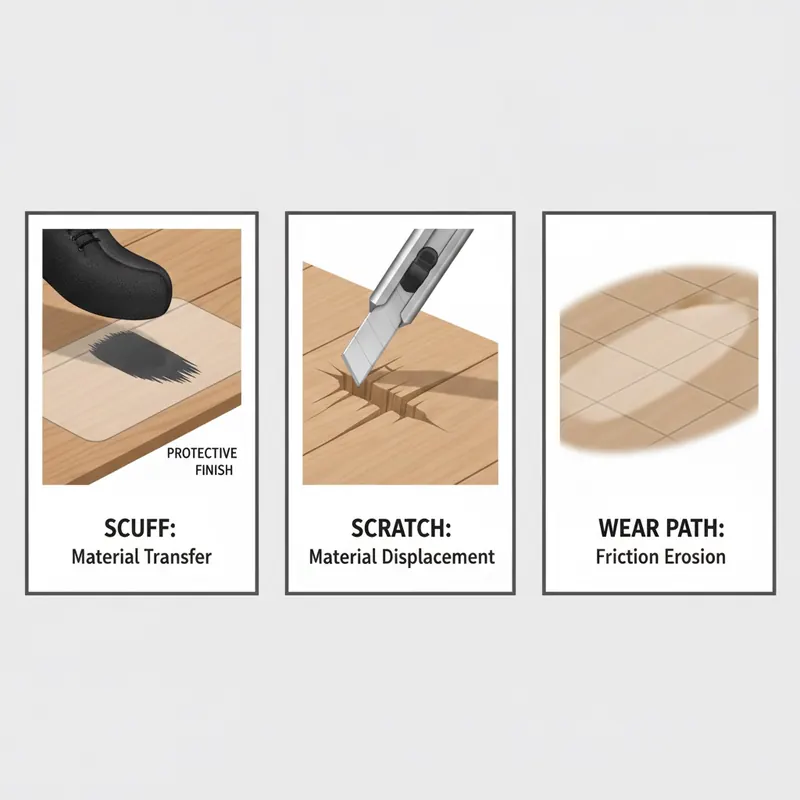
Flooring manufacturer care guides often differentiate between these damage types, as surface-level scuffs are typically covered under cleaning and maintenance, while deep scratches may constitute damage beyond the scope of a standard surface warranty.
Decoding Durability Ratings: Wear Layers, AC Ratings, and PEI Scale Explained
To combat friction wear and prevent damage, manufacturers have developed robust materials and rating systems to help consumers choose the right product. Understanding this industry jargon is your best defense against premature floor failure.
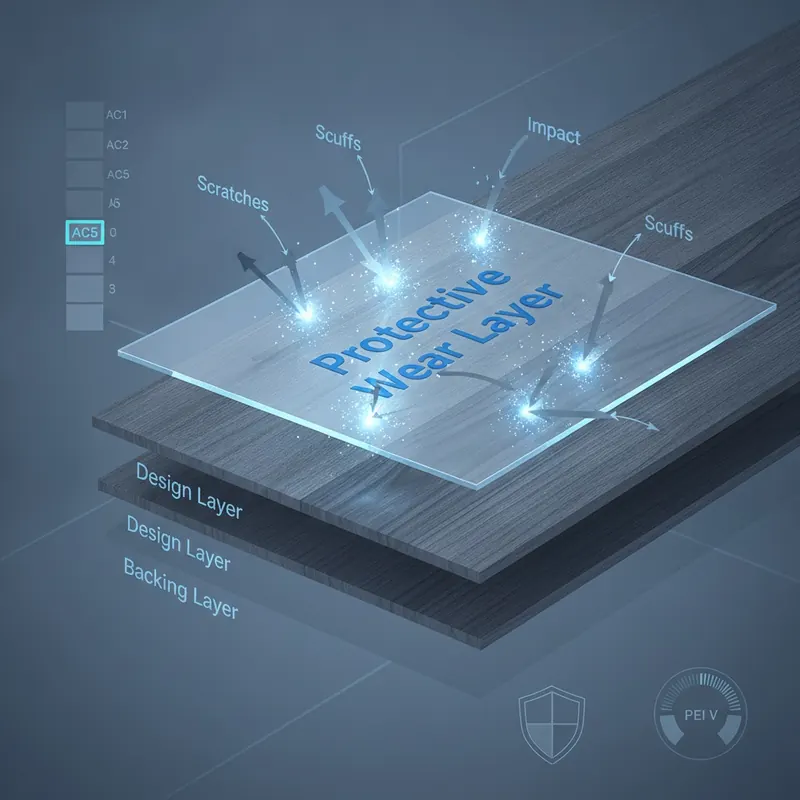
- Wear Layer (Luxury Vinyl Flooring): For resilient flooring like Luxury Vinyl Tile (LVT), the wear layer is everything. This transparent top layer, measured in mils (one-thousandth of an inch), is what protects the photographic design layer from scuffs, scratches, and wear. According to the Resilient Floor Covering Institute (RFCI), a 6-12 mil wear layer is suitable for light residential use, while 20 mil or higher is the standard for commercial grade flooring designed for heavy foot traffic [3].
- AC Rating (Laminate Flooring): The Abrasion Class (AC) rating system is a globally recognized standard for laminate flooring durability, governed by organizations like the North American Laminate Flooring Association (NALFA) [2]. It measures resistance to abrasion, impact, stains, and burns. The ratings are a clear guide to a product’s intended use.
| AC Rating | Traffic Level | Recommended Application |
|---|---|---|
| AC1 | Light | Closets, bedrooms |
| AC2 | Moderate | Living rooms, dining rooms |
| AC3 | Heavy | All residential areas, light commercial (small offices) |
| AC4 | Commercial | Busy offices, boutiques, cafes |
| AC5 | Heavy Commercial | Department stores, public buildings, airport terminals |
- PEI Rating (Porcelain & Ceramic Tile): The Tile Council of North America (TCNA) endorses the Porcelain Enamel Institute (PEI) rating, which measures the abrasion resistance of a tile’s glaze [4]. This is crucial for ensuring the surface doesn’t wear away in high-traffic areas.
- PEI I & II: Suitable for walls only or very light residential foot traffic (e.g., bathroom floors).
- PEI III: Ideal for all standard residential applications.
- PEI IV: Suitable for all residential and light-to-moderate commercial applications.
- PEI V: Designed for heavy commercial and industrial use with significant foot traffic.
Material Masterclass: The Top 5 Most Durable & Scuff-Resistant Flooring Options
With a solid understanding of durability metrics, let’s compare the top contenders in the world of wear resistant flooring. This scorecard provides a quick overview before we dive into the details of each material.
Durability Scorecard
| Flooring Material | Scuff Resistance | Scratch Resistance | Impact Resistance | Maintenance Needs |
|---|---|---|---|---|
| LVT (Commercial Grade) | 5/5 | 4/5 | 4/5 | Low |
| Epoxy Coating | 5/5 | 4/5 | 5/5 | Low |
| Polished Concrete | 4/5 | 3/5 | 5/5 | Very Low |
| Porcelain Tile | 4/5 | 5/5 | 4/5 | Low-Moderate |
| High-AC Laminate | 4/5 | 4/5 | 3/5 | Low |
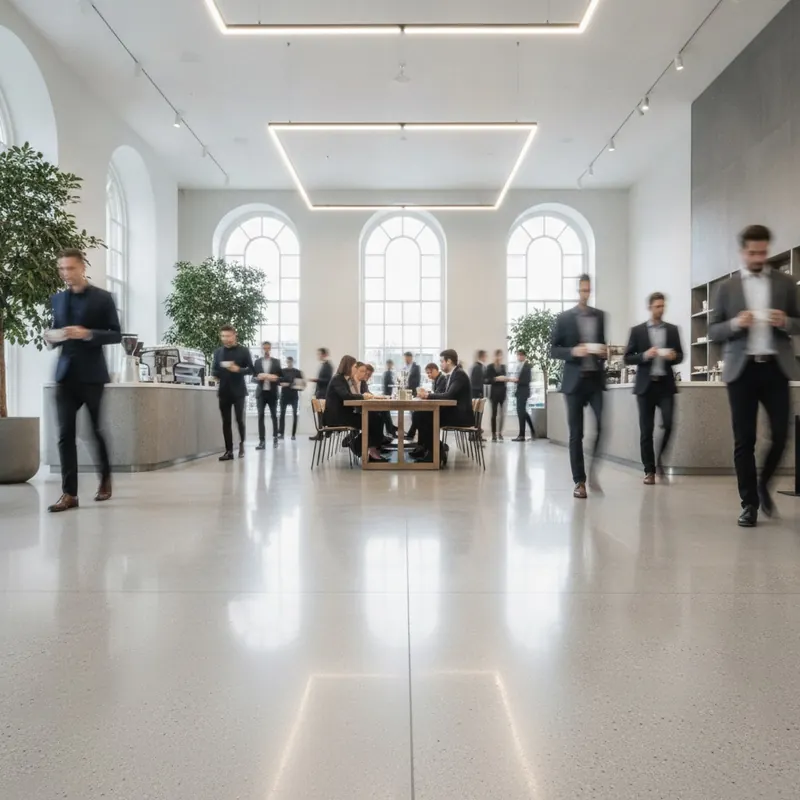
1. Luxury Vinyl Tile (LVT/LVP): The Versatile Champion
Modern LVT is an engineering marvel and a leader in scuff resistant flooring. Its strength comes from a multi-layer construction, typically comprising a backing layer, a rigid core, a high-definition printed design layer, and the all-important wear layer topped with a protective urethane coating. High-quality LVT, especially commercial grade vinyl flooring with a wear layer of 20 mil or more, is exceptionally resilient. Many leading brands now incorporate proprietary anti-scuff technologies, such as Shaw’s ScufResist PLATINUM or Mannington’s ScratchResist, which embed microscopic particles like aluminum oxide into the topcoat for enhanced protection.
2. Epoxy Floor Coatings: The Seamless Protector
For the ultimate in heavy duty flooring, especially in garages, workshops, basements, or commercial settings, epoxy coatings are unmatched. This two-part thermosetting resin is applied as a liquid over a concrete substrate, where it cures into a hard, seamless, and incredibly durable plastic surface. It is highly resistant to abrasion, chemical spills, and heavy impacts from dropped tools or machinery. According to The Society for Protective Coatings (SSPC), proper surface preparation is the single most important factor in the performance of any coating system [5]. Our Pro Panel certified installer, Marco Diaz, confirms this:
“I tell every client the same thing: 90% of an epoxy floor’s success happens before the epoxy is even mixed. A poorly prepared, damp, or contaminated concrete slab will cause any epoxy system to fail. Grinding, cleaning, and moisture testing are non-negotiable.”
3. Polished Concrete: The Industrial Powerhouse
Once relegated to warehouses and big-box stores, polished concrete has become a chic and incredibly durable option for modern homes and high-traffic commercial areas like retail stores and restaurants. The process involves mechanically grinding the concrete surface with progressively finer diamond abrasives to achieve the desired level of sheen and smoothness. A chemical densifier is then applied, which penetrates the concrete and creates a chemical reaction to help harden and dust-proof the surface. The result is a floor with immense compressive strength, often exceeding 4,000 PSI, making it nearly impervious to damage from friction wear or heavy loads. The American Concrete Institute (ACI) provides extensive standards for the proper finishing and treatment of concrete surfaces to ensure maximum durability [6].
A local coffee shop owner noted, “We chose polished concrete for our cafe three years ago. Between the constant foot traffic, dragged chairs, and occasional spills, it looks almost exactly the same as the day it was finished. A quick mop is all it ever needs.”
4. Porcelain Tile: The Classic Defender
When it comes to sheer surface hardness, porcelain tile is a champion. Made from finer, denser clay and fired at higher temperatures than standard ceramic tile, porcelain is exceptionally resistant to scratches and wear. For any area with heavy foot traffic, selecting a tile with a PEI rating of IV or V is crucial, as recommended by the Tile Council of North America (TCNA) [4]. This ensures the glazed surface can withstand thousands of passes without showing wear. But a tile floor is a system, and its overall durability depends on more than just the tile itself. Using a high-performance, stain-resistant grout and sealing it properly is essential to prevent cracking and discoloration in high-traffic zones, ensuring the entire floor system is easy to maintain and lasts for decades.
5. Engineered Hardwood & High-Durability Laminate
For those who love the look of wood but need more resilience, modern technology offers excellent solutions. High-quality laminate flooring with an AC4 or AC5 rating provides a commercial-grade level of wear resistance suitable for even the busiest homes and businesses. The secret lies in the topcoat, which is typically a melamine resin finish infused with aluminum oxide—one of the hardest engineered particles available. This creates an incredibly tough surface that resists scuffs and fading. Similarly, many modern engineered hardwoods now feature advanced, factory-applied urethane finishes with aluminum oxide, offering significantly more durability than traditional site-finished solid hardwood. As defined by NALFA standards, choosing a laminate product with the appropriate AC rating is the best way to match the floor’s durability to its intended environment [2].
Application Blueprint: Choosing the Best Durable Flooring for Your Space
Knowing the materials is half the battle. Now, let’s apply that knowledge to specific environments to help you make the right choice. For any commercial project, it’s vital to start with a compliance mindset. Your flooring choice may be governed by regulations from the Occupational Safety and Health Administration (OSHA) for slip resistance or the Americans with Disabilities Act (ADA) for surface transitions and friction coefficients [8], [9].
Our Pro Panel expert, facilities manager Sarah Jenkins, adds a critical perspective:
“Durability is paramount, but it’s not the only factor in a commercial space. We also have to consider acoustics—how a floor impacts noise levels in an open office—and the specific maintenance protocols. A floor that requires specialized equipment or nightly buffing might be durable, but its lifetime cost can be prohibitive. You have to look at the whole picture.”
For High-Traffic Homes (Kids, Pets, and Busy Entryways)
For the unpredictable chaos of a busy family home, you need a floor that balances durability, safety, and ease of cleaning. Here is a ‘Good, Better, Best’ approach:
- Good: AC3-rated laminate flooring offers a budget-friendly and scratch-resistant surface that can handle most residential traffic.
- Better: LVT with a 12-20 mil wear layer provides excellent protection against scuffs and scratches and is also waterproof, making it ideal for homes with pets and kids. To minimize the appearance of minor imperfections, consumer testing resources often recommend choosing matte or low-sheen finishes over high-gloss ones.
- Best: Porcelain tile with a PEI III or IV rating offers the ultimate in scratch and stain resistance. It is virtually indestructible and perfect for entryways, kitchens, and bathrooms.
For Demanding Commercial Spaces: A Sector-by-Sector Guide
Commercial environments require flooring that performs under specific, intense pressures. Material selection must be tailored to the sector’s unique demands.
Retail & Hospitality: Appearance and Wear Resistance
In hotel lobbies and retail stores, the floor is a critical part of the brand’s aesthetic and must withstand constant, heavy foot traffic. High-end LVT (20+ mil wear layer), polished concrete, and high-grade carpet tiles are top choices. These materials offer design flexibility while meeting the rigorous maintenance standards outlined by organizations like the Building Owners and Managers Association (BOMA) International [10].
Healthcare & Education: Sanitation and Durability
Hospitals, clinics, and schools require non-porous, seamless surfaces that are easy to sanitize and can endure rolling loads from carts and equipment. Sheet vinyl, rubber flooring, and LVT are excellent options. They meet strict health code requirements for hygiene and can be flash-coved up the wall for a completely sealed, easy-to-clean surface.
Industrial, Workshops & Kitchens: Impact and Chemical Resistance
These spaces demand the most heavy duty flooring available. Epoxy coatings provide a seamless, chemical-resistant surface perfect for workshops and manufacturing facilities. For commercial kitchens, quarry tile that meets specific American National Standards Institute (ANSI) standards for slip resistance and durability is often the mandated choice [11]. Thick rubber flooring is ideal for gyms and workshops where impact from dropped weights or tools is a primary concern.
Maximizing Your Investment: The Total Cost of Ownership
The sticker price of flooring is only one part of its true cost. To make a smart financial decision, you must consider the Total Cost of Ownership (TCO), which includes installation, maintenance, and potential repairs or replacement over the floor’s lifespan. A cheaper floor that needs to be replaced in five years is far more expensive than a premium option that lasts for twenty.
As one property manager and member of the International Facility Management Association (IFMA) explained, “We never budget for flooring based on material cost alone. We project its lifecycle cost. A slightly more expensive LVT with a 28 mil wear layer might cost 20% more upfront than a 20 mil option, but if it extends the replacement cycle from 10 years to 15 in our high-traffic corridors, the long-term savings are enormous” [12].
Sample 15-Year Total Cost of Ownership Comparison (per 1,000 sq. ft.)
| Cost Factor | LVT (20 mil) | Epoxy Coating | Porcelain Tile |
|---|---|---|---|
| Material Cost | $4,000 | $2,500 | $5,000 |
| Installation Cost | $3,000 | $5,000 | $8,000 |
| Annual Maintenance | $150 | $100 | $200 |
| 15-Year TCO | $9,250 | $9,000 | $16,000 |
*Note: These are estimates for illustrative purposes. Actual costs will vary significantly.
Your Floor Protection Plan: Preventing and Repairing Damage
The best way to deal with floor damage is to prevent it from ever happening. A proactive maintenance plan, guided by the standards of professional organizations like the Institute of Inspection, Cleaning and Restoration Certification (IICRC), can dramatically extend the life and beauty of your floor [13].
Daily/Weekly Tasks:
- Sweep or Dust Mop: Remove abrasive grit and dirt daily.
- Use Entry Mats: Place high-quality mats at all exterior doors to trap dirt and moisture.
- Clean Spills Immediately: Prevent stains and moisture damage.
- Damp Mop: Use a pH-neutral cleaner recommended for your specific floor type.
Annual Tasks:
- Deep Clean: Perform a restorative cleaning to remove built-up grime.
- Re-apply Sealer/Finish: For surfaces like concrete, tile grout, or certain hardwoods, re-applying a protective finish is key.
- Inspect for Damage: Check for deep scratches, chips, or peeling that may need professional attention.
Our professional cleaning consultant advises, “The biggest mistake we see is people using the wrong products. Never use vinegar on natural stone or tile grout, as the acid will etch it. Avoid ‘mop and shine’ products on LVT, as they create a sticky buildup. And never use an abrasive scrubbing pad on a modern urethane finish. Stick to the manufacturer’s recommendations.”
Proactive Protection: The First Line of Defense
Simple, inexpensive measures are your most powerful tools against scuffs and scratches.
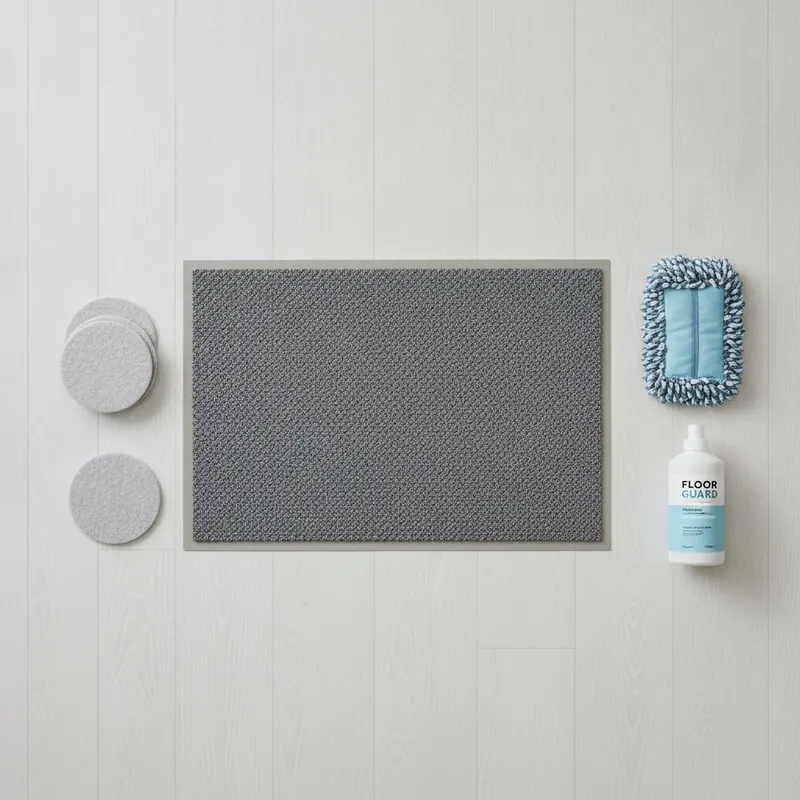
- Furniture Pads: Apply thick felt pads to the feet of all chairs, tables, and sofas. Check and replace them regularly.
- Entry Mats: Use a coarse scraping mat outside the door and a softer, absorbent mat inside. For LVT, ensure the mat has a non-staining, non-rubber backing.
- Area Rugs: Place rugs in high-wear areas like in front of couches or in main hallways.
Scuff Removal 101: A Material-Specific Guide
When scuffs inevitably appear, use the gentlest method first.
| If your floor is… | Try this first… | If that doesn’t work… |
|---|---|---|
| LVT / Vinyl | A dry microfiber cloth | A tennis ball or pink pencil eraser |
| Laminate | A damp microfiber cloth | A small amount of acetone on a cloth (test first) |
| Sealed Hardwood | A damp microfiber cloth | A specialized hardwood floor scuff remover |
| Polished Concrete | A damp mop with neutral cleaner | A melamine foam sponge (e.g., Magic Eraser) |
A melamine foam sponge works by acting as an extremely fine abrasive that “sands” the scuff mark—the transferred material—off the floor’s surface without damaging the hard finish underneath. This principle is explained by resources like Chemical Safety Facts, which detail the physical and chemical properties of cleaning products [14].
Damage Triage: When to Repair vs. Replace
How do you know if damage is a simple fix or a sign of a bigger problem? Use this checklist to decide.
- Is the damage only on the surface, or has it penetrated the wear layer or design? (Surface = Repairable)
- Is the damage localized to one or two planks/tiles? (Localized = Repairable)
- Is the floor peeling, cupping, or buckling? (Widespread = Likely Replacement)
- Is the subfloor underneath soft, damp, or compromised? (Compromised = Replacement)
According to the Certified Flooring Installers Association (CFI), many instances of premature floor failure, like peeling or buckling in high-traffic areas, are not a fault of the material but a direct result of improper installation or inadequate subfloor preparation [15]. If you see these signs, a full replacement may be the only long-term solution.
Conclusion
Choosing a durable floor is an investment in the long-term value, beauty, and functionality of your space. By moving beyond marketing hype and focusing on the science of durability, you can make a choice with confidence. Remember the key takeaways: durability is defined by measurable metrics like wear layer thickness, AC ratings, and PEI ratings; the right material is always dictated by the specific application; and the true cost of a floor is best understood through its total cost of ownership. An informed decision based on this data-driven framework will lead you to a scuff-resistant, high-performance floor that truly lasts.
Ready to find the perfect durable floor for your project? Download our free ‘Durability Scorecard’ to compare your options, or contact our flooring experts today for a personalized consultation.
Disclaimer: This article provides informational guidance. Always consult with a certified flooring professional for specific project advice and to ensure proper installation and sub-floor preparation.
References & Authoritative Sources
- ASTM International. (N.D.). Standards for Resilient Floor Coverings. Retrieved from astm.org
- North American Laminate Flooring Association (NALFA). (N.D.). AC Ratings. Retrieved from nalfa.com
- Resilient Floor Covering Institute (RFCI). (N.D.). Technical Resources. Retrieved from rfci.com
- Tile Council of North America (TCNA). (N.D.). PEI Rating. Retrieved from tcnatile.com
- The Society for Protective Coatings (SSPC). (N.D.). Surface Preparation Standards. Retrieved from sspc.org
- American Concrete Institute (ACI). (N.D.). Standards for Concrete Finishing. Retrieved from concrete.org
- Good Housekeeping Institute. (N.D.). Flooring Reviews and Advice. Retrieved from goodhousekeeping.com
- Occupational Safety and Health Administration (OSHA). (N.D.). Walking-Working Surfaces Standards. Retrieved from osha.gov
- The U.S. Access Board. (N.D.). ADA Standards for Accessible Design. Retrieved from access-board.gov
- Building Owners and Managers Association (BOMA) International. (N.D.). Floor and Finish Maintenance Standards. Retrieved from boma.org
- American National Standards Institute (ANSI). (N.D.). A137.1 Specifications for Ceramic Tile. Retrieved from ansi.org
- International Facility Management Association (IFMA). (N.D.). Resources on Asset Lifecycle Management. Retrieved from ifma.org
- Institute of Inspection, Cleaning and Restoration Certification (IICRC). (N.D.). Standards for Floor Care. Retrieved from iicrc.org
- Chemical Safety Facts. (N.D.). Melamine. Retrieved from chemicalsafetyfacts.org
- Certified Flooring Installers Association (CFI). (N.D.). Installation Standards. Retrieved from cfiinstallers.org