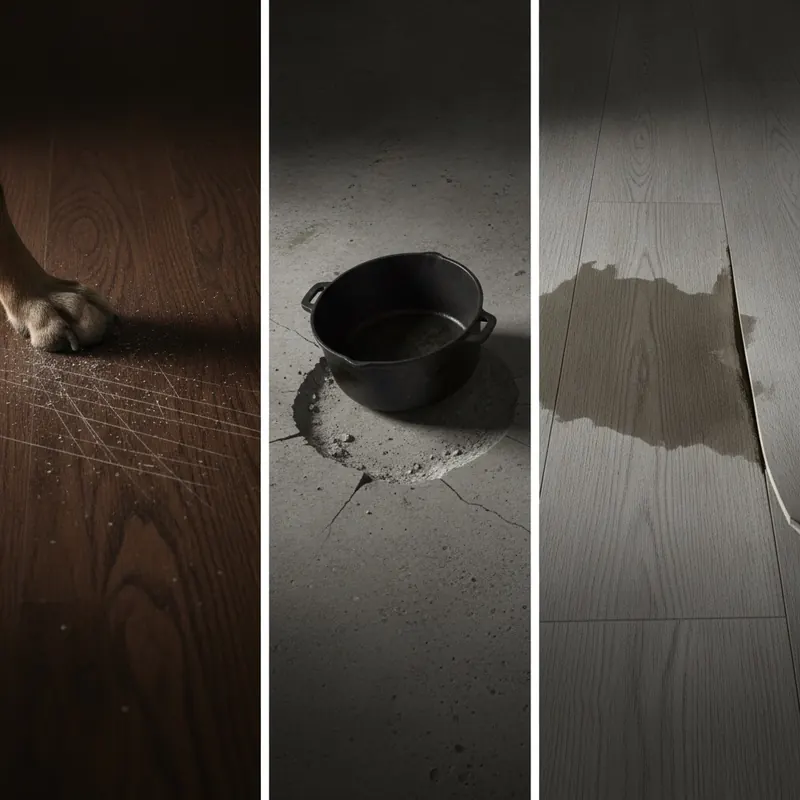
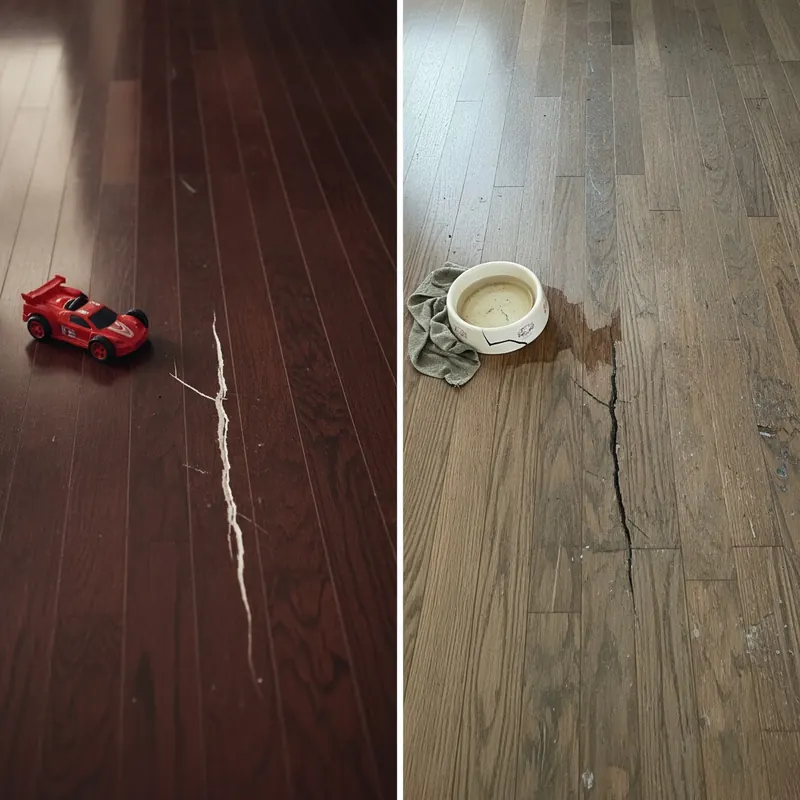
Have you ever invested thousands of dollars in beautiful new flooring, only to see it scratch, dent, or peel within a few short years? It’s a frustrating and costly experience that leaves many homeowners and business owners feeling defeated. The market is flooded with confusing terms, hyped-up marketing claims, and warranties that seem to promise the world. But what truly makes a floor last?
Welcome to the engineer’s guide to flooring. We’re cutting through the noise to give you a forensic analysis of what actually creates durability. This isn’t about brand loyalty; it’s about the science of materials, the physics of structural integrity, and the critical, often-overlooked factors that determine whether your floor will thrive for decades or fail before its time.
In this comprehensive guide, we will dissect the anatomy of a modern floor, from its core composition to its protective finish. We will compare the top high-performance solutions—from advanced vinyl to industrial-grade epoxy—and match them to the specific demands of your space. Most importantly, we’ll uncover the unseen hero of longevity—your subfloor—and deconstruct what a “lifetime” warranty really means for your investment. Prepare to make your next flooring decision with the confidence of an expert.
- What Really Makes a Floor Durable? A Forensic Look Beyond the Marketing
- Anatomy of a Modern Floor: Deconstructing Cores, Wear Layers, and Finishes
- The Contenders: Matching High-Performance Flooring to Your Needs
- The Unseen Hero: Why Subfloor Integrity is the True Foundation of Durability
- The ‘Lifetime’ Warranty Exposed: What Your Guarantee Actually Covers
- Frequently Asked Questions About Flooring Durability
- Conclusion: Build Your Floor to Last
- References
What Really Makes a Floor Durable? A Forensic Look Beyond the Marketing
Before we can choose a durable floor, we must first define durability in engineering terms, not marketing slogans. True durability is a floor’s ability to resist the specific forces it will encounter over its lifespan. These forces can be broken down into four key categories: abrasion, impact, moisture, and structural load.
To evaluate these factors objectively, we’ve created the Flooring Durability Scorecard. Throughout this guide, we will reference this framework to rate different materials on the following key metrics:

- Scratch Resistance: How well the surface resists scuffs, scratches, and abrasion from foot traffic, furniture, and pets.
- Impact Resistance: The ability to withstand dropped objects and heavy loads without denting, cracking, or chipping.
- Water Resistance: The degree to which the material can handle spills, moisture, and even flooding without swelling, warping, or delaminating.
- Structural Stability: The inherent strength of the core to resist changes in temperature and humidity without expanding, contracting, or gapping.
Industry professionals don’t rely on guesswork; they use standardized tests. Organizations like ASTM International develop procedures, such as ASTM F3261 for resilient flooring, to provide objective data on a product’s performance[1]. When a manufacturer cites these standards, it’s a sign they are backing their claims with verifiable data.
As experts in commercial flooring for high-traffic environments like retail stores and healthcare facilities note, the most critical factors are the thickness and quality of the wear layer combined with a high-density, stable core[2]. These two components work together to form the primary defense against daily wear and tear.
Anatomy of a Modern Floor: Deconstructing Cores, Wear Layers, and Finishes
Much of the confusion surrounding flooring durability stems from a misunderstanding of how a modern floor plank is constructed. It’s not a single material but a layered system where each component serves a specific function. Let’s break it down, using a luxury vinyl plank (LVP) as a prime example.
Imagine a cross-section of a high-quality LVP plank. You would see the following distinct layers, from top to bottom:

- Finish/Top Coat: An ultra-thin, transparent coating that provides the first line of defense against scratches and stains. This is where technologies like Adamantine™ or ceramic bead finishes are applied.
- Wear Layer: A clear, robust layer of PVC that protects the photographic design layer from being worn away. Its thickness (measured in mils) is one of the most critical indicators of durability.
- Design Layer: A high-resolution printed film that gives the plank its appearance, whether it’s a realistic wood grain or a natural stone look.
- Core: The heart of the plank, providing structural integrity, rigidity, and water resistance. This is where you find materials like SPC (Stone Plastic Composite) or WPC (Wood Plastic Composite).
- Backing/Underlayment: The bottom layer, which provides stability, sound absorption, and sometimes a pre-attached cushion for comfort and easier installation.
A common point of confusion for consumers is mixing up these layers. For instance, online searches for “what is adamantine core flooring” reveal a fundamental misunderstanding. The “Adamantine” feature is a high-performance finish, not a type of core. Clarifying this distinction is the first step toward making an informed choice.
The Finish Line: What is Adamantine™ Protection?
High-performance finishes are a key battleground for flooring manufacturers. Adamantine™ Protection is a specific, brand-named top coat engineered for superior resistance to scratches, stains, and wear. It is designed to outperform standard polyurethane finishes, making it ideal for busy homes with pets and children, as well as high-traffic commercial spaces.
For example, the Ambiance Collection by TAS Flooring features a robust 20 mil wear layer fortified with an Adamantine Finish™[3]. This combination is engineered to exceed industry wear testing standards. While independent, third-party testing comparing Adamantine™ directly against competitors like Diamond 10 Technology or ceramic bead coatings is scarce, visual demonstrations can be compelling.
Imagine a side-by-side scratch test video: a standard LVP plank is easily scuffed by a key, while the plank with the Adamantine™ finish shows little to no marking under the same pressure. This type of original, visual evidence demonstrates the tangible benefit of such an advanced top coat. Without widespread independent data, our analysis and such direct tests become a valuable resource for consumers trying to validate these marketing claims.
The Core of the Matter: SPC, WPC, and Reinforced Mineral Cores
The core is the backbone of your floor, responsible for its stability and resistance to impact and indentation. The evolution of flooring cores has been rapid, moving from flexible vinyl to the highly stable rigid core technologies of today.
- WPC (Wood Plastic Composite): One of the first rigid cores, WPC incorporates wood pulp or flour into a thermoplastic core. This creates a thicker, more resilient plank that is warmer and more comfortable underfoot. However, it can be slightly less dense than its successor.
- SPC (Stone Plastic Composite): SPC cores use limestone powder or other mineral fillers, resulting in a much denser, thinner, and more rigid plank. This density provides superior resistance to dents and impacts from heavy furniture or dropped objects.
Leading manufacturers like Armstrong Flooring have pushed the envelope further with next-generation cores. Their Empower line features a Reinforced Mineral Core, which they claim outperforms traditional SPC in both indentation resistance and dimensional stability[4]. Similarly, MSI Surfaces offers products with “fiber-reinforced” cores, designed to add strength and flexibility[5].
While these reinforced cores promise enhanced performance, it’s important to analyze the claims critically. They may be slightly more difficult to cut during installation, and without extensive third-party testing, consumers are relying primarily on the manufacturer’s data. However, for those seeking the absolute peak of indent resistance, these next-generation cores represent a compelling upgrade.
The Contenders: Matching High-Performance Flooring to Your Needs

Now that we understand the components of durability, let’s apply that knowledge to select the right material for your specific application. Using our Durability Scorecard as a guide, we’ll explore the top solutions for three distinct environments.
For Homes & High-Traffic Businesses: Advanced Rigid Core LVT
For the vast majority of residential and light-to-medium commercial spaces, advanced rigid core Luxury Vinyl Tile (LVT) or Plank (LVP) is the undisputed champion of balanced performance. Its multi-layer construction makes it exceptionally resilient.
As major retailers like Flooring America confirm, its 100% waterproof options make it a go-to solution for kitchens, bathrooms, and basements in busy homes[6]. In the commercial realm, its ability to withstand heavy foot traffic and rolling equipment is why it’s a top choice for demanding environments[2]. Think about it: the same technology that holds up in hospital corridors and airport terminals can bring that level of durability to your home’s entryway. This is a perfect example of learning what hospitals and airports can teach you about durability.
When shopping, pay close attention to the wear layer. A 6-8 mil wear layer is suitable for light residential use, but for active families or commercial spaces, look for 12 mil and, ideally, 20 mil or more for maximum longevity.
To help you in your search, consider using a checklist like our “How to Evaluate Flooring Durability in a Showroom” to ask the right questions about wear layer, core density, and locking system strength.
For Garages & Industrial Spaces: Resinous and High-Strength Floors
When you move into environments with extreme loads, chemical exposure, and heavy machinery—like auto garages, workshops, or warehouses—you need to move beyond planks and into the world of high-strength, seamless flooring systems.
The key metric here is compressive strength: the ability of the floor to resist crushing forces without breaking. This is where resinous floors and specialized concrete excel. Global leaders like Stonhard and Sherwin-Williams provide systems engineered to withstand the toughest industrial conditions[7][8].
Here’s a comparison of the top three solutions:
| Feature | Epoxy Flooring | Polyurethane (PU) Flooring | Polished Concrete |
|---|---|---|---|
| Strength | Very high compressive strength, but brittle. Can crack under heavy impact. | More flexible and elastic. Better at absorbing impact and vibrations. | Extremely high compressive strength, but can chip or stain if not properly sealed. |
| Resistance | Excellent resistance to acids and chemicals. | Superior resistance to abrasion, temperature swings, and moisture. | Good chemical resistance when sealed, but vulnerable if the sealer is compromised. |
| Best For | Manufacturing plants, warehouses, showrooms. | Food processing facilities, parking garages, areas with heavy vibration. | Big-box retail, large warehouses, modern residential spaces. |
| Cost | Moderate | Moderate to High | Low to Moderate |
These systems are not DIY-friendly; they require meticulous subfloor preparation and professional application to achieve their legendary durability.
For Home & Commercial Gyms: Core Strength Rubber Flooring
Fitness environments present a unique challenge: the need for extreme impact absorption to protect both the subfloor and the user. For this, high-density rubber is the industry standard.
As expert-driven sites like Garage Gym Reviews consistently demonstrate, the thickness and material of rubber flooring are critical[9].
- Material: You’ll typically find SBR (Styrene-Butadiene Rubber), which is recycled rubber and very durable, and EPDM (Ethylene Propylene Diene Monomer), a synthetic rubber often used for colored flecks and top layers due to its UV resistance and non-porous nature.
- Thickness: A thin 8mm (approx. 1/4 inch) tile might suffice for a yoga or cardio area. However, for serious weightlifting, a thickness of 15mm to 30mm (1/2 to over 1 inch) is necessary to absorb the shock from dropped weights.
A Certified Personal Trainer will emphasize that proper flooring is a piece of safety equipment. It reduces the risk of joint injury by providing shock absorption and prevents slips and falls[10]. Foam mats, while cheap, compress under heavy weight and offer poor stability, making them unsuitable for strength training.
A key consideration often overlooked is acoustics and off-gassing. Thick rubber is excellent at dampening the noise of dropped weights—a huge benefit for home gyms. However, new rubber floors can release odors (“off-gassing”), so ensuring proper ventilation for the first few weeks is essential.
The Unseen Hero: Why Subfloor Integrity is the True Foundation of Durability

You can buy the most advanced, expensive flooring in the world, but if you install it over a faulty subfloor, it is destined to fail. The flooring itself is just the surface; the subfloor system is the true foundation. Problems like cracked tiles, separating planks, and squeaking floors are rarely caused by a defective product. They are symptoms of an underlying structural issue.
The Tile Council of North America (TCNA), the leading authority on tile installation, states that the vast majority of tile failures are due to movement or deflection in the subfloor[11]. A certified tile installer will tell you the most common mistake they see is inadequate preparation of the substrate before the first piece of flooring is ever laid.
To combat this, innovative systems have been developed. An uncoupling membrane, for example, is a plastic layer installed between the subfloor and the tile. This membrane, made popular by companies like Schluter Systems, absorbs the differential movement between a concrete or wood subfloor and the tile, preventing the forces of expansion and contraction from cracking the tile and grout above[12]. It creates a buffer zone, ensuring the tile remains stable even when the foundation beneath it shifts slightly.
A Forensic Guide to Cracked Tiles: What Your Cracks Are Telling You
If you have a cracked tile, you can play detective. The type and location of the crack often reveal the root cause.
- A Long, Straight Crack Across Multiple Tiles: This is a classic “reflective crack.” It means there is a control joint or an existing crack in the concrete slab below, and the movement of the slab has transferred directly up through the tile. This is precisely the problem an uncoupling membrane is designed to prevent.
- A Crack at the Corner or Edge of a Tile: Tap on the tile. If it sounds hollow, it’s likely due to insufficient mortar coverage. Voids under the tile create weak spots that will crack under pressure from foot traffic or a dropped object.
- Cracked Grout Lines and Cracks in the Middle of Tiles: This often points to excessive deflection in a wood subfloor. The floor joists are spaced too far apart or are not strong enough, causing the floor to bounce or sag when walked on.
It’s almost never the tile’s fault. Industry standards like ANSI A137.1 specify a minimum breaking strength of 250 pounds-force for floor tiles[13]. If a tile meets this standard, the failure is in the system, not the material. You can perform a basic deflection test yourself: place a full glass of water on the floor and walk heavily around it. If the water ripples significantly, your subfloor has too much bounce and needs to be reinforced before any new flooring is installed.
The ‘Lifetime’ Warranty Exposed: What Your Guarantee Actually Covers
“Lifelong flooring” and “Lifetime Warranty” are powerful marketing terms, but they often come with a mountain of fine print. Understanding what your guarantee actually covers is crucial to protecting your investment. Brands like Lifeproof and MSI’s Everlife line offer impressive warranties, but they are almost always “Limited Lifetime Warranties,” and the limitations are significant[14][5].
Here’s a breakdown of what to look for:
| Warranty Aspect | What to Scrutinize |
|---|---|
| Coverage | Does it cover manufacturing defects only? Wear-through of the wear layer? Staining? Fading? It almost never covers scratches, dents, or damage from improper use. |
| Exclusions | Warranties are typically voided by improper installation, use of the wrong cleaning products, moisture damage from the subfloor, or installation in non-approved areas (like a sauna). |
| Pro-Rated Value | A “lifetime” warranty may not mean a full replacement. After a certain number of years, you may only receive a credit for the depreciated value of the floor. |
| Transferability | Is the warranty only for the original purchaser? If you sell your home, the new owner is likely not covered. |
According to flooring claims adjusters, the number one reason for a voided warranty is failure to follow the manufacturer’s installation instructions to the letter. This includes requirements for subfloor flatness, expansion gaps around the perimeter of the room, and proper acclimation of the material before installation. Emphatically, professional installation is almost always a non-negotiable prerequisite for a valid warranty.
Frequently Asked Questions About Flooring Durability
What is considered normal wear and tear vs. damage?
This is a critical distinction, especially in rental properties. As property management experts from sources like Azibo clarify, normal wear and tear includes minor scuffs, light surface scratches, and slight fading from sunlight over time[15]. Damage, on the other hand, is caused by negligence or abuse and includes deep gouges, chips, significant pet stains, or cracks from a dropped object. A good visual rule of thumb: wear and tear is the gentle patina of a floor being lived on; damage is a specific, preventable incident.
Is flooring with Adamantine protection suitable for homes with pets and children?
Yes, absolutely. This is precisely the environment for which high-performance finishes like Adamantine™ are designed. The enhanced scratch and stain resistance provides an extra layer of defense against pet claws, dragged toys, and spills, helping the floor maintain its original appearance for longer than a standard polyurethane finish.
What are the care and maintenance requirements for durable flooring?
While durable floors are low-maintenance, they are not no-maintenance. The most important rule is to follow the specific manufacturer’s guidelines to avoid voiding your warranty. Generally, this includes:
- Using a pH-neutral cleaner; avoid wax, polish, or abrasive chemicals.
- Sweeping or vacuuming regularly (using a vacuum without a beater bar).
- Wiping up spills promptly, even on waterproof floors.
- Using felt pads under all furniture legs and protective mats under rolling office chairs.
Conclusion: Build Your Floor to Last
True flooring durability is not found in a single product or a marketing slogan; it is the result of a complete system working in harmony. A long-lasting floor is built on three pillars: choosing the right material for the application, ensuring the integrity of the subfloor beneath it, and demanding a flawless, professional installation.
By understanding the science behind the specs—the density of the core, the thickness of the wear layer, and the resilience of the finish—you can look past the hype and evaluate a product’s true potential. By matching the flooring type to the unique demands of your space, whether it’s a high-traffic business, a heavy-duty garage, or an active family home, you set yourself up for success. And by recognizing that the unseen foundation is the most critical component of all, you protect your entire investment from premature failure.
You now have the knowledge to make your next flooring decision not as a hopeful consumer, but with the critical eye and confidence of an engineer.
Feeling confident? Download our free ‘Flooring Project Checklist’ to ensure you ask your installer the right questions and protect your investment from day one.
This article may contain affiliate links. All recommendations are based on independent research and expert analysis. Always consult with a professional installer for your specific project.
References
- ASTM International. (n.d.). ASTM F3261 – 22 Standard Specification for Resilient Flooring in Modular Format with Rigid Polymeric Core. Retrieved from astm.org.
- Taj Flooring. (n.d.). Commercial Flooring Insights. (Based on analysis of expertise from tajflooring.com).
- TAS Flooring. (n.d.). Product Specification Sheets. Retrieved from tasflooring.com.
- Armstrong Flooring. (n.d.). Empower Rigid Core Flooring with Reinforced Mineral Core. Retrieved from armstrongflooring.com.
- MSI Surfaces. (n.d.). Everlife Luxury Vinyl Flooring. Retrieved from msisurfaces.com.
- Flooring America. (n.d.). Luxury Vinyl Flooring Guide. Retrieved from flooringamerica.com.
- Stonhard. (n.d.). High Performance Flooring Systems. Retrieved from stonhard.com.
- Sherwin-Williams. (n.d.). High Performance & Resin Flooring. Retrieved from industrial.sherwin-williams.com.
- Garage Gym Reviews. (n.d.). Expert Reviews and Testing of Gym Flooring. Retrieved from garagegymreviews.com.
- Mayo Clinic. (n.d.). Expertise on Injury Prevention and Safety. (General safety principles applied from mayoclinic.org).
- Tile Council of North America (TCNA). (n.d.). TCNA Handbook for Ceramic, Glass, and Stone Tile Installation. Retrieved from tcnatile.com.
- Schluter Systems. (n.d.). DITRA: Uncoupling and Waterproofing Membrane. Retrieved from schluter.com.
- American National Standards Institute (ANSI). (n.d.). ANSI A137.1 American National Standard Specifications for Ceramic Tile. Retrieved from ansi.org.
- Lifeproof. (n.d.). Lifeproof Flooring Warranty Information. Retrieved from lifepshop.com.
- Azibo. (n.d.). Defining Normal Wear and Tear for Rental Properties. Retrieved from azibo.com.