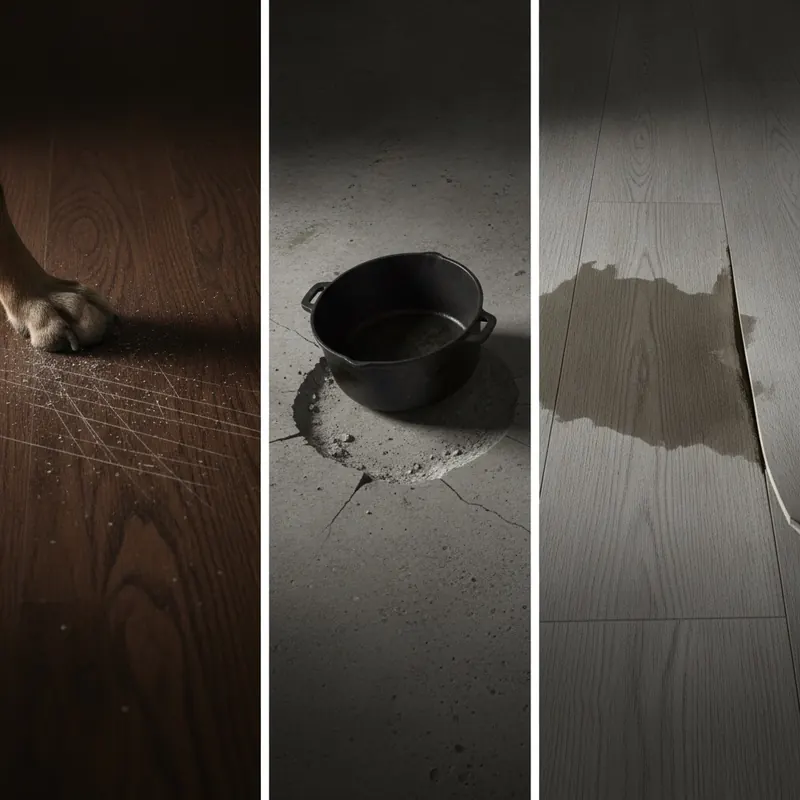
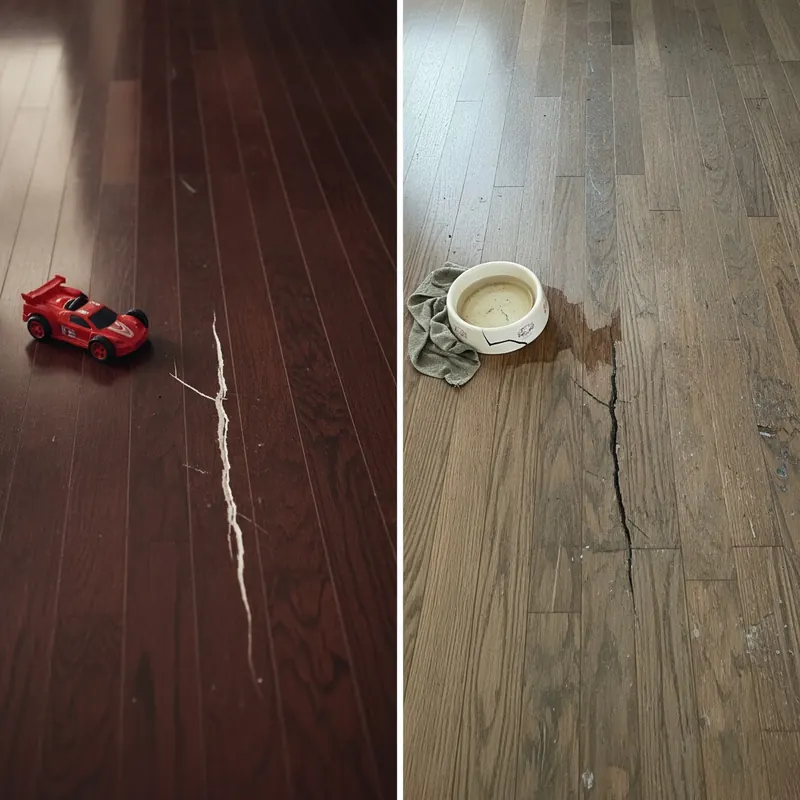
Is there anything more frustrating than watching your beautiful new floors succumb to the daily chaos of life? The cringe-inducing scrape of a chair, the tell-tale click of a dog’s nails, or the dent left behind by a dropped toy—these are the moments that make you question your investment. You wanted a foundation for your home, not a constant source of stress.
If you’re tired of floors that scratch, stain, and wear out before their time, you’ve come to the right place. This is not just another list of flooring types. This is your definitive guide to choosing a “forever floor”—a durable, high-performance surface engineered to withstand your unique lifestyle. We’ll move beyond marketing hype to give you a practical framework for your decision.
Together, we will decode the technical specs that define true durability, put the top materials in a head-to-head comparison, match the right floor to your specific needs (pets and kids included!), and demystify the fine print of so-called “lifetime” warranties. By the end, you’ll be empowered to choose a floor that you’ll love not just for years, but for decades to come.
- What Truly Makes a Floor Durable? Decoding the Specs
- The Top 4 Contenders for Most Durable Flooring: A Head-to-Head Comparison
- Matchmaking: Finding the Perfect Durable Floor for Your Lifestyle
- The Economics of Durability: A Long-Term Investment Guide
- Spotlight: What is ‘Adamantine’ Flooring Protection?
- Maintaining Your Durable Floor for a Lifetime of Performance
- Your Foundation for the Future
- References & Authoritative Sources
What Truly Makes a Floor Durable? Decoding the Specs
Before you can choose the most durable flooring, you need to speak the language. Manufacturers use specific terms to measure a floor’s resilience. Understanding these key metrics is the first step to seeing past marketing claims and assessing a product’s true potential for long-lasting performance.
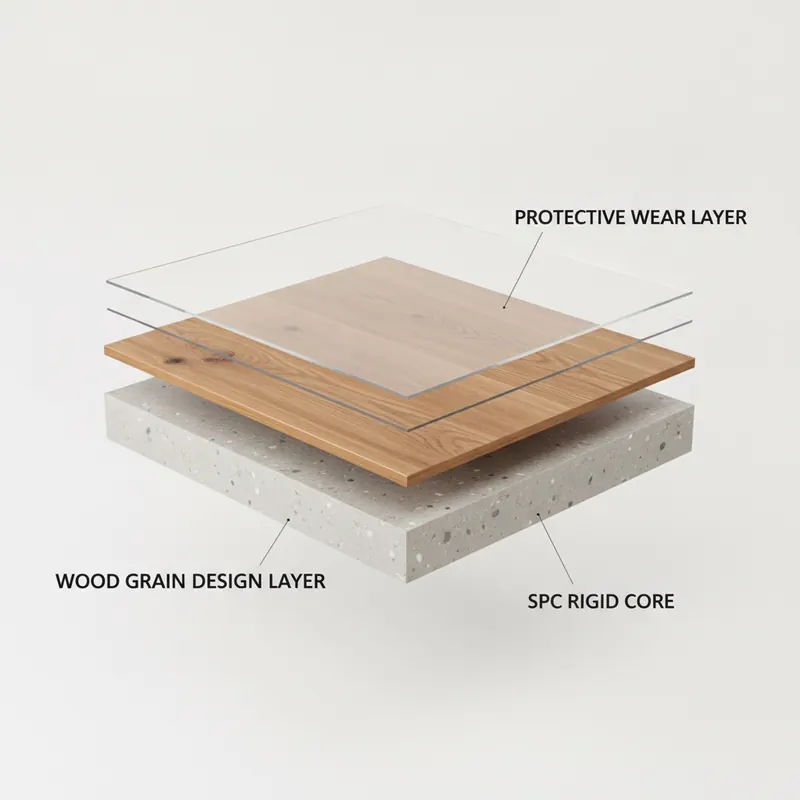
- Wear Layer: This is the transparent top coat on luxury vinyl and laminate flooring that provides protection against scratches, scuffs, and stains. Its thickness is measured in mils (one-thousandth of an inch). For a busy home, a thicker wear layer is non-negotiable. While 6-10 mils might suffice for a low-traffic bedroom, high-traffic areas demand 12 mils or, ideally, 20 mils or more for maximum protection.
- AC (Abrasion Class) Rating: Specific to laminate flooring, the AC rating measures its resistance to abrasion, impact, stains, and burns. The scale runs from AC1 (light residential use) to AC5 (heavy commercial use). For most homes, an AC3 or AC4 rating offers an excellent balance of durability and cost, ensuring the floor can handle general family life with ease.
- SPC (Stone Plastic Composite) Core: Found in many modern luxury vinyl plank (LVP) products, an SPC core is a game-changer for durability. This rigid core is made from a mixture of natural limestone powder, polyvinyl chloride, and stabilizers. It makes the plank incredibly dense, stable, and resistant to impacts and dents—far more so than older, more flexible vinyl flooring.
From the Pro’s Toolbox: “I’ve installed thousands of floors, and the one spec I tell every homeowner to look at is the wear layer on LVP or the AC rating on laminate. A beautiful design doesn’t mean a thing if the protective top coat wears off in three years. A 20-mil wear layer or an AC4 rating is what separates a ‘looks good now’ floor from a ‘looks good in a decade’ floor.”
The Top 4 Contenders for Most Durable Flooring: A Head-to-Head Comparison
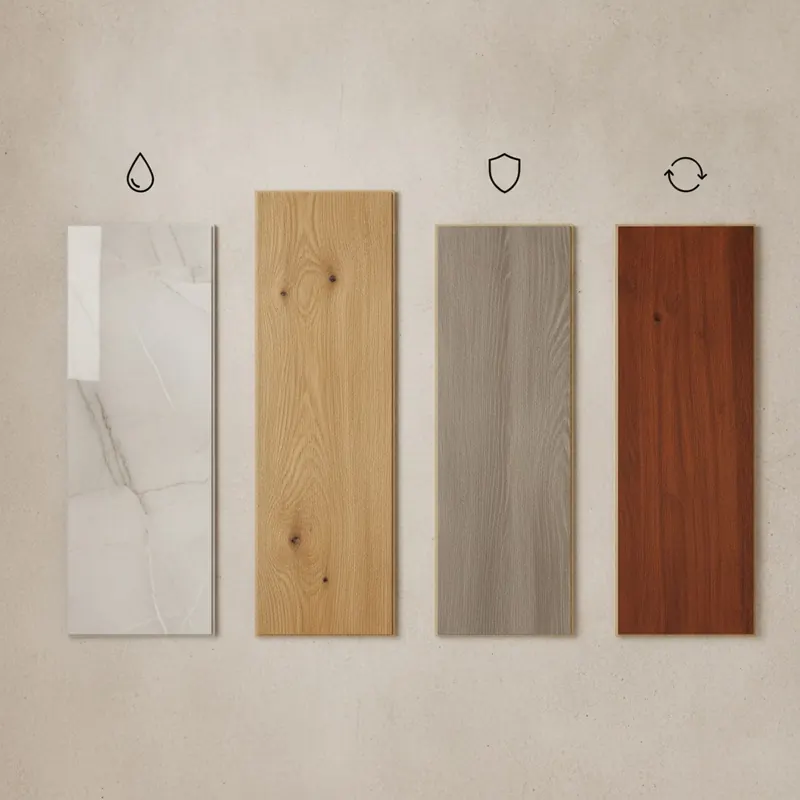
Now that you know what to look for, let’s analyze the heavyweights in the world of durable flooring. To make this easier, we’ve created a simple scorecard to see how they stack up at a glance.
- Scratch Resistance: How well it stands up to pets, furniture, and daily traffic.
- Water Resistance: Its ability to handle spills, moisture, and even flooding.
- Lifespan: The expected duration with proper care.
- Maintenance Effort: How easy it is to clean and maintain.
While porcelain tile can last 60 years or more, a well-maintained hardwood floor has the unique ability to last 70 to 100 years through refinishing.[1] Let’s dive into the specific pros and cons of each contender.
1. Porcelain & Ceramic Tile: The Undisputed Durability Champion
When it comes to raw, brute-force durability, nothing beats tile. Porcelain tile, in particular, is fired at higher temperatures and made from more refined clay, making it denser, less porous, and harder than standard ceramic tile.
So, what makes porcelain tile the most durable flooring? Its incredible hardness makes it nearly impervious to scratches from pet claws, furniture legs, and heavy foot traffic. It’s also completely waterproof, making it a perfect choice for bathrooms, kitchens, and basements. A properly maintained tile floor can easily last up to 20 years even in the most demanding high-traffic conditions.
However, this champion has its trade-offs. The same hardness that makes tile so durable also makes it unforgiving underfoot and cold to the touch. Dropped glasses will shatter instantly. Furthermore, while the tiles themselves are low-maintenance, the grout lines between them can be a pain point, requiring regular sealing and cleaning to prevent staining.
2. Luxury Vinyl Plank/Tile (LVP/LVT): The All-Around Performer
For many busy households, luxury vinyl is the most practical choice for durable flooring. It masterfully combines resilience, water resistance, comfort, and style. Modern LVP with an SPC core is exceptionally resistant to dents and impacts.
When comparing luxury vinyl plank durability to real hardwood, LVP often wins in day-to-day scratch and water resistance. While hardwood can be dented or scratched by a dropped can or a dog’s claws, a quality LVP with a thick wear layer (remember, under 12 mils is not recommended for high-traffic areas) will shrug off most daily abuse.[3] Its waterproof nature makes it suitable for any room in the house. As a major retailer, Flooring America frequently recommends LVP as a top solution for busy families.[4] With a typical lifespan of 15-25 years, it offers fantastic long-term value.[4]
3. High-Quality Laminate: Scratch Resistance Redefined
Forget the laminate of the 1990s. Today’s high-quality laminate flooring is an engineering marvel, designed specifically for superior scratch and impact resistance. The key is its robust top wear layer, often infused with aluminum oxide, one of the hardest materials available.
A higher AC rating in laminate flooring absolutely prevents scratches more effectively. An AC4-rated laminate can withstand significant daily abuse from kids, pets, and high traffic without showing wear. Some brands have taken this even further with proprietary technologies. For instance, advanced wear layers like “Adamantine Protection” offer commercial-grade scratch and stain resistance in a residential product. Trusted sources like Consumer Reports consistently test and recommend flooring, and modern high-AC laminates often perform exceptionally well in their durability tests.[5]
4. Solid Hardwood: The Lifetime Classic (with Caveats)
There is an undeniable beauty and warmth to solid hardwood that other materials can only imitate. Its greatest durability feature is its longevity. A solid hardwood floor can indeed last for a century because it can be sanded down and refinished multiple times, erasing years of wear and tear to look brand new again.[1]
However, this classic comes with important caveats. Hardwood is the most susceptible to scratches and dents of any material on this list. It is also vulnerable to moisture, making it a poor choice for bathrooms or basements. To mitigate this, look for harder wood species and a factory-applied finish containing aluminum oxide, which can double or triple its wear resistance.[3] As flooring experts with over 35 years of real-world testing experience note, the performance of hardwood is heavily dependent on the finish and proper maintenance.[1]
Matchmaking: Finding the Perfect Durable Floor for Your Lifestyle
The “best” durable floor isn’t a one-size-fits-all answer. It’s the material that best aligns with the unique demands of your home. Let’s find your perfect match.
For Homes with Pets: The Ultimate Scratch & Stain-Resistant Flooring
Pets introduce two major challenges: claws and accidents. The best flooring to prevent scratches from pets needs to have a tough surface, and it must be non-porous to prevent stains and odors from soaking in.
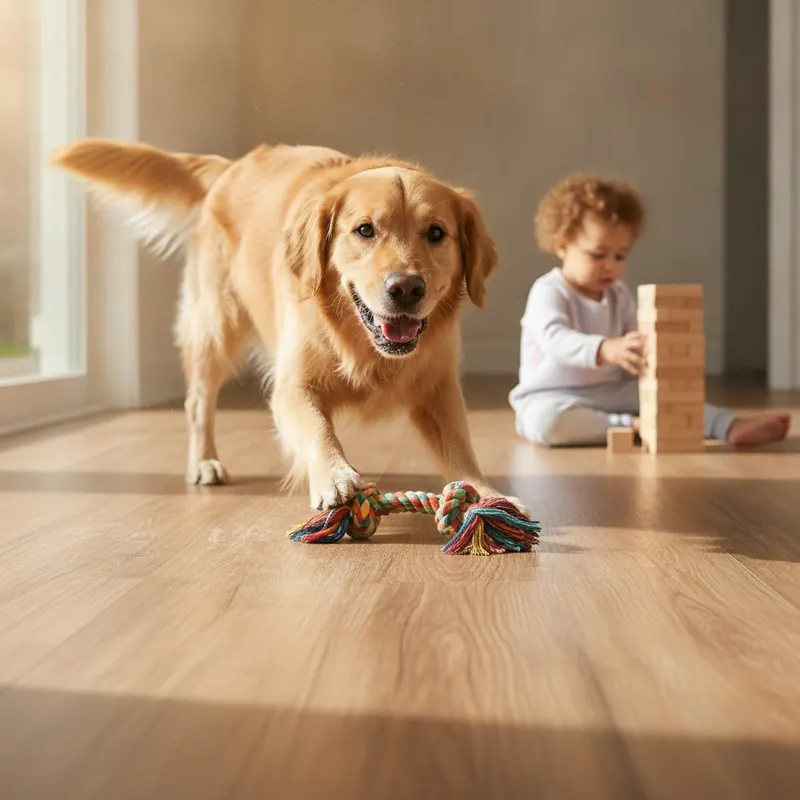
- Top Recommendation: LVP/SPC. Luxury vinyl is the undisputed king for pet owners. Its tough wear layer resists scratches from claws, and its 100% waterproof construction means accidents won’t cause swelling or damage. The planks are seamless, leaving no grout lines to trap messes.
- Runner-Up: Porcelain Tile. Tile is virtually scratch-proof and completely waterproof. It’s an excellent choice, with the only downside being that messes can sometimes stain the grout if it isn’t properly sealed.
For Busy Families with Kids: Combining Durability with Comfort & Safety
Households with children need a floor that can handle everything from dropped toys and spilled juice to constant foot traffic. But durability isn’t the only factor; comfort and acoustics matter, too.
- Top Recommendation: LVP/SPC. Again, LVP shines. It’s tough enough to resist dents from falling objects and is incredibly easy to clean. Unlike tile, it has a bit of “give” underfoot, making it a softer and warmer surface for kids to play on. It also absorbs sound better than laminate or tile, reducing the noise of running feet and bouncing balls—a significant plus for play areas and second-story rooms.
- Runner-Up: High-AC Laminate. Modern laminate is a strong contender, offering elite scratch resistance and easy cleanup. While slightly louder and harder underfoot than LVP, it’s an excellent and often more budget-friendly choice.
Many busy parents have shared testimonials about how switching to LVP has simplified their lives, cutting down cleaning time and eliminating worry about spills and scuffs.
For High-Traffic Zones (Entryways, Kitchens, Hallways)
These workhorse areas of your home face a constant barrage of dirt, moisture, and foot traffic. The flooring here must be exceptionally resistant to abrasion and wear. The principles used for commercial spaces, as noted by experts like McLean Company, can be applied here: the surface must be hard, non-porous, and easy to clean.[2]
- Top Recommendation: Porcelain Tile. Its extreme hardness and water resistance make it the ideal choice for an entryway where wet shoes and abrasive grit are common.
- Runner-Up: LVT/LVP. Luxury vinyl is a fantastic option for kitchens and hallways, offering superior water resistance and durability against constant traffic.
- Honorable Mention: High-AC Laminate. A great choice for hallways and kitchens, provided spills are wiped up promptly.
For homeowners who desire the look of wood in these areas, choosing a hardwood with a strong aluminum oxide finish is critical, as this can significantly boost its wear resistance against constant foot traffic.
The Economics of Durability: A Long-Term Investment Guide
A durable floor is about more than just its initial price tag; it’s a long-term financial investment. Understanding the costs of maintenance, repair, and the true meaning of a warranty will help you calculate the total cost of ownership.
From the Pro’s Toolbox: “I get called out to look at damaged floors all the time. My rule of thumb is this: if the damage is cosmetic and limited to just a few planks, a repair is usually worth it. But if you have widespread water damage, deep structural gouges across the whole room, or you can’t find matching planks anymore, you’ll spend more time and money on a frustrating repair than you would on a beautiful new replacement.”
Repair or Replace? A Diagnostic Guide for Damaged Floors
When faced with worn-out flooring, the big question is whether to repair or replace it. Use this checklist to guide your decision:
- Is the damage cosmetic or structural? Surface scratches can often be hidden or repaired, but deep gouges, warped planks from water damage, or a failing subfloor often signal the need for replacement.
- Is the damage widespread or isolated? Replacing a single damaged plank in the middle of a laminate or LVP floor is often possible, though it requires some skill. Authoritative DIY tutorials from sources like The Home Depot can show you how.[6] However, if the wear and tear is visible across the entire room, a full replacement is more practical.
- Can you find matching replacement materials? For older floors, finding exact matches can be impossible as product lines are discontinued. This often forces a replacement.
- What type of flooring is it? Deep scratches in solid hardwood can be sanded out during a full refinish. A deep scratch in LVP or laminate is permanent, and the only solution is to replace the affected plank.
Deconstructing ‘Lifetime’ Flooring Warranties: What’s Really Covered?
Many LVP and laminate products come with an enticing “Limited Lifetime Warranty.” But what does this actually cover? Unfortunately, it’s often less than homeowners assume. Understanding the fine print is crucial.
A limited lifetime warranty almost never covers scratches, dents, or damage from improper use. It typically only covers specific manufacturing defects and “wear-thru,” which means the printed design layer has completely worn away to the core—a very rare occurrence.
Here are common exclusions and conditions that can void your warranty:
- Improper Installation: Not following the manufacturer’s specific instructions is the #1 reason claims are denied.
- Improper Maintenance: Using the wrong cleaners (like steam mops on LVP) or failing to protect the floor from furniture can void coverage.
- Environmental Conditions: Many warranties, like those from MSI Surfaces and LW Mountain, require that normal residential humidity levels (e.g., 35%-55%) be maintained in the home.[7], [8]
- Exclusions: “Loss of shine” or changes in gloss level are almost always excluded.
Here is a simplified comparison of what you might find in typical LVP warranties:
| Coverage Area | Typical Warranty Coverage (Example) | Common Exclusions (What’s NOT Covered) |
|---|---|---|
| Wear-Thru | Covered (The pattern must be completely worn away) | Scratches, scuffs, dents, loss of shine |
| Staining | Covered for common household stains | Stains from chemicals, asphalt, rubber mats |
| Fading | Covered from normal artificial light/indirect sunlight | Fading from direct, excessive sun exposure |
| Manufacturing Defects | Covered (Planks don’t lock, delamination, etc.) | Damage from improper installation or subfloor issues |
Always read the full warranty document for any floor you are considering before you buy.
Spotlight: What is ‘Adamantine’ Flooring Protection?
As you shop for durable laminate, you may come across the term “Adamantine Protection.” So, what is it exactly?
Adamantine Protection is not a type of flooring. It is a high-performance, branded wear layer technology applied to specific collections of laminate and commercial vinyl flooring. It is engineered to provide exceptional resistance to scratches, stains, and wear, often meeting commercial-grade standards.
Based on manufacturer claims, products featuring this technology, such as the “Monument Collection,” boast superior durability.[9] This collection features wide, long planks (9-1/2” x 60”) and can be installed in large areas up to 66′ x 66′ without transitions, a testament to its dimensional stability.[9]
Compared to other branded technologies like Pergo’s ScratchGuard, Adamantine positions itself as a premium option focused on delivering maximum surface protection, aiming to solve the problem of easily worn-out or high-maintenance floors for good.
Maintaining Your Durable Floor for a Lifetime of Performance
Choosing a durable material is half the battle; proper care is what ensures it achieves its maximum lifespan. Luckily, maintaining these high-performance floors is simple.
Preventative care is your best strategy against scratches. Use felt pads on all furniture legs, place mats at all exterior doors to trap abrasive dirt, and sweep or vacuum regularly to remove grit.
Here are some simple cleaning Do’s and Don’ts:
| Flooring Type | Do | Don’t |
|---|---|---|
| LVP / LVT | Use a pH-neutral cleaner; damp mop as needed. | Use steam mops, abrasive scrubbers, or wax-based cleaners. |
| Laminate | Use a microfiber mop with a laminate-specific cleaner; use minimal water. | Wet mop, use steam cleaners, or let spills sit. |
| Porcelain Tile | Use a pH-neutral cleaner for tile and grout; reseal grout lines periodically. | Use acidic cleaners (like vinegar) which can damage grout; use wax or oil-based cleaners. |
Your Foundation for the Future
The journey to finding the perfect durable floor ends not with a single “best” material, but with the one that is best for you. The ideal choice is a thoughtful alignment of your lifestyle, your budget, and your home’s unique demands.
For the pet owner, the scratch-and-stain-proof nature of LVP might be the clear winner. For the busy family, the quiet comfort and resilience of SPC vinyl could be the perfect fit. And for the high-traffic entryway, the sheer, uncompromising hardness of porcelain tile remains unmatched.
By understanding the true metrics of durability, comparing the top contenders honestly, and decoding the realities of flooring warranties, you are now fully equipped to make a smart, confident, long-term investment. You can finally choose a floor that frees you from worry and provides a steadfast foundation for a lifetime of memories.
Feeling confident about your choice? Explore our curated collection of high-performance flooring or contact our flooring experts for a personalized consultation to find the perfect ‘forever floor’ for your home.
This article contains information and cost estimates that are subject to change. Prices for materials and installation can vary significantly by location and contractor. Readers should conduct their own research and obtain professional quotes before making a purchase decision.
References & Authoritative Sources
- Creative Carpet & Flooring. (2026, May 13). Most Durable Flooring Ranked: 35 Years of Real-World Testing. Retrieved from https://www.creativecarpetinc.com/2026/05/13/most-durable-flooring-ranked-35-years-of-real-world-testing
- McLean Company. (N.D.). The 12 Best Flooring Options For High-Traffic Commercial Areas. Retrieved from https://mclean-company.com/blog/the-12-best-flooring-options-for-high-traffic-commercial-areas
- Go Flooring. (N.D.). Best Scratch Resistant Flooring. Retrieved from https://goflooring.com/learn-about-flooring/best-scratch-resistant-flooring
- Flooring America. (N.D.). Most Durable Flooring Options. Retrieved from https://www.flooringamerica.com/blog/most-durable-flooring-options
- Consumer Reports. (N.D.). Best Flooring for a High-Traffic Area. Retrieved from https://www.consumerreports.org/home-garden/flooring/best-flooring-for-high-traffic-area-a2992906171
- The Home Depot. (N.D.). How to Replace Laminate Flooring. Retrieved from https://www.youtube.com/watch?v=t7Ds2d8_fQs
- MSI Surfaces. (N.D.). Luxury Vinyl Flooring. Retrieved from https://www.msisurfaces.com/luxury-vinyl-flooring
- LW Mountain. (N.D.). Luxury Vinyl Plank Warranty. Retrieved from https://www.lwmountain.com/luxury-vinyl-plank-warranty
- Instagram. (N.D.). Brand Posts Regarding Adamantine Protection. Retrieved from https://www.instagram.com/reel/C9xrQWcJh8c and https://www.instagram.com/p/DMau2R9hbgE