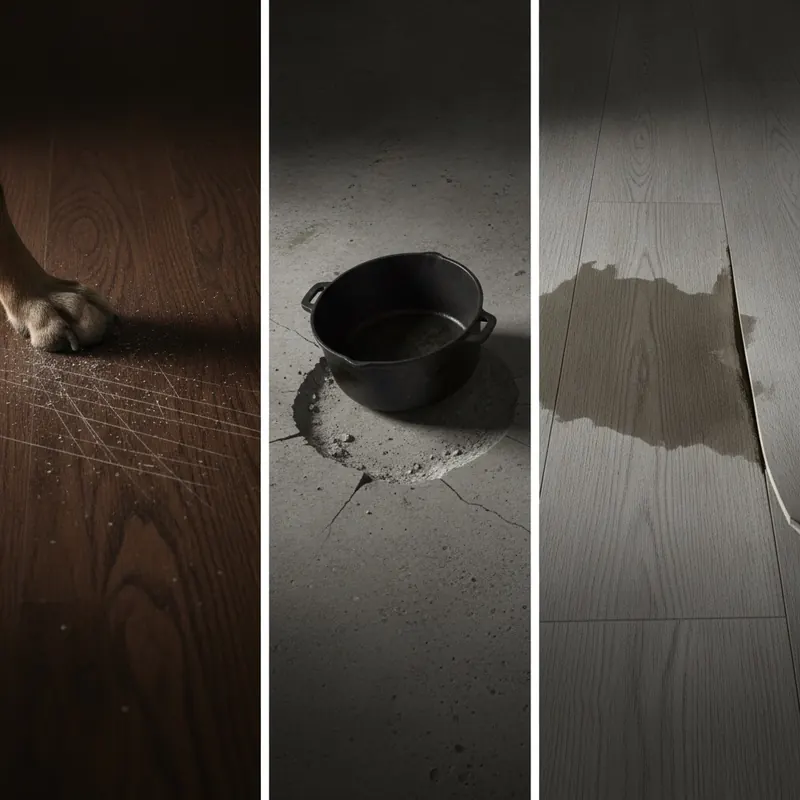
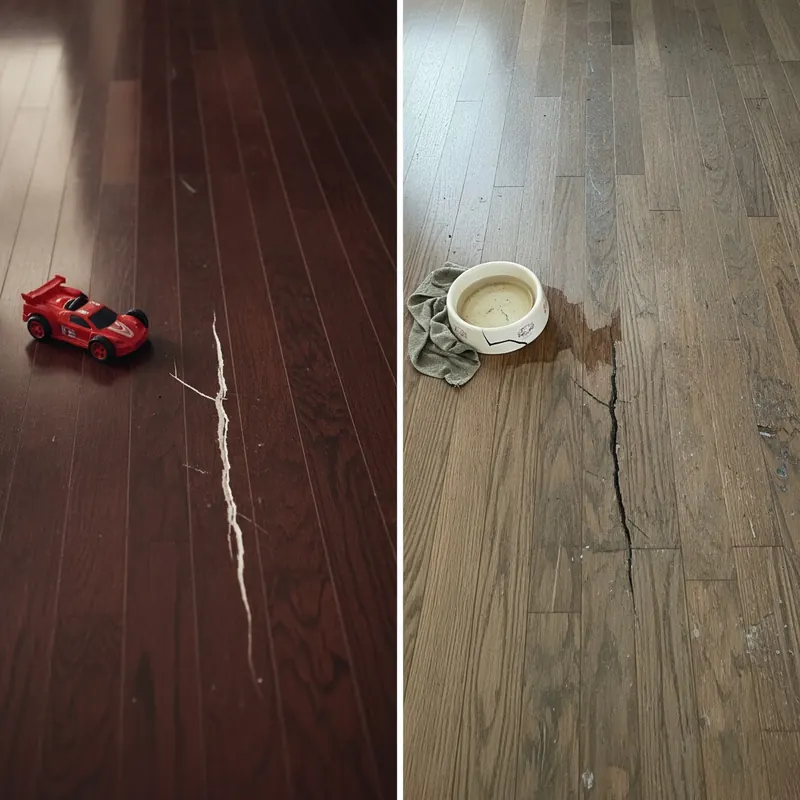
The sound is unmistakable: the scrape of a dining chair, the skid of a dog’s claws, or the thud of a dropped toy, followed by the sinking feeling as you spot a new scratch on your beautiful floor. If you’re tired of living in constant fear of the next scuff, dent, or spill, you’re not alone. Choosing a new floor is a significant investment, and the fear of making a costly mistake—of picking a material that looks great in the showroom but fails under the pressure of real life—is a major source of stress for homeowners. You’re faced with a sea of confusing technical terms like “wear layers,” “PEI ratings,” and “Janka hardness,” leaving you feeling unequipped to make the right choice.
This is where the playbook changes. Welcome to The Indestructible Floor Playbook, your life-proof guide to confidently selecting a floor that will outlast the chaos of family life. We’re going to empower you with the knowledge to stop guessing and start choosing like an expert. In this guide, you will learn how to:
- Diagnose your home’s unique stressors to identify exactly what your floor needs to fight against.
- Decode the technical specs on any flooring sample so you know precisely what you’re buying.
- Compare the top contenders in durable flooring in a head-to-head showdown.
- Protect your investment for a lifetime with pro tips on installation and maintenance.
Get ready to find a floor that not only looks stunning but acts as the ultimate shield against daily home life.
- First, Diagnose Your Home’s Unique Stressors
- The Durability Decoder: How to Read Flooring Specs Like a Pro
- The 2025 Durable Flooring Showdown: Top Contenders Compared
- The Final Verdict: Passing the Real-World Stress Test
- Beyond the Plank: How to Guarantee a Lifetime of Durability
- Conclusion: Your Playbook for a Flawless Floor
- References & Authoritative Sources
First, Diagnose Your Home’s Unique Stressors
Before you even look at a single flooring sample, the most crucial step is to understand what your floor will be up against. Every home has a unique set of challenges. By identifying your primary “stressors,” you can narrow your search to materials specifically engineered to handle them. Think of this as creating a job description for your new floor.
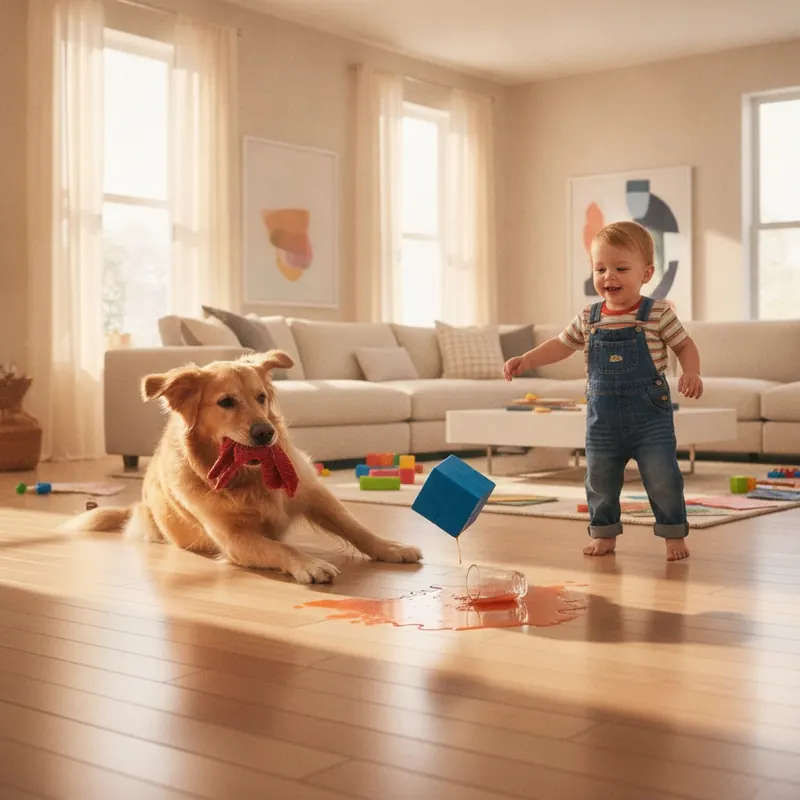
What’s Your Floor’s Kryptonite? A Quick Diagnostic
Ask yourself these questions to pinpoint your home’s biggest challenges:
- The Foot Traffic Test: Is your home the central hub for neighborhood kids? Do you have a busy entryway or a direct path from the garage to the kitchen that sees constant use? (High Traffic)
- The Pet Gauntlet: Do you have pets, especially large dogs with active claws or animals prone to accidents? (Pets)
- The Kid Catastrophe Zone: Are there young children at home who treat the floor as a surface for dropping toys, spilling juice, and driving toy trucks? (Kids/Impact)
- The Splash Zone: Which areas are most exposed to water, moisture, or frequent spills, like kitchens, bathrooms, or mudrooms? (Moisture)
Your answers will guide you to the features that matter most for your lifestyle.
The Family Factor: Kids, Toys, and Daily Chaos
A family home is a beautiful, chaotic environment where floors bear the brunt of daily life. From dropped sippy cups to the unforgiving plastic wheels of a toy car, the challenges are constant. When choosing the most durable flooring for a family home, you need a surface that resists scratches and dents. But durability isn’t the only factor. A major gap in many flooring guides is the discussion of comfort and warmth. For families with babies learning to crawl or toddlers who spend hours playing on the floor, a cold, hard surface like concrete can be impractical. The ideal family floor offers a trifecta of resilience, ease of cleaning, and a degree of softness or warmth underfoot.
The Pet Problem: Claws, Accidents, and the Zoomies
Pets bring joy, but they are notoriously tough on floors. The primary concern for most owners is damage from pet claws scratching floor. But the “pet problem” goes deeper. You also need to consider:
- Traction: A slippery floor can be dangerous for dogs, potentially leading to joint problems or injuries, especially in older pets.
- Stain & Odor Resistance: Accidents happen. A non-porous, waterproof floor is essential for preventing stains and lingering odors from seeping into the subfloor.
- Acoustics: The constant click-clack of claws on a hard surface can be a source of noise.
Specialty retailers like Floors for Paws, whose products are endorsed by veterinarians, emphasize a holistic approach to pet-friendly floors, focusing as much on animal safety and well-being as on durability[1].
Expert Q&A: A Veterinarian’s View on Flooring
Q: Why is floor traction so important for dogs?
A: “Consistent slipping on slick floors can put undue stress on a dog’s joints, especially the hips and elbows. For senior dogs or breeds prone to dysplasia, a floor with good texture and grip is not just a matter of comfort, but a crucial component of their long-term health and mobility.”
The Traffic Pattern: Mapping Your Home’s Busiest Zones
Not all areas of your home experience the same level of wear. An expert approach is to implement a “Zonal Flooring Strategy,” choosing materials based on the traffic levels of different rooms. Your home can be mapped into three primary zones:
- High-Traffic Zones (The Gauntlet): These are your home’s highways—entryways, mudrooms, hallways, and kitchens. They require the most heavy-duty residential flooring with maximum scratch and wear resistance.
- Medium-Traffic Zones (The Living Area): Living rooms, family rooms, and playrooms see consistent daily use but less direct outdoor grit. Here, you can balance durability with comfort and style.
- Low-Traffic Zones (The Sanctuary): Bedrooms, home offices, and formal dining rooms experience the least foot traffic. In these areas, you have more flexibility to choose materials based on aesthetics and comfort.
Visualizing your home this way prevents you from over-investing in a high-performance floor where it isn’t needed or, more importantly, under-investing in an area that will see premature wear.
The Durability Decoder: How to Read Flooring Specs Like a Pro
This is where you gain your superpower. Understanding the key industry ratings transforms you from a confused customer into a confident buyer. Instead of relying on marketing claims, you’ll be able to look at a product’s spec sheet and know exactly how it will perform. According to industrial flooring experts at Stonhard, true wear resistance is a measurable quality, often tested against rigorous standards like those from ASTM International (American Society for Testing and Materials)[2]. Here are the four non-negotiable specs you need to know.
Expert Q&A: A Materials Specialist on Durability Tech
Q: What’s the secret behind modern durable flooring?
A: “It’s all about the top layer. For vinyl and laminate, the magic is in the wear layer—a clear, factory-applied coating, often infused with microscopic particles of ceramic bead or aluminum oxide. This incredibly hard, transparent shield is what takes the daily abuse of foot traffic and scratches, protecting the decorative layer beneath. The thickness and composition of this layer are far more important than the thickness of the plank itself.”
The Wear Layer: Your Floor’s Invisible Shield (Mils Explained)
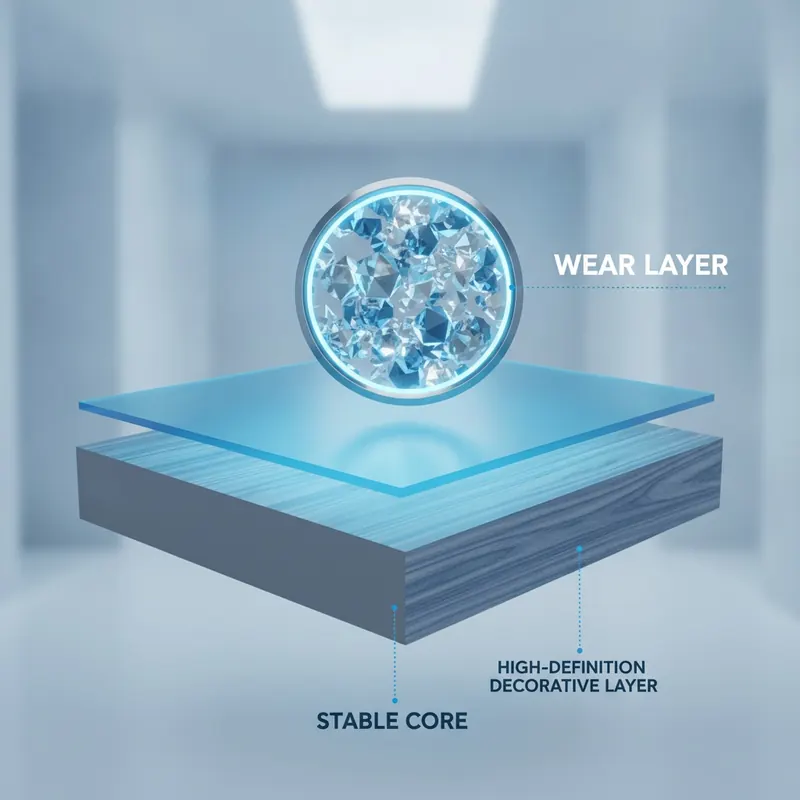
For Luxury Vinyl Plank (LVP), Stone Plastic Composite (SPC), and some laminate floors, the wear layer is everything. It’s a clear top coat measured in mils (not to be confused with millimeters). One mil is one-thousandth of an inch. It’s the floor’s first and most important line of defense.
As flooring experts at Cavalieri Flooring often advise their clients, this single specification is a primary indicator of durability[3].
- 6-12 mil: Suitable for low-traffic areas like bedrooms or closets.
- 12-20 mil: Good for all-purpose residential use, including living rooms and kitchens.
- 20+ mil: Considered commercial-grade and is the gold standard for busy homes. For households with large dogs, research shows a wear layer of 20-mil or 28-mil is recommended for serious claw resistance.
PEI Rating: Grading Tile for Abrasion Resistance
The Porcelain Enamel Institute (PEI) rating grades ceramic and porcelain tile on its resistance to abrasion and wear. It’s a simple 1-5 scale that tells you where a tile is best suited. As trusted home improvement resources like Bob Vila consistently point out, matching the PEI rating to the room is key for longevity[4].
- PEI Class 1: No foot traffic (wall tile only).
- PEI Class 2: Light traffic (e.g., residential bathrooms).
- PEI Class 3: Light to moderate traffic (suitable for most residential floors).
- PEI Class 4: Moderate to heavy traffic (can be used anywhere in the home, including entryways).
- PEI Class 5: Heavy to extra-heavy traffic (suitable for all residential and heavy commercial use).
For peace of mind in any part of your home, look for a tile with a PEI rating of at least Class 3, and preferably Class 4 or 5 for the busiest zones.
AC Rating: The Abrasion Class for Laminate Flooring
Similar to PEI for tile, the Abrasion Class (AC) rating measures laminate flooring’s durability. The rating reflects its resistance to abrasion, impact, stains, and burns. As experts at Elevate Flooring explain, choosing the right AC rating is critical to avoid disappointment with laminate performance[5].
- AC1: Light residential (e.g., bedrooms).
- AC2: General residential (e.g., living rooms).
- AC3: Heavy residential / Moderate commercial (an excellent choice for any area in a busy home).
- AC4: General commercial (can easily handle high-traffic residential zones).
- AC5: Heavy commercial (the toughest laminate available, ideal for entryways and mudrooms).
For a truly durable laminate floor that can withstand intense foot traffic, look for high AC ratings of AC3, AC4, or AC5.
Janka Hardness Scale: Measuring Wood’s Dent Resistance
For solid hardwood, engineered hardwood, and bamboo, the Janka Hardness Scale measures the force required to embed a steel ball into the wood. A higher number means the wood is harder and more resistant to denting. This is particularly important when considering damage from dropped objects or pet claws, which often cause indentations rather than surface scratches.
As flooring manufacturers like Hartco advise, choosing a harder species is a key strategy for pet owners who want real wood floors[6]. For example, Red Oak has a Janka rating of 1290, while Brazilian Cherry is much harder at 2350. An outlier in this category is strand-woven bamboo, which can have an incredible Janka hardness rating ranging from 3000 to over 5000, making it one of the toughest natural flooring options available.
The 2025 Durable Flooring Showdown: Top Contenders Compared
Now that you can diagnose your needs and decode the specs, it’s time to meet the champions. In this ultimate showdown, we pit the top categories of durable flooring against each other.
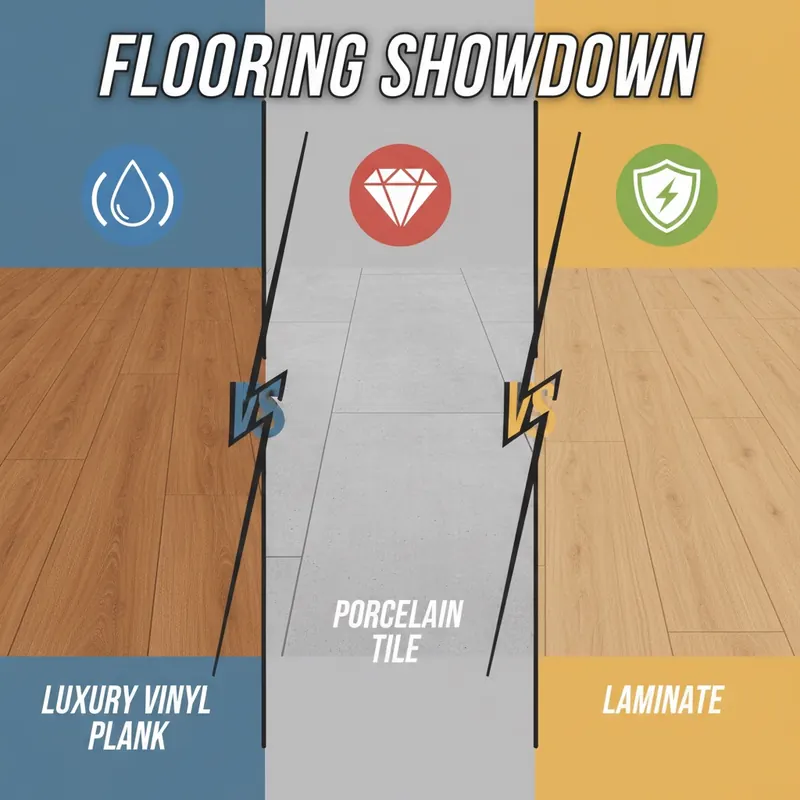
| Flooring Type | Scratch Resistance | Dent Resistance | Water Resistance | Comfort/Warmth | Avg. Cost |
|---|---|---|---|---|---|
| LVP / SPC | High – Very High | Good – Very High | Excellent (Waterproof) | Good | $$ |
| Porcelain Tile | Excellent | Excellent | Excellent (Waterproof) | Low | $$$ |
| Laminate | High – Very High | Good | Good (Water-Resistant) | Good | $ |
| Eng. Hardwood | Low – Good | Low – Good | Poor | Excellent | $$$$ |
Champion of Versatility: Luxury Vinyl & SPC Flooring
Luxury Vinyl Plank (LVP) and its rigid-core sibling, Stone Plastic Composite (SPC), are arguably the best all-around durable flooring options for modern families. The key difference is the core: LVP is flexible, while SPC has a rigid core made from a limestone composite, making it exceptionally stable and dent-resistant. In fact, the core of some premium SPC products can be nearly 70% limestone, giving it incredible strength.
Major retailers like Floor & Decor highlight advanced SPC products like Optimax™, which feature enhanced wear layers and dent-proof technology, making them a top choice for scratch-proof flooring[7]. A key benefit is repairability; if a plank gets severely damaged, a single piece can often be replaced without redoing the entire floor.
The Indestructible Titan: Porcelain & Ceramic Tile
When it comes to sheer, brute-force durability, nothing beats high-quality porcelain tile. As flooring professionals at Weles note, porcelain is near-indestructible in terms of scratches and water damage[8]. Its surface is incredibly hard, making it immune to pet claws and daily wear. It also boasts a water absorption rate of under 0.5%, making it completely waterproof. With a potential lifespan of 50+ years, it’s a true long-term investment.
The trade-offs are comfort and maintenance. Tile is hard and cold underfoot, and the grout lines require periodic sealing to prevent staining—a long-term maintenance task not required by vinyl plank flooring.
The High-Tech Contender: High-Performance Laminate
Laminate has evolved far beyond the cheap-looking floors of the past. Modern, high-performance laminate with an AC4 or AC5 rating offers incredible scratch resistance, often outperforming even some engineered hardwoods in durability tests conducted by independent bodies like Consumer Reports[9].
Its multi-layer construction is designed for high-traffic punishment. A key advantage is that the matte or low-gloss finishes common on modern laminate are excellent at hiding minor scratches and scuffs that might be more visible on a high-gloss surface. While most laminates are not fully waterproof, many top brands now offer excellent water resistance for up to 24-72 hours, making them suitable for kitchens and entryways.
The Natural Warrior: Engineered Hardwood & Bamboo
For those who refuse to compromise on the authentic look and feel of real wood, there are durable options. Engineered hardwood is more stable than solid wood and can be installed in more areas of the home. The key is to choose a species with a high Janka rating (like Hickory or Brazilian Cherry) and a thick wear layer. For homes with dogs, an engineered hardwood should have a wear layer of at least 2mm to allow for potential refinishing down the line.
As experts at Block Renovation explain, strand-woven bamboo is a powerhouse of durability due to its unique manufacturing process where bamboo strands are compressed under extreme pressure[10]. Furthermore, choosing a textured finish, such as hand-scraped or wire-brushed, is a brilliant strategy to naturally camouflage the minor scratches and dings that are inevitable with any wood floor in a busy home.
The Final Verdict: Passing the Real-World Stress Test
Theory is great, but how do these floors perform in the real world? Drawing on the practical, application-focused approach used by experts at Tish Flooring[11], let’s declare a winner for each of your home’s toughest challenges[11].
The Pet-Proof Pick: Best for Claws, Traction, and Cleanup
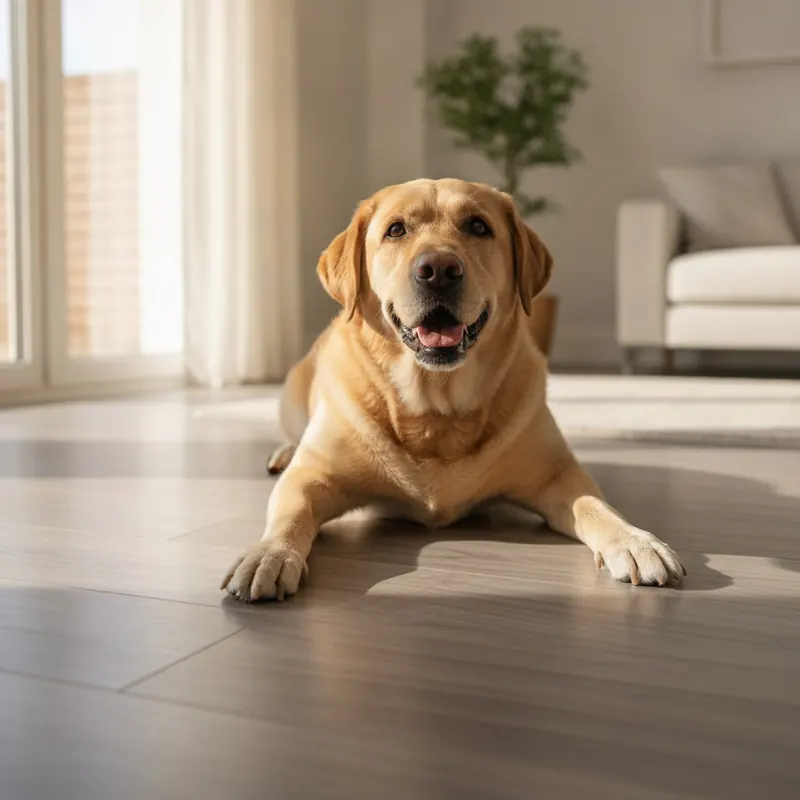
🏆 Winner: SPC Flooring (with 20+ mil wear layer)
SPC takes the crown for pet owners. Its high-mil wear layer provides elite scratch resistance against claws. Its waterproof construction means accidents are no-stress events that can be cleaned up easily without fear of staining or odor. The subtle texturing on many styles provides better traction for pets than smooth laminate or tile. Finally, its solid core provides better acoustics, dampening the “click-clack” of pet nails more effectively than laminate.
The Family-Friendly Champion: Best for Spills, Comfort, and Chaos
🏆 Winner: LVP Flooring
LVP is the family champion. It combines the waterproof and scratch-resistant qualities of SPC with a slightly more flexible and forgiving core. This makes it a bit warmer and softer underfoot—a noticeable benefit for crawling babies and playing toddlers. It’s tough enough to handle dropped toys and easy enough to clean up spilled juice, hitting the perfect balance of resilience and comfort that busy families need. Using a “Family Durability Score” framework like that suggested by Go Flooring[12], LVP consistently ranks highest across the board for family life[12].
The High-Traffic Hero: Best for Entryways and Hallways
🏆 Winner: Porcelain Tile (with PEI 4+ rating)
For the most punishing zones in your home, porcelain tile is the undisputed hero. It is virtually immune to the abrasion from dirt, grit, and salt tracked in from outside. It will not scratch, dent, or fade from heavy use. While it may be overkill for a bedroom, it’s the smartest long-term investment for an entryway, mudroom, or busy hallway. Strategically using a tile with some color variation or pattern can also help to camouflage dirt between cleanings.
Beyond the Plank: How to Guarantee a Lifetime of Durability
Choosing the right material is only half the battle. The most durable flooring in the world can fail if it’s not supported by a proper system of installation and care.
Expert Q&A: A Certified Installer on Common Mistakes
Q: What’s the biggest mistake homeowners make that compromises a floor’s durability?
A: “Ignoring the subfloor. Hands down. You can buy the most expensive, toughest plank on the market, but if you install it over a subfloor that isn’t perfectly flat, clean, and dry, you’re asking for trouble. Planks will start to separate, you’ll get hollow spots, and the locking systems can break. A great floor starts with a great foundation.”
The Unsung Hero: Why Subfloor Prep is Non-Negotiable
As professional installers at places like Flooring America emphasize, proper installation is critical for longevity[13]. Your subfloor—the surface beneath your flooring—must be:
- Flat: Any peaks or valleys can create stress on the flooring joints.
- Clean: Debris can create bumps and prevent proper adhesion.
- Dry: Moisture is the enemy of almost every flooring system and can lead to mold, mildew, and warping.
Taking the time to properly prepare your subfloor is the single most important step in guaranteeing a long-lasting, trouble-free installation.
Installation: The DIY vs. Pro Decision
Many modern durable floors are designed to be DIY-friendly. As trusted DIY sources like The Spruce often demonstrate, homeowners can achieve professional results with the right preparation[14].
- Great for DIY: LVP and laminate flooring often feature a simple click-lock system that is very forgiving for first-timers.
- Best Left to Pros: Porcelain tile requires specialized tools for cutting, and achieving perfectly level tiles and clean grout lines is an art form. Engineered hardwood installation can also be complex depending on the method (glue-down, nail-down, or floating).
A simple cost-benefit analysis can help. Calculate the cost of tools and your time against the quotes from professional installers. Often, the peace of mind and warranty protection that come with a professional job are well worth the investment.
Preventative Care: Your First Line of Defense
Once your floor is installed, a simple maintenance routine is your best defense. As outlined by flooring experts at District Floor Depot, a few proactive steps can dramatically extend the life of your floor[15]:
- Furniture Pads: Place felt pads under the legs of all furniture, especially chairs that are moved frequently.
- Doormats: Use high-quality mats at all exterior doors to trap grit and moisture before it gets on the floor.
- Regular Cleaning: Sweep or vacuum regularly to remove abrasive dirt. Clean spills promptly with a manufacturer-approved cleaner.
- Pet Nail Care: Keep your pet’s nails trimmed. A well-trimmed, rounded nail is far less likely to scratch a floor’s surface than a long, sharp one.
Conclusion: Your Playbook for a Flawless Floor
You are now officially equipped with the Indestructible Floor Playbook. You’ve moved beyond the marketing hype and into the world of informed, confident decision-making. By following this simple but powerful framework—Diagnose your lifestyle, Decode the technical specs, Compare the top contenders, and Protect your final choice—you have all the tools you need to invest in a durable home flooring solution that will stand up to whatever your family throws at it. You no longer have to fear the dropped toy or the skittering claws. You can choose a floor that not only completes your home’s style but serves as a beautiful, resilient foundation for a lifetime of memories.
Ready to find your perfect floor? Explore our detailed reviews of the top-rated durable flooring brands of 2026, or use our free flooring calculator to estimate your project cost today.
This article may contain affiliate links. Product recommendations are based on extensive independent research and expert analysis.
References & Authoritative Sources
- Floors for Paws. (n.d.). Veterinarian Approved Flooring. Retrieved from floorsforpaws.com
- Stonhard. (n.d.). Wear Resistant Floors. Retrieved from stonhard.com/product-benefits/wear-resistant
- Cavalieri Flooring. (n.d.). Pet-Friendly Flooring Options. Retrieved from cavalieriflooring.com/pages/blog/pet-friendly-flooring-options
- Bob Vila. (n.d.). The Best Flooring Options for Every Room in the House. Retrieved from bobvila.com/interior/ultra-durable-flooring-options
- Elevate Flooring. (n.d.). The Top 5 Scratch Resistant Flooring Options. Retrieved from elevateflooring.com.au/blogs/resources/the-top-5-scratch-resistant-flooring-options
- Hartco. (n.d.). Can You Have a Dog with Hardwood Floors? Retrieved from hartco.com/en-us/can-you-have-a-dog-with-hardwood-floors.html
- Floor & Decor. (n.d.). Top Waterproof & Water-Resistant Floors. Retrieved from flooranddecor.com/blogs/top-waterproof-water-resistant-floors.html
- Weles. (n.d.). Best Flooring for Family Room. Retrieved from weles.us/blog/best-flooring-for-family-room
- Consumer Reports. (n.d.). Best Flooring for High-Traffic Areas. Retrieved from consumerreports.org/home-garden/flooring/best-flooring-for-high-traffic-area-a2992906171
- Block Renovation. (n.d.). The Best Scratch-Resistant Wood Floors for Dog Owners. Retrieved from blockrenovation.com/guides/best-scratch-resistant-wood-floors-for-dog-owners
- Tish Flooring. (2026, April). The Most Durable Flooring for High Traffic Areas. Retrieved from tishflooring.com/2026/04/the-most-durable-flooring-for-high-traffic-areas
- Go Flooring. (n.d.). Learn About The Most Durable Flooring. Retrieved from goflooring.com/learn-about-flooring/most-durable-flooring
- Flooring America. (n.d.). Most Durable Flooring Options. Retrieved from flooringamerica.com/blog/most-durable-flooring-options
- The Spruce. (n.d.). The 8 Most Durable Flooring Options. Retrieved from thespruce.com/most-durable-floorings-you-can-install-1821624
- District Floor Depot. (n.d.). Dogs and Hardwood Floors: How to Prevent Scratching. Retrieved from districtfloordepot.com/blogs/news/dogs-and-hardwood-floors-how-to-prevent-scratching