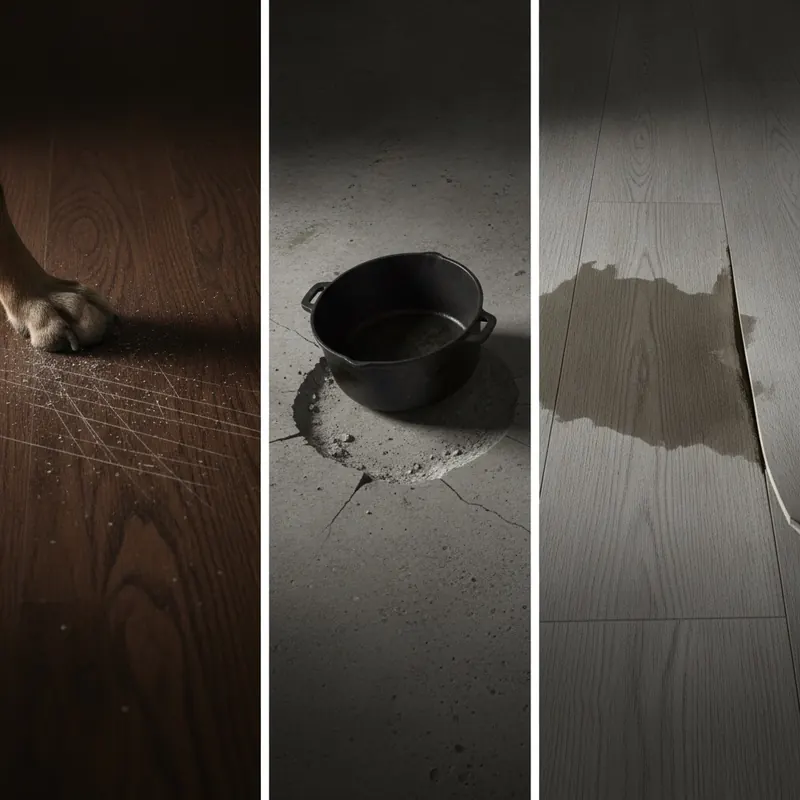
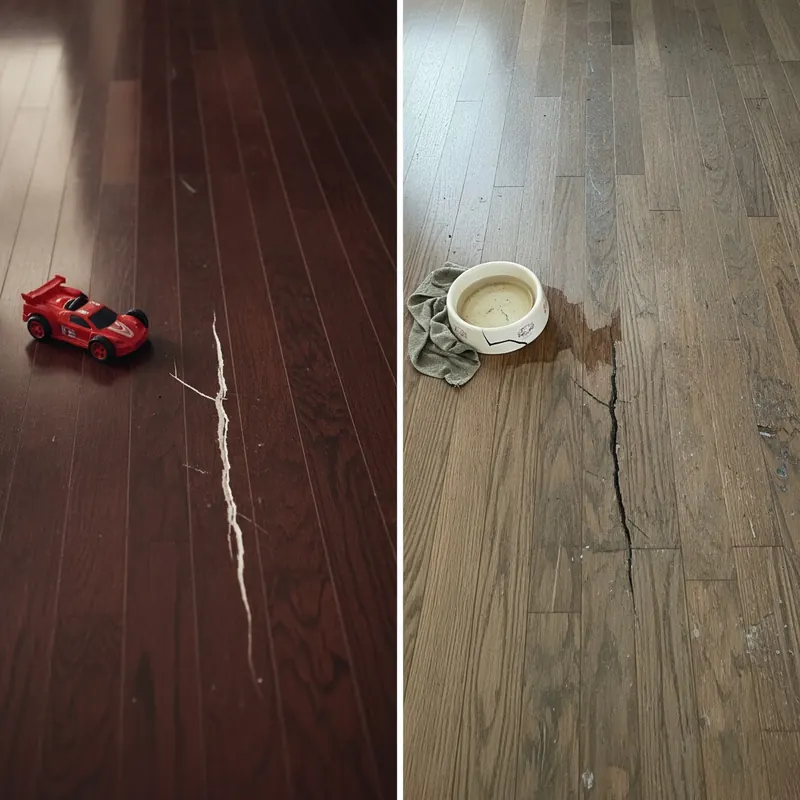
Choosing a new floor feels like a high-stakes decision, and for good reason. It’s a significant investment that lives at the very foundation of your home’s style and function. But the fear of making a costly mistake is real. You imagine your beautiful new floors—the ones you spent weeks picking out—buckling under the summer humidity, feeling icy cold in the winter, or showing every scratch from your kids and pets. The truth is, many floors fail not because they are poor quality, but because they were the wrong choice for the environment.
Most guides offer simple product lists. This is not one of them. This is your ultimate flooring survival guide, a system-based approach to building a truly bulletproof foundation for your home. We’ll go beyond brand names to decode the science of durability, empowering you with our unique Flooring Durability Scorecard and expert insights.
In this guide, you will learn:
- The real reasons floors warp, crack, and fail in different climates.
- How to translate technical jargon like “wear layers” and “AC ratings” into a confident choice.
- A head-to-head comparison of the top all-weather flooring contenders.
- Why proper installation is just as important as the material you choose.
By the end, you’ll have the knowledge to select, install, and maintain a floor that conquers extreme climates, moisture, and high traffic for years to come.
- Why Your Floor Fails: Understanding Common Climate & Moisture-Related Problems
- Decoding Durability: The Science Behind a Bulletproof Floor
- The Ultimate Flooring Durability Scorecard
- Top Contenders for All-Weather Performance: A Deep Dive
- Special Focus: What is Adamantine Flooring?
- Beyond the Planks: Why Installation is Crucial for Climate Resilience
- Choosing the Right Floor for Your Specific Climate
- Your Floor is a System, Not Just a Surface
- References & Authoritative Sources
Why Your Floor Fails: Understanding Common Climate & Moisture-Related Problems
Before we can find the right solution, we must understand the enemy. For flooring, the primary adversaries are moisture and dramatic temperature swings. These environmental stressors cause a range of problems that can compromise not just the look of your floor, but its structural integrity.
Wood is a “hygroscopic” material, which means it naturally absorbs and releases moisture from the air to match its environment.[9] This simple fact is the root cause of many flooring headaches. When moisture levels are imbalanced, the wood fibers swell or shrink, leading to visible and often destructive changes.
The Humidity Battle: Why Floors Warp, Cup, and Buckle
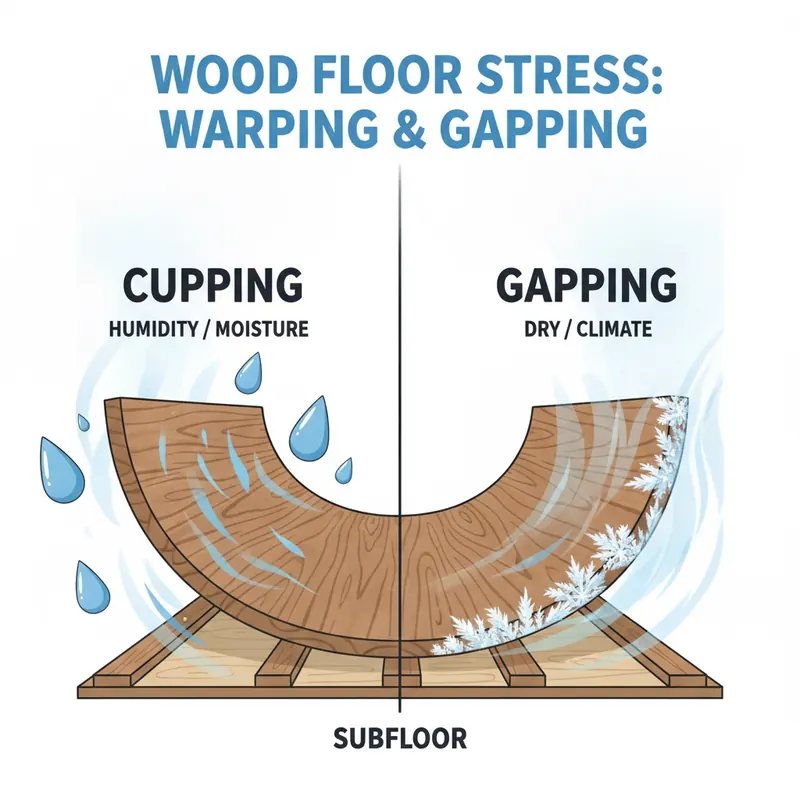
If you’ve ever seen a wood or laminate floor that is no longer flat, you’ve witnessed the power of humidity. The key to preventing this is maintaining a stable indoor environment, ideally with humidity levels between 30% and 50% year-round.[2] When humidity spikes or a hidden water source is present, that equilibrium is lost, resulting in several distinct types of warping:
- Cupping: The edges of the planks are higher than the center, creating a concave, “cupped” shape. This typically happens when there’s more moisture on the bottom of the plank than on the top, causing the underside to expand.
- Crowning: The opposite of cupping, where the center of the plank is higher than the edges. This often occurs after a cupped floor has been sanded flat before the moisture issue was fully resolved.
- Buckling: The most extreme form of warping, where the flooring lifts dramatically from the subfloor. This is almost always caused by excessive water from a leak or flood.
Pro Tip: According to flooring installation experts, one of the most common and preventable causes of warping is failing to acclimate the flooring materials. Letting the unopened boxes of flooring sit in the room where they will be installed for at least 48-72 hours allows them to adjust to the home’s specific temperature and humidity before they are locked into place.
When Cold Strikes: Are Cracks in Your Floor a Sign of Trouble?
A homeowner’s nightmare is finding a new crack in their tile or a gap in their wood floor after a cold spell. While extreme cold can make certain low-quality materials brittle, a crack in your floor during winter is often a symptom of a larger issue: foundation movement.
As construction experts at Park Range Construction explain, freezing and thawing cycles can cause the soil around and under your home’s foundation to expand and contract, leading to settling or shifting.[3] This structural movement puts immense stress on the rigid materials above, and your flooring can be the first place you see the evidence.
While a hairline crack might be cosmetic, certain signs warrant immediate professional attention.
When to Call a Structural Engineer:
- You see “stair-step” cracks in your foundation walls (brick or concrete block).
- A crack in the floor is wider than 1/8 of an inch or is actively growing.
- Doors or windows in the same area have become difficult to open or close.
- The floor feels noticeably sloped, uneven, or bouncy.
Your safety is paramount. If you notice these red flags, don’t just patch the floor; have a certified structural engineer diagnose the root cause.
Decoding Durability: The Science Behind a Bulletproof Floor
To choose a floor that can withstand your climate and lifestyle, you need to speak the language of durability. The flooring industry uses several key metrics to measure a product’s toughness. Understanding these will allow you to see past marketing claims and focus on what truly matters.
The Wear Layer: Your Floor’s First Line of Defense
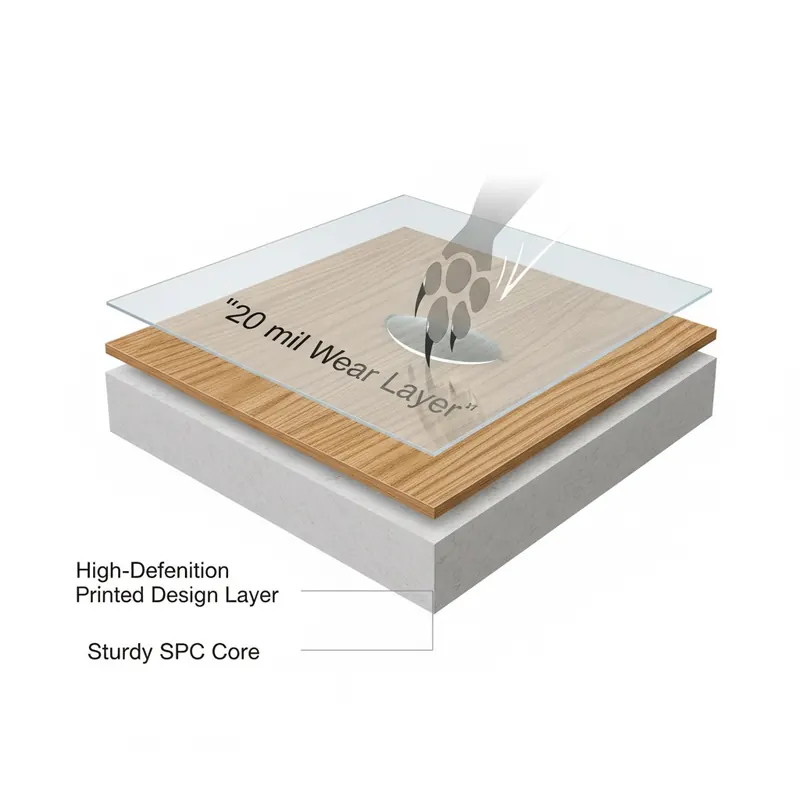
Especially critical for Luxury Vinyl Plank (LVP), the wear layer is a transparent top coating that protects the printed design layer from scratches, stains, and scuffs. Think of it like the clear coat on your car’s paint—its thickness is the single most important factor in the floor’s long-term resilience.
Wear layer thickness is measured in mils (not to be confused with millimeters). For a busy home, especially one with pets and children, flooring experts consistently recommend a wear layer of at least 20 mil for maximum durability.[4] A floor with a 6 or 12 mil wear layer might be fine for a low-traffic guest room, but it won’t stand up to the demands of an active entryway or kitchen.
AC and PEI Ratings Explained: Measuring Abrasion Resistance
For laminate and tile, durability is measured by standardized abrasion resistance ratings.
- AC Rating (Laminate): The Abrasion Class rating measures a laminate floor’s resistance to wear, stains, impact, and burns. The scale runs from AC1 (light residential use) to AC5 (heavy commercial use). For most homes, an AC3 or AC4 rating is excellent. An AC5 rating indicates extreme durability, suitable for high-traffic commercial spaces like department stores, giving you ultimate peace of mind in a residential setting.[5]
- PEI Rating (Tile): The Porcelain Enamel Institute rating measures the abrasion resistance of a tile’s glaze. For residential flooring, look for a PEI rating of at least Class 3, which is suitable for all residential foot traffic. Class 4 and 5 are even more durable, designed for commercial applications.
Waterproof vs. Water-Resistant: A Critical Distinction
This is one of the most confusing and critical distinctions for consumers. The terms are not interchangeable.
- Waterproof: The flooring material itself is impervious to water. It can be fully submerged for an extended period without swelling, warping, or degrading. Luxury Vinyl Plank (with a polymer core) and Porcelain Tile are truly waterproof materials.
- Water-Resistant: The flooring can withstand topical moisture, spills, and splashes for a limited time before damage occurs. Modern high-performance laminate and some types of engineered hardwood fall into this category. They offer great protection against everyday accidents, but they will be damaged by standing water or moisture coming from below.
Knowing this difference is crucial. A water-resistant floor might be perfect for a living room, but a truly waterproof option is essential for a flood-prone basement or a bathroom.
The Ultimate Flooring Durability Scorecard
To simplify your decision, we’ve created this scorecard. It rates the top all-weather flooring contenders across the most important durability metrics, giving you a clear, at-a-glance comparison.
| Flooring Material | Waterproofness | Scratch Resistance | Temperature Stability | Dent Resistance | DIY-Friendliness |
|---|---|---|---|---|---|
| Luxury Vinyl (LVP/LVT) | Excellent (100% Waterproof Core) | Very Good (with 20mil+ wear layer) | Very Good (especially SPC core) | Good | Excellent |
| Porcelain Tile | Excellent (100% Waterproof) | Excellent (PEI 3+) | Excellent | Excellent | Fair |
| Engineered Hardwood | Poor (Water-Resistant Top) | Fair to Good | Good | Fair | Fair |
| High-Performance Laminate | Good (Water-Resistant) | Excellent (AC4/AC5) | Good | Very Good | Very Good |
Top Contenders for All-Weather Performance: A Deep Dive
Now, let’s take a closer look at the materials that earned top marks on our scorecard. Each has a unique construction that makes it a powerful ally against the elements.
Luxury Vinyl Plank/Tile (LVP/LVT): The All-Around Champion
LVP has exploded in popularity for one simple reason: it solves more problems than any other flooring type. It is the ultimate combination of style, durability, and resilience. The key to its performance lies in its waterproof core.
- SPC (Stone Polymer Core): This core is made from a limestone composite, making it incredibly dense, rigid, and dimensionally stable. SPC is the superior choice for areas with significant temperature fluctuations or direct sunlight, as it is less prone to expansion and contraction.
- WPC (Wood Polymer Core): This core incorporates wood pulp and foaming agents, making it slightly softer and warmer underfoot than SPC. It’s still 100% waterproof and highly durable.
With a recommended 20 mil wear layer, LVP is truly 100% waterproof, making it an ideal choice for any room in the house, from the basement to the bathroom.[6]
Porcelain & Ceramic Tile: The Indestructible Classic
When it comes to sheer, brute-force durability, nothing beats porcelain tile. It is fired at higher temperatures and made from denser clay than ceramic, making it harder and less porous. For high-moisture, high-traffic areas, it is virtually indestructible.
Porcelain is impervious to water, won’t scratch from pet claws, doesn’t stain, and will not fade from UV exposure. Its incredible rigidity also means it won’t expand or contract with temperature changes, making it a rock-solid choice for any climate.
Maintenance Tip: While the tile itself is waterproof, the grout between the tiles is porous. To create a truly impenetrable waterproof system, especially in showers and bathrooms, it’s essential to apply a quality grout sealer after installation and reapply it every few years.
Engineered Hardwood: Real Wood Built for Stability
For those who love the timeless beauty of real wood but live in a challenging climate, engineered hardwood is the answer. Unlike solid hardwood, which is a single piece of wood, engineered planks are constructed of multiple layers of wood bonded together in a cross-grain pattern.
This cross-grain construction provides exceptional dimensional stability, counteracting the wood’s natural tendency to expand and contract with changes in humidity and temperature.[7] This makes it a far more stable choice than solid wood for installation over concrete slabs, in basements, or in regions with distinct seasons. It gives you the authentic look and feel of hardwood without the constant worry of warping.
Modern Laminate: Tougher and More Water-Resistant Than Ever
Forget the laminate of the 1990s. Today’s high-performance laminate is a technological marvel. Its primary strength is exceptional scratch and dent resistance, thanks to extremely tough top layers that earn it AC4 and AC5 durability ratings. This makes it one of the best choices for homes with large dogs and active kids.
While most laminate is still technically “water-resistant” rather than fully waterproof, many premium products now feature advanced core technologies and edge sealants that can withstand moisture and spills for up to 72 hours. This newfound resilience makes modern laminate a highly durable and budget-friendly contender for most areas of the home.
Special Focus: What is Adamantine Flooring?
As you research durable flooring, you may encounter the term “Adamantine Flooring” or “Adamantine Protection.” It’s important to understand that this is not a type of flooring material, but rather a proprietary, high-performance finish developed by the manufacturer TAS Flooring.[1] It is applied to their commercial-grade collections to provide superior durability.
Breaking Down the Technology: More Than Just a Wear Layer
The Adamantine Finish™ is an advanced wear layer technology that enhances scratch, stain, and scuff resistance beyond that of standard urethane finishes. It’s engineered for the most demanding high-traffic commercial environments, such as retail stores and healthcare facilities. Products featuring this finish, like the Ambiance Collection, boast robust specifications, including a heavy-duty 20 mil wear layer and a total thickness of 10 mm.[1]
To put it in context, here’s how it compares to other common wear layer technologies:
| Finish Type | Primary Benefit | Best For |
|---|---|---|
| Adamantine Finish™ | Extreme scratch & stain resistance | High-traffic commercial and residential |
| Ceramic Bead | High abrasion resistance | Busy commercial and residential |
| Aluminum Oxide | Good scratch resistance, industry standard | General residential use |
Is Adamantine Flooring Worth It for Your Home?
For the average household, a standard 20 mil wear layer with an aluminum oxide coating is more than sufficient. However, if your home experiences commercial-level traffic—perhaps you run a home business, have multiple large pets, or a very active family—investing in a product with an advanced finish like Adamantine can be a wise choice. It represents a trade-off: a higher upfront cost for the ultimate peace of mind and long-term, worry-free performance in the most demanding residential settings, particularly in entryways, kitchens, and playrooms.
Beyond the Planks: Why Installation is Crucial for Climate Resilience
You can choose the most durable, technologically advanced flooring in the world, but if it’s installed improperly, it will fail. A successful flooring project is a complete system, and the steps taken during installation are just as critical as the planks themselves. As flooring contractors often note, many issues blamed on the product are actually caused by installation errors.[8]
The Unsung Hero: Subfloor and Moisture Barriers
Your new floor is only as good as the foundation it rests on. The subfloor must be clean, flat, and dry before a single plank is laid. For installations in basements or on concrete slabs, a moisture barrier (or vapor barrier) is non-negotiable.
Many homeowners ask, “Do I still need a vapor barrier with waterproof flooring?” The answer is almost always yes. While the LVP plank itself is waterproof, moisture from the concrete can still get trapped underneath. This creates a dark, damp environment perfect for mold and mildew growth, which can affect your home’s air quality even if you can’t see it.
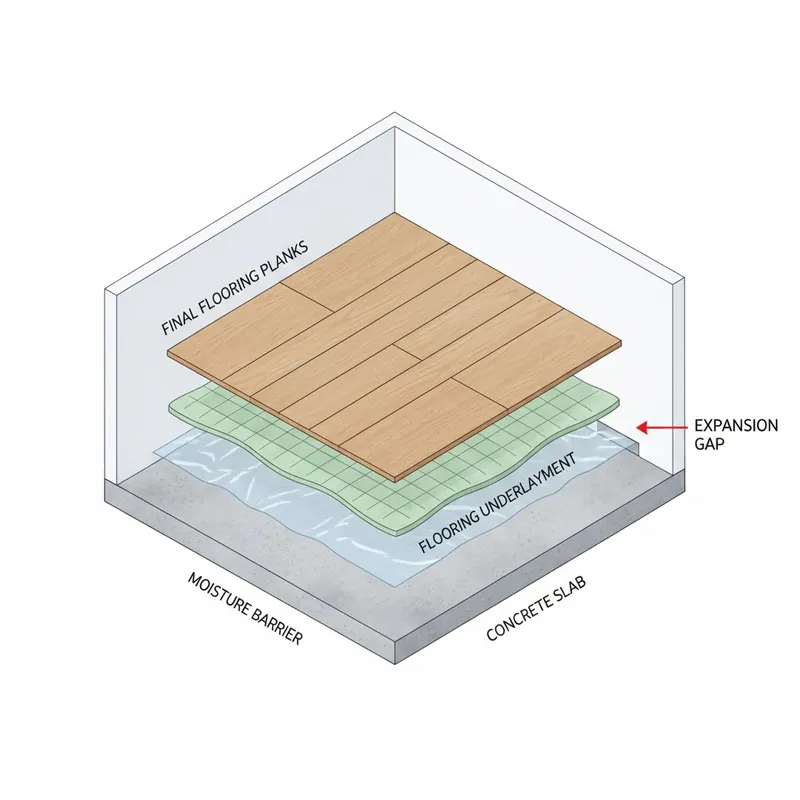
Acclimation and Expansion Gaps: Giving Your Floor Room to Breathe
As we’ve learned, flooring materials can expand and contract with changes in temperature and humidity. Two installation steps are critical to manage this natural movement:
- Acclimation: Always let the flooring materials acclimate to the room’s environment for at least 48-72 hours before installation. This allows the planks to stabilize before they are locked together.
- Expansion Gaps: A small gap (typically 1/4 to 3/8 inch) must be left around the entire perimeter of the room where the flooring meets the walls. This gap, which is later covered by baseboards, gives the floor space to expand. Without it, the expanding floor will press against the walls and have nowhere to go but up, causing buckling. This is especially critical for vinyl floors, which can expand if room temperatures exceed 85°F.[8]
Choosing the Right Floor for Your Specific Climate
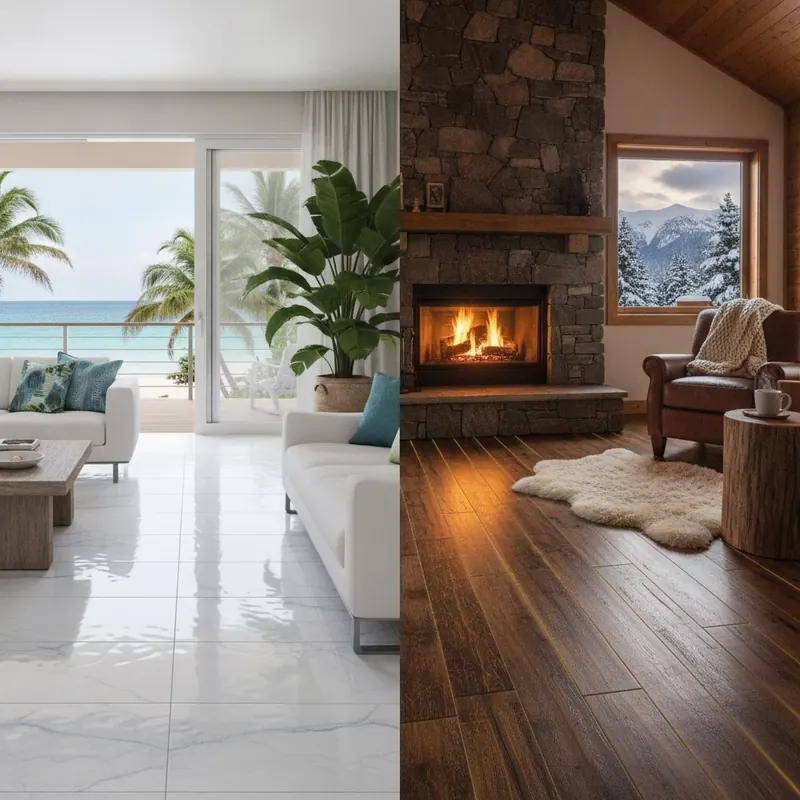
While the top contenders are all resilient, certain materials have a distinct advantage in specific climates. Tailoring your choice to your region is the final step in creating a truly all-weather floor.
For Hot, Humid Regions: Fighting Moisture and Warping
In areas with persistent high humidity (like the Southeast US), the primary battle is against moisture.
- Top Choices: Porcelain Tile and Luxury Vinyl Plank (LVP/LVT) are the clear winners. Their 100% waterproof nature means they are completely unaffected by ambient humidity.
- Good Alternative: Engineered hardwood offers good stability and is a viable option for those who want a real wood look.
- Avoid: Solid hardwood is a very poor choice for humid climates, as its tendency to absorb moisture and expand makes it highly prone to cupping and warping.
For Cold Climates & Temperature Swings: Stability is Key
In regions with cold winters, dry indoor air, and significant temperature swings from season to season, dimensional stability is paramount.
- Top Choices: Engineered Hardwood and SPC Core LVP are the best options. Their layered, rigid construction makes them highly resistant to contracting in the dry winter air or expanding in the summer.
- Good Alternative: High-performance laminate also performs well in these conditions.
- Pro Tip for Radiant Heat: If you have or are planning to install in-floor radiant heating, always check the flooring manufacturer’s warranty. SPC vinyl and many engineered hardwood products are specifically warrantied for use with radiant heat systems, making them excellent choices for a warm, stable, and comfortable floor in a cold climate.
Your Floor is a System, Not Just a Surface
Choosing a floor that will perform flawlessly in any climate is about more than picking a pretty color. It’s about adopting a system-based approach. It begins with understanding the environmental challenges of your home, continues with decoding the science of durability to select the right material, and finishes with a meticulous installation that prepares your floor for a lifetime of performance.
By using the Durability Scorecard, focusing on the right metrics, and respecting the crucial role of proper installation, you are no longer just a shopper—you are an informed homeowner ready to make a confident, long-term investment in the foundation of your home.
Feeling confident? Download our free ‘Flooring Pre-Purchase Checklist’ to take to the store, ensuring you ask the right questions and choose a floor built to last.
This article provides general guidance. Always consult with a professional flooring installer for advice specific to your home’s subfloor, climate, and structural conditions. Follow all manufacturer installation and warranty requirements.
References & Authoritative Sources
- TAS Flooring. (N.D.). Product Collections. Retrieved from tasflooring.com.
- Top Notch Flooring America / Networx. (N.D.). [Research on causes and prevention of wood floor warping].
- Park Range Construction. (N.D.). How the Cold Creeps In and Causes Structural Damage. Retrieved from parkrangeconstruction.com.
- Bob Vila / Flooring America. (N.D.). [Research on durability metrics for residential flooring].
- Wood and Beyond. (N.D.). The 8 Finest Hard Flooring Options for 2026. Retrieved from woodandbeyond.com.
- Carpet One / The Spruce. (N.D.). [Research on durability and waterproof capabilities of flooring materials].
- Twenty & Oak / BuildDirect. (N.D.). [Research on the benefits of engineered hardwood’s cross-grain construction].
- Toro Contracting LLC. (N.D.). Durable Flooring to Withstand Moisture and Temperature Changes. Retrieved from torocontractingrllc.com.
- Advanced DRI. (N.D.). Hardwood Floor Water Damage Repair. Retrieved from advanceddri.com.