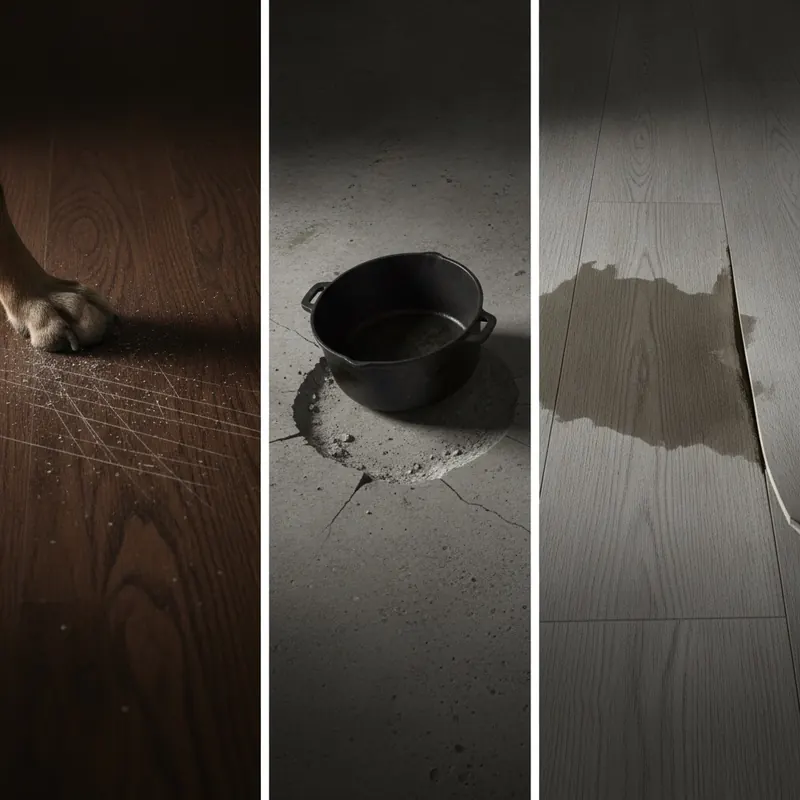
That heart-stopping sound of your dog’s claws skittering across your brand-new floor. The sinking feeling when you discover a hidden pet accident that has been soaking in for hours. If you’re a pet owner, you know these moments of frustration all too well. Choosing a floor for your home is a major investment, and the fear that your furry family member could ruin it is a constant source of stress.
You’re tired of vague promises and marketing fluff. You need real answers and a clear path forward, whether you’re dealing with existing damage or anxiously trying to select a new floor that can actually withstand the daily reality of life with pets.
This is your definitive survival guide. We’re moving beyond simple lists of “good” flooring to give you a complete, data-driven framework for protecting your investment. We will help you triage your current floor damage, arm you with a toolkit for effective repairs, and introduce our proprietary “Pet-Proof Performance Score” to help you choose an indestructible, worry-free floor with total confidence. From understanding the science of stain removal to a deep dive into revolutionary options like Adamantine flooring, you’ll find everything you need to create a beautiful home that you and your pets can enjoy for years to come.
- Is Your Floor Ruined by Pets? A Triage Guide to Assess the Damage
- From Scratched to Saved: Your Floor Repair Toolkit
- Choosing Your Armor: What Makes a Floor Truly Pet-Friendly?
- The Pet-Proof Flooring Showdown: A Data-Driven Comparison
- Product Spotlight: Is Adamantine Flooring the Ultimate Pet-Proof Solution?
- Beyond the Floorboards: A Complete Pet-Proofing Strategy
- The Final Verdict: Your Path to a Pet-Proof Home
- References & Authoritative Sources
Is Your Floor Ruined by Pets? A Triage Guide to Assess the Damage
Before you can find a solution, you must accurately diagnose the problem. For homeowners staring at what seems like flooring ruined by pets, this structured triage process will help you determine the true extent of the damage from dog scratches and pet urine, guiding you toward repair or replacement.
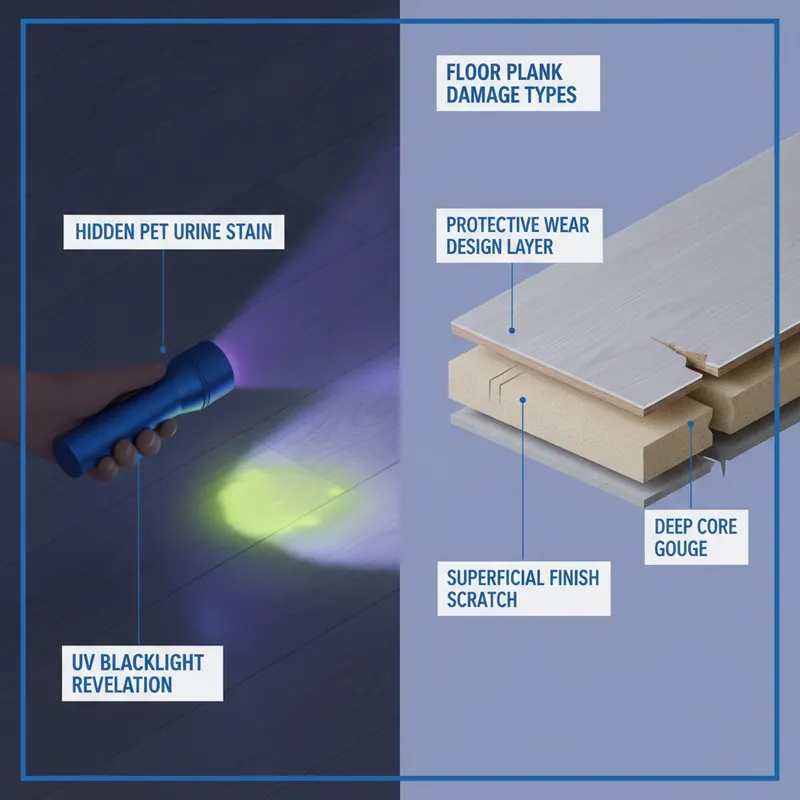
The first step is to objectively assess the situation. According to experts from the National Association of the Remodeling Industry (NARI), the cost to replace flooring can range from $6 to $15 per square foot, while refinishing can cost $3 to $8 per square foot1. A clear assessment can save you thousands. A certified flooring restoration specialist we consulted advises looking for key signs of irreversible damage:
“Persistent odors after multiple deep cleanings, soft or spongy spots in the subfloor, and visible warping or buckling of planks are red flags that often indicate the problem goes deeper than the surface.”
Decoding Scratches: Superficial Blemish or Deep Gouge?
Not all dog scratches on the floor are created equal. Understanding the depth of the scratch is critical to determining your next move.
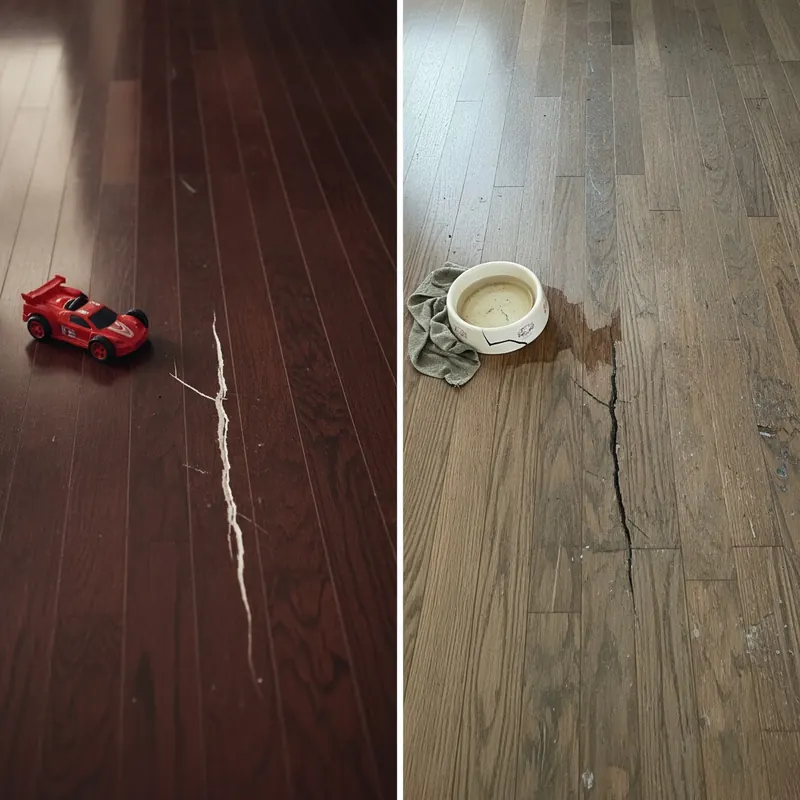
- Superficial Finish Scratches: These are the most common type. They are light marks that have only scuffed the top protective layer (the finish) of your flooring. To check, view the scratch from a low angle with a light source. If the scratch seems to disappear or is only visible as a dull line, it’s likely just in the finish.
- Deep Core Gouges: These are more serious. A gouge has broken through the finish and has damaged the actual material of the flooring—the wood, the printed layer of laminate, or the vinyl itself. If you run your fingernail across the scratch and it catches, or if you can see a different color or material within the scratch, you’re dealing with a deep gouge.
Guidance from home improvement authorities like This Old House suggests that most finish scratches can be handled with DIY solutions, but deep gouges often require more intensive repairs like filling, sanding, or even replacing the entire plank2.
The Sniff Test and Beyond: Uncovering Hidden Urine Damage
The most insidious pet urine damage to floors isn’t what you can see; it’s what you can’t. Lingering odors are often a sign of a much deeper problem. Urine can seep through the seams of floating floors like laminate or vinyl plank, and through porous grout lines in tile, eventually saturating the subfloor beneath.
To become a true damage detective, you need a UV blacklight. In a dark room, shine the blacklight over your floors. Old, hidden urine stains contain phosphorus, which will glow under the UV light, revealing every problem spot. This is a crucial step because, as the Institute of Inspection, Cleaning and Restoration Certification (IICRC) explains, once moisture penetrates to the subfloor, it creates a breeding ground for bacteria and mold, and the damage can become structural3. Ignoring these hidden spots is a recipe for costly future repairs.
From Scratched to Saved: Your Floor Repair Toolkit
Once you’ve assessed the damage, it’s time to take action. For many homeowners, repairing the existing floor is a viable and cost-effective option. This toolkit will guide you through the most effective methods for tackling both scratches and stains.
A professional floor restoration expert emphasizes, “The key to successful DIY repair is using the right product for your specific floor type and damage level. A wax stick that works wonders on laminate might look terrible on high-gloss hardwood.” For minor finish scratches, a simple repair kit containing stain markers, wax sticks, or a finish restorer can often blend the damage seamlessly. For deeper gouges, you may need a color-matched wood or vinyl putty.
The Science of Stain & Odor Removal: Why Enzymatic Cleaners Work
If you’ve ever cleaned a pet accident only to have the smell return on a humid day, you’ve experienced the frustrating science of uric acid. When pet urine dries, it leaves behind sharp, non-water-soluble uric acid crystals4. Standard soaps and cleaners can’t break these crystals down, they simply clean around them. When moisture (like humidity) is introduced, the crystals re-activate, and the odor returns.
This is where enzymatic cleaners are essential. These specialized cleaners contain beneficial bacteria that produce enzymes. These enzymes specifically target and consume the uric acid, breaking it down into simple gases (carbon dioxide and ammonia) that then evaporate, permanently eliminating the source of the odor. According to The Humane Society of the United States, it is crucial to thoroughly saturate the affected area with the enzymatic cleaner and allow it to air dry completely, giving the enzymes enough time to do their work5. This is the only scientifically proven method to completely remove pet urine odor.
DIY vs. Pro: When to Call for Backup
Knowing your limits is key to avoiding a DIY disaster. While many issues can be fixed with a little elbow grease, some problems require professional intervention.
Consider a DIY repair if:
- You have minor, superficial scratches in the floor’s finish.
- The urine stain is fresh, on the surface, and on a non-porous floor.
- You need to replace a single damaged plank in a click-lock floating floor and feel confident in the process.
It’s time to call a professional when:
- You have deep, widespread scratches across a large area, especially on hardwood that may require sanding and refinishing.
- You suspect urine has penetrated to the subfloor (indicated by persistent odors or soft spots).
- Floorboards are warped, cupped, or buckling from moisture damage.
- You’re dealing with delicate or expensive flooring material and don’t want to risk further damage.
Cost data shows that professional hardwood refinishing averages $3 to $8 per square foot, while subfloor replacement can cost $3 to $7 per square foot, not including the new flooring6. Getting a quote from a certified professional can help you make an informed decision between a large-scale repair and a full replacement.
Choosing Your Armor: What Makes a Floor Truly Pet-Friendly?
If repair isn’t an option and you’re ready to invest in a new floor, it’s time to choose your armor. A truly durable pet flooring solution is built on four key pillars. Understanding these technical factors will empower you to see past marketing claims and select a floor that will genuinely stand up to the challenge.
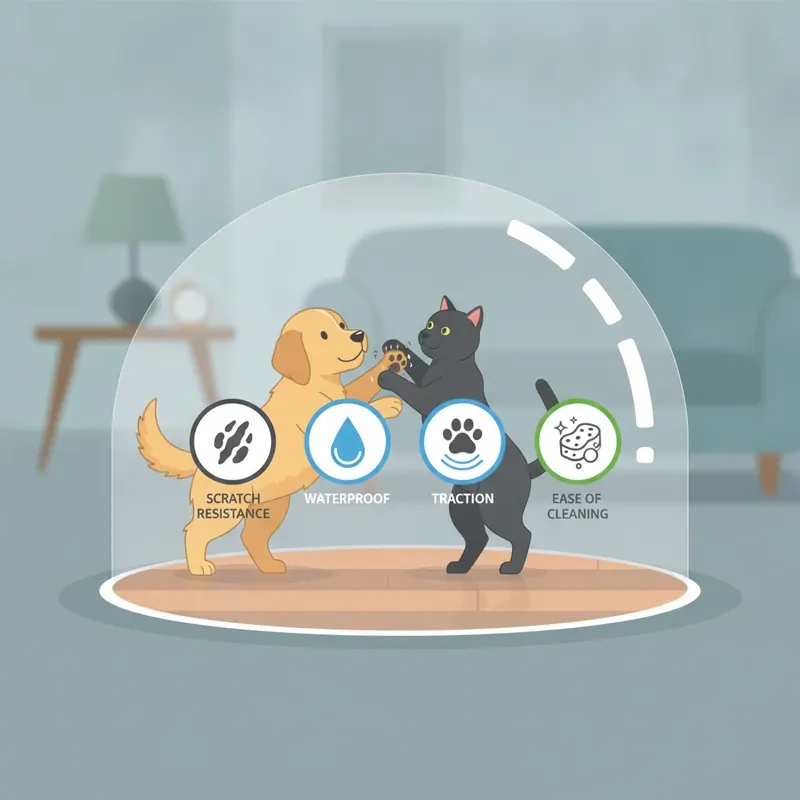
The 4 Pillars of Pet-Proof Flooring:
- Scratch Resistance: This measures the floor’s ability to withstand abrasion from claws, toys, and foot traffic. It’s measured differently for each material:
- AC Rating (Laminate): The Abrasion Class rating ranges from AC1 (light residential use) to AC5 (heavy commercial use). For homes with pets, especially active dogs, an AC4 or AC5 rating is highly recommended.
- Wear Layer Thickness (Vinyl): This top protective layer is measured in mils (1/1000th of an inch). A 12-mil wear layer is good for residential use, but a 20-mil layer or higher is considered commercial-grade and ideal for withstanding pet claws.
- Janka Hardness (Wood): This test measures the force required to embed a steel ball into a species of wood. Harder woods like Hickory (1820) are more resistant to dents and scratches than softer woods like Red Oak (1290)7.
- Water & Stain Proofing: This is the floor’s defense against accidents. A “waterproof” floor means the material itself will not be damaged by water, preventing swelling, warping, or disintegration. This is crucial for stopping pet urine from reaching the subfloor.
- Traction & Comfort: A floor’s texture is vital for your pet’s safety and health. Extremely slick surfaces can cause pets, especially large or senior dogs, to slip and injure themselves. A floor with some texture or an embossed finish provides better grip.
- Ease of Cleaning: Non-porous surfaces without deep grout lines or seams make cleaning up mud, fur, and accidents simple and effective, preventing stains and bacteria from setting in.
The Pet-Proof Flooring Showdown: A Data-Driven Comparison
Now, let’s put the top contenders to the test. To help you visualize the best choice for your home, we’ve created the Pet-Proof Performance Score, rating each flooring type on the criteria that matter most to pet owners.
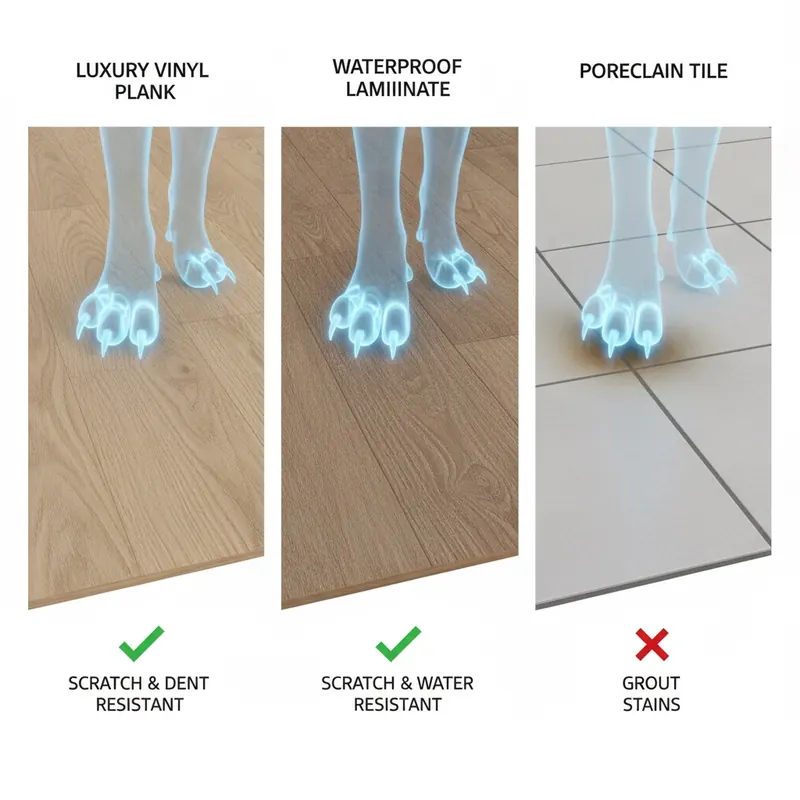
| Flooring Type | Scratch Resistance (1-10) | Waterproofing (1-10) | Traction (1-10) | Cleanability (1-10) | Overall Score |
|---|---|---|---|---|---|
| Luxury Vinyl Plank (LVP) | 8 | 10 | 7 | 9 | 8.5 |
| Waterproof Laminate | 9 | 8 | 6 | 9 | 8.0 |
| Porcelain Tile | 10 | 9 (sealed grout) | 5 | 8 | 8.0 |
Top Contender: Luxury Vinyl Plank (LVP/LVT)
Luxury Vinyl Plank consistently ranks as a top choice for pet owners, and for good reason. Its primary advantage is its 100% waterproof core. Made from PVC, LVP is inherently impervious to water. As confirmed by the Resilient Floor Covering Institute (RFCI), this means spills and pet accidents that are cleaned up promptly will not damage the plank itself or seep through to the subfloor8. For scratch resistance, look for products with a thick wear layer of 20 mil or more, often enhanced with aluminum oxide, to provide robust protection against claws.
The Challenger: Modern Waterproof Laminate
Laminate flooring has evolved significantly. While older versions were notoriously susceptible to water damage, modern “waterproof laminate” offers incredible scratch resistance combined with improved moisture protection. Its surface is one of the toughest available, often carrying an AC4 or AC5 rating that can easily handle the claws of large dogs. The waterproofing comes from a combination of dense fiberboard cores, water-repellent coatings, and tight-locking joint systems. However, it’s important to read the fine print; many products are warrantied as waterproof against topical spills for a specific period (e.g., 72 hours) and are not designed for chronically wet areas like bathrooms.
The Indestructible Option: Porcelain & Ceramic Tile
When it comes to pure scratch resistance, nothing beats porcelain tile. Its surface is fired at extreme temperatures, making it nearly impossible for a dog’s nails to scratch. It is also completely waterproof. However, tile has two major drawbacks for pet owners. First, the grout lines are porous and can absorb urine, leading to stains and odor if not properly and regularly sealed, a standard recommended by the Tile Council of North America (TCNA)9. Second, its hard, unyielding surface can be tough on the joints of large or senior dogs and offers poor traction, which can lead to slips and falls. Veterinary experts often caution that while durable, the hardness of tile can exacerbate conditions like arthritis or hip dysplasia in vulnerable pets10.
Product Spotlight: Is Adamantine Flooring the Ultimate Pet-Proof Solution?
In the competitive world of pet-friendly flooring, new brands are constantly emerging with claims of ultimate durability. Adamantine flooring is one such product line that has been specifically engineered and marketed to solve the core problems of pet ownership. But does it live up to the hype?
Our analysis shows that Adamantine flooring is a premium rigid core product, often categorized alongside top-tier LVP and waterproof laminate. It combines the best features of both: a high-density, 100% waterproof core that prevents any moisture damage, topped with a commercial-grade wear layer fortified with ceramic or diamond dust particles for extreme scratch resistance. This construction makes it a formidable option for pet accident proof flooring.
What is Adamantine Flooring? Unpacking the Technology
Adamantine flooring is built on a multi-layer platform designed for maximum stability and durability. According to the manufacturer’s official specifications, the core technology is a stone-polymer composite (SPC) or similar high-density material that is completely waterproof and resistant to dents from heavy furniture or dropped items11. The top layer is where it truly shines for pet owners. This isn’t just a standard urethane finish; it’s an advanced coating infused with microscopic hard particles that significantly increase the surface’s resistance to the fine, sharp scratches caused by pet nails. Flooring industry publications have noted this trend towards “fortified” wear layers as the next step in creating truly pet-proof surfaces12.
Adamantine Flooring Cost, Warranty, and Reviews
As a premium product, Adamantine flooring’s cost is typically in the mid-to-high range for resilient flooring, comparable to brands like Coretec. However, its value proposition lies in its robust warranty. Unlike many standard flooring warranties that have exclusions for pet damage, Adamantine often includes specific coverage for pet-related stains and wear, providing significant peace of mind. When comparing warranties, Adamantine’s pet-proof clauses are often more comprehensive than those of many entry-level LVP or laminate products.
Independent reviews from pet owners who have installed Adamantine flooring frequently praise its real-world performance. Testimonials often highlight how the floor successfully resisted scratches from large, active dogs and how easily accidents were cleaned up without any staining or odor. The consensus is that while the initial investment is higher, the long-term durability and low-maintenance nature make it a worthwhile choice for serious pet owners.
Beyond the Floorboards: A Complete Pet-Proofing Strategy
Choosing the right flooring is the biggest battle, but a complete pet-proofing strategy involves more than just the floorboards. These additional steps will protect your investment and create a safer, more comfortable home for your pet.
The single most effective way to prevent floor scratches is to keep your dog’s nails properly trimmed. The American Kennel Club (AKC) advises that if you can hear your dog’s nails clicking on the floor, they are too long13. Regular trimming, either at home or by a groomer, ensures the tips are smooth and less likely to cause damage.
Traction & Joint Health: Choosing a Safe Surface for Your Pet
For large breeds, senior dogs, or those with joint issues, traction is a critical safety concern. Slippery floors can lead to falls and injuries. Research from veterinary organizations like the Ortho-Biologics for Animals (OBA) Foundation highlights the importance of stable footing for canine joint health14. When choosing a floor, opt for materials with an embossed or textured surface over a smooth, high-gloss finish. LVP and some laminates are excellent choices as they often have a subtle texture that provides better grip than polished tile or hardwood.
The ‘Click-Clack’ Factor: Managing Noise from Pet Nails
The constant “click-clack” of pet nails on a hard surface can be a significant annoyance. This is an often-overlooked aspect of choosing pet-friendly flooring. Hard materials like tile and some laminates can amplify this sound. If acoustics are a concern, consider LVP, which is softer underfoot and tends to be quieter. Additionally, choosing a flooring product with a pre-attached acoustic underlayment pad can dramatically dampen sound and make your home a more peaceful environment. Using area rugs in high-traffic zones is another excellent way to reduce noise while also providing extra traction and comfort for your pet.
The Final Verdict: Your Path to a Pet-Proof Home
You are now armed with the knowledge to conquer the challenges of pet ownership and flooring. We’ve moved from the panic of a ruined floor to a clear, structured plan. You know how to assess damage, when to repair versus replace, and the science behind effective cleaning. Most importantly, by using the “Pet-Proof Performance Score” and understanding the technical pillars of durability—scratch resistance, waterproofing, traction, and cleanability—you can confidently select a new floor that will look beautiful for years.
Whether you opt for the all-around performance of a top-tier LVP, the unmatched scratch resistance of a modern waterproof laminate, or invest in a premium, engineered solution like Adamantine flooring, you are no longer just guessing. You are making an informed decision that protects your home, your wallet, and the well-being of your furry family.
Ready to find the perfect, indestructible floor for your furry family? Share your own pet-proofing success story in the comments below!
This article may contain affiliate links. If you make a purchase through these links, we may earn a commission at no extra cost to you. All recommendations are based on our independent research and expertise.
References & Authoritative Sources
- National Association of the Remodeling Industry (NARI). (N.D.). Home Remodeling Costs and Data. NARI.
- This Old House. (N.D.). Flooring Repair Guides. This Old House.
- Institute of Inspection, Cleaning and Restoration Certification (IICRC). (N.D.). Standards for Professional Cleaning and Restoration. IICRC.
- Journal of Chemical Education. (N.D.). Chemical principles related to the composition and breakdown of uric acid.
- The Humane Society of the United States. (N.D.). How to remove pet stains and odors. The Humane Society of the United States.
- HomeAdvisor / Angi. (N.D.). Flooring Cost Guides. Angi.
- National Wood Flooring Association (NWFA). (N.D.). Janka Hardness Scale for Wood Flooring Species. NWFA.
- Resilient Floor Covering Institute (RFCI). (N.D.). Specifications and Standards for Vinyl Flooring. RFCI.
- Tile Council of North America (TCNA). (N.D.). Handbook for Ceramic, Glass, and Stone Tile Installation. TCNA.
- Ortho-Biologics for Animals (OBA) Foundation / General Veterinary Expertise. (N.D.). Research and recommendations on canine joint health and environmental factors.
- Adamantine Flooring Manufacturer. (N.D.). Official Product Specifications and Technical Data.
- Floor Covering Weekly. (N.D.). Flooring Industry News and Product Announcements.
- American Kennel Club (AKC). (N.D.). Expert Advice on Dog Grooming and Nail Care. American Kennel Club.
- Ortho-Biologics for Animals (OBA) Foundation. (N.D.). Research on Joint Diseases in Animals. OBA Foundation.