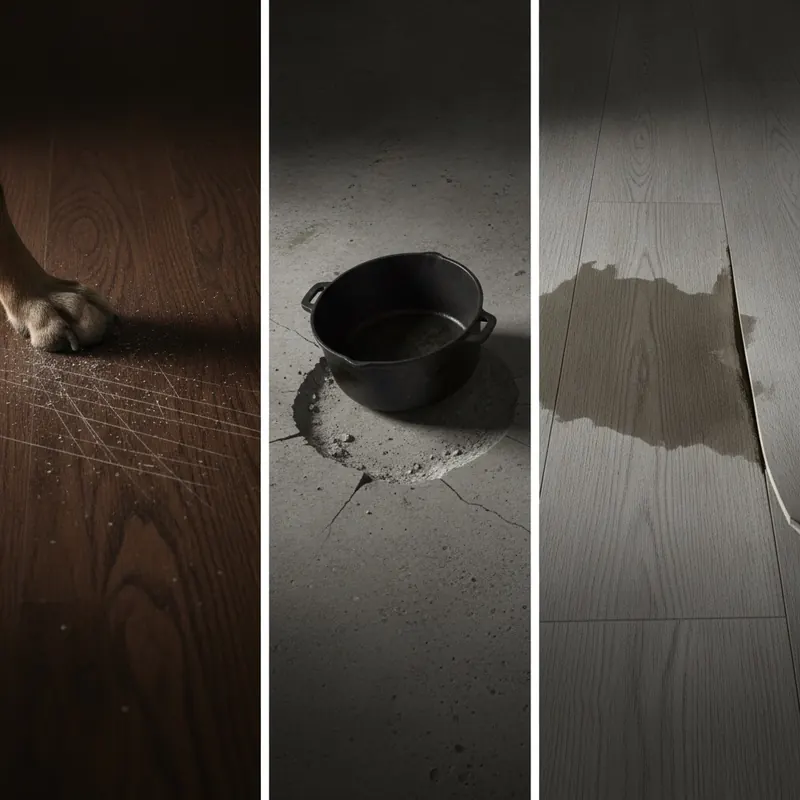
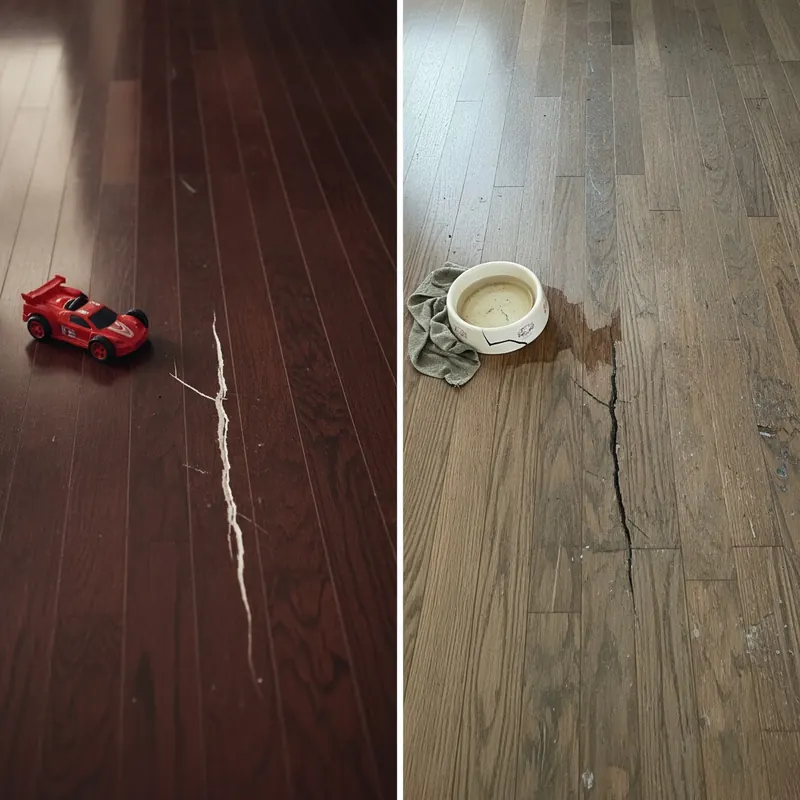
There’s a specific kind of frustration that comes from seeing your beautiful, expensive floor begin to fail. It starts subtly—a small bubble, a peeling edge, a corner that just doesn’t seem to sit right. This is delamination, and it’s a homeowner’s nightmare that can turn a significant investment into a source of constant stress. The culprit is almost always the same: moisture. It attacks the very heart of your floor, breaking down the bonds that hold it together.
But what if a floor was engineered from its core to be impervious to this threat? This is the promise of Adamantine flooring and its revolutionary waterproof core technology. It’s not just water-resistant; it’s a fortress against the moisture that causes peeling, bubbling, and separation.
This is not just another product guide. This is the definitive owner’s manual for waterproof flooring. We will demystify the science behind the waterproof core, provide a visual guide to diagnosing common flooring failures, and arm you with a failure-proof plan for installation and maintenance. By the end, you will have the expert knowledge to choose, install, and maintain a floor that truly lasts a lifetime.
- The Homeowner’s Nightmare: Understanding Flooring Delamination
- The Science of a Solution: How a Waterproof Core Works
- A Deep Dive: Adamantine Flooring’s Waterproof Core Technology
- Your Failure-Proof Plan: How to Prevent Floor Delamination for Good
- Buyer’s Guide: Choosing the Best Durable Waterproof Flooring for Your Home
- What If It’s Too Late? An Emergency Guide to Flooring Water Damage
- Conclusion: Your Investment, Protected by Science
- References & Authoritative Sources
The Homeowner’s Nightmare: Understanding Flooring Delamination
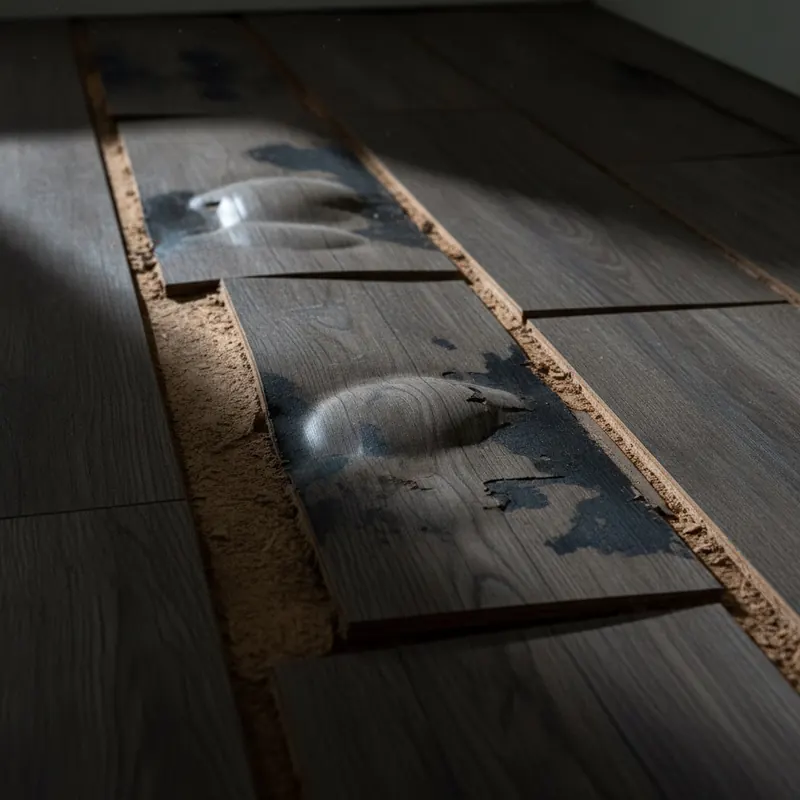
Before you can find the right solution, you must fully understand the problem. Flooring delamination is a common but often misunderstood issue. This section is your diagnostic guide, helping you identify the signs, understand the causes, and recognize why your floor is failing.
According to the Institute of Inspection, Cleaning and Restoration Certification (IICRC), the leading authority on flooring inspection and restoration, moisture is the primary catalyst for most flooring failures, including delamination[1]. A certified floor inspector might tell you that over 90% of the delamination cases they investigate trace back to an unaddressed moisture issue at the subfloor level or from improper maintenance.
What is Delamination? (And Why It Happens)
In simple terms, delamination is the separation of the layers that make up a flooring plank. Modern floors, especially popular options like laminate and Luxury Vinyl Plank (LVP), are not single pieces of material. They are sophisticated composites, engineered with multiple layers fused together under immense heat and pressure.
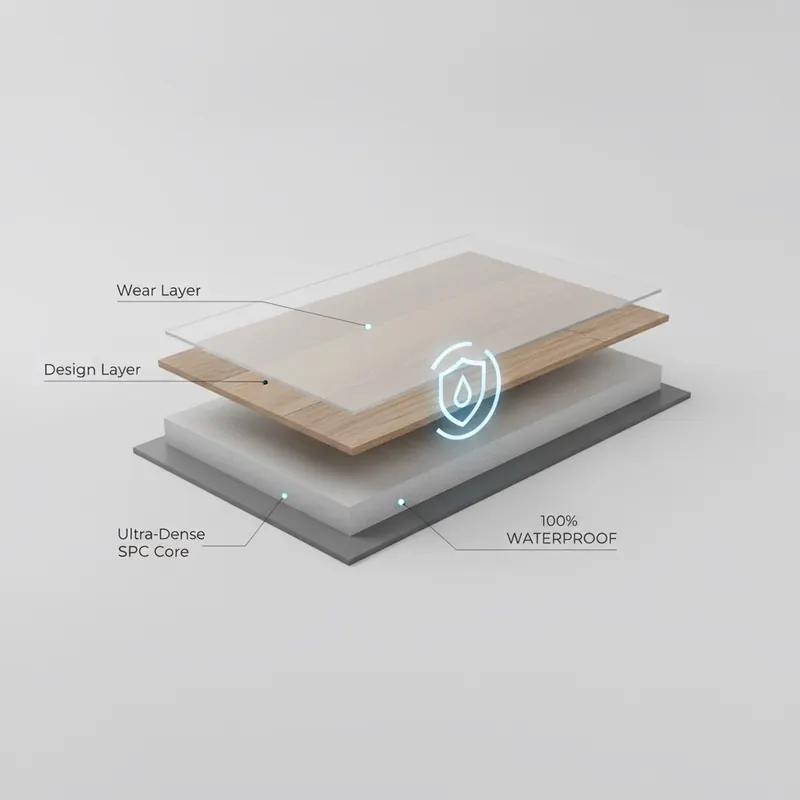
A typical plank consists of:
- Wear Layer: A tough, transparent topcoat that resists scratches and stains.
- Design Layer: A high-resolution printed image that gives the plank its wood or stone look.
- Core Layer: The structural heart of the plank, providing stability and rigidity.
- Backing Layer: An attached underlayment for cushioning and moisture protection.
Delamination occurs when the adhesive bond between any of these layers fails. The wear layer might peel away from the design layer, or the entire top assembly might separate from the core. The National Wood Flooring Association (NWFA) emphasizes that the integrity of these bonds is critical to the performance and longevity of any engineered flooring product[2]. When that bond is compromised, the floor begins to fall apart.
The 4 Main Culprits Behind Peeling and Separating Floors
While a manufacturing defect can occasionally be the cause, delamination is almost always triggered by one of four environmental or installation-related factors.
1. Subfloor Moisture: This is the silent killer of floors. Concrete subfloors are porous and can constantly release moisture vapor. If a proper vapor barrier isn’t installed, this moisture gets trapped beneath the flooring, attacking the adhesives from below. Experts at the Building Science Corporation confirm that unchecked moisture vapor transmission through concrete slabs is a leading cause of flooring system failures in modern construction[3].
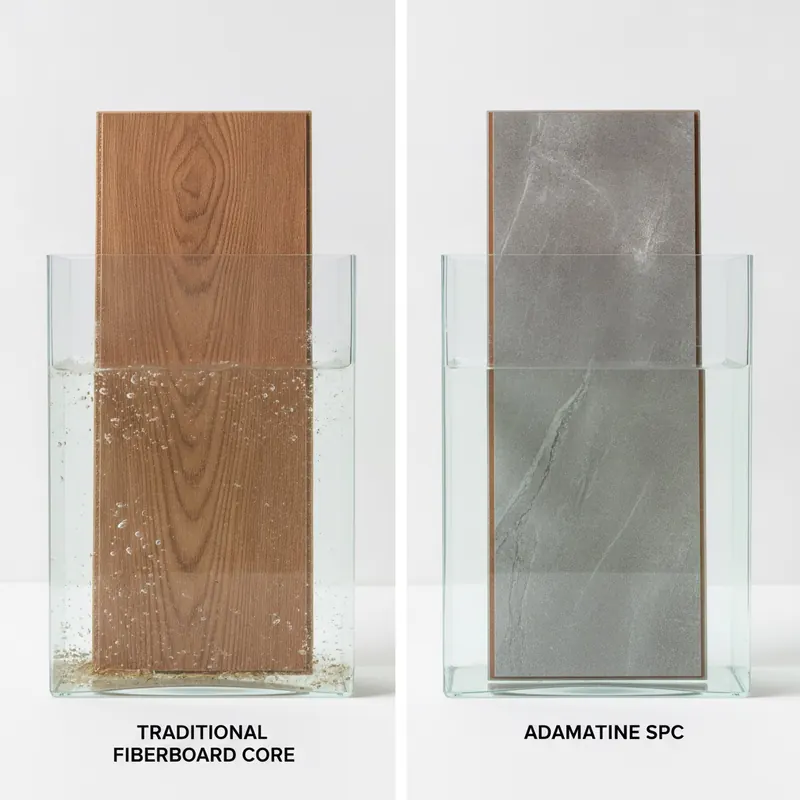
2. Topical Moisture: This comes from above. Excessive water from mopping, appliance leaks, pet accidents, or consistent spills can seep into the seams between planks. While the surface may be water-resistant, traditional laminate cores made of Medium-Density Fiberboard (MDF) act like a sponge, swelling and causing the top layers to peel and bubble.
3. Installation Errors: A floor is only as good as its installation. Key mistakes include:
- No Acclimation: Failing to let the planks acclimate to the home’s temperature and humidity before installation.
- Uneven Subfloor: Installing over a subfloor that isn’t perfectly flat, causing planks to flex and stress the locking systems and layers.
- No Expansion Gaps: Not leaving a small gap around the perimeter of the room, preventing the floor from expanding and contracting naturally.
4. Improper Cleaning: Using steam mops, abrasive cleaners, or soaking the floor with water can force moisture and heat into the seams, weakening the bonds between layers over time.
It’s crucial to note that delamination presents differently depending on the flooring type. In traditional laminate, the fiberboard core swells and disintegrates, causing the edges to peel and the surface to bubble. With some types of LVP, the vinyl layers themselves can separate without the dramatic swelling seen in laminate.
The Science of a Solution: How a Waterproof Core Works
To combat the primary cause of delamination, manufacturers developed a groundbreaking innovation: the waterproof core. This technology fundamentally changes how a floor interacts with water, making it inert to the moisture damage that destroys traditional floors.
The core of the plank is no longer made of water-absorbing materials like fiberboard. Instead, it’s composed of a dense, rigid, and 100% waterproof composite material. This means that even if the plank is fully submerged in water for days, the core will not swell, warp, or fall apart. This stability is the ultimate defense against delamination.
Deconstructing the Core: SPC vs. WPC Technology
The two dominant types of waterproof cores are Stone Polymer Composite (SPC) and Wood Plastic Composite (WPC). While both are 100% waterproof, they have distinct compositions and characteristics.
- Stone Polymer Composite (SPC): This core is primarily made of natural limestone powder, polyvinyl chloride (PVC), and stabilizers. The high concentration of stone makes SPC cores incredibly dense, rigid, and durable.
- Wood Plastic Composite (WPC): This core combines recycled wood pulp, plastic composites, and a foaming agent. The foaming agent creates air pockets within the core, making it lighter, thicker, and more comfortable underfoot than SPC.
The Floor Covering Institute, an educational body providing unbiased technical information, highlights these key differences[4].
| Feature | SPC (Stone Polymer Composite) | WPC (Wood Plastic Composite) |
|---|---|---|
| Composition | Limestone, PVC, Stabilizers | Wood Pulp, Plastic Composites |
| Rigidity | Extremely High | High |
| Dent Resistance | Superior | Very Good |
| Feel Underfoot | Hard, solid | Softer, more resilient |
| Cost | Generally more affordable | Generally more expensive |
For most applications, especially those requiring maximum durability and impact resistance, SPC has become the industry standard for high-performance waterproof flooring.
More Than Just the Core: Is the Entire Plank Waterproof?
This is a critical question: is a waterproof core the same as a “waterproof floor”? The answer lies in the complete system. While the core itself is impervious to water, a truly waterproof flooring system relies on two additional factors:
- The Locking System: High-quality waterproof planks feature a precision-milled locking system (or “click-lock” mechanism). When installed correctly, these seams create an extremely tight seal that prevents topical spills from seeping between the planks and reaching the subfloor.
- Proper Installation: This is non-negotiable. As all manufacturer installation guides stress, the perimeter of the room must be sealed with 100% silicone caulk in wet areas like bathrooms and kitchens. This prevents water from getting around the edges of the floor and becoming trapped underneath.
So, while the waterproof core is the hero, the locking system and installation are the essential supporting cast that creates a complete, top-to-bottom waterproof surface that protects both the floor and the subfloor beneath it.
A Deep Dive: Adamantine Flooring’s Waterproof Core Technology
Adamantine flooring represents the pinnacle of this waterproof technology, engineered specifically to provide a delamination-proof solution. By referencing the official manufacturer’s documentation, we can see how its construction delivers superior performance[5]. Adamantine utilizes an ultra-dense Stone Polymer Composite (SPC) core, which provides exceptional rigidity and dimensional stability. This means it resists expansion and contraction with temperature changes and is incredibly difficult to dent or damage.
Furthermore, Adamantine flooring often carries third-party certifications like FloorScore®, which is administered by UL[6]. This certification ensures that the product meets stringent indoor air quality standards and has low volatile organic compound (VOC) emissions, making it a safe choice for your home.
| Specification | Adamantine Flooring (Typical) |
|---|---|
| Core Composition | High-Density Stone Polymer Composite (SPC) |
| Wear Layer Thickness | 20mil or higher for commercial-grade durability |
| Water Resistance Rating | 100% Waterproof Core |
| Warranty | Lifetime Residential / 15-Year Commercial |
| Certifications | FloorScore® Certified for Indoor Air Quality |
What Makes Adamantine’s Core Different?
While many brands use SPC, Adamantine’s manufacturing process focuses on creating an ultra-high-density core. This density is key. It not only makes the plank more resistant to impact from dropped objects but also provides a more robust foundation for the locking system. A stronger lock means a tighter seam, offering even greater protection against topical water intrusion. The high-pressure fusion process used to bond the layers ensures a near-monolithic plank structure, making the separation of layers—delamination—extremely unlikely under normal use.
Adamantine Flooring: Pros, Cons, and Cost
To build trust, a balanced overview is essential. Based on manufacturer data and reviews from certified flooring installers, here is a breakdown of Adamantine flooring.
Pros:
- Ultimate Durability: The high-density SPC core and thick wear layer make it resistant to scratches, dents, and stains.
- 100% Waterproof: The core will not swell or degrade, making it ideal for basements, kitchens, and bathrooms.
- Delamination-Proof: The inert core and strong layer bonding virtually eliminate the risk of peeling or bubbling due to moisture.
- Easy Maintenance: Simple to clean with no need for waxing or special treatments.
Cons:
- Hard Underfoot: Like tile, the rigid SPC core can feel harder than WPC or traditional hardwood.
- Subfloor Prep is Key: Requires a very flat subfloor for proper installation; imperfections can telegraph through.
Cost:
Adamantine flooring is a premium product. Homeowners can expect the cost to be in the range of $4.00 to $7.00 per square foot for the material alone. While this is a higher initial investment than traditional laminate, its longevity and resistance to water damage provide significant long-term value.
Your Failure-Proof Plan: How to Prevent Floor Delamination for Good
Choosing a floor with a waterproof core like Adamantine is the most important step. However, to guarantee a lifetime of performance, you must follow best practices before, during, and after installation. Think of this as your lifetime maintenance checklist, based on standards from industry leaders like the NWFA and ASTM International[7].
Step 1: Master Your Subfloor and Acclimation
The foundation of a great floor is a great subfloor.
- Be Dry: For concrete subfloors, you must perform a moisture test. A simple method is taping a 2’x2′ plastic square to the floor for 72 hours. If you see condensation, the moisture level is too high. A professional should use a calcium chloride test or a moisture meter for precise readings. Always install a 6-mil vapor barrier over concrete.
- Be Flat: The subfloor must be flat to within 3/16 of an inch over a 10-foot span. Use a self-leveling compound to fill any low spots.
- Acclimate Properly: Even though SPC is stable, it’s crucial to acclimate the planks. As directed by manufacturer guides, place the unopened boxes in the installation room for at least 48 hours. This allows the material to adjust to your home’s specific temperature and humidity, preventing issues after installation.
Step 2: Use the Right Cleaning Methods and Products
You can have the best floor in the world, but the wrong cleaning routine can damage it. The question, “Can using the wrong cleaning products cause peeling?” has a clear answer: yes. Harsh chemicals can degrade the wear layer, while excessive water can find its way into seams.
According to experts at the Resilient Floor Covering Institute (RFCI), you should only use pH-neutral cleaners designed for vinyl flooring[8]. Never use steam mops, as the combination of high heat and pressure can weaken the adhesive bonds over time. The best method is simple: sweep or vacuum regularly and damp-mop with an approved cleaner as needed.
Step 3: Control Your Home’s Environment
A stable home environment is good for you and your floors. While a waterproof core is not susceptible to humidity, extreme temperature swings can cause the overall flooring system to expand and contract. According to guidance from home inspection authorities like InterNACHI, maintaining a consistent indoor environment is key to the longevity of all building materials[9].
Keep your home’s relative humidity within a stable range, ideally between 35% and 55%, year-round. Using your HVAC system, and a dehumidifier in damp basements or humid climates, helps protect not only your floor but all the finishes in your home.
Buyer’s Guide: Choosing the Best Durable Waterproof Flooring for Your Home
When you’re ready to buy, you need to select the right material for the right space. As a flooring professional with years of experience in home renovation, I’ve seen what works and what doesn’t. Here’s a comparison of the top “delamination proof” flooring options.
| Flooring Type | Waterproofing | Durability (Wear) | Cost (Material) | DIY-Friendliness |
|---|---|---|---|---|
| Adamantine (SPC) | Excellent (100% Waterproof) | Excellent | $$$ | High |
| Other LVP/SPC | Excellent (100% Waterproof) | Good to Excellent | $$-$$$ | High |
| Ceramic/Porcelain Tile | Excellent (Waterproof Surface) | Excellent | $$-$$$$ | Low to Medium |
Insights from the American Society of Home Inspectors (ASHI) consistently show that for below-grade installations like basements, monolithic, waterproof materials like SPC or tile are vastly superior to any product containing wood or fiberboard[10].
For the Basement: Why SPC Reigns Supreme
For basements, which are subject to high humidity and potential water intrusion, SPC flooring like Adamantine is the undisputed champion. Its 100% waterproof core means it’s unaffected by moisture from the concrete slab (when used with a vapor barrier). Its rigidity allows it to bridge minor subfloor imperfections better than flexible LVP. Most importantly, in the event of a minor flood or leak, the planks can often be removed, the subfloor dried, and the same planks reinstalled with no damage. This is impossible with any wood-based product.
However, remember that no flooring is a substitute for proper water management. Before installing any floor in a basement, ensure your exterior grading, gutters, and sump pump are all functioning correctly to keep the space as dry as possible.
For Kitchens & Bathrooms: Comparing LVP and Tile
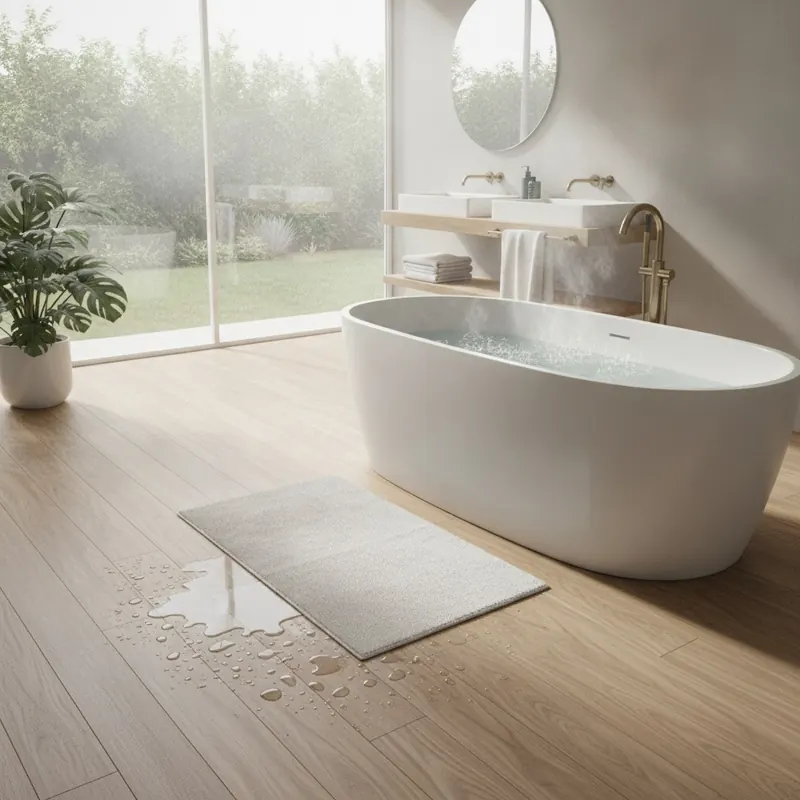
In kitchens and bathrooms, the choice often comes down to high-quality SPC/LVP or traditional tile.
- Tile: The gold standard for waterproofing. The tile itself is impervious to water. Its only potential weakness is grout lines, which must be properly sealed to prevent staining and mold. It is extremely durable but is also cold, hard, and unforgiving to dropped dishes.
- SPC/LVP (like Adamantine): Offers a warmer, more comfortable surface underfoot. The lack of grout lines makes cleaning easier. A high-quality SPC with a tight locking system provides a waterproof surface that is more than sufficient for these areas. It is also a much more DIY-friendly and typically faster installation.
Ultimately, the choice between the two in these spaces often comes down to aesthetics, comfort, and budget.
What If It’s Too Late? An Emergency Guide to Flooring Water Damage
If you’re facing a leak or flood right now, act fast. The following steps, based on professional restoration standards and FEMA guidelines, can help mitigate the damage[11].
- Safety First: If there is standing water, immediately turn off the electricity to the affected area at the breaker box to prevent electrocution.
- Stop the Water Source: Find the source of the leak and shut it off. This may mean turning off the main water valve to your house.
- Remove the Water: Use a wet-dry vacuum, mops, and towels to remove as much standing water as possible, as quickly as possible.
- Promote Drying: Open windows and doors. Set up fans and dehumidifiers to circulate air and pull moisture out of the room.
- Call a Professional: For significant water damage, contact an IICRC-certified water damage restoration professional. They have the equipment and expertise to dry the structure properly and prevent mold growth. A certified professional will tell you that the first 24-48 hours are critical to preventing secondary damage like mold.
If you have a waterproof core floor like Adamantine, the planks themselves will likely be unharmed. The primary concern is drying the subfloor underneath.
Conclusion: Your Investment, Protected by Science
Delamination is a preventable problem. The peeling, bubbling, and separation that plague traditional floors are almost always the result of a single weakness: a core that cannot stand up to moisture.
By understanding the science, you can see that a high-quality waterproof core, like the ultra-dense SPC found in Adamantine flooring, is the most effective defense. It is an engineered solution to a natural problem. This technology, combined with a commitment to proper subfloor preparation, installation, and long-term maintenance, transforms your floor from a potential liability into a durable, long-lasting asset. You are now empowered with the knowledge to move past the marketing hype and make a smart, failure-proof flooring investment that will bring you peace of mind for years to come.
Ready to invest in a floor that’s engineered to last? Explore the Adamantine flooring collection to find the perfect waterproof, delamination-proof style for your home.
This article provides general information and guidance. Always consult the specific manufacturer’s installation instructions and warranty details for your flooring product. For complex issues, consult a certified flooring professional.
References & Authoritative Sources
- Institute of Inspection, Cleaning and Restoration Certification (IICRC). (N.D.). IICRC Standards for Professional Restoration. Retrieved from IICRC.org.
- National Wood Flooring Association (NWFA). (N.D.). Engineered Wood Flooring Guidelines. Retrieved from NWFA.org.
- Building Science Corporation. (N.D.). Building Science Insights and Publications on Moisture Management. Retrieved from buildingscience.com.
- Floor Covering Institute. (N.D.). Technical Information on Flooring Materials. Retrieved from floorcoveringinstitute.com.
- Adamantine Flooring. (N.D.). Official Manufacturer Website and Technical Documentation.
- UL (Underwriters Laboratories). (N.D.). SPOT Sustainable Product Database – FloorScore Certification. Retrieved from spot.ul.com.
- ASTM International. (N.D.). Standards for Resilient Floor Coverings. Retrieved from astm.org.
- Resilient Floor Covering Institute (RFCI). (N.D.). Maintenance and Care Guidelines for Resilient Flooring. Retrieved from rfci.com.
- International Association of Certified Home Inspectors (InterNACHI). (N.D.). Home Inspection Standards of Practice. Retrieved from nachi.org.
- American Society of Home Inspectors (ASHI). (N.D.). ASHI Standards of Practice for Home Inspections. Retrieved from ashi.org.
- Federal Emergency Management Agency (FEMA). (N.D.). How to Clean Up After a Flood. Retrieved from fema.gov.