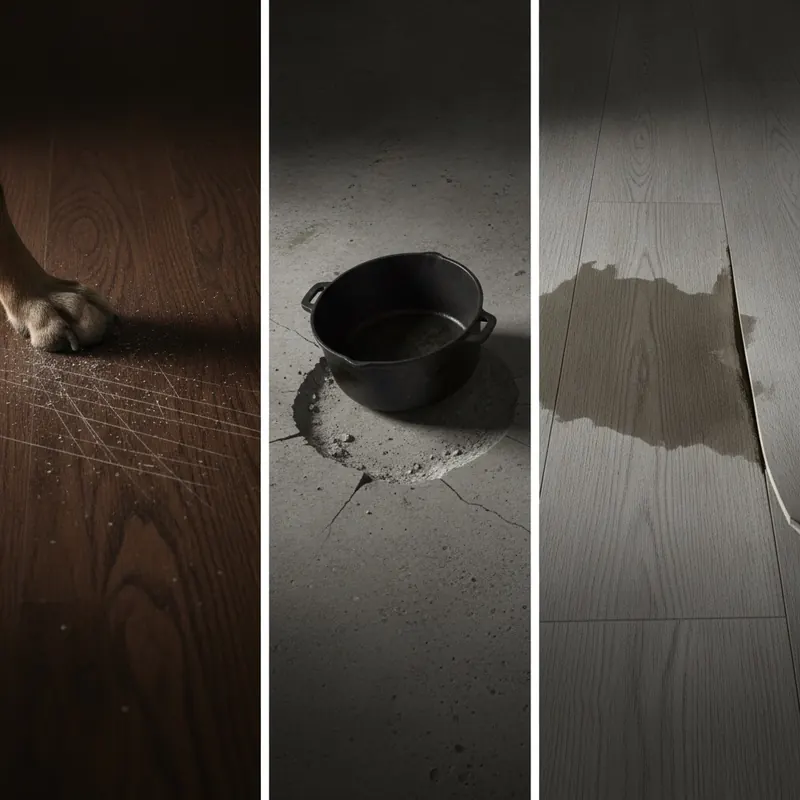
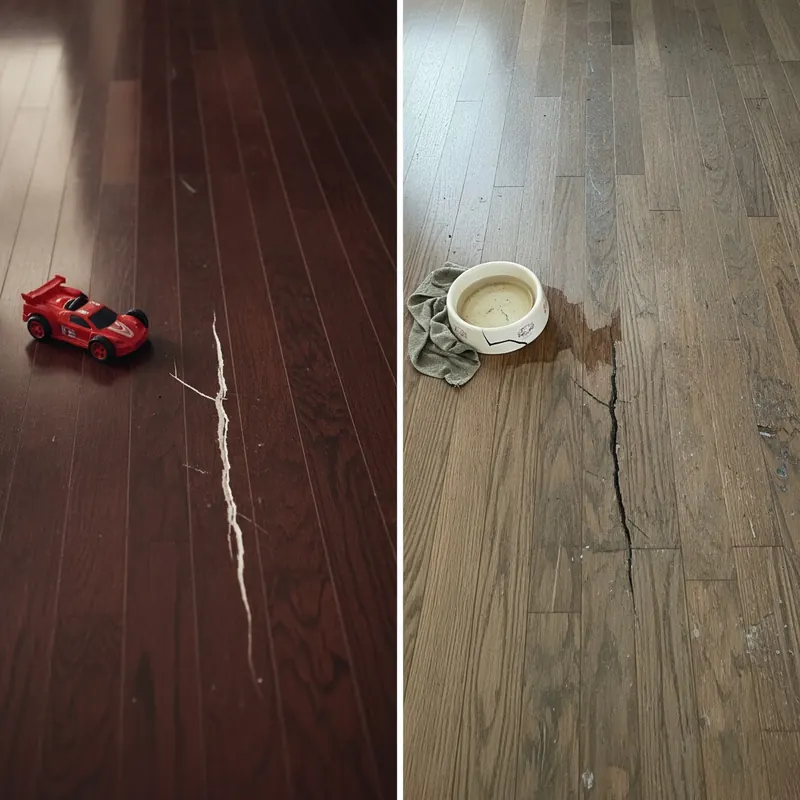
You’ve been there before. You invest in beautiful new flooring, envisioning years of pristine beauty. But within months, the reality of daily life sets in. A dragged chair leaves a faint scratch. Sunlight through the window creates a faded patch. The intricate wood grain pattern you fell in love with starts to look dull and worn in the high-traffic hallway. This frustrating cycle of flooring wear and tear leaves many homeowners feeling that a floor that is both beautiful and truly durable is an impossible dream.
What if there was a new class of flooring engineered from the ground up to solve this exact problem? Enter Adamantine flooring, a next-generation solution designed to resist the scratches, fading, and pattern wear that plague traditional options.
This is not a sales pitch. This is the ultimate flooring investment guide. We will decode the science behind flooring that looks brand new for decades, moving beyond marketing claims to provide a data-driven framework for choosing, protecting, and maintaining a floor that truly lasts. We will define what Adamantine flooring is, deconstruct the technology that powers its resilience, compare it directly to established industry leaders, and give you a practical guide to long-term care. By the end, you’ll be empowered to make a confident choice for a floor that retains its impeccable detail through years of use.
- What is Adamantine Flooring? A Definitive Explanation
- The Science of Lasting Beauty: How Modern Floors Retain Impeccable Detail
- The Total Durability Scorecard: Ranking the Most Durable Flooring Options
- Flooring First-Aid: A Practical Guide to Prevention & Repair
- Conclusion
- References & Authoritative Sources
What is Adamantine Flooring? A Definitive Explanation
In a market saturated with acronyms like LVP, SPC, and WPC, the term “Adamantine flooring” has emerged, causing both excitement and confusion. So, what is it? Adamantine flooring is not a generic category but a proprietary technology and brand name applied to a new class of high-performance resilient flooring.
Think of it less as an entirely new species of flooring and more as a significant evolution of existing rigid core technology. It represents a specific manufacturer’s formula and construction process designed to maximize durability, scratch resistance, and the long-term retention of its high-definition visual layer. While the name itself may be trademarked by a specific company, such as Flooret, the underlying principles are part of a broader industry push towards creating tougher, more resilient flooring solutions. The technical specifications, and potentially any associated patents filed with bodies like the United States Patent and Trademark Office (USPTO), provide the unbiased details that define its unique construction.
Deconstructing the Plank: What is Adamantine Flooring Made Of?
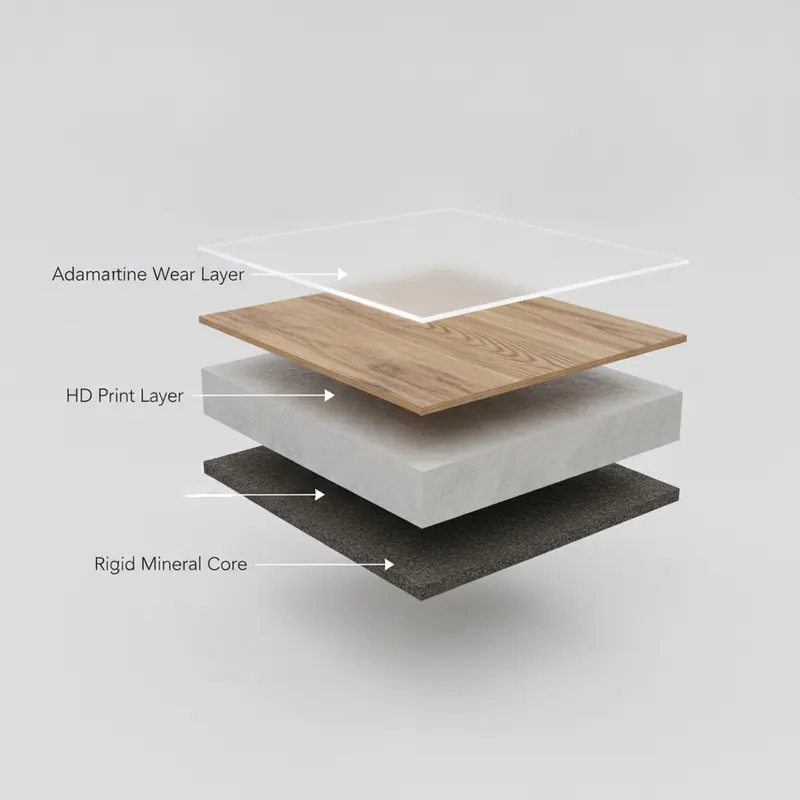
To truly understand what makes Adamantine flooring different, we need to look inside the plank. While specific formulations are proprietary, its construction generally consists of several key layers, each serving a critical function.
- Acoustic Backing: Often, the bottom layer is an attached underlayment made of cork or high-density foam. Its primary purpose is to reduce sound transmission, making the floor quieter underfoot, and to smooth over minor subfloor imperfections.
- Rigid Mineral Core: This is the heart of the plank. Unlike the wood-plastic composite (WPC) or stone-plastic composite (SPC) cores of the past, Adamantine flooring typically features an extremely high-density, rigid mineral core. This core provides exceptional dimensional stability, preventing the planks from expanding, contracting, or warping with changes in temperature and humidity. Its density is also the primary source of its resistance to dents from dropped objects or heavy furniture.
- High-Definition Print Layer: This is the aesthetic layer. Using advanced, high-resolution printing technology, this layer realistically reproduces the look of natural wood, stone, or other materials. The quality of this layer determines the visual authenticity and pattern variation of the floor.
- The Adamantine Wear Layer & Top Coat: This is the most critical component for long-term detail retention and durability. It’s a multi-layered, transparent shield that protects the print layer below. It begins with a thick, commercial-grade wear layer, followed by multiple, factory-applied coatings of an advanced acrylic or urethane-based finish. This finish is often enhanced with microscopic particles of hard minerals like aluminum oxide or ceramic beads, creating a surface that is exceptionally resistant to scratches, scuffs, and stains.
Adamantine Flooring vs. LVP, SPC, and Laminate: Key Differences
To help you understand where Adamantine flooring fits in the market, here is a direct comparison with other popular hard-surface flooring options. This table breaks down the key differences that impact real-world performance.
| Feature | Adamantine Flooring | SPC (Stone Plastic Composite) | LVP (Luxury Vinyl Plank) | Laminate Flooring |
|---|---|---|---|---|
| Core Composition | Ultra-high-density rigid mineral core. | High-density stone and polymer composite. | Flexible or rigid vinyl core. | High-density fiberboard (HDF). |
| Wear Layer Tech | Thick (often 20+ mil) with multiple enhanced urethane/acrylic top coats. | Typically 12-20 mil wear layer, some with enhanced coatings. | Varies widely from 6-20 mil. | Melamine resin infused with aluminum oxide. |
| Water Resistance | 100% Waterproof. The mineral core is impervious to water. | 100% Waterproof. | 100% Waterproof (plank itself). | Water-resistant, but the HDF core can swell with prolonged exposure. |
| Print Detail | High-definition with Embossed in Register (EIR) technology for realism. | Good to excellent print quality, often with EIR. | Varies from basic to high-definition. | Excellent print quality, often with EIR. |
| Dent Resistance | Excellent due to ultra-dense core. | Very good due to dense core. | Fair to good; more susceptible to dents from heavy objects. | Good, but severe impacts can chip the surface. |
| Scratch Resistance | Exceptional due to advanced top coats with mineral additives. | Good to very good, especially with enhanced finishes. | Dependent on wear layer thickness and quality. | Very good due to hard aluminum oxide finish. |
As the Resilient Floor Covering Institute (RFCI) helps define the standards for vinyl flooring, it’s clear that while SPC set a new bar for rigidity and water resistance, Adamantine technology aims to elevate performance further, focusing intensely on the surface durability and scratch resistance that protect the floor’s visual appeal.
The Science of Lasting Beauty: How Modern Floors Retain Impeccable Detail
The difference between a floor that looks good on day one and one that looks good on day 3,000 lies in the science of its construction. The goal is to combat the three primary enemies of aesthetic longevity: abrasion (scratches and scuffs), delamination (peeling layers), and photobleaching (fading from light). Modern flooring innovations, as tracked by material science authorities, are engineered specifically to win these battles.
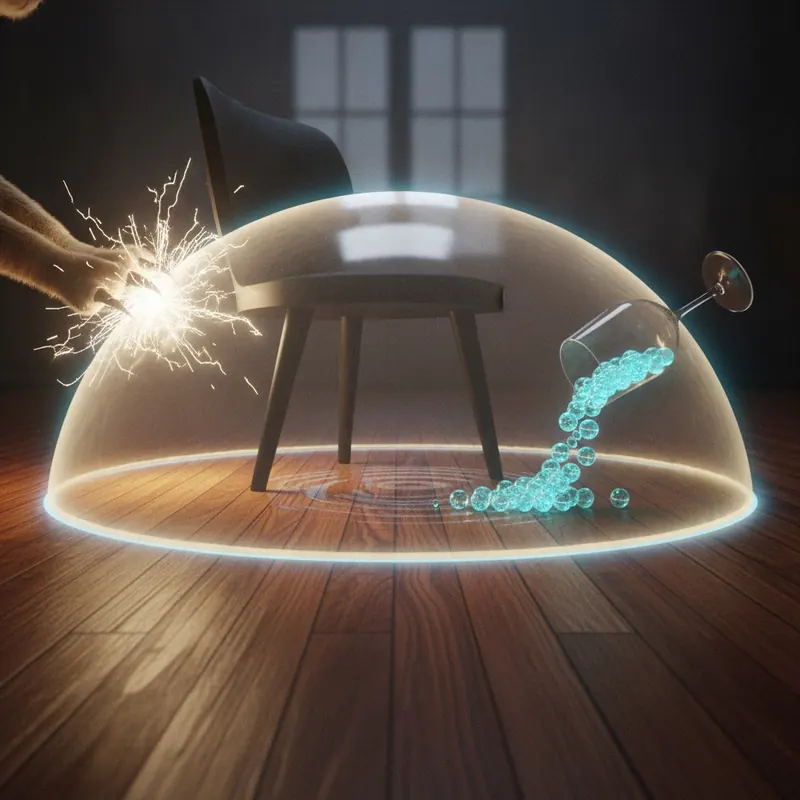
The fundamental principle is separation. A durable top coat and a thick wear layer create a transparent, resilient buffer zone. This zone absorbs the punishment of daily life—the grit on the bottom of a shoe, the scoot of a dining chair, the claws of a pet—preventing it from ever reaching and damaging the high-definition print layer that gives the floor its beauty. Furthermore, advanced chemical engineering within these top coats includes UV inhibitors that combat the effects of sunlight, much like sunscreen for your floor. Research from institutions like the Lawrence Berkeley National Laboratory has long demonstrated how UV radiation breaks down chemical bonds in pigments, causing fading; modern flooring top coats are designed to scatter or absorb this radiation before it can do harm.
The Wear Layer: Your Floor’s Invisible Shield
The single most important component for preserving your floor’s pattern and texture is the wear layer. It is a completely transparent top layer of PVC, measured in mils (one-thousandth of an inch), that is bonded to the print layer.
How thick is thick enough?
- 6-12 mil: Suitable for light residential use, like bedrooms or closets.
- 12-20 mil: The standard for most residential applications, including living rooms and kitchens.
- 20 mil and above: Considered commercial-grade. Industry bodies like the Resilient Floor Covering Institute (RFCI) recognize that LVT with a 20 mil (0.5mm) wear layer or thicker is recommended for commercial-level pattern protection and is ideal for busy homes with pets, kids, and heavy foot traffic.
But thickness isn’t the only factor. The wear layer is almost always protected by a factory-applied finish. The most effective of these are urethane coatings enhanced with microscopic particles of aluminum oxide or ceramic beads. These additives, some of the hardest materials known, create an incredibly tough surface that dramatically increases resistance to fine scratches and scuffs that can dull a floor’s finish over time.
The Art of Realism: High-Definition Printing & Embossing
The reason modern resilient floors can look indistinguishable from real hardwood or stone is due to incredible advancements in printing and texturing technology. This is what “high detail flooring” is all about.
Key technologies to look for include:
- High-Definition Printing: Using advanced digital printing, manufacturers can create incredibly detailed and realistic visuals with minimal pattern repetition, so your floor doesn’t look like a repeating stamp.
- Embossed in Register (EIR): This is a game-changer for realism. EIR technology aligns the physical texture of the plank’s surface with the underlying visual pattern. When you see a wood knot in the print, you feel a knot in the texture. This creates a level of authenticity that basic texturing cannot match.
Glossary of Detail Terms
- Embossed in Register (EIR): The plank’s surface texture is synchronized with the visual pattern for maximum realism.
- Micro-bevel: A tiny, subtle angled edge on each plank that helps define individual boards, adding depth and realism compared to a completely flat floor.
- Print Resolution: Measured in DPI (dots per inch), a higher resolution print layer results in a sharper, more detailed, and less pixelated image.
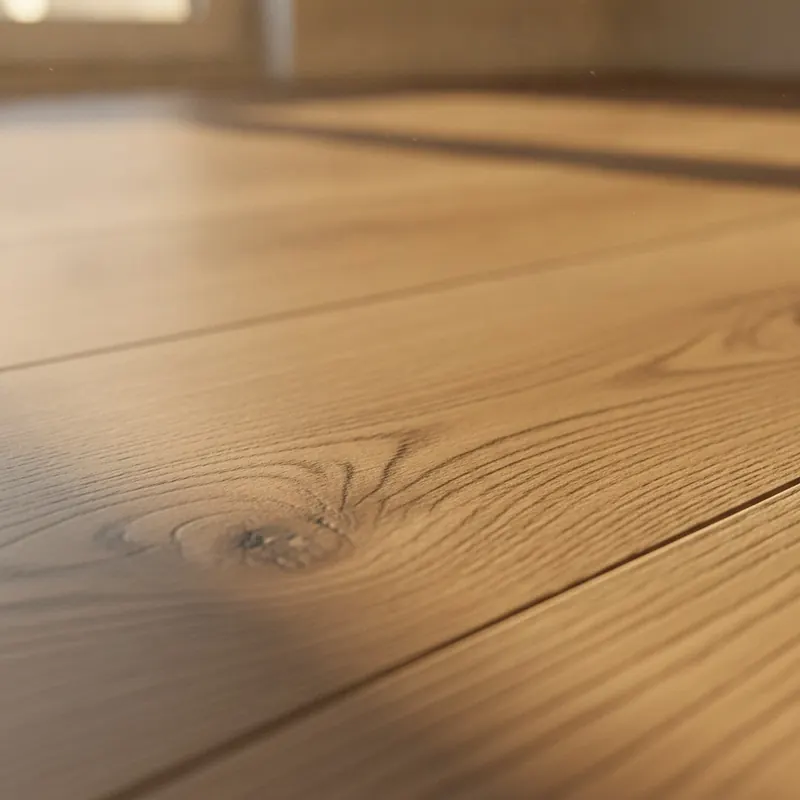
According to interior design experts affiliated with organizations like the American Society of Interior Designers (ASID), these high-detail technologies are crucial for elevating a space, as they provide the depth and character of natural materials without the associated maintenance concerns.
Fade-Proof Flooring: Winning the Battle Against UV Rays
A faded, discolored patch of flooring in front of a sunny window is a common and disheartening sight. This damage, known as photobleaching, is caused by ultraviolet (UV) radiation. Choosing a fade-proof flooring solution is critical for rooms with abundant natural light.
The most inherently fade-proof flooring materials are porcelain and ceramic tile. Their color comes from inorganic, mineral-based pigments that are fired at extreme temperatures, making them exceptionally stable and resistant to UV degradation.
For other flooring types like LVP and laminate, fade resistance comes from the technology in the top coat. Manufacturers incorporate powerful UV inhibitors and stabilizers into the finish. To verify a product’s claims, look for those that have passed rigorous industry testing for colorfastness to light. Standards like ASTM G154 simulate accelerated weathering from sunlight and moisture, while the Blue Wool Scale is another test used to measure fade resistance, with a rating of 6 or higher considered good for flooring applications.
For maximum protection, an expert tip from window treatment specialists is to install modern Low-E (low-emissivity) window films. According to sources like the Window Film Association of Australia and New Zealand (WFAANZ), these films are a powerful defense, capable of blocking up to 99% of harmful UV rays before they ever reach your floor.
The Total Durability Scorecard: Ranking the Most Durable Flooring Options
With so much technical jargon, choosing the right floor can feel overwhelming. To simplify your decision, we’ve created the Total Durability Scorecard. This table synthesizes multiple industry metrics to give you a clear, at-a-glance comparison of the most durable modern flooring options.
The Total Durability Scorecard
| Flooring Type | Scratch Resistance | Dent Resistance | Fade Resistance | Water Resistance | Expected Lifespan (Residential) |
|---|---|---|---|---|---|
| Adamantine Flooring | Exceptional (40 mil+ wear layer, enhanced top coat) | Excellent (Ultra-dense mineral core) | Very Good (UV-inhibiting top coat) | 100% Waterproof | 25 Years to Lifetime |
| Porcelain Tile | Exceptional (PEI 4-5 rating, Mohs hardness 7+) | Excellent (Extremely dense and hard) | Exceptional (Inorganic mineral pigments) | 100% Waterproof | 50+ Years |
| SPC Vinyl | Very Good (20 mil+ wear layer, enhanced top coat) | Very Good (Dense stone-polymer core) | Very Good (UV-inhibiting top coat) | 100% Waterproof | 20-30 Years |
| AC5 Laminate | Excellent (AC5-rated aluminum oxide finish) | Good (High-density fiberboard core) | Good (UV inhibitors in finish) | Water-Resistant (Not waterproof) | 15-25 Years |
| Solid Hardwood | Fair to Good (Depends on species’ Janka rating & finish) | Fair (Susceptible to dents) | Fair (Prone to fading without protection) | Poor (Susceptible to water damage) | 100+ Years (with refinishing) |
Note: The metrics above are based on high-quality examples from each category. Performance can vary by manufacturer. Authoritative data for these ratings comes from industry standards bodies like the Tile Council of North America (TCNA) for PEI ratings 1, the World Floor Covering Association (WFCA) for AC ratings 2, and the USDA Forest Products Laboratory for Janka hardness ratings 3.
For High-Traffic Areas & Commercial Use: Porcelain Tile & AC5 Laminate
For the most demanding environments like commercial entryways, bustling kitchens, and hallways, you need flooring that can withstand constant abrasion. The data is clear: porcelain tile and high-rated laminate are top contenders.
According to the Tile Council of North America (TCNA), porcelain tile with a PEI rating of 5 is the most durable option available, suitable for heavy commercial foot traffic 1. Its incredible hardness makes it nearly impossible to scratch with everyday objects. Similarly, laminate flooring with an AC5 rating is engineered for moderate commercial traffic, meaning it can easily handle the busiest residential settings 2. Its hardened melamine and aluminum oxide top layer provides superior scratch resistance.
For Homes with Pets & Kids: Adamantine & High-Quality SPC Vinyl
The primary challenges in a home with pets and children are scratches (from claws and toys) and spills. This is where the combination of a 100% waterproof core and an advanced wear layer shines.
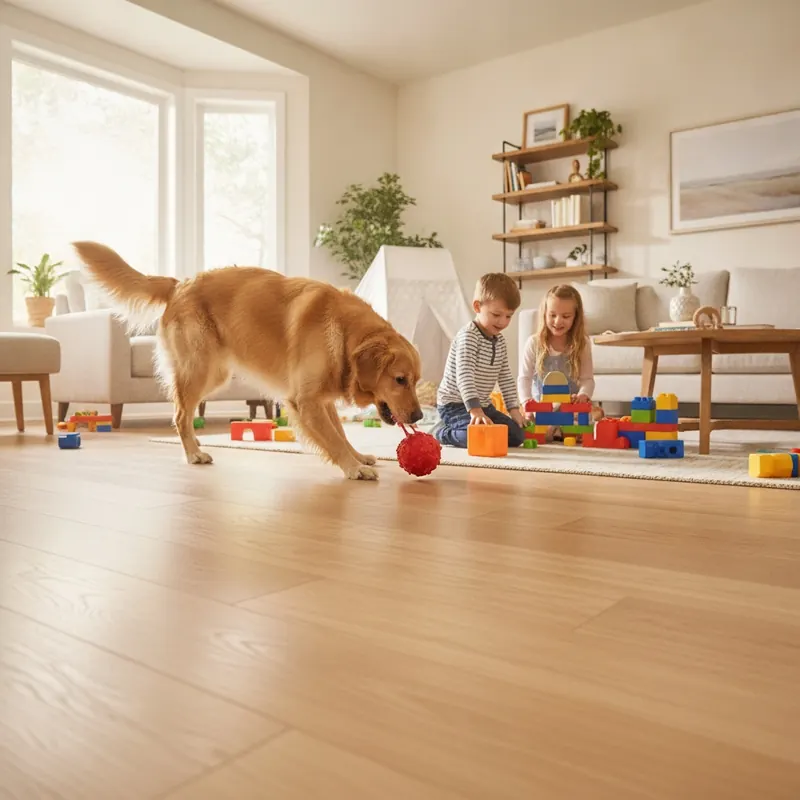
Adamantine and high-quality SPC vinyl (with a 20 mil or thicker wear layer) are ideal choices. Their rigid mineral or stone-polymer cores are completely impervious to water, so pet accidents or spilled drinks won’t cause swelling or damage. Furthermore, their enhanced top coats are specifically designed to resist the type of scratching that pets can inflict. The inclusion of hard minerals in the finish, which rank high on the Mohs scale of mineral hardness, provides a level of scratch protection that far surpasses traditional polyurethane-finished hardwood.
For Timeless Longevity & Resale Value: Solid Hardwood
While it may not top the charts for initial scratch or water resistance, solid hardwood has a unique advantage: it is repairable for a lifetime. According to data from the National Association of Home Builders (NAHB), solid hardwood floors can last for 100 years or more because they can be sanded down and refinished multiple times, erasing years of wear and tear with each cycle 4.
This longevity translates directly to home value. Reports from the National Association of Realtors (NAR) consistently show that hardwood floors are a top feature desired by homebuyers and can provide a significant return on investment upon resale 5. Following proper maintenance guidelines from the National Wood Flooring Association (NWFA) is key to preserving this long-term investment 6.
Flooring First-Aid: A Practical Guide to Prevention & Repair
Choosing the right floor is half the battle; the other half is proper care and maintenance. A proactive approach can prevent most issues, while knowing how to handle minor repairs can keep your floor looking impeccable for years. The Institute of Inspection, Cleaning and Restoration Certification (IICRC) is a leading authority on flooring damage, and their principles emphasize prevention as the first line of defense 7.
A simple but powerful statistic to remember is that placing high-quality walk-off mats at all exterior entrances can trap up to 80% of the abrasive dirt, grit, and debris that gets tracked inside and acts like sandpaper on your floor’s finish.
Preventing Scratches, Fading, and Pattern Wear Before It Starts
The best repair is the one you never have to make. By integrating these simple habits into your routine, you can dramatically extend the life and beauty of your floor.
- Use the Right Cleaning Tools: Use a microfiber dust mop for daily sweeping and a pH-neutral cleaner designed for your specific flooring type. Avoid abrasive scrub brushes. A critical mistake is using steam mops on many modern floors, as the high heat and moisture can damage the finish and even cause layers to delaminate over time.
- Avoid Harmful Chemicals: Never use cleaners with ammonia, vinegar, bleach, or wax-based polishes on modern resilient or laminate flooring. These harsh chemicals can strip the protective factory finish, leaving the floor dull and vulnerable to damage.
- Protect from Furniture: Apply felt or soft plastic pads to the bottom of all furniture legs, especially chairs and tables that are moved frequently.
- Manage Sunlight: During peak hours, use curtains, blinds, or the previously mentioned UV-blocking window films to protect your floor from direct, prolonged sun exposure.
- Lift, Don’t Drag: When moving heavy furniture or appliances, always lift them or use furniture sliders. Never drag them across the floor.
How to Fix Scratches on High-Detail Flooring
Even with the best prevention, a minor scratch can happen. For high-detail flooring where the scratch affects the visual pattern, the goal is to conceal the damage without making it worse.
For minor surface scuffs or light scratches that haven’t penetrated the wear layer:
- Clean the Area: First, thoroughly clean the scratch and the surrounding area with a pH-neutral cleaner to remove any dirt or debris.
- Use a Repair Kit: Purchase a floor repair kit from a reputable manufacturer (like Mohawk or Dr. Schutz) that is specifically designed for your type of flooring (e.g., LVP/laminate). These kits often come with color-matched wax fillers or markers.
- Apply Carefully: Follow the kit’s instructions to carefully fill or color in the scratch. The key is to blend the repair with the existing pattern and texture.
- Buff the Excess: Gently buff away any excess material with a soft, clean cloth until the repair is level and blended with the surrounding finish.
When to Call a Professional: If a scratch is very deep and has gone through the print layer to the core, or if a large area is damaged, a DIY repair is not recommended. A certified flooring restoration professional can assess the damage and may be able to perform a more advanced repair or, if necessary, replace the damaged plank, which is a significant advantage of plank-based flooring systems.
Conclusion
The pursuit of the perfect floor—one that marries high-end design with the resilience to withstand the rigors of daily life—is no longer an impossible quest. We’ve learned that modern flooring durability is a science, a measurable and verifiable quality based on core composition, wear layer thickness, and advanced finish technology, not just on marketing slogans.
By moving beyond the surface and understanding the science of what makes a floor truly last, you are now equipped to decode the jargon and make a confident, long-term investment in your home. Next-generation products like Adamantine flooring are prime examples of this evolution, engineered specifically to retain their impeccable detail and beauty for years. By applying this knowledge, you can choose a floor that not only looks stunning on day one but continues to be a source of pride and satisfaction for decades to come.
What is your biggest flooring challenge, or what question do you still have? Share it in the comments below—we’d love to help!
References & Authoritative Sources
- Tile Council of North America (TCNA). (N.D.). PEI Rating. TCNA. Retrieved from industry standards documentation.
- World Floor Covering Association (WFCA). (N.D.). AC Rating for Laminate Flooring. WFCA. Retrieved from industry educational materials.
- USDA Forest Products Laboratory. (N.D.). Janka Hardness. USDA. Retrieved from wood properties databases and publications.
- National Association of Home Builders (NAHB). (N.D.). Study of Life Expectancy of Home Components. NAHB. Retrieved from official reports and publications.
- National Association of Realtors (NAR). (N.D.). Remodeling Impact Report. NAR. Retrieved from annual industry reports.
- National Wood Flooring Association (NWFA). (N.D.). Maintenance and Refinishing Guidelines. NWFA. Retrieved from official technical guidelines.
- Institute of Inspection, Cleaning and Restoration Certification (IICRC). (N.D.). Floor Care Standards. IICRC. Retrieved from official standards of practice.