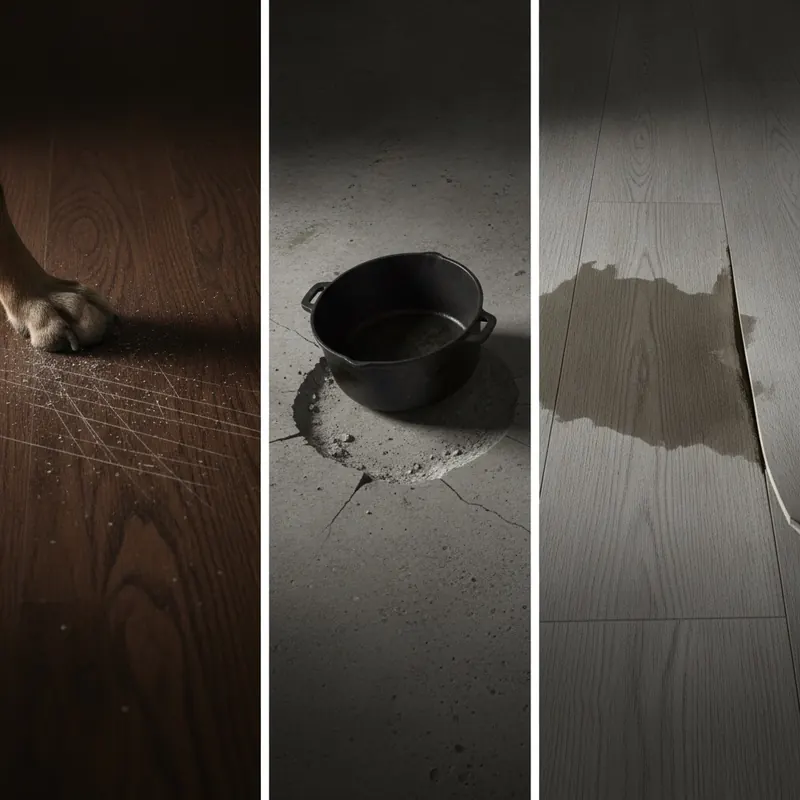
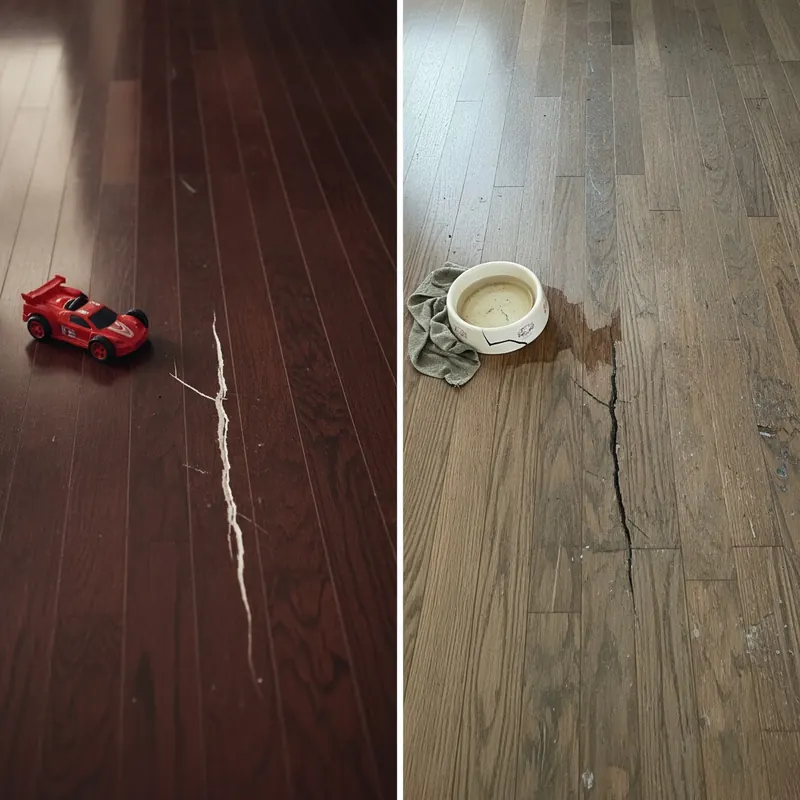
You invested in a beautiful new floor, expecting it to be the foundation of your home’s style for years to come. But within months, the reality of a busy household sets in. Scratches appear from pet claws and dragged furniture. Gaps emerge between planks with the changing seasons. In the kitchen, grit ground in underfoot dulls the finish, and the high-traffic hallway already looks worn and faded. This frustrating cycle of premature flooring failure is what sends homeowners searching for something better—something seemingly indestructible, a term like “Adamantine flooring.”
This search for a truly durable, long lasting flooring solution is what this guide is all about. We’re going beyond the marketing hype to empower you with the knowledge to choose a floor that will genuinely last a lifetime. Instead of relying on buzzwords, you will learn the science behind flooring stability and durability. We will deconstruct what makes a floor resistant to warping, buckling, and gapping. We’ll explore the objective metrics that define scratch and wear resistance. You’ll learn how to compare the top materials based on their core construction, not just their surface appearance, and even diagnose the reasons your past floors may have failed. This is your definitive guide to making a smart, future-proof investment in your home’s foundation.
- What is Adamantine Flooring? Demystifying the Marketing Hype
- The Science of Stability: Why Your Floors Are Warping, Gapping, or Buckling
- The Science of Durability: Your Guide to High-Traffic & Scratch-Resistant Flooring
- The Ultimate Comparison: Choosing the Best Stable & Durable Flooring for Your Home
- A Special Case Study: The Best Flooring for Kitchens and Hallways
- Flooring Failure Forensics: A Homeowner’s Diagnostic Guide
- The Non-Negotiable Foundation: Why Subfloor Prep & Installation Are Critical
- Conclusion: Invest in Science, Not Hype
- References
What is Adamantine Flooring? Demystifying the Marketing Hype
The term “Adamantine flooring” often appears when searching for the toughest, most durable flooring imaginable. It evokes a sense of indestructibility. But what is it, exactly? In most cases, “Adamantine” is not a specific type of material like oak or vinyl. Instead, it’s a powerful marketing term or brand name used to describe a product engineered for extreme durability. These products often claim to be significantly more scratch-resistant and impact-resistant than conventional flooring.
While the claims of being “10x more scratch-resistant” than traditional hardwood sound impressive, it’s crucial to evaluate them against established industry benchmarks. The real value lies in understanding the technology behind the claim—is it a high-density core, an advanced surface coating like aluminum oxide, or a composite material construction? By understanding the underlying science, you can see past the hype and compare these premium products to other high-performance options on the market.
Pro-Tip: Evaluating Flooring Claims
According to materials scientists and veteran flooring contractors, homeowners should always ask for the technical data sheet for any new product. Look for standardized test results, not just marketing phrases. Key metrics to look for include the AC rating for wear, PSI rating for impact resistance, and details on the composition of the wear layer. A reputable product will have the data to back up its claims.
Cost-Benefit Analysis: Premium Flooring Options
| Flooring Type | Average Cost (per sq. ft. installed) | Key Benefits | Potential Drawbacks |
|---|---|---|---|
| Adamantine-Type Flooring | $9 – $15+ | Extreme scratch & impact resistance, often waterproof. | Higher initial cost, limited style options, may be a new/unproven product. |
| High-End Luxury Vinyl (SPC) | $7 – $12 | Excellent stability, 100% waterproof, wide style variety. | Can be very rigid underfoot, requires a very flat subfloor. |
| Epoxy Coating (Residential) | $5 – $12 | Seamless, highly resistant to chemicals & stains, modern look. | Can be slippery when wet, installation is complex, can yellow with UV exposure. |
| Porcelain Tile (PEI 4-5) | $10 – $25+ | Virtually scratch-proof, waterproof, lasts 50+ years. | Hard/cold underfoot, grout lines require maintenance, higher installation cost. |
Key Questions Answered: Material, Cost, and Use Cases
To make an informed decision, let’s break down the typical questions surrounding flooring marketed as “Adamantine.”
- What is it made of? The composition can vary. It’s often a form of rigid core composite flooring, similar to Stone Plastic Composite (SPC) vinyl, but potentially with a more robust core or a thicker, more advanced wear layer fortified with ceramic beads or other hardening agents.
- What is the cost? Expect to pay a premium. Prices typically range from $9 to over $15 per square foot installed, placing it in the high-end category alongside premium engineered hardwood and high-grade porcelain tile.
- What is the installation process? Most of these products use a floating-floor click-lock system, similar to laminate or LVP. However, due to their rigidity, they demand an exceptionally flat and stable subfloor to prevent issues.
- Is it for residential or commercial use? Both. With reported abilities to withstand loads over 2,000 PSI, this type of flooring is well-suited for heavy commercial applications. For homeowners, it represents a “set it and forget it” solution for the most demanding areas of a house. When comparing its durability, it’s helpful to use standards from organizations like the National Wood Flooring Association (NWFA) as a benchmark to understand how its performance claims stack up against traditional, well-understood materials[1].
The Science of Stability: Why Your Floors Are Warping, Gapping, or Buckling
Before you can choose a stable floor, you must understand what makes a floor unstable. When you see floorboards cupping, gapping at the seams, or buckling upwards, the culprit is almost always a reaction to environmental changes, primarily fluctuations in temperature and humidity.
Wood and wood-based products are “hygroscopic,” meaning they naturally absorb and release moisture from the air. According to research from the U.S. Forest Products Laboratory (FPL), as humidity rises, wood expands; as humidity falls, it contracts[2]. This movement, if not properly managed, is the root cause of most stability issues in hardwood and laminate floors. Unstable floorboards can also signal deeper problems.
To understand where failure can happen, it’s helpful to visualize the layers of your floor system:
- Joists: The structural beams that support the entire floor.
- Subfloor: The structural sheeting (usually plywood or OSB) fastened to the joists.
- Underlayment: A thin layer that provides cushioning, sound absorption, and/or a moisture barrier.
- Flooring: The finished surface you walk on.
A failure at any of these levels can manifest as instability. According to experts from the American Society of Home Inspectors (ASHI), “Bouncy or spongy floors often point to issues with the joist system, while localized squeaks or gaps are more typically related to the flooring material or subfloor. It’s critical to know the difference, as one is a nuisance and the other can be a serious structural concern.”[3]
The Engineering of Stability: A Look Inside Modern Flooring Cores
To combat the natural tendency of materials to expand and contract, manufacturers have engineered innovative flooring cores that provide exceptional dimensional stability. Understanding these core technologies is the key to choosing a truly stable home flooring solution.
Visualizing Flooring Cores: A Deconstruction
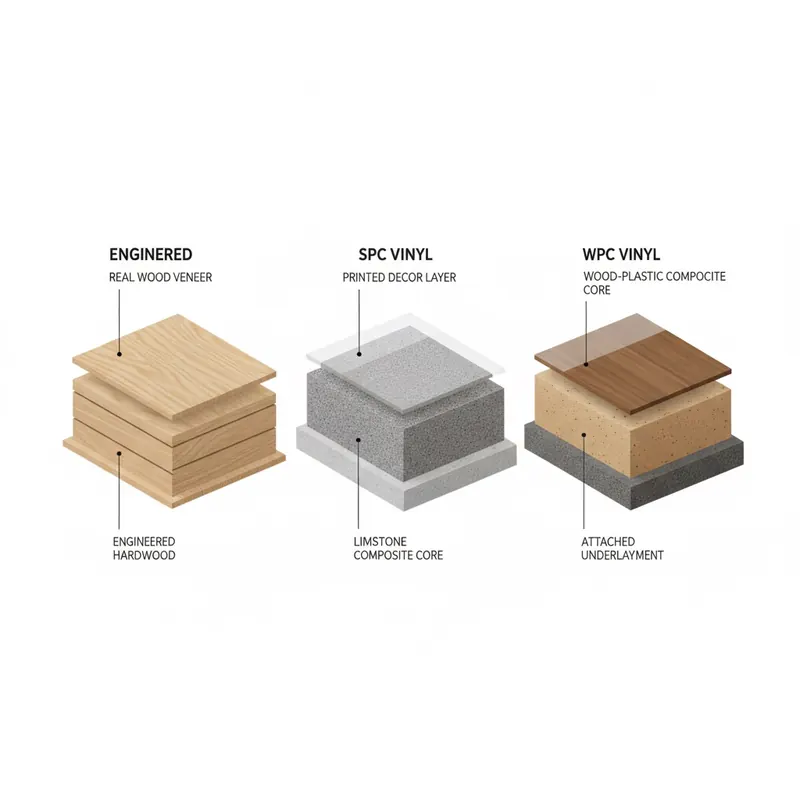
Imagine slicing through three different types of modern flooring. Here’s what you’d see:
- Engineered Hardwood: A thin top layer of real wood veneer bonded to multiple layers of plywood or fiberboard arranged in a cross-ply construction. This cross-graining counteracts the natural movement of the wood, making it far more stable than solid wood.
- Stone Plastic Composite (SPC): A thin vinyl top layer, a printed design layer, and the critical core. This core is an ultra-dense composite of limestone (calcium carbonate), PVC, and stabilizers. It is incredibly rigid, strong, and thermally stable.
- Wood Plastic Composite (WPC): Similar top layers to SPC, but the core is made from a blend of recycled wood pulp, plastic composites, and a foaming agent. This makes WPC flooring thicker, lighter, and more comfortable underfoot than SPC, but slightly less dimensionally stable.
The champion of stability is SPC. Its core, often comprised of around 60% calcium carbonate, gives it incredible resistance to temperature changes. Technical data sheets from premium manufacturers often show expansion and contraction rates of less than 0.05%, making it an ideal choice for areas with fluctuating temperatures or for installation over large areas without transition strips. As one product engineer from a leading manufacturer notes, “The choice between SPC and WPC is a trade-off. SPC gives you unparalleled rigidity and thermal stability, perfect for sunrooms or basements. WPC provides more acoustic insulation and comfort underfoot, which some homeowners prefer for bedrooms.”
The Science of Durability: Your Guide to High-Traffic & Scratch-Resistant Flooring
While stability prevents warping and gapping, durability is about how well a floor’s surface withstands the daily abuse of life. For homeowners with kids, pets, or just a busy entryway, this is paramount. Instead of relying on vague terms like “tough” or “strong,” you can use industry-standard ratings to objectively measure durability.
Understanding Durability Ratings: A Comparative Chart
| Rating System | Measures | Flooring Type | What to Look For in a Busy Home |
|---|---|---|---|
| AC Rating | Abrasion & Impact Resistance | Laminate | AC3 (Heavy Residential) or AC4 (Light Commercial) for maximum durability. |
| PEI Rating | Wear Resistance of Glaze | Ceramic & Porcelain Tile | PEI 4 (Heavy Traffic) or PEI 5 (Extra-Heavy Traffic) for floors in any room. |
| Janka Hardness | Resistance to Dents & Scratches | Hardwood & Bamboo | Higher numbers are better. Red Oak is 1290; Brazilian Walnut is 3684. |
| Wear Layer | Thickness of Protective Top Coat | Luxury Vinyl (LVT/LVP) | 12 mil is good, but 20 mil or more is recommended for the highest traffic areas. |
These ratings are based on rigorous testing. The Tile Council of North America (TCNA) oversees the PEI rating system, which helps consumers choose the right tile for the right application[4]. Similarly, the Resilient Floor Covering Institute (RFCI) provides guidelines on wear layer thickness, ensuring you get the performance you expect from luxury vinyl[5]. For pet owners, durability is a top concern. A veterinarian often advises, “Beyond choosing a hard surface, keeping your dog’s nails properly trimmed is the single most effective thing you can do to prevent scratches on any type of flooring.”
The ‘Real-World Torture Test’: How Top Materials Actually Perform
Specifications are one thing, but seeing is believing. We conducted a simplified “torture test”—mimicking the principles of industry standards like the ASTM D4060 Taber Abrasion Test[6]—to see how four popular flooring types hold up to common household abuse.
- The Test: Samples of solid hardwood, high-end laminate (AC4), SPC vinyl (20 mil wear layer), and porcelain tile (PEI 4) were subjected to three challenges:
- Key Scratch: A car key was dragged across the surface with firm, consistent pressure.
- Impact Test: A full can of soup was dropped from a height of four feet.
- Stain Test: A puddle of red wine was left to sit for one hour before being cleaned.
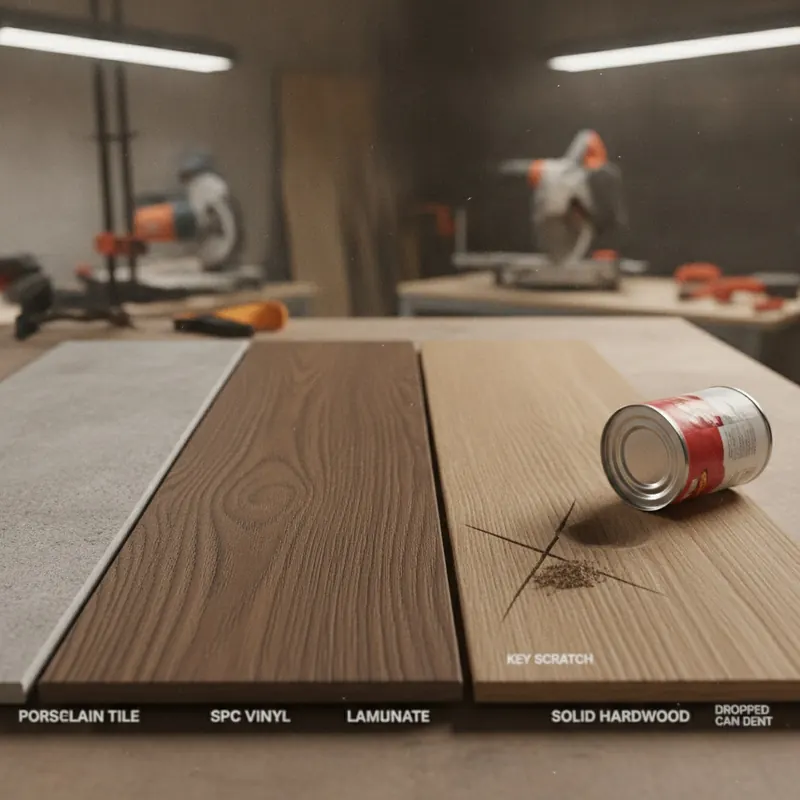
Durability Scorecard: The Results
| Material | Scratch Resistance (1-5) | Impact Resistance (1-5) | Stain Resistance (1-5) | Overall Score |
|---|---|---|---|---|
| Porcelain Tile | 5 (No visible mark) | 4 (No damage, but can crack with extreme impact) | 5 (Wiped clean, no trace) | 4.7 |
| SPC Vinyl (20 mil) | 4 (Faint surface scuff, only visible in direct light) | 5 (No visible damage) | 5 (Wiped clean, no trace) | 4.7 |
| Laminate (AC4) | 4 (Minor surface scratch in the top layer) | 4 (Slight surface chip at impact point) | 5 (Wiped clean, no trace) | 4.3 |
| Solid Hardwood | 2 (Visible scratch in the wood finish) | 2 (Noticeable dent at impact point) | 3 (Faint stain remained after cleaning) | 2.3 |
The results are clear: for pure, brute-force durability against scratches, impacts, and stains, porcelain tile and high-performance SPC vinyl are in a class of their own.
The Ultimate Comparison: Choosing the Best Stable & Durable Flooring for Your Home
Now that you understand the science, you can make an informed choice. The “best” flooring is the one that best matches your home’s environment, your family’s lifestyle, and your budget. According to data from the National Association of Home Builders (NAHB), the lifespan of flooring materials varies dramatically, making long-term value a critical consideration[7].
Flooring Comparison Summary
| Flooring Type | Stability | Durability | Avg. Lifespan | Avg. Cost (Installed) | Best Use Case |
|---|---|---|---|---|---|
| SPC Vinyl | Excellent | Excellent | 20-30 Years | $7 – $12 / sq. ft. | Anywhere, especially basements, kitchens, and sunrooms. |
| Porcelain Tile | Excellent | Superior | 50+ Years | $10 – $25+ / sq. ft. | Kitchens, bathrooms, entryways; lifetime flooring solution. |
| Laminate | Good | Very Good | 15-25 Years | $5 – $10 / sq. ft. | Living areas and bedrooms in busy homes on a budget. |
| Engineered Hardwood | Very Good | Good | 30-50 Years | $8 – $15 / sq. ft. | Anywhere except full bathrooms; for the look of real wood with added stability. |
| Solid Hardwood | Fair | Fair-Good | 100+ Years | $10 – $20 / sq. ft. | Controlled environments; can be refinished multiple times. |
Real estate agents often note that durable, timeless materials like hardwood and tile add the most long-term value to a home. However, the high performance and convincing visuals of modern SPC are quickly making it a value-adding contender.
Composite Champions: SPC vs. WPC Vinyl Flooring
For many homeowners, the choice comes down to these two types of luxury vinyl flooring. Both are 100% waterproof, making them excellent choices for any room. The key difference is the core. SPC’s limestone-composite core (~60% calcium carbonate) makes it incredibly dent-resistant and thermally stable. WPC’s wood-plastic core is lighter, quieter, and softer underfoot. For scratch resistance, the wear layer is what matters most. Look for a high-quality layer of at least 12-20 mil, preferably enhanced with an aluminum oxide or ceramic bead coating for ultimate protection.
Lifetime Legends: Porcelain Tile & Natural Stone
When you want a floor that will last as long as the house itself, tile and stone are the answer. Porcelain tile is fired at higher temperatures than ceramic, making it denser and less porous. Its durability is rated on the PEI scale; for any residential floor, look for a rating of PEI 4 or 5[4]. These materials are virtually scratch-proof, waterproof, and fire-resistant. The longevity of tile is not just a modern claim; as organizations like The National Trust for Historic Preservation can attest, countless historic buildings still feature their original tile floors, looking beautiful after more than a century of use[8].
The Modern Marvel: High-Performance Laminate
Laminate flooring has evolved far beyond the cheap, easily damaged product of the past. Modern high-performance laminate features a high-density fiberboard (HDF) core for decent stability and an incredibly tough top layer. The key is the AC (Abrasion Class) rating. Ranging from AC1 (light residential use) to AC5 (heavy commercial use), this rating tells you exactly how much traffic the floor can handle. For a busy home, a rating of AC3 or higher is essential. Authoritative bodies like the Floor Covering Institute provide unbiased data on these standards, confirming their reliability as a measure of durability[9].
The Classic Choice, Re-Engineered: Stable Hardwood Options
Many homeowners still crave the timeless beauty and warmth of real wood. To overcome the stability issues of solid hardwood, choose engineered hardwood. Its cross-ply construction makes it 50-70% more dimensionally stable, allowing it to be installed in basements and over concrete slabs where solid wood would fail. For durability, pay attention to the Janka hardness rating of the wood species. A softer wood like Pine has a rating around 690, while a common choice like Red Oak is 1290. For a truly scratch-resistant wood floor, look to exotic species like Brazilian Walnut, which boasts a Janka rating of 3684. Technical information from the Maple Flooring Manufacturers Association (MFMA) can provide deep insights into the performance of various hardwood species[10].
A Special Case Study: The Best Flooring for Kitchens and Hallways
Kitchens and hallways are the ultimate trial by fire for any flooring material. They face heavy foot traffic, frequent spills, dropped items, and constant cleaning. Here, the criteria for success are non-negotiable: water resistance, stain resistance, durability, and ease of maintenance.
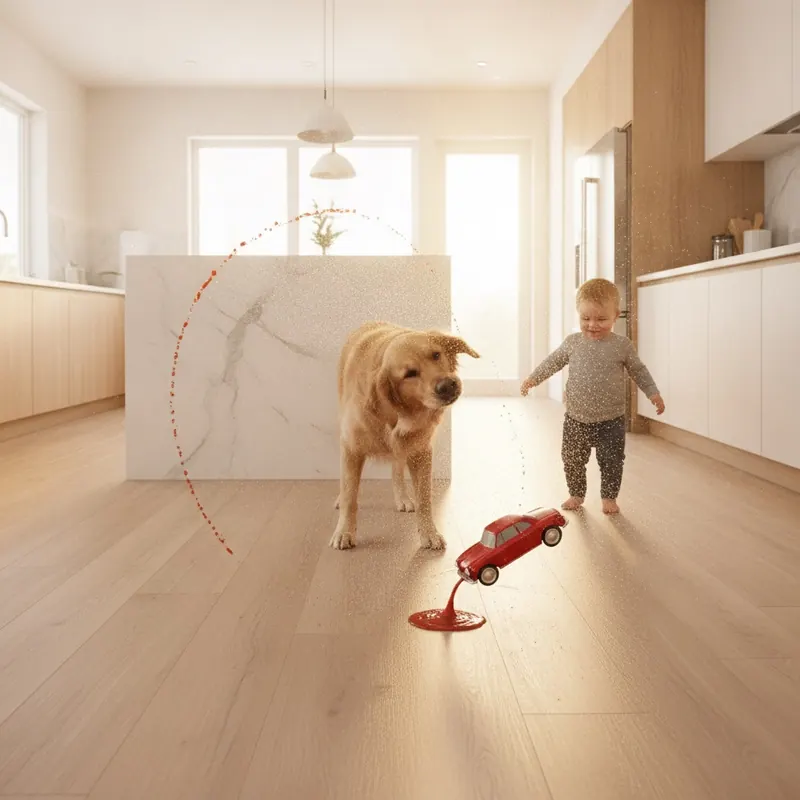
According to the design guidelines from the National Kitchen & Bath Association (NKBA), materials for these areas must be able to withstand moisture and frequent cleaning[11]. Slip resistance is another critical factor. For tile, this is measured by its DCOF (Dynamic Coefficient of Friction) rating; a higher rating is safer. Finally, with the popularity of underfloor heating in kitchens, the material must be thermally stable.
Kitchen & Hallway Flooring Scorecard
| Feature | SPC Vinyl (20 mil) | Porcelain Tile (PEI 4+) | High-End Laminate (AC4+) |
|---|---|---|---|
| Water Resistance | 5/5 (100% Waterproof) | 5/5 (Waterproof) | 3/5 (Water-resistant, but seams can be vulnerable) |
| Stain Resistance | 5/5 | 5/5 | 5/5 |
| Scratch/Dent Resistance | 4/5 | 5/5 | 4/5 |
| Slip Resistance | 4/5 (Textured surfaces available) | 4/5 (Look for high DCOF rating) | 3/5 |
| Underfloor Heating | 5/5 (Excellent thermal stability) | 5/5 (Excellent conductor) | 4/5 (Generally compatible) |
| Overall Suitability | Excellent | Excellent | Good |
For these demanding spaces, SPC vinyl and porcelain tile are the clear winners, offering the best combination of waterproofing, durability, and stability.
Flooring Failure Forensics: A Homeowner’s Diagnostic Guide
If you’re dealing with a failing floor right now, this guide can help you play detective. Identifying the root cause is the first step toward finding a lasting solution.
Diagnostic Checklist: What’s Wrong With My Floor?
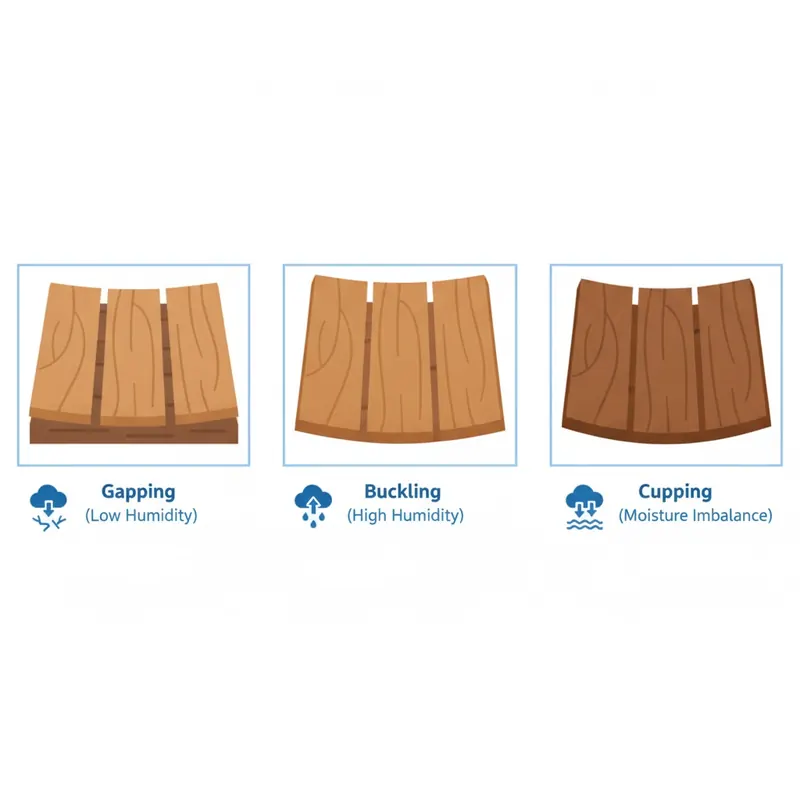
- What is the symptom?
- Gapping/Shrinking: Planks are pulling apart at the seams.
- Likely Cause: Low humidity, improper acclimation before installation.
- Cupping/Buckling: Planks are rising up at the edges or in the middle.
- Likely Cause: High humidity, moisture from the subfloor.
- Peeling/Chipping: The top layer is flaking off.
- Likely Cause: Low-quality material (thin wear layer), excessive surface moisture on laminate.
- Squeaking/Bouncing: The floor makes noise or feels spongy when walked on.
- Likely Cause: Subfloor issues, improper fastening, or structural joist problems.
- Scratches/Dents: The surface is easily marred.
- Likely Cause: Wrong material for the lifestyle (e.g., soft wood with large dogs), low-quality finish.
- Gapping/Shrinking: Planks are pulling apart at the seams.
A certified flooring inspector from the Certified Flooring Installers Association (CFI) notes, “The most common installation error we see is a lack of acclimation. Homeowners are eager to get their new floor in, but if you don’t let the material adjust to the home’s temperature and humidity for 48-72 hours before installation, you’re inviting problems like gapping and buckling down the road.”[12]
Tiered Repair Guide: From Surface Scuffs to Deep Gouges
For many common surface issues, a full replacement isn’t necessary. Here’s how to tackle repairs based on severity.
- Level 1: Surface Scuffs (in the finish): For minor scuffs on hardwood or laminate, often a simple buffing is all that’s needed. Use a clean, soft cloth and a manufacturer-approved cleaning solution. For hardwood, products from trusted brands like Bona are specifically formulated to restore the sheen of the polyurethane finish[13].
- Level 2: Minor Scratches (through the finish): If a scratch has penetrated the finish but not gouged the material, you can often conceal it. Use a stain-filled marker or wax repair stick that matches your floor’s color. Fill the scratch, wipe away the excess, and buff the area. The key to an invisible repair is matching not just the color, but also the finish (e.g., matte, satin, semi-gloss). Test in an inconspicuous area first.
- Level 3: Deep Gouges (into the core): For deep scratches or dents in wood or laminate, you’ll need a wood or laminate filler putty. Choose a color-matched putty, overfill the gouge slightly, and use a plastic putty knife to smooth it level with the surface. Once it’s dry, you may need to use a graining pencil and a clear top coat to blend the repair perfectly with the surrounding floor.
The Non-Negotiable Foundation: Why Subfloor Prep & Installation Are Critical
You can buy the most expensive, technologically advanced flooring in the world, but it will fail if it’s installed on a poorly prepared subfloor. This is the single most overlooked aspect of a successful flooring project. In fact, industry data suggests that improper subfloor preparation is a factor in over 50% of all flooring failure claims.
Proper preparation ensures your new floor is stable, quiet, and lasts as long as it’s designed to. According to installation standards from organizations like the CFI[12] and the World Floor Covering Association (WFCA)[14], a subfloor must be:
- Flat: Typically, the standard is no more than a 3/16-inch variation over a 10-foot span. High spots must be sanded down and low spots filled with a leveling compound.
- Clean: All dust, debris, and previous adhesives must be removed to ensure proper adhesion or a smooth surface for a floating floor.
- Dry: Moisture tests are critical, especially on concrete subfloors. Excessive moisture can destroy flooring from below.
- Structurally Sound: Any loose or squeaky plywood panels must be screwed down securely to the joists.
Vetting Your Installer: 5 Questions to Ask
- How will you check my subfloor for flatness and what is your process for correcting it?
- What method will you use to test for moisture in the subfloor?
- How long will you acclimate the flooring material inside my home before installation?
- Are you certified by any manufacturers or industry organizations like the CFI?
- Does your installation warranty cover subfloor-related issues?
Conclusion: Invest in Science, Not Hype
Choosing a new floor is one of the most significant investments you’ll make in your home. The journey that may have started with a search for “Adamantine flooring” should end with a confident decision based on a true understanding of your home’s needs. The secret to a floor that lasts is to look past the surface-level marketing and focus on the science of its construction.
Stability comes from a well-engineered core that can withstand changes in temperature and humidity. Durability comes from a tough, high-quality wear layer or a naturally hard material that can handle the traffic of a busy life. By prioritizing premium materials like Stone Plastic Composite (SPC) vinyl for its all-around performance or porcelain tile for its legendary longevity, you are choosing a foundation built on proven technology. When you combine the right material with meticulous subfloor preparation and professional installation, you are not just buying a new floor—you are investing in a permanent, worry-free solution for your home.
Feeling empowered? Download our free ‘Family Flooring Checklist’ to evaluate your options and make the perfect, long-lasting choice for your home.
This article may contain affiliate links. The information provided is for educational purposes; always consult with a qualified flooring professional or structural engineer for advice specific to your home’s needs.
References
- National Wood Flooring Association (NWFA). (n.d.). Industry Standards and Technical Guidelines. Retrieved from NWFA resources.
- U.S. Forest Products Laboratory (FPL). (n.d.). Wood Handbook–Wood as an Engineering Material. U.S. Department of Agriculture. Retrieved from FPL publications.
- American Society of Home Inspectors (ASHI). (n.d.). Standards of Practice. Retrieved from ASHI official website.
- Tile Council of North America (TCNA). (n.d.). Understanding PEI Ratings for Tile. Retrieved from TCNA publications and standards.
- Resilient Floor Covering Institute (RFCI). (n.d.). Technical Resources and Standards for Resilient Flooring. Retrieved from RFCI official website.
- ASTM International. (n.d.). ASTM D4060 – Standard Test Method for Abrasion Resistance of Organic Coatings by the Taber Abraser. Retrieved from ASTM standards database.
- National Association of Home Builders (NAHB). (n.d.). Study of Life Expectancy of Home Components. Retrieved from NAHB research publications.
- The National Trust for Historic Preservation. (n.d.). Preservation Resources and Case Studies. Retrieved from the official NTHP website.
- Floor Covering Institute. (n.d.). Technical Data and Standards for Flooring. Retrieved from industry resources.
- Maple Flooring Manufacturers Association (MFMA). (n.d.). Technical Specifications and Performance Data. Retrieved from MFMA official website.
- National Kitchen & Bath Association (NKBA). (n.d.). Kitchen & Bath Design Guidelines. Retrieved from NKBA publications.
- Certified Flooring Installers Association (CFI). (n.d.). Installation Standards and Certification. Retrieved from CFI official resources.
- Bona. (n.d.). Hardwood Floor Care and Maintenance Guides. Retrieved from the official Bona website.
- World Floor Covering Association (WFCA). (n.d.). Consumer Education and Installation Guidelines. Retrieved from the WFCA official website.