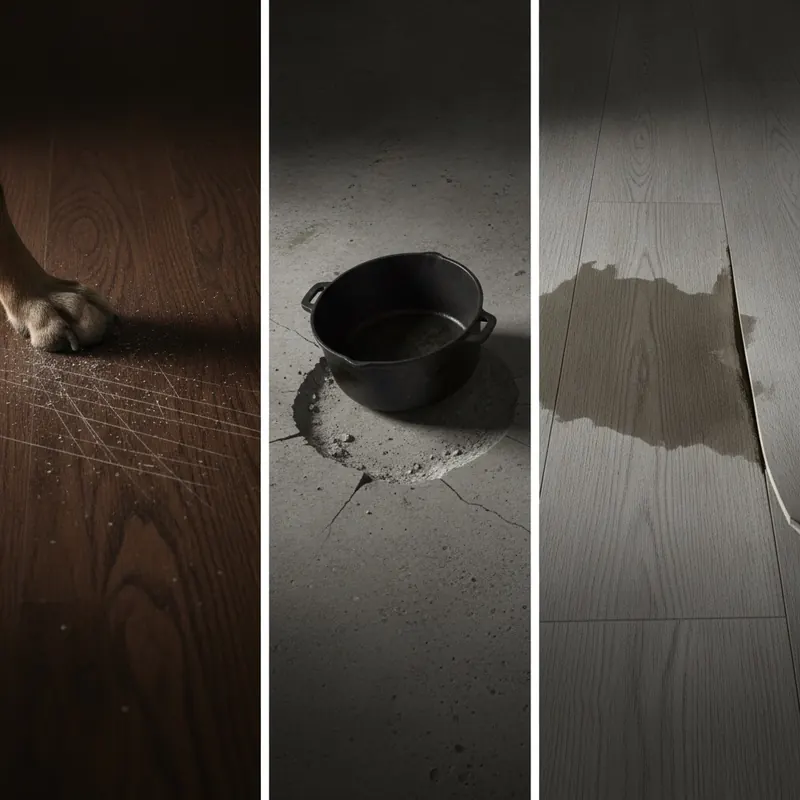
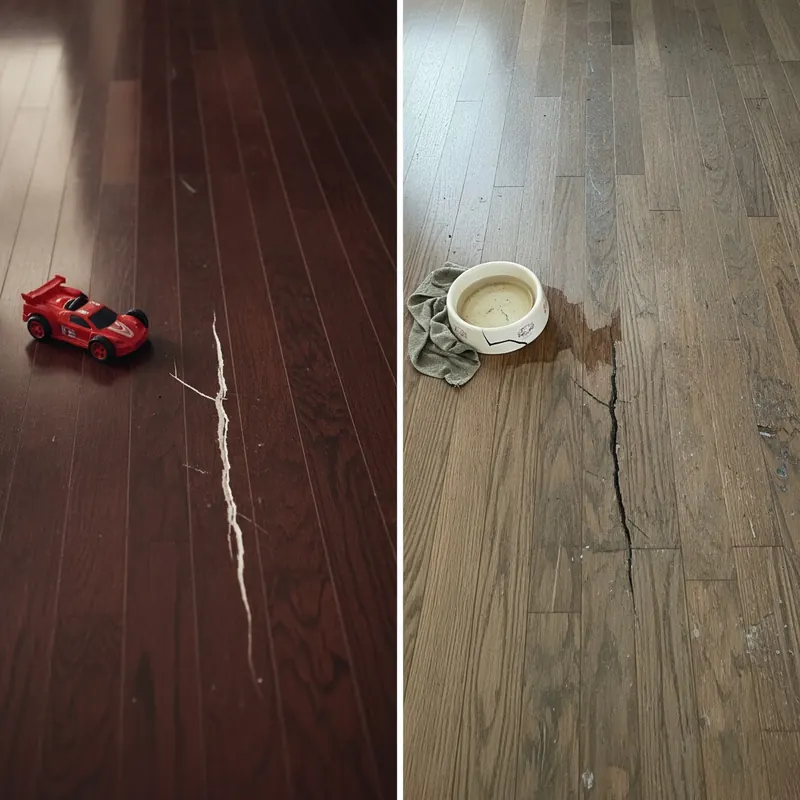
Is your floor a battlefield of scratches, scuffs, and worn-out pathways? For too many homeowners and business owners, the promise of a beautiful, durable floor quickly fades into a reality of constant worry and disappointing wear. You invest a significant amount of time and money, only to see pet claws, dragged furniture, and daily foot traffic leave their mark. The truth is, traditional flooring often fails because its strength is only skin deep.
True, enduring durability isn’t about the surface material alone; it’s about advanced engineering. It comes from a sophisticated, multi-layer construction where each component works in synergy to create a high-performance system. This is the core philosophy behind Adamantine Flooring.
Forget the confusing marketing jargon and vague promises. This is your engineer’s guide to flooring. We will deconstruct the science behind multi-layer technology, decode the industry ratings that actually matter, and provide a clear framework for choosing a floor that won’t just look good on day one—it will withstand the rigors of your life for years to come. It’s time to invest with confidence in a floor built from the core out.
- Beyond the Surface: What Does “Durable Flooring” Really Mean?
- The Science of Strength: Deconstructing Adamantine’s Multi-Layer Advantage
- The Durability Matrix: How Adamantine Compares to Other Flooring
- A Proactive Guide to Preventing Common Flooring Failures
- Application Guide: Choosing the Right Adamantine Floor for Your Space
- Your Foundation for Lasting Value
- References
Beyond the Surface: What Does “Durable Flooring” Really Mean?
In the world of flooring, “durable” is one of the most overused and misunderstood terms. It’s not a single quality but a combination of specific resistances that determine how a floor will perform in the real world. A floor that resists scratches might dent easily, while one that’s waterproof could fade under direct sunlight. To find a truly long lasting floor solution, you must understand that enduring floor strength is a multi-faceted system.
The key components of durability include:
- Scratch & Scuff Resistance: The ability to withstand sharp objects, pet claws, and abrasive grit without showing marks.
- Impact & Dent Resistance: The capacity to absorb the force of dropped objects or heavy furniture without chipping, cracking, or denting.
- Water Resistance: The power to repel moisture, preventing swelling, warping, or damage to the core and subfloor—crucial for kitchens, bathrooms, and basements.
- Fade Resistance: The stability to maintain its original color and pattern when exposed to UV rays from sunlight.
- Wear Resistance: The resilience to hold up against the constant friction of foot traffic in hallways, entryways, and commercial spaces without the pattern or finish wearing away.
The most common point of failure I see isn’t a single catastrophic event. It’s the slow, steady breakdown of a floor not designed for its environment. It’s the laminate in a kitchen that swells at the seams, or the hardwood in a sunny room that develops a permanent ‘area rug’ shadow. True durability means the floor’s construction anticipates and defends against all these threats, not just one.
The Science of Strength: Deconstructing Adamantine’s Multi-Layer Advantage
The secret to Adamantine Flooring’s superior performance lies in its advanced multi-layer construction. Unlike single-material floors that have inherent weaknesses, our engineered system is a synergy of specialized layers, each performing a critical function. This approach, recognized by industry authorities like the Resilient Floor Covering Institute (RFCI), ensures a balanced and robust defense against all forms of wear and tear.
Let’s break down how each layer contributes to the overall strength.

Layer 1: The High-Performance Wear Layer – Your Floor’s Bodyguard
This transparent top layer is arguably the single most important component for day-to-day durability. It is the frontline defense against everything that touches your floor, from muddy shoes to your dog’s claws. Its effectiveness is measured in mils (1 mil = one-thousandth of an inch), and when it comes to preventing scratches, thickness matters. While basic residential vinyl might have a 6-10 mil wear layer, a truly robust floor needs more. Commercial-grade wear layers are typically 20 mil (0.5mm) or thicker, providing the protection needed for high-traffic environments.
Adamantine Flooring goes a step further by enhancing its wear layer with advanced coatings. As experts at Bona, a leader in floor finishes, can attest, the right finish technology is a game-changer. High-quality polyurethane finishes infused with aluminum oxide can make a floor up to 10 times more scratch-resistant. This ceramic-based additive creates an incredibly tough and abrasion-resistant shield, ensuring your floor remains free from the scuffs and scratches of daily life.
Layer 2: The Stable Skeleton – The SPC Core Advantage
Beneath the surface lies the heart of the floor: the core. This layer provides the structural integrity, impact resistance, and dimensional stability. While older multi-layer floors used WPC (Wood Polymer Composite) cores, the modern standard for enduring floor strength is SPC (Stone Polymer Composite).
The difference is profound. SPC cores contain around 60-70% limestone, giving them superior indentation resistance compared to softer, wood-based cores. This dense, rigid construction means Adamantine Flooring is far less likely to dent under heavy appliances or high-heeled shoes. Furthermore, SPC flooring is known for its high density and can withstand static loads of up to 2000 PSI. This strength is measured by a standardized test, ASTM F970, which assesses how well a floor resists permanent indentation under heavy, stationary weight—a critical factor for both commercial settings and homes with heavy furniture. Because it has minimal wood content, the SPC core is also 100% waterproof, so it will not swell, warp, or cup when exposed to moisture.
Layer 3 & 4: The Design Layer and Supportive Backing
While the wear layer and core provide the muscle, the remaining layers complete the high-performance system. The design layer is a high-resolution printed film that gives Adamantine Flooring its stunningly realistic wood or stone visuals.
Finally, the supportive backing layer provides a solid foundation. It adds stability to each plank, helps to dampen sound, and often includes a pre-attached underlayment. This not only makes installation faster and easier but also ensures the materials used are safe for your home. Adamantine Flooring is FloorScore® certified, an independent standard that verifies ultra-low emissions of volatile organic compounds (VOCs), contributing to healthier indoor air quality for your family or employees.
The Durability Matrix: How Adamantine Compares to Other Flooring

To truly understand what is the most durable type of flooring, you need to compare materials using standardized, objective industry ratings. A simple list of “durable” options is not enough. This matrix breaks down how Adamantine’s multi-layer SPC construction stacks up against other popular flooring choices, using the metrics that professionals rely on.
vs. Porcelain Tile (PEI Rating)
Porcelain tile is renowned for its hardness and wear resistance, measured by the Porcelain Enamel Institute (PEI) rating system. As the Tile Council of North America (TCNA) explains, this scale rates a tile’s ability to withstand abrasion. Porcelain tile often has a PEI rating of 4 or 5, making it suitable for heavy commercial traffic.
However, its strength is also its weakness. While highly scratch-resistant, porcelain is brittle and can crack or chip if a heavy object is dropped on it. It is also cold and hard underfoot, and the grout lines require regular sealing and cleaning to prevent staining. Adamantine’s SPC core offers superior impact absorption to prevent chipping, and its seamless click-lock installation eliminates the need for grout maintenance.
vs. Laminate (AC Rating)
Laminate flooring’s durability is measured by its Abrasion Class (AC) rating, which indicates its resistance to wear, stains, and impact. Laminate flooring with an AC4 or AC5 rating is designed for heavy commercial traffic and offers excellent scratch protection.
The critical difference lies in the core. Most laminate uses a high-density fiberboard (HDF) core, which is essentially wood fiber. When exposed to water, this core can swell, bubble, and delaminate, causing irreparable damage. Adamantine’s 100% waterproof SPC core is completely inert to moisture, making it a far more reliable long lasting floor solution for any room, especially kitchens, bathrooms, and basements.
vs. Hardwood (Janka Hardness)
The Janka hardness test, a standard upheld by the National Wood Flooring Association (NWFA), measures the force required to embed a steel ball into a piece of wood. It’s a good indicator of how well wood will resist denting. For example, strand-woven bamboo can have a Janka hardness rating of over 4000, making it significantly harder than traditional hardwoods like Oak (approx. 1290).
Despite its beauty, all-natural wood is vulnerable. It scratches more easily than a floor with an aluminum oxide wear layer, dents under pressure, and is highly susceptible to damage from water and humidity changes. Adamantine’s multi-layer system provides the timeless look of hardwood without these inherent weaknesses, offering superior surface protection and complete dimensional stability.
A Proactive Guide to Preventing Common Flooring Failures
The best defense against flooring failures is a combination of choosing the right material and implementing smart, preventative habits. Adamantine Flooring is engineered for resilience, but these proactive steps will ensure any floor looks its best for years to come.
Solution for Scratches: Protecting Against Pets, Furniture, and Grit
The number one enemy of any floor finish is abrasive grit—tiny particles of sand and dirt tracked in on shoes. These act like sandpaper underfoot. A robust entryway matting system is your first line of defense. Studies show that entrance matting can trap up to 85% of dirt and debris at the door, significantly reducing abrasive wear on interior floors. For furniture, use high-quality felt or polymer pads on the bottom of all legs, especially on chairs that are moved frequently. For heavy items, use larger, weight-distributing pads to prevent indentation.
Solution for High-Traffic Wear: Winning the War in Your Hallways
Hallways, entryways, and main corridors see the most concentrated foot traffic, leading to premature wear. This is where a floor’s construction is truly tested. A thick wear layer (20 mil+) and a dense, high-strength core are non-negotiable for these zones. Regular cleaning to remove abrasive grit is also crucial. For commercial spaces or extremely busy homes, establishing a simple maintenance schedule—such as daily sweeping and weekly mopping with a pH-neutral cleaner—can dramatically extend the life and appearance of the floor.
Solution for Fading: How to Sun-Proof Your Floors
If you’ve ever moved a rug and seen a darker, richer version of your floor underneath, you’ve witnessed the power of ultraviolet (UV) radiation. Sunlight is the primary cause of fading floor surfaces. While Adamantine Flooring is built with UV-inhibitors in its topcoat, a holistic approach provides the best protection. Low-emissivity (Low-E) windows can block up to 99% of harmful UV rays that cause flooring to fade. According to the National Fenestration Rating Council (NFRC), an authority on window performance, these coatings protect all your interior furnishings without significantly reducing visible light. Applying UV-blocking films to existing windows is another excellent and cost-effective solution.
Application Guide: Choosing the Right Adamantine Floor for Your Space
The right floor is not just about the material; it’s about matching the material’s specifications to the demands of the space. Adamantine’s engineered strength makes it uniquely suited for a wide range of challenging environments.
For Demanding Homes: Kitchens, Basements, and Homes with Pets
Modern homes are active spaces. A kitchen floor must withstand dropped utensils, spills, and heavy appliances. A basement floor needs to be impervious to moisture. A home with pets needs maximum scratch resistance. Adamantine Flooring addresses all these needs. Its 100% waterproof SPC core eliminates any worry of water damage. Its commercial-grade wear layer stands up to the claws of even large dogs—a key consideration highlighted by pet-focused groups like the American Kennel Club. Finally, its high-density core resists dents from furniture and appliances, making it the ideal all-in-one solution for the most demanding areas of your home.

For High-Performance Commercial Use: Retail, Healthcare, and Hospitality
Commercial environments require flooring that meets stringent safety codes and can handle relentless traffic. Adamantine Flooring is engineered to exceed these demands. Its textured surfaces can be designed to meet slip-resistance requirements set by the Americans with Disabilities Act (ADA), which often require a static coefficient of friction (COF) of 0.6 or higher for level surfaces. It also meets critical fire rating standards, such as the ASTM E648 test, a requirement outlined in the International Building Code (IBC) for commercial spaces. From a safety perspective, ensuring a slip-resistant surface is also a key part of meeting Occupational Safety and Health Administration (OSHA) workplace standards. With its minimal maintenance needs and exceptional longevity, Adamantine offers a lower total cost of ownership compared to materials that require frequent waxing, polishing, or replacement.

Your Foundation for Lasting Value
Choosing a new floor is one of the most important investments you can make in your property. True durability is not a matter of chance; it is a result of deliberate, intelligent engineering. By understanding that real strength comes from a multi-layer construction—a tough wear layer for scratches, a dense core for impact, and waterproof materials for stability—you can move past the marketing claims and make a decision based on science.
Adamantine Flooring was created to solve the most common and frustrating flooring failures. It is a complete, high-performance system engineered to provide enduring strength and timeless style. With the knowledge from this guide, you are now empowered to choose with confidence, investing not just in a new floor, but in a lasting foundation for your life.
Ready to invest in a floor with enduring strength? Explore the Adamantine Flooring collection to find the perfect high-performance solution for your space, or contact one of our flooring experts today for a personalized consultation.
This article provides general information on flooring durability. Always consult with a professional installer for specific installation advice and verify product specifications directly with the manufacturer before making a purchase.
References
- Resilient Floor Covering Institute (RFCI). (n.d.). Standards for Vinyl Flooring.
- Commercial flooring specification guides. (n.d.). Wear Layer Thickness in High-Traffic Environments.
- Bona. (n.d.). Floor Finishes and Protective Coatings Technology.
- Industry research on flooring finishes. (n.d.). Chemical Composition and Performance of Aluminum Oxide Coatings.
- Manufacturer technical specifications. (n.d.). Properties of Stone Polymer Composite (SPC) Flooring Cores.
- ASTM International. (n.d.). ASTM F970 – Standard Test Method for Static Load Limit.
- FloorScore®. (n.d.). Indoor Air Quality Certification.
- Tile Council of North America (TCNA). (n.d.). PEI Ratings and Tile Standards.
- Flooring industry guides. (n.d.). Comparative Analysis of Flooring Durability Ratings.
- National Wood Flooring Association (NWFA). (n.d.). Official Flooring Guidelines.
- Building maintenance and management studies. (n.d.). Effectiveness of Entrance Matting Systems.
- Architectural and building science research. (n.d.). UV Radiation Impact on Interior Surfaces and Mitigation Technologies.
- National Fenestration Rating Council (NFRC). (n.d.). Energy Performance Ratings for Windows, Doors, and Skylights.
- American Kennel Club (AKC). (n.d.). Recommendations for Pet-Friendly Home Products.
- Americans with Disabilities Act (ADA) National Network. (n.d.). ADA Standards for Accessible Design.
- International Code Council. (n.d.). International Building Code (IBC).
- Occupational Safety and Health Administration (OSHA). (n.d.). Workplace Safety Standards.