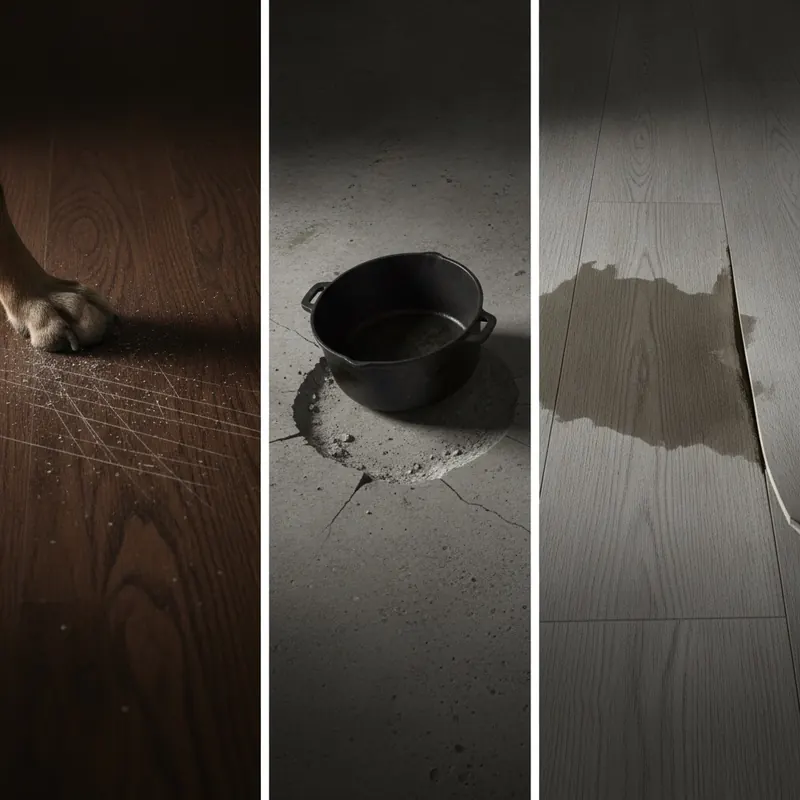
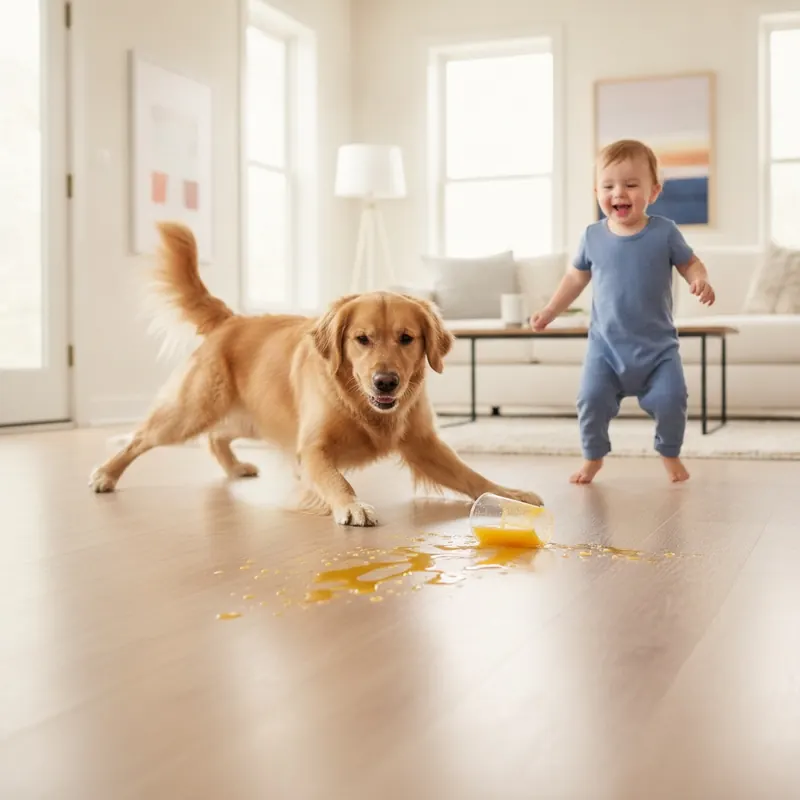
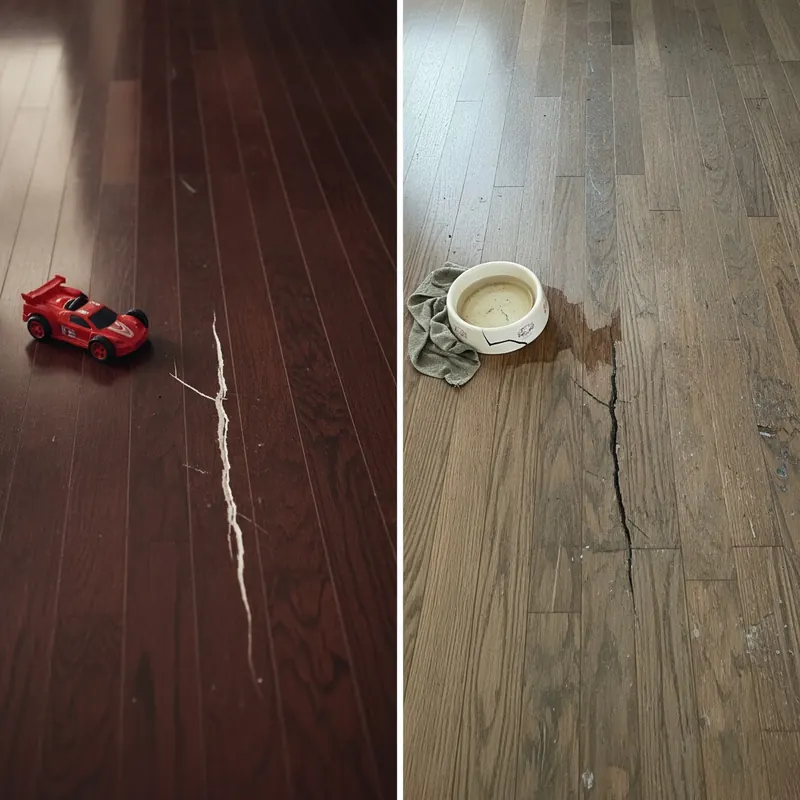
Are you tired of the constant battle with your floors? The cringe-inducing sound of a dropped toy leaving a dent, the sight of new scratches from the dog’s claws, the endless hours spent scrubbing, polishing, and worrying. It’s a universal frustration that leaves you wishing for a surface that could simply endure life, not just get by. You’re searching for something truly resilient, something almost mythical in its toughness—what one might call “Adamantine flooring.”
This isn’t just a fantasy. While the term “adamantine” harks back to an older era’s ideal of an unbreakable material, the spirit of that quest is alive and well. Today, it’s fulfilled by modern material science and engineering. This guide is your data-driven masterclass, designed to bridge that historical ideal with today’s high-performance flooring. We will move beyond vague marketing claims to decode the science of durability—Janka, PEI, AC ratings, and more—empowering you to choose a truly durable, low-maintenance solution with absolute confidence. It’s time to find your forever floor.
- What Was Adamantine Flooring? The Quest for an Indestructible Floor
- The Science of Durability: A Masterclass in Decoding Tough Floors
- The Ultimate Showdown: Today’s Most Durable & Low-Maintenance Flooring
- Context is Key: Matching the Right Floor to Your Life
- Frequently Asked Questions (FAQ) About Durable Flooring
- Conclusion: Your Investment in a Lifetime of Performance
- References & Authoritative Sources
What Was Adamantine Flooring? The Quest for an Indestructible Floor
When you search for “Adamantine flooring,” you’re tapping into a long-held desire for permanence and strength. The term itself, derived from “adamant,” means unbreakable or unyielding. Historically, it wasn’t a single, consistent brand but a descriptor used for various ultra-hard materials, including a type of vitreous ceramic tile popular in the late 19th and early 20th centuries. These floors were prized for their incredible density and resistance to wear in high-traffic areas like public buildings, train stations, and grand homes.
The quest was simple: create a surface that wouldn’t chip, stain, or wear out. While the original “Adamant” flooring is now a historical artifact, the need it addressed is more relevant than ever. Today, a homeowner or business owner looking for an “adamantine” floor is seeking a modern equivalent that embodies those same qualities:
- Extreme Scratch and Dent Resistance: A surface that stands up to pet claws, dropped objects, and furniture movement.
- Effortless Upkeep: A floor that frees you from the cycle of constant cleaning, sealing, and specialized care.
- Long-Term Value: An investment that will look and perform beautifully for decades, not just a few years.
This article will guide you through the modern materials that fulfill this promise, turning the historical ideal of an indestructible floor into your reality.
The Science of Durability: A Masterclass in Decoding Tough Floors
To find a truly durable floor, you must look past the showroom shine and understand the language of performance. Manufacturers use standardized, scientific tests to measure how a material will hold up to real-world abuse. Understanding these ratings is the single most important step in making a confident choice. These metrics, often governed by standards bodies like ASTM International, are the objective truth behind marketing claims.[1]
For Wood & Bamboo: Understanding the Janka Hardness Test
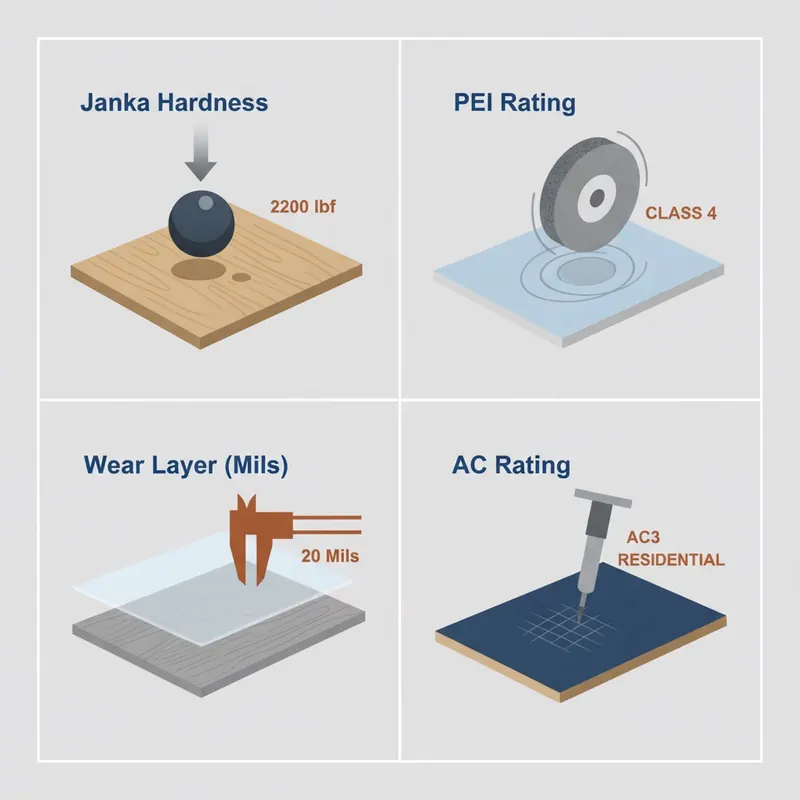
The Janka hardness test is the industry standard for measuring a wood species’ resistance to denting and wear. The test involves pressing a 0.444-inch steel ball into the wood until it is halfway embedded. The amount of force (in pounds-force, or lbf) required to do this becomes the wood’s Janka rating. A higher number means a harder, more dent-resistant wood.
According to the National Wood Flooring Association (NWFA), the authority on wood flooring standards, the difference is significant.[2] For example:
- Soft Woods: Species like Pine and Fir have Janka ratings under 1,000, making them highly susceptible to scratches and dents.
- Benchmark Hardness: Red Oak, a common choice, has a rating of 1290.
- Extreme Hardness: Exotic woods like Brazilian Walnut (Ipe) have a rating of over 3600, making them exceptionally durable.
When choosing hardwood, the Janka rating gives you a clear, numerical indicator of how it will handle impacts from dropped items or heavy furniture.
For Tile: Decoding the PEI Rating for Wear Resistance
For ceramic and porcelain tile, the most important durability metric is the PEI (Porcelain Enamel Institute) rating. This scale, promoted by the Tile Council of North America (TCNA), measures the abrasion resistance of the tile’s glaze—its ability to withstand wear from foot traffic without showing visible damage.[3]
The scale runs from 1 to 5:
- PEI 1: Suitable for walls only; no foot traffic.
- PEI 2: Light traffic areas like residential bathrooms.
- PEI 3: All residential areas with normal foot traffic.
- PEI 4: Residential, medium commercial, and light institutional traffic.
- PEI 5: Heavy to extra-heavy traffic, suitable for all residential and commercial applications.
For a truly “adamantine” tile floor in a busy home or commercial space, a PEI rating of 4 or 5 is essential. A PEI 5 rating is the most durable and is engineered for the most demanding environments.
For Laminate: What the AC (Abrasion Class) Rating Really Means
Laminate flooring’s toughness is defined by its AC (Abrasion Class) rating. This system classifies laminate based on its resistance to a series of tests, including abrasion, impact, stains, and even burns. The ratings range from AC1 to AC5.
- AC1: Light residential use (e.g., bedrooms).
- AC2: General residential use (e.g., living rooms).
- AC3: Heavy residential use and light commercial use.
- AC4: General commercial use (e.g., offices, cafes).
- AC5: Heavy commercial use (e.g., department stores, public buildings).
For a busy home, especially with kids and pets, AC3 or higher is strongly recommended. For ultimate peace of mind and scratch resistance that rivals commercial-grade flooring, look for products with an AC4 or AC5 rating.
For Vinyl: The Critical Importance of the Wear Layer (Mils)
The durability of Luxury Vinyl Plank/Tile (LVP/LVT) isn’t measured by the thickness of the plank itself, but by the thickness of its top protective layer, known as the “wear layer.” This clear, urethane-based coating is what defends the floor against scratches, scuffs, and stains. It is measured in mils (one-thousandth of an inch).
The Resilient Floor Covering Institute (RFCI) provides technical specifications that help clarify these numbers.[4]
- Entry-Level (6-12 mil): Suitable for light-traffic areas.
- Good Residential (12-20 mil): A solid choice for most homes.
- Excellent/Light Commercial (20+ mil): The gold standard for high-traffic homes with pets and kids, offering superior scratch and scuff protection.
When shopping for LVP, the wear layer thickness is the most critical number to look for on the spec sheet.
The Ultimate Showdown: Today’s Most Durable & Low-Maintenance Flooring
Now that you speak the language of durability, let’s compare the top contenders for the modern “adamantine” floor. Below is a simple Durability Matrix to give you a quick overview, followed by a detailed breakdown of each material.
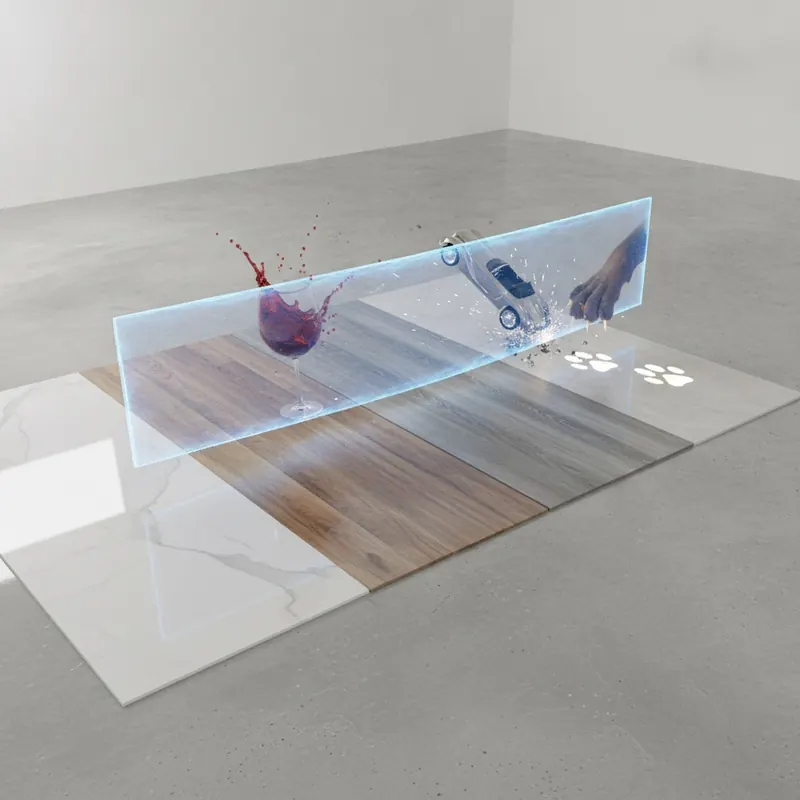
Durability Matrix
| Flooring Material | Scratch Resistance | Dent Resistance | Water Resistance | Maintenance Level |
|---|---|---|---|---|
| LVP/LVT (20+ mil) | 4/5 | 4/5 | 5/5 | 1/5 (Very Low) |
| Porcelain Tile (PEI 4-5) | 5/5 | 5/5 | 5/5 | 2/5 (Low) |
| High-End Laminate (AC4-5) | 5/5 | 4/5 | 3/5 | 1/5 (Very Low) |
| Polished/Epoxy Concrete | 5/5 | 5/5 | 5/5 | 1/5 (Very Low) |
1. Luxury Vinyl Plank/Tile (LVP/LVT): The All-Around Champion
LVP/LVT has exploded in popularity for one simple reason: it masterfully balances performance, style, and value. It is arguably the best all-around choice for busy families seeking a low-maintenance, high-performance floor. Its strength lies in its multi-layer construction, which is non-porous and 100% waterproof, making it a worry-free option for kitchens, bathrooms, and basements. Spills from juice, mud, or pet accidents simply sit on the surface waiting to be wiped away without any risk of soaking in or causing damage. Combined with a thick wear layer (20 mil or more), it offers excellent protection against the daily chaos of family life.
2. Porcelain Tile: The Classic Choice for Extreme Hardness
When absolute hardness is the priority, porcelain tile remains the king. Fired at higher temperatures than standard ceramic, porcelain is incredibly dense, making it exceptionally resistant to scratches, chipping, and moisture. It often has a Mohs hardness rating (a scale used to measure mineral hardness) between 7 and 9, making it one of the most scratch-resistant flooring materials you can buy. The primary maintenance concern has always been grout lines, but modern installation techniques have minimized this issue. Using large-format tiles with rectified (perfectly straight) edges allows for ultra-thin 1/16-inch grout lines, drastically reducing the area for dirt to accumulate and making cleaning a breeze. For ultimate durability, always choose a tile with a PEI rating of 4 or 5.[3]
3. High-End Laminate: The Scratch-Resistant Contender
Modern laminate flooring is a world away from the cheap, easily damaged products of the past. Today’s high-end laminate, especially products with an AC4 or AC5 rating, offers some of the best scratch resistance on the market. This is thanks to advanced top coats infused with materials like aluminum oxide, creating a surface that can stand up to pet nails, dragging chairs, and active kids. While most laminate is not fully waterproof (making it less ideal for full bathrooms), many premium lines now feature enhanced water resistance for use in kitchens and entryways. With hyper-realistic wood and stone visuals, it’s a fantastic option for those who prioritize scratch protection above all else.
4. High-Performance Systems: Epoxy & Polished Concrete
For the ultimate in industrial-grade durability, nothing beats a professionally installed concrete flooring system. These are not just floors; they are complete systems engineered for the most demanding environments like garages, basements, workshops, and commercial spaces.
- Polished Concrete: This process involves grinding the concrete slab with progressively finer diamond abrasives to achieve a smooth, high-sheen surface that is incredibly dense and easy to clean. A well-maintained polished concrete floor can have a life expectancy exceeding 100 years.
- Epoxy/Polyaspartic Coatings: These are multi-layer resinous systems applied over a concrete slab. A typical system includes a primer, a color base coat, decorative flakes or quartz, and one or two clear top coats. According to experts at organizations like The Society for Protective Coatings (SSPC), these professional systems create a seamless, non-porous, and chemical-resistant surface that is far superior to any DIY kit.[5]
Context is Key: Matching the Right Floor to Your Life
The “best” durable floor is not a one-size-fits-all answer. The ideal choice depends entirely on your lifestyle and the specific demands of the space.
For Busy Families with Kids & Pets: The ‘Peace of Mind’ Floor
For this environment, the priorities are scratch resistance, water resistance, and ease of cleaning. LVP/LVT with a 20+ mil wear layer is the top recommendation. It’s virtually immune to spills and pet accidents and holds up beautifully to toys and claws. High-end laminate (AC4+) is another excellent choice, particularly for its superior scratch resistance in living areas.
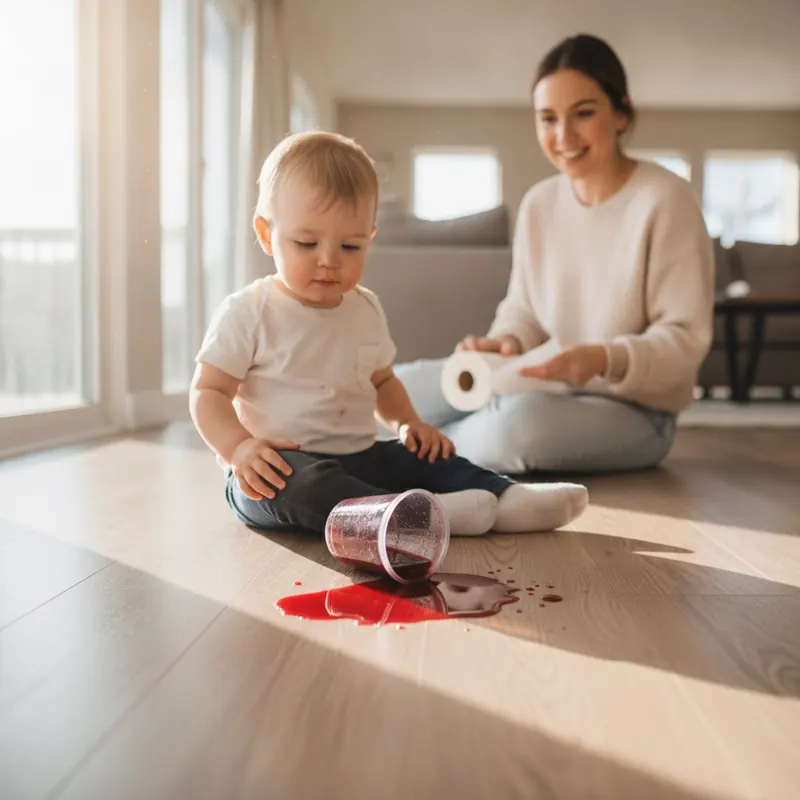
A simple scenario-based cleaning guide proves its value: to clean crayon off LVT, simply use a damp cloth with a drop of mineral spirits, and it will wipe away without a trace, leaving no stain or damage. This is the kind of easy-care performance that gives families true peace of mind.
For High-Traffic Commercial Spaces: Performance & Longevity
In a commercial setting—be it a retail store, cafe, or office—flooring must withstand constant foot traffic, rolling carts, and frequent cleaning, all while meeting safety standards. The best options focus on long-term value and minimal downtime.
- Commercial-Grade LVT (20-30 mil wear layer): Offers excellent durability, sound absorption, and endless design options.
- Porcelain Tile (PEI 5): Provides unparalleled wear resistance for the heaviest traffic areas.
- Polished Concrete: Delivers extreme longevity and the lowest maintenance costs over its lifespan.
Furthermore, safety is paramount. The Americans with Disabilities Act (ADA) recommends a static coefficient of friction (SCOF) of at least 0.6 for accessible routes to ensure slip resistance.[6] Always verify that your chosen material meets these critical safety guidelines.
For Problem Areas (Basements & Garages): The Ultimate Resilience
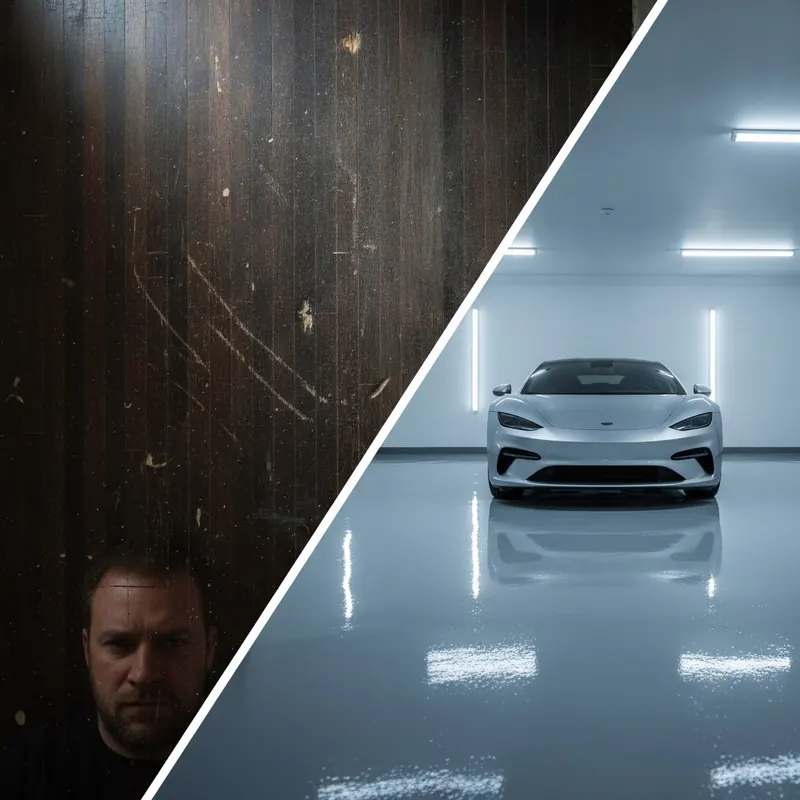
Below-grade spaces present unique challenges, primarily the risk of moisture from the concrete slab. This makes waterproof and highly durable materials essential. Professionally installed epoxy or polyaspartic coating systems are the premier choice. These systems create a seamless, impenetrable barrier that is resistant to moisture, chemicals, hot tires, and heavy impacts. In fact, a quality epoxy floor coating can increase the surface strength of the underlying concrete by up to 300%. Polished concrete is another outstanding option, as it allows the concrete to “breathe” while still providing a sealed, hardened, and easy-to-clean surface.
Frequently Asked Questions (FAQ) About Durable Flooring
Q: What is the single most durable type of flooring overall?
A: For sheer hardness and resistance to wear and tear in almost any application, porcelain tile with a PEI rating of 4 or 5 is a top contender. For industrial-level strength, impact resistance, and longevity, professionally installed systems like polished concrete or epoxy coatings are unmatched, boasting incredible compressive strength and a lifespan that can exceed a century.
Q: Does ‘durable’ also mean ‘waterproof’?
A: Not necessarily. These are two distinct attributes. A floor can be very durable but not waterproof. For example, Strand-Woven Bamboo is extremely hard (high Janka rating) but can be damaged by moisture. Conversely, sheet vinyl is 100% waterproof but may not be as scratch-resistant as a high-end laminate.
| Material | Durable | Waterproof |
|---|---|---|
| LVP/LVT | Yes | Yes |
| Porcelain Tile | Yes | Yes |
| Hardwood | Yes | No |
| Laminate | Yes | Water-Resistant (some) |
Q: Which flooring is best for hiding dirt and scratches?
A: The visual characteristics of a floor play a huge role in its perceived maintenance. Floors with multi-tonal colors, natural variations, and strong patterns (like a realistic wood grain or stone look) are excellent at camouflaging minor scratches, dust, and pet hair. Additionally, a matte or low-gloss finish will hide smudges and footprints far better than a dark, solid-colored, high-gloss floor, which tends to show everything.
Conclusion: Your Investment in a Lifetime of Performance
The search for an “Adamantine” floor—a surface that is beautiful, indestructible, and effortless—is no longer a historical fantasy. It is an achievable reality thanks to modern materials engineered for a lifetime of performance. By moving beyond simple aesthetics and empowering yourself with the science of durability, you can make a choice that truly serves your life, rather than demands more of it.
We’ve learned that the key is to understand the language of strength: the Janka rating for wood’s dent resistance, the PEI scale for tile’s wear-and-tear endurance, the AC rating for laminate’s scratch-proof surface, and the critical wear layer for vinyl’s resilience. With this knowledge, you can confidently select the perfect material for your needs—whether it’s the all-around excellence of LVT for a busy family, the classic hardness of porcelain tile, the scratch-defying power of high-end laminate, or the ultimate toughness of a concrete system. You are now equipped to escape the cycle of high-maintenance floors and make a smart, long-term investment in a home that is both beautiful and built to last.
This article may contain affiliate links. All recommendations are based on extensive research and expert opinion, but final purchasing decisions should be based on your specific needs and professional consultation.
References & Authoritative Sources
- ASTM International. (N.D.). Standards for Material Performance Testing. ASTM International is a global leader in the development and delivery of voluntary consensus standards. Their testing methods form the basis for many durability claims in the flooring industry.
- National Wood Flooring Association (NWFA). (N.D.). Official Flooring Industry Guide to Janka Hardness. The NWFA is the leading authority on wood flooring standards, installation, and technical information in North America.
- Tile Council of North America (TCNA). (N.D.). Understanding the PEI Rating System. The TCNA is an authoritative body that develops standards and provides technical resources for the ceramic tile industry.
- Resilient Floor Covering Institute (RFCI). (N.D.). Technical Specifications for Resilient Flooring. The RFCI is an industry trade association representing manufacturers of resilient flooring, providing information on product performance, including wear layer standards.
- The Society for Protective Coatings (SSPC). (N.D.). Standards for Surface Preparation and Coating Application. The SSPC is an authority on protective coatings, which includes the standards for high-performance epoxy and resinous flooring systems.
- U.S. Access Board. (N.D.). Americans with Disabilities Act (ADA) Accessibility Standards. This federal agency provides guidelines for accessible design, including recommendations for slip-resistant surfaces in public and commercial spaces.
- American Kennel Club (AKC). (N.D.). Pet-Friendly Home Solutions. As a leading authority on dogs, the AKC offers credible advice on creating a home environment that is safe and durable for pets, including flooring recommendations.