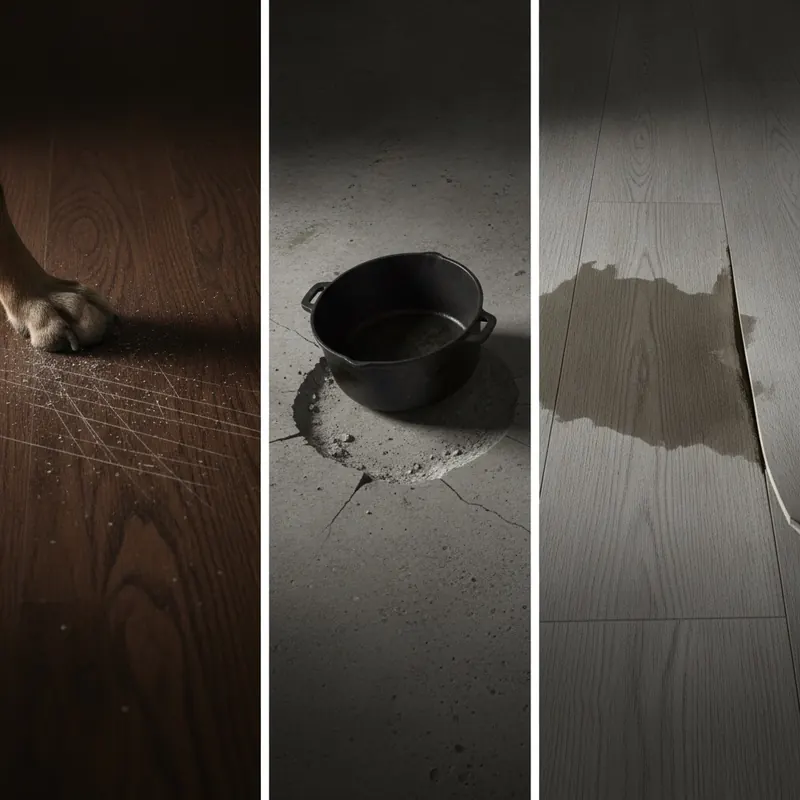
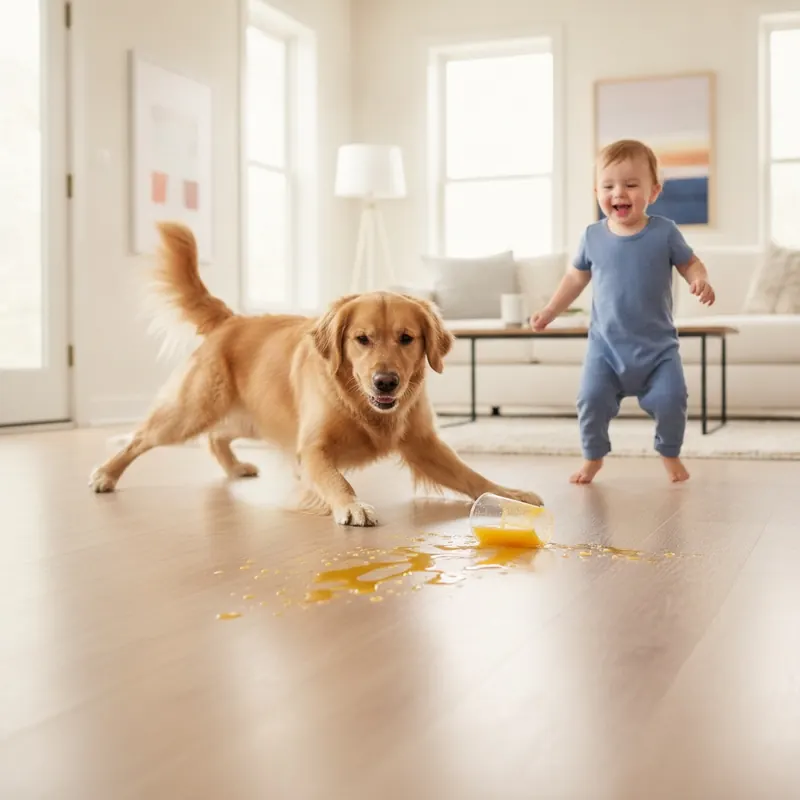
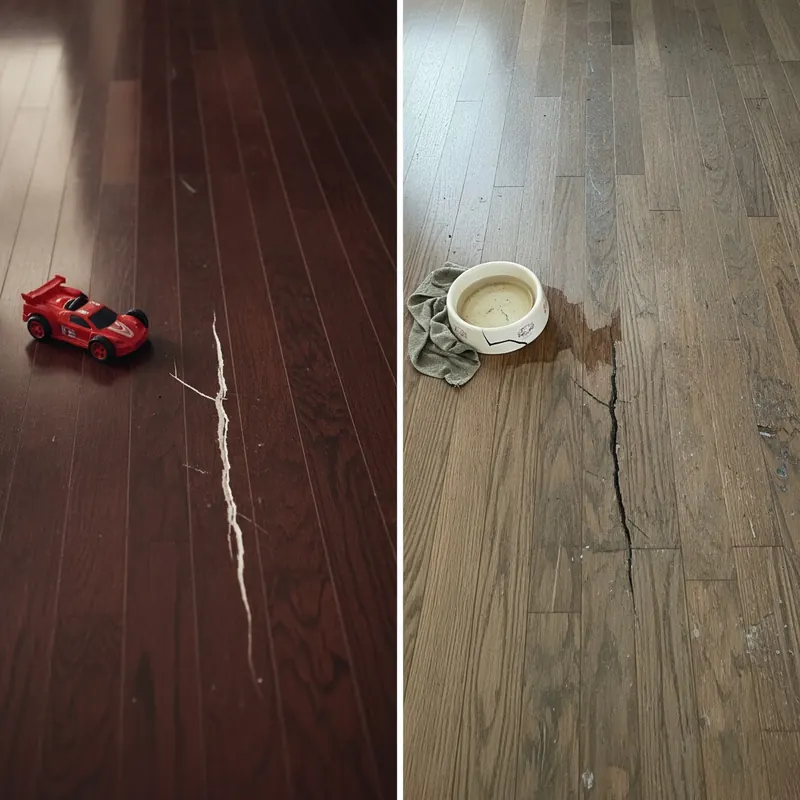
You see the ghost of a rug on your hardwood floor—a perfect, pale rectangle where sunlight couldn’t reach, surrounded by a sun-faded landscape. Or perhaps you remember the panic of a tipped glass of water, watching it seep between the planks of your laminate floor before you could grab a towel. These moments of flooring failure are all too common. Choosing a new floor can feel overwhelming, a maze of marketing terms and conflicting advice, leaving you to wonder: which floor can actually stand up to real life?
This is not just another list of flooring types. This is The Indestructible Floor Playbook—your definitive guide to making a truly future-proof investment. We’ll go beyond the surface to give you a complete decision-making framework, helping you select a floor that is genuinely “adamantine”—unshakable in its resistance to water, sun, and the rigors of daily life.
- Why Most Floors Fail: The Common Culprits of Damage and Disappointment
- Sun-Proof Your Investment: A Deep Dive into Fade-Resistant Flooring
- The Ultimate Water Defense: Building a Truly Waterproof Flooring System
- Built for Life: A Guide to High-Durability Flooring
- The True Cost of a Floor: A ‘Cost-Per-Year’ Investment Analysis
- Frequently Asked Questions About Durable Flooring
- Conclusion: Your Indestructible Foundation Awaits
- References
Why Most Floors Fail: The Common Culprits of Damage and Disappointment
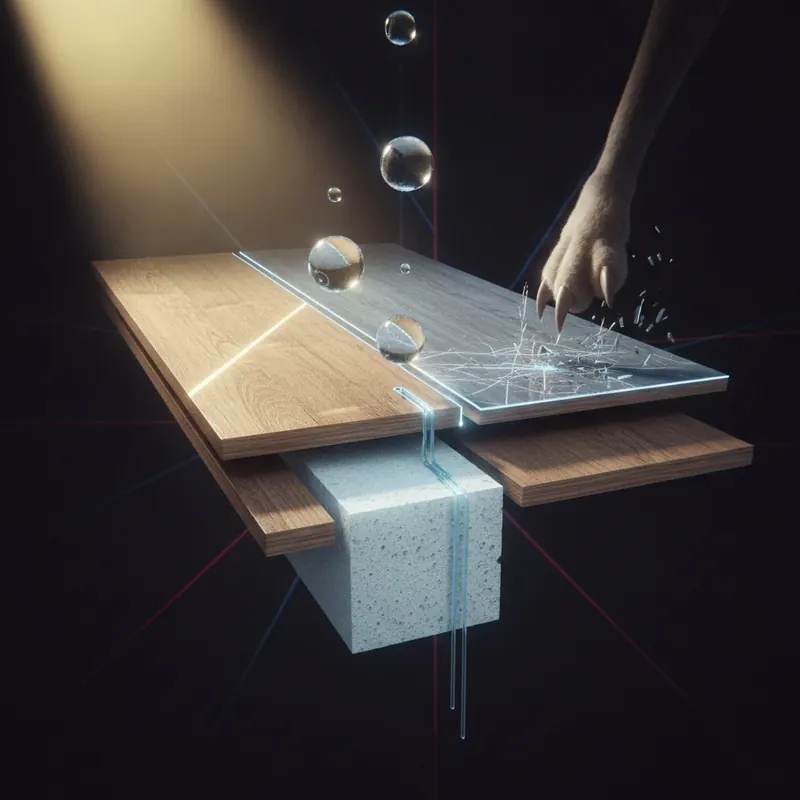
Before choosing a new floor, it’s crucial to understand the enemies you’re up against. Most flooring failures aren’t due to a single catastrophic event, but a slow surrender to three common culprits: relentless sun, insidious water, and the daily grind of life.
The Unseen Damage of Sunlight: How UV Rays Degrade Your Floors
That beautiful, sun-drenched room you love is waging a silent war on your floors. The damage comes from a process called photodegradation, where ultraviolet (UV), visible, and infrared light break down the chemical bonds in your flooring material[4]. For wood floors, this can be a deep-seated issue, as sun damage can penetrate up to 3 mm into the wood grain[1].
Different materials react in different ways. Certain wood species, like American Cherry and Brazilian Cherry, are highly photosensitive and will darken significantly, while others like Oak may lighten or turn yellow. This is why you often see uneven coloring where area rugs or furniture have blocked the light. Even floors marketed as “fade-resistant” are not entirely immune, making a multi-layered defense essential.
Water: The Silent Destroyer of Subfloors and Surfaces
From a pet accident to a leaky dishwasher, water is the most aggressive and fast-acting threat to many flooring types. The danger isn’t just the visible warping or staining on the surface; it’s the hidden damage that happens underneath. For materials with a fiberboard core, like traditional laminate, the clock starts ticking immediately. Research shows that within just 2-4 hours, moisture can penetrate the seams and edges, and after 24 hours, the core can swell irreversibly[2].
This is why the Institute of Inspection, Cleaning and Restoration Certification (IICRC) emphasizes that the first 24 hours are critical for professional intervention to mitigate long-term damage and prevent mold growth[3]. A certified water damage restoration professional will tell you that the most devastating damage often comes not from floods, but from small, persistent leaks that go unnoticed until the subfloor is already compromised.
The Daily Grind: Scratches, Dents, and High-Traffic Wear
Life happens on your floors. Pets’ claws, children’s toys, dragged furniture, and even grit on the bottom of shoes contribute to a constant barrage of micro-abrasions and impacts. Over time, this daily grind wears down the protective top layer, leading to visible scratches, scuffs, and a dull, worn-out appearance.
A veteran flooring installer will often tell you that premature wear is one of the most common reasons for customer dissatisfaction. It frequently stems from a mismatch between the floor’s durability and the household’s lifestyle. A deep gouge that penetrates the wear layer and damages the photographic layer of a laminate or vinyl plank is often irreparable, while a surface scratch may only affect the finish. Understanding this distinction is key to choosing a floor built to handle your home’s unique level of activity.
Sun-Proof Your Investment: A Deep Dive into Fade-Resistant Flooring
Protecting your flooring investment from sun damage requires a two-pronged approach: choosing the right material and implementing smart home strategies. Our Sun-Proof Flooring Scorecard below helps visualize how different materials stack up not just on fade resistance, but also on secondary factors like heat absorption.
The Champions of Fade Resistance: LVP, Tile, and Modern Laminate
The best defense against fading is built directly into the flooring. Modern materials have made incredible technological leaps.
- Luxury Vinyl Plank (LVP): High-quality LVP is a top performer due to its multi-layer construction. The key is a transparent, factory-applied wear layer fortified with a UV-cured urethane coating. This coating often contains UV inhibitors, such as benzotriazoles, which are chemical compounds that absorb UV radiation and dissipate it as heat, protecting the printed design layer below[5]. When shopping, look for manufacturers’ warranties that explicitly cover fading and color retention.
- Porcelain & Ceramic Tile: Because the color is baked into the tile itself, porcelain and ceramic are virtually immune to fading from sunlight. The pigments are inorganic minerals that are not broken down by UV radiation, making tile an ideal choice for the sunniest spots in your home.
- High-Quality Laminate: Like LVP, modern laminate flooring features a tough top wear layer designed to protect the photographic layer beneath. The best brands incorporate UV protection into this layer, but quality can vary significantly.
Content Gap Filler: Your Home’s First Line of Defense – Windows and Treatments
Your flooring is only one part of the equation. Your windows are the gateway for damaging UV rays. Upgrading your home’s defenses here can protect not only your floors but also your furniture, textiles, and artwork.
According to technical data from window manufacturers, Low-E (low-emissivity) glass is a game-changer. These windows have a microscopically thin, transparent coating that reflects UV and infrared light while still allowing visible light to pass through, significantly reducing the fading potential[6].
Here’s a comparison of common window treatments:
| Treatment | UV Protection | Cost | Aesthetics |
|---|---|---|---|
| Window Film | Up to 99% | Low to Moderate | Minimal impact on view |
| Blinds/Shades | Variable (High when closed) | Low to High | Wide variety of styles |
| Drapes/Curtains | High (when closed) | Moderate to High | Can block light/view completely |
Repairing Sun-Faded Floors: When to Refinish vs. Replace
If you’re already dealing with sun damage, don’t despair. First, you need to diagnose the problem. Hardwood flooring specialists often recommend a simple 30-day rug-removal test: move a rug to a different, non-faded part of the floor for a month. If the floor under the rug lightens to match its surroundings, the damage is likely in the finish, which can often be fixed with a professional cleaning and buffing. If the color doesn’t change, the damage has penetrated the wood itself, which will likely require a full sand and refinish[7].
For minor fading on a wood floor’s finish, a professional buff-and-recoat can often restore the luster. However, for deep photodegradation, the only solution is to sand down past the damaged layer and apply a new stain and finish.
The Ultimate Water Defense: Building a Truly Waterproof Flooring System
One of the biggest sources of confusion for homeowners is the difference between “water-resistant” and “waterproof.” The distinction is critical. As authoritative home improvement publications like The Spruce clarify, water-resistant flooring can handle topical spills if they are wiped up quickly, but it will not survive prolonged exposure or standing water. Waterproof flooring, on the other hand, is made from materials that are impervious to water and can be fully submerged without damage to the plank itself[8].
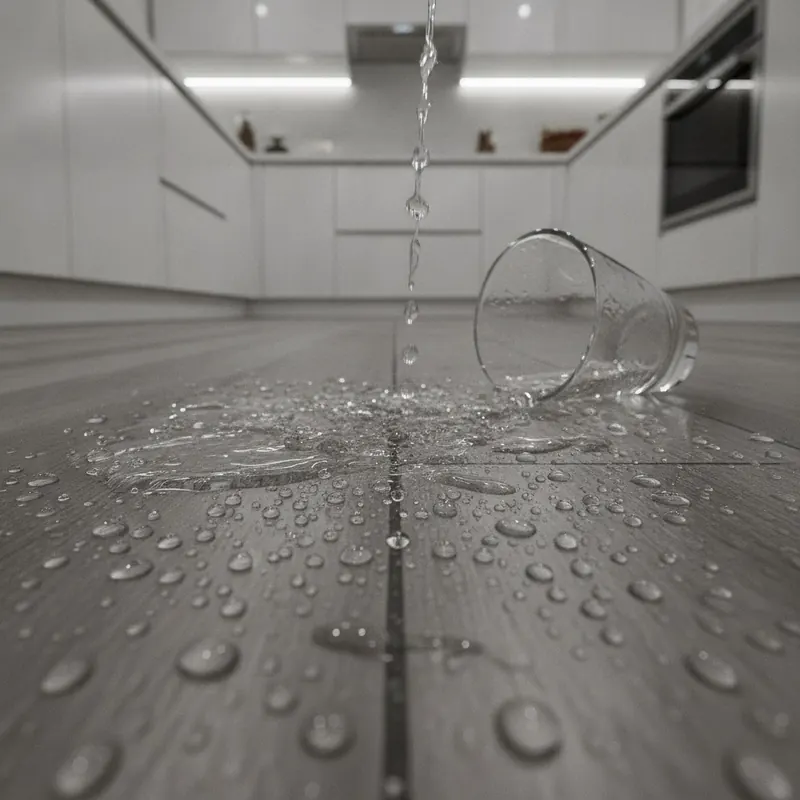
The popularity of these solutions is undeniable. Driven by its superior moisture resistance, resilient flooring like luxury vinyl now commands an impressive 34.2% of the U.S. flooring market share[9].
To help you choose the right level of protection, use our Water Defense Scale.
The Best Waterproof Materials: SPC Vinyl, Porcelain Tile, and Sealed Concrete
For true peace of mind, especially in basements, bathrooms, and kitchens, you need a material that is 100% waterproof.
- SPC Vinyl: Stone Plastic Composite (or Stone Polymer Composite) vinyl is the gold standard for waterproof flooring. Its core is made from a blend of limestone powder, polyvinyl chloride, and stabilizers. This ultra-dense core is completely impervious to water and provides superior dimensional stability, meaning it won’t expand or contract with moisture changes. In contrast, WPC (Wood Plastic Composite) has a foamed core that is also waterproof but is softer and less dent-resistant than SPC. Major retailers like Floor & Decor feature brands like NuCore®, which leverage this rigid core technology for maximum performance[10].
- Porcelain Tile: Like its fade resistance, tile’s waterproof nature is inherent. Glazed porcelain tile has a water absorption rate of less than 0.5%, making it an ideal choice for the wettest environments.
- Sealed Concrete: When properly sealed and finished, concrete offers a seamless, industrial-chic, and completely waterproof surface.
Content Gap Filler: The Unsung Heroes – Subfloor Prep and Underlayment
A waterproof plank is useless if water gets trapped underneath it. Creating a truly waterproof system requires meticulous attention to what’s below the floor. Even with a click-lock system, tiny gaps between planks can allow water to seep through to the subfloor, where it can cause mold, mildew, and rot.
Waterproof System Installation Checklist:
- Subfloor Check: Ensure the subfloor is clean, level, and dry before starting.
- Vapor Barrier: Over a concrete subfloor, always use a 6-mil polyethylene vapor barrier to block moisture wicking up from the slab.
- Seal the Perimeter: Apply a bead of 100% silicone sealant around the entire perimeter of the room, filling the expansion gap between the flooring and the wall. This creates a bathtub-like effect, containing surface water.
- Seal Transitions: Use silicone sealant at transitions to other flooring types and around fixtures like toilets or island counters.
Emergency Response Plan: What to Do When Water Damage Strikes
When a pipe bursts or an appliance fails, quick action is critical. Follow this emergency plan.
Built for Life: A Guide to High-Durability Flooring
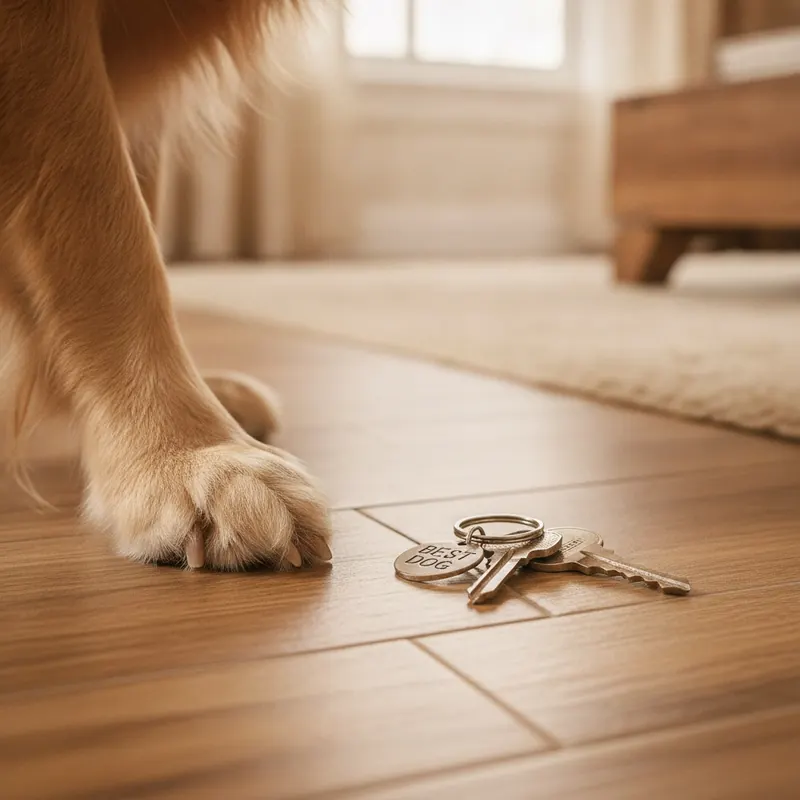
Durability isn’t a single feature; it’s a measure of how well a floor resists scratches, dents, and general wear. The right choice depends entirely on your lifestyle. A retired couple has very different needs than a family with two large dogs and three active children.
As trusted home improvement authority Bob Vila often notes, matching the material to the use case is the secret to a long-lasting floor[11]. Our Lifestyle Durability Scorecard helps you do just that.
Understanding Durability Ratings: How to Read the Specs Like a Pro
To choose wisely, you need to speak the language of durability. Here are the key ratings to look for:
- LVP/LVT Wear Layer: This is the most important factor for vinyl durability. It’s a clear top coat measured in mils (1/1000th of an inch). For busy homes, a 20 mil wear layer is the minimum recommendation. A 6 mil layer might be fine for a bedroom, but it won’t stand up to a high-traffic entryway.
- Laminate AC Rating: The Abrasion Class (AC) rating measures resistance to abrasion, impact, stains, and burns. The scale runs from AC1 (light residential use) to AC5 (heavy commercial use). For most homes, AC3 or AC4 is ideal.
- Tile PEI Rating: The Porcelain Enamel Institute (PEI) rating measures the hardness and durability of the tile’s glaze. It ranges from PEI 0 (no foot traffic) to PEI 5 (heavy commercial traffic). For residential floors, look for PEI 3 (all residential use) or PEI 4 (heavy residential/light commercial use).
Top Picks for Toughness: Porcelain Tile, SPC Vinyl, and Engineered Hardwood
When life demands the toughest floor, these materials deliver.
- Porcelain Tile (PEI 4+): The undisputed king of durability. It’s incredibly hard, scratch-resistant, stain-resistant, and waterproof. Interior designers specializing in high-traffic commercial spaces often choose porcelain because it can withstand decades of abuse with minimal maintenance[12].
- SPC Vinyl (20+ mil wear layer): The dense, limestone-composite core makes SPC vinyl highly resistant to dents and impacts from dropped objects. Some premium products, like Hewn’s Stoneform flooring, feature a 5-millimeter composite core made of nearly 70% limestone for ultimate toughness[13]. Paired with a thick wear layer, it’s an ideal choice for homes with large dogs and active kids.
- Engineered Hardwood: For those who want the look of real wood with enhanced stability, engineered hardwood is a great option. Its layered construction makes it less prone to warping from humidity changes than solid wood. Durability depends on the hardness of the wood species on top and the quality of the factory-applied finish.
The True Cost of a Floor: A ‘Cost-Per-Year’ Investment Analysis
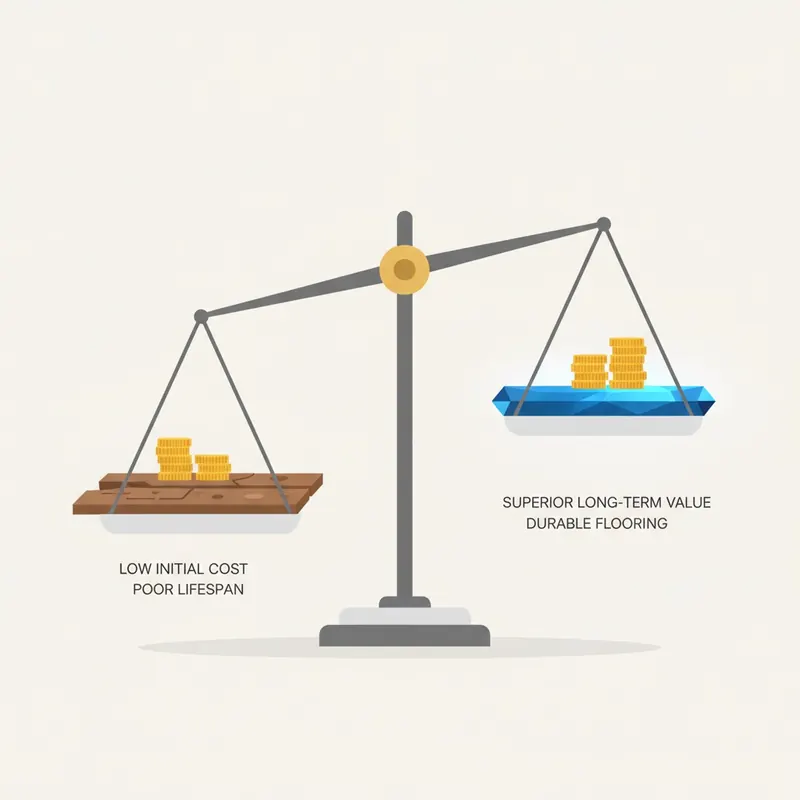
The sticker price of flooring is only part of the story. A cheap floor that needs to be replaced in 10 years is far more expensive than a premium floor that lasts for 50. To understand the true value, you need to calculate the Cost-Per-Year of Service.
The formula is simple: (Total Installed Cost per Sq. Ft.) / (Expected Lifespan in Years)
Here’s a comparison based on average lifespans provided by major retailers like Flooring America[14]:
| Flooring Type | Avg. Installed Cost/SqFt | Avg. Lifespan | Cost-Per-Year/SqFt |
|---|---|---|---|
| Laminate | $4 – $8 | 15-25 years | $0.16 – $0.53 |
| Luxury Vinyl (LVP) | $5 – $10 | 20-30 years | $0.17 – $0.50 |
| Engineered Hardwood | $7 – $13 | 25-50 years | $0.14 – $0.52 |
| Solid Hardwood | $8 – $15 | 70-100+ years | $0.08 – $0.21 |
| Porcelain Tile | $10 – $20 | 50-100+ years | $0.10 – $0.40 |
As the table shows, materials like solid hardwood and tile, while more expensive upfront, can offer incredible long-term value, costing just pennies per square foot each year. This analysis shifts the focus from a short-term expense to a long-term home investment.
Frequently Asked Questions About Durable Flooring
Here are concise answers to some of the most common questions homeowners have when choosing a long-lasting floor.
Can you refinish engineered hardwood flooring?
Yes, but it depends entirely on the thickness of the top layer, or “veneer,” of real wood. High-quality engineered hardwood with a veneer of 3mm or more can typically be sanded and refinished once or twice in its lifetime. Thinner veneers (less than 2mm) cannot be sanded without exposing the plywood core beneath. Professional flooring repair blogs always advise checking the manufacturer’s specifications before attempting to refinish[15].
How do you replace a single damaged laminate or vinyl plank?
Replacing a single plank in the middle of a floating floor requires precision. The process generally involves using a circular saw with the blade set to the exact thickness of the plank to make plunge cuts and remove the damaged piece. The tongue of the new plank is trimmed off, and it’s then secured in place with wood glue or a specialized adhesive. Authoritative DIY sources like The Home Depot’s YouTube channel provide excellent visual guides for this process[16]. A great pro-tip is to use a super glue gel, which doesn’t run and creates a strong, quick bond.
What happens if water gets under waterproof flooring?
This is a serious issue. Even though the planks themselves are waterproof, the water trapped between the flooring and the subfloor has nowhere to go. This creates a dark, damp environment perfect for mold and mildew growth, which can pose significant health risks and cause the wood subfloor to rot over time. According to water restoration authorities, this is why proper installation and sealing the perimeter are just as important as the flooring material itself[17]. If you suspect water is trapped, it’s best to have a professional assess the situation.
Conclusion: Your Indestructible Foundation Awaits
Choosing a floor shouldn’t be a gamble. The Indestructible Floor Playbook is designed to replace uncertainty with a clear strategy. By understanding the true enemies of your floor—sun, water, and wear—and by using tools like the Durability Scorecard, the Water Defense Scale, and a Cost-Per-Year analysis, you can make an informed, system-based decision. This isn’t just about buying a product; it’s about investing in a durable, beautiful, and worry-free foundation for your life. You are future-proofing your home against the unexpected, ensuring decades of performance and peace of mind.
Ready to build your indestructible foundation? Explore our full range of Adamantine Flooring solutions and find the perfect match for your home today.
References
- Naperville Hardwood. (N.D.). Blog and Resources on Hardwood Fading and Repair. Naperville Hardwood.
- Advanced DRI. (N.D.). Water Damage Restoration Resources. Advanced DRI.
- Institute of Inspection, Cleaning and Restoration Certification (IICRC). (N.D.). IICRC S500 Standard for Professional Water Damage Restoration. IICRC.
- Elephant Floors. (N.D.). Material Science of Flooring Blog. Elephant Floors.
- Various Manufacturers. (N.D.). Flooring Technical Specifications for UV-Cured Coatings and Product Warranties.
- Various Manufacturers. (N.D.). Technical Data for Low-E Glass Performance.
- ReCoat Revolution. (N.D.). Resources on Hardwood Floor Refinishing. ReCoat Revolution.
- The Spruce. (N.D.). Home Improvement Guides on Flooring. The Spruce.
- Industry Publications. (N.D.). Market Research on Resilient Flooring Market Share.
- Floor & Decor. (N.D.). Product Specifications for Waterproof Flooring Brands like NuCore®. Floor & Decor.
- BobVila.com. (N.D.). Guides and Recommendations on Durable Flooring Materials. BobVila.com.
- CE Floorings. (N.D.). Commercial Flooring Services and Material Insights. CE Floorings.
- Hewn. (N.D.). Product Specifications for Stoneform Flooring.
- Flooring America. (N.D.). Educational Content on Flooring Lifespan and Durability. Flooring America.
- Corlew and Perry. (N.D.). Flooring Repair and Installation Blog. Corlew and Perry.
- The Home Depot. (N.D.). DIY Project Guides and Tutorials. The Home Depot YouTube Channel.
- Water Restoration Authority. (N.D.). Information on Water Damage and Mold Remediation. Water Restoration Authority.