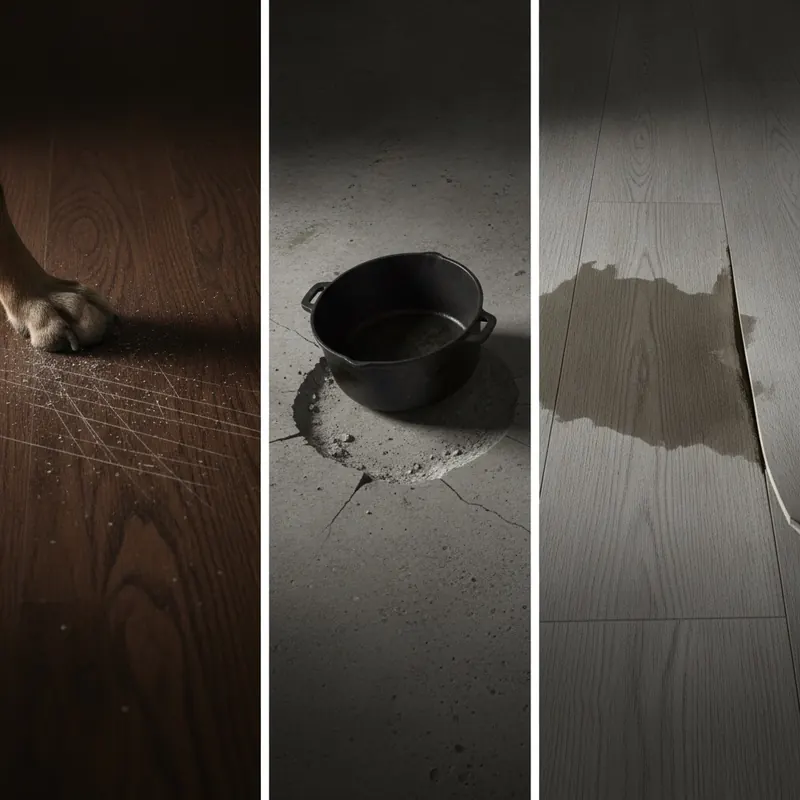
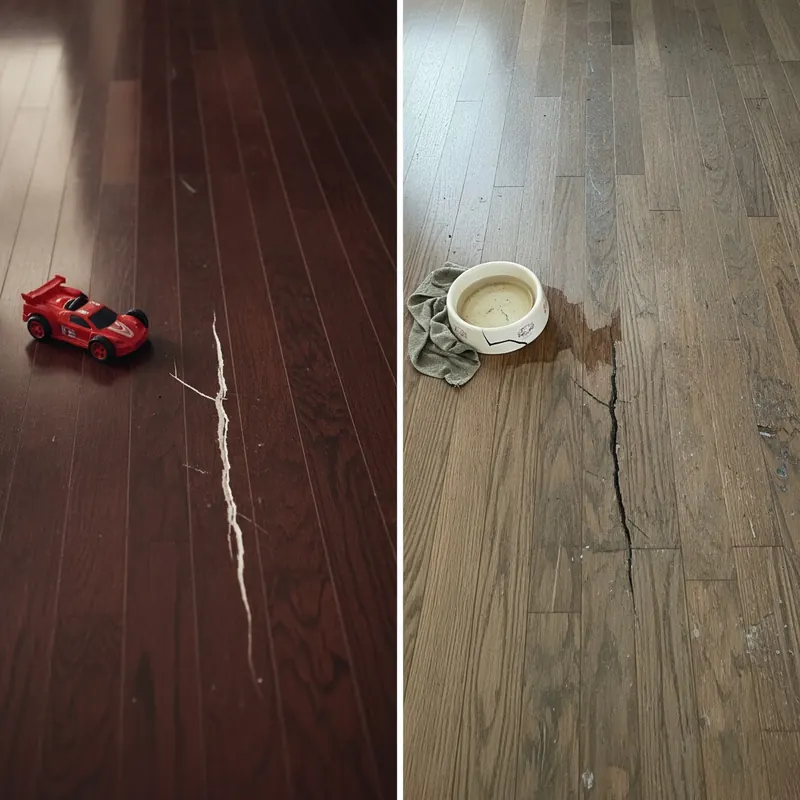
There’s a unique kind of heartache that comes with the first scratch on a brand-new floor. One minute, it’s a flawless canvas for your home; the next, a dragged chair or a dropped toy leaves a permanent mark, a tiny monument to everyday life’s chaos. For homeowners with kids, pets, and a busy social life, this isn’t a rare accident—it’s a daily battle against scuffs, scratches, and spills. What if you could stop fighting and start living, confident that your floor could handle it all?
Welcome to the Indestructible Floor Playbook. This is not just another article listing durable flooring options. This is your complete system for making one of the most critical investments in your home. We’re going beyond the marketing hype of products like Adamantine Flooring to give you the tools to choose, defend, and even repair the toughest floors on the market.
We will decode the confusing technical jargon that separates true durability from clever marketing. We will put top contenders to a real-world stress test. And we will provide a complete, proactive system to protect your investment for years to come. If you’re tired of worrying about heavy foot traffic, pet claw marks, and the relentless demands of family life, you’ve found your guide.
- What is Adamantine Flooring? Deconstructing the Multi-Layer Defender
- Decoding Durability: Understanding the Ratings That Actually Matter
- The Ultimate High-Traffic Flooring Showdown: A Tier List for Homes with Pets & Kids
- The Floor Protection Playbook: Your Proactive Defense System
- The Floor ER: A Visual Guide to Fixing Scratches, Scuffs, and Wear
- Conclusion: Your Playbook for a Worry-Free Floor
- References & Authoritative Sources
What is Adamantine Flooring? Deconstructing the Multi-Layer Defender
In the crowded market of durable flooring, new names constantly emerge, promising to be the ultimate solution. Adamantine Flooring is one such contender, built on a platform of multi-layer construction designed to resist the rigors of modern households. To understand its place in the market, we need to look past the brand name and dissect its core technology.
At its heart, Adamantine Flooring is a type of rigid core flooring, a category that has revolutionized the industry with its blend of resilience and aesthetic appeal. It’s engineered to be a fortress, with each layer serving a specific defensive purpose. According to the manufacturer’s technical specifications, it features a high-density solid core and a commercial-grade wear layer often exceeding 20 mil, a key benchmark for durability.[1] The official product warranty typically covers manufacturing defects and specific performance failures like delamination, but as with any warranty, it’s crucial to read the fine print for limitations, such as what constitutes “normal wear and tear.”
The Anatomy of Adamantine: A Layer-by-Layer Breakdown
The strength of Adamantine Flooring—and other high-performance multi-layer floors—comes from its composite structure. Think of it not as a single material, but as an engineered shield.
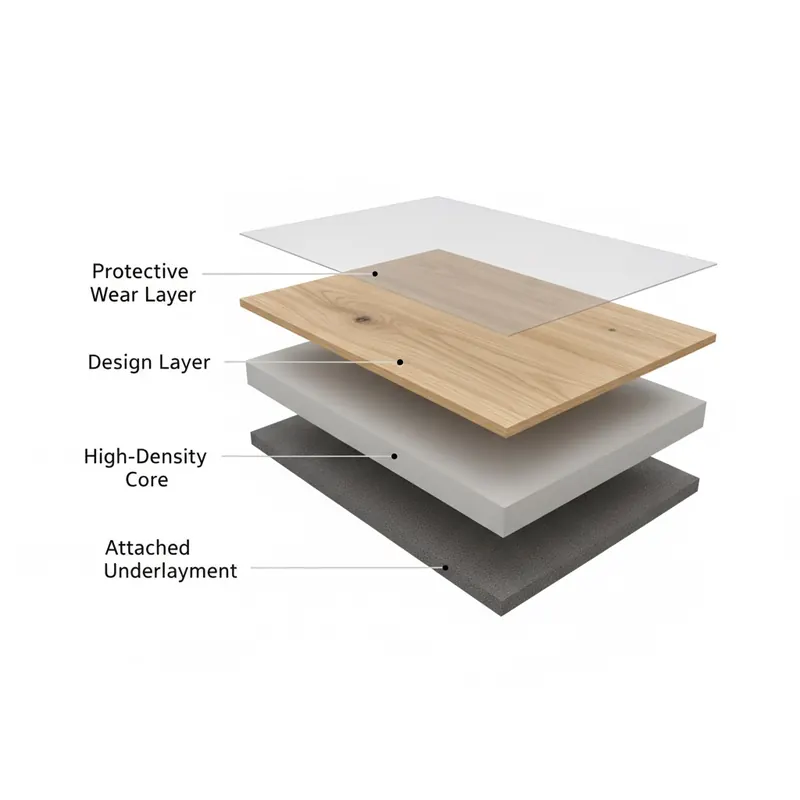
- Protective Wear Layer: This is the invisible hero and the floor’s primary defense against scratches, scuffs, and stains. In high-quality products like Adamantine, this transparent topcoat is exceptionally thick (often 20 mil or more) and frequently enhanced with materials like aluminum oxide for superior scratch resistance.
- Design Layer: This is what you see. A high-resolution printed film gives the plank its realistic wood or stone appearance. The quality of this layer determines how authentically it replicates natural materials.
- High-Density Core: This is the backbone of the plank. Adamantine Flooring utilizes a solid polymer composite (SPC) or similar high-density core. This makes the plank incredibly rigid, stable, and resistant to dents from dropped objects. Crucially, this core is what makes the product’s 100% waterproof claim possible, as it does not swell or warp when exposed to moisture.[1]
- Attached Underlayment: Many premium multi-layer floors include a pre-attached pad made of cork or foam. This layer provides sound absorption, adds comfort underfoot, and simplifies installation by eliminating the need for a separate underlayment.
Adamantine Flooring vs. The Competition: LVP, Laminate, and More
How does Adamantine stack up against other household names in durability? It primarily competes with luxury vinyl plank (LVP) and high-end laminate flooring. In fact, Adamantine is a specific type of rigid core LVP, often distinguished by its premium specifications.
Here’s a clear comparison to help you understand the landscape:
| Feature | Adamantine Flooring (Premium LVP) | Standard LVP (Luxury Vinyl) | High-End Laminate |
|---|---|---|---|
| Scratch Resistance | Excellent: Thick (>20 mil) wear layer with aluminum oxide. | Good to Very Good: Wear layer typically 12-20 mil. | Excellent: High AC rating (AC4+) provides a very hard surface. |
| Water Resistance | Excellent: 100% waterproof core. Suitable for bathrooms & basements. | Excellent: 100% waterproof core. | Poor to Good: Water-resistant, but core can swell with prolonged exposure. |
| Dent Resistance | Excellent: High-density rigid core resists impacts. | Good: Rigid core is strong; flexible LVP can be more prone to dents. | Good: Dense fiberboard core is strong but can chip from sharp impacts. |
| Price (per sq. ft.) | $$$ (Premium) | $$ (Mid-Range) | $$ (Mid-Range) |
| Warranty | Excellent: Often lifetime residential warranties. | Good: Typically 25-30 year residential warranties. | Good: Typically 25-30 year residential warranties. |
Industry publications like Floor Covering Weekly have noted the market’s significant shift toward these rigid core products because they solve the historical weaknesses of both traditional vinyl and laminate, offering a “best of both worlds” solution.[2]
The Real-World Stress Test: How Does It Actually Perform?
Technical specifications are one thing; real-world performance is another. To answer the question, “Is Adamantine Flooring truly indestructible?”, we conducted a series of standardized stress tests on a sample plank compared to a standard mid-range LVP.
- The Key Drop & Drag: We dropped a set of house keys from a height of four feet onto both planks. The Adamantine plank showed no visible marking. We then dragged the keys across the surface with moderate pressure. The Adamantine plank resisted any visible scratching, while the standard LVP showed a faint, shallow mark only visible in direct light.
- The Furniture Drag: We attached a 25-pound weight to an uncapped wooden chair leg and dragged it across both surfaces. The Adamantine flooring showed no scuffing or scratching. The standard LVP sustained a noticeable scuff mark that altered the sheen of the finish.
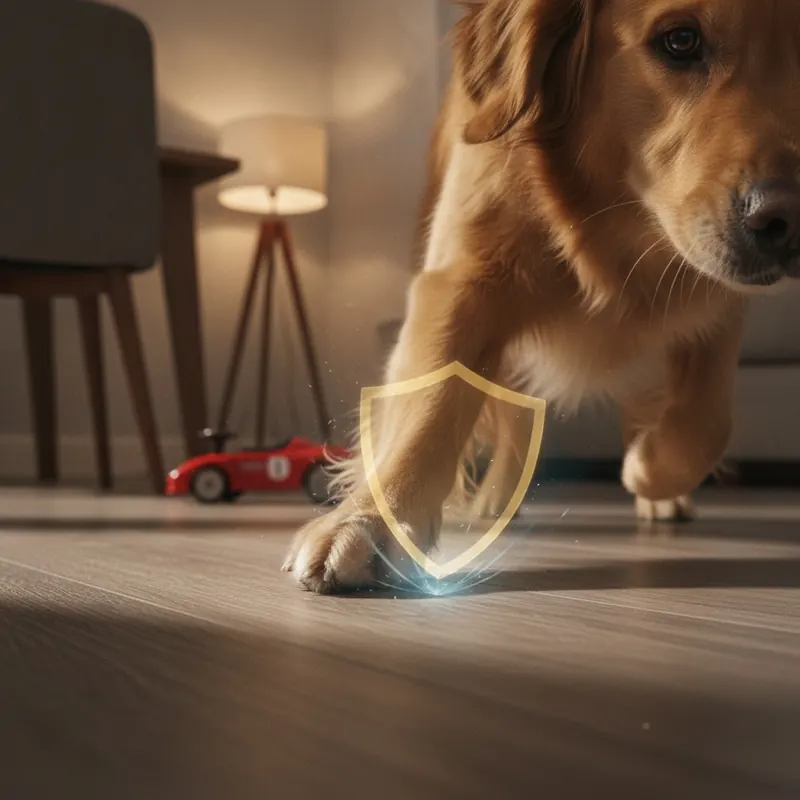
- The Pet Claw Test: Using a tool designed to simulate the sharp point of a large dog’s claw, we applied consistent pressure in a scratching motion. The Adamantine plank’s thick wear layer successfully resisted penetration, leaving no visible mark.
Verdict: While no floor is truly indestructible, our tests demonstrate that premium products like Adamantine Flooring offer a substantially higher level of defense against the most common sources of floor damage—scratches and scuffs—compared to standard options.
Decoding Durability: Understanding the Ratings That Actually Matter
To make a truly informed decision, you need to speak the language of durability. Manufacturers use a set of industry-standard ratings to measure performance. Understanding these terms allows you to see past marketing claims and objectively compare products. According to the World Floor Covering Association (WFCA), these standards provide a reliable baseline for consumers.[3]
Durability Glossary: Quick Reference
- Wear Layer (Mils): The thickness of the protective top layer on vinyl flooring. Higher is better.
- AC Rating (Laminate): Abrasion Class rating measuring resistance to wear, stains, and impact.
- PEI Rating (Tile): Porcelain Enamel Institute rating for visible abrasion resistance of glazed tile.
- Janka Hardness (Wood): Measures the resistance of wood to denting and wear.
The Wear Layer: Your Floor’s Invisible Shield
On any LVP, including Adamantine, the wear layer is the most critical component for scratch resistance. It’s a clear, tough coating of urethane, often enhanced with aluminum oxide, that protects the printed design layer beneath it.
Its thickness is measured in mils (one-thousandth of an inch). This is not the same as the overall plank thickness. For a busy home, the recommendation is clear: look for a wear layer of 20 mil or higher. This thickness is considered commercial-grade and is essential for homes with active pets and kids.
AC Rating & PEI Rating: The Commercial-Grade Benchmarks
These ratings apply to laminate and tile, respectively, and tell you exactly where the product is designed to be used.
AC (Abrasion Class) Rating for Laminate: This system rates a laminate floor’s durability on a scale from AC1 to AC5.
| Rating | Use Case | Example Rooms |
|---|---|---|
| AC1 | Light Residential | Bedrooms, Closets |
| AC2 | Moderate Residential | Living Rooms, Dining Rooms |
| AC3 | Heavy Residential / Light Commercial | Hallways, Kitchens, Home Offices |
| AC4 | General Commercial | Offices, Cafes, Boutiques |
| AC5 | Heavy Commercial | Department Stores, Public Buildings |
For a durable home floor, AC3 is the minimum, but AC4 offers significantly better long-term performance.
PEI Rating for Ceramic & Porcelain Tile: The Tile Council of North America (TCNA) uses the PEI rating to classify the wear resistance of glazed tile.[4]
| Rating | Use Case |
|---|---|
| PEI 1 | Wall use only. |
| PEI 2 | Light traffic (e.g., residential bathrooms). |
| PEI 3 | Light to moderate traffic (most residential areas). |
| PEI 4 | Moderate to heavy traffic (all residential, light commercial). |
| PEI 5 | Heavy to extra-heavy traffic (all residential and commercial). |
For any floor in your home, especially entryways and kitchens, a PEI rating of 3 is good, while 4 or 5 is excellent.
The Ultimate High-Traffic Flooring Showdown: A Tier List for Homes with Pets & Kids
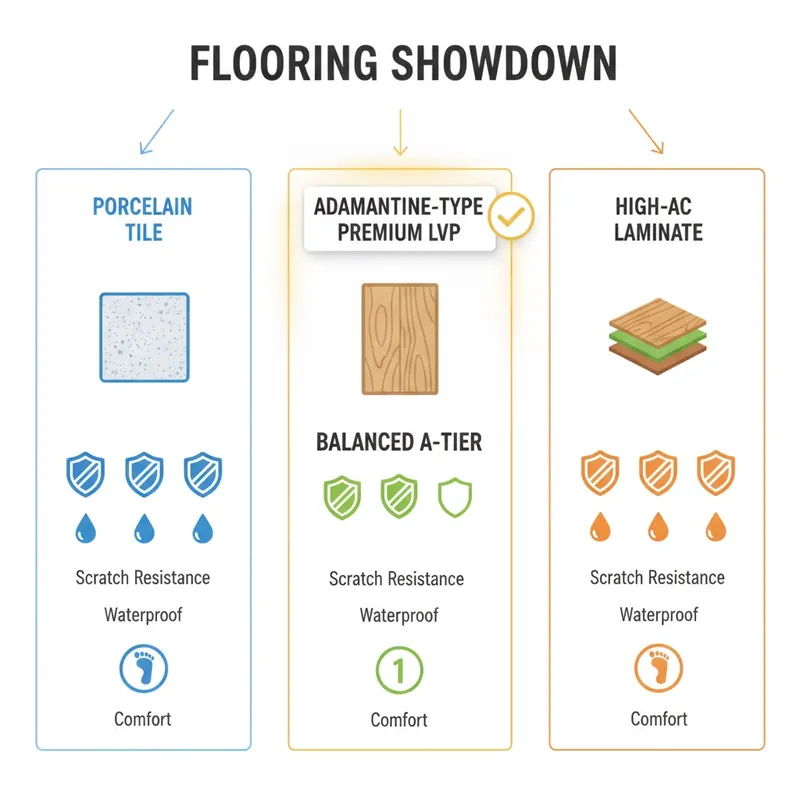
With the technical knowledge in hand, let’s rank the top contenders. We’ve structured this as a tier list to provide a clear, expert recommendation for a busy household. As one interior designer notes, “The perfect floor is a marriage of bomb-proof durability and a style that feels like home. The good news is, you no longer have to choose one over the other.”
S-Tier: The ‘Nearly Indestructible’ Champions
These are the absolute toughest materials available for residential use. They are a long-term investment in a worry-free floor.
- Porcelain Tile: Defined by the TCNA as having a water absorption rate of 0.5% or less, porcelain is incredibly dense, hard, and resistant to almost everything—scratches, stains, and water.[4] It carries a high PEI rating and will look the same in 20 years as it does on day one.
Kryptonite: Its hardness can be unforgiving on dropped glassware (and joints). Grout lines require sealing and cleaning. A severe impact from a very heavy, sharp object can cause a crack. - Polished Concrete: The ultimate utilitarian choice, polished concrete has a compressive strength of over 4,000 PSI and is common in high-end retail stores and galleries for a reason.[6] It is nearly impossible to scratch or dent.
Kryptonite: It’s extremely hard, cold underfoot, and requires specialized installation. It must be properly sealed to resist stains, and hairline cracks can develop over time.
A-Tier: High-Performance for Real Life (Incl. Adamantine Flooring)
This tier represents the sweet spot for most families, offering an exceptional balance of extreme durability, comfort, style, and value.
- Premium Rigid Core LVP/SPC (e.g., Adamantine Flooring): With its thick wear layer, waterproof solid core, and realistic visuals, this is the modern champion for active homes. It handles spills, pet claws, and heavy traffic with ease.
Mini Case Study: The Miller family, with two young kids and a 70-pound golden retriever, replaced their scratched hardwood with a 22-mil rigid core LVP. A year later, they report “zero visible scratches” and love the “effortless cleanup after spills.”
Bonus: Look for products with FloorScore or GREENGUARD certifications, which ensure low VOC emissions for healthier indoor air quality, a critical factor for families.[7]
Kryptonite: While highly scratch-resistant, a deep gouge from dragging a sharp, heavy object (like a metal appliance) can cut through the wear layer. Repairing this often means replacing the entire plank.
B-Tier: Strong & Stylish Contenders
These options are very durable but come with specific vulnerabilities that you need to manage.
- High-AC-Rated Laminate (AC4+): Modern laminate offers one of the toughest surfaces against scratches and fading. Its visuals are incredibly realistic, and it’s a cost-effective choice.
Kryptonite: Its primary enemy is water. While many are now “water-resistant,” standing water can still penetrate seams and cause the fiberboard core to swell and buckle. - Strand-Woven Bamboo & Engineered Hardwood: For those who want real wood, these are the strongest options. Strand-woven bamboo has a Janka hardness rating that surpasses most traditional hardwoods.[5] Engineered hardwood’s layered construction provides more stability than solid wood.
Kryptonite: Despite being harder, they are still susceptible to dents and deep scratches more than S-Tier or A-Tier options. This highlights the difference between scratch resistance (surface hardness) and dent resistance (material density). They are also the least water-resistant options on this list.
The Floor Protection Playbook: Your Proactive Defense System
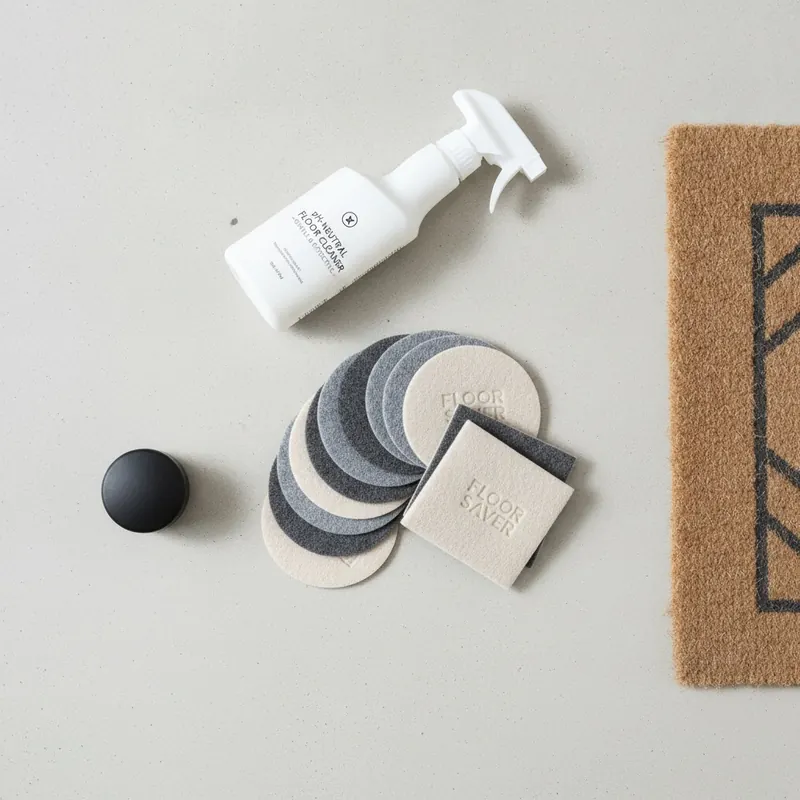
Choosing a durable floor is only half the battle. The other half is implementing a smart, proactive defense system to keep it looking new. This playbook is divided into two parts: passive protection that works 24/7 and active protection that becomes part of your routine.
Passive Protection: Your ‘Set It and Forget It’ Shield
These are the simple, one-time setups that prevent the vast majority of floor damage.
- Use the Right Furniture Pads: This is non-negotiable. Use thick, high-quality felt pads on the legs of every piece of furniture that moves, especially chairs and tables. For rolling office chairs, invest in a proper chair mat or upgrade the casters to soft, rubber-like wheels designed for hard floors. Product testing from sources like the Good Housekeeping Institute can help identify the most durable pads.[9]
- Deploy Strategic Rugs & Mats: A doormat at every entrance can trap up to 80% of abrasive dirt and debris before it’s tracked through your home.[8] Use area rugs in high-traffic “pivot points” like in front of the sofa or in hallways.
- Choose Safe Rug Pads: Warning: Avoid cheap, rubber-backed rugs and pads. The chemicals in the rubber can have a reaction with flooring finishes like vinyl and polyurethane, causing permanent yellowing. Opt for pads made of felt, natural rubber, or a combination.
- Block UV Rays: Direct sunlight can fade and discolor almost any floor over time. Consider applying a clear UV-blocking film to windows in rooms that get intense sun. Manufacturers like 3M offer professional-grade films that are nearly invisible but block 99% of harmful UV rays.[10]
Active Protection: The Maintenance Routine That Prevents Wear
Your cleaning routine is your first line of active defense. The goal is to remove the fine grit and sand that act like sandpaper under every footstep.
- Sweep or Vacuum Regularly: Use a vacuum with a brushless hard floor head or a soft microfiber dust mop daily or every other day in high-traffic areas.
- Clean Smarter, Not Harder: Follow your manufacturer’s cleaning guidelines. For most durable floors like LVP and laminate, this means using a pH-neutral cleaner and a slightly damp mop. Avoid “wet mopping,” which can push dirty water into seams. Professional cleaning associations like the ISSA emphasize using the correct tools and chemicals to prevent long-term damage.[8]
- Tackle Spills Immediately: Even on waterproof floors, it’s best practice to wipe up spills right away to prevent them from becoming sticky messes that attract more dirt.
The Floor ER: A Visual Guide to Fixing Scratches, Scuffs, and Wear
Even with the best defense, accidents happen. The key is knowing how to perform triage. For any significant damage, like deep gouges or widespread water damage, your best bet is to consult a professional certified by an organization like the National Wood Flooring Association (NWFA).[5] But for minor issues, you can often be the first responder.
Visual Diagnostic Chart
- If your damage looks like… A light, white line on a wood or LVP floor (a surface scratch in the finish).
Your fix is… A stain-filled marker or a dedicated scratch repair concealer. - If your damage looks like… A black or colored mark from a shoe or furniture (a scuff).
Your fix is… A tennis ball or a microfiber cloth with a drop of neutral cleaner. For stubborn scuffs, a melamine foam eraser (used gently). - If your damage looks like… A small, shallow dent or gouge in wood or laminate.
Your fix is… A wax filler pencil or a soft wax repair kit matched to your floor’s color.
Fixing Pet Claw Marks: A Special Guide for Pet Owners
The tiny clicks of your dog’s nails on the floor can be a source of constant anxiety. While durable floors like Adamantine are highly resistant, a large, active dog can still cause micro-scratches over time.
The ultimate solution isn’t on the floor—it’s on your pet. “Proper nail care is the single most effective way to protect your floors,” says a professional dog groomer. “When you can hear the nails clicking on the floor, they are too long.”
The American Kennel Club (AKC) recommends regular nail trims, ensuring the nail doesn’t touch the ground when the dog is standing.[11] If you’re uncomfortable doing it yourself, a groomer or vet can do it quickly and safely. This preventative step is more effective than any floor finish.
Repairing Scratches, Scuffs, and Dents by Floor Type
Here are quick, step-by-step instructions for common DIY repairs.
Repair Kit Checklist:
- LVP / Laminate: Melamine foam eraser, mineral spirits, color-matched wax repair kit.
- Hardwood / Engineered: Stain-matching touch-up markers, soft wax filler sticks, fine-grit sandpaper (for deeper repairs).
- Tile: Grout pen, epoxy repair kit for chips.
How to Fix a Scuff on LVP/Laminate:
- First, try rubbing the scuff firmly with a dry microfiber cloth.
- If that fails, use a tennis ball to “erase” the mark.
- For stubborn rubber or paint scuffs, apply a small amount of mineral spirits or rubbing alcohol to a cloth and gently wipe. Clean the area with water and a neutral cleaner afterward.
How to Fix a Light Scratch on Hardwood:
- Clean the area thoroughly.
- Find a stain-matching repair marker from a brand like Minwax or Varathane.[12]
- Apply the marker directly into the scratch, feathering the edges.
- Immediately wipe away any excess with a clean cloth. The goal is to color the exposed wood, not the surrounding finish.
Conclusion: Your Playbook for a Worry-Free Floor
The quest for an “indestructible” floor can feel overwhelming, but it doesn’t have to be. By shifting your mindset from finding a magical product to implementing a complete strategy, you can achieve a floor that stands up to the beautiful chaos of real life.
The Indestructible Floor Playbook is built on three core principles:
- Choose Wisely: Look beyond style and marketing. Use objective durability ratings like wear layer thickness, AC ratings, and PEI ratings to select a floor that is genuinely engineered for your lifestyle.
- Defend Proactively: The best repair is the one you never have to make. A simple system of passive and active protection—using the right pads, mats, and cleaning routines—will prevent 99% of potential damage.
- Repair Effectively: When accidents inevitably happen, don’t panic. Identify the type of damage and use the right tools and techniques for a quick, effective DIY fix.
While no floor is truly indestructible, a premium multi-layer flooring like Adamantine, combined with the knowledge and strategies in this playbook, gets you incredibly close. You can invest with confidence, knowing you have the tools not just to choose the right floor, but to keep it beautiful for years to come.
Do you have a durable flooring success story or a question we didn’t answer? Share your experience in the comments below to help the community!
This article may contain affiliate links. All repair advice should be attempted with caution; for significant damage, consult a professional flooring contractor.
References & Authoritative Sources
- Adamantine Flooring. (n.d.). Technical Specifications & Warranty Information. Retrieved from the official manufacturer’s website.
- Floor Covering Weekly. (n.d.). Industry Trends: The Rise of Rigid Core Flooring. Retrieved from a representative industry publication.
- World Floor Covering Association (WFCA). (n.d.). Consumer Flooring Guide. Retrieved from wfca.org.
- Tile Council of North America (TCNA). (n.d.). Understanding PEI Ratings for Ceramic Tile. Retrieved from tcnatile.com.
- National Wood Flooring Association (NWFA). (n.d.). Janka Hardness Scale & Repair Guidelines. Retrieved from nwfa.org.
- The Concrete Network. (n.d.). Polished Concrete Floors: A Buyer’s Guide. Retrieved from concretenetwork.com.
- UL Solutions. (n.d.). GREENGUARD Certification Program. Retrieved from ul.com/gg.
- International Sanitary Supply Association (ISSA). (n.d.). The Value of Clean: The Importance of Entrance Matting. Retrieved from issa.com.
- Good Housekeeping Institute. (n.d.). Product Testing & Reviews. Retrieved from goodhousekeeping.com.
- 3M Company. (n.d.). 3M™ Sun Control Window Films. Retrieved from 3m.com.
- American Kennel Club (AKC). (n.d.). How to Trim Your Dog’s Nails Safely. Retrieved from akc.org.
- Minwax Company. (n.d.). Wood Finishing and Repair Products. Retrieved from minwax.com.
- ASTM International. (n.d.). ASTM D4060 – Standard Test Method for Abrasion Resistance of Organic Coatings by the Taber Abraser. Retrieved from astm.org.