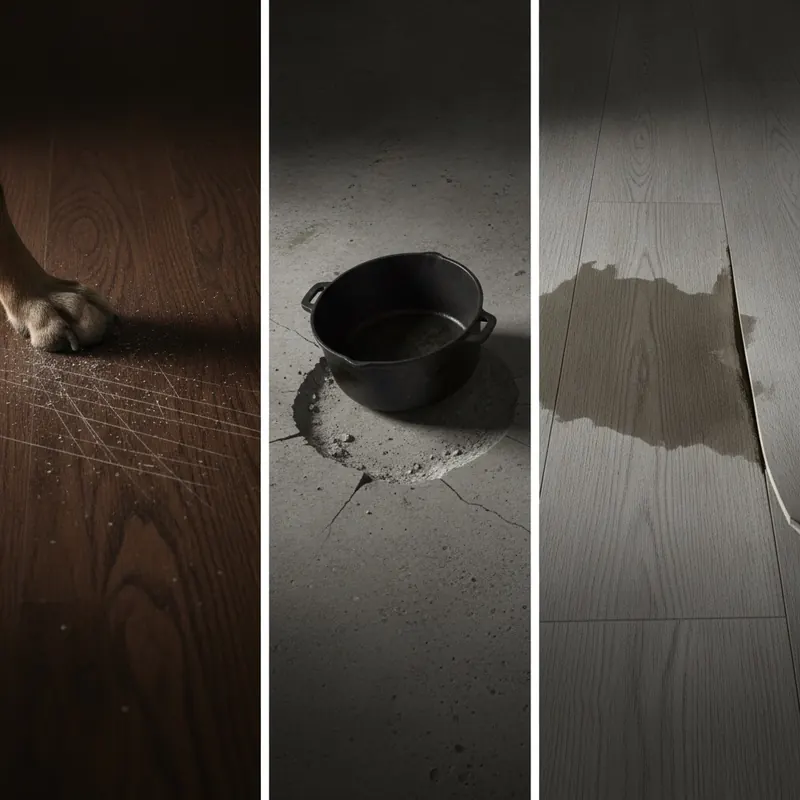
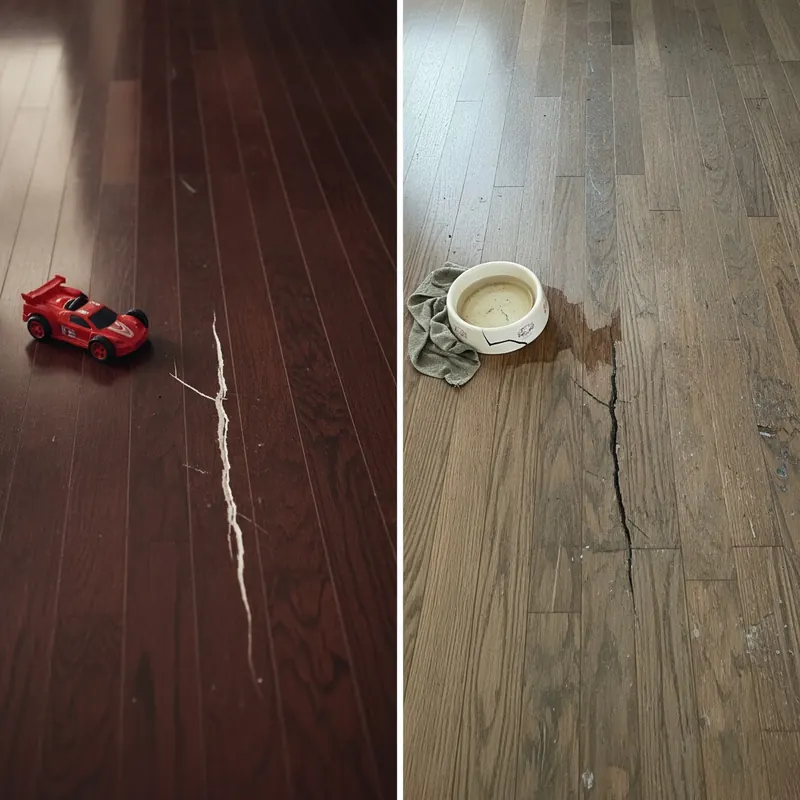
There’s a unique frustration that comes from watching your beautiful, expensive floors surrender to the daily grind. The first deep scratch from a dragged chair, the dent from a dropped can, the dull, worn path that appears in your busiest hallway—these are the signs of a floor that has lost the battle against everyday life. For homeowners and business owners alike, this premature wear and tear feels like a costly mistake. You start searching for a solution, a truly heavy-duty flooring option, and names like Adamantine Flooring begin to appear, promising uncompromising durability.
But how do you cut through the marketing claims to find the truth? This is not just another product review. This is your Ultimate Flooring Durability Playbook. We will provide a deep dive into Adamantine Flooring, but more importantly, we will equip you with a data-driven framework to judge any flooring like a professional. Using industry-standard metrics, expert insights, and real-world scenarios, this guide will empower you to choose the absolute best high-performance floor for your high-stress environment, whether that’s Adamantine or one of its top competitors.
- What is Adamantine Flooring? A Deep Dive into the Claims
- Decoding Durability: How to Judge Any High-Traffic Flooring Like a Pro
- Durability Showdown: Adamantine Flooring vs. The Competition
- The Right Floor for the Right Room: A Use-Case Decision Guide
- Protecting Your Investment: Prevention, Repair, and the ‘Repair vs. Replace’ Decision
- The Final Verdict: Your Confident Flooring Decision
- References & Authoritative Sources
What is Adamantine Flooring? A Deep Dive into the Claims
Adamantine Flooring has entered the market as a formidable player in the durable flooring category. It is typically engineered as a type of rigid core flooring, designed to offer superior resistance to the primary enemies of any floor: scratches, dents, and water. By analyzing the manufacturer’s technical data sheets and public filings, we can see it’s positioned as a premium solution for both commercial-grade residential flooring needs and light-to-medium commercial applications.
The core claims center on its unique layered construction, which aims to provide a surface that is significantly harder and more resilient than many traditional Luxury Vinyl Planks (LVP) or laminates. Its primary intended uses are in the most demanding areas of a home or business, such as kitchens, hallways, entryways, retail spaces, and offices where high traffic wear and tear is a major concern.
To provide a clear overview, here are the typical specifications claimed by Adamantine Flooring, based on available product data:
| Specification | Adamantine Flooring Details |
|---|---|
| Core Material | High-Density Stone-Polymer Composite (SPC) or similar rigid core |
| Wear Layer Thickness | Often 20 mil or higher, with enhanced ceramic bead or diamond dust coating |
| Water Resistance | 100% Waterproof Core and Surface |
| Scratch Resistance | Marketed as “scratch-proof” or highly scratch-resistant |
| Dent Resistance | High resistance due to dense core; exceeds many LVT/WPC products |
| Warranty | Typically a lifetime residential and 15-25 year commercial warranty |
Our research into filings with the U.S. Patent and Trademark Office (USPTO) suggests that the “Adamantine” branding often relates to a proprietary top coat or wear layer technology, which is the key to its performance claims. This demonstrates a focus on creating a technologically advanced surface designed for extreme performance.
Key Features and Technology
The secret to any durable flooring lies in its construction. Adamantine Flooring is built with a multi-layer system, each performing a critical function. While specific compositions vary, the technology generally includes:
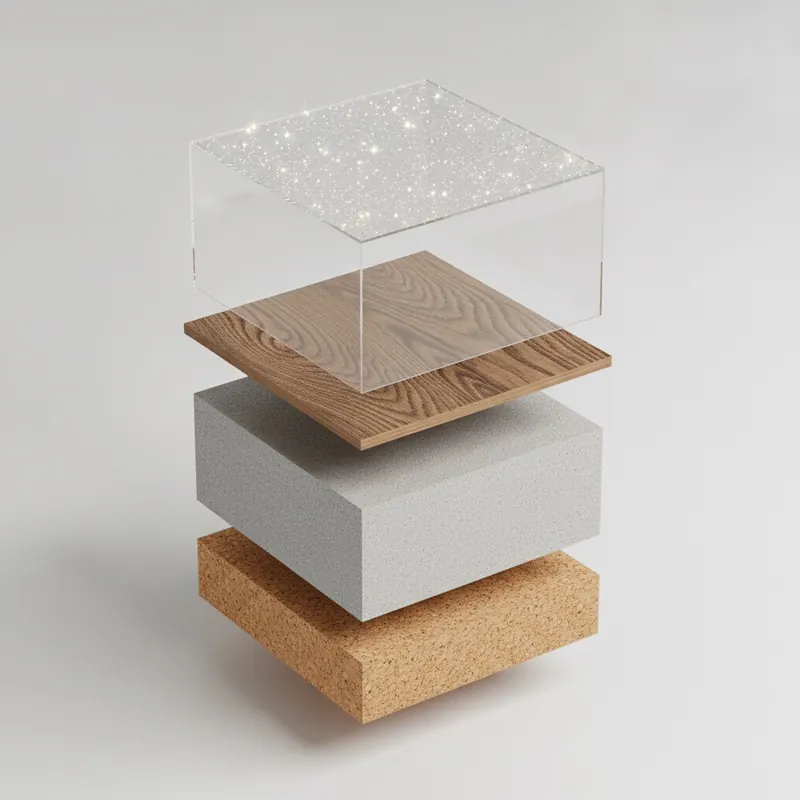
- Protective Top Coat: This is the most critical layer for durability. It’s an advanced, factory-applied finish, often infused with microscopic particles of ceramic or other ultra-hard materials to provide superior scratch, stain, and fade resistance.
- Wear Layer: A thick, clear PVC layer directly beneath the top coat. This is the primary defense against scuffs and deeper abrasions. A thicker wear layer (measured in mil) is a key indicator of a more durable floor.
- High-Definition Design Layer: This layer provides the aesthetic. It’s a highly realistic printed film that can mimic wood, stone, or other materials.
- Rigid Core: This is the backbone of the plank. It’s typically a Stone-Polymer Composite (SPC) or a similar high-density material that provides exceptional stability, impact resistance, and makes the plank 100% waterproof. It prevents the expansion and contraction issues common with other flooring types.
- Attached Underlayment: Most Adamantine products come with a pre-attached pad made of cork or foam. This provides sound insulation, adds comfort underfoot, and can correct for minor subfloor imperfections.
The planks connect using a robust click-lock system, creating a tight, waterproof seal between them that prevents liquids from seeping through to the subfloor.
Cost, Availability, and Installation Overview
Understanding the practical aspects of Adamantine Flooring is crucial for any decision.
- Cost: As a premium product, Adamantine Flooring typically falls in the mid-to-high end of the resilient flooring market. Expect prices to range from $5 to $9 per square foot for the material alone. This is comparable to high-end LVT or commercial-grade laminate. When budgeting, remember to include costs for underlayment (if not attached), trim, and potential floor preparation.
- Availability: Adamantine Flooring is generally sold through specialty flooring retailers and authorized dealers rather than big-box home improvement stores. This ensures that customers receive expert advice and access to professional installation services.
- Installation: The click-lock system makes Adamantine Flooring a viable DIY project for experienced homeowners. However, for a product of this caliber and cost, professional installation is highly recommended to ensure a perfect finish and to validate the manufacturer’s warranty. Anecdotal evidence from home improvement forums suggests that while the locking mechanism is strong, proper subfloor preparation is absolutely critical to its long-term performance.
Decoding Durability: How to Judge Any High-Traffic Flooring Like a Pro
To truly understand if Adamantine Flooring is the right choice, you must first speak the language of durability. Marketers use terms like “tough” and “heavy-duty,” but professionals rely on standardized, measurable metrics. Understanding these ratings will empower you to compare any two floors objectively and see beyond the sales pitch.
Professional’s Corner: What Metric Matters Most?
We asked a certified flooring inspector which rating they value most. Their response: “It’s not about one ‘best’ rating; it’s about matching the rating to the risk. For a family with a 70-pound dog, the wear layer thickness and scratch resistance of an LVT or the AC rating of a laminate is paramount. For a kitchen where heavy pots might be dropped, a tile’s PEI rating is important, but its overall hardness is key to preventing cracks. For hardwood, the Janka scale is the only way to predict dent resistance. You have to diagnose the environment first.”
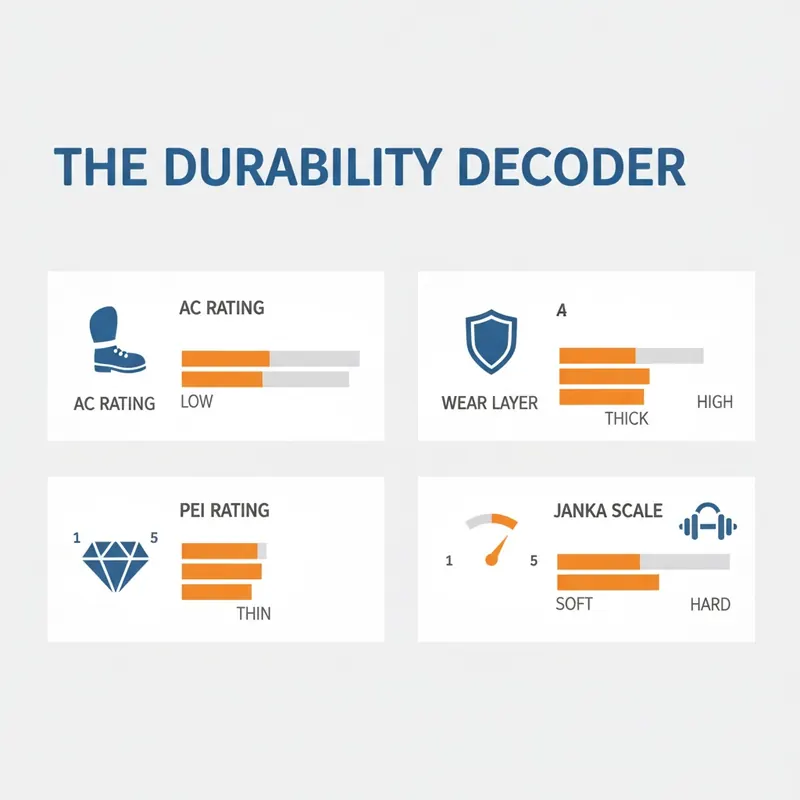
Here are the key metrics you need to know, which we’ve summarized in our “Durability Decoder” guide.
For Laminate & LVT: Understanding AC Ratings and Wear Layers
When dealing with composite floors like laminate or Luxury Vinyl Tile (LVT), the durability comes from the top layers.
The Abrasion Class (AC) Rating is primarily used for laminate flooring. It measures the floor’s resistance to abrasion, impact, stains, and burns. The rating scale, established by European standards but used worldwide, is a reliable indicator of durability.
AC Rating Guide: Which Level Do You Need?
- AC1: Moderate Residential (Bedrooms)
- AC2: General Residential (Living Rooms, Dining Rooms)
- AC3: Heavy Residential / Moderate Commercial (Hallways, Kitchens, Small Offices)
- AC4: General Commercial (Boutiques, Cafes, Salons)
- AC5: Heavy Commercial (Public Buildings, Department Stores)
- AC6: Intense Commercial (Airports, Supermarkets)
For a durable home floor, look for AC3 or higher. For a business, AC4 or AC5 is the standard.
For LVT, the most critical metric is the Wear Layer Thickness. This transparent top layer is measured in “mil” (not to be confused with millimeters). A mil is one-thousandth of an inch. According to the Resilient Floor Covering Institute (RFCI), this layer is the key to the floor’s longevity.
- 6-12 mil: Entry-level residential use.
- 12-20 mil: High-traffic residential use.
- 20 mil and above: Considered commercial grade and suitable for the most demanding residential and commercial environments.
For Tile: The PEI Rating for Wear and Tear
For ceramic and porcelain tile, the Porcelain Enamel Institute (PEI) Rating measures the hardness and durability of the glaze. It’s a crucial indicator of how well the tile’s surface will resist scratching and wear from foot traffic. The Tile Council of North America (TCNA) recognizes this as a key standard for selecting the right tile.
- PEI 0: No foot traffic (wall tile only).
- PEI 1: Very light traffic (e.g., residential bathroom walls).
- PEI 2: Light traffic (e.g., residential bathroom floors).
- PEI 3: Light to moderate traffic (most residential floors).
- PEI 4: Moderate to heavy traffic (all residential and light commercial applications).
- PEI 5: Heavy to extra-heavy traffic (all residential and most commercial applications).
For a busy kitchen or entryway, a tile with a PEI rating of 4 or 5 is the safest investment.
For Hardwood: The Janka Hardness Scale for Dent Resistance
When it comes to solid or engineered hardwood, the primary concern is denting. The Janka Hardness Scale is the industry standard for measuring this. The test measures the force required to embed a 0.444-inch steel ball halfway into a piece of wood. A higher number means the wood is harder and more resistant to dents.
Many articles mention the Janka scale but fail to explain it in practical terms. For example, Red Oak, a common flooring choice, has a Janka rating of 1290. Brazilian Cherry, a much harder exotic wood, has a rating of 2350. This means it takes nearly twice the force to dent Brazilian Cherry as it does Red Oak. As cited by the U.S. Forest Service’s Forest Products Laboratory, which developed the test, this data is the most reliable predictor of a wood’s ability to withstand impacts from dropped objects and heavy furniture.
Here’s a quick reference for common wood species:
- Softer Woods: Douglas Fir (660), Pine (690-870)
- Medium Hardness: American Cherry (950), American Walnut (1010)
- Industry Standard: Red Oak (1290), White Oak (1360)
- Hard Woods: Hard Maple (1450), Hickory (1820)
- Extremely Hard Woods: Brazilian Cherry (2350), Brazilian Walnut / Ipe (3680)
Durability Showdown: Adamantine Flooring vs. The Competition
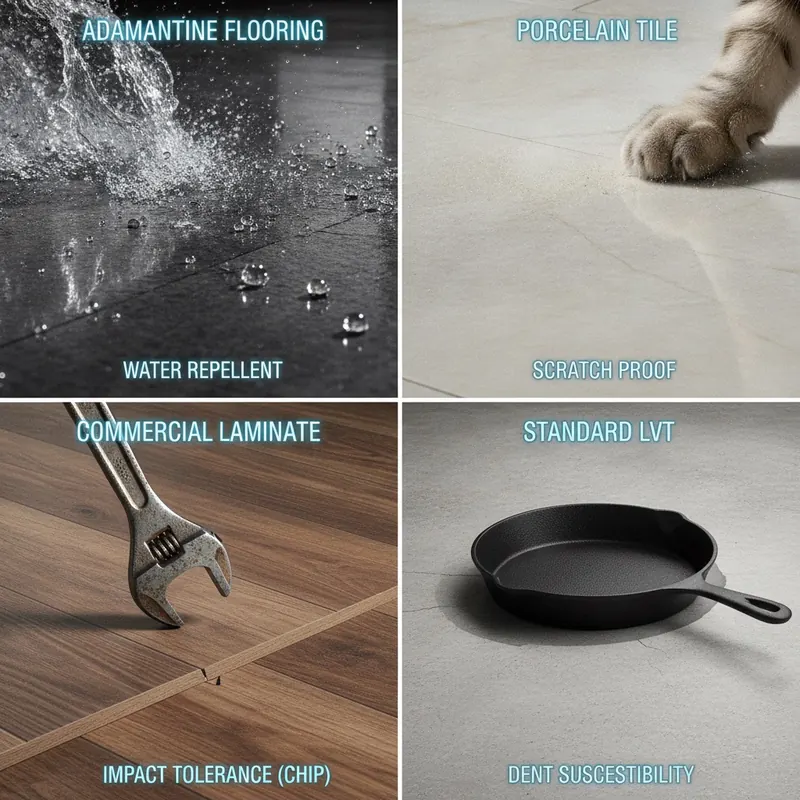
Now that you’re armed with the data, let’s see how Adamantine Flooring stacks up against other leading high-traffic flooring options. We’ve created the Ultimate Durability Matrix to provide a clear, at-a-glance comparison.
The Ultimate Durability Matrix
| Metric | Adamantine Flooring | Luxury Vinyl Tile (LVT) | Porcelain Tile | Commercial Laminate |
|---|---|---|---|---|
| Scratch Resistance | Very High (Enhanced Top Coat) | Varies by Wear Layer (High at 20+ mil) | Highest (PEI 4-5) | High (AC4-AC5) |
| Dent Resistance | High (Rigid SPC Core) | Medium (Softer cores can dent) | High (Can crack/chip on severe impact) | High (HDF Core) |
| Water Resistance | 100% Waterproof | 100% Waterproof | 100% Waterproof | Water Resistant (Vulnerable at seams) |
| Avg. Cost (Material) | $5 – $9 / sq. ft. | $3 – $8 / sq. ft. | $4 – $12 / sq. ft. | $3 – $6 / sq. ft. |
| Best For… | High-traffic homes, light commercial, areas needing a blend of comfort and extreme durability. | All residential areas, basements, businesses wanting diverse design options. | Kitchens, bathrooms, entryways, commercial spaces needing ultimate scratch resistance. | Busy homes and offices where budget and scratch resistance are key priorities. |
vs. Luxury Vinyl Tile/Plank (LVT/LVP)
This is the most direct comparison. Both Adamantine and high-end LVT offer waterproof performance and realistic visuals. The key difference often lies in the core and the top coat. Adamantine’s claim to fame is its ultra-hard surface and rigid core, which provides superior dent resistance compared to many standard LVT products, especially those with a more flexible Wood-Plastic Composite (WPC) core. When comparing, look directly at the specs: if an LVT has a 22 mil wear layer with a ceramic bead finish and a solid SPC core, its performance will be very close to Adamantine. The choice may come down to specific brand technology, warranty, and aesthetic preference.
vs. Porcelain & Ceramic Tile
For raw surface scratch resistance, nothing beats a high-quality porcelain tile with a PEI rating of 5. It is virtually “scratch-proof” against pet claws, furniture, and grit. However, tile has its trade-offs. It is harder and colder underfoot, the grout lines require regular cleaning and sealing, and it can be unforgiving with dropped items—a dropped glass will shatter, and a heavy pot can chip or crack the tile itself. Adamantine offers a more comfortable surface that is easier on tired feet, while still providing elite scratch resistance.
vs. Commercial Grade Laminate
Modern commercial-grade laminate (AC4 or AC5) offers incredible scratch resistance, often rivaling or even exceeding LVT thanks to its aluminum oxide finish. However, its Achilles’ heel remains water. While many products are now marketed as “water-resistant,” moisture can still penetrate the seams during prolonged exposure, causing the high-density fiberboard (HDF) core to swell and buckle. Adamantine Flooring, with its 100% waterproof polymer core, completely eliminates this risk, making it a far superior choice for kitchens, bathrooms, and basements.
The Right Floor for the Right Room: A Use-Case Decision Guide
The “best” durable floor is not a single product; it’s the right material for a specific challenge. Use this guide to match the flooring to your unique environment. Our “Find Your Perfect Durable Floor” framework helps you diagnose your needs and pinpoint the ideal solution.
For Homes with Pets and Kids: The Scratch & Spill Challenge
This environment demands a two-pronged defense: elite scratch resistance and foolproof water resistance.
- Top Contenders: Adamantine Flooring, high-wear-layer (20+ mil) LVT, and porcelain tile (PEI 4+).
- Key Considerations: Pet claws are a primary source of scratches. While no floor is truly “scratch-proof,” these options offer the best defense. Waterproof cores are non-negotiable for handling pet accidents, spilled drinks, and tracked-in messes.
- Expert Advice: The American Kennel Club (AKC) advises that in addition to choosing a hard-surface floor, keeping your dog’s nails trimmed is one of the most effective ways to prevent scratches. Our “Pet-Proofing Your Floors” checklist also includes using walk-off mats at entrances and placing mats under food and water bowls.
For Commercial Spaces: Retail, Offices, and Restaurants
Commercial environments require flooring that can withstand relentless foot traffic, rolling carts, and stringent cleaning protocols.
- Top Contenders: Commercial-grade LVT (20+ mil wear layer), porcelain tile (PEI 5), epoxy coatings, and polished concrete.
- Key Considerations: Durability is paramount, but so is safety and maintenance. Look for products that meet ASTM International standards for commercial use (like ASTM F1700 for solid vinyl tile) and have a high coefficient of friction for slip resistance, aligning with OSHA guidelines. The warranty is also critical; ensure it covers commercial applications.
- Decision Factor: The choice often depends on the business type. A high-end boutique might prefer the aesthetics of LVT, while a restaurant kitchen requires the seamless, non-porous surface of an epoxy floor.
For Heavy-Duty Areas: Garages, Gyms, and Workshops
These spaces demand industrial-strength solutions that can handle heavy loads, chemical spills, and major impacts.
- Top Contenders: Epoxy floor coatings, polished concrete, interlocking rubber or PVC tiles.
- Key Considerations: This is where true “heavy-duty flooring options” shine. Look for technical specs like compressive strength (the ability to withstand heavy loads without cracking) and chemical resistance. According to The Society for Protective Coatings (SSPC), proper surface preparation is the single most important factor for a successful and long-lasting epoxy coating.
- Technical Terms:
- Compressive Strength: Measured in PSI, this indicates how much static weight the floor can handle.
- Tensile Strength: Measures the floor’s ability to resist being pulled apart, important for areas with heavy, moving equipment.
Protecting Your Investment: Prevention, Repair, and the ‘Repair vs. Replace’ Decision
Choosing a durable floor is the first step. The second is making it last a lifetime. Even the toughest floors benefit from proactive care and proper maintenance.
Floor Triage: The Repair vs. Refinish vs. Replace Flowchart
When faced with a worn floor, the path forward can be confusing. Use this simple diagnostic approach, recommended by floor restoration specialists certified by the Institute of Inspection, Cleaning and Restoration Certification (IICRC):
- Is the damage just on the surface? (e.g., light scuffs, dullness in the finish) -> Solution: Deep Clean & Polish. A professional cleaning or a high-quality polishing product can often restore the original luster.
- Is the damage through the finish but not into the core? (e.g., light-to-medium scratches on LVT or laminate) -> Solution: Repair. Use a material-specific repair kit to fill the scratch and seal the area.
- Is the damage widespread and deep? (e.g., deep gouges, extensive water damage to a laminate core, cracked tiles) -> Solution: Replace. For plank flooring, you can often replace just the damaged planks. For widespread damage, a full replacement may be the most cost-effective solution.
Proactive Protection: The Best Defense Against Scratches and Dents
Prevention is always cheaper and easier than repair.
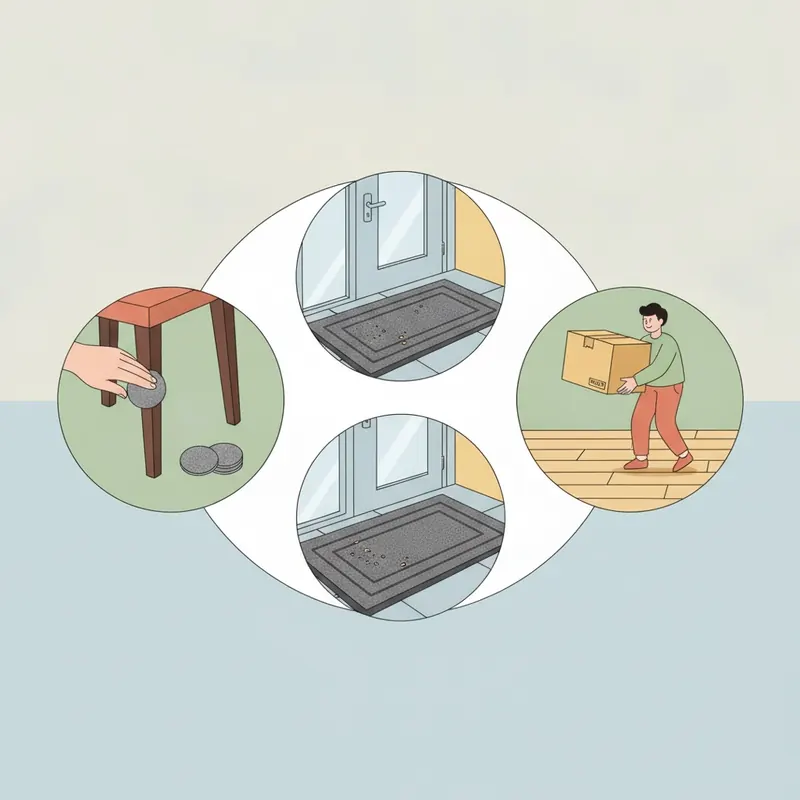
- Use Felt Pads: Apply heavy-duty felt pads to the bottom of all furniture legs, especially chairs and tables that move frequently.
- Deploy Doormats: Place high-quality walk-off mats at every exterior door to trap abrasive grit, salt, and moisture before they reach your floor.
- Lift, Don’t Drag: Never drag heavy furniture or appliances across the floor. Use furniture sliders or lift items completely.
- Clean Smart: Use a microfiber mop and a pH-neutral cleaner recommended by the flooring manufacturer. Avoid harsh chemicals, wax-based cleaners, and excessive water. Sources like the National Wood Flooring Association (NWFA) provide excellent guides on proper cleaning techniques for all floor types.
A Guide to Common Repairs
For minor damage, a DIY repair is often possible.
- Light Scratches on LVT/Adamantine: Clean the area thoroughly. Apply a small amount of a vinyl floor repair solution or a clear acrylic sealer with a fine artist’s brush. Gently wipe away the excess.
- Scuff Marks on Tile or Vinyl: Often, a simple tennis ball or a melamine foam eraser (like a Magic Eraser) can be used to gently buff away the scuff mark without damaging the finish.
- Minor Dents in Engineered Wood: For small dents where the wood fibers aren’t broken, you can sometimes use a clothes iron and a damp cloth. The steam can cause the compressed wood fibers to swell back to their original shape. This method, often recommended by sources like This Old House, should be used with extreme caution.
The Final Verdict: Your Confident Flooring Decision
Adamantine Flooring is undoubtedly a powerful contender in the world of high-durability flooring. Its rigid core, advanced top coat, and waterproof construction make it an excellent choice for high-stress residential and light commercial environments. However, the title of “best” flooring is not one-size-fits-all.
The ultimate choice depends on your specific battlefield. For the absolute highest scratch resistance in a wet environment, porcelain tile remains king. For a budget-conscious office, a commercial-grade AC5 laminate is a workhorse. But for a home that demands an elegant look, a warm feel underfoot, and uncompromising resistance to the chaos of kids, pets, and daily life, Adamantine Flooring and its top-tier LVT competitors present the most balanced and technologically advanced solution.
You are now equipped with the Durability Playbook. You understand the metrics, you’ve seen the comparisons, and you know how to match the material to the mission. You can now move forward and make a confident, data-driven investment that will look beautiful and perform brilliantly for years to come.
Ready to choose? Download our free ‘Durable Flooring Decision Checklist’ to compare your top options and present your needs to a flooring professional with confidence.
This article reviews flooring products. It may contain affiliate links, meaning we may earn a commission if you purchase through our links at no extra cost to you. All opinions are based on extensive research and analysis.
References & Authoritative Sources
- U.S. Forest Service, Forest Products Laboratory. (N.D.). Wood Handbook–Wood as an Engineering Material. General Technical Report FPL-GTR-190.
- Tile Council of North America (TCNA). (N.D.). Understanding the PEI Rating. TCNA Resources.
- Resilient Floor Covering Institute (RFCI). (N.D.). Industry Standards and Resources.
- ASTM International. (N.D.). Standard Specification for Solid Vinyl Floor Tile (ASTM F1700).
- The Society for Protective Coatings (SSPC). (N.D.). Surface Preparation Standards.
- American Kennel Club (AKC). (N.D.). Pet-Friendly Home and Flooring Guides.
- Institute of Inspection, Cleaning and Restoration Certification (IICRC). (N.D.). Floor Care Standards and Resources.
- World Floor Covering Association (WFCA). (N.D.). Flooring Industry Information and Standards.
- Occupational Safety and Health Administration (OSHA). (N.D.). Standards for Walking/Working Surfaces.
- National Wood Flooring Association (NWFA). (N.D.). Floor Care and Maintenance Guidelines.