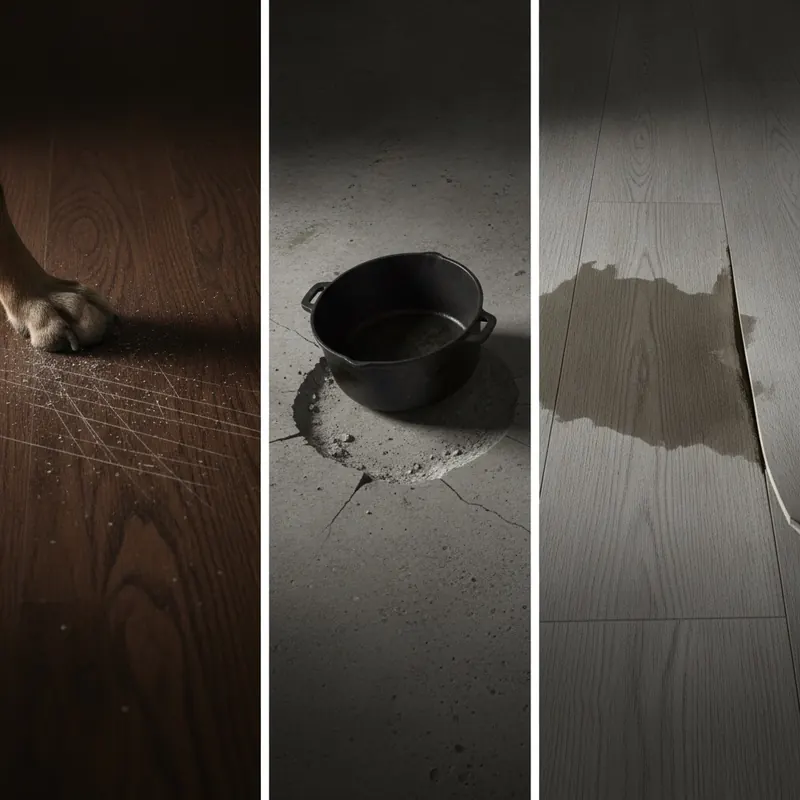
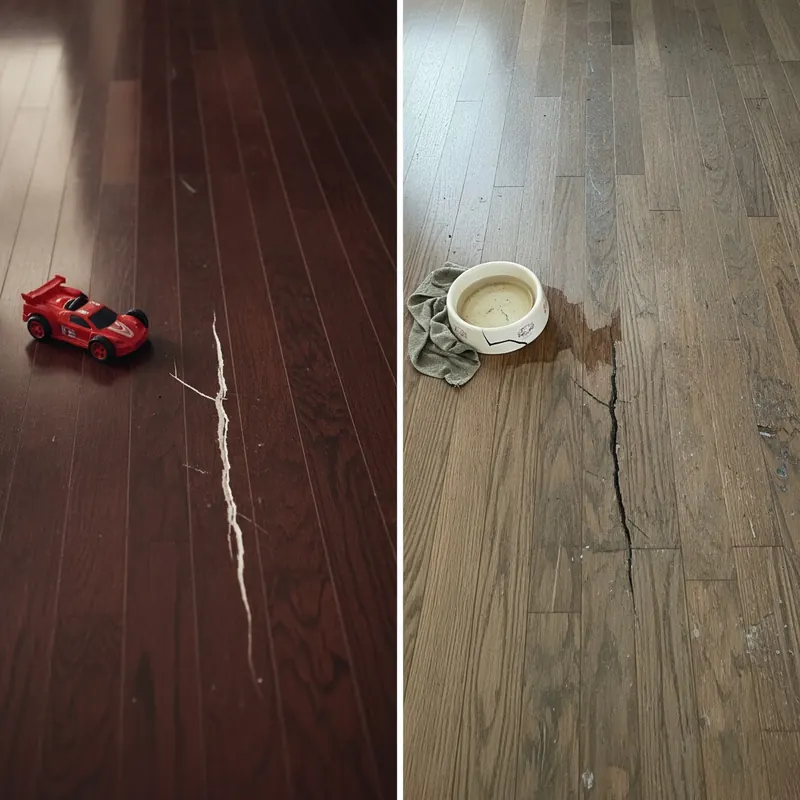
You’ve heard the term “Adamantine flooring” whispered in showrooms or seen it pop up in your search for the most durable floor imaginable. It sounds indestructible, almost mythical. But what is it, really? If you’re tired of marketing hype and just want to find a floor that can withstand the relentless daily wear from kids, pets, and customers, you’ve come to the right place.
The truth is, “Adamantine” isn’t a type of flooring material. It’s a high-performance protective finish. This guide will demystify this technology and, more importantly, empower you with the knowledge to look beyond brand names. We’ll teach you how to decode the science of durability, compare the top long-lasting flooring materials on the market, and choose a floor that is genuinely engineered for structural integrity and a lifetime of performance.
- What is Adamantine Flooring? Demystifying the Hype
- The Science of Durability: How to Decode Flooring Specs Like a Pro
- The Ultimate Comparison: Top High-Durability Flooring Options
- Solving Common Flooring Problems: From High Traffic to Pet Scratches
- Beyond the Material: The Keys to a Long-Lasting Floor
- Your Floor, Your Choice, Your Confidence
- References & Authoritative Sources
What is Adamantine Flooring? Demystifying the Hype
Let’s cut straight to the core of the confusion. When you search for Adamantine flooring, you’re actually looking for products that feature a specific brand of protective coating. Understanding this distinction is the first step to becoming an informed buyer and avoiding costly mistakes.
It’s Not a Floor, It’s a Finish: The Adamantine™ Protection Technology
Adamantine™ Protection is a trademarked, high-performance urethane finish applied as the final topcoat on certain flooring products, such as Luxury Solid Polymer Core (LSPC) Hybrid or some advanced laminates.[1] Think of it not as the structure of the floor, but as its invisible, high-tech shield.
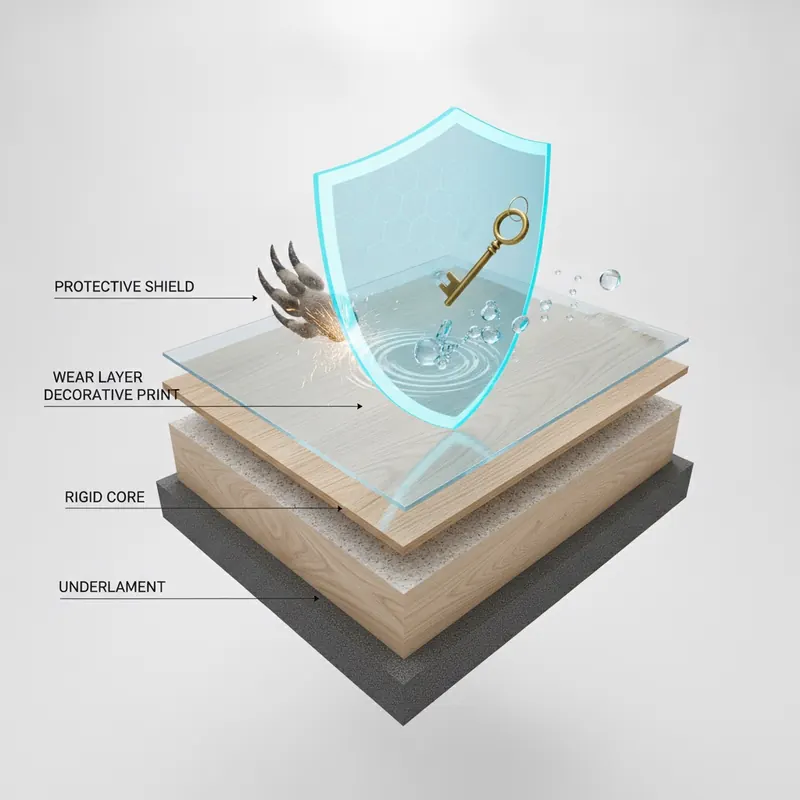
This finish is engineered to be exceptionally tough, often enhanced with microscopic particles of ultra-hard materials like ceramic beads or aluminum oxide suspended within the urethane. This creates a surface that is highly resistant to the daily assaults that degrade lesser floors. You’ll find this technology featured on specific product lines, such as the Ambiance Collection by TAS Flooring, which is the primary manufacturer and authority on the Adamantine Finish™.[1]
Key Benefits: How it Compares to Other Protective Layers
The primary benefit of a specialized finish like Adamantine™ is its superior resistance to scratches, stains, and general wear and tear. While most quality vinyl or laminate floors have a protective topcoat, advanced finishes are engineered to a higher standard. The dimensional stability of planks featuring this technology is often so high that they can be installed in vast rooms—up to 66’ x 66’—without needing transition strips, a testament to the integrity of the entire flooring system.[1]
To put it in perspective, here’s how it stacks up against other common protective layers:
The Science of Durability: How to Decode Flooring Specs Like a Pro
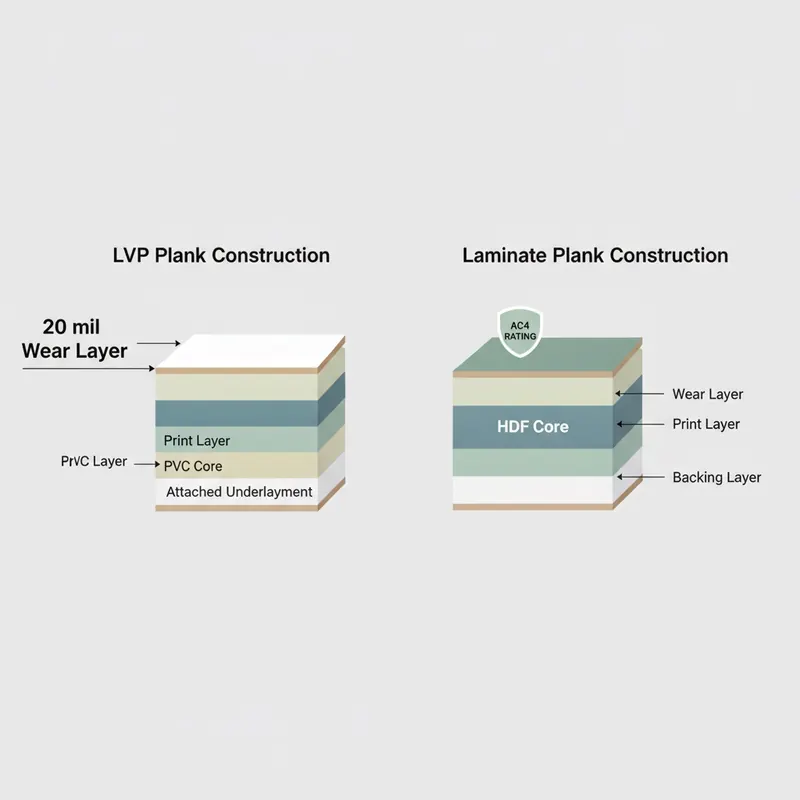
Beyond any single brand name, true durability is defined by a set of technical specifications. Understanding these metrics is the most powerful tool you have. It allows you to objectively compare products and choose a floor based on performance data, not just marketing claims.
The Wear Layer: Your Floor’s First Line of Defense (LVP & Laminate)
For Luxury Vinyl Plank (LVP) and laminate flooring, the wear layer is the transparent top surface that takes all the abuse. Its thickness is the single most important indicator of its durability. This thickness is measured in mils (one-thousandth of an inch).
- 12 mil: Good for moderate residential traffic.
- 20 mil+: Excellent for high-traffic homes (with kids and pets) and light commercial use.
- 28 mil+: Ideal for heavy commercial environments.
According to flooring experts at Go Flooring, a wear layer of 20 to 30 mils is the sweet spot for homeowners seeking the best long-term performance and scratch resistance.[3] Don’t settle for less in your busy areas.
AC Rating (Abrasion Class) for Laminate: From Residential to Heavy Commercial
Laminate flooring uses a different system called the AC Rating to classify its durability against abrasion, impact, and stains. This scale is a reliable, standardized measure of how a laminate floor will perform.
- AC1: Light residential use (e.g., bedrooms).
- AC2: General residential use (e.g., living rooms).
- AC3: Heavy residential use and light commercial use (e.g., busy homes, small offices).
- AC4: General commercial use (e.g., boutiques, cafes).
- AC5: Heavy commercial use (e.g., public buildings, department stores).
For most homes, an AC3 or AC4 rated laminate offers fantastic scratch resistance. Commercial-grade laminates often feature a High-Density Fiberboard (HDF) core, which provides superior strength and moisture resistance compared to standard Medium-Density Fiberboard (MDF).[4]
Core Matters: Understanding SPC, WPC, HDF, and Plywood Cores
The core is the heart of a flooring plank, providing stability and impact resistance.
- SPC (Stone Plastic Composite): A rigid core made from a mixture of limestone powder and stabilizers. It’s incredibly dense, making it highly resistant to dents and impacts. Premium SPC cores can be nearly 70% limestone.
- WPC (Wood Plastic Composite): A core that incorporates wood pulp and plasticizers, often with an aerated structure. This makes it feel softer and warmer underfoot than SPC but slightly less dent-resistant.
- HDF (High-Density Fiberboard): The standard for quality laminate flooring. It’s a wood-fiber product compressed under extreme heat and pressure, offering excellent stability and impact resistance.
- Plywood: The multi-layered core used in engineered hardwood. Its cross-laminated construction provides stability and resistance to humidity changes.
For Tile & Wood: PEI Ratings and Janka Hardness
Tile and hardwood have their own durability metrics that are crucial to understand.
- PEI Rating (Porcelain Enamel Institute): This rating, explained by trusted sources like Bob Vila, measures a tile’s resistance to abrasion and wear on a scale from 1 to 5.[5] For residential floors, look for a PEI rating of Class 3 (all residential uses) or Class 4 (all residential and light commercial uses).
- Janka Hardness Scale: This scale measures the force required to embed a steel ball into a species of wood. It’s the best indicator of how well a hardwood or engineered wood veneer will resist denting. Harder species like Hickory, Maple, and Brazilian Cherry rank much higher than softer woods like Pine.
The Ultimate Comparison: Top High-Durability Flooring Options
Now that you can decode the specs, let’s compare the top contenders for the most durable flooring on the market.
Luxury Vinyl & Composite (LVP/SPC): The All-Around Champion
LVP and especially its rigid-core sibling, SPC, have become the go-to choice for durable, worry-free flooring. Top-tier products are 100% waterproof, making them perfect for kitchens, bathrooms, and basements. Their resilience comes from a combination of a thick wear layer and a dense core. As noted by experts at Go Flooring, SPC is often considered the best overall choice for scratch resistance in a busy home.[3] The highest quality versions feature a 20-mil wear layer infused with ceramic beads and aluminum oxide for ultimate protection.
Advanced Laminate: The Scratch-Resistance Specialist
If your primary concern is scratches, modern laminate is a beast. Thanks to its incredibly tough top layer, a laminate with an AC4 or AC5 rating can offer superior scratch resistance, even when compared to LVP. As independent testing from sources like Consumer Reports has shown, high-quality laminate performs exceptionally well in wear and tear tests.[2] While historically vulnerable to water, many new laminate lines now feature enhanced water resistance and HDF cores, making them more suitable for a wider range of applications.
Porcelain & Ceramic Tile: The Longevity King
When it comes to sheer lifespan, nothing beats tile. Properly installed porcelain tile is waterproof, fade-proof, and fire-proof. As noted by experts at Floor Coverings International, it’s one of the most long-lasting flooring materials you can choose.[6] Its primary trade-offs are comfort—it’s hard and cold underfoot—and complex, costly installation. For safety in wet areas, look for a DCOF (Dynamic Coefficient of Friction) rating of 0.42 or higher, which indicates good slip resistance when wet.
Engineered Hardwood: Durability Meets Natural Beauty
For those who want the authentic look and feel of wood without the fragility of solid hardwood, engineered flooring is the answer. To ensure durability in high-traffic areas, you must choose wisely. Look for products from reputable manufacturers like Bruce Flooring that feature a thick top veneer (allowing for future refinishing), a veneer made from a hard wood species (check the Janka rating), and a multi-layer factory finish containing aluminum oxide for scratch resistance.[7]
Heavy-Duty Options: Epoxy, Polished Concrete & Quarry Tile
For the most demanding environments—commercial kitchens, garages, warehouses, or industrial facilities—you need to step up to true heavy-duty flooring.
- Quarry Tile: The industry standard for commercial kitchens due to its durability and slip resistance.
- Polished Concrete: Extremely durable and low-maintenance, ideal for large open spaces.
- Epoxy/Resin Flooring: As detailed by authorities like Sherwin-Williams Industrial, these seamless systems offer incredible resistance to chemicals, abrasion, and heavy loads.[8] They can also be customized with aggregates like quartz sand to increase traction and safety.
Solving Common Flooring Problems: From High Traffic to Pet Scratches
Understanding your flooring is one thing; knowing how to deal with the real-world problems it will face is another.
What is ‘Normal Wear and Tear’ vs. Actual Damage?
This distinction is critical for homeowners, landlords, and tenants. Authoritative property management resources like Avail.com help clarify the difference.[9]
- Normal Wear and Tear: The gradual, expected decline of a floor from everyday use. This includes minor scuffs, light scratches, and gentle fading in high-traffic paths or sunny areas.
- Damage: Harm caused by negligence, accidents, or abuse. This includes deep gouges from moving furniture, large stains, chips in tile, or cracks in a plank.
Knowing the difference helps you assess when a floor needs a simple refresh versus a costly repair or replacement.
The Scratch-Resistance Tier List: Best Floors for Pets & Kids
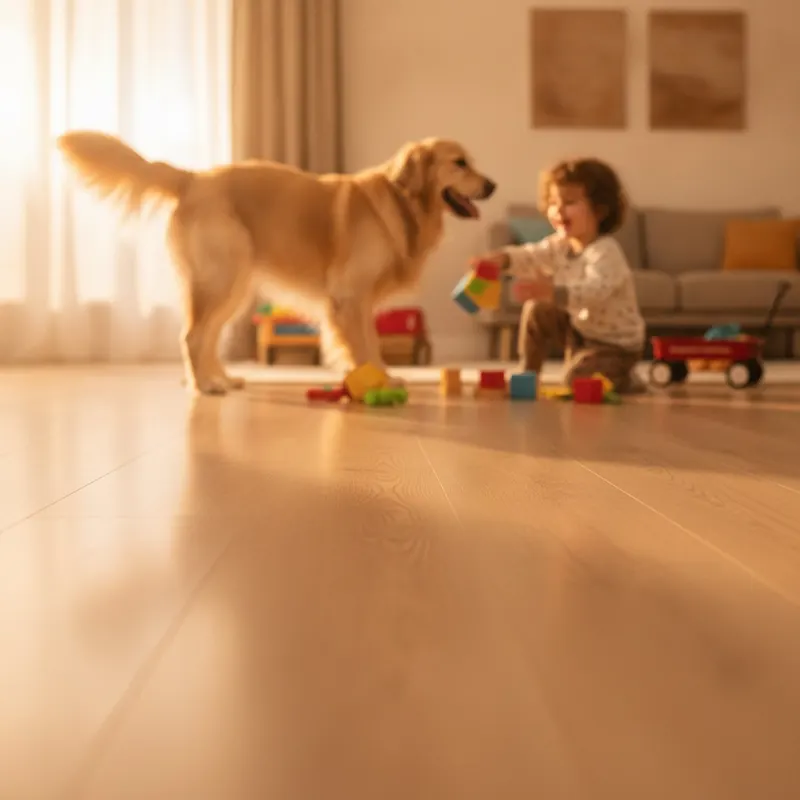
For a quick, at-a-glance guide to scratch resistance, here is our tier list based on material properties:
- S-Tier (Elite): Porcelain Tile. Its surface is fired at extreme temperatures, making it incredibly hard and almost impossible for pet claws or toys to scratch.
- A-Tier (Excellent): AC4/AC5 Laminate, Stone Plastic Composite (SPC). The high abrasion class of top-tier laminate and the dense, rigid nature of SPC make these fantastic choices for resisting scratches.
- B-Tier (Very Good): Luxury Vinyl Plank (LVP), Hard Engineered Wood. A quality LVP with a 20mil+ wear layer holds up very well. Engineered wood with a hard veneer species (like Hickory) and an aluminum oxide finish is also highly durable, though more susceptible than the tiers above.
Beyond the Material: The Keys to a Long-Lasting Floor
The most durable flooring material in the world can fail if not treated as part of a complete system. Longevity depends just as much on what’s underneath the floor and how you care for it.
Why Professional Installation is a Critical Investment
Proper installation is non-negotiable for a long-lasting floor. As installation experts at Floor Coverings International emphasize, subfloor preparation is paramount.[6] An uneven subfloor can cause floating floors like LVP and laminate to flex, damaging the locking systems and leading to gaps. For commercial applications, strict subfloor flatness standards, such as those defined by ASTM F-710, are often mandatory.[10] Furthermore, improper installation—failing to perform moisture tests on concrete, leaving inadequate expansion gaps—can void your product warranty entirely.
Proactive Protection: Your Maintenance & Prevention Plan
The best way to deal with damage is to prevent it from ever happening. Professional cleaning services like ServiceMaster Clean stress the importance of a proactive maintenance plan.[11]
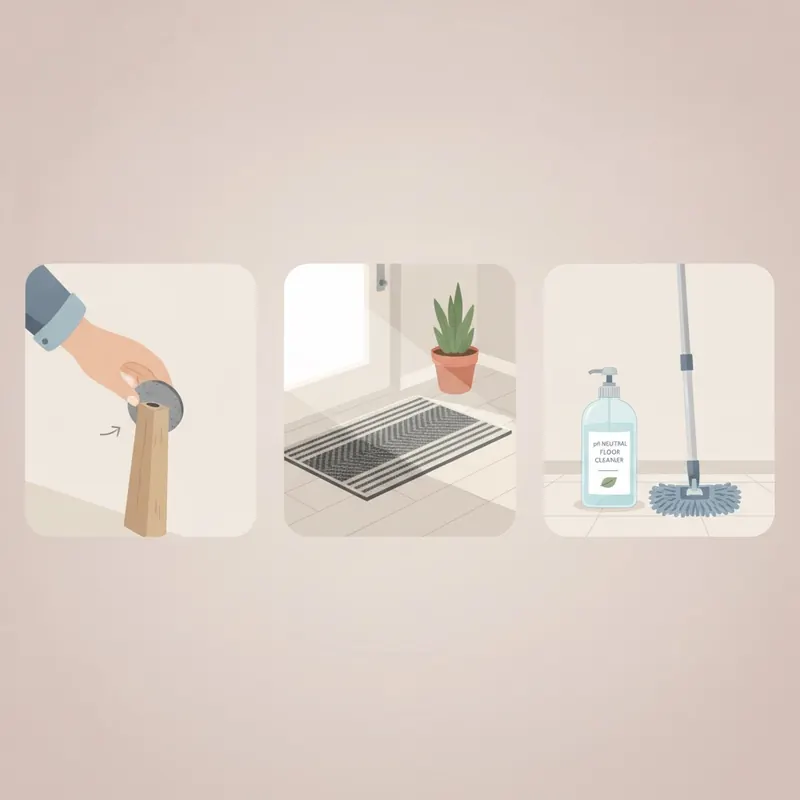
- Guard the Entrance: Use a high-quality, two-mat system. A coarse scraper mat outside removes heavy debris, and a soft absorption mat inside catches fine grit and moisture.
- Use Furniture Pads: Apply thick felt pads to the bottom of all furniture legs, especially chairs that move frequently.
- Clean Smart: Sweep or vacuum regularly to remove abrasive grit that acts like sandpaper. Clean spills immediately and use a pH-neutral cleaner recommended for your specific flooring type.
Your Floor, Your Choice, Your Confidence
The search for “Adamantine flooring” begins with the desire for an indestructible, worry-free surface. While that specific term refers to a high-performance finish, the journey leads to a more powerful destination: knowledge.
You now know that true durability isn’t found in a brand name, but in understanding the science behind the specs. You can confidently walk into a showroom and compare a 20-mil SPC vinyl to an AC4 laminate because you know what those numbers mean for your home and your family. The best floor is always the right material, with the right specifications, installed the right way for your unique environment. You are no longer just a buyer; you are an informed expert, ready to make a confident investment that will last a lifetime.
Ready to shop? Download our free ‘Flooring Spec Sheet Checklist’ to take with you and ask all the right questions.
Disclaimer: Flooring performance is heavily dependent on proper installation according to manufacturer guidelines, appropriate subfloor preparation, and consistent maintenance. If affiliate links are used in this article, we may earn a commission from qualifying purchases.
References & Authoritative Sources
- TAS Flooring. (n.d.). Ambiance Collection. Retrieved from tasflooring.com
- Consumer Reports. (n.d.). Flooring Buying Guide. Retrieved from consumerreports.org
- Go Flooring. (n.d.). The Best Scratch Resistant Flooring. Retrieved from goflooring.com
- Floor Daddy. (n.d.). Commercial Flooring: Laminate. Retrieved from floordaddy.com
- Bob Vila. (n.d.). Ultra-Durable Flooring Options. Retrieved from bobvila.com
- Floor Coverings International. (n.d.). The Most Durable Flooring Options. Retrieved from floorcoveringsinternational.com
- Bruce Flooring. (n.d.). Engineered Hardwood for High-Traffic Flooring. Retrieved from bruce.com
- Sherwin-Williams Industrial. (n.d.). The Best Heavy-Duty Flooring for Industrial and Manufacturing Facilities. Retrieved from industrial.sherwin-williams.com
- Avail. (n.d.). Normal Wear and Tear in a Rental Property: What’s Fair?. Retrieved from avail.com
- ASTM International. (n.d.). ASTM F710 – 17(2023) Standard Practice for Preparing Concrete Floors to Receive Resilient Flooring. Retrieved from astm.org
- ServiceMaster Clean. (n.d.). How to Maintain Your Flooring in High-Traffic Areas. Retrieved from servicemasterclean.com