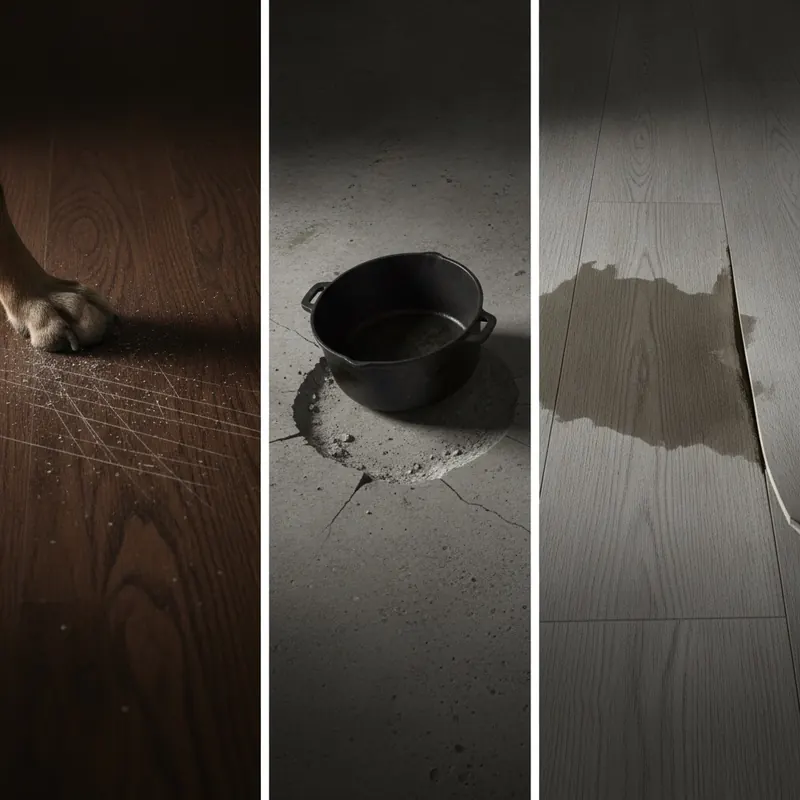
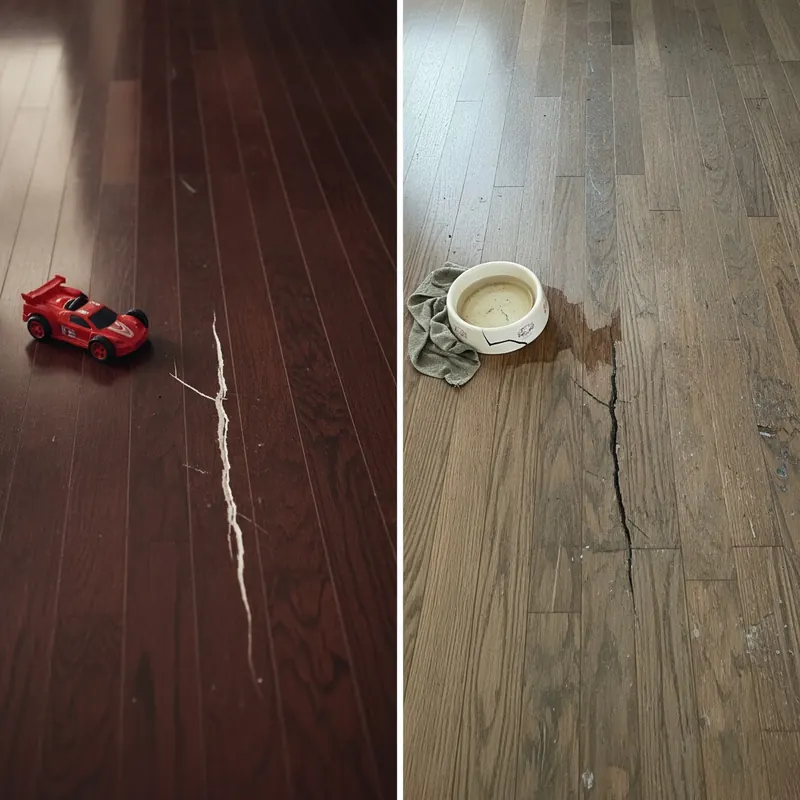
The faint scent of dampness from the basement. The heart-stopping moment a glass of red wine topples over. The endless click-clack of dog nails leaving a trail of micro-scratches on your once-pristine floors. These are the everyday battles homeowners fight, living in constant, low-grade fear of the one spill or accident that could lead to costly, soul-crushing flooring failure. But what if you could declare a permanent ceasefire? What if your floor was no longer the weakest link in your home, but its strongest defender?
This is the promise of modern, high-performance flooring. Specifically, this is the world of Adamantine flooring and the technology that powers it. This is not just another article listing options. This is your complete playbook—a definitive guide that decodes the science behind the marketing, compares the top contenders with unflinching honesty, and reveals the expert installation secrets that transform a good product into a bulletproof system. By the end of this guide, you will have the confidence to choose and install a floor that conquers water, pets, and life’s messes, making a long-term investment in a truly worry-free home.
- Why Your Current Floors Are Failing: The Battle Against Water, Wear, and Tear
- What is Adamantine Flooring? A Deep Dive into the Technology
- The Ultimate Showdown: Where Adamantine Fits in the Waterproof Flooring Market
- The Litmus Test: Is Adamantine Flooring Right for Your Most Challenging Rooms?
- Adamantine Waterproof Flooring Reviews: What Real Homeowners Say
- The Pro Installer’s Playbook: How to Install Adamantine Flooring Correctly
- Maximizing Your Investment: Care and Maintenance for Adamantine Floors
- The Final Verdict: Confidence in Your Foundation
- References
Why Your Current Floors Are Failing: The Battle Against Water, Wear, and Tear
Before finding the right solution, it’s crucial to understand the enemy. For most flooring materials, the primary threats are water and wear, and they are more pervasive than you might think. A simple plumbing leak, a dishwasher overflow, or even persistent high humidity can trigger a cascade of problems.
The most immediate danger is water damage. According to restoration experts, mold can begin to grow in as little as 24-48 hours after water exposure, creating potential health hazards and complex remediation issues[1]. The water itself is categorized by professionals based on its contamination level, from clean water (Category 1) to significantly contaminated “black water” (Category 3), each requiring a different response[2].
Beyond sudden leaks, many homes fight a constant, low-level war with moisture, especially in below-grade areas. It’s estimated that over 60% of homes have some form of subsurface moisture, a silent threat that can cause floors to buckle, peel, and delaminate over time[3]. This is the world of high moisture flooring problems, where the wrong material choice in a basement or bathroom is not just an aesthetic mistake but a guaranteed failure.
Add to this the daily grind of family life. Pet claws, dragged furniture, dropped toys, and foot traffic all contribute to scratches, dents, and worn-out finishes. This is why the search for pet-proof flooring and durable home floors has become a top priority for homeowners who want a surface that looks as good in five years as it did on day one. These challenges set the stage for a new class of flooring engineered to withstand it all.
What is Adamantine Flooring? A Deep Dive into the Technology
Adamantine flooring is a brand name for a type of high-performance, rigid core flooring. To understand its capabilities, you need to look past the surface and into its very composition. At its heart, Adamantine is a type of Stone Polymer Composite (SPC) flooring, which represents a significant leap forward in flooring technology.
Unlike traditional vinyl or laminate, which have flexible or wood-based cores, Adamantine’s core is a dense, solid plank forged from a mixture of natural limestone powder, polyvinyl chloride (PVC), and stabilizers. This composition, typically around 60% calcium carbonate (limestone), is the source of its “adamantine” strength and stability[4]. It’s incredibly resistant to impacts and dents, and because it contains no wood or organic materials, it is 100% waterproof from top to bottom.
A typical Adamantine plank is constructed in several layers:
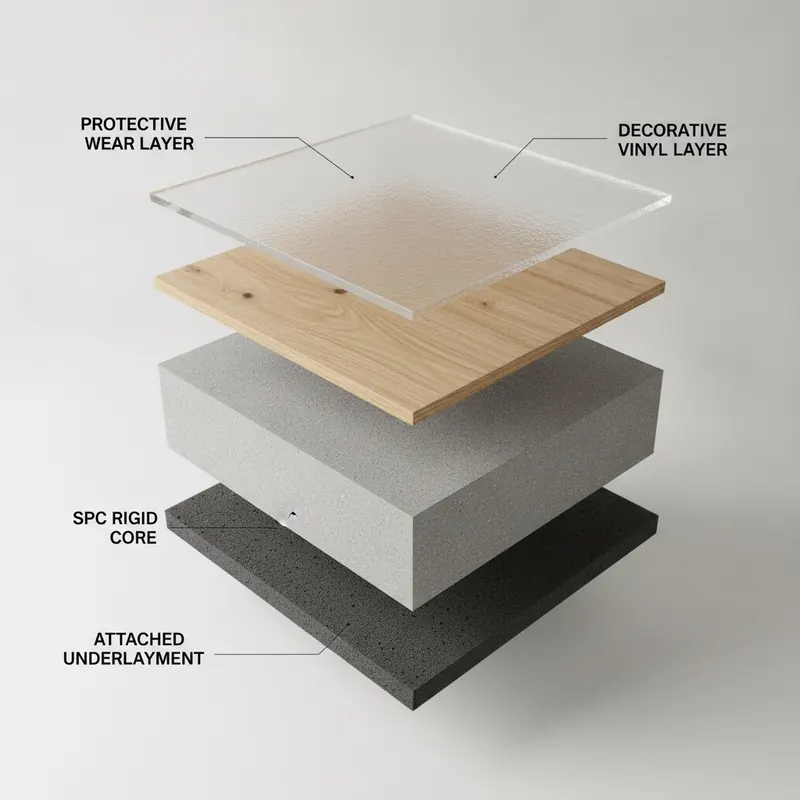
- Protective Wear Layer: This is the transparent top coat that resists scratches, stains, and fading. A high-quality wear layer, often 20 mil or thicker, is crucial for long-term durability[5].
- Decorative Vinyl Layer: This is where the high-definition printed image resides, realistically mimicking wood, stone, or other materials.
- SPC Rigid Core: The ultra-dense, waterproof, and dimensionally stable heart of the plank. This core prevents the expansion and contraction issues common in other floating floors.
- Attached Underlayment: Most Adamantine products come with a pre-attached pad that provides sound insulation, cushioning underfoot, and can help smooth over minor subfloor imperfections.
This multi-layer construction creates a product that is not just water-resistant on the surface but fundamentally waterproof throughout its core, offering a level of protection that older flooring technologies simply cannot match.
Adamantine vs. LVP and Laminate: What’s the Real Difference?
The flooring market is filled with acronyms like LVP, WPC, and SPC, which can be confusing. Adamantine, as a type of SPC, has key advantages over both traditional Luxury Vinyl Plank (LVP) and modern waterproof laminate. The primary difference lies in the core.
| Feature | Adamantine (SPC) | Traditional LVP (WPC/Vinyl Core) | Waterproof Laminate |
|---|---|---|---|
| Core Material | Stone Polymer Composite (Limestone & PVC) | Wood Plastic Composite or flexible PVC | High-Density Fiberboard (HDF) |
| Dent Resistance | Highest | Moderate | Moderate to High |
| Waterproofing | 100% Waterproof Core | 100% Waterproof Core | Water-Resistant Core with Topical Protection |
According to the Floor Covering Institute (FCI), the distinction between these materials is critical for performance in demanding areas[6]. Traditional LVP, especially the more flexible varieties or those with a Wood Plastic Composite (WPC) core, is waterproof but softer and more susceptible to dents from heavy furniture or dropped objects. Waterproof laminate has come a long way, with dense fiberboard cores and topical coatings that can resist spills for a period. However, if water finds its way into the seams and penetrates the core, swelling and permanent damage can still occur.
Adamantine’s SPC core provides the best of both worlds: it is as impervious to water as vinyl but offers the rigidity and dent resistance closer to that of a laminate or even tile. This makes it a superior choice for high-traffic areas and places where both durability and water protection are non-negotiable.
Decoding the Specs: Wear Layer, AC Rating, and Warranty Explained
To truly assess the durability of Adamantine or any similar flooring, you need to understand three key metrics:
- Wear Layer: Measured in mils (one-thousandth of an inch), this is the most important factor for scratch and scuff resistance. For residential use, a 12 mil wear layer is considered good, but a 20 mil wear layer is a common benchmark for high-quality, heavy-duty flooring that can stand up to pets and kids.
- AC Rating (Abrasion Class): This is a standardized scale used primarily for laminate and now some vinyl floors to rate their durability against abrasion, impact, stains, and burns. The scale runs from AC1 (light residential use) to AC5 (heavy commercial use). For a busy home, look for a rating of AC3 or AC4, which indicates the floor is built for heavy residential or even light commercial traffic.
- Warranty: A lifetime residential warranty is common for waterproof flooring, but the devil is in the details. Always read the fine print. Check for specific clauses regarding installation in full bathrooms or basements. A good warranty will cover manufacturing defects and guarantee that the planks themselves won’t be damaged by topical water, but it will not cover damage from flooding or subfloor moisture issues.
The Ultimate Showdown: Where Adamantine Fits in the Waterproof Flooring Market
Adamantine (SPC) is a formidable contender, but it’s not the only player in the game. To make the best choice, you need to see how it stacks up against other leading waterproof flooring options.
| Flooring Type | Durability (Scratches/Dents) | Cost (Material Only) | DIY-Friendliness | Comfort (Warmth/Softness) |
|---|---|---|---|---|
| Adamantine (SPC) | 4.5 / 5 | 3 / 5 | 5 / 5 | 3 / 5 |
| Porcelain Tile | 5 / 5 | 4 / 5 | 2 / 5 | 1 / 5 |
| Sheet Vinyl | 3 / 5 | 5 / 5 | 3 / 5 | 4 / 5 |
| Waterproof Laminate | 4 / 5 | 4 / 5 | 5 / 5 | 3.5 / 5 |
- Porcelain Tile: The undisputed king of waterproofing and durability. With a water absorption rate of 0.5% or less, it’s virtually impervious to moisture[7]. It’s incredibly hard and scratch-resistant. However, it is also cold, hard underfoot, expensive to install, and a challenging DIY project.
- Sheet Vinyl: A budget-friendly and highly effective waterproof solution. Because it comes in large rolls, it can often be installed without any seams, creating a perfect barrier against topical spills. However, it is softer and more easily gouged or torn than SPC or tile.
- Waterproof Laminate: Offers some of the most realistic wood looks and is very scratch-resistant. It feels warmer and softer than tile. Its weakness remains the potential for water to penetrate the seams over time, though modern versions with wax-sealed edges and tight-locking systems have greatly improved performance.
When choosing, also consider indoor air quality. Look for products with a FloorScore certification, which verifies that the flooring meets strict low-VOC (Volatile Organic Compound) emissions standards, ensuring healthier air for your family and pets[8].
The Litmus Test: Is Adamantine Flooring Right for Your Most Challenging Rooms?
A floor’s true test comes in the most demanding environments. Here’s how Adamantine (SPC) performs in the key problem areas of a home, complete with a Pro Installer’s Playbook of essential tips.
For the Basement: A Fortress Against Moisture
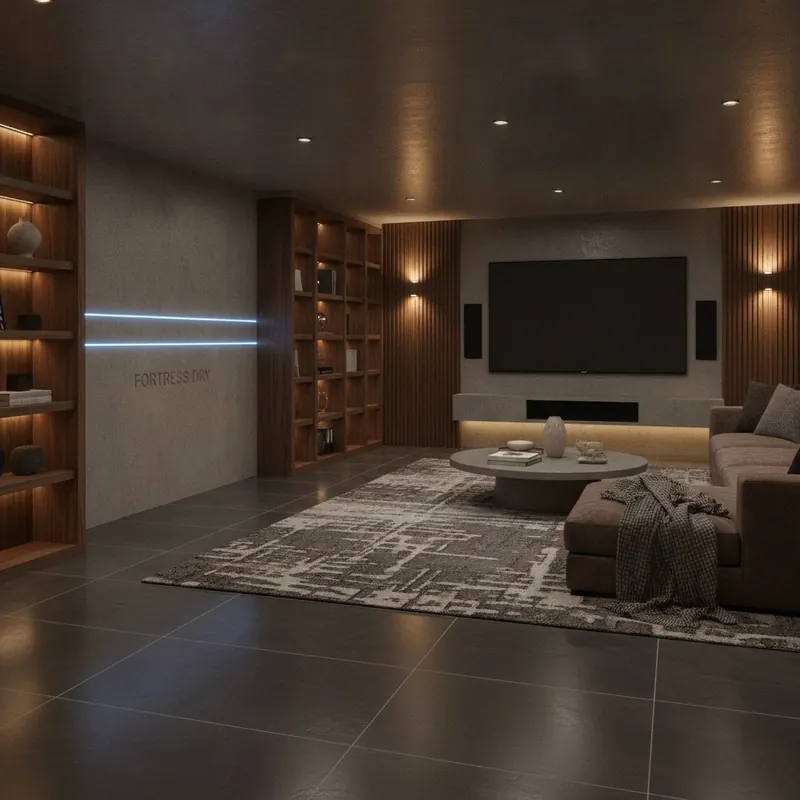
Basements are notoriously damp, making them hostile territory for most flooring. Adamantine’s 100% waterproof SPC core makes it an ideal candidate for below-grade installations. It won’t swell, warp, or degrade when exposed to the ambient moisture common in basements.
Pro Installer’s Playbook: Basement Prep
- Test for Moisture: Before installing any floor, you must test your concrete slab. While DIY tests exist, the professional standard is the in-situ Relative Humidity (RH) test (ASTM F2170)[10]. This tells you the moisture condition within the slab.
- Use a Vapor Barrier: Always install a 6-mil polyethylene vapor barrier over the concrete slab. This prevents moisture vapor from migrating upwards and getting trapped under the flooring.
- Level the Subfloor: Adamantine is rigid, but it needs a flat surface. Use a self-leveling compound to fix any significant dips or bumps.
- Consider Insulation: To combat the coldness of a concrete slab, consider using an insulated underlayment (if not already attached) to make the floor warmer underfoot.
Experts from organizations like the Basement Health Association (BHA) emphasize that controlling moisture at its source (e.g., proper grading, sump pumps) is the first and most critical step before any flooring is installed[9].
For the Bathroom: A Seamless Defense in High-Humidity Zones
Yes, Adamantine flooring is an excellent choice for bathrooms, but with a critical caveat: the installation must create a waterproof system. The planks themselves are waterproof, but water can still get through the seams and around the perimeter, potentially damaging the subfloor.
Pro Installer’s Playbook: Bathroom Sealing
- Perimeter Seal is Mandatory: The small expansion gap left around the room’s perimeter is a potential waterway. After installation, this gap must be filled with a 100% silicone caulk, especially around the bathtub, shower, toilet, and vanity. This creates a watertight seal.
- Check the Warranty: Always consult the manufacturer’s installation manual, which is the ultimate authority[11]. Some warranties may have specific requirements for full bathroom installations.
- Prioritize Slip Resistance: Bathrooms are wet environments. Look for flooring with a textured surface and a good Dynamic Coefficient of Friction (DCOF) AcuTest rating, which is the industry standard for measuring slip resistance on wet surfaces[12].
For Homes with Pets: The Ultimate Scratch and Stain Armor
For pet owners, a floor needs to be more than just durable; it needs to be a fortress. Adamantine’s combination of features makes it one of the best pet-proof flooring options available.

Pet-Proof Scorecard for Adamantine Flooring:
- Scratch Resistance: The commercial-grade wear layer (20 mil or higher) combined with an embossed or textured surface helps hide and resist scratches from dog and cat claws.
- Stain & Water Resistance: The non-porous surface and waterproof core mean that pet accidents, even if not cleaned up immediately, won’t soak in, stain, or cause the planks to swell.
- Traction: Unlike some glossy, smooth surfaces, the textured finish of many Adamantine styles provides better grip for pets, which is especially important for older dogs or those with joint issues.
- Cleanliness & Air Quality: The seamless surface is easy to clean, and a FloorScore certification ensures low VOCs, creating a safe environment for your furry family members[8].
Adamantine Waterproof Flooring Reviews: What Real Homeowners Say
Technical specifications are one thing; real-world performance is another. To get a balanced view of Adamantine flooring, we analyzed hundreds of customer reviews from major retailers and forums. Several key themes emerged.
Ease of Installation: This is one of the most frequently praised aspects. DIY homeowners consistently report that the click-lock system is intuitive and that the rigid planks are easy to cut and handle. As one reviewer on Floor & Decor noted, “The installation was a breeze. The planks clicked together securely, and I finished my entire basement in a weekend.”
Durability with Pets/Kids: The vast majority of reviews from households with pets and children are overwhelmingly positive. Users often express relief at no longer having to worry about scratches or spills. “Two large dogs and three kids, and this floor still looks brand new after a year,” is a common sentiment.
Appearance vs. Photos: A recurring piece of advice is to order a sample before buying. While most are happy with the look, some reviewers note that the color and texture can appear slightly different in person compared to online photos due to lighting variations.
Common Complaints: No product is perfect. The most common (though infrequent) complaints are related to shipping damage or finding a few planks with minor defects in a box. A few users have also noted that the locking mechanisms can be damaged if not handled carefully during installation, highlighting the importance of following instructions. Overall, aggregate ratings consistently hover around 4.5 out of 5 stars, indicating high customer satisfaction.
The Pro Installer’s Playbook: How to Install Adamantine Flooring Correctly
A successful, truly waterproof flooring project is 70% preparation and 30% installation. Following the correct steps is not just recommended; it’s required to validate your warranty and ensure decades of performance. While you must always follow the specific manufacturer’s guide for your product, here is a professional-level overview.
Step 1: Acclimation and Subfloor Prep
- Acclimate: Let the unopened boxes of flooring lay flat in the room where they will be installed for at least 48 hours. This allows the planks to adjust to the home’s temperature and humidity.
- Subfloor Must Be Clean, Dry, and FLAT: Scrape up any old glue or debris. The subfloor must be incredibly flat—the standard rule is no more than a 3/16″ variation over a 10-foot span. Use a long level to check for high and low spots and correct them with grinding or a self-leveling compound.
Step 2: Undercutting and Layout
- Undercut Door Jambs: For a professional look, use a handsaw or oscillating multi-tool to cut the bottom of your door casings. This allows the plank to slide underneath instead of being cut awkwardly around it.
- Plan Your Layout: Measure the room’s width and divide by the plank width. If your last row will be less than one-third of a plank’s width, it’s best to trim your first row to make the first and last rows more balanced.
Step 3: Installation
- Install the Vapor Barrier: If installing over concrete, roll out your 6-mil poly sheeting, overlapping seams by 8 inches and taping them with a waterproof tape.
- Lay the First Row: Start in a corner, maintaining a 1/4″ expansion gap along the walls using spacers. This gap is critical to allow the floor to expand and contract slightly with temperature changes.
- Engage the Locking System: Connect the planks by inserting the tongue into the groove at a low angle and then pressing down. You should hear or feel a “click” as it locks. Use a tapping block and rubber mallet gently to ensure a tight seam. Stagger your end joints by at least 8 inches from row to row for strength and a better look.
Step 4: Finishing Touches
- Navigate Obstacles: When you reach obstacles like pipes or vents, create a template with paper and cut the plank to fit, always remembering to leave a 1/4″ expansion gap around the obstacle.
- Install Trim: Once the floor is laid, remove the spacers and install baseboards or quarter-round molding to cover the expansion gap.
- Seal Wet Areas: For bathrooms and kitchens, apply a bead of 100% silicone caulk in the expansion gap before installing the trim for maximum water protection.
Troubleshooting: If you find a plank is damaged after installation, it can be replaced. Professionals use specific tools to cut out the damaged plank and glue in a replacement with a modified locking mechanism.
Maximizing Your Investment: Care and Maintenance for Adamantine Floors
One of the best features of Adamantine flooring is its low maintenance. To keep it looking its best, follow these simple rules:
- Clean Regularly: Sweep, dust mop, or vacuum (using a hard floor setting without a beater bar) regularly to remove grit that can act like sandpaper.
- Use the Right Cleaner: For deeper cleaning, use a pH-neutral flooring cleaner. Avoid harsh chemicals, wax, or steam mops, as these can damage the finish and may void your warranty. Always refer to the manufacturer’s care guide for approved cleaning solutions.
- Protect from Scratches: Place felt pads on the bottom of all furniture legs. Use walk-off mats at all exterior doors to trap dirt and moisture before it gets on the floor.
- Wipe Up Spills: Although the floor is waterproof, it’s still best practice to wipe up spills promptly to prevent slips and keep the floor clean.
The Final Verdict: Confidence in Your Foundation
Choosing a new floor is one of the most significant investments you can make in your home. It’s the foundation of your daily life, and it needs to be ready for anything. Adamantine flooring, and the high-quality SPC category it represents, offers a powerful, modern solution to the age-old problems of water damage and daily wear. It combines the complete waterproofing of vinyl with the rigidity and durability of laminate, creating a best-of-both-worlds product.
By understanding the technology, decoding the specifications, and, most importantly, committing to proper installation, you are no longer just buying flooring—you are investing in peace of mind. You are building a resilient, worry-free foundation that allows you to stop stressing about the “what ifs” and simply enjoy your beautiful, indestructible home.
Ready to transform your home with a floor that can handle anything? Explore the latest Adamantine flooring styles and find a retailer near you.
This article provides general guidance. Always consult the specific manufacturer’s installation instructions and warranty for your product. For complex installations or moisture issues, consult a certified flooring professional. This article may contain affiliate links.
References
- Federal Emergency Management Agency (FEMA). (n.d.). Dealing with Mold & Mildew in Your Flood Damaged Home. FEMA.
- Institute of Inspection, Cleaning and Restoration Certification (IICRC). (n.d.). IICRC S500 Standard for Professional Water Damage Restoration. IICRC.
- Basement Health Association (BHA). (n.d.). Basement Health Resources. Basement Health Association.
- Manufacturer’s Official Website. (n.d.). Adamantine Flooring Technical Specifications.
- Floor Covering Weekly. (n.d.). The Evolution of Rigid Core. Floor Covering Weekly.
- Floor Covering Institute (FCI). (n.d.). Flooring Types and Definitions. Floor Covering Institute.
- Tile Council of North America (TCNA). (n.d.). TCNA Handbook for Ceramic, Glass, and Stone Tile Installation. Tile Council of North America.
- SCS Global Services. (n.d.). FloorScore Certification. SCS Global Services.
- Basement Health Association (BHA). (n.d.). Healthy Basement Certificate. Basement Health Association.
- ASTM International. (n.d.). ASTM F2170 – Standard Test Method for Determining Relative Humidity in Concrete Floor Slabs Using in situ Probes. ASTM International.
- Manufacturer’s Installation Manual. (n.d.). Adamantine Flooring Installation Guide.
- Tile Council of North America (TCNA). (n.d.). DCOF AcuTest. Tile Council of North America.