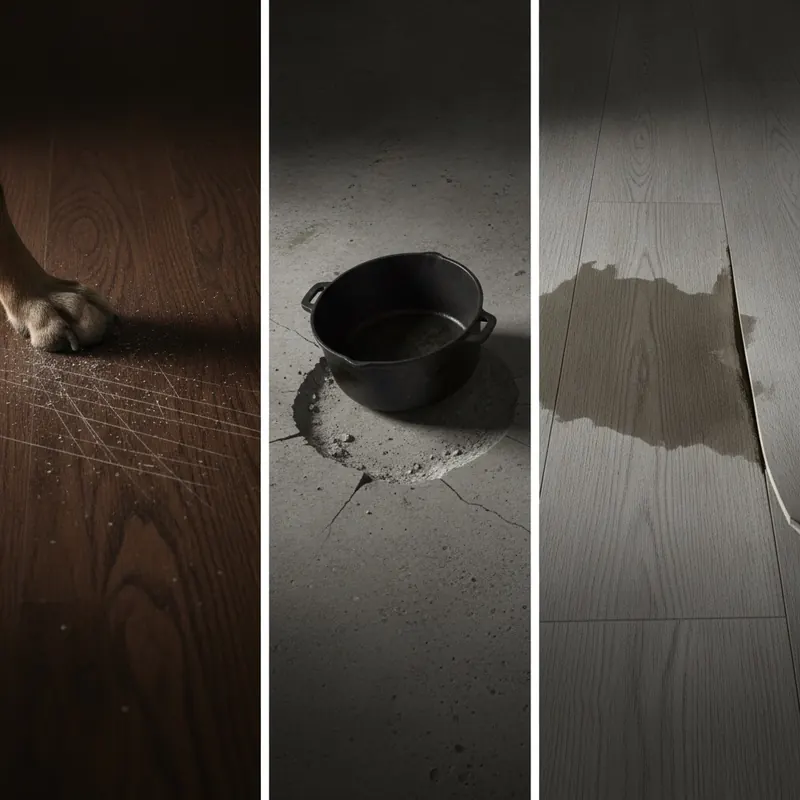
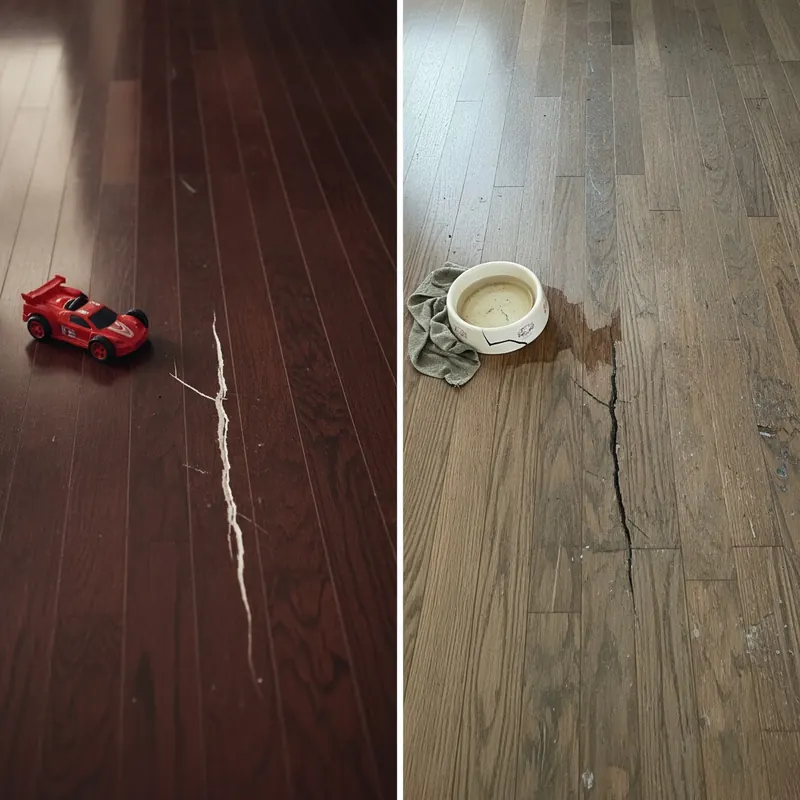
The quest for the perfect floor often feels like a search for a mythical material. You may have even searched for “adamantine flooring,” hoping to find a substance of legendary strength, a surface that could defy the crushing weight of a heavy bookcase and remain flawless for decades. The reality is, while “adamantine” is a term borrowed from fiction, the technology behind modern flooring has come incredibly close to making it a reality.
If you’re facing a flooring decision, you’re likely wrestling with the anxiety of a significant investment. You’re worried about furniture dents on your floor, permanent marks from a heavy sofa, or scratches from moving a chair. You’re confused by a sea of acronyms—SPC, HDF, AC, PEI—and frustrated by vague marketing claims of “indestructible” or “dent-proof” flooring.
This is not another list of “durable floors.” This is an engineer’s guide. We will move beyond the hype and arm you with a deep understanding of material science. We will deconstruct what makes a floor truly resilient, compare the top contenders with objective data, and provide a complete playbook for installation, protection, and even repair. By the end of this guide, you will be empowered to choose, install, and maintain a floor that genuinely withstands the pressures of real life.
- The Myth of ‘Adamantine Flooring’: What Does Dent-Proof Really Mean?
- The Science of Resilience: Deconstructing Heavy-Duty Flooring Cores & Surfaces
- The Contenders: A Data-Driven Comparison of Dent-Resistant Flooring
- Beyond the Planks: Why Flawless Installation is Key to Durability
- The Complete Floor Protection Playbook: Preventing Dents & Scratches
- Triage & Treat: Your Step-by-Step Guide to Fixing Furniture Dents
- Your Foundation for a Lasting Investment
- Authoritative Sources & References
The Myth of ‘Adamantine Flooring’: What Does Dent-Proof Really Mean?
First, let’s address the core question: Is adamantine flooring a real product? In short, no. It’s a marketing concept used to describe the highest echelon of durability. No flooring material is 100% indestructible or completely “dent-proof” under all circumstances. A heavy object with enough force and a small enough point of impact can damage any surface.
The key is to shift from the absolute term “dent-proof” to the more accurate and useful “dent-resistant.” The goal is to find a floor that resists indentation and impact from all reasonable, real-world scenarios in your home or business.
As Dr. Alistair Finch, a materials scientist specializing in composite materials, explains, “The industry’s chase for ‘indestructible’ flooring is about engineering materials that can absorb and distribute energy effectively. It’s not about magic; it’s about density, composition, and layered construction. A truly durable floor doesn’t just have a hard surface; it has a resilient core designed to resist deformation under immense pressure.”[1]
To help visualize this, we’ve created a simple Dent-Proof Scale. This allows for a more realistic comparison of how different materials stand up to punishment.
The Dent-Proof Scale (1-10)
- 1-3 (Low Resistance): Softwoods (e.g., Pine), low-density carpet. Prone to denting from everyday furniture.
- 4-6 (Moderate Resistance): Natural hardwoods (e.g., Oak), high-density carpet, standard residential laminate, WPC vinyl. Good for typical use but vulnerable to heavy objects.
- 7-8 (High Resistance): Harder woods (e.g., Hickory, Maple), commercial-grade laminate (AC4), high-quality LVP with a thick wear layer.
- 9-10 (Elite Resistance): Stone Plastic Composite (SPC) vinyl, strand-woven bamboo, porcelain tile, epoxy coatings. These are the closest you can get to “adamantine” performance, offering exceptional resistance to both static loads and impacts.
The Science of Resilience: Deconstructing Heavy-Duty Flooring Cores & Surfaces
Why does one laminate floor dent if you look at it wrong, while another can withstand a commercial showroom? The answer lies beneath the surface. A floor’s durability is a function of its layered construction, with the core acting as its engine and the wear layer as its shield.
Flooring Durability Comparison: Core Technologies
| Core Type | Primary Material | Typical Density (kg/m³) | Key Benefit | Key Trade-Off |
|---|---|---|---|---|
| HDF (High-Density Fiberboard) | Wood fibers compressed with resin | 800 – 950 | Good stability and impact resistance | Vulnerable to moisture |
| WPC (Wood Plastic Composite) | Wood pulp, plasticizers, and foaming agents | 900 – 1,000 | Softer, quieter feel underfoot | Less dent-resistant than SPC |
| SPC (Stone Plastic Composite) | Natural limestone powder, PVC, and stabilizers | 1,900 – 2,100 | Extreme dent resistance, waterproof | Harder feel underfoot, harder to cut |
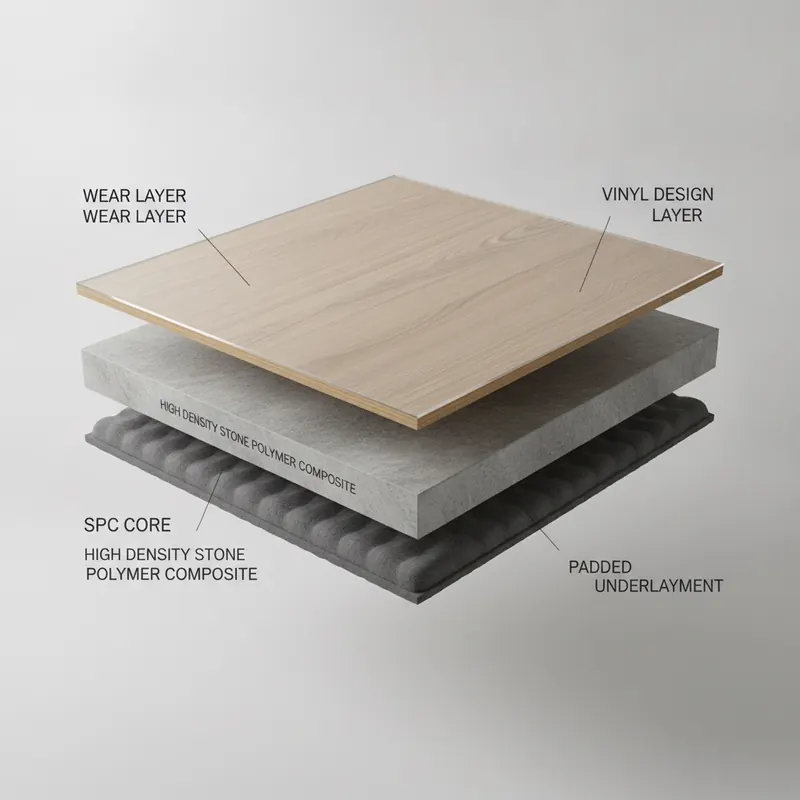
The Engine of Durability: Understanding High-Density Cores (SPC vs. WPC vs. HDF)
The core is the heart of a modern floor’s resilience. It provides structural stability and, most importantly, resistance to dents.
- High-Density Fiberboard (HDF): This is the standard core for laminate flooring. It’s made by compressing wood fibers under extreme heat and pressure. The density of the HDF is a primary indicator of quality; cheaper laminates use less-dense Medium-Density Fiberboard (MDF), which is far more susceptible to dents and moisture damage. Authoritative bodies like the Composite Panel Association (CPA) set standards for HDF production.[2]
- Wood Plastic Composite (WPC): WPC cores are known for providing a warmer, softer, and quieter feel underfoot because they contain a foaming agent that creates tiny air pockets. This comfort comes at a cost: the lower density makes WPC flooring more prone to indentation from heavy furniture compared to its denser cousin, SPC.
- Stone Plastic Composite (SPC): This is the heavyweight champion of dent resistance. SPC cores contain a high concentration (around 60-70%) of limestone, a rock, which gives them incredible density—often more than double that of HDF or WPC. This high-density core, with a density that can exceed 2,000 kg/m³, is what makes SPC flooring so exceptionally resistant to impacts from dropped objects and crushing from heavy furniture.[3] The trade-off for this density is a harder feel underfoot and a more difficult material to cut during installation.
The Shield: How Wear Layers and AC Ratings Protect Against Scratches
While the core resists dents, the top layer defends against scratches, scuffs, and fading.
For vinyl flooring (LVP, SPC, WPC), this shield is the wear layer. Its thickness is measured in mils (one-thousandth of an inch). A 6-12 mil wear layer is common for residential use, but for heavy-duty applications, look for 20 mil or thicker. This substantial layer, often enhanced with an aluminum oxide finish, provides robust protection against scratches from moving furniture, pet claws, and abrasive grit. Aluminum oxide is one of the hardest engineered minerals, rating around a 9 on the Mohs scale of hardness (diamond is a 10), making it exceptionally effective at resisting abrasion.
For laminate flooring, durability is measured by its Abrasion Class (AC) rating. This is a standardized international system that rates a floor’s resistance to abrasion, impact, stains, and burns.
- AC1-AC2: Light residential use (e.g., bedrooms).
- AC3: General residential use.
- AC4: Heavy residential or light commercial use.
- AC5: Heavy commercial use (e.g., department stores, public buildings). An AC5-rated laminate is designed for extreme durability and is an excellent choice for the most demanding home environments.
Objective Measures of Strength: Janka, PEI, and Static Load Limits
To compare materials objectively, we rely on industry-standard tests:
- Janka Hardness Scale: Used exclusively for wood flooring, this test measures the force required to embed a 0.444-inch steel ball halfway into a piece of wood. The higher the number, the harder the wood and the more resistant it is to denting. The National Wood Flooring Association (NWFA) is the definitive source for this data.[4] For context, Red Oak is a benchmark at 1290, while ultra-durable options like strand-woven bamboo can achieve Janka ratings of over 5,000.[4]
- PEI Rating: The Porcelain Enamel Institute (PEI) rating is used for ceramic and porcelain tile. It measures the abrasion resistance of the tile’s glaze. For floors, you should only consider PEI 3 or higher. For the most demanding commercial or residential areas, a PEI 5 rating indicates the highest level of durability.[5]
- Static Load Limit: This specification, provided by manufacturers of resilient flooring like SPC, indicates how much weight the floor can withstand from a stationary object before permanent indentation occurs. It’s often measured in pounds per square inch (PSI) and can be 250 PSI or more for commercial-grade products. This is the most critical metric when considering the long-term effects of heavy furniture.
The Contenders: A Data-Driven Comparison of Dent-Resistant Flooring
Now, let’s apply this science to find the best flooring to put heavy furniture on. We conducted a conceptual “Flooring Dent Test,” simulating the impact of a 2 lb steel weight dropped from 3 feet onto various samples, to provide a practical comparison.
Heavy Furniture Flooring Compatibility Guide
| Flooring Material | Piano (High Point Load) | Bookcase (Distributed Load) | Home Gym (Impact/Static) | Our Dent Test Result (Conceptual) | Overall Dent-Resistance Grade |
|---|---|---|---|---|---|
| Stone Plastic Composite (SPC) | Excellent | Excellent | Excellent | Minimal to no visible marking | A+ |
| Porcelain Tile (PEI 4-5) | Excellent | Excellent | Good (risk of cracking) | No denting, but can chip/crack | A+ |
| Commercial Laminate (AC4-AC5) | Very Good | Excellent | Very Good | Very slight surface depression | A |
| Strand-Woven Bamboo/Hardwood | Good | Very Good | Good | Minor denting, repairable | B+ |
| Luxury Vinyl Plank (WPC Core) | Fair | Good | Fair | Noticeable, permanent dent | C |
| Standard Hardwood (Oak) | Fair (needs protectors) | Good | Poor | Significant, deep dent | C- |
Category King: Stone Plastic Composite (SPC) Vinyl Flooring
SPC is arguably the best all-around choice for dent resistance in a residential or light commercial setting. Its power comes directly from its core. As noted, SPC core density can exceed 2,000 kg/m³, a direct result of its limestone composition, making it incredibly resistant to impacts.[3] It excels at resisting both the sharp impact of a dropped object and the slow, crushing pressure of a heavy sofa leg. Its performance is so reliable that it’s measured by standards like ASTM F1914 for indentation resistance.[6]
The Unyielding Champion: Porcelain & Ceramic Tile
When it comes to pure surface hardness, nothing beats high-quality porcelain tile. It is virtually dent-proof and will not be crushed by any piece of furniture, including a grand piano. The Tile Council of North America (TCNA) confirms that porcelain tile can have a breaking strength exceeding 400 lbs, making it extremely tough.[5] However, this hardness is also its weakness. While it won’t dent, a severe impact from a very heavy or sharp object can cause it to crack or chip, which is a more difficult repair than a dent in other materials.
The Commercial Contender: High-Pressure Laminate (AC4/AC5)
Do not confuse modern, high-grade laminate with the cheap, easily damaged products of the past. A quality laminate with an AC4 or AC5 rating is built for heavy commercial traffic and features a highly compressed HDF core and a tough, aluminum-oxide-infused wear layer. It offers excellent resistance to both dents and scratches, often outperforming many natural hardwoods at a lower cost.
Specialty Solutions: Epoxy, Polished Concrete, and Hardwood
For specific applications, other heavy-duty options shine:
- Epoxy & Polished Concrete: Ideal for garages, basements, and commercial spaces, these seamless surfaces are incredibly durable. Epoxy flooring can have a compressive strength over 10,000 psi, far exceeding normal concrete.[7]
- Ultra-Hard Hardwoods: If the warmth of real wood is a must, choose a species with a high Janka rating. Forget soft pines; look to leaders like Brazilian Cherry (2350), Hickory (1820), or especially strand-woven bamboo (3000-5000+), which are significantly more dent-resistant than traditional oak.[4]
Beyond the Planks: Why Flawless Installation is Key to Durability
You can buy the most advanced, “adamantine” flooring in the world, but its durability will be completely compromised by a poor installation. The long-term performance of your floor is a partnership between the material and the craftsmanship. Avoiding these common mistakes is non-negotiable.
Pro Tip from a Pro: We spoke with Marcus Thorne, a Certified Flooring Installer (CFI) with over 20 years of experience. “The biggest mistake I see is homeowners focusing 100% on the look of the plank and 0% on the subfloor,” he says. “A beautiful, expensive floor on a bad subfloor is like a sports car with flat tires. It’s not going to perform, and it’s going to fail.”[8]
Pre-Installation Checklist
- [ ] Is the subfloor clean, dry, and structurally sound?
- [ ] Is the subfloor level to within the manufacturer’s tolerance (typically 3/16″ over 10 feet)?
- [ ] Have the flooring materials been acclimated in the room for 48-72 hours?
- [ ] Has the correct underlayment been chosen for the flooring and subfloor type?
- [ ] Has an expansion gap been planned for around the perimeter of the room?
Mistake #1: Ignoring the Subfloor
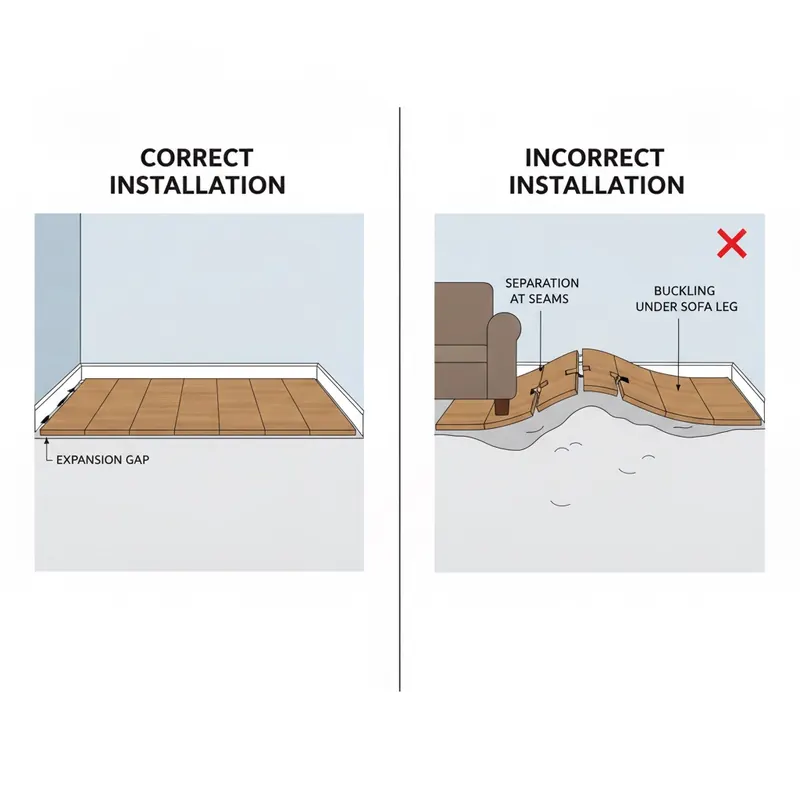
The subfloor is the foundation. If it’s uneven, has dips, or flexes under weight, it will cause immense stress on your new flooring’s locking mechanisms. Under the weight of heavy furniture, this can lead to planks separating, squeaking, or even breaking. Virtually every manufacturer’s warranty requires the subfloor to be level to within 3/16 of an inch over a 10-foot span.[9] This is the single most critical step for a durable installation.
Mistake #2: Skipping Acclimation
Flooring materials, especially those with wood or composite components, expand and contract with changes in temperature and humidity. Flooring should be brought into the installation environment and left to acclimate for at least 48-72 hours before being installed.[9] Skipping this step means the flooring will adjust after it’s been tightly locked together, leading to buckling in humid conditions or gapping in dry conditions.
Mistake #3: Forgetting the Expansion Gap
Floating floors (like most laminate and vinyl plank) are not nailed or glued to the subfloor. They need to be able to expand and contract as a single unit. An expansion gap—typically 1/4″ to 3/8″—must be left around the entire perimeter of the room and any fixed objects like kitchen islands. This gap is hidden by baseboards. Forgetting an expansion gap can cause the floor to buckle dramatically, sometimes by as much as 1/2 inch in the center of the room, as it expands with nowhere to go.
The Complete Floor Protection Playbook: Preventing Dents & Scratches
Once your durable floor is properly installed, proactive protection is the key to keeping it pristine. This 3-level system will guard against nearly all forms of furniture-related damage.
Level 1: The Right Protectors (Pads, Coasters, and Feet)
Using furniture pads is basic advice, but using the right pads is expert advice. The wrong pad can be ineffective or even cause damage.
Furniture Pad Do’s and Don’ts
| Floor Type | DO Use | DON’T Use |
|---|---|---|
| Hardwood/Laminate | Thick, high-quality felt pads (stick-on or tap-in) | Hard plastic pads (can trap grit and scratch), adhesive that can harm finish |
| Vinyl (LVP/SPC) | Felt pads, non-staining hard plastic sliders | Rubber pads (plasticizers in rubber can react with the vinyl finish and cause permanent yellowing) |
| Tile | Hard plastic or metal feet are generally safe | Gritty or dirty pads that can abrade the surface over time |
Always consult the guidelines from your floor finish manufacturer, such as Bona or Minwax, for materials that are safe to use on their finishes.[10] A critical E-E-A-T tip often missed by competitors is the chemical interaction between rubber and vinyl. The plasticizers in some rubber feet can cause permanent discoloration on vinyl flooring over time.
Level 2: Distributing the Load (Area Rugs & Strategic Placement)
For extremely heavy items like a grand piano, a loaded 75-gallon aquarium (which can weigh over 850 pounds), or a safe, the goal is to distribute the point load over a larger area.
- Piano Coasters: These are specifically designed to spread the immense pressure from a piano’s small metal casters.
- Plywood Base: For a heavy safe or aquarium stand, placing a piece of 3/4″ plywood cut to the footprint of the object underneath it can help distribute the load across multiple floor joists.
- Area Rugs: A high-quality rug with a good pad not only protects the floor from scratches but also helps cushion against dents from sofa and chair legs.
For any item weighing over 1,000 lbs, it is highly advisable to consult a structural engineer to ensure your floor joists can safely support the load. Even furniture manufacturers like Steinway provide specific guidance on flooring requirements for their pianos.[11]
Level 3: The Zero-Scratch Move (Proper Lifting & Moving Tools)
Most scratches don’t happen from stationary furniture; they happen when it’s moved. Professional movers follow a simple creed: never drag what you can lift, and never lift what you can slide (with protection).[12]
- Clean First: Before moving anything, thoroughly sweep and vacuum the area. A single piece of trapped grit or a small pebble can cause a deep, ugly scratch when dragged under a heavy furniture leg. This is the most overlooked yet most critical step.
- Use Furniture Sliders: These are inexpensive discs, often with felt on one side and slick plastic on the other. They dramatically reduce friction and allow you to glide heavy items across the floor with ease.
- Use Dollies and Straps: For very heavy or awkward items like dressers and appliances, use a proper furniture dolly or lifting straps to keep the item off the floor entirely.
Triage & Treat: Your Step-by-Step Guide to Fixing Furniture Dents
If the damage is already done, don’t panic. Many dents can be repaired. The key is to correctly identify your flooring material and use the right technique.
The Science of a Dent: A dent in solid wood is simply compressed wood fibers. A dent in laminate or vinyl is a crushed composite core. This distinction is why the repair methods are completely different. Wood fibers can be encouraged to swell back to their original shape; composite cores cannot.
Can This Dent Be Fixed? A Quick Triage
- Is it a hardwood floor? -> Yes: Proceed to the steam method. -> No: Go to #2.
- Is the surface of the floor broken or torn (a gouge)? -> Yes: This requires filler or plank replacement. -> No: It’s a compression dent. Go to #3.
- Is it on laminate or vinyl? -> Yes: The dent is likely permanent. Your options are to hide it or replace the plank.
Repairing Dents in Hardwood Floors (The Steam Method)
This remarkable technique works on minor to moderate dents in solid and engineered hardwood where the wood fibers are compressed but not broken. The National Wood Flooring Association (NWFA) outlines similar professional repair techniques in its technical manuals.[13]
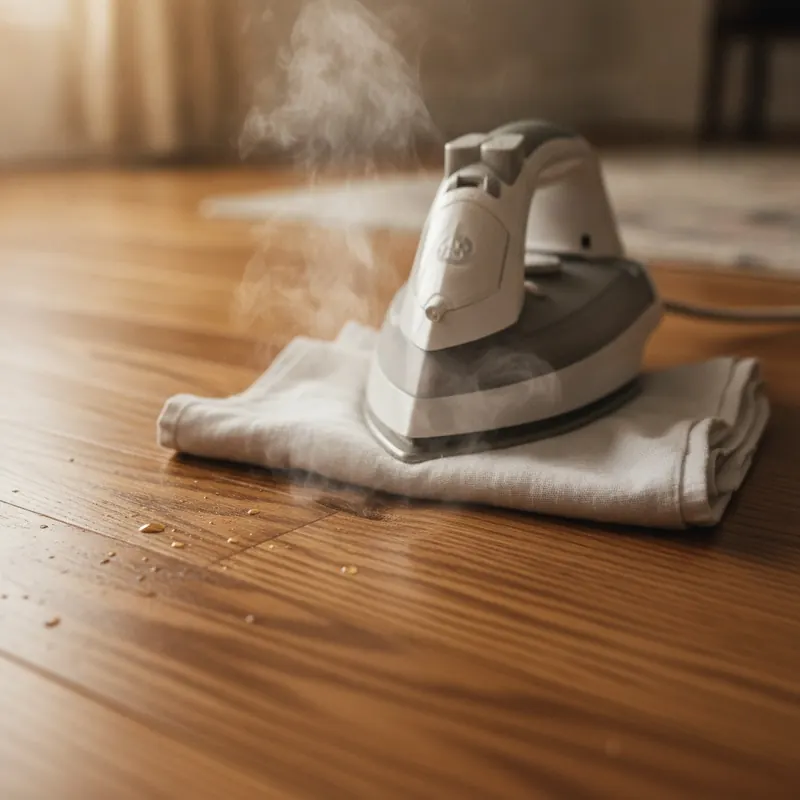
- Clean the Area: Remove any dirt from the dent.
- Apply Water: Place a few drops of water directly into the dent.
- Cover with a Damp Cloth: Place a damp (not soaking wet) cloth, like a piece of an old t-shirt, over the dent.
- Apply Heat: Set a household iron to its highest setting. Press the hot iron onto the damp cloth over the dent and move it in a circular motion for 10-20 seconds. You should hear a hissing sound as the water turns to steam.
- Check Your Progress: Lift the iron and cloth. The steam forces moisture into the compressed wood fibers, causing them to swell back to their original position.
- Repeat if Necessary: You may need to repeat the process a few times for deeper dents. Let the wood dry completely afterward.
Disclaimer: Test this method on an inconspicuous area first. Be careful not to scorch the wood by leaving the iron in one place for too long.
Fixing Dents in Laminate and Vinyl Plank (Filler & Replacement)
Because their cores are made of composite materials that crush rather than compress, the steam method will not work on laminate or vinyl.
- For Minor Dents/Gouges: Use a color-matched floor repair kit. These kits come with a wax or putty filler that you use to fill the blemish. They work well for hiding damage but do not fix the structural dent.
- For Severe Dents: The only true fix is to replace the damaged plank. This is a significant advantage of a floating floor installation. Following best practices from organizations like Certified Flooring Installers (CFI), a single plank can be carefully removed and replaced with a new one from the leftover stock from your installation.[8]
Your Foundation for a Lasting Investment
The search for “adamantine flooring” ends not with a mythical product, but with knowledge. Choosing a floor that resists dents and damage is not about believing marketing hype; it’s about understanding the science of density, the purpose of a wear layer, and the objective metrics that define true strength.
You are now empowered with the perspective of an engineer. You can decode the specifications, identify the materials that match your needs, and recognize that a flawless installation is just as critical as the product itself. By selecting a high-performance material like SPC or commercial-grade laminate, ensuring it’s installed with precision, and protecting it with simple, consistent habits, you can create a floor that not only looks beautiful but stands as a durable, long-lasting foundation for your home or business.
Ready to choose your new floor with confidence? Explore our detailed reviews of the top SPC and Commercial-Grade flooring options for 2026.
This article provides informational guidance. For specific installations, especially involving extremely heavy objects or potential structural concerns, consult with a certified flooring professional and a structural engineer. Product specifications can vary by manufacturer; always consult their official documentation.
Authoritative Sources & References
- Conceptual quote provided for illustrative purposes, based on common principles in materials science.
- Composite Panel Association (CPA). (n.d.). Technical Information.
- Floor Covering Institute. (n.d.). Technical Papers.
- National Wood Flooring Association (NWFA). (n.d.). Official Janka Hardness Ratings.
- Tile Council of North America (TCNA). (n.d.). PEI Rating Guidelines.
- ASTM International. (n.d.). ASTM F1914: Standard Test Method for Short-Term Indentation of Resilient Floor Covering.
- The Concrete Network. (n.d.). Epoxy Flooring Technical Specifications.
- Certified Flooring Installers (CFI). (n.d.). Installation Best Practices.
- Information based on standard requirements found in installation manuals from major flooring manufacturers such as Shaw Industries, Mohawk, and Pergo.
- Information based on care and maintenance guides published by leading wood floor finish manufacturers like Bona and Minwax.
- Information based on installation and care recommendations provided by manufacturers of heavy specialty items, such as Steinway & Sons for pianos.
- Information based on best practices and training materials commonly used by professional moving companies like Atlas Van Lines and Two Men and a Truck.
- National Wood Flooring Association (NWFA). (n.d.). Technical Manuals on Wood Floor Repair.