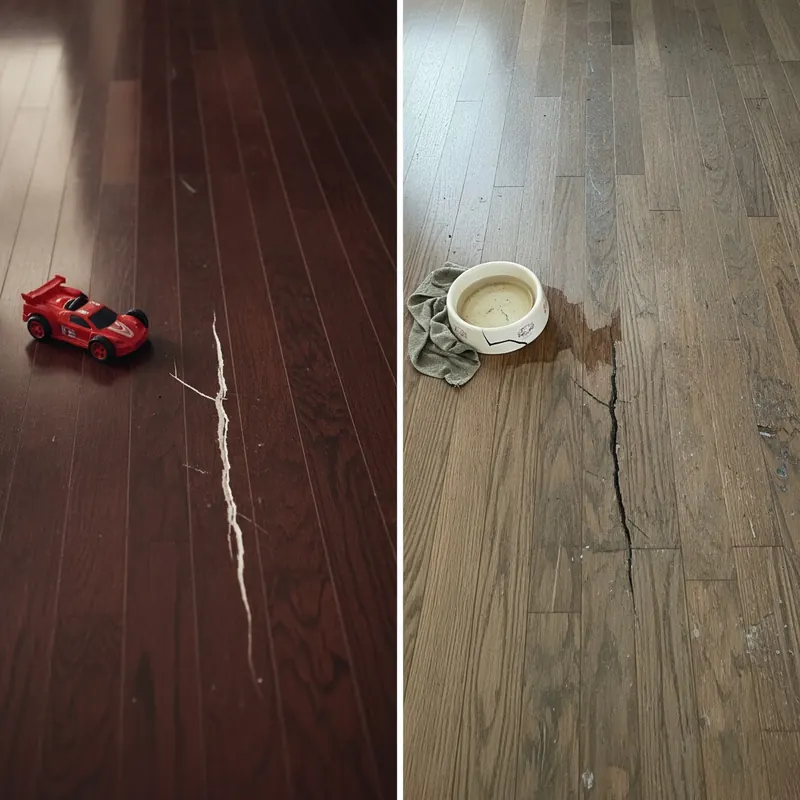
That first ugly scuff mark on a brand-new floor. It’s a moment every homeowner and business manager dreads. It feels like a permanent blemish on a significant investment, a sign of the inevitable decline from pristine to worn-out. But what if your floors could possess an almost unyielding defense against the daily onslaught of dropped keys, dragged chairs, pet claws, and constant foot traffic?
Welcome to the concept of ‘Adamantine Flooring’—not a specific brand, but a state of ultimate durability, resilience, and longevity. This isn’t just about choosing a “hard” floor; it’s about understanding the science of wear and tear and building a complete system to combat it.
This guide is your 360-degree playbook for achieving floors that last. We will move beyond simple lists of materials to empower you with a complete ‘Diagnose, Select, Protect, Restore’ system. You will learn to identify the true nature of floor damage, select the scientifically-proven best materials for your specific needs, implement a proactive strategy to protect your investment, and restore surfaces that have already seen some action. By the end, you’ll have the confidence of a flooring expert, ready to make decisions that ensure your floors remain beautiful for life.
- The Anatomy of Floor Damage: Decoding Scuffs, Scratches, and Abrasion
- The Science of Selection: Choosing Your Unyielding ‘Adamantine’ Floor
- Proactive Protection: Your Strategic Plan to Prevent Floor Wear and Tear
- The Restoration Toolkit: From Simple Scuff Removal to Protective Coatings
- Frequently Asked Questions (FAQ) About Durable Flooring
- Conclusion: Your Floor, Fortified for Life
- References and Authoritative Sources
The Anatomy of Floor Damage: Decoding Scuffs, Scratches, and Abrasion
Before you can choose a durable floor or fix an existing one, you must become a damage detective. Understanding the difference between a scuff, a scratch, and abrasion is the critical first step in proper diagnosis and treatment. Using the wrong solution for the problem can often make things worse. According to experts like the Institute of Inspection, Cleaning and Restoration Certification (IICRC), the key distinction lies in whether material has been added to the surface or taken away [1].
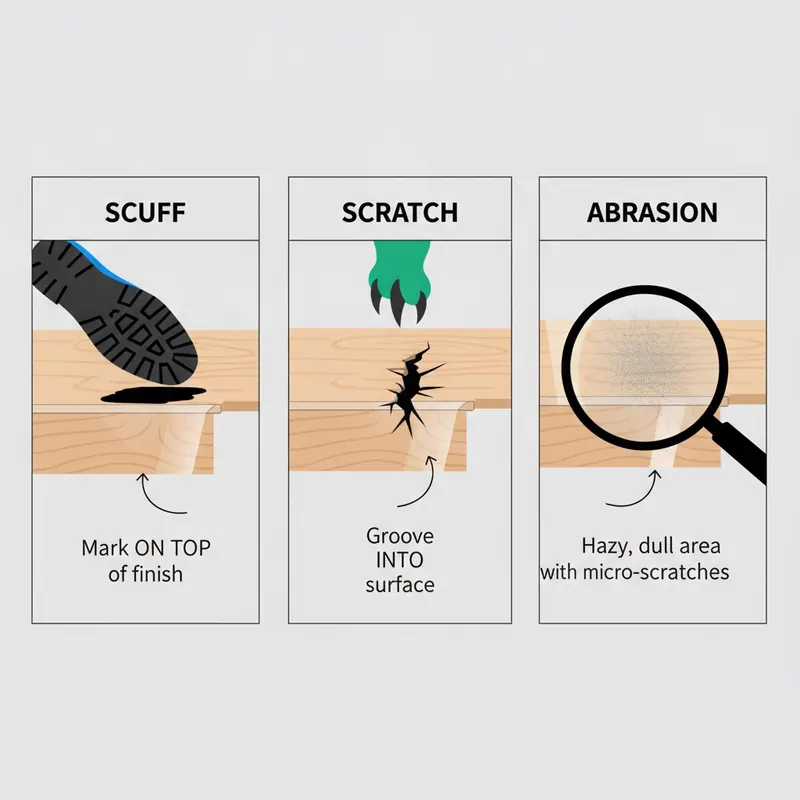
| Damage Type | Definition | Common Causes | Visual Cue |
|---|---|---|---|
| Scuff | A transfer of material onto the floor’s surface or finish. No material is removed. | Rubber-soled shoes, plastic furniture legs, kids’ toys, black heels. | A surface-level mark, often black or colored, that sits on top of the finish. |
| Scratch | A physical gouge or cut into the floor’s surface, removing or displacing material. | Pet claws, dragged heavy furniture, sharp objects, grit trapped under shoes. | A thin line or groove you can often feel with your fingernail. |
| Abrasion | Widespread, microscopic scratching that wears down the floor’s protective finish. | Accumulated dirt and grit from foot traffic, improper cleaning methods. | A dull, hazy, or worn-looking patch in high-traffic areas like hallways or entryways. |
Scuffs: The Surface-Level Annoyance
A scuff mark is the most common and least severe type of floor blemish. It occurs when a softer material, like the rubber from a shoe sole or the plastic from a toy, rubs against the floor and leaves a residue behind. Think of it like a crayon mark on a wall—it’s an addition to the surface, not a subtraction. Flooring manufacturers like Bona and Armstrong often define scuffs in their care guides as surface transfers that can typically be removed with proper cleaning techniques without damaging the floor’s finish.
Scratches: The Deeper Cut
Unlike a scuff, a scratch is a physical injury to the floor itself. It’s a narrow incision where the flooring material has been cut, gouged, or displaced. The National Wood Flooring Association (NWFA) identifies the primary culprits as grit and debris tracked in on shoes, unprotected furniture legs being dragged across the surface, and the claws of beloved family pets [2]. A scratch penetrates the protective wear layer and can sometimes go deep into the core of the flooring material, making it much more difficult to repair than a simple scuff.
Abrasion: The Silent Finish Killer
Abrasion is the most insidious form of floor damage. It isn’t a single event but a slow, grinding process that erodes the floor’s protective topcoat. Imagine fine-grit sandpaper being rubbed over the surface with every footstep—that’s abrasion. It’s caused by the countless tiny, hard particles of dirt, sand, and grit that act as an abrasive agent under the pressure of foot traffic. An often-cited statistic reveals that up to 90% of floor abrasion is caused by dirt and grit tracked in from outside.
To standardize how well a material resists this type of wear, the flooring industry uses rigorous testing methods. The most famous is the Taber Abrasion Test, developed by Taber Industries, where a weighted abrasive wheel spins on a flooring sample to measure how many cycles it takes to wear through the finish [3]. This scientific approach is why you see durability ratings on products—they are a direct measure of a floor’s ability to fight the silent killer of abrasion. The Resilient Floor Covering Institute (RFCI) also provides extensive technical data on how the composition of modern wear layers in vinyl and cork flooring contributes to their impressive abrasion resistance [4].
The Science of Selection: Choosing Your Unyielding ‘Adamantine’ Floor
Selecting a truly durable floor requires looking past surface-level aesthetics and understanding the science that makes a material resilient. The key is to match the technical specifications of the flooring to the specific demands of your environment. To simplify this complex process, we’ve created the Floor Durability Index—a master comparison chart that translates industry jargon into a clear, actionable guide. This will help you compare different materials on an apples-to-apples basis, ensuring you choose a floor that’s built to last for your unique situation.
The Floor Durability Index: Comparing Top Materials at a Glance
This table synthesizes key durability metrics. Here’s a quick guide to what they mean:
- Janka Hardness (Wood): Measures the force required to embed a steel ball into wood. Higher is harder.
- AC Rating (Laminate): Abrasion Class rating from AC1 (light use) to AC5 (heavy commercial).
- PEI Rating (Tile): Porcelain Enamel Institute rating from 1 (no foot traffic) to 5 (extra heavy traffic).
- Wear Layer (Vinyl): The thickness of the protective top layer, measured in mils (1/1000th of an inch). 20 mil or more is excellent for high traffic.
| Flooring Type | Scratch Resistance | Abrasion Resistance | Water Resistance | Avg. Cost (Material) | Best For |
|---|---|---|---|---|---|
| Luxury Vinyl (LVT/LVP) | Good to Excellent | Excellent (Wear Layer 12-28 mil) | Excellent (100% Waterproof) | $2 – $7 / sq. ft. | Pets, kitchens, basements, active families |
| Laminate | Good to Excellent | Excellent (AC3 – AC5) | Good to Excellent (Water-resistant/proof options) | $1.50 – $5 / sq. ft. | High-traffic homes, budget-conscious buyers |
| Porcelain Tile | Excellent | Excellent (PEI 4 – 5) | Excellent (Nearly impervious) | $3 – $10 / sq. ft. | Pets, commercial spaces, bathrooms, entryways |
| Engineered Hardwood | Fair to Good | Good (Janka + Aluminum Oxide finish) | Poor to Fair | $4 – $12 / sq. ft. | Living rooms, bedrooms (low moisture) |
| Polished Concrete | Good | Excellent | Excellent (when sealed) | $3 – $15 / sq. ft. | Commercial, industrial, garages, modern homes |
| Epoxy Coating | Good to Excellent | Excellent | Excellent | $4 – $12 / sq. ft. | Garages, workshops, commercial kitchens |
Best Durable Flooring for Homes with Pets
Pet owners face a unique trifecta of challenges: claws (scratches), accidents (water damage), and noise. The American Kennel Club (AKC) consistently recommends flooring that is water-resistant, durable, and provides good traction for dogs [5].
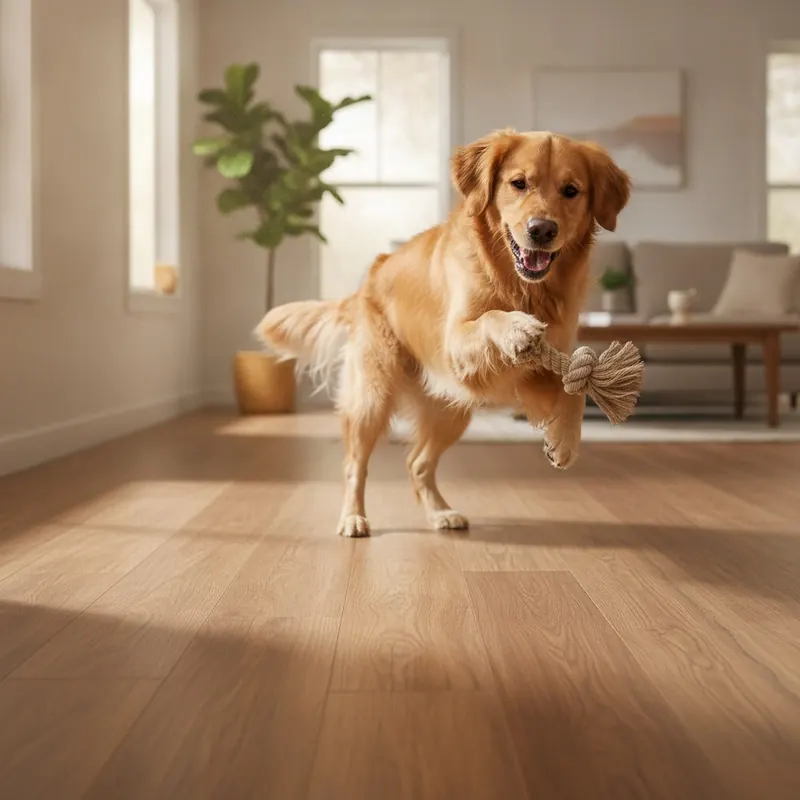
- Top Choice: Luxury Vinyl Tile/Plank (LVT/LVP). This is often the champion for pet-friendly homes. High-quality LVT with a thick wear layer of 20 mil or more is highly resistant to scratches from dog and cat claws. Its 100% waterproof construction means accidents won’t cause swelling or damage. Furthermore, it’s quieter and softer underfoot than tile, which can be more comfortable for pets.
- Strong Contender: Porcelain Tile. For ultimate scratch and water invulnerability, porcelain is unmatched. It boasts a water absorption rate of less than 0.5%, making it impervious to accidents. A PEI rating of 4 or 5 means it can handle the heaviest traffic and claw-scrabbling. The main downsides are its hardness and coldness, and the sound of claws on its surface can be loud.
- Filling a Gap: While most advice focuses on dogs, cat owners should also consider LVT’s resistance to damage from dragged scratching posts or the occasional “zoomies.” The slightly textured surface of many LVT products can also provide better traction than ultra-smooth laminate.
Best Flooring for High-Traffic Commercial Areas
Commercial spaces demand flooring that meets stringent criteria for durability, maintenance, safety, and accessibility. The goal is to find a surface that can withstand thousands of footsteps, rolling carts, and potential spills day after day.
- Top Choice: Commercial-Grade LVT. With wear layers of 20 mil or higher and robust construction that meets ASTM International standards like ASTM F1700 for solid vinyl tile, this flooring is designed for retail, healthcare, and hospitality settings [6].
- Heavy-Duty Champion: Epoxy Flooring & Polished Concrete. For environments with extreme demands like warehouses, auto shops, or industrial kitchens, these are the top contenders. Epoxy flooring can have a compressive strength of over 10,000 psi, easily handling heavy machinery. Polished concrete is similarly robust. Both options are seamless, making them easy to clean and sanitize.
- Critical Considerations: All commercial flooring must comply with The Americans with Disabilities Act (ADA) guidelines, which specify requirements for slip resistance and smooth transitions to ensure accessibility [7]. From a cost-benefit perspective, while the upfront cost of epoxy or polished concrete can be high, their incredible lifespan and low maintenance needs often result in a lower total cost of ownership compared to materials that need frequent replacement.
Ultimate Scuff-Proof Flooring for Active Families and Kids’ Rooms
For homes with children, the challenge is constant activity—dropped toys, scraped chairs, and endless foot traffic. The solution lies in flooring with advanced topcoat technology designed specifically to repel scuffs.
- The Technology: Many premium LVT and laminate products feature factory-applied finishes infused with microscopic ceramic beads or aluminum oxide particles. These incredibly hard minerals create a tough, clear shield over the decorative layer of the floor. This shield deflects the rubber and plastic transfers that cause scuff marks, keeping the floor looking cleaner for longer.
- Scuff vs. Scratch: It’s important to clarify that “scuff-proof” is not the same as “scratch-proof.” The ceramic bead finish is excellent at preventing surface-level material transfer (scuffs), but a sharp, heavy object can still potentially gouge the surface (a scratch).
- The Finish Matters: A key strategy for hiding the inevitable minor imperfections of an active home is to choose a floor with a matte or low-gloss finish. Glossy surfaces reflect more light, making every tiny scuff and micro-scratch highly visible. A matte finish diffuses light, effectively camouflaging minor wear and tear.
Proactive Protection: Your Strategic Plan to Prevent Floor Wear and Tear
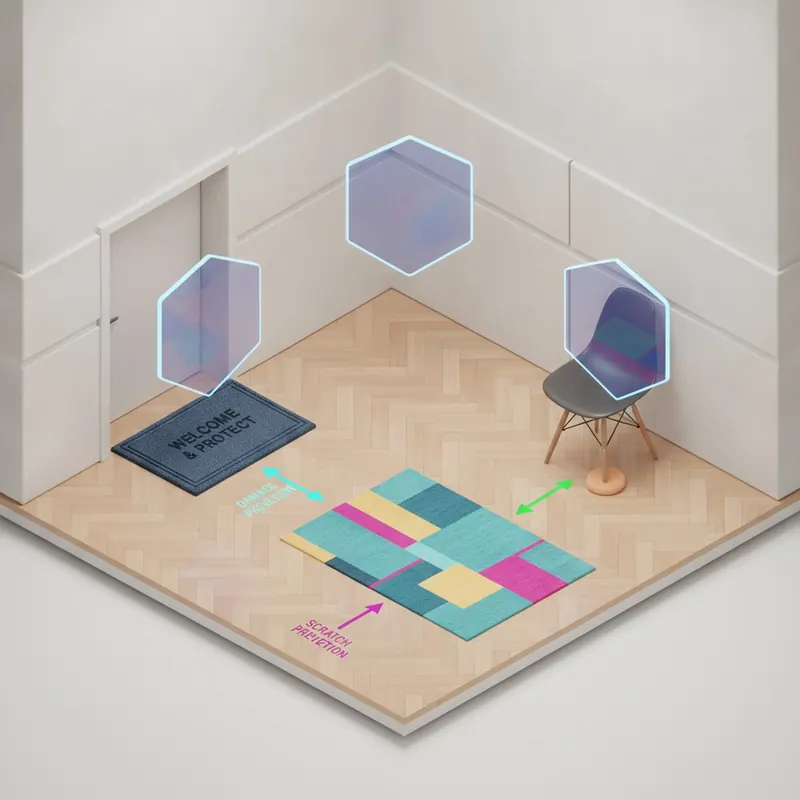
The most effective way to keep your floors looking new is to stop damage before it ever happens. An effective floor protection strategy is like a multi-layered military defense: it works at the source, on the surface, and in your daily routine. Adopting these habits is the single best way to preserve your flooring investment.
Defense at the Source: Furniture Pads and Smart Shoe Choices
The battle begins with the objects that contact your floor most often.
- Furniture Pads are Non-Negotiable: Unprotected chair and table legs are a primary source of scratches and deep scuffs. Using high-quality, thick felt pads on every piece of furniture is essential. Research shows that something as simple as using felt pads can reduce the direct force exerted on a floor by up to 50%, dramatically lowering the risk of damage. Opt for pads that stick on with a strong adhesive or, even better, ones that can be tapped or screwed into the furniture leg for a permanent solution.
- Know Your Soles: The worst offenders for scuff marks are soft, black rubber soles. While you can’t control what guests wear, having a “no shoes in the house” policy is the ultimate defense. If that’s not practical, be mindful that hard-soled shoes are less likely to leave scuff marks than soft, grippy ones.
Defense on the Surface: The Power of Mats, Rugs, and Chair Mats
Your second line of defense is creating physical barriers in high-stress zones.
- The Unsung Hero: The Doormat. According to the Cleaning Research Institute, high-quality exterior and interior doormats can trap up to 85% of the outside dirt, grit, and moisture that would otherwise be tracked into your home. Considering a typical family can track in up to 24 pounds of dirt per year, a robust mat system is your most powerful weapon against abrasion. The Carpet and Rug Institute (CRI) recommends a dual-mat system: a coarse one outside to scrape off large debris and a more absorbent one inside to catch fine particles and water [9].
- Strategic Rug Placement: Use area rugs and runners in natural “wear paths”—hallways, entryways, and the areas in front of sofas and chairs. These not only protect the floor but also add to your home’s decor.
- The Office Lifesaver: If you have a home office with a rolling chair, a dedicated chair mat is crucial. The constant, concentrated movement of caster wheels will quickly abrade and destroy the finish on almost any type of flooring. Choose a mat designed for your specific floor type (hard floor or carpet) to prevent it from sliding.
Defense in Your Routine: Correct Cleaning to Preserve the Finish
Your final line of defense is a smart cleaning routine. Improper cleaning can cause more damage than foot traffic.
- The Right Tools: Use a microfiber dust mop or a vacuum with a soft brush attachment (turn the beater bar off for hard surfaces) for daily debris removal. This lifts the abrasive grit instead of just pushing it around.
- Material-Specific Cleaners: Avoid using all-purpose cleaners, vinegar, or steam mops on surfaces where they aren’t recommended. As flooring experts like the NWFA and Bona advise, always use a pH-neutral cleaner specifically formulated for your floor type (e.g., hardwood, vinyl, laminate) [2], [10]. Harsh chemicals can strip the protective finish, leaving your floor vulnerable to staining and abrasion.
- Less is More: When mopping, use a minimal amount of liquid and ensure the floor dries quickly. Never let water pool on a wood or laminate floor. Following the manufacturer’s specific care and maintenance guidelines is the best way to protect your warranty and the life of your floor.
The Restoration Toolkit: From Simple Scuff Removal to Protective Coatings
Even with the best preventative plan, some wear and tear is inevitable. This toolkit provides solutions for existing damage, from easy DIY fixes for scuffs to more advanced options for restoring a floor’s protective shield. Always remember the professional’s golden rule: start with the least abrasive method first.
Your Step-by-Step Guide to Removing Scuff Marks
Before you begin, always test any removal method in a small, inconspicuous area to ensure it doesn’t damage the floor’s finish.
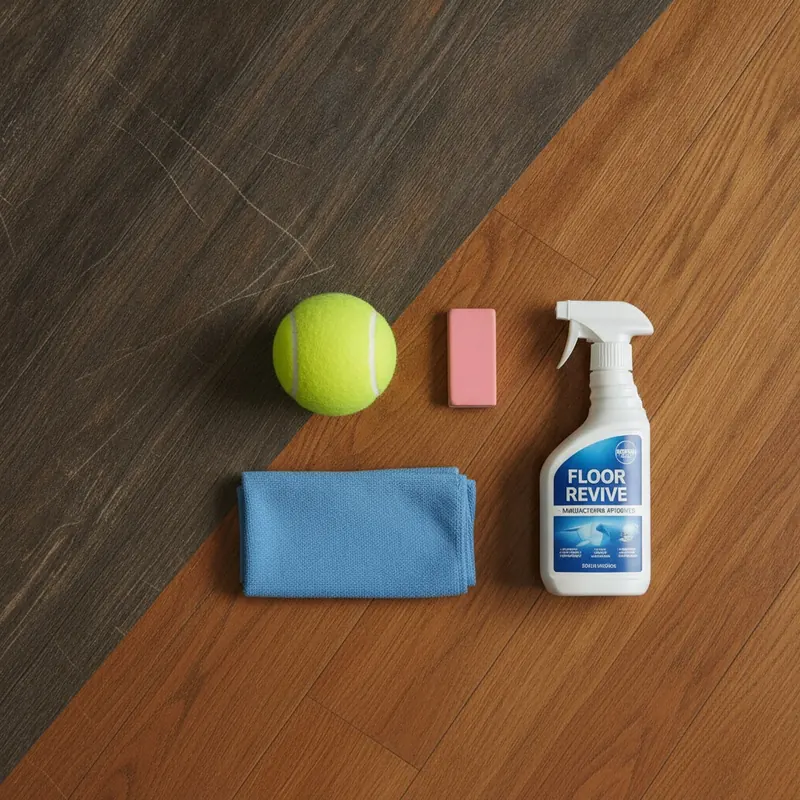
| If your floor is… | Method 1: Gentle Friction | Method 2: Mild Abrasive | Method 3: Targeted Cleaner |
|---|---|---|---|
| Vinyl & Laminate | Rub the scuff with a clean tennis ball or a pink pencil eraser. | Dampen a melamine foam sponge (e.g., Magic Eraser) and gently rub. Use with caution as it is a fine abrasive. | Apply a small amount of a manufacturer-approved cleaner to a microfiber cloth and wipe. |
| Hardwood & Bamboo | Buff the area with a dry microfiber cloth. For stubborn scuffs, use a sock or tennis ball. | AVOID. Abrasives can permanently dull the polyurethane finish. | Spray a recommended hardwood floor cleaner onto a cloth (not the floor) and gently wipe the mark. |
| Tile & Stone | Use a non-scratch nylon scrub pad with a bit of water. | Gently rub with a damp melamine foam sponge. | Mix a paste of baking soda and water, apply to the scuff, let sit for a few minutes, then gently scrub and rinse. |
A special note on melamine foam erasers: They work by acting as an extremely fine-grit sandpaper, microscopically abrading the scuff mark (and a tiny bit of the finish) away. While effective, the IICRC’s principles would advise using them with minimal pressure and only after less aggressive methods have failed, as overuse can create a dull spot in the floor’s finish [1].
For Vinyl and Laminate Floors
These resilient surfaces are generally easy to clean. The friction from a simple tennis ball is often enough to grab the rubber or plastic residue of a scuff mark and lift it off the surface without harming the wear layer.
For Hardwood and Bamboo Floors
The key here is to protect the finish. Never use abrasive powders or scrubbers. For scuffs that won’t come off with a cloth, your best bet is to use a cleaner specifically recommended by the NWFA or a trusted brand like Bona, as these are formulated to be effective yet safe for modern polyurethane finishes [2], [10].
For Tile and Stone Floors
Porcelain and ceramic tile are very durable, but it’s still wise to start gently. For natural stone like marble or travertine, avoid all acidic or highly abrasive cleaners. Always check with the manufacturer or a stone care professional if you are unsure what is safe for your specific type of tile.
Advanced Defense: Applying Abrasion-Resistant Coatings
For restoring a dull, abraded floor or for fortifying a new floor in a high-demand environment, an abrasion-resistant coating is the ultimate solution. These are clear, liquid-applied topcoats that cure to form a new, ultra-durable wear layer.
- The Main Types:
- Polyurethane (Water or Oil-Based): This is the standard for finishing hardwood floors. Modern two-component polyurethane coatings, which use a catalyst to harden, can provide up to 5 times the abrasion resistance of older, single-component varnishes.
- Epoxy Coatings: Typically used on concrete floors in garages and commercial settings, epoxy creates a thick, hard, and chemical-resistant shell. It’s a heavy-duty solution for the most demanding environments.
- The Homeowner-Friendly Approach: While a full floor refinishing is a job for professionals, some manufacturers offer “refresher” or “polish” products that homeowners can apply. These are thinner coatings that can fill in micro-scratches and restore the sheen to a dull floor, adding a temporary layer of protection.
- Trust the Data: When considering any coating, look for the manufacturer’s Technical Data Sheet (TDS). This document, often provided by companies like Rust-Oleum or Sherwin-Williams, contains the results of lab testing (like Taber abrasion tests) and provides critical information on performance and proper application. Following the TDS is essential for a successful and long-lasting result.
Frequently Asked Questions (FAQ) About Durable Flooring
Is there any flooring that is completely scratch and scuff proof?
No flooring is truly indestructible or “proof” against all damage. However, some materials come very close to being invincible in normal residential settings. Porcelain tile with a high PEI rating of 5 is exceptionally resistant to scratches and wear [8]. High-quality LVT with a thick, 28-mil commercial-grade wear layer infused with ceramic beads is also incredibly tough. The goal is to choose the highest level of resistance for your lifestyle, not to chase the myth of invincibility.
Is laminate or vinyl better for pets?
For most pet owners, luxury vinyl (LVT/LVP) is generally the better choice. Its primary advantage is being 100% waterproof, which provides peace of mind against pet accidents that can seep into the seams of laminate and cause the core to swell. Many vinyl products also offer better traction and are quieter underfoot. That said, high-end laminate with a strong AC4 or AC5 rating and new water-resistant or waterproof technology is also an excellent and highly scratch-resistant option. The American Kennel Club’s emphasis on waterproof flooring often gives vinyl the edge [5].
How can you fix a dull spot on a hardwood floor caused by wear?
A dull spot in a high-traffic area is a classic sign of abrasion, where the top layer of the finish has been worn away. This is a form of damage that can often be reversed. For minor dulling, a professional may be able to perform a “screen and recoat,” where they lightly abrade the entire floor’s surface and apply a new coat of finish. According to the NWFA, this process can only be done if the wear has not gone through the finish to the bare wood [2]. If the damage is severe, a full sand-and-refinish, which removes the old finish completely, will be required to restore the floor.
What does an AC rating on laminate flooring mean?
The AC (Abrasion Class) rating is an industry-standard, internationally recognized system that grades the durability of laminate flooring. It measures resistance to abrasion, impact, stains, and burns. The scale is:
- AC1: Light residential (e.g., bedrooms)
- AC2: Moderate residential (e.g., living rooms)
- AC3: Heavy residential / Light commercial
- AC4: General commercial
- AC5: Heavy commercial
For an active home, it is highly recommended to choose a laminate with a rating of at least AC3, with AC4 providing an even greater level of durability and peace of mind.
Conclusion: Your Floor, Fortified for Life
Achieving truly ‘Adamantine’ flooring is not about finding a single magic material, but about adopting a comprehensive, intelligent system. By embracing the ‘Diagnose, Select, Protect, Restore’ methodology, you transform from a passive floor owner into a proactive, informed guardian of your home or business’s foundation.
You now have the knowledge to decode damage like an expert, select materials based on scientific proof rather than marketing hype, implement a strategic protection plan that stops wear before it starts, and restore your floor’s defenses when needed. Your floors are a significant investment, and by applying these principles, you can ensure they remain a source of pride and beauty, unyieldingly resistant to the demands of everyday life.
Ready to protect your investment? Start today by implementing our ‘Proactive Protection Plan’ and choose your next floor with the confidence of an expert. Share your own floor durability challenges in the comments below!
This article may contain affiliate links. All DIY repair and coating application steps should be performed with caution; consult a professional if you are unsure. Follow all manufacturer safety guidelines for products mentioned.
References and Authoritative Sources
- Institute of Inspection, Cleaning and Restoration Certification (IICRC). (N.D.). IICRC Standards. Retrieved from iicrc.org.
- National Wood Flooring Association (NWFA). (N.D.). Maintenance and Care. Retrieved from nwfa.org.
- Taber Industries. (N.D.). Taber Rotary Abraser. Retrieved from taberindustries.com.
- Resilient Floor Covering Institute (RFCI). (N.D.). Resources. Retrieved from rfci.com.
- American Kennel Club (AKC). (N.D.). Pet-Friendly Home. Retrieved from akc.org.
- ASTM International. (N.D.). ASTM F1700 – 20 Standard Specification for Solid Vinyl Floor Tile. Retrieved from astm.org.
- U.S. Access Board. (N.D.). ADA Accessibility Standards. Retrieved from ada.gov.
- Porcelain Enamel Institute (PEI). (N.D.). PEI Rating. (Industry standard, often referenced by tile manufacturers).
- Carpet and Rug Institute (CRI). (N.D.). Carpet and Rug Care. Retrieved from carpet-rug.org.
- Bona. (N.D.). Hardwood Floor Care. Retrieved from bona.com.